# Neural Interfaces 2026 — Track 02 | Spectral BCI Decoder
[](LICENSE) [](https://www.codabench.org/competitions/17982/)   [](independent_20261031.json)  [](https://nemar.org/dataexplorer/detail?dataset_id=nm000290)
[**Official result**](#official-result-and-scientific-evidence) · [**Method**](#method) · [**Independent checks**](#independent-checks) · [**Reproduce**](#reproduce) · [**Observations**](#observations-and-limitations) · [**Bibliography**](#bibliography)
**A fully trained, independently audited EEG decoding model with a completed official Codabench warm-up evaluation.**
[Official competition / Track 02](https://www.codabench.org/competitions/17982/) · [Download the exact accepted ZIP](Agnuxo_SpectralBCI_Track02.zip) · [Original public data (NEMAR nm000290)](https://nemar.org/dataexplorer/detail?dataset_id=nm000290)
Neural Interfaces 2026 Track 02 challenges participants to decode cued mental commands from short EEG windows. This open-source research entry provides an entirely CPU-compatible, causal, interpretable spectral model trained on the official public PROTEUS dataset. No cloud API, participant-ID lookup, hidden competition label or pretrained network is used.
**Contents** — [Official result and scientific evidence](#official-result-and-scientific-evidence) · [Method](#method) · [Background](#background) · [Independent checks](#independent-checks) · [Files](#files) · [Reproduce](#reproduce) · [Expected applications](#expected-applications) · [Observations and limitations](#observations-and-limitations) · [Possible improvements](#possible-improvements) · [Future work](#future-work) · [Bibliography](#bibliography)
## Official result and scientific evidence
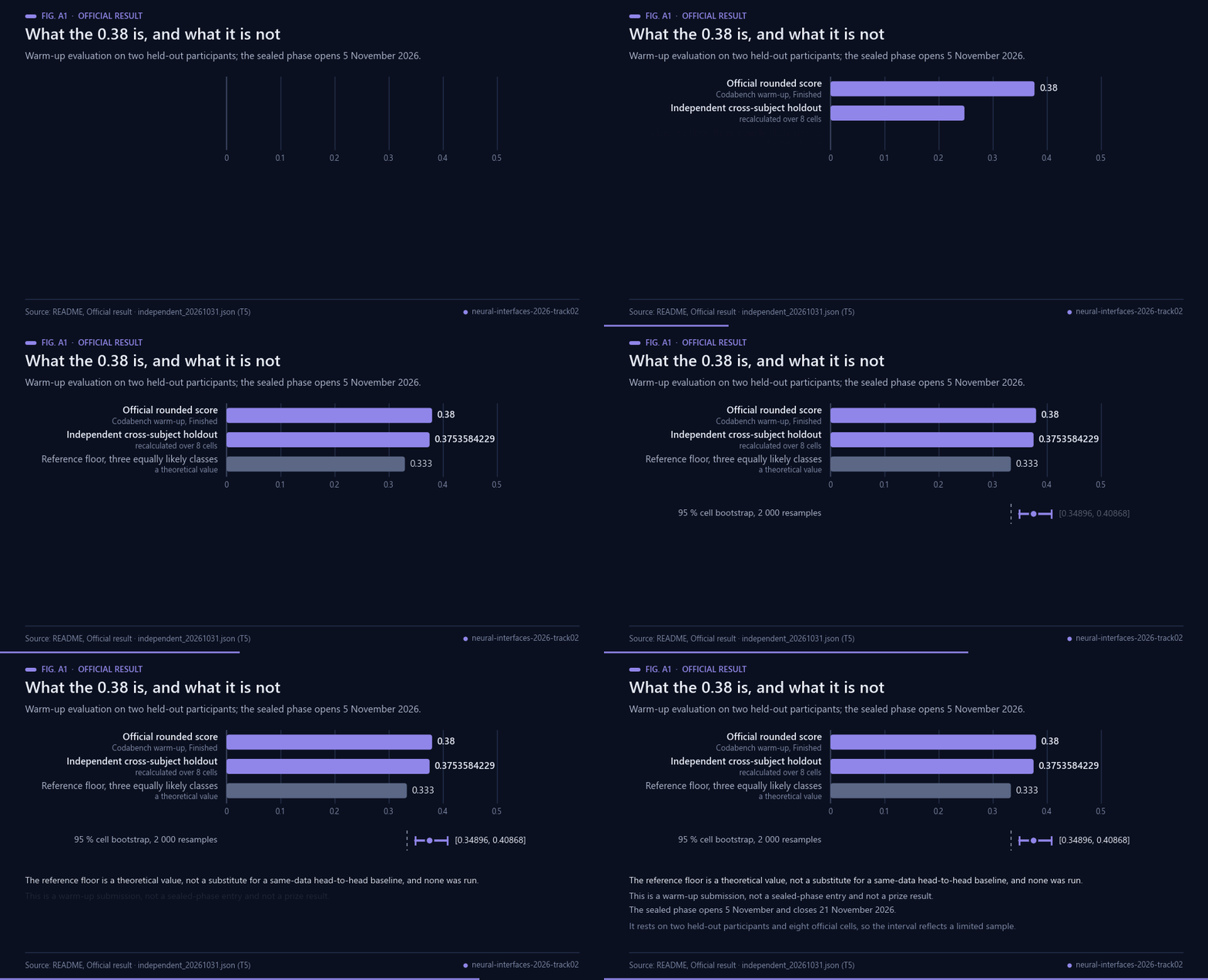
Animated figure A1 — The warm-up score with its interval and its reference floor. Data: the table below and independent_20261031.json.
| Item | Verified result |
|---|---|
| Codabench warm-up entry | **1023163** |
| Official evaluation state | **Finished** on 31 October 2026 at 09:14 CET |
| Official rounded score | **0.38 balanced accuracy** |
| Independent cross-subject holdout score | **0.37535842293906807** |
| Training / validation / test | 1,521 / 379 / 755 EEG windows |
| Train / validation / test participants | **6 / 2 / 2, mutually disjoint** |
| Validated official context cells | 8 held-out subject × recording × interface cells |
| Five independent quality-control experiments | **5/5 passed** |
| Exact ZIP SHA-256 | **d5a1f2bef886fcd775b5a41338612f016087f0c6a4b321dc3ef33e27987de0cd** |
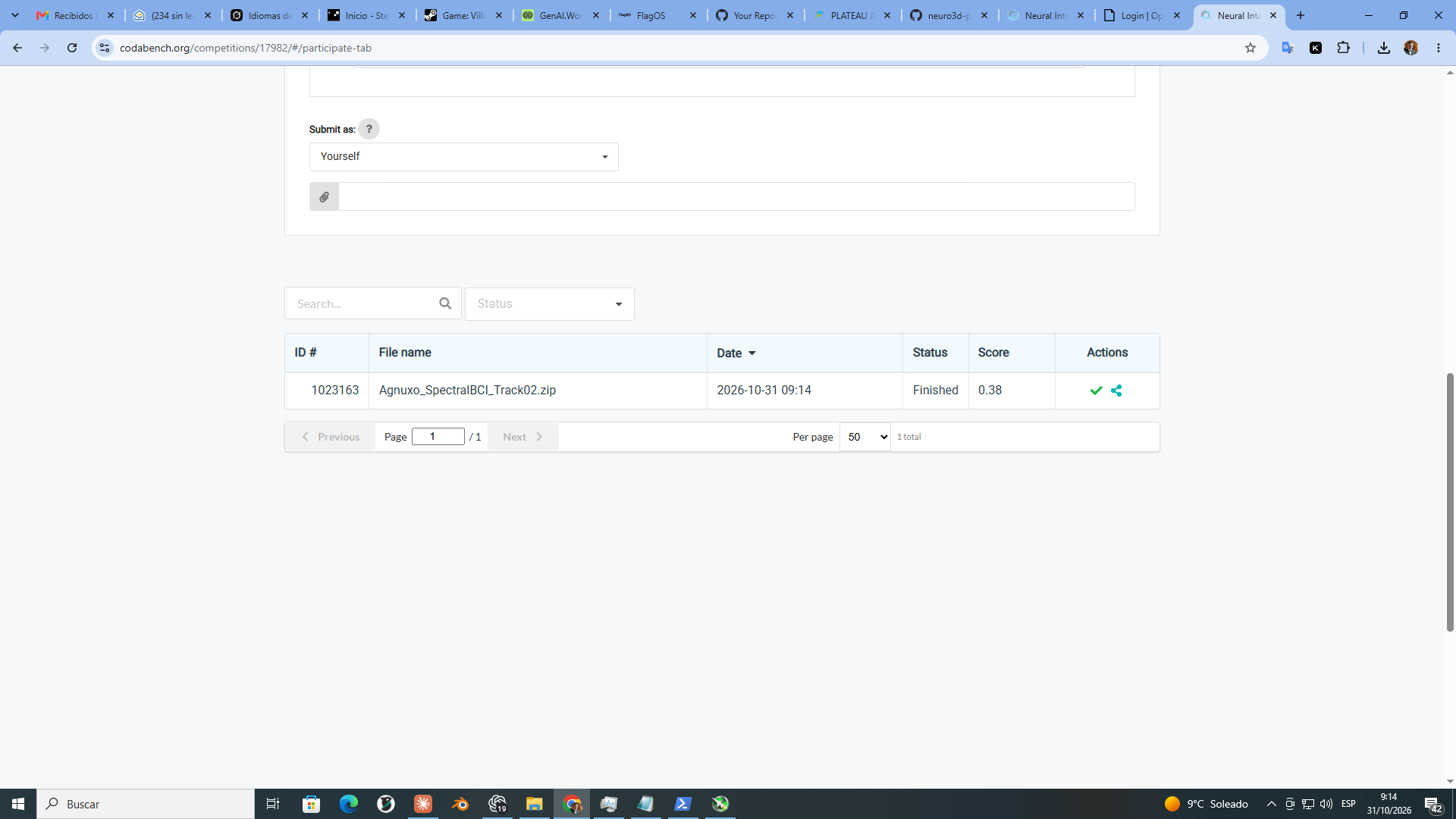
The official score reproduces the independently calculated held-out score after rounding. The reference floor for three equally likely classes is approximately 0.333, but that theoretical value is not a substitute for a same-data head-to-head baseline. **This is a warm-up submission, not a sealed-phase competition entry or a prize result.** The sealed phase opens 5 November and closes 21 November 2026.
## Method
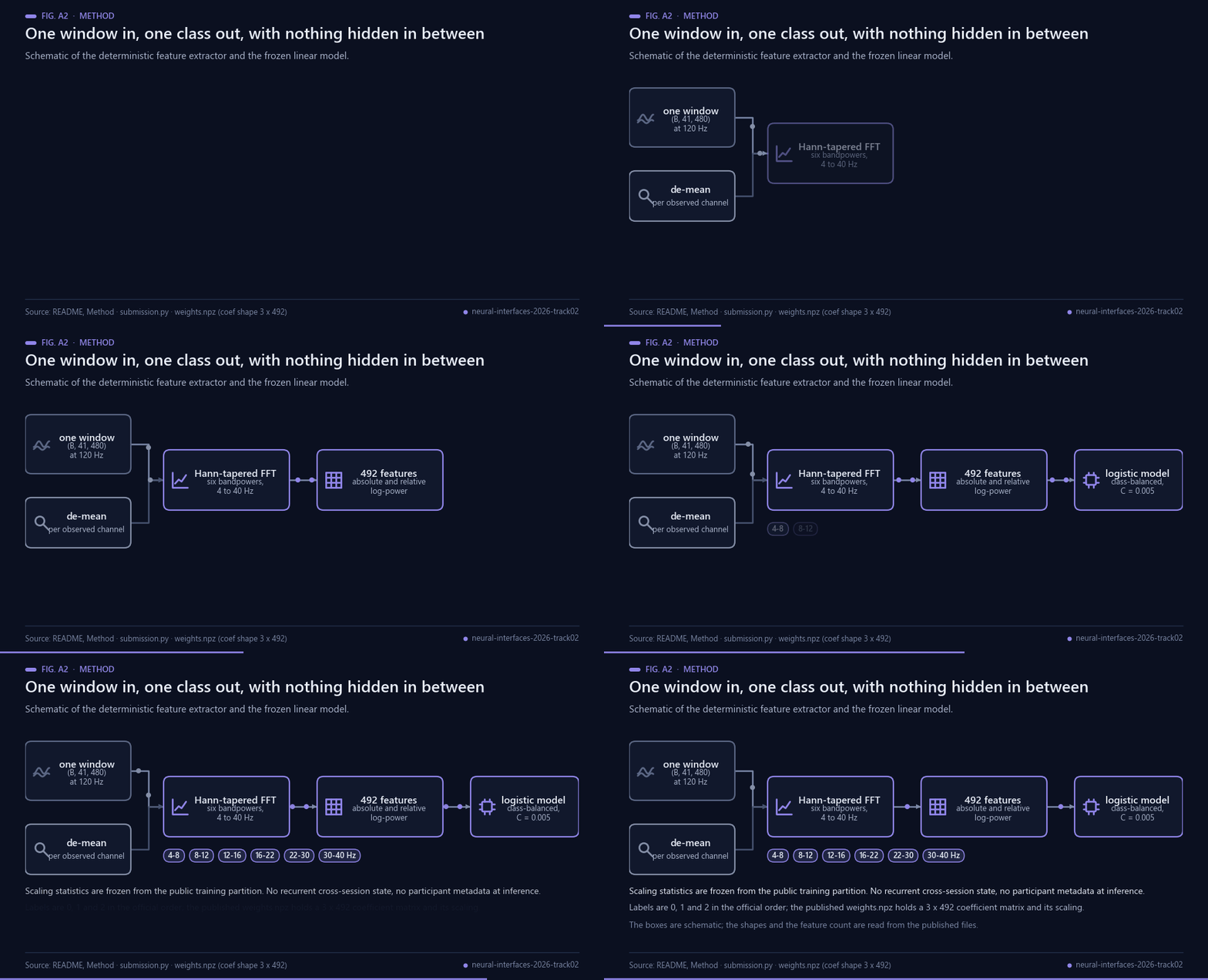
Animated figure A2 — Schematic of the pipeline; the shapes are read from submission.py and weights.npz.
Each input is one `(B, 41, 480)` EEG window sampled at 120 Hz. The deterministic feature extractor subtracts each observed channel's temporal mean, then calculates a Hann-tapered Fourier transform with six bandpowers: 4–8, 8–12, 12–16, 16–22, 22–30 and 30–40 Hz. Absolute log-power and across-channel relative log-power yield 492 interpretable features. A class-balanced multinomial logistic regression is trained on these features, with scaling statistics frozen from the public training partition.
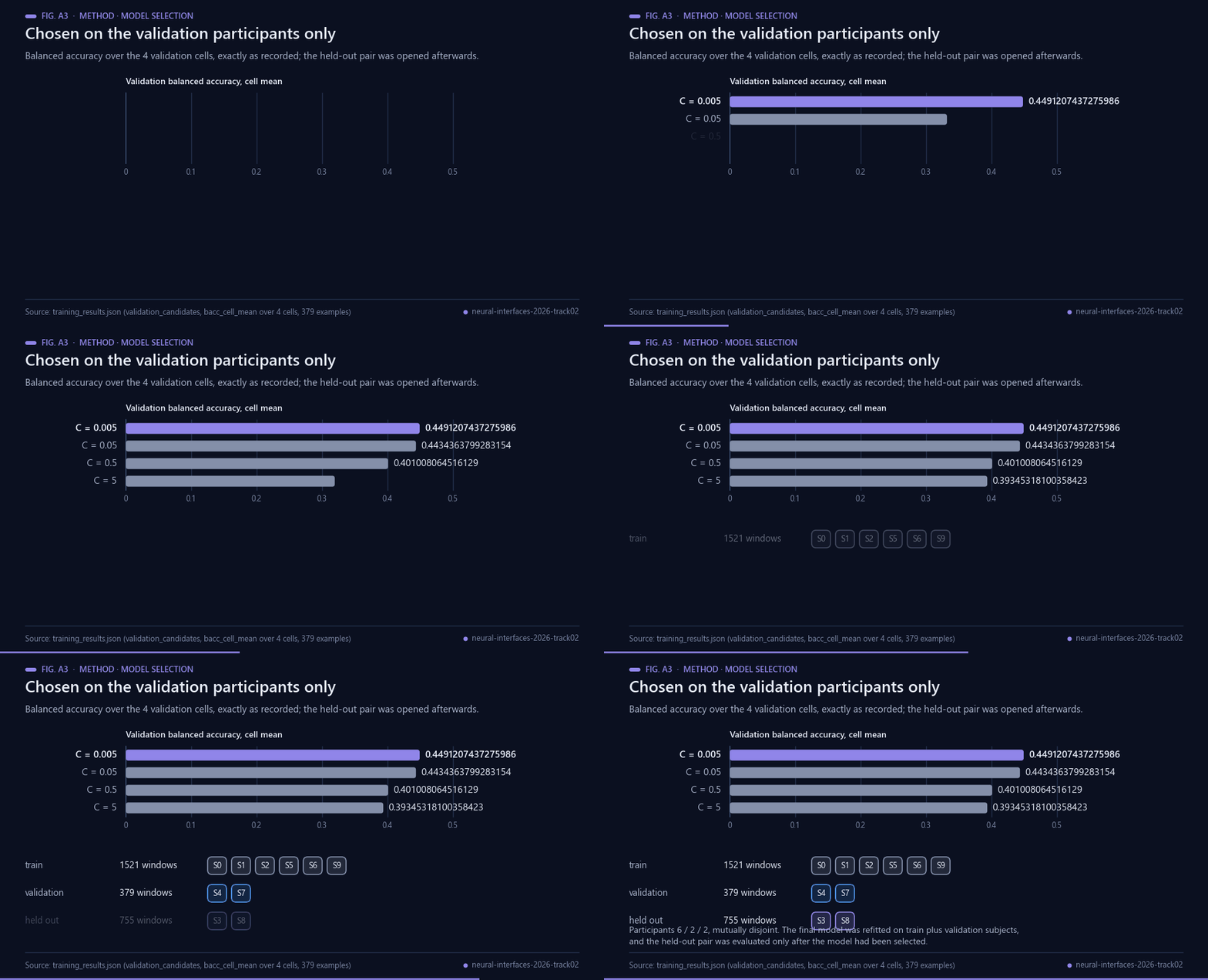
Animated figure A3 — Selection on the validation participants only. Data: training_results.json.
Model selection tested C = 0.005, 0.05, 0.5 and 5.0 on the validation participants only; C = **0.005** was selected. The final frozen model was refitted on train plus validation subjects, and the two held-out participants were evaluated only after selecting the model. Predicted labels are 0, 1 and 2, in the official order. There are no recurrent cross-session states, and no participant metadata is used during inference.
## Background
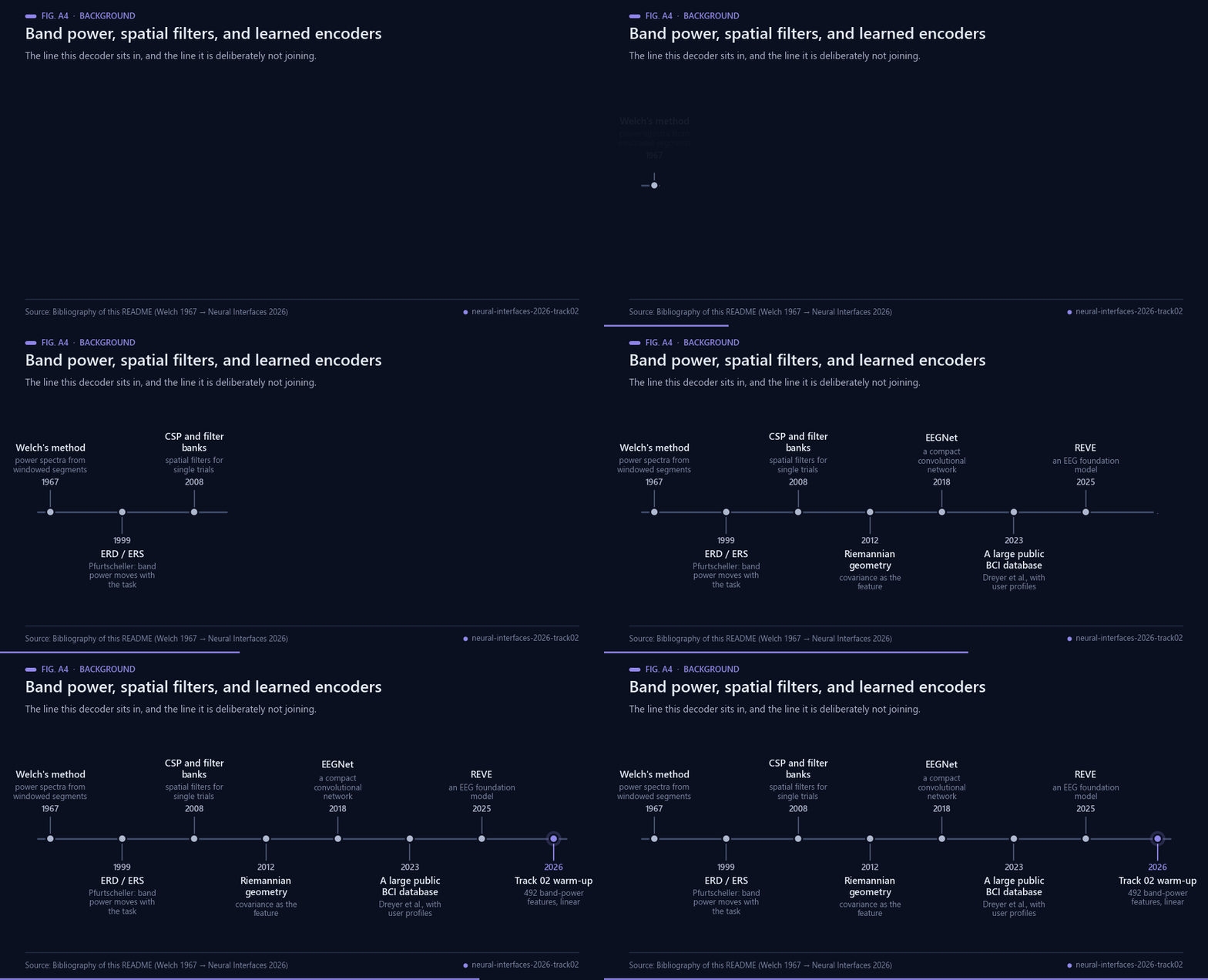
Animated figure A4 — Milestones behind this decoder. Sources: bibliography below.
Everything this decoder computes has been in use for decades. Welch's method estimates a power spectrum by
averaging over windowed segments [[5](#ref-5)], which is what the Hann-tapered transform in `submission.py`
does per 5 s window; Pfurtscheller and Lopes da Silva set out the principle the band powers rest on, that
band power rises and falls with the task in event-related synchronisation and desynchronisation
[[4](#ref-4)]; and Hjorth-style time-domain descriptors and band ratios have been standard features since.
The BCI field then built spatial filters on top: common spatial patterns optimised for robust single-trial
analysis [[6](#ref-6)], filter-bank variants that select the frequency range as well [[7](#ref-7)], and
Riemannian-geometry classifiers that treat the covariance matrix itself as the feature [[8](#ref-8)].
The decade since has moved towards learned encoders — EEGNet, a compact convolutional network designed so
one architecture serves several BCI paradigms [[9](#ref-9)], and more recently pretrained EEG foundation models
such as REVE [[10](#ref-10)]. Public datasets made that possible: Dreyer and colleagues released a large EEG
database with user profile information for motor-imagery BCI research [[3](#ref-3)], and the PROTEUS recordings
used here are distributed through NEMAR [[2](#ref-2)] with the organisers' own starter kit defining the split
and the preprocessing [[17](#ref-17)].
This entry deliberately sits on the older side of that line, and the reason is evaluation rather than
nostalgia. Cross-subject BCI performance varies enough between people that transfer between subjects is a
research field of its own [[13](#ref-13)], and a substantial share of users score near chance with a given
paradigm [[14](#ref-14)]. Balanced accuracy is the metric used precisely because it does not reward predicting
the majority class [[11](#ref-11)], and the interval around it here comes from a cluster bootstrap over the
eight held-out cells [[12](#ref-12)]. With a sample that small, methodological failures of the familiar
kinds — a too-small test set, a baseline that was never run, information crossing the split
[[15](#ref-15), [16](#ref-16)] — would be easier to commit than to detect, which is why the checks in this repository
are about the package and the protocol rather than about the score.
## Independent checks
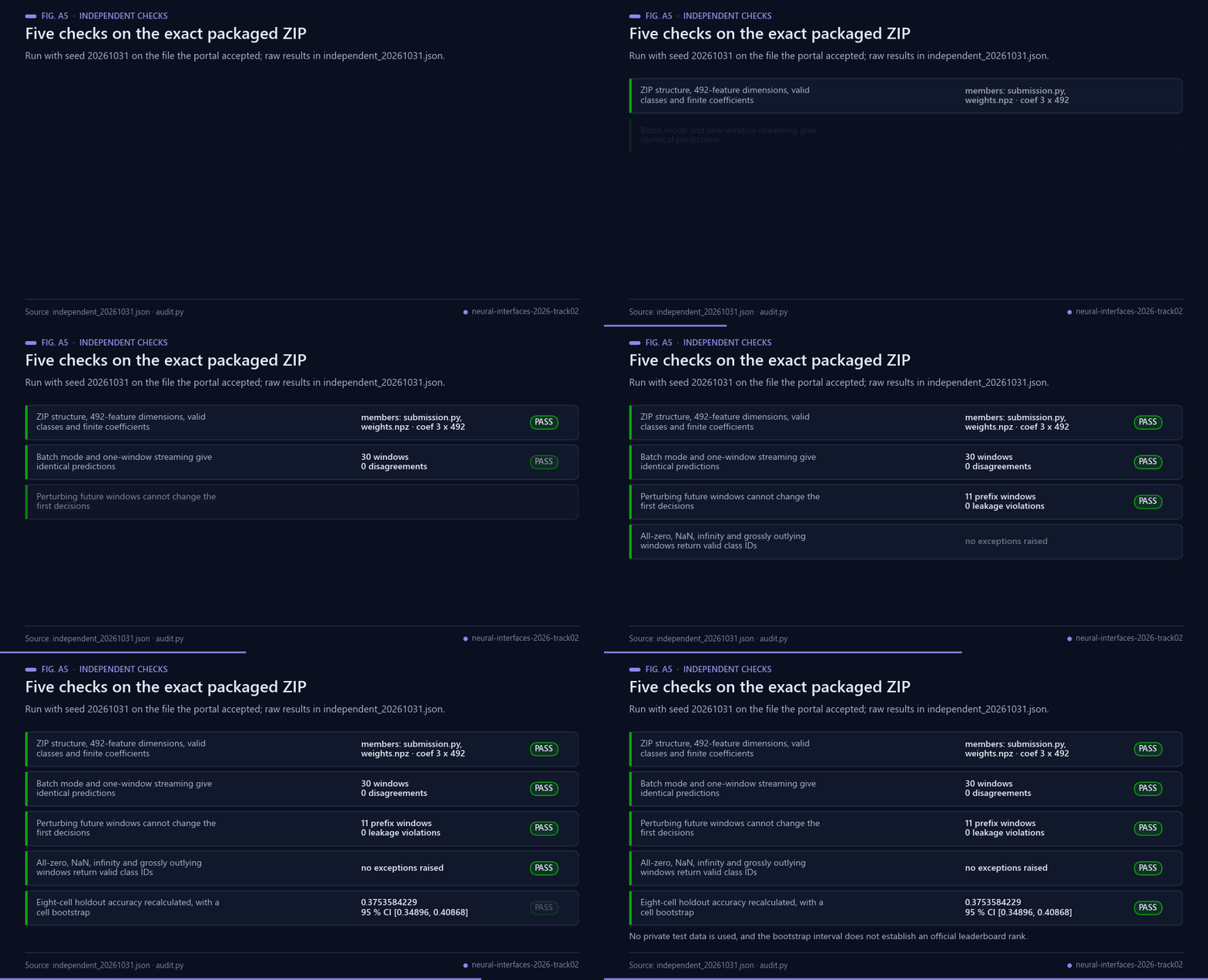
Animated figure A5 — The five checks on the exact packaged ZIP. Data: independent_20261031.json.
All five external checks executed on the *exact packaged ZIP*, with seed **20261031**. Their machine-readable raw results are in [independent_20261031.json](independent_20261031.json).
1. ZIP structure, 492-feature dimensions, valid classes and finite coefficients: **PASS**.
2. Identical predictions for batch mode and one-window streaming across 30 windows: **PASS**, zero disagreements.
3. Perturbing future windows cannot change the first 11 decisions: **PASS**, zero leakage violations.
4. All-zero, NaN, infinity and grossly outlying input windows return valid finite class IDs: **PASS**.
5. Eight-cell holdout accuracy independently recalculated to **0.3753584229**. A 2,000-resample cell bootstrap gave **95% CI [0.34896, 0.40868]**: **PASS**.
## Files
| File | Purpose |
|---|---|
| [submission.py](submission.py) | Self-contained frozen inference implementation conforming to `CompetSolver` |
| [weights.npz](weights.npz) | Trained real-data multinomial coefficients and scaling |
| [Agnuxo_SpectralBCI_Track02.zip](Agnuxo_SpectralBCI_Track02.zip) | Exact file accepted and scored by the official Codabench portal |
| [train_public.py](train_public.py) | Deterministic train / validation / held-out evaluation and ZIP packaging |
| [audit.py](audit.py) | Independent tests on the exact packaged entry |
| [training_results.json](training_results.json) | Original raw split assignments, model comparison and measured results |
| [independent_20261031.json](independent_20261031.json) | Audited results and uncertainty estimates |
| [kit_compat.py](kit_compat.py) | Explicit documented Windows/NeuralBench 0.4.0 compatibility layer |
| [docs/](docs/) | Official scored warm-up screenshot |
## Reproduce
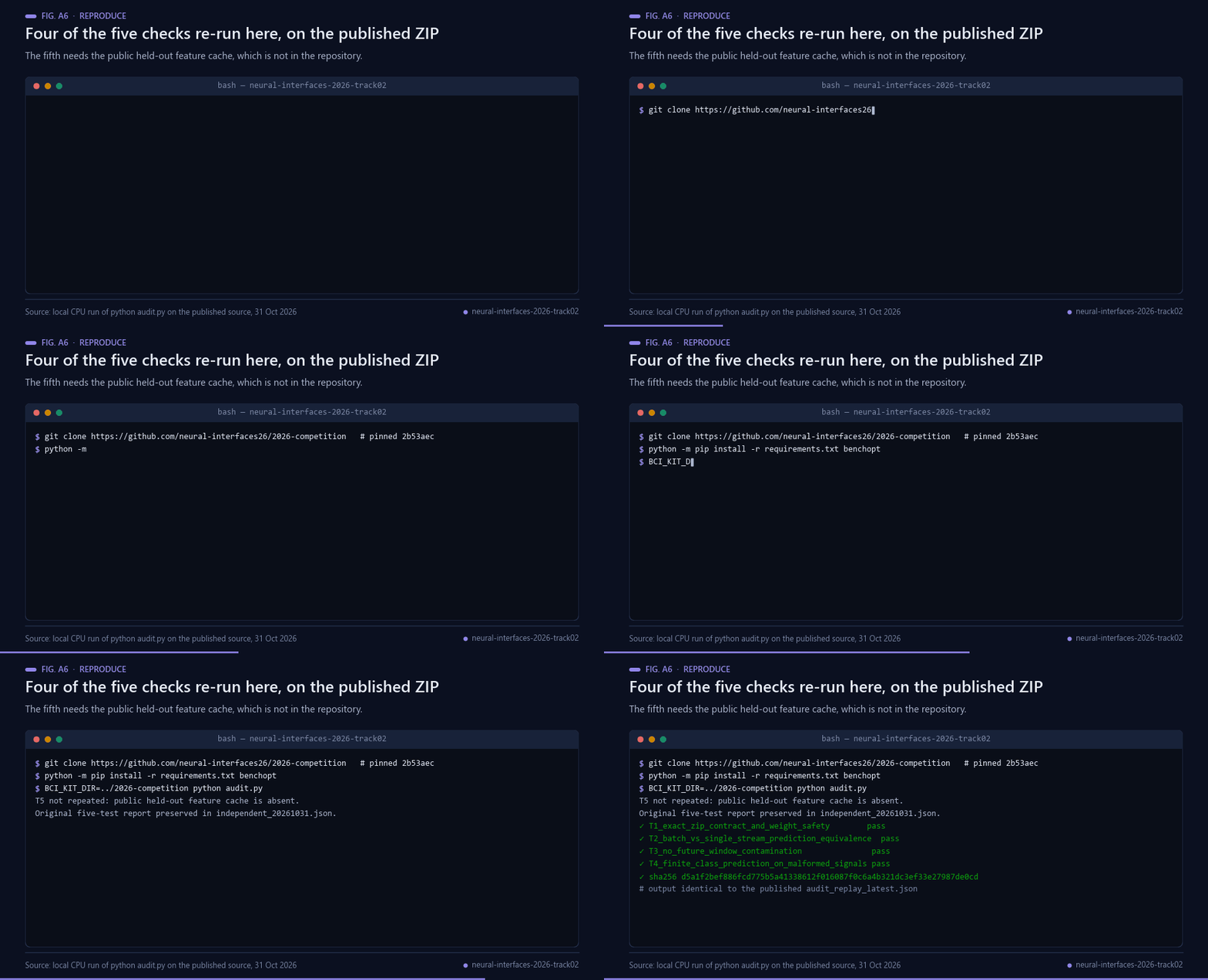
Animated figure A6 — A real CPU re-run on the published ZIP, 31 Oct 2026; its output matched audit_replay_latest.json.
Use Python 3.11 or later, the public [organiser's starter kit](https://github.com/neural-interfaces26/2026-competition) pinned to commit **2b53aec91c111f8b5423b6674f096c48cc1a99af**, and the legitimately downloaded public [PROTEUS NEMAR nm000290](https://nemar.org/dataexplorer/detail?dataset_id=nm000290). Reproduction uses the *organiser's* train/validation/test split and preprocessing; no raw EEG data is redistributed in this repository.
First clone this repository and the organisers' starter kit, then install the dependencies using `python -m pip install -r requirements.txt` in a virtual environment. Download the public PROTEUS dataset through NeuralBench or the starter kit; set `BCI_KIT_DIR` to the top-level starter-kit directory and `BCI_DATA_DIR` to the directory holding `Dreyer2026Proteus`. Run `python train_public.py` to refit the model. `python audit.py` runs the independent package checks using the logged public test features; for auditing the original result, the checked-in JSON is the preserved raw output. The official ZIP can be uploaded directly without retraining.
The original development workstation used the public data directory `E:\Proyecto-concursos\NeuralTrack02\public_data`, a 6-CPU-thread local run, and did not use Server-IA or paid Codex API. All training code and the full verification history are preserved. To run a new offline test on a fresh machine, first prepare the organisers' study and then execute the training pipeline; the downloaded raw data must remain outside Git.
## Expected applications
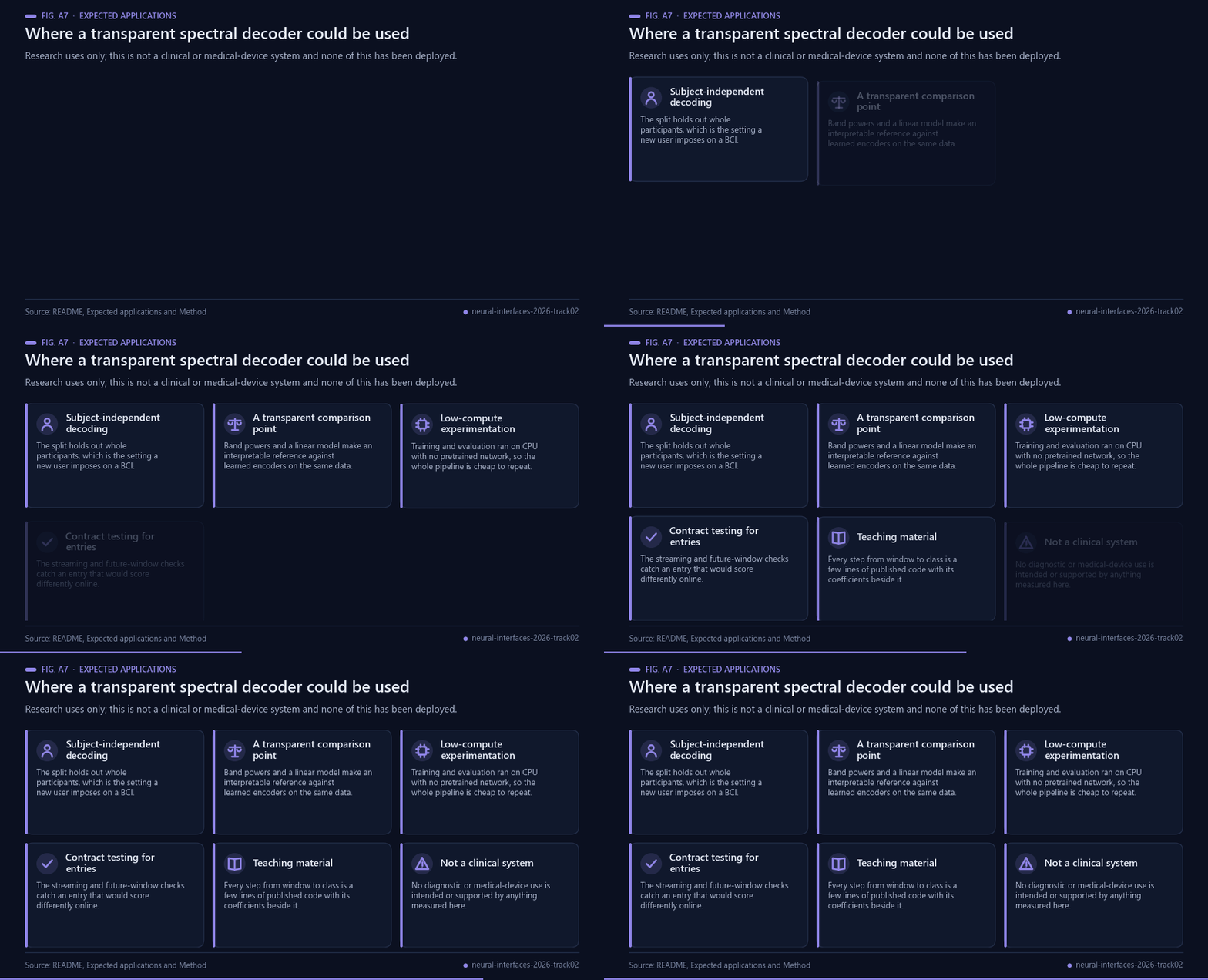
Animated figure A7 — Research uses only; not a clinical or medical-device system.
This compact approach is suitable for research on subject-independent BCI decoding, transparent comparisons between neurophysiological band features and learned neural encoders, and low-compute experimentation. It is not a clinical or medical-device system.
## Observations and limitations
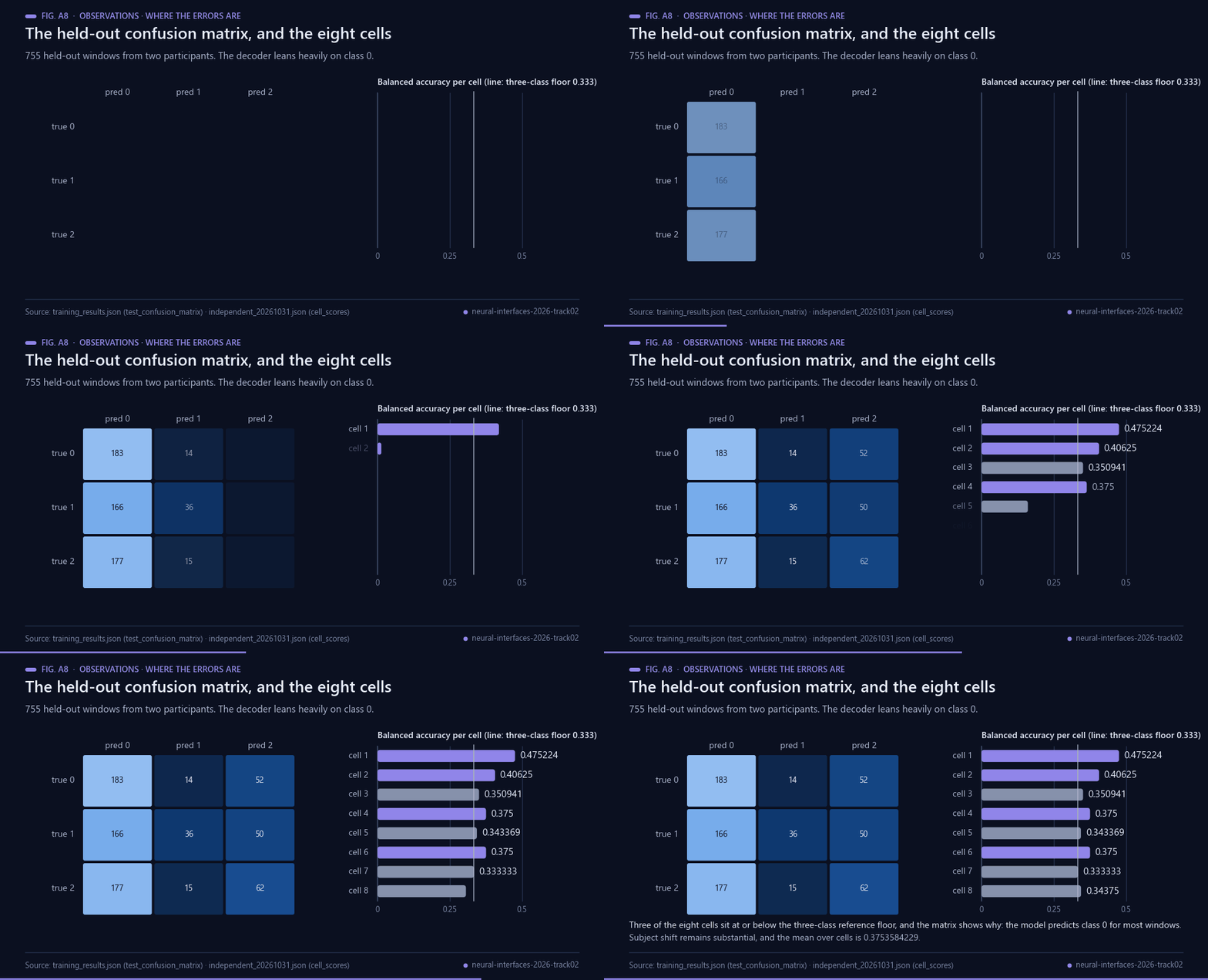
Animated figure A8 — Where the errors are. Data: training_results.json and independent_20261031.json.
The public evaluation consists of only two held-out participants (eight official subject/session/context cells), so the interval reflects a limited sample. Subject shift remains substantial. The 0.38 result is specific to this public warm-up task and cannot be extrapolated to the hidden sealed phase or a leaderboard win. No unreleased data or paid pretrained network was used.
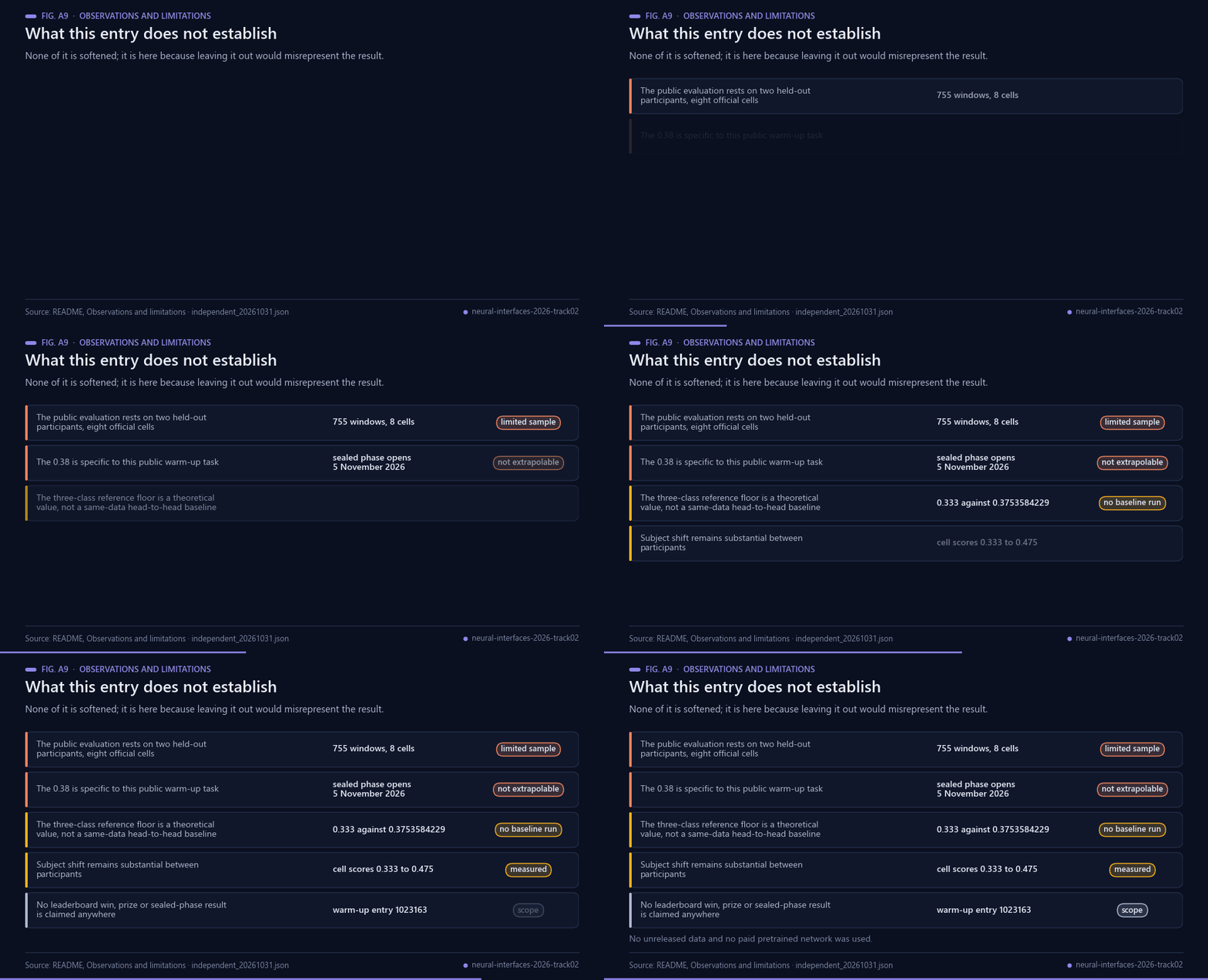
Animated figure A9 — What is not claimed. Data: this section and independent_20261031.json.
**Author:** Francisco Angulo de Lafuente · [Agnuxo1](https://github.com/Agnuxo1) · Spain. New source code: MIT License. NEMAR data and the organisers' kit retain their own terms.
## Possible improvements
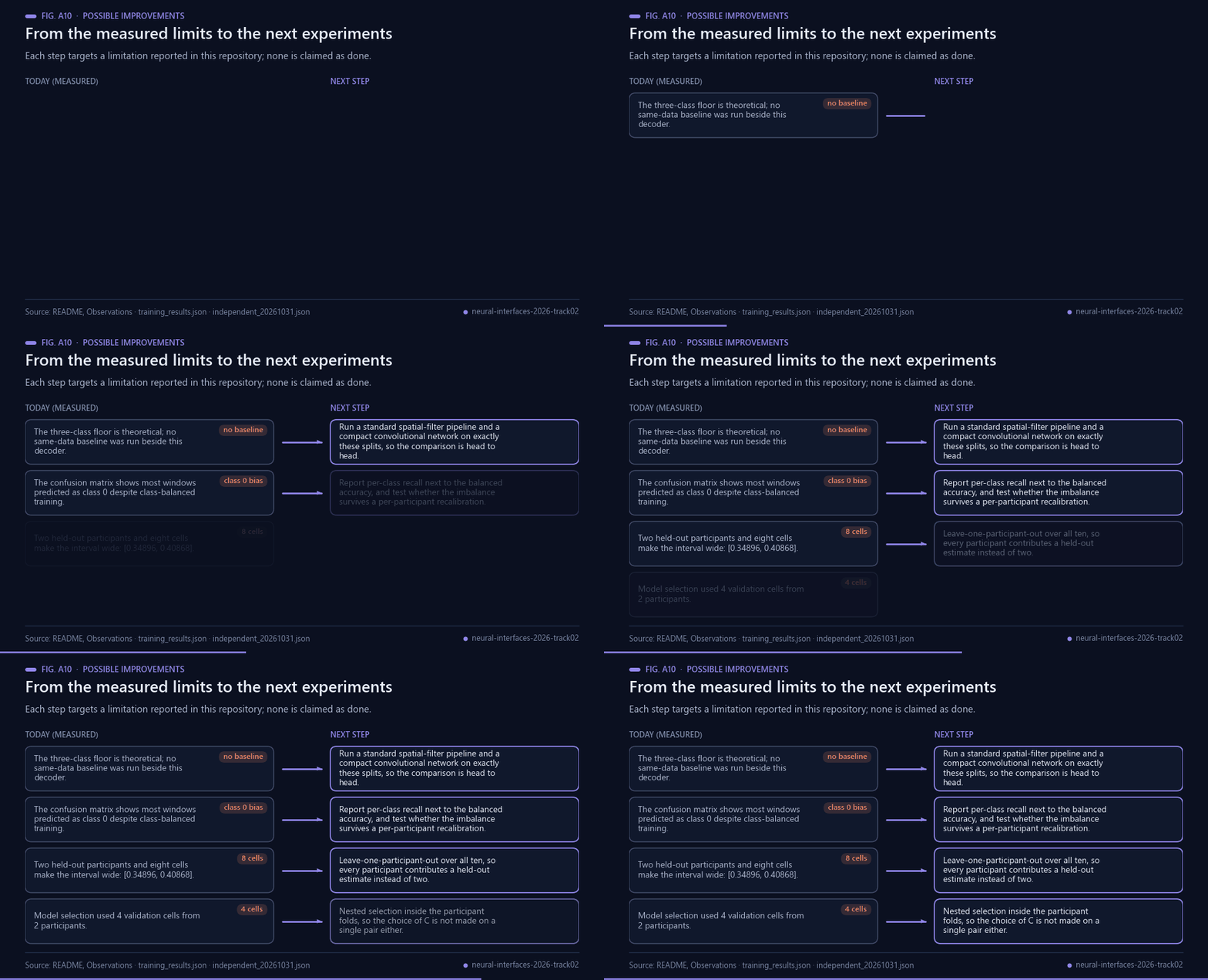
Animated figure A10 — Each improvement targets a limitation reported in this repository.
- **Run a same-data baseline.** The three-class reference floor is a theoretical value and the README says
it is not a substitute for a head-to-head comparison. A common-spatial-pattern pipeline [[6](#ref-6), [7](#ref-7)],
a Riemannian classifier [[8](#ref-8)] and EEGNet [[9](#ref-9)] on exactly these splits would turn 0.38 into a
number with a comparison beside it.
- **Report per-class recall next to the balanced accuracy.** The held-out confusion matrix shows most
windows predicted as class 0 even though training was class-balanced; balanced accuracy alone hides which
class is being lost [[11](#ref-11)].
- **Leave one participant out over all ten.** Two held-out participants and eight cells give a 95 %
interval of [0.34896, 0.40868]. A leave-one-participant-out protocol would give every participant a
held-out estimate and a tighter picture of the subject shift [[13](#ref-13), [14](#ref-14)].
- **Nest the model selection.** C was chosen on four validation cells from two participants; nesting the
choice inside the participant folds removes one more place where a single pair decides the outcome
[[15](#ref-15)].
- **Keep the package checks, and add a leakage check across sessions.** The existing checks already cover
streaming equivalence and future-window contamination; the remaining risk at this sample size is
information shared between a participant's sessions [[16](#ref-16)].
## Future work
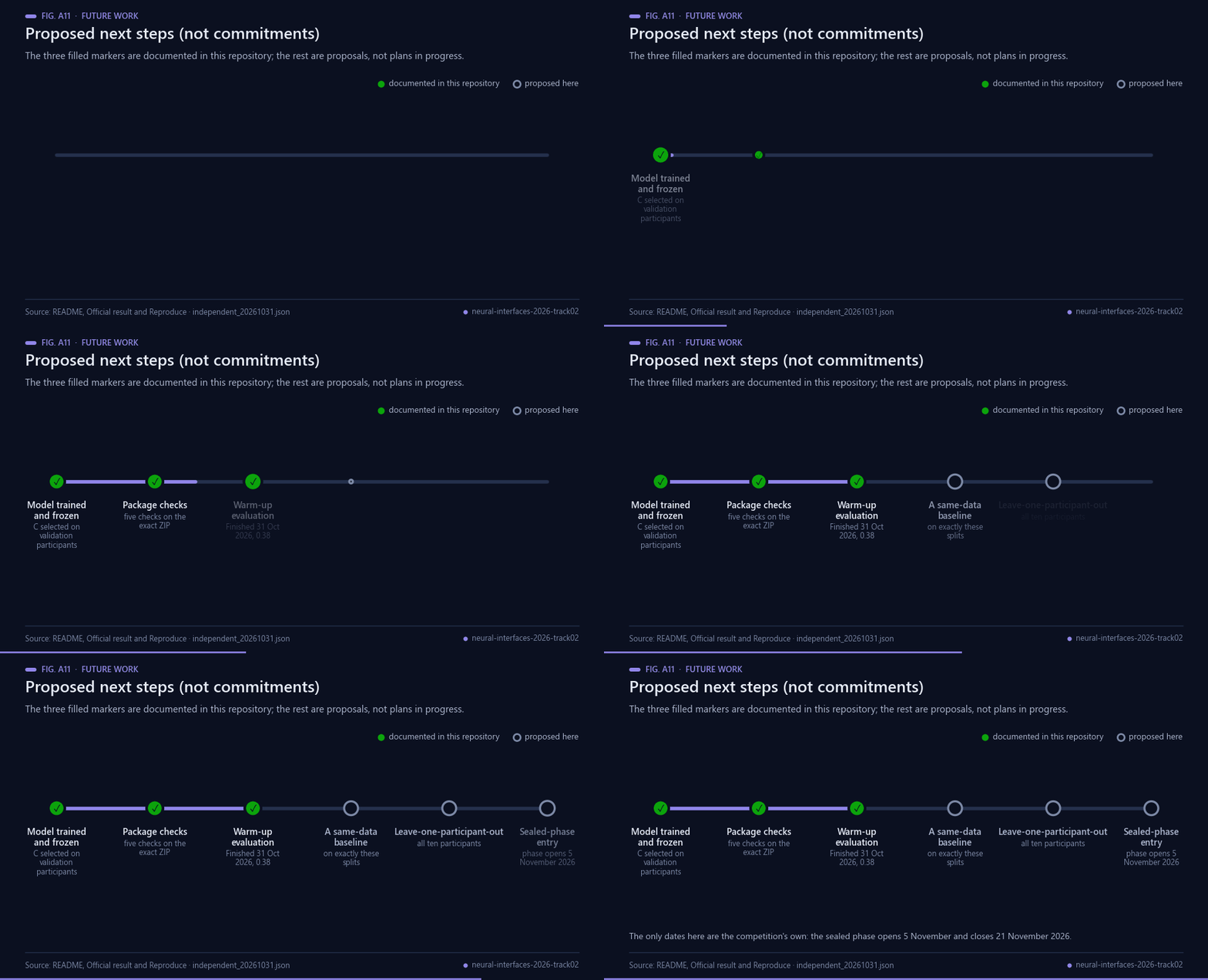
Animated figure A11 — The three filled markers are documented in this repository; the rest are proposals.
Proposed next steps, not commitments. Only the first three are documented in this repository as done; the
others are proposals and none is claimed as started:
1. *Documented.* The model was trained and frozen, with C selected on the validation participants only and
the held-out pair opened afterwards (`training_results.json`).
2. *Documented.* Five checks were run on the exact packaged ZIP, all passing
(`independent_20261031.json`).
3. *Documented.* The warm-up evaluation on Codabench finished on 31 October 2026 with a rounded score of
0.38 [[1](#ref-1)].
4. Run a same-data baseline on these splits, so the score has a comparison beside it.
5. Repeat the evaluation leave-one-participant-out across all ten participants.
6. Enter the sealed phase, which opens on 5 November and closes on 21 November 2026 [[1](#ref-1)]. No result
on it is claimed or predicted here.
## Bibliography
1. Neural Interfaces 2026 organizers (2026). *Track 02* (Codabench competition 17982). https://www.codabench.org/competitions/17982/
2. Dreyer Pauline, Bourdil Manon, Bechon Loic, et al. (2026). *PROTEUS BCI Bordeaux — EEG/EMG Foundation Challenge 2026, Track 02*. NEMAR (Neuroelectromagnetic Data Archive and Tools Resource). https://doi.org/10.82901/nemar.nm000290
3. Dreyer, P., Roc, A., Pillette, L., Rimbert, S., & Lotte, F. (2023). A large EEG database with users’ profile information for motor imagery brain-computer interface research. *Scientific Data*, 10(1). https://doi.org/10.1038/s41597-023-02445-z
4. Pfurtscheller, G., & Lopes da Silva, F.H. (1999). Event-related EEG/MEG synchronization and desynchronization: basic principles. *Clinical Neurophysiology*, 110(11), 1842–1857. https://doi.org/10.1016/S1388-2457(99)00141-8
5. Welch, P. (1967). The use of fast Fourier transform for the estimation of power spectra: A method based on time averaging over short, modified periodograms. *IEEE Transactions on Audio and Electroacoustics*, 15(2), 70–73. https://doi.org/10.1109/TAU.1967.1161901
6. Blankertz, B., Tomioka, R., Lemm, S., Kawanabe, M., & Muller, K. (2008). Optimizing Spatial filters for Robust EEG Single-Trial Analysis. *IEEE Signal Processing Magazine*, 25(1), 41–56. https://doi.org/10.1109/MSP.2008.4408441
7. Kai Keng Ang, Zhang Yang Chin, Haihong Zhang, & Cuntai Guan (2008). Filter Bank Common Spatial Pattern (FBCSP) in Brain-Computer Interface. *2008 IEEE International Joint Conference on Neural Networks (IEEE World Congress on Computational Intelligence)*, 2390–2397. https://doi.org/10.1109/IJCNN.2008.4634130
8. Barachant, A., Bonnet, S., Congedo, M., & Jutten, C. (2012). Multiclass Brain–Computer Interface Classification by Riemannian Geometry. *IEEE Transactions on Biomedical Engineering*, 59(4), 920–928. https://doi.org/10.1109/TBME.2011.2172210
9. Lawhern, V. J., Solon, A. J., Waytowich, N. R., et al. (2018). EEGNet: a compact convolutional neural network for EEG-based brain–computer interfaces. *Journal of Neural Engineering*, 15(5), 056013. https://doi.org/10.1088/1741-2552/aace8c
10. El Ouahidi, Y., Lys, J., Thölke, P., et al. (2025). REVE: A Foundation Model for EEG - Adapting to Any Setup with Large-Scale Pretraining on 25,000 Subjects. *Advances in Neural Information Processing Systems 38*, 25583–25619. https://doi.org/10.52202/085713-0760
11. Brodersen, K. H., Ong, C. S., Stephan, K. E., & Buhmann, J. M. (2010). The Balanced Accuracy and Its Posterior Distribution. *2010 20th International Conference on Pattern Recognition*, 3121–3124. https://doi.org/10.1109/ICPR.2010.764
12. Efron, B. (1979). Bootstrap Methods: Another Look at the Jackknife. *The Annals of Statistics*, 7(1), 1–26. https://doi.org/10.1214/aos/1176344552
13. Jayaram, V., Alamgir, M., Altun, Y., Scholkopf, B., & Grosse-Wentrup, M. (2016). Transfer learning in brain-computer interfaces. *IEEE Computational Intelligence Magazine*, 11(1), 20–31. https://doi.org/10.1109/MCI.2015.2501545
14. Vidaurre, C., & Blankertz, B. (2009). Towards a Cure for BCI Illiteracy. *Brain Topography*, 23(2), 194–198. https://doi.org/10.1007/s10548-009-0121-6
15. Varoquaux, G., & Cheplygina, V. (2022). Machine learning for medical imaging: methodological failures and recommendations for the future. *npj Digital Medicine*, 5(1). https://doi.org/10.1038/s41746-022-00592-y
16. Kaufman, S., Rosset, S., Perlich, C., & Stitelman, O. (2012). Leakage in data mining. *ACM Transactions on Knowledge Discovery from Data*, 6(4), 1–21. https://doi.org/10.1145/2382577.2382579
17. Neural Interfaces 2026 organizers (2026). *2026-competition starter kit* (source code, commit 2b53aec91c111f8b5423b6674f096c48cc1a99af). https://github.com/neural-interfaces26/2026-competition
---