 AiScientist: A File-as-Bus Research Lab AiScientist: A File-as-Bus Research Lab
Long-horizon ML research needs File-as-Bus coordination, not just message handoffs.
Talk is cheap, show me your files.









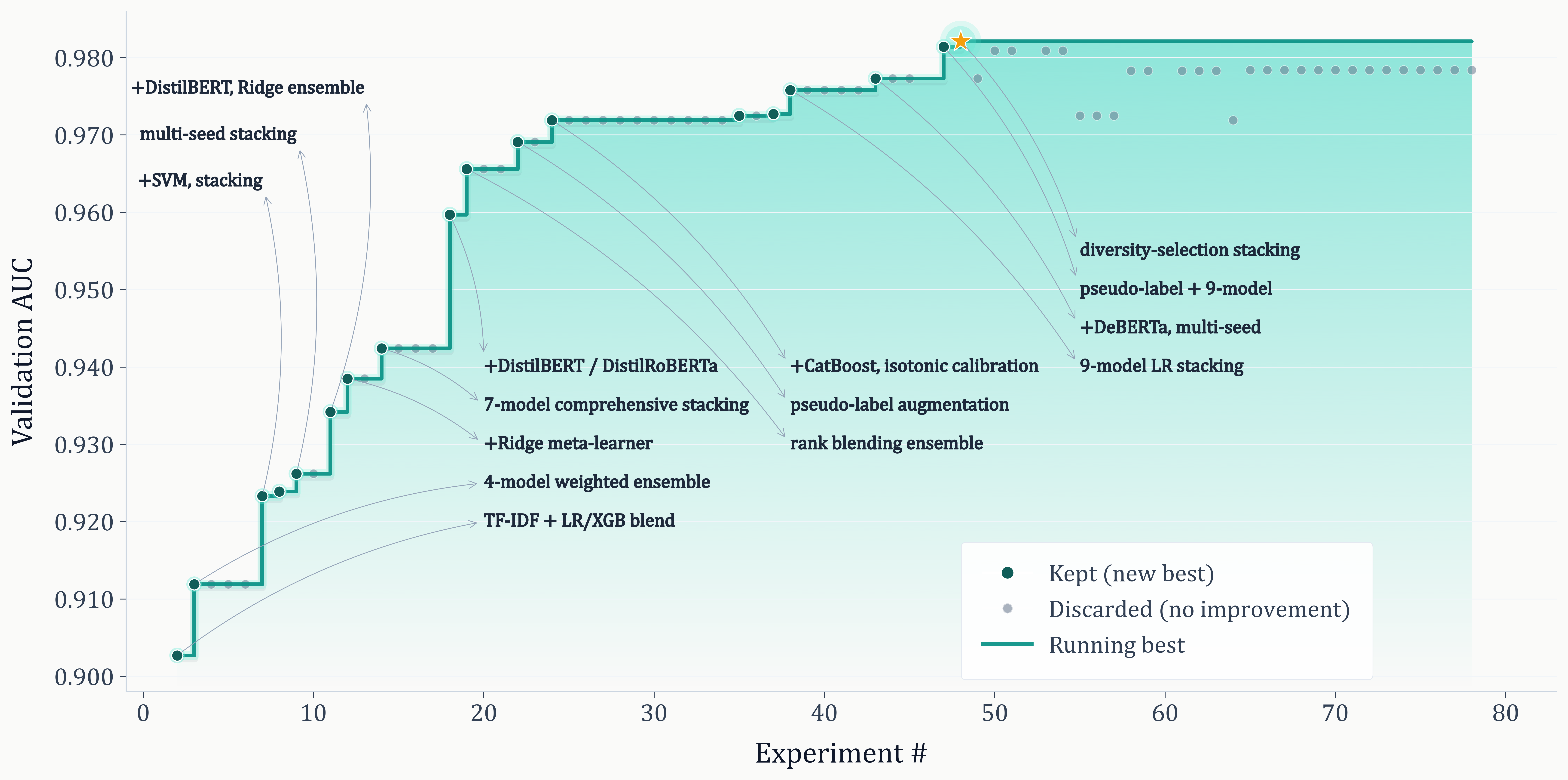
Across a 24-hour autonomous run, AiScientist repeatedly implements, tests, keeps, and discards candidate ideas while pushing the running best upward. This trajectory shows long-horizon improvement through 78 experiment cycles, with diverse solution strategies explored along the way rather than a single lucky guess.
## 📰 News - `2026-04-17`: Released the paper on [arXiv](https://arxiv.org/pdf/2604.13018) and added benchmark integrations for `PaperBench` under `benchmark/frontier-evals` and `MLE-Bench` under `benchmark/MLE-bench`. - `2026-04-13`: Initial public release of AiScientist, including the `File-as-Bus` runtime model, hierarchical research-team orchestration, and long-horizon `paper` / `mle` workflows. ## 🔬 What AiScientist Is AiScientist is an artifact-mediated virtual research lab for long-horizon ML research engineering. It treats long-horizon performance as a joint systems problem: agents must not only orchestrate the right expertise at the right stage, but also preserve evolving project state with enough fidelity for later decisions to stay coherent. - `paper`: given a paper markdown or bundle plus a GPU and time budget, AiScientist autonomously drives the full reproduction loop from reading and planning to implementation, experimentation, debugging, and final self-check. - `mle`: given an ML task plus a GPU and time budget, AiScientist autonomously conducts research for stronger solutions through repeated implementation-and-experiment cycles that improve the target metric over time. File-as-Bus is the core coordination protocol. Instead of compressing progress into lossy conversational handoffs, AiScientist turns workspace files into the system of record for plans, code, experiments, logs, and validation artifacts. ---A short look at AiScientist in motion.
| https://github.com/user-attachments/assets/4356691b-eeb5-4766-a50b-29ddbc48ef9b |
Hierarchical Research Team
A hierarchical research team pairs a top-level Orchestrator with specialists and focused subagents to sustain coherent progress over multi-day workloads. |
File-as-Bus Coordination
Agents coordinate through evolved workspace files instead of relying only on lossy message handoffs between prompts. |
Workspace as System of Record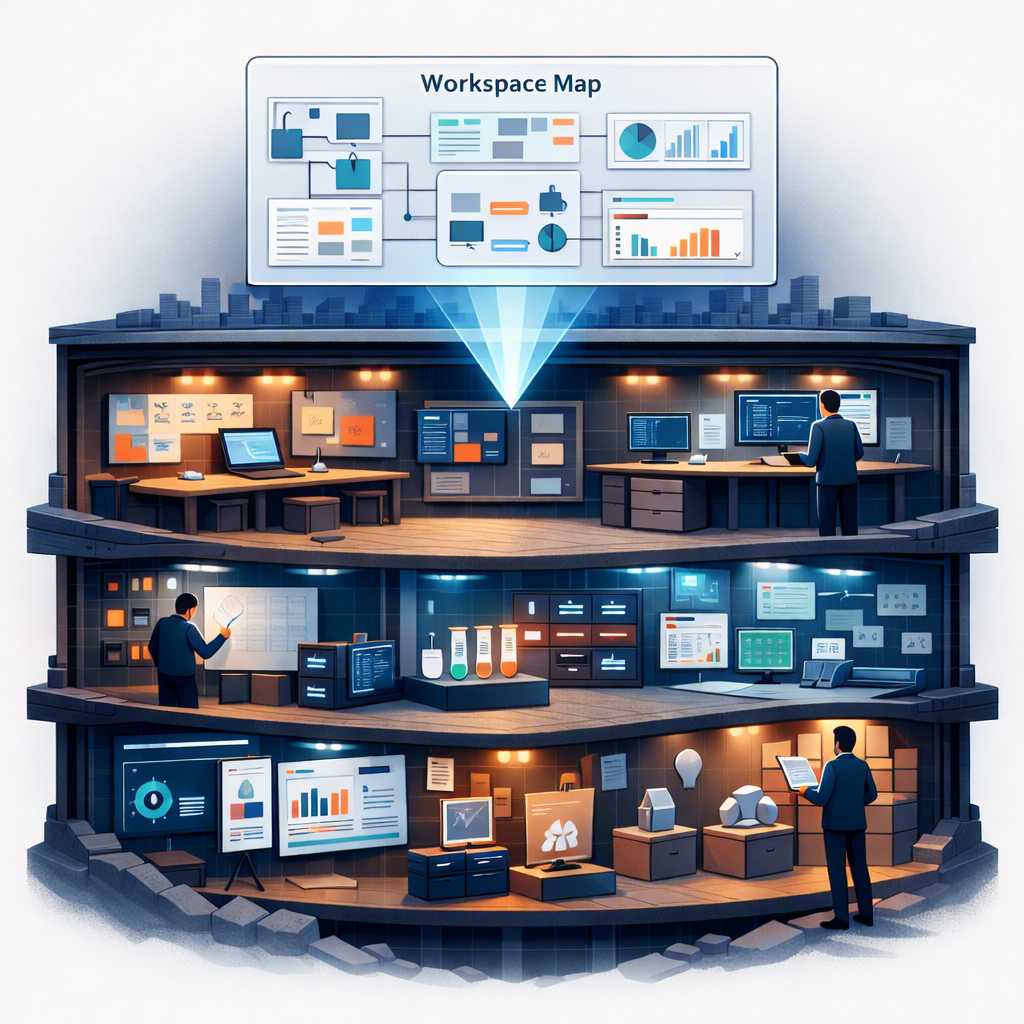
A permission-scoped workspace and compact workspace map keep plans, code, experiments, and validation as the durable source of truth for both agents and operators. |
Thin Control over Thick State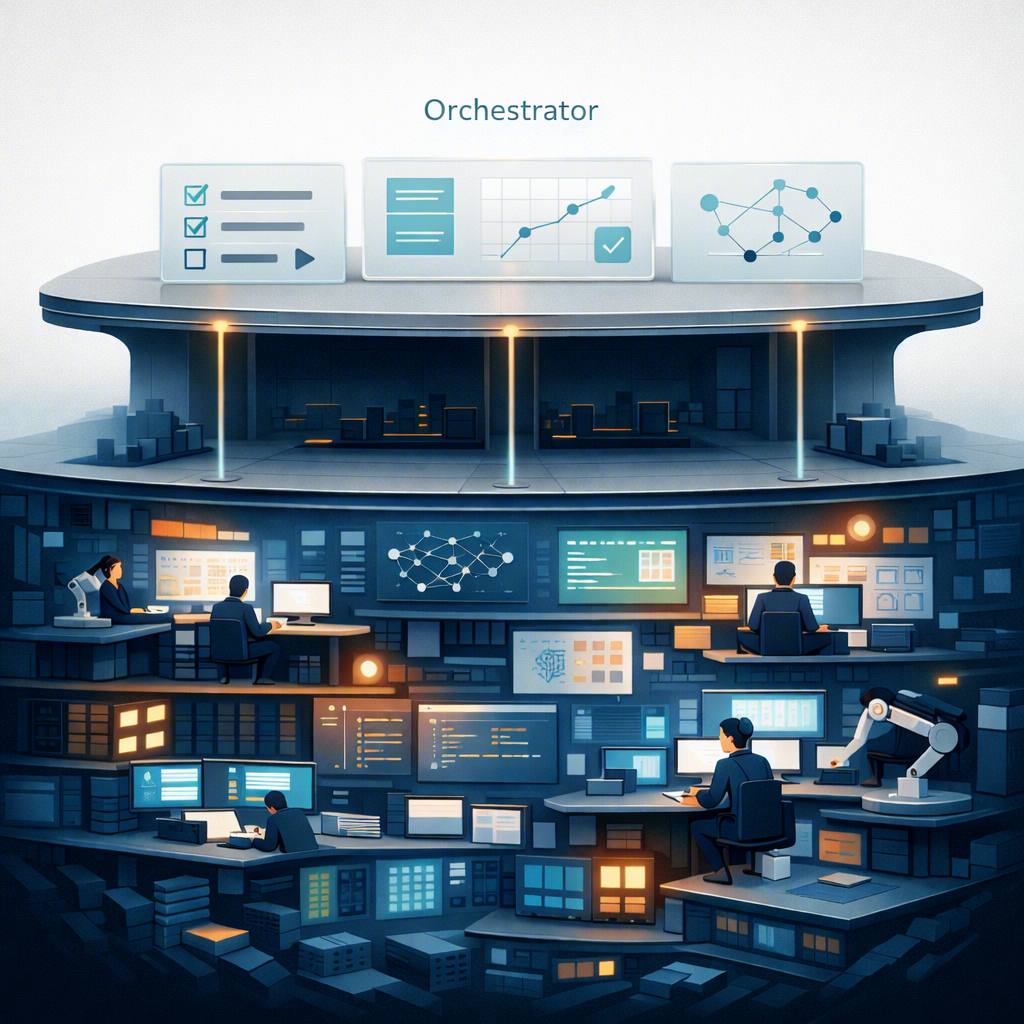
The Orchestrator keeps control thin through stage-level directives, concise summaries, and a workspace map, while specialists progressively disclose thick state by reading task-relevant artifacts on demand. |
| **Environment Note** The current Dockerfiles are still tuned for our operator environment. Both [`docker/paper-agent.Dockerfile`](docker/paper-agent.Dockerfile) and [`docker/mle-agent.Dockerfile`](docker/mle-agent.Dockerfile) reference internal Ubuntu images and package mirrors. If you are outside that environment, replace those base-image and mirror lines before the first build. See the full notes in the [Operator Guide](docs/operator-guide.md). | **Profile Note** The shipped LLM defaults are not symmetric: `paper=glm-5`, `mle=gpt-5.4` in [`config/llm_profiles.yaml`](config/llm_profiles.yaml). If you only have `OPENAI_API_KEY`, run paper commands with `--llm-profile gpt-5.4` and use `AISCI_PAPER_DOCTOR_PROFILE=gpt-5.4` for `paper doctor`, or update the default profile locally. |