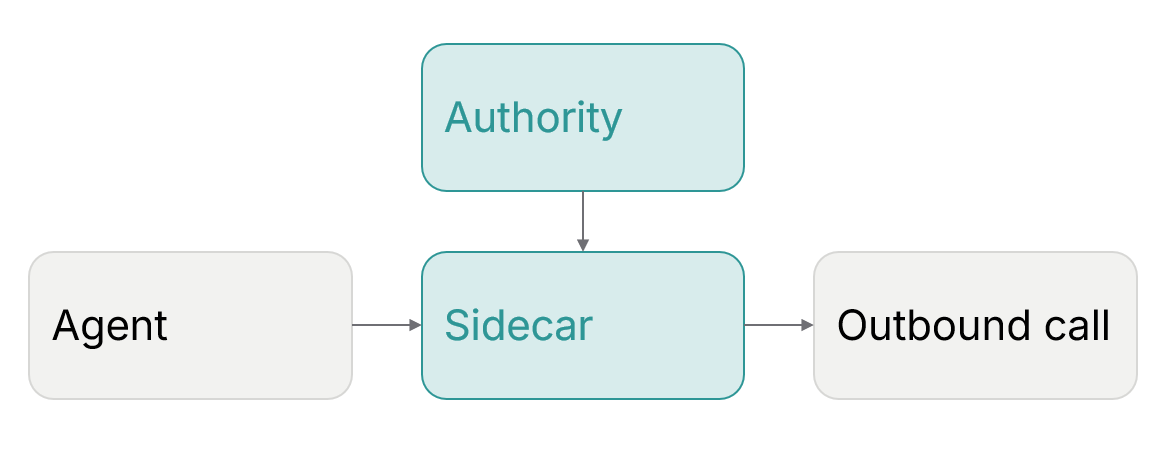

| **1. Single agent (like Quickstart)** OpenFirma first looks for an existing Authority. If none is configured, it offers to autostart a local Mini Authority and Sidecar for the session, wraps the agent process, and applies the selected policy profile automatically. ```bash firma run -- claude ``` |
|
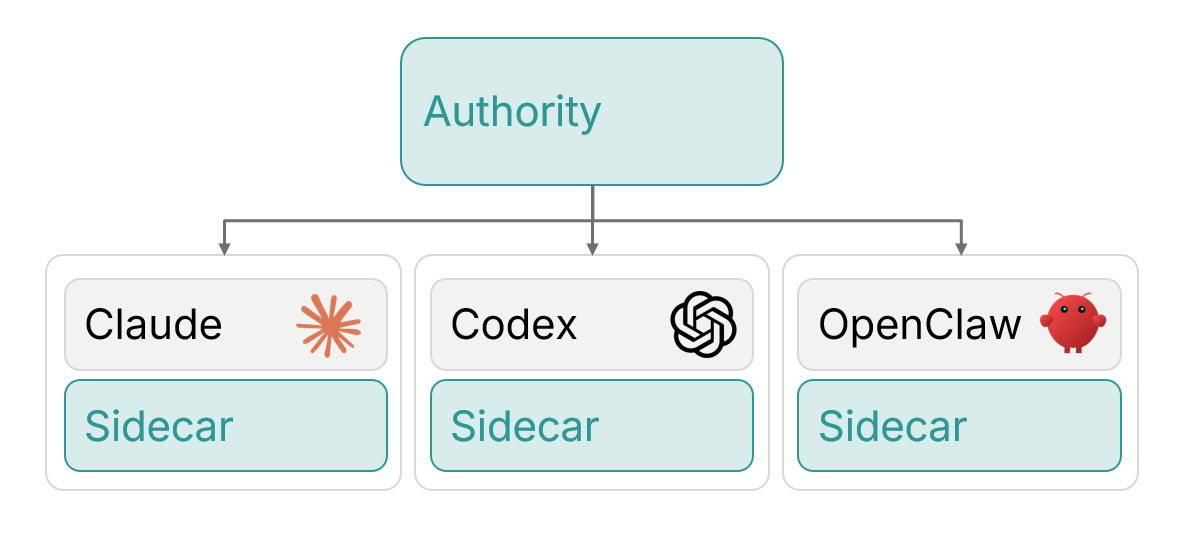
| **2. Local Authority, multiple agents** The Authority becomes persistent and shared across local agent sessions. Each new `firma run` attaches to the same trust root and pulls the current policy bundle without restarting existing agents. ```bash firma config firma sidecar start --detach firma run -- claude & firma run -- codex & firma run -- opencode ``` |
|
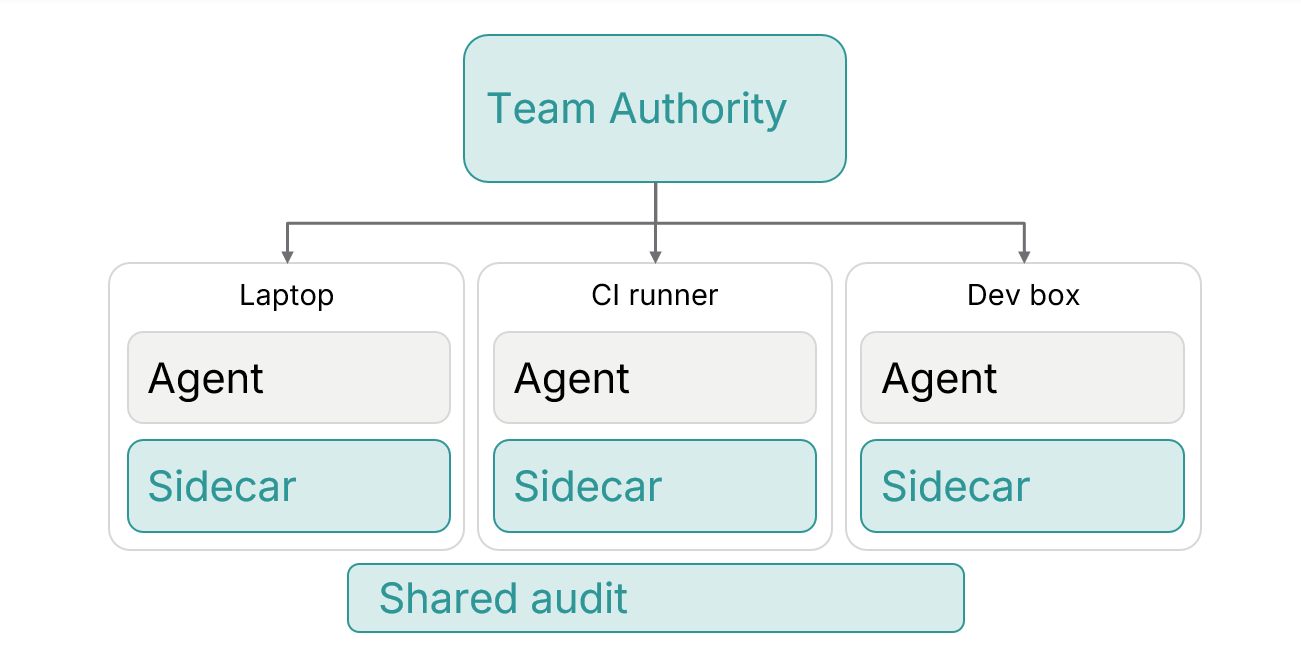
| **3. Team Authority, agents on multiple machines** Each Sidecar enforces policy locally on its own machine while the shared Authority distributes policy bundles, capability tokens, and revocation updates across the team. ```bash # On each developer machine or CI runner: firma run \ --authority https://authority.internal \ --profile claude-code \ -- claude ``` |
|
|
**4. Custom Authority, custom agents without `firma run`**
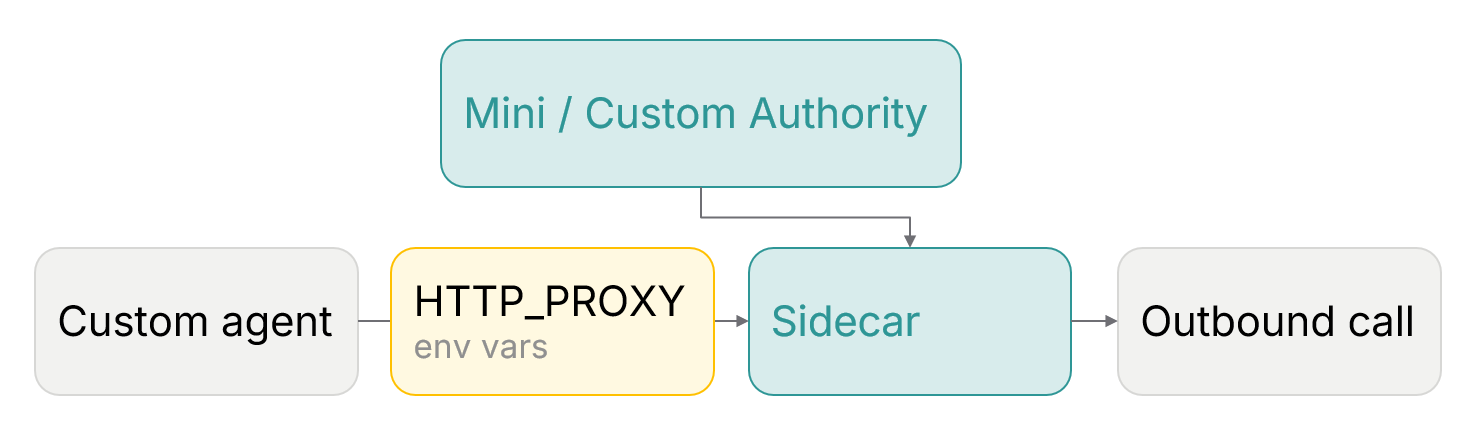
Ideal for more structured enterprise use cases The Sidecar runs independently as a standalone enforcement proxy. Any agent, CI worker, or custom runtime that respects `HTTP_PROXY` / `HTTPS_PROXY` can be governed without SDK integrations or agent-specific wrappers. ```bash firma authority --config firma.toml firma sidecar --config firma.toml export HTTP_PROXY=http://127.0.0.1:8080 export HTTPS_PROXY=http://127.0.0.1:8080 python my_agent.py ``` The Authority can be the Mini Authority included in this repo or your own implementation of the `FirmaAuthority` gRPC interface. |
|