 # Munder Difflin
### Agent harness to run an office of your clones
# Munder Difflin
### Agent harness to run an office of your clones


 **Free, open source and performant.** A multi-agent harness that works with the
subscriptions you already pay for, on their hourly limits. It turns the terminal coding CLI
you already run into a clone of you, one that keeps working while you're away and
coordinates a whole office of agents on your own machine.
Wraps [Claude Code](https://claude.com/claude-code), Antigravity (Gemini), OpenAI Codex,
**xAI Grok**, **Kimi Code**, **Gemini CLI**, **Qwen**, **OpenCode**, **Crush**,
**pi.dev**, **GitHub Copilot CLI**, and **Cursor**, with bring-your-own keys and local LLMs.
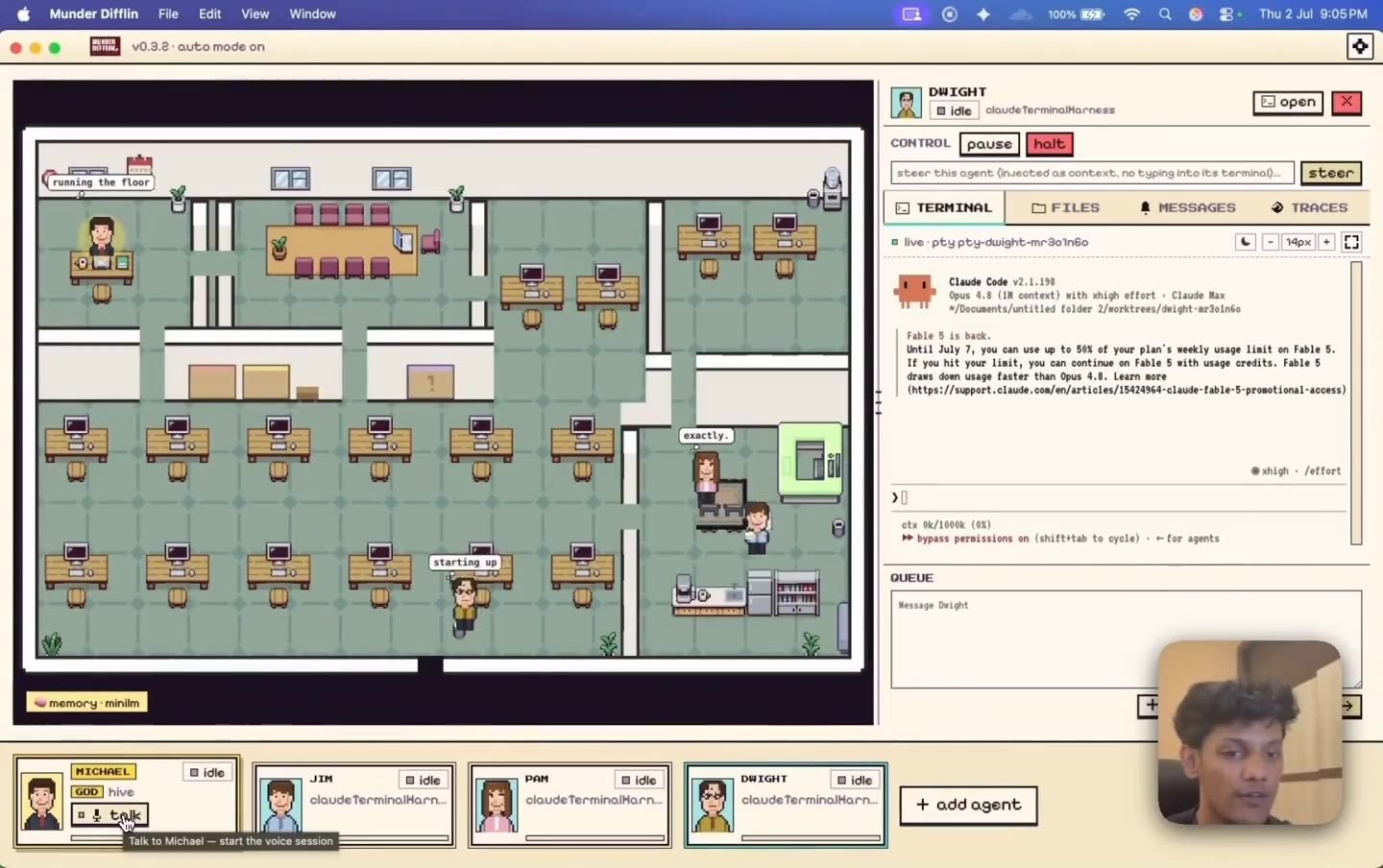
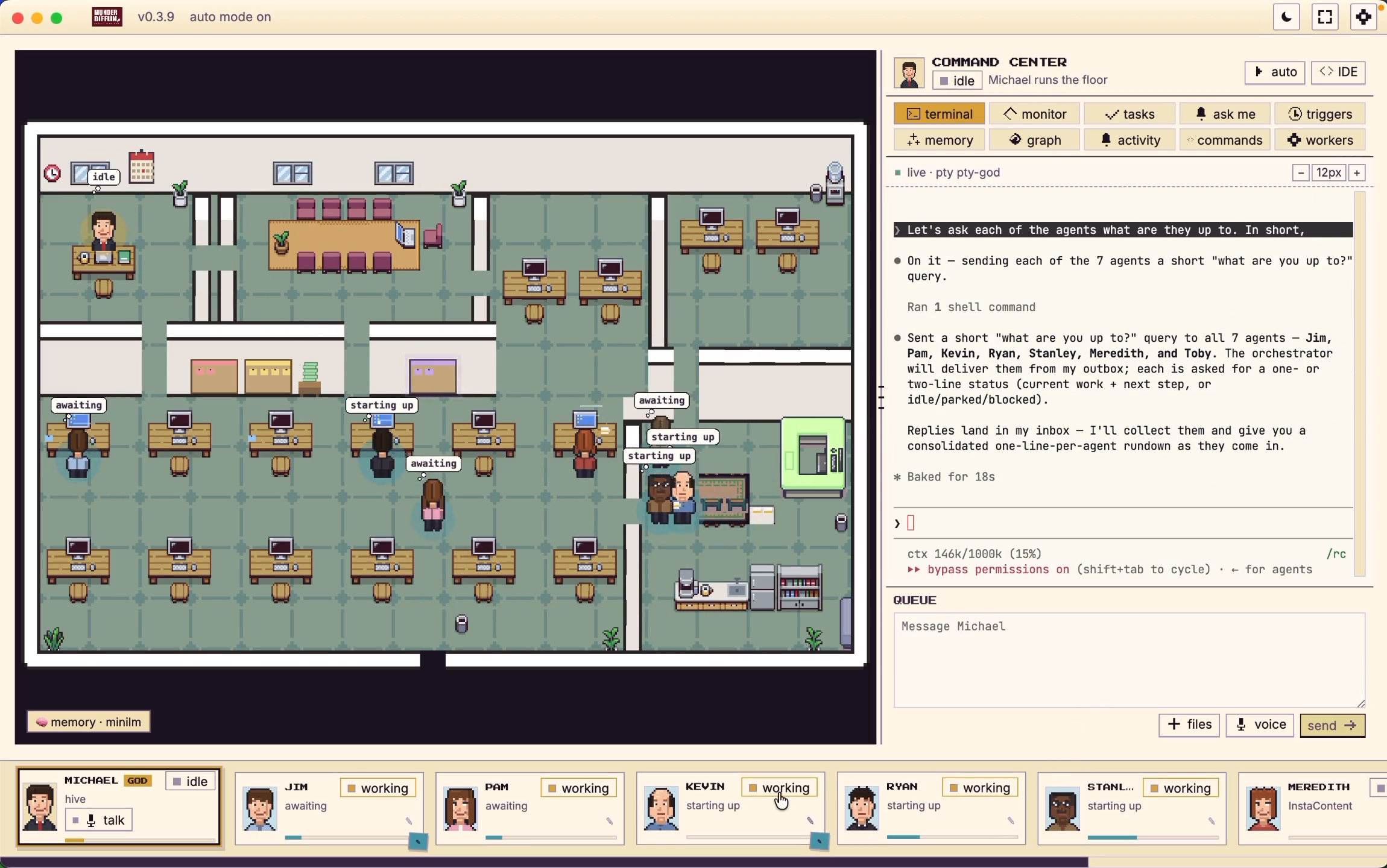
Agents that message, route, and remember, coordinated by **your clone** (Michael) and
visualized as avatars at work on a shared office floor.
**Free, open source and performant.** A multi-agent harness that works with the
subscriptions you already pay for, on their hourly limits. It turns the terminal coding CLI
you already run into a clone of you, one that keeps working while you're away and
coordinates a whole office of agents on your own machine.
Wraps [Claude Code](https://claude.com/claude-code), Antigravity (Gemini), OpenAI Codex,
**xAI Grok**, **Kimi Code**, **Gemini CLI**, **Qwen**, **OpenCode**, **Crush**,
**pi.dev**, **GitHub Copilot CLI**, and **Cursor**, with bring-your-own keys and local LLMs.
Agents that message, route, and remember, coordinated by **your clone** (Michael) and
visualized as avatars at work on a shared office floor.
Electron · React · TypeScript · Pixi.js · xterm.js · node-pty







**[⬇ Download 0.5.3 for macOS, Windows or Linux](https://harnessmd.com/download)** macOS builds are signed and notarized. You do not need to build from source to use it. The open source build is on the GitHub releases page. **Cancel your Granola and Wispr Flow subscriptions.** 0.5.3 dictates into any app and transcribes your meetings, all running locally. Launch offer: the Pro annual plan for $150 USD, adjusted for purchasing power in different countries and as low as $100 a year. Get Pro