The same relation model across five scenes, with tracked regions and relations. Clip credits · Reproduce the video
**[Try the browser demo](https://maelic.github.io/RelateAnythingProject/demo/)** — no installation; inference runs on your device using WebGPU or WASM. [Quickstart](#quickstart) · [Models](#models) · [Deployment](#deployment) · [Performance](#performance) · [Results](#results) · [How it works](#how-it-works) ## Quickstart Use **Python 3.12+**. Install a CUDA-enabled PyTorch build for NVIDIA GPU inference, or use `device="cpu"` in the example below. ```bash git clone https://github.com/Maelic/RelateAnything.git cd RelateAnything pip install -e ".[hub]" ``` Run this from the repository root. The sample photo is included; the two example boxes identify the person and the horse. ```python import numpy as np from PIL import Image from relsgg import RelateAnything model = RelateAnything.from_pretrained("maelic/relsgg-vits16plus", device="cuda") image = Image.open("assets/reel/images/horse.jpg").convert("RGB") boxes = np.array([[470, 130, 650, 630], [90, 310, 1010, 875]], dtype=np.float32) # Boxes are [x1, y1, x2, y2] in original-image pixels. # Labels are optional and only make the printed triplets easier to read. for triplet in model.predict(image, boxes, box_labels=["person", "horse"], topk=5): print(triplet) # Change what relations to look for, without retraining. model.set_vocabulary(["riding", "carrying a rider", "beside", "in front of"]) graphs = model.predict(image, boxes, box_labels=["person", "horse"], decompose=True) print(graphs["spatial"]) print(graphs["semantic"]) ``` Released checkpoints include the backbone configuration and text encoder; **no gated DINOv3 login is needed for inference**. Replace the sample image and boxes with your own inputs; the API also supports masks and a larger built-in relation vocabulary. [API guide: inputs, vocabularies, masks, and scores](docs/quickstart.md) · [Installation and offline use](docs/installation.md) ## Models Start with **`relsgg-vits16plus`**, the recommended balance of quality and speed. All three checkpoints use the same training recipe; their vision backbones differ. | Checkpoint | Backbone | Parameters | |---|---|---:| | [`relsgg-vits16`](https://huggingface.co/maelic/relsgg-vits16) | DINOv3 ViT-S/16 | 46.1 M | | **[`relsgg-vits16plus`](https://huggingface.co/maelic/relsgg-vits16plus)** | **DINOv3 ViT-S/16+** | **53.2 M** | | [`relsgg-vitb16`](https://huggingface.co/maelic/relsgg-vitb16) | DINOv3 ViT-B/16 | 113.8 M | [Compare model quality and speed](docs/results.md#model-comparison). Each model card includes evaluation results and calibration details. ## Deployment - **PyTorch:** use the Python API above on CPU or CUDA. - **NVIDIA GPU / TensorRT 10:** build a local FP32 engine from the released ONNX graph. Vocabulary selection, calibration and two-graph decoding stay available. [Setup and examples](deploy/README.md#tensorrt-nvidia-gpu). - **Laptop / ONNX or OpenVINO:** run the local image or webcam demo. [Setup](deploy/README.md) · [OpenVINO](docs/deployment.md#laptop-cpu-openvino). - **Browser:** [try the demo](https://maelic.github.io/RelateAnythingProject/demo/) without installing Python. After downloading the relation graph and building the local detector as explained in the [deployment guide](deploy/README.md): ```bash # CPU image demo; omit --image to use a webcam. python deploy/demo_webcam.py --dist deploy/dist/relsgg-vits16plus --image photo.jpg # NVIDIA GPU, after building both TensorRT engines. python deploy/demo_webcam.py --dist deploy/dist/relsgg-vits16plus \ --backend tensorrt --device cuda --image photo.jpg --decompose ``` The relation model consumes regions; it does not detect objects itself. Demo detectors are rebuilt locally and have separate licenses. The exported ONNX/TensorRT graph scores boxes; native mask inputs are supported by the PyTorch API. [Deployment contracts and limitations](docs/deployment.md). ## Performance On an **RTX 3080 Laptop GPU**, the recommended **ViT-S+** model takes **17.2 ms per image** with TensorRT FP32, including preprocessing, transfers and triplet decoding. Object regions are provided as input. With **YOLO26m detection included**, the full pipeline takes **36.5 ms per image**. Detection uses PyTorch FP32; ViT-S+ relations use TensorRT FP32. *Warm median latency, batch 1, 35 relation types, 6 sample images; loading and setup excluded.* [All models and runtimes](docs/benchmarks/README.md) · [YOLO26, YOLO-World and YOLOE comparison](docs/benchmarks/end-to-end.md) · [Paper pipeline benchmarks](docs/deployment.md#realtime-pipeline) ## Results The paper evaluates relation prediction across datasets, open vocabularies and spatial reasoning tasks. Selected transfer results for **ViT-S+**, using ground-truth boxes and one relation per ordered pair: | Test set | OvSGTR F1@50 | RelateAnything F1@50 | |---|---:|---:| | VG150 | 16.5 | **36.9** | | PSG | 13.5 | **34.7** | | IndoorVG | 20.2 | **37.8** | Both models use the same evaluator and vocabulary. OvSGTR receives object labels; RelateAnything does not. The [full results](docs/results.md) cover stronger baselines including ROBIN-3B, zero-shot controls and the complete evaluation. [Evaluation protocol](benchmark/SPEC.md) · [Scoring guide](docs/evaluation.md) ## How it works
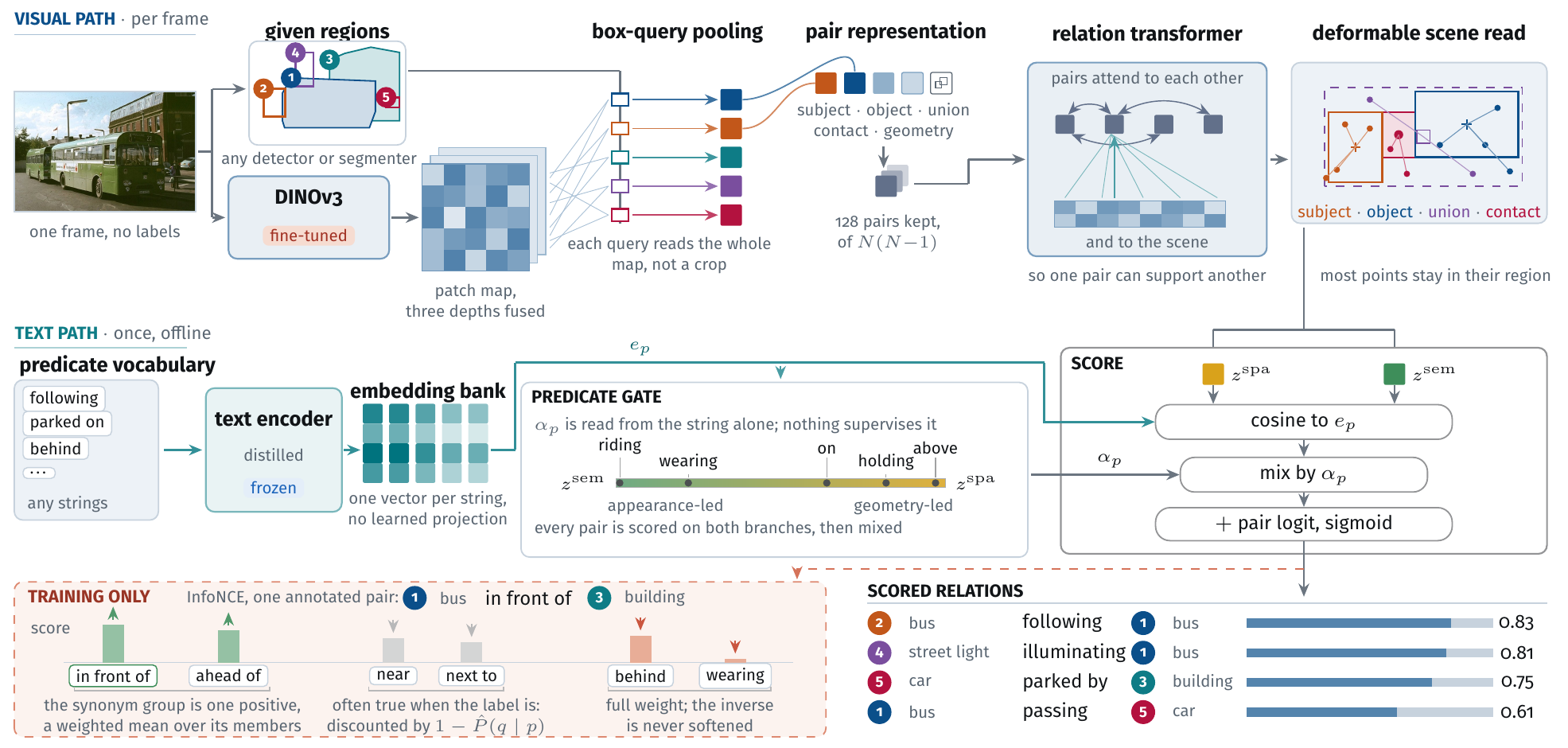
*Figure 2 from the [paper](https://arxiv.org/abs/2609.12552). Click to enlarge.*
A DINOv3 backbone reads the image once. Regions become visual tokens; a pair
sampler selects candidate relations; a transformer refines them using the
scene. A vocabulary head scores each pair against embeddings of your predicate
strings, mixing spatial and semantic features. Swapping that embedding bank
changes the vocabulary without retraining the vision model.
[Architecture guide](docs/architecture.md)
## Data and evaluation packs
- **[RA-4M](https://huggingface.co/datasets/maelic/RA-4M):** training annotations
for open-vocabulary relations. Images are referenced by ID and are not
redistributed. [Dataset details and generation](docs/data.md).
- **[OV-SGG-Bench](https://huggingface.co/datasets/maelic/OV-SGG-Bench):** evaluation
packs, explicit negatives and calibration files for six complementary axes.
[Protocol](benchmark/SPEC.md).
## Reproduce and contribute
- **Train:** [training guide](docs/training.md), [released configs](training/configs/)
and [`train.sh`](train.sh).
- **Evaluate:** [evaluation guide](docs/evaluation.md) and [`benchmark/`](benchmark/).
- **Generate annotations:** [`datagen/`](datagen/). **Explore the paper's probes:**
[`research/`](research/).
- **Contribute:** [contributor guide](CONTRIBUTING.md). Bug reports, deployment
feedback and examples of new uses are welcome in
[GitHub issues](https://github.com/Maelic/RelateAnything/issues). Include the
model, runtime, hardware and a small reproducer when reporting a problem.
The [documentation index](docs/) covers the API, architecture, training, data
and deployment. Read [evaluation pitfalls](docs/pitfalls.md) before comparing
results or changing the scoring path.
## License
- **Code:** [AGPL-3.0-only](LICENSE), with the additional attribution terms in
[NOTICE](NOTICE). If you run a modified version as a network service, you must
offer its users the complete source of that version.
- **Commercial license:** to use RelateAnything in a product or service without
the AGPL obligations, contact the author (Maëlic Neau) through
[GitHub issues](https://github.com/Maelic/RelateAnything/issues) or the email
in the paper.
- **Model weights:** derivatives of Meta DINOv3; see the model cards and
[DINOv3 license](https://ai.meta.com/resources/models-and-libraries/dinov3-license/).
- **RA-4M annotations:** carry the [Gemma Terms of Use](https://ai.google.dev/gemma/terms)
notice. Source images are not redistributed.
- **Demo detectors:** ultralytics-derived components use AGPL-3.0 and are
excluded from the relation model's release artifacts.
[Full third-party notices and credits](THIRD_PARTY_NOTICES.md)
## Citation
```bibtex
@article{neau2026relateanything,
title = {RelateAnything: Real-Time Open-Vocabulary Relation Prediction From Any Inputs},
author = {Neau, Ma\"elic},
journal = {arXiv preprint arXiv:2609.12552},
eprint = {2609.12552},
archivePrefix = {arXiv},
primaryClass = {cs.CV},
url = {https://arxiv.org/abs/2609.12552},
year = {2026}
}
```