# Shouko · ショウコ
**English** · [简体中文](README.zh.md)
**We trained a fruit fly connectome network to control Yumi's legs for flat-ground walking. Here is the training process, and how to run and train it locally.**
Her full name is ショウジョウバエ. A public male *Drosophila* connectome dataset is her brain; the girl is a virtual character in VRM format, [Yumi](research/avatar/YUMI.md). Everything runs in a simulation built on MuJoCo, an open-source physics engine.
WebGPU online preview (v0.3.0): [Shouko · ショウコ · Studio](https://shouko.snowy.moe/)
**Latest weights: [v0.3.0 — directional walking](https://github.com/Moemu/Shouko/releases/tag/v0.3.0).** Two fixed checkpoints each pass 72/72 held-out trials. All nine 120-second walks per model stay within 2 m of the starting centerline throughout. [Model card](research/releases/v0.3.0/MODEL_CARD.md) · [Download and run](research/releases/v0.3.0/REPRODUCE.md).
The online preview has used v0.3.0 primary checkpoint `1e1c3160` since 2026-10-01. The Yumi images below show the same checkpoint in a local browser. The default studio installation remains on v0.2.0. See [preview deployment checks](docs/PREVIEW.md#v030-production-update-2026-10-01).
## Overview
We set out to validate one engineering chain: **turn a fruit fly's real neural wiring into a control network, and let it drive a walking body.** A fly's **connectome** records which neuron connects to which. It carries no brain function by itself. This project imports that wiring list as a neural network, trains it to output 12 lower-limb joint targets, hands them to MuJoCo for gravity and contact, and lets the character skeleton follow the same physical state.
The data is [MaleCNS v1.0](https://male-cns.janelia.org/): **166,700 neurons and 25,582,938 connections**.
The body has moved twice. The first two generations used **G1**, Unitree's humanoid robot model, as the physical proxy: the 8,192-neuron subgraph prototype handed the connectome's velocity commands to a frozen official gait policy, while the full-connectome cloud generation trained end-to-end, outputting joint targets straight from the connectome — both passed their own acceptance. The current mainline moved to the **Yumi** lower-limb body rebuilt from the VRM character's measured skeleton: joint order, axes and zero positions match, so the network interface is unchanged, but height, mass and torque differ, and weights do not transfer (see [Historical results](#historical-results)).
### Motivation and inspirations
When the fruit fly connectome was released, many interesting projects appeared around it. The two that surprised me most came from X users [@yakshawan](https://x.com/yakshawan) and @satorunet, who each put the fly brain into a 3D body: [FFREP](https://heavyrain39.github.io/ffrep/) trains MaleCNS to drive the SHOKI quadruped and the YUMEKA humanoid, and [hae](https://hae.satoru.net/) ([source](https://github.com/satorunet/hae)) runs a FlyWire connectome as a spiking simulation in the browser. That is where Shouko started — I wanted to build one of these myself.
Shouko differs from both in what is open: the training method, released weights and experiment records are public. The release package supports local inference and evaluation; complete historical training datasets are not included. It also differs in scope, and you should know this up front — unlike their full-limb implementations, Shouko currently controls only the lower limbs, with the upper body as one fixed mass, and achieves controlled stable flat-ground walking under speed and heading commands (no goal points). The result is less fun to watch than the two above, but full limbs are already on the roadmap under [Future work](#future-work). Our pinned-version survey of both projects lives in [research/references/fly-embodiment/](research/references/fly-embodiment/README.md).
I am not an expert on fly simulation — my background is some NLP studied years ago — so this project doubles as a multi-agent collaboration experiment: several independent frontier models (GPT 6 Astra, Kimi K3, Qwen 3.8 Max and others) run in parallel with harnesses to discuss proposals and training, GPT 6 Astra acts as the main coordinator for concrete training and goal setting, and training runs on an AutoDL RTX 4090D instance.
Community reproduction is welcome — see [Running Locally](#running-locally) and the [training reproduction guide](docs/TRAINING.md) — and future directions (full limbs, running and dopamine-based goal rewards) are listed under [Future work](#future-work). Feedback and suggestions are very welcome.
### Current status and release history
**Current milestone: Yumi lower-limb walking with reduced lateral drift on flat ground.** The policy controls 12 hip, knee and ankle joints, six per leg. The upper body is fixed to the pelvis in the physics model. Visible arm swing is display animation; the policy does not control the arms or use them for balance.
| Body / stage | Model during walking | Neural activity at the same instant |
|---|---|---|
| **G1 · earlier stage**
`ffcf9a97` · 8.28 s | 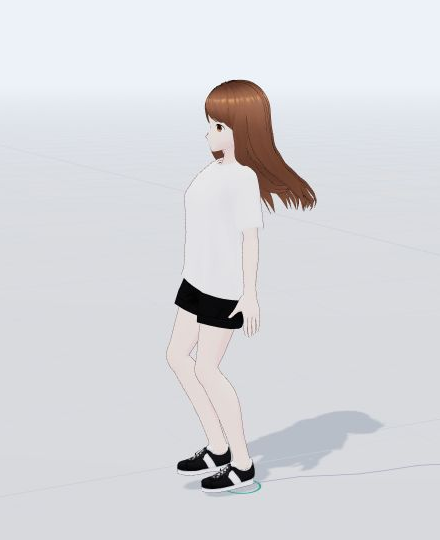 |
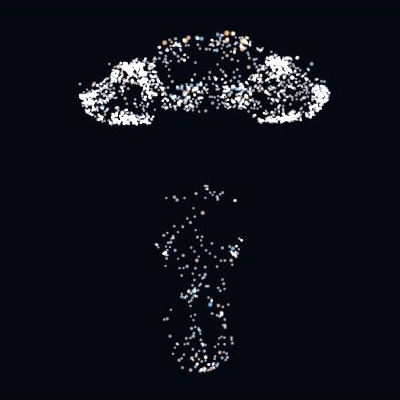 |
| **Yumi · v0.3.0 local preview**
`1e1c3160` · 8.28 s | 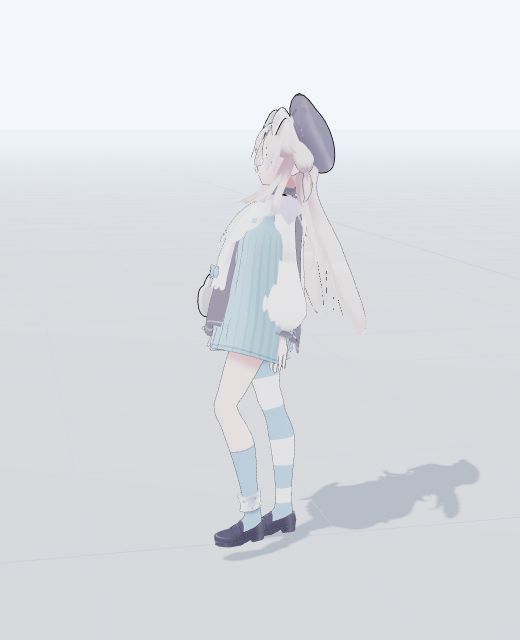 |
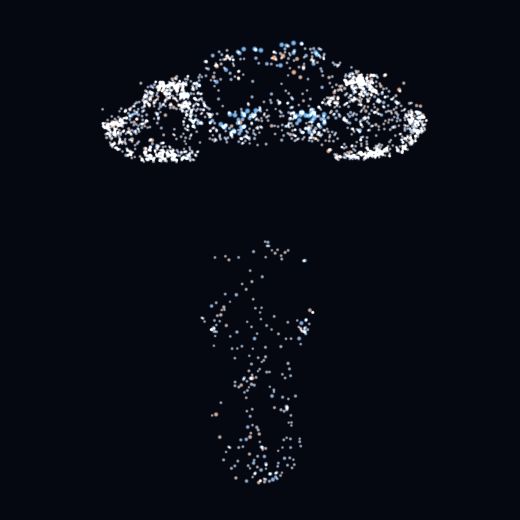 |
Yumi was captured on 2026-09-30 in the local WebGPU / MuJoCo-WASM preview; G1 retains its 2026-09-23 studio capture.
Each pair freezes one real walking frame at a commanded 0.50 m/s and 0° heading; model and neural images share the same simulation time. Neural views show **2,048 sampled somata out of 166,700 neurons**, using signed model activity at a fixed ±1 scale (blue: negative; orange: positive). These are not biological spikes or new acceptance tests. [Capture details and hashes](assets/preview-metadata.json). The G1 image uses the later `ffcf9a97` checkpoint ([6/9 held-out record](research/experiments/G1_CHECKPOINT_REBIND_20260918.md)); the 9/9 in the [historical results](#historical-results) table below belongs to `f1d5147c`. G1 avatar: © 2022 pixiv Inc. Yumi: concept 松酒, artist 7Apoi, model 星晨水影工作室, publisher 墨海徽. [Asset attribution](THIRD_PARTY.md).
| Version | Checkpoint / stage | Scope | Status |
|---|---|---|---|
| Unreleased | `f1d5147c` · G1 cloud full connectome | End-to-end full-connectome training, G1 proxy | Accepted |
| v0.1.0 | `a7a4281f` · Yumi squat lineage | The same chain on the Yumi body | Accepted |
| Bundled in v0.2.0 | `458fc465` · Yumi upright source | 50-dim observations, physics interface embedded in the checkpoint | Retained baseline: upright survival and alternating rhythm hold; directed tracking did not |
| **v0.2.0 (studio default)** | `f1a20071` · primary model | Full-connectome readout transfer, Yumi lower limbs | Four strict held-out groups passed with zero falls; precise heading and lateral drift remain open |
| **v0.3.0 (latest weights / online preview)** | `1e1c3160` primary / `fe386851` verification | Train lateral-velocity encoder column and readout, 27,128 parameters | Each 72/72; each 9/9 long walks within the 2 m corridor; residual drift remains |
| Reserved | Later stages | Everything in [Future work](#future-work) | Pending |
Future rows reserve space for confirmed stages. They do not commit to a schedule or mark candidate research as implemented.
#### Latest results (v0.3.0)
The primary `1e1c3160` and verification model `fe386851` were fixed before the final held-out evaluation. Each was tested at commanded speeds of 0.35, 0.50 and 0.65 m/s, with zero falls:
| Held-out test / metric | Primary | Verification |
|---|---:|---:|
| Normal starts, 30 s | 27/27 | 27/27 |
| Initial yaw ±0.2 rad, 30 s | 18/18 | 18/18 |
| Long walks, 120 s, whole-trajectory corridor | 9/9 | 9/9 |
| Lateral velocity +0.25 m/s at 10 s | 9/9 | 9/9 |
| Lateral velocity −0.25 m/s at 10 s | 9/9 | 9/9 |
| **Total** | **72/72** | **72/72** |
| Mean absolute endpoint drift, 120 s | 0.489 m | 0.447 m |
| Largest lateral displacement anywhere in the 120 s trials | 0.837 m | 0.965 m |
Protocol `strict_gait_v2_corridor2` retains the six walking criteria and at least one qualifying swing per foot per second. A qualifying swing lasts at least 0.12 s with peak minimum sole clearance of at least 0.025 m. The 120-second group also requires **|y| ≤ 2 m for the entire trajectory**, not just at the endpoint. The other groups retain the strict gait screen. Source: [checkpoint-bound evidence and model card](research/releases/v0.3.0/MODEL_CARD.md).
These 72-trial results use ordered CSR with nine worlds. The independent release package also passed native CSR at batch one: three 30-second speed trials and one 120-second high-speed trial per model, **8/8 total**. Those reuse known seeds and do not add new holdout evidence. See [release validation](research/releases/v0.3.0/VALIDATION.md).
The two models have different training histories and holdout seeds; the smaller final mean does not establish a better model. The 0.8-second phase input and external yaw feedback remain. Drift still depends on speed, and the policy has no absolute lateral-position target. These results do not establish indefinite position keeping, arbitrary turning, natural gait, autonomous CPG or a biological topology advantage.
#### Historical results
| Check | Full-graph G1 body `f1d5147c` | Yumi squat lineage `a7a4281f` |
|---|---|---|
| 9 fresh initial states × 30 s | 9/9 | 9/9 |
| 120 s continuous walk | 55.40 m | 65.55 m (0.13 m lateral drift) |
| Lateral push recovery | 3/3 | 3/3 |
| Brain connections severed | falls in ≈1.4 s | falls in ≈1 s |
| Record | `runs/local/heldout.json` | `runs/local/heldout_yumi.json` |
Sever the brain connections, keep the body and output layer intact, and the character falls in about a second — walking depends on this wiring. Older results use criteria different from the current model — no matched comparison.
#### Studio default results (v0.2.0 primary model `f1a20071`)
The v0.2.0 model `f1a20071` fits 9,792 readout parameters while freezing its previously trained core. Its four strict held-out groups passed 63/63 with zero falls; separate native CSR checks passed 27/27. The independent-data branch needed an extra DAgger round and was not an equal-budget replication.
Under that release's older screen, mean 120-second endpoint drift was **5.47 m**, and precise yaw recovery was **9/18**. Its long-walk screen allowed lateral drift up to 20% of the target distance, with a 1 m minimum allowance. It did not enforce the v0.3.0 whole-trajectory 2 m corridor. The releases use different held-out seeds, so their final means are not a paired comparison. See the [v0.2.0 model card](research/releases/v0.2.0/MODEL_CARD.md) and [training record](research/experiments/CONNECTOME_TRANSFER_20260923.md).
### Not attempted yet
A same-scale random-network control, rough terrain, starting and stopping, upper-limb balance, natural human gait. The full list is in section 5 of the [research report](research/REPORT.md).
### Future work
These are research directions, not completed capabilities or a fixed schedule.
**Upper limbs.** The upper body is currently one fixed mass, and arm swing is display animation. A first prototype needs an articulated body, inertial and collision parameters, actuators, and a matching observation/action interface. It must then recheck standing and lower-limb walking before training arm-assisted balance. v0.3.0 remains a lower-body baseline.
**Running.** Flight phases, higher speeds and gait timing need a separate training task and acceptance criteria. Passing the current walking tests does not validate running.
**Dopamine-driven learning.** The current controller has no STDP or dopamine reward learning. Local plasticity and reward-modulated updates are possible experiments; their stability and control benefit still need evidence.
**Visual obstacle avoidance.** A visual route would need defined depth or optical-flow inputs, sensor-to-neuron mapping, obstacle tasks and held-out tests. Supplying visual input alone does not establish an avoidance reflex.
## Training Approach & Details
### Data flow
```text
User target speed / heading + MuJoCo body observation (50 dims)
↓ sensory encoder
Data-labelled sensory neurons
↓ 4 rate updates per decision, propagating only along measured pre → post edges
166,700 neurons / 25,582,938 connections
↓
Data-labelled VNC / CB motor neurons (readout)
↓
12 lower-limb joint targets → PD torque → MuJoCo gravity and contact
↓
Pose feedback; the VRM skeleton displays the same physical state
```
The 815 output neurons are annotated VNC (ventral nerve cord) and CB (central brain) motor neurons. Edge weights come from `sign × sqrt(contact count)`, normalized per target node. Acetylcholine is treated as excitatory, GABA, glutamate and histamine as inhibitory, neuromodulators and unknown classes default to positive — a simplification policy, not a per-synapse receptor measurement. Dynamics use a rate approximation (`r ← a·r + b·tanh(W·r + sensory drive)`) with no neural memory across decisions, no STDP and no dopamine reward learning. Sensory drive enters the input group only, the output group does not overlap it, and no path bypasses the network to reach the joints.
### How it trains
The v0.2.0 final stage: a Yumi MLP teacher labels actions for the training data; the student then executes on its own, and the states it actually visits (including failures) go back to the teacher for relabeling over several rounds (**DAgger**); ridge regression analytically fits the 9,792 readout parameters on features cached from the frozen core. The core (connections, sensory encoder, neuron biases, normalization) stays bit-identical to its source model. The teacher takes part in training only; evaluation and preview drive the joints straight from the connectome policy.
v0.3.0 opens one sensory path as well as the readout: the encoder column for world-frame lateral velocity (`vy`, observation index 48). It trains 17,336 encoder parameters plus 9,792 readout parameters, **27,128 total**. Connections, neuron biases, other encoder columns and LayerNorm stay frozen relative to the trained source. Teacher labels still guide training; deployed inference uses the connectome alone.
The stability study crossed two datasets with two sampling seeds. After a second training stage, both the readout-only control and the sensory/readout branch passed all four development configurations. That stage shared an extra student-state dataset. An earlier equal-budget replication failed, and there is no equal-update/no-extra-data control. The gain cannot be attributed solely to opening the sensory column. See the [sensory-access record](research/experiments/SENSORY_ACCESS_20260930.md) and [stability study](research/experiments/SENSORY_STABILITY_20260930.md).
A new body means retraining. G1 is Unitree's humanoid robot model; Yumi is a 12-joint body rebuilt from the VRM character's measured skeleton (hip height 0.97231 m, roughly 1.55 m overall, 38 kg assumed from Dempster segment ratios). Joint order, axes and zero positions match, so the network interface is unchanged; height, mass, torque limits and fall thresholds differ, and weights do not transfer. The earlier G1 and Yumi lineages were trained end-to-end with **PPO** (at that time the sensory encoder, neuron biases, connection gains and readout trained together, about 26.6 M parameters); the process and tuning notes live in `research/experiments/` and the [training reproduction guide](docs/TRAINING.md).
### Compute and cost
- Local: Ryzen 9 7940HX, ~16 GB RAM, RTX 4070 Laptop 8 GB. The full graph runs inference only on this machine, with a median 10.04 ms per decision.
- Cloud: training runs on an AutoDL RTX 4090D instance, billed on total powered-on time (idle included); instance configuration, benchmarks and cost records are in the [cloud measurements and reproduction record](docs/CLOUD.md).
## Running Locally
Choose the package for the task:
| Goal | Version and guide |
|---|---|
| Run the latest checkpoints and reproduce evaluation | [v0.3.0 independent runtime](research/releases/v0.3.0/REPRODUCE.md), Python 3.12 + NVIDIA CUDA, no VRM needed |
| Use the existing character and neural-activity UI | [v0.2.0 studio installation](research/releases/v0.2.0/STUDIO.md), still the default local studio |
### Run and check v0.3.0
Download and verify all five [release assets](https://github.com/Moemu/Shouko/releases/tag/v0.3.0), then extract into a separate directory and install its pinned dependencies as described in [REPRODUCE.md](research/releases/v0.3.0/REPRODUCE.md). From that extracted directory, with its environment ready, run in PowerShell:
```powershell
.venv\Scripts\python.exe smoke.py --role primary --output verification/primary_native.json
.venv\Scripts\python.exe smoke.py --role replica --output verification/replica_native.json
```
Each command verifies the packaged files and runs four native CSR trials. Output paths must not already exist. Linux commands and the full five-group evaluation are in the same guide. This package does not install the web studio or replace `runs/yumi/best.pt`.
### Run the default studio (v0.2.0)
For a clean checkout, use the [v0.2.0 studio installation guide](research/releases/v0.2.0/STUDIO.md). It downloads the public weights and graph, verifies checksums and installs the default model. Existing prepared environments can use:
```powershell
cd D:\Project\Neuromechfly
.\start.ps1 # defaults to Yumi + CUDA
```
Open the [studio](http://127.0.0.1:8740). The VRM character on the page walks in real time, with every action computed on your machine. Both panels are the same live studio: the left pane displays lower-limb walking and gait stats; the right pane shows 2,048 sampled neuron activity rates of the 166,700-neuron connectome.
- Defaults to the Yumi body and CUDA. The page's top bar switches between G1 and Yumi live; training must not be running.
- `.\stop.ps1` stops it. The startup log is `runs/cloud/server-error.log` (or `runs/yumi/server-error.log`).
- On an RTX 4070 Laptop 8 GB the median decision is 10.04 ms and the Yumi page measured 1.00× real time; heavy system load drops it to 0.7–1.0×.
The UI supports pause, resume, reset, target speed and heading, lateral pushes, character/skeleton toggle, connection severing (cutting the brain's wiring), retraining, training curves and raw evaluation. Retraining archives the previous round's core results. Hair and upper-limb display following stay out of the physics evaluation.
### Legacy environment setup
Needs Python 3.12, uv, Node.js 20.19+ or 22.12+, and Git. `setup.ps1` downloads about 1.1 GB of raw connectome data and builds `.venv` (the legacy subgraph-prototype environment; the v0.2.0 weights and graph are installed through [STUDIO.md](research/releases/v0.2.0/STUDIO.md) instead):
```powershell
.\setup.ps1
.\start.ps1
```
Vendor repositories and large data stay out of normal Git history.
### Installing and accepting the v0.2.0 model
Follow [STUDIO.md](research/releases/v0.2.0/STUDIO.md) for the browser or [REPRODUCE.md](research/releases/v0.2.0/REPRODUCE.md) for headless verification. Local acceptance command:
```powershell
.venv-gpu\Scripts\python.exe -m app.evaluate_locomotion --checkpoints runs/yumi/best.pt --seed-base 140001 --output runs/local/v020_normal.json
```
The acceptance script neither trains nor selects checkpoints. Measured Yumi skeleton dimensions, physics body construction and the screen-consistency check are in the [Yumi body adaptation record](research/avatar/YUMI_BODY.md); training and tuning notes live in `research/experiments/`.
### Run modes
| Mode | Entry | Address | Notes |
|---|---|---|---|
| Local studio (mainline) | `.\start.ps1 [-Body g1\|yumi]` | 8740 | Full connectome + MuJoCo locally; body switchable in the page |
| Cloud full graph | `.\cloud.ps1 Preview` | 8742 | AutoDL instance over an SSH tunnel, bound to localhost |
| Local static preview | see [PREVIEW.md](docs/PREVIEW.md) (export the preview package, then `python -m app.serve_preview`) | 8741 | Serves the released weight package without a server |
The 8,192-neuron subgraph prototype (`app/server.py`) remains as legacy code without a start script.
On the cloud side, `./cloud.ps1 Status` reports state, `./cloud.ps1 Train -Seconds 1800` resumes training from a checkpoint, and `./cloud.ps1 Sync` syncs code and UI. The SSH target is machine-specific: pass `-CloudHost user@host -CloudPort 12345`, or write it once to `runs/cloud/target.json` (git-ignored). Training does not shut down the instance; the preview keeps running and keeps billing.
### Weights and checkpoints
The v0.3.0 archive contains `models/primary.pt` (`1e1c3160`) and `models/replica.pt` (`fe386851`). Full hashes and training provenance are in its [model card](research/releases/v0.3.0/MODEL_CARD.md). Extracting the archive keeps them separate from the installed studio.
The default studio still uses `runs/yumi/best.pt`, the v0.2.0 primary `f1a20071`. Its upright source `458fc465` remains in the v0.2.0 package; the older squat checkpoint `a7a4281f` remains in v0.1.0. Each release preserves its own evidence. For v0.3.0, the evaluation report checks the checkpoint, physics interface and body XML hashes together; do not pair new weights with an old report.
### Publishing and verifying artifacts
Download all five files from [v0.3.0](https://github.com/Moemu/Shouko/releases/tag/v0.3.0): `shouko-v0.3.0.tgz`, `manifest.json`, `primary_native.json`, `replica_native.json` and `SHA256SUMS.txt`. Keep them together so the checksum check includes both runtime reports.
The archive includes both checkpoints, the complete graph, physics body, evaluation code, frozen evidence, long-walk trajectories and attribution. The manifest binds all 55 payload files to source commit `33465f6`. The release reports record native CSR checks from the extracted package on an RTX 4070 Laptop GPU; the historical held-out evaluations used an RTX 4090D.
Inference and evaluation are reproducible from these assets. The package excludes the Yumi VRM, complete historical training datasets, teacher/ancestor checkpoints and optimizer states. It does not promise byte-identical reconstruction of training or certify the new weights for the production browser preview. The older [v0.2.0 release](https://github.com/Moemu/Shouko/releases/tag/v0.2.0) remains available. `research/provenance/release.json` is an earlier inventory, not the current release manifest.
## Key files
- `app/prepare.py`: validates and streams the dataset, builds a traceable subgraph.
- `app/full_brain.py`: sensory encoding, measured sparse connections and trained readout for the full connectome.
- `app/yumi_skeleton.py`, `app/yumi_description/`: parse the skeleton from the VRM and build the Yumi physics body.
- `app/sim.py`: MuJoCo physics and G1 / Yumi body switching.
- `app/train_full.py`, `app/ppo_yumi.py`: full-graph training and PPO fine-tuning.
- `app/imitate_yumi.py`, `app/train_sensory_readout.py`: teacher labels, student-state collection, and readout/sensory-column fitting.
- `app/evaluate_direction.py`, `app/release_evidence.py`: direction evaluation, full-trajectory corridor checks and bound release reports.
- `app/export_preview_weights.py`, `app/serve_preview.py`: preview weight export and the local static preview server.
- `app/studio_server.py`: mainline studio service, training control and hash-bound evaluation display.
- `web/`: Three.js / VRM visualization and the experiment UI.
- `research/REPORT.md`: literature review, method, results, compute and unfinished scope.
## About
### License
The project's own code and documentation are released under the [MIT License](LICENSE). MIT is compatible with every bundled upstream license: the permissive ones (FlyCube, DOOMFLY, three-vrm, Three.js, Vite, FastAPI — MIT; Unitree RL Gym, NumPy, SciPy, Uvicorn — BSD-3-Clause; MuJoCo — Apache-2.0; PyTorch — BSD-style) only require retaining their notices, which stay in `vendor/` checkouts and installed packages; `app/sim.py` keeps its Unitree adaptation note in the file header.
MIT covers this repository's code only and does not override the data and asset terms: the MaleCNS dataset stays CC BY 4.0 (attribution required), the pixiv VRM sample stays under VRM Public License 1.0, and the Yumi VRM is not redistributed at all under its author's terms. Third-party components are listed in [THIRD_PARTY.md](THIRD_PARTY.md), with license copies under `research/provenance/licenses/`:
- **MaleCNS v1.0** (connectome data): FlyEM / HHMI Janelia and collaborators, CC BY 4.0. We normalize records, select a subgraph, convert contact counts into signed weights and define new dynamics; these transformations are not physiological measurements.
- **Unitree RL Gym**: BSD-3-Clause, providing the G1 model, pretrained checkpoint and simulation conventions.
- **VRM1_Constraint_Twist_Sample** v1.0.1: pixiv, VRM Public License 1.0, redistribution and modification permitted ("Hikari" is a UI nickname).
- **FlyCube**, **DOOMFLY**: MIT, source of the MaleCNS downloader, importer and transmitter sign policy.
- **NeuroMechFly / FlyGym**: research reference for hierarchical control; no code bundled.
- **MuJoCo** (Apache-2.0), **PyTorch**, **NumPy / SciPy**, **Three.js / three-vrm**, **Vite**, **FastAPI / Uvicorn** and other dependencies keep their notices in the installed packages.
This experiment is not affiliated with or endorsed by the cited researchers or organizations.
### Assets and models
**Yumi** (1.3.0 / 20240715) — concept: 松酒; artist: 7Apoi; model: 星晨水影工作室; publisher: 墨海徽 ([author's release page](https://www.bilibili.com/video/BV1uG411f72b/)). File `web/public/yumi.vrm`, 25,754,408 bytes, SHA-256 `3f1eaf57…`, path listed in `.gitignore`. The author permits non-profit use, monetized livestreams and derivative works, prohibits redistribution and resale, and the embedded metadata prohibits sexual and violent use. Details in the [Yumi provenance record](research/avatar/YUMI.md).
**Weights and data**: latest release models are v0.3.0 `1e1c3160` / `fe386851`; the studio default remains v0.2.0 `f1a20071`. See [Weights and checkpoints](#weights-and-checkpoints) for their roles and download sources. `data/full_graph.npz` enforces SHA-256 validation on load, with the provenance manifest in `research/provenance/provenance.json`.
### Disclaimer
Research experiment code. Results cover flat-ground walking only, with no validation on a real robot. The developers accept no responsibility for any direct or indirect consequences of using this project.