---
title: kafka源码阅读(3)-日志的增删改查
categories: [源码阅读,kafka]
tags: [kafka,mq,源码]
---
> [!note]
>
> 基于开源 kafka 2.5 版本。
>
> 如无特殊说明,文中代码片段将删除 debug 信息、异常触发、英文注释等代码,以便观看核心代码
本篇将接着[上篇](https://nosae.top/posts/kafka%E6%BA%90%E7%A0%81%E9%98%85%E8%AF%BB2-%E6%97%A5%E5%BF%97%E5%8F%8A%E5%85%B6%E5%88%9D%E5%A7%8B%E5%8C%96/)的内容,继续深入研究 Log 的一些常见操作。
## LeaderEpoch
在开始讲解日志之前,我觉得有必要先研究一下 LeaderEpoch 这个经常在代码中出现的东西。
上一篇有稍微提到 HM(high watermark,高水位)的概念,它的作用是为了保证分区副本之间的对外一致性,即高水位之前的偏移量才算是真正被提交偏移量。但是在 [KIP-101](https://cwiki.apache.org/confluence/display/KAFKA/KIP-101+-+Alter+Replication+Protocol+to+use+Leader+Epoch+rather+than+High+Watermark+for+Truncation) 中提出了这种同步方法会将不必要数据截断导致效率低下,甚至会导致副本数据不一致的问题,最后引入 leader epoch 来替代 HM 来解决这些问题。
关于 HW 带来的问题查阅 KIP-101 即可,我们这里重点关注 leader epoch 的定义以及相应的一些代码实现。首先根据文档有如下定义:
- **leader epoch** 是一个单调递增整数,表示当前领导者的任期
- **leader epoch start offset** 是一个该领导者任期内的第一个偏移量
- **leader epoch sequence file** 是记录了所有 leader epoch => start offset 映射的文件,每个副本都维护了一份
- **leader epoch request** 是 follower 向 leader 发送的请求,follower 告诉 leader 它目前知道的最后任期,leader 返回该任期的最后一个偏移量的下一个偏移量,**follower 会将该任期内超出该偏移量的消息截断以与 leader 保持一致**
可以看到 follower 不再是根据 HW 进行偏移量截断,而是通过这份 epoch => offset 的映射表来截断。然后我们重新审视一下 leader epoch 是如何解决 HW 可能导致的问题的:
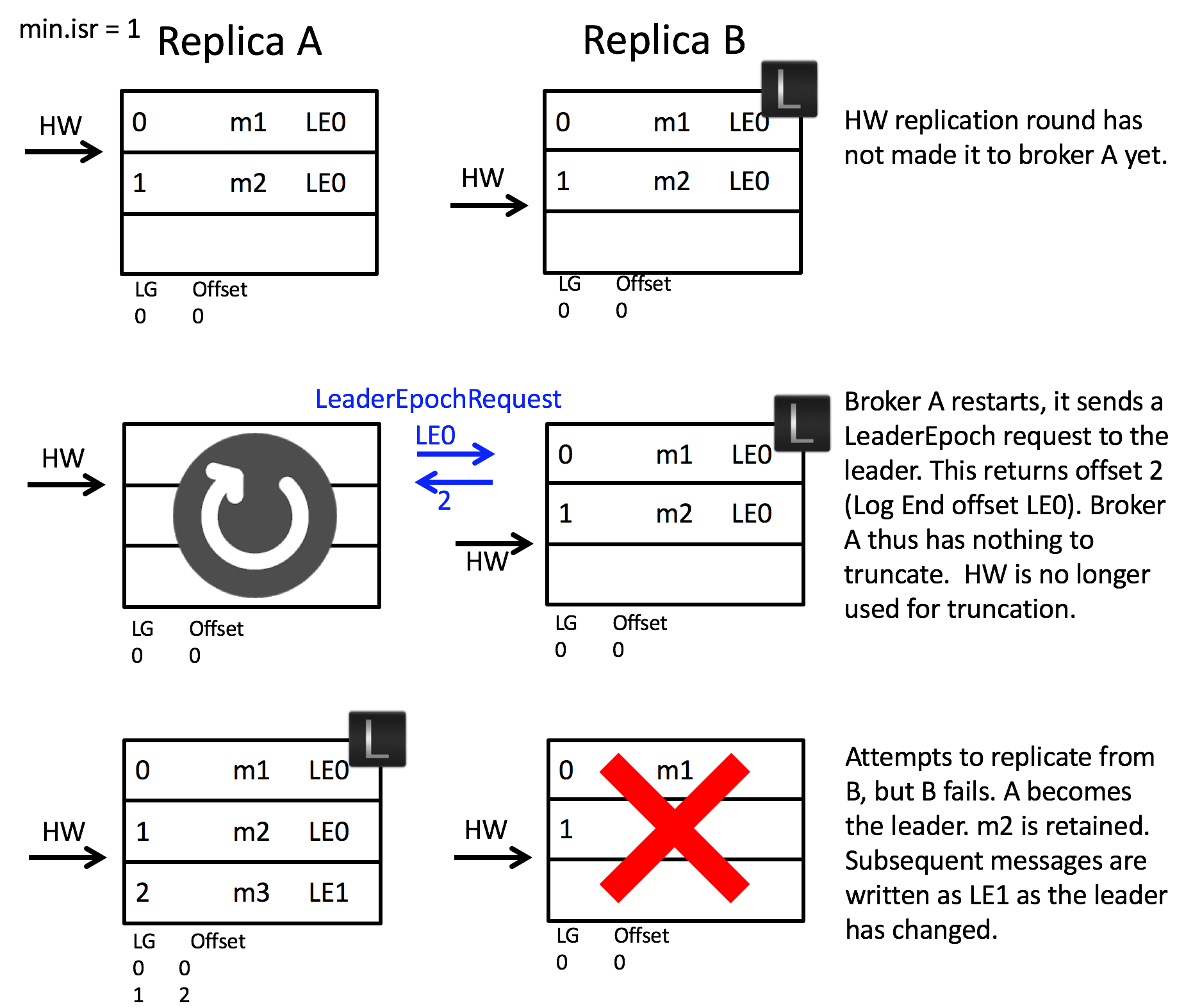
1. 首先是第一个场景,follower 宕机恢复后如何避免不必要的数据截断。如下图所示,当 A 发生宕机重启之后,B 告知 A 当前任期 LE0 的偏移量上界为 2,那么偏移量为 2 之前的消息都不会被截断。之后 B 宕机,A 成为 leader,此时任期也正确递增变为 LE1,之后新增的消息所属任期都为 LE1。**如果使用原先 HW 的方案,那么 A 的 m2 将会被不必要地截断。**
另外,HW 的方案中,就算不直接将 m2 截断,而是像 leader epoch 那样先问 leader,但是也避免不了下面场景 2 带来的的问题。
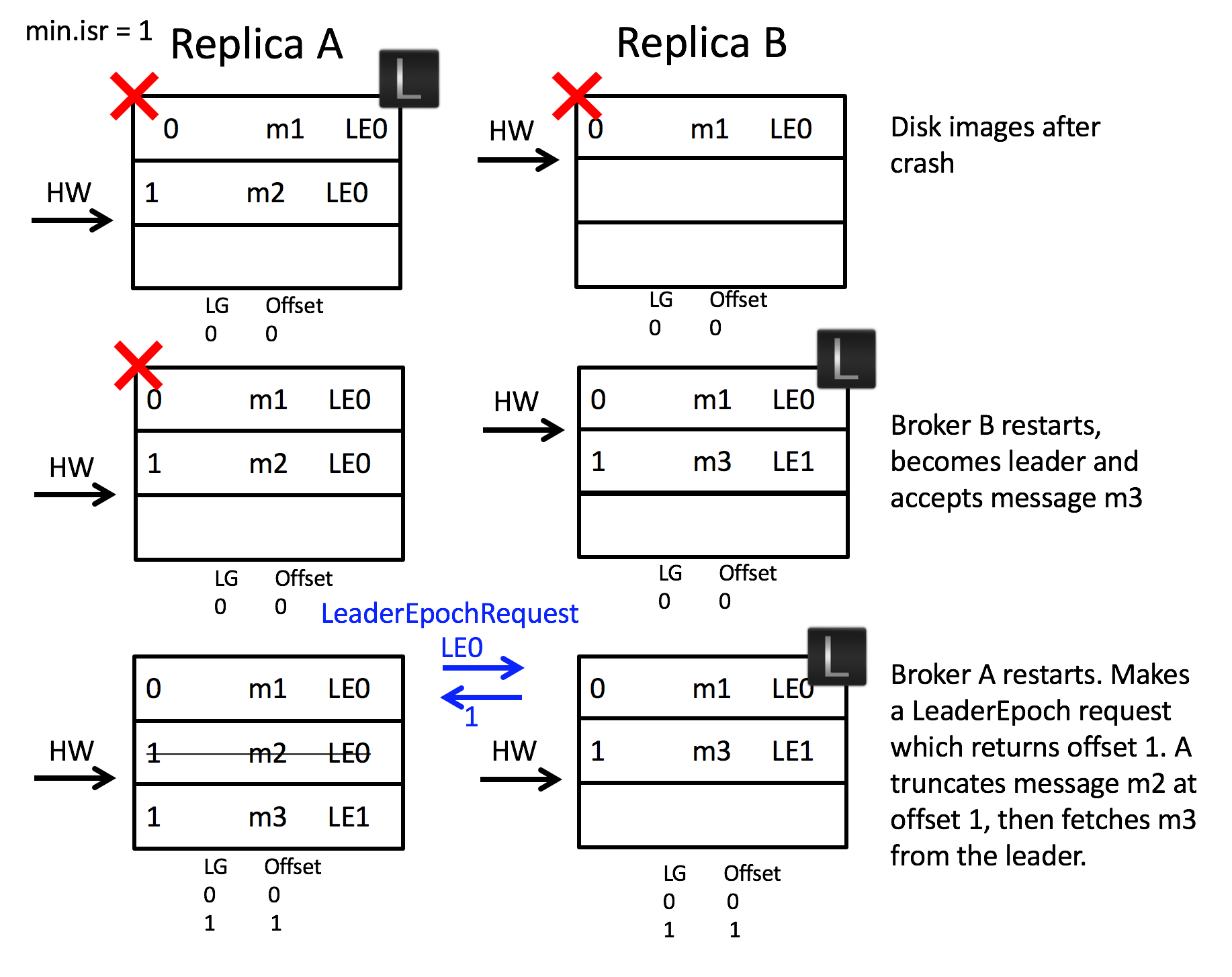
 2. 再来看第二个场景,如何避免副本数据不一致的情况。如下图所示,A 和 B 同时宕机,随后 B 先重启了,但由于消息落盘是异步的,此时 B 的硬盘中本应该存在的消息 m2 由于未落盘而丢失,并且 B 当上了 leader 并开始写入新的消息 m3。随后 A 重启并得知当前已知任期 LE0 的偏移量上界为 1,因此 A 会把任期为 LE0 并且偏移量大于等于 1 的消息截断,以与 leader B 保持一致。**如果使用原先 HW 的方案,由于 HW 没有任期的区分,A 和 B 会被认为是一致的,因为他们的 HW 都在偏移量 1 这里,但实际上 A 在偏移量 1 处的消息是 m2,而 B 则是 m3,产生了比上面“错误的截断”更为严重的“副本数据不一致”问题**。
 leader epoch 的代码是`LeaderEpochFileCache`这个类,其实就是 leader epoch file 这个文件的内存缓存,仅此而已。里面的操作无非就是新增 leader epoch 映射、截断非法 leader epoch 等,核心方法只有 `endOffsetFor`,之后会遇到。
总而言之,leader epoch 协议的引入就是为了解决 high watermark 在副本同步时所导致的数据丢失、副本数据不同步等问题,大概知道它在干什么即可。
## 日志段管理
在 Log 类中,日志段保存在`segments`这个 map 中,日志段管理无非就是增删改查。“增”和“改”操作比较简单,只是更新`segments`而已,比如新增一个日志段:
``` scala
def addSegment(segment: LogSegment): LogSegment = this.segments.put(segment.baseOffset, segment)
```
而“查”则是利用了 map 的一些现成方法,比如:
``` scala
segments.firstEntry
segments.lastEntry
```
这里所谓删除是根据运行策略自动清除某些日志段,分别有两个重载方法 `deleteOldSegments` 去删除日志。首先是一个无参的版本,这个方法是被外部的 `LogCleaner`和`LogManager`调用的,这个方法比较直观,不多说:
``` scala
def deleteOldSegments(): Int = {
if (config.delete) {
// 如果开启了自动清除,则删除过期日志、大小超出的日志、logStartOffset之前的日志
deleteRetentionMsBreachedSegments() + deleteRetentionSizeBreachedSegments() + deleteLogStartOffsetBreachedSegments()
} else {
// 否则只删除logStartOffset之前的日志
deleteLogStartOffsetBreachedSegments()
}
}
```
其中`deleteXXXBreachedSegments`分别对应三个删除策略,并且最终会调用下面这个带参的 `deleteOldSegments`。
``` scala
// 从最老的日志开始,删除符合条件的日志
private def deleteOldSegments(predicate: (LogSegment, Option[LogSegment]) => Boolean, reason: String): Int = {
lock synchronized {
// 筛选出被删除的日志段集合
val deletable = deletableSegments(predicate)
// 删除
deleteSegments(deletable)
}
}
```
我们重点分析 `deletableSegments` 和 `deleteSegments` 这两个方法,看源码的话,一定要看方法注释,这里注释已经说得非常清楚,这里我把核心部分翻译一下:
``` scala
// 从最老的日志开始遍历,遇到符合predict条件的就删除,一旦不符合就返回。
// 日志段除了要符合predict外,日志段的最后一个偏移量必须 < highWatermark,因为logStartOffset必须 <= highWatermark
private def deletableSegments(predicate: (LogSegment, Option[LogSegment]) => Boolean): Iterable[LogSegment] = {
if (segments.isEmpty) {
Seq.empty
} else {
val deletable = ArrayBuffer.empty[LogSegment]
var segmentEntry = segments.firstEntry
while (segmentEntry != null) {
val segment = segmentEntry.getValue
val nextSegmentEntry = segments.higherEntry(segmentEntry.getKey)
val (nextSegment, upperBoundOffset, isLastSegmentAndEmpty) = if (nextSegmentEntry != null)
(nextSegmentEntry.getValue, nextSegmentEntry.getValue.baseOffset, false)
else
(null, logEndOffset, segment.size == 0)
if (highWatermark >= upperBoundOffset && predicate(segment, Option(nextSegment)) && !isLastSegmentAndEmpty) {
deletable += segment
segmentEntry = nextSegmentEntry
} else {
segmentEntry = null
}
}
deletable
}
}
```
接着看删除操作`deleteSegments`,其中的`roll`方法比较复杂,先忽略:
``` scala
private def deleteSegments(deletable: Iterable[LogSegment]): Int = {
maybeHandleIOException(s"Error while deleting segments for $topicPartition in dir ${dir.getParent}") {
val numToDelete = deletable.size
if (numToDelete > 0) {
if (segments.size == numToDelete)
roll()
lock synchronized {
// 确保日志没被关闭,以进行下面的IO操作
checkIfMemoryMappedBufferClosed()
// 删除日志段
removeAndDeleteSegments(deletable, asyncDelete = true)
// 更新logStartOffset
maybeIncrementLogStartOffset(segments.firstEntry.getValue.baseOffset)
}
}
numToDelete
}
}
// 删除步骤:
// 1. 删除日志段在segments成员中的键值对
// 2. 将日志和索引文件加上.deleted后缀(重点注意这里)
// 3. 根据asyncDelete,异步或马上删除文件
private def removeAndDeleteSegments(segments: Iterable[LogSegment], asyncDelete: Boolean): Unit = {
lock synchronized {
val toDelete = segments.toList
toDelete.foreach { segment =>
this.segments.remove(segment.baseOffset)
}
deleteSegmentFiles(toDelete, asyncDelete)
}
}
// 执行日志段文件删除操作
private def deleteSegmentFiles(segments: Iterable[LogSegment], asyncDelete: Boolean): Unit = {
// 日志和索引文件加上.deleted后缀
segments.foreach(_.changeFileSuffixes("", Log.DeletedFileSuffix))
def deleteSegments(): Unit = {
info(s"Deleting segments $segments")
maybeHandleIOException(s"Error while deleting segments for $topicPartition in dir ${dir.getParent}") {
segments.foreach(_.deleteIfExists())
}
}
if (asyncDelete) {
// 异步删除
scheduler.schedule("delete-file", () => deleteSegments, delay = config.fileDeleteDelayMs)
} else {
// 同步删除
deleteSegments()
}
}
```
最后我们回头看下`roll`方法,这个方法用于日志切分,所谓切分就是当当前日志段满了之后,就关闭当前日志段并创建下一个日志段。(类似的概念也可以在 linux 的 logrotate 命令中找到):
``` scala
def roll(expectedNextOffset: Option[Long] = None): LogSegment = {
maybeHandleIOException(s"Error while rolling log segment for $topicPartition in dir ${dir.getParent}") {
lock synchronized {
checkIfMemoryMappedBufferClosed()
val newOffset = math.max(expectedNextOffset.getOrElse(0L), logEndOffset)
val logFile = Log.logFile(dir, newOffset)
if (segments.containsKey(newOffset)) {
// 新日志段已经存在(这里源码中有一个判断为了解决某个偶发bug,这里简略成直接抛异常)
throw new KafkaException(...)
} else if (!segments.isEmpty && newOffset < activeSegment.baseOffset) {
// 新日志段的偏移量应该大于当前日志段的偏移量
throw new KafkaException(...)
} else {
// 做一些清理工作,将当前日志段设置为非当前日志段
val offsetIdxFile = offsetIndexFile(dir, newOffset)
val timeIdxFile = timeIndexFile(dir, newOffset)
val txnIdxFile = transactionIndexFile(dir, newOffset)
for (file <- List(logFile, offsetIdxFile, timeIdxFile, txnIdxFile) if file.exists) {
warn(s"Newly rolled segment file ${file.getAbsolutePath} already exists; deleting it first")
Files.delete(file.toPath)
}
Option(segments.lastEntry).foreach(_.getValue.onBecomeInactiveSegment())
}
// 事务相关,忽略..
producerStateManager.updateMapEndOffset(newOffset)
producerStateManager.takeSnapshot()
// 创建新日志段
val segment = LogSegment.open(dir,
baseOffset = newOffset,
config,
time = time,
fileAlreadyExists = false,
initFileSize = initFileSize,
preallocate = config.preallocate)
addSegment(segment)
// 更新LEO
updateLogEndOffset(nextOffsetMetadata.messageOffset)
// 刷新老日志段
scheduler.schedule("flush-log", () => flush(newOffset), delay = 0L)
// 返回新日志段
segment
}
}
}
```
## 新增消息
Log 类的`append`方法用于新增一批消息到日志中,并且给消息分配偏移量,这个方法非常长,下面通过注释逐步分析,最后给出总结。
``` scala
private def append(
// 待新增的消息
records: MemoryRecords,
// 消息的来源,分别有:leader、coordinator、client,区别消息来源是为了对消息进行不同程度的合法性校验以提升效率
origin: AppendOrigin,
// 同上,用来校验合法性
interBrokerProtocolVersion: ApiVersion,
// 如果是leader则是true,即由leader分配消息偏移量
assignOffsets: Boolean,
// 这批消息所属的leaderEpoch
leaderEpoch: Int
): LogAppendInfo = {
maybeHandleIOException(s"Error while appending records to $topicPartition in dir ${dir.getParent}") {
// 校验消息合法性,然后返回这批消息的元信息(比如消息数,第一条消息偏移量)
val appendInfo = analyzeAndValidateRecords(records, origin)
if (appendInfo.shallowCount == 0)
return appendInfo
// 截断这批消息中的非法批次及之后的消息
var validRecords = trimInvalidBytes(records, appendInfo)
lock synchronized {
checkIfMemoryMappedBufferClosed()
if (assignOffsets) {
// 为这批消息分配偏移量,第一个偏移量为当前日志的LEO
val offset = new LongRef(nextOffsetMetadata.messageOffset)
appendInfo.firstOffset = Some(offset.value)
val now = time.milliseconds
val validateAndOffsetAssignResult = try {
// 进一步检查消息合法性并且分配偏移量
LogValidator.validateMessagesAndAssignOffsets(validRecords,
topicPartition,
offset,
time,
now,
appendInfo.sourceCodec,
appendInfo.targetCodec,
config.compact,
config.messageFormatVersion.recordVersion.value,
config.messageTimestampType,
config.messageTimestampDifferenceMaxMs,
leaderEpoch,
origin,
interBrokerProtocolVersion,
brokerTopicStats)
} catch {
case e: IOException =>
throw new KafkaException(s"Error validating messages while appending to log $name", e)
}
// 更新appendInfo
validRecords = validateAndOffsetAssignResult.validatedRecords
appendInfo.maxTimestamp = validateAndOffsetAssignResult.maxTimestamp
appendInfo.offsetOfMaxTimestamp = validateAndOffsetAssignResult.shallowOffsetOfMaxTimestamp
appendInfo.lastOffset = offset.value - 1
appendInfo.recordConversionStats = validateAndOffsetAssignResult.recordConversionStats
if (config.messageTimestampType == TimestampType.LOG_APPEND_TIME)
appendInfo.logAppendTime = now
// 消息可能因为压缩或格式转换,而大小发生变动。因此重新检查大小确保不超过限制
if (validateAndOffsetAssignResult.messageSizeMaybeChanged) {
for (batch <- validRecords.batches.asScala) {
if (batch.sizeInBytes > config.maxMessageSize) {
brokerTopicStats.topicStats(topicPartition.topic).bytesRejectedRate.mark(records.sizeInBytes)
brokerTopicStats.allTopicsStats.bytesRejectedRate.mark(records.sizeInBytes)
throw new RecordTooLargeException(s"Message batch size is ${batch.sizeInBytes} bytes in append to" +
s"partition $topicPartition which exceeds the maximum configured size of ${config.maxMessageSize}.")
}
}
}
} else {
// 不需要为消息分配偏移量,检查偏移量是否单调递增
if (!appendInfo.offsetsMonotonic)
throw new OffsetsOutOfOrderException(s"Out of order offsets found in append to $topicPartition: " +
records.records.asScala.map(_.offset))
// 消息偏移量小于LEO,抛异常
if (appendInfo.firstOrLastOffsetOfFirstBatch < nextOffsetMetadata.messageOffset) {
val firstOffset = appendInfo.firstOffset match {
case Some(offset) => offset
case None => records.batches.asScala.head.baseOffset()
}
val firstOrLast = if (appendInfo.firstOffset.isDefined) "First offset" else "Last offset of the first batch"
throw new UnexpectedAppendOffsetException(
s"Unexpected offset in append to $topicPartition. $firstOrLast " +
s"${appendInfo.firstOrLastOffsetOfFirstBatch} is less than the next offset ${nextOffsetMetadata.messageOffset}. " +
s"First 10 offsets in append: ${records.records.asScala.take(10).map(_.offset)}, last offset in" +
s" append: ${appendInfo.lastOffset}. Log start offset = $logStartOffset",
firstOffset, appendInfo.lastOffset)
}
}
// 此时,消息已经分配了偏移量,更新leader epoch缓存
validRecords.batches.asScala.foreach { batch =>
if (batch.magic >= RecordBatch.MAGIC_VALUE_V2) {
maybeAssignEpochStartOffset(batch.partitionLeaderEpoch, batch.baseOffset)
} else {
...
}
}
// 确保这批消息大小不超过日志段大小限制
if (validRecords.sizeInBytes > config.segmentSize) {
throw new RecordBatchTooLargeException(s"Message batch size is ${validRecords.sizeInBytes} bytes in append " +
s"to partition $topicPartition, which exceeds the maximum configured segment size of ${config.segmentSize}.")
}
// 切分日志段
// 只有发生以下三种情况之一会发生切分:
// 1. 日志段满了
// 2. 日志段的索引满了
// 3. 自从日志段的第一条消息的时间戳开始,已经过了maxTime
val segment = maybeRoll(validRecords.sizeInBytes, appendInfo)
val logOffsetMetadata = LogOffsetMetadata(
messageOffset = appendInfo.firstOrLastOffsetOfFirstBatch,
segmentBaseOffset = segment.baseOffset,
relativePositionInSegment = segment.size)
// 事务相关,忽略...
val (updatedProducers, completedTxns, maybeDuplicate) = analyzeAndValidateProducerState(
logOffsetMetadata, validRecords, origin)
maybeDuplicate.foreach { duplicate =>
appendInfo.firstOffset = Some(duplicate.firstOffset)
appendInfo.lastOffset = duplicate.lastOffset
appendInfo.logAppendTime = duplicate.timestamp
appendInfo.logStartOffset = logStartOffset
return appendInfo
}
// 将消息新增到当前日志段,这里执行真正的写入操作
segment.append(largestOffset = appendInfo.lastOffset,
largestTimestamp = appendInfo.maxTimestamp,
shallowOffsetOfMaxTimestamp = appendInfo.offsetOfMaxTimestamp,
records = validRecords)
// 更新LEO
updateLogEndOffset(appendInfo.lastOffset + 1)
// 事务相关,忽略...
for (producerAppendInfo <- updatedProducers.values) {
producerStateManager.update(producerAppendInfo)
}
for (completedTxn <- completedTxns) {
val lastStableOffset = producerStateManager.lastStableOffset(completedTxn)
segment.updateTxnIndex(completedTxn, lastStableOffset)
producerStateManager.completeTxn(completedTxn)
}
producerStateManager.updateMapEndOffset(appendInfo.lastOffset + 1)
// update the first unstable offset (which is used to compute LSO)
maybeIncrementFirstUnstableOffset()
trace(s"Appended message set with last offset: ${appendInfo.lastOffset}, " +
s"first offset: ${appendInfo.firstOffset}, " +
s"next offset: ${nextOffsetMetadata.messageOffset}, " +
s"and messages: $validRecords")
// 刷盘
if (unflushedMessages >= config.flushInterval)
flush()
appendInfo
}
}
}
```
下面详细分析一下`append`中调用的各个方法,首先是`analyzeAndValidateRecords`,这个方法主要用于检查消息的完整性,并获取这批消息的一些元数据,比如偏移量是否单调递增、有效字节数等:
``` scala
private def analyzeAndValidateRecords(records: MemoryRecords, origin: AppendOrigin): LogAppendInfo = {
// 消息批次数
var shallowMessageCount = 0
// 这批消息的有效字节数
var validBytesCount = 0
// 第一条消息的偏移量
var firstOffset: Option[Long] = None
// 最后一条消息的偏移量
var lastOffset = -1L
// 源压缩器
var sourceCodec: CompressionCodec = NoCompressionCodec
// 这批消息的偏移量是否严格单调递增
var monotonic = true
// 这批消息的最大时间戳
var maxTimestamp = RecordBatch.NO_TIMESTAMP
// 最大时间戳的消息的偏移量
var offsetOfMaxTimestamp = -1L
var readFirstMessage = false
// 第一批次中的最后一条消息偏移量
var lastOffsetOfFirstBatch = -1L
// 遍历所有批次
for (batch <- records.batches.asScala) {
// 客户端发来的消息偏移量必须是0,因为偏移量不是由客户端分配的,而是由broker分配的
if (batch.magic >= RecordBatch.MAGIC_VALUE_V2 && origin == AppendOrigin.Client && batch.baseOffset != 0)
throw new InvalidRecordException(s"The baseOffset of the record batch in the append to $topicPartition should " +
s"be 0, but it is ${batch.baseOffset}")
// 读取第一个批次中的第一个偏移量和最后一个偏移量
if (!readFirstMessage) {
if (batch.magic >= RecordBatch.MAGIC_VALUE_V2)
firstOffset = Some(batch.baseOffset)
lastOffsetOfFirstBatch = batch.lastOffset
readFirstMessage = true
}
// 偏移量是否单调递增
if (lastOffset >= batch.lastOffset)
monotonic = false
lastOffset = batch.lastOffset
// 批次大小超过限制,直接抛异常
val batchSize = batch.sizeInBytes
if (batchSize > config.maxMessageSize) {
brokerTopicStats.topicStats(topicPartition.topic).bytesRejectedRate.mark(records.sizeInBytes)
brokerTopicStats.allTopicsStats.bytesRejectedRate.mark(records.sizeInBytes)
throw new RecordTooLargeException(s"The record batch size in the append to $topicPartition is $batchSize bytes " +
s"which exceeds the maximum configured value of ${config.maxMessageSize}.")
}
// 使用CRC校验批次完整性,不完整则直接抛异常
if (!batch.isValid) {
brokerTopicStats.allTopicsStats.invalidMessageCrcRecordsPerSec.mark()
throw new CorruptRecordException(s"Record is corrupt (stored crc = ${batch.checksum()}) in topic partition $topicPartition.")
}
// 记录最大时间戳以及对应偏移量
if (batch.maxTimestamp > maxTimestamp) {
maxTimestamp = batch.maxTimestamp
offsetOfMaxTimestamp = lastOffset
}
// 记录批次数和有效字节数
shallowMessageCount += 1
validBytesCount += batchSize
// 记录压缩器
val messageCodec = CompressionCodec.getCompressionCodec(batch.compressionType.id)
if (messageCodec != NoCompressionCodec)
sourceCodec = messageCodec
}
// 如果broker端配置了别的压缩器,则使用broker端指定的目标压缩器
val targetCodec = BrokerCompressionCodec.getTargetCompressionCodec(config.compressionType, sourceCodec)
// 返回以上所有信息
LogAppendInfo(firstOffset, lastOffset, maxTimestamp, offsetOfMaxTimestamp, RecordBatch.NO_TIMESTAMP, logStartOffset,
RecordConversionStats.EMPTY, sourceCodec, targetCodec, shallowMessageCount, validBytesCount, monotonic, lastOffsetOfFirstBatch)
}
```
然后是用于进一步检测消息合法性并为消息分配偏移量的`validateMessagesAndAssignOffsets`方法,这个方法会根据消息压缩情况以及消息格式,调用不同的方法进行合法性校验并分配偏移量:
``` scala
private[log] def validateMessagesAndAssignOffsets(
// 消息
records: MemoryRecords,
// 分区
topicPartition: TopicPartition,
// 初始偏移量
offsetCounter: LongRef,
time: Time,
now: Long,
// 源和目标压缩器
sourceCodec: CompressionCodec,
targetCodec: CompressionCodec,
// 是否压缩键值
// kafka有两日志清理策略,分别是默认的删除过时消息,另一种是清理key值相同的消息,只保留最新的那条
compactedTopic: Boolean,
// 目标消息格式,一般就是V2
magic: Byte,
// 时间戳类型,分别是默认的由生产者提供(CreateTime),另一种是由broker提供(LogAppendTime)
timestampType: TimestampType,
// 当时间戳类型为CreateTime时,如果消息的时间戳与broker时间的差异超过这个值,broker会拒绝该消息
timestampDiffMaxMs: Long,
// 如果是leader,这是当前的leader epoch,否则是-1
partitionLeaderEpoch: Int,
// 消息来源
origin: AppendOrigin,
// broker通信协议版本
interBrokerProtocolVersion: ApiVersion,
brokerTopicStats: BrokerTopicStats
): ValidationAndOffsetAssignResult = {
if (sourceCodec == NoCompressionCodec && targetCodec == NoCompressionCodec) {
if (!records.hasMatchingMagic(magic))
// 消息格式不同,需要转换成统一格式
convertAndAssignOffsetsNonCompressed(records, topicPartition, offsetCounter, compactedTopic, time, now, timestampType,
timestampDiffMaxMs, magic, partitionLeaderEpoch, origin, brokerTopicStats)
else
// 消息格式相同
assignOffsetsNonCompressed(records, topicPartition, offsetCounter, now, compactedTopic, timestampType, timestampDiffMaxMs,
partitionLeaderEpoch, origin, magic, brokerTopicStats)
} else {
// 需要压缩
validateMessagesAndAssignOffsetsCompressed(records, topicPartition, offsetCounter, time, now, sourceCodec, targetCodec, compactedTopic,
magic, timestampType, timestampDiffMaxMs, partitionLeaderEpoch, origin, interBrokerProtocolVersion, brokerTopicStats)
}
}
```
可以看到`validateMessagesAndAssignOffsets`针对这批消息的不同的情况调用了不同方法。当接收的消息格式与目标消息格式不同的时候,将调用`convertAndAssignOffsetsNonCompressed`方法,这个方法的核心点在于,需要开辟新的空间去容纳转换格式后的消息,并且在转换格式的过程中,顺便分配了偏移量,这一点在`builder.appendWithOffset`的实现中体现:
``` scala
// 针对无压缩,并且存在格式不同消息批次的消息校验合法性以及设置偏移量
private def convertAndAssignOffsetsNonCompressed(
records: MemoryRecords,
topicPartition: TopicPartition,
offsetCounter: LongRef,
compactedTopic: Boolean,
time: Time,
now: Long,
timestampType: TimestampType,
timestampDiffMaxMs: Long,
toMagicValue: Byte,
partitionLeaderEpoch: Int,
origin: AppendOrigin,
brokerTopicStats: BrokerTopicStats
): ValidationAndOffsetAssignResult = {
val startNanos = time.nanoseconds
// 根据消息的编码规则,计算这批消息的编码后的存储大小
val sizeInBytesAfterConversion = AbstractRecords.estimateSizeInBytes(toMagicValue, offsetCounter.value,
CompressionType.NONE, records.records)
// 获取该批消息的一些公共信息,如生产者id、sequence
val (producerId, producerEpoch, sequence, isTransactional) = {
val first = records.batches.asScala.head
(first.producerId, first.producerEpoch, first.baseSequence, first.isTransactional)
}
// 分配新的空间去容纳转换格式后的消息
val newBuffer = ByteBuffer.allocate(sizeInBytesAfterConversion)
// 使用builder模式创建格式转换后的消息对象
val builder = MemoryRecords.builder(newBuffer, toMagicValue, CompressionType.NONE, timestampType,
offsetCounter.value, now, producerId, producerEpoch, sequence, isTransactional, partitionLeaderEpoch)
// 获取第一个批次
// 当消息格式是V2或者源压缩器存在的情况下,必须有且仅有一个批次,否则直接抛异常
// 至于为什么要这样,与事务、幂等以及压缩效率相关,在此先不展开讨论
val firstBatch = getFirstBatchAndMaybeValidateNoMoreBatches(records, NoCompressionCodec)
// 校验所有批次消息
for (batch <- records.batches.asScala) {
validateBatch(topicPartition, firstBatch, batch, origin, toMagicValue, brokerTopicStats)
val recordErrors = new ArrayBuffer[ApiRecordError](0)
for ((record, batchIndex) <- batch.asScala.view.zipWithIndex) {
// 校验消息合法性
validateRecord(batch, topicPartition, record, batchIndex, now, timestampType,
timestampDiffMaxMs, compactedTopic, brokerTopicStats).foreach(recordError => recordErrors += recordError)
// 给消息分配偏移量
if (recordErrors.isEmpty)
builder.appendWithOffset(offsetCounter.getAndIncrement(), record)
}
// 处理校验消息合法性出现的错误,即抛异常
processRecordErrors(recordErrors)
}
// 获取转换格式后的消息批对象
val convertedRecords = builder.build()
// 返回转换格式后的消息,以及一些stat数据
val info = builder.info
val recordConversionStats = new RecordConversionStats(builder.uncompressedBytesWritten,
builder.numRecords, time.nanoseconds - startNanos)
ValidationAndOffsetAssignResult(
validatedRecords = convertedRecords,
maxTimestamp = info.maxTimestamp,
shallowOffsetOfMaxTimestamp = info.shallowOffsetOfMaxTimestamp,
messageSizeMaybeChanged = true,
recordConversionStats = recordConversionStats)
}
// MemoryRecordsBuilder.appendWithOffset
private Long appendWithOffset(long offset, boolean isControlRecord, long timestamp, ByteBuffer key,ByteBuffer value, Header[] headers) {
try {
// ...
if (firstTimestamp == null)
firstTimestamp = timestamp;
if (magic > RecordBatch.MAGIC_VALUE_V1) {
appendDefaultRecord(offset, timestamp, key, value, headers);
return null;
} else {
return appendLegacyRecord(offset, timestamp, key, value, magic);
}
} catch (IOException e) {
throw new KafkaException("I/O exception when writing to the append stream, closing", e);
}
}
// MemoryRecordsBuilder.appendDefaultRecord
private void appendDefaultRecord(long offset, long timestamp, ByteBuffer key, ByteBuffer value, Header[] headers) throws IOException {
ensureOpenForRecordAppend();
// 每条消息存储的是相对偏移量以及相对时间戳,以节省编码空间
int offsetDelta = (int) (offset - baseOffset);
long timestampDelta = timestamp - firstTimestamp;
// 将消息内容写入输出流
int sizeInBytes = DefaultRecord.writeTo(appendStream, offsetDelta, timestampDelta, key, value, headers);
// stat
recordWritten(offset, timestamp, sizeInBytes);
}
```
`convertAndAssignOffsetsNonCompressed`中最后调用`builder.build()`的时候,其中会调用`writeDefaultBatchHeader`将这批消息的公共元数据写入缓存作为 header,包括基础偏移量、总大小、生产者ID等。
再来看下`assignOffsetsNonCompressed`方法,这个方法不需要转换消息格式,因此无需开辟新的空间就可以设置偏移量:
``` scala
// 针对无压缩,并且格式相同的消息批次校验合法性以及设置偏移量
private def assignOffsetsNonCompressed(
records: MemoryRecords,
topicPartition: TopicPartition,
offsetCounter: LongRef,
now: Long,
compactedTopic: Boolean,
timestampType: TimestampType,
timestampDiffMaxMs: Long,
partitionLeaderEpoch: Int,
origin: AppendOrigin,
magic: Byte,
brokerTopicStats: BrokerTopicStats
): ValidationAndOffsetAssignResult = {
var maxTimestamp = RecordBatch.NO_TIMESTAMP
var offsetOfMaxTimestamp = -1L
val initialOffset = offsetCounter.value
// 获取第一个批次
val firstBatch = getFirstBatchAndMaybeValidateNoMoreBatches(records, NoCompressionCodec)
// 遍历所有批次
for (batch <- records.batches.asScala) {
// 校验批次合法性
validateBatch(topicPartition, firstBatch, batch, origin, magic, brokerTopicStats)
var maxBatchTimestamp = RecordBatch.NO_TIMESTAMP
var offsetOfMaxBatchTimestamp = -1L
val recordErrors = new ArrayBuffer[ApiRecordError](0)
for ((record, batchIndex) <- batch.asScala.view.zipWithIndex) {
// 校验消息合法性
validateRecord(batch, topicPartition, record, batchIndex, now, timestampType,
timestampDiffMaxMs, compactedTopic, brokerTopicStats).foreach(recordError => recordErrors += recordError)
// 记录批次内的最大时间戳及其相应的偏移量
val offset = offsetCounter.getAndIncrement()
if (batch.magic > RecordBatch.MAGIC_VALUE_V0 && record.timestamp > maxBatchTimestamp) {
maxBatchTimestamp = record.timestamp
offsetOfMaxBatchTimestamp = offset
}
}
// 处理校验消息合法性出现的错误,即抛异常
processRecordErrors(recordErrors)
// 记录最大时间戳及其相应偏移量
if (batch.magic > RecordBatch.MAGIC_VALUE_V0 && maxBatchTimestamp > maxTimestamp) {
maxTimestamp = maxBatchTimestamp
offsetOfMaxTimestamp = offsetOfMaxBatchTimestamp
}
// 设置批次内的最大偏移量
batch.setLastOffset(offsetCounter.value - 1)
// 设置批次的leader epoch
if (batch.magic >= RecordBatch.MAGIC_VALUE_V2)
batch.setPartitionLeaderEpoch(partitionLeaderEpoch)
// 设置批次的最大时间戳
if (batch.magic > RecordBatch.MAGIC_VALUE_V0) {
if (timestampType == TimestampType.LOG_APPEND_TIME)
batch.setMaxTimestamp(TimestampType.LOG_APPEND_TIME, now)
else
batch.setMaxTimestamp(timestampType, maxBatchTimestamp)
}
}
// 如果时间戳类型是LogAppendTime,则这批消息的最大时间戳应该是当前broker时间
if (timestampType == TimestampType.LOG_APPEND_TIME) {
maxTimestamp = now
if (magic >= RecordBatch.MAGIC_VALUE_V2)
offsetOfMaxTimestamp = offsetCounter.value - 1
else
offsetOfMaxTimestamp = initialOffset
}
// 返回结果
ValidationAndOffsetAssignResult(
validatedRecords = records,
maxTimestamp = maxTimestamp,
shallowOffsetOfMaxTimestamp = offsetOfMaxTimestamp,
messageSizeMaybeChanged = false,
recordConversionStats = RecordConversionStats.EMPTY)
}
```
这里有一个值得注意的地方,我们将这个`assignOffsetsNonCompressed`方法和之前的`convertAndAssignOffsetsNonCompressed`比较发现,`assignOffsetsNonCompressed`并没有为每个消息写入其偏移量,最终每条消息却能得到正确的偏移量,通过调试发现,运行了 `batch.setLastOffset(offsetCounter.value - 1)` 之后,batch 里的每个消息的偏移量从 0 值变成了正确的偏移量。
举个例子,当前 LEO=10,此时 append 了 4 条消息进来,并且这四条消息都在同一个 batch,此时 batch 的偏移量范围显示为 [0, 3],并且对每条消息调用 `offset()` 返回 0。运行了 `batch.setLastOffset` 之后,此时 batch 的偏移量范围显示为 [10, 13],并且每条消息偏移量依次为 10, 11, 12, 13。
点进这个方法的实现看一下:
``` java
@Override
public void setLastOffset(long offset) {
buffer.putLong(BASE_OFFSET_OFFSET, offset - lastOffsetDelta());
}
private int lastOffsetDelta() {
return buffer.getInt(LAST_OFFSET_DELTA_OFFSET);
}
```
我们知道批次的数据是存储在 buffer 上的,这里通过设置 lastOffset,再加上 batch 已知的 offsetDelta,即批次内最大和最小偏移量差值,就能计算出每条整个批次的偏移量范围,以及每条消息的偏移量。当然,消息批次 `RecordBatch` 作为 kafka 消息处理的主要基本单位,还有其他一些类似 `setLastOffset` 的方法,只需要 O(1) 复杂度就能作用到批次内的所有消息。
另外`validateMessagesAndAssignOffsetsCompressed`方法其实就大同小异了,不过是多了个消息压缩,不再费篇幅介绍。
综上,对`append`方法总结如下:该方法目的就是将客户端发来的一批消息存储到 broker 中,主要进行了以下几步核心操作:
1. 检查**消息合法性**
2. 为消息**转换格式、压缩以及分配偏移量**(partition leader)或者检查偏移量合法性(partition follower)
3. 如果有必要的话,**切分日志段**
4. 将消息**写入日志段**
5. 更新 LEO、事务、刷盘等
## 读取消息
既然有新增/写入(append),那必然就有读取(read)。这个`read`方法返回类型与日志段的`read`方法返回类型相同,都是`FetchDataInfo`。
``` scala
def read(
// 读取的起始偏移量
startOffset: Long,
// 读取最大字节数
maxLength: Int,
// 隔离级别,主要控制能读取的最大偏移量,一般用于事务
isolation: FetchIsolation,
// 是否至少返回一条消息,即使这条消息大小超过maxLength
minOneMessage: Boolean
): FetchDataInfo = {
maybeHandleIOException(s"Exception while reading from $topicPartition in dir ${dir.getParent}") {
val includeAbortedTxns = isolation == FetchTxnCommitted
val endOffsetMetadata = nextOffsetMetadata
val endOffset = endOffsetMetadata.messageOffset
// 获取baseOffset <= startOffset的baseOffset最大的日志段
var segmentEntry = segments.floorEntry(startOffset)
// startOffset超出可读范围,直接抛异常
if (startOffset > endOffset || segmentEntry == null || startOffset < logStartOffset)
throw new OffsetOutOfRangeException(s"Received request for offset $startOffset for partition $topicPartition, " +
s"but we only have log segments in the range $logStartOffset to $endOffset.")
// 根据隔离级别确定读取消息偏移量的上限
val maxOffsetMetadata = isolation match {
case FetchLogEnd => endOffsetMetadata
case FetchHighWatermark => fetchHighWatermarkMetadata
case FetchTxnCommitted => fetchLastStableOffsetMetadata
}
// startOffset超过上限,返回空
if (startOffset == maxOffsetMetadata.messageOffset) {
return emptyFetchDataInfo(maxOffsetMetadata, includeAbortedTxns)
} else if (startOffset > maxOffsetMetadata.messageOffset) {
val startOffsetMetadata = convertToOffsetMetadataOrThrow(startOffset)
return emptyFetchDataInfo(startOffsetMetadata, includeAbortedTxns)
}
// 从日志段读取消息数据
while (segmentEntry != null) {
val segment = segmentEntry.getValue
// 确定读取日志段的物理位置上限
val maxPosition = {
if (maxOffsetMetadata.segmentBaseOffset == segment.baseOffset) {
maxOffsetMetadata.relativePositionInSegment
} else {
segment.size
}
}
// 读取
val fetchInfo = segment.read(startOffset, maxLength, maxPosition, minOneMessage)
if (fetchInfo == null) {
// startOffset已经超出了该日志段的最大偏移量,获取下一个日志段
// 这种情况是可能发生的,因为事务(或其他原因)可能导致偏移量不是连续的,因此startOffset可能大于当前日志段的lastOffset并且小于下一个日志段的baseOffset
segmentEntry = segments.higherEntry(segmentEntry.getKey)
} else {
return if (includeAbortedTxns)
// 事务相关,忽略...
addAbortedTransactions(startOffset, segmentEntry, fetchInfo)
else
fetchInfo
}
}
// 边界情况,startOffset比最后一个日志段的偏移量的lastOffset还要大
FetchDataInfo(nextOffsetMetadata, MemoryRecords.EMPTY)
}
}
```
综上,读消息方法还是比新增消息方法简单许多,只需要稍微注意到偏移量不连续的问题,可能需要遍历下一个日志段。
## 总结
本篇首先过了一下前两篇多次在代码中出现过的 leader epoch 的概念,以及简单说明了其解决了什么问题。其次,分析了日志对日志段的管理(增删改查、切分)。最后用大篇幅重点分析了日志如何新增消息以及读取消息。
## 参考
leader epoch 的代码是`LeaderEpochFileCache`这个类,其实就是 leader epoch file 这个文件的内存缓存,仅此而已。里面的操作无非就是新增 leader epoch 映射、截断非法 leader epoch 等,核心方法只有 `endOffsetFor`,之后会遇到。
总而言之,leader epoch 协议的引入就是为了解决 high watermark 在副本同步时所导致的数据丢失、副本数据不同步等问题,大概知道它在干什么即可。
## 日志段管理
在 Log 类中,日志段保存在`segments`这个 map 中,日志段管理无非就是增删改查。“增”和“改”操作比较简单,只是更新`segments`而已,比如新增一个日志段:
``` scala
def addSegment(segment: LogSegment): LogSegment = this.segments.put(segment.baseOffset, segment)
```
而“查”则是利用了 map 的一些现成方法,比如:
``` scala
segments.firstEntry
segments.lastEntry
```
这里所谓删除是根据运行策略自动清除某些日志段,分别有两个重载方法 `deleteOldSegments` 去删除日志。首先是一个无参的版本,这个方法是被外部的 `LogCleaner`和`LogManager`调用的,这个方法比较直观,不多说:
``` scala
def deleteOldSegments(): Int = {
if (config.delete) {
// 如果开启了自动清除,则删除过期日志、大小超出的日志、logStartOffset之前的日志
deleteRetentionMsBreachedSegments() + deleteRetentionSizeBreachedSegments() + deleteLogStartOffsetBreachedSegments()
} else {
// 否则只删除logStartOffset之前的日志
deleteLogStartOffsetBreachedSegments()
}
}
```
其中`deleteXXXBreachedSegments`分别对应三个删除策略,并且最终会调用下面这个带参的 `deleteOldSegments`。
``` scala
// 从最老的日志开始,删除符合条件的日志
private def deleteOldSegments(predicate: (LogSegment, Option[LogSegment]) => Boolean, reason: String): Int = {
lock synchronized {
// 筛选出被删除的日志段集合
val deletable = deletableSegments(predicate)
// 删除
deleteSegments(deletable)
}
}
```
我们重点分析 `deletableSegments` 和 `deleteSegments` 这两个方法,看源码的话,一定要看方法注释,这里注释已经说得非常清楚,这里我把核心部分翻译一下:
``` scala
// 从最老的日志开始遍历,遇到符合predict条件的就删除,一旦不符合就返回。
// 日志段除了要符合predict外,日志段的最后一个偏移量必须 < highWatermark,因为logStartOffset必须 <= highWatermark
private def deletableSegments(predicate: (LogSegment, Option[LogSegment]) => Boolean): Iterable[LogSegment] = {
if (segments.isEmpty) {
Seq.empty
} else {
val deletable = ArrayBuffer.empty[LogSegment]
var segmentEntry = segments.firstEntry
while (segmentEntry != null) {
val segment = segmentEntry.getValue
val nextSegmentEntry = segments.higherEntry(segmentEntry.getKey)
val (nextSegment, upperBoundOffset, isLastSegmentAndEmpty) = if (nextSegmentEntry != null)
(nextSegmentEntry.getValue, nextSegmentEntry.getValue.baseOffset, false)
else
(null, logEndOffset, segment.size == 0)
if (highWatermark >= upperBoundOffset && predicate(segment, Option(nextSegment)) && !isLastSegmentAndEmpty) {
deletable += segment
segmentEntry = nextSegmentEntry
} else {
segmentEntry = null
}
}
deletable
}
}
```
接着看删除操作`deleteSegments`,其中的`roll`方法比较复杂,先忽略:
``` scala
private def deleteSegments(deletable: Iterable[LogSegment]): Int = {
maybeHandleIOException(s"Error while deleting segments for $topicPartition in dir ${dir.getParent}") {
val numToDelete = deletable.size
if (numToDelete > 0) {
if (segments.size == numToDelete)
roll()
lock synchronized {
// 确保日志没被关闭,以进行下面的IO操作
checkIfMemoryMappedBufferClosed()
// 删除日志段
removeAndDeleteSegments(deletable, asyncDelete = true)
// 更新logStartOffset
maybeIncrementLogStartOffset(segments.firstEntry.getValue.baseOffset)
}
}
numToDelete
}
}
// 删除步骤:
// 1. 删除日志段在segments成员中的键值对
// 2. 将日志和索引文件加上.deleted后缀(重点注意这里)
// 3. 根据asyncDelete,异步或马上删除文件
private def removeAndDeleteSegments(segments: Iterable[LogSegment], asyncDelete: Boolean): Unit = {
lock synchronized {
val toDelete = segments.toList
toDelete.foreach { segment =>
this.segments.remove(segment.baseOffset)
}
deleteSegmentFiles(toDelete, asyncDelete)
}
}
// 执行日志段文件删除操作
private def deleteSegmentFiles(segments: Iterable[LogSegment], asyncDelete: Boolean): Unit = {
// 日志和索引文件加上.deleted后缀
segments.foreach(_.changeFileSuffixes("", Log.DeletedFileSuffix))
def deleteSegments(): Unit = {
info(s"Deleting segments $segments")
maybeHandleIOException(s"Error while deleting segments for $topicPartition in dir ${dir.getParent}") {
segments.foreach(_.deleteIfExists())
}
}
if (asyncDelete) {
// 异步删除
scheduler.schedule("delete-file", () => deleteSegments, delay = config.fileDeleteDelayMs)
} else {
// 同步删除
deleteSegments()
}
}
```
最后我们回头看下`roll`方法,这个方法用于日志切分,所谓切分就是当当前日志段满了之后,就关闭当前日志段并创建下一个日志段。(类似的概念也可以在 linux 的 logrotate 命令中找到):
``` scala
def roll(expectedNextOffset: Option[Long] = None): LogSegment = {
maybeHandleIOException(s"Error while rolling log segment for $topicPartition in dir ${dir.getParent}") {
lock synchronized {
checkIfMemoryMappedBufferClosed()
val newOffset = math.max(expectedNextOffset.getOrElse(0L), logEndOffset)
val logFile = Log.logFile(dir, newOffset)
if (segments.containsKey(newOffset)) {
// 新日志段已经存在(这里源码中有一个判断为了解决某个偶发bug,这里简略成直接抛异常)
throw new KafkaException(...)
} else if (!segments.isEmpty && newOffset < activeSegment.baseOffset) {
// 新日志段的偏移量应该大于当前日志段的偏移量
throw new KafkaException(...)
} else {
// 做一些清理工作,将当前日志段设置为非当前日志段
val offsetIdxFile = offsetIndexFile(dir, newOffset)
val timeIdxFile = timeIndexFile(dir, newOffset)
val txnIdxFile = transactionIndexFile(dir, newOffset)
for (file <- List(logFile, offsetIdxFile, timeIdxFile, txnIdxFile) if file.exists) {
warn(s"Newly rolled segment file ${file.getAbsolutePath} already exists; deleting it first")
Files.delete(file.toPath)
}
Option(segments.lastEntry).foreach(_.getValue.onBecomeInactiveSegment())
}
// 事务相关,忽略..
producerStateManager.updateMapEndOffset(newOffset)
producerStateManager.takeSnapshot()
// 创建新日志段
val segment = LogSegment.open(dir,
baseOffset = newOffset,
config,
time = time,
fileAlreadyExists = false,
initFileSize = initFileSize,
preallocate = config.preallocate)
addSegment(segment)
// 更新LEO
updateLogEndOffset(nextOffsetMetadata.messageOffset)
// 刷新老日志段
scheduler.schedule("flush-log", () => flush(newOffset), delay = 0L)
// 返回新日志段
segment
}
}
}
```
## 新增消息
Log 类的`append`方法用于新增一批消息到日志中,并且给消息分配偏移量,这个方法非常长,下面通过注释逐步分析,最后给出总结。
``` scala
private def append(
// 待新增的消息
records: MemoryRecords,
// 消息的来源,分别有:leader、coordinator、client,区别消息来源是为了对消息进行不同程度的合法性校验以提升效率
origin: AppendOrigin,
// 同上,用来校验合法性
interBrokerProtocolVersion: ApiVersion,
// 如果是leader则是true,即由leader分配消息偏移量
assignOffsets: Boolean,
// 这批消息所属的leaderEpoch
leaderEpoch: Int
): LogAppendInfo = {
maybeHandleIOException(s"Error while appending records to $topicPartition in dir ${dir.getParent}") {
// 校验消息合法性,然后返回这批消息的元信息(比如消息数,第一条消息偏移量)
val appendInfo = analyzeAndValidateRecords(records, origin)
if (appendInfo.shallowCount == 0)
return appendInfo
// 截断这批消息中的非法批次及之后的消息
var validRecords = trimInvalidBytes(records, appendInfo)
lock synchronized {
checkIfMemoryMappedBufferClosed()
if (assignOffsets) {
// 为这批消息分配偏移量,第一个偏移量为当前日志的LEO
val offset = new LongRef(nextOffsetMetadata.messageOffset)
appendInfo.firstOffset = Some(offset.value)
val now = time.milliseconds
val validateAndOffsetAssignResult = try {
// 进一步检查消息合法性并且分配偏移量
LogValidator.validateMessagesAndAssignOffsets(validRecords,
topicPartition,
offset,
time,
now,
appendInfo.sourceCodec,
appendInfo.targetCodec,
config.compact,
config.messageFormatVersion.recordVersion.value,
config.messageTimestampType,
config.messageTimestampDifferenceMaxMs,
leaderEpoch,
origin,
interBrokerProtocolVersion,
brokerTopicStats)
} catch {
case e: IOException =>
throw new KafkaException(s"Error validating messages while appending to log $name", e)
}
// 更新appendInfo
validRecords = validateAndOffsetAssignResult.validatedRecords
appendInfo.maxTimestamp = validateAndOffsetAssignResult.maxTimestamp
appendInfo.offsetOfMaxTimestamp = validateAndOffsetAssignResult.shallowOffsetOfMaxTimestamp
appendInfo.lastOffset = offset.value - 1
appendInfo.recordConversionStats = validateAndOffsetAssignResult.recordConversionStats
if (config.messageTimestampType == TimestampType.LOG_APPEND_TIME)
appendInfo.logAppendTime = now
// 消息可能因为压缩或格式转换,而大小发生变动。因此重新检查大小确保不超过限制
if (validateAndOffsetAssignResult.messageSizeMaybeChanged) {
for (batch <- validRecords.batches.asScala) {
if (batch.sizeInBytes > config.maxMessageSize) {
brokerTopicStats.topicStats(topicPartition.topic).bytesRejectedRate.mark(records.sizeInBytes)
brokerTopicStats.allTopicsStats.bytesRejectedRate.mark(records.sizeInBytes)
throw new RecordTooLargeException(s"Message batch size is ${batch.sizeInBytes} bytes in append to" +
s"partition $topicPartition which exceeds the maximum configured size of ${config.maxMessageSize}.")
}
}
}
} else {
// 不需要为消息分配偏移量,检查偏移量是否单调递增
if (!appendInfo.offsetsMonotonic)
throw new OffsetsOutOfOrderException(s"Out of order offsets found in append to $topicPartition: " +
records.records.asScala.map(_.offset))
// 消息偏移量小于LEO,抛异常
if (appendInfo.firstOrLastOffsetOfFirstBatch < nextOffsetMetadata.messageOffset) {
val firstOffset = appendInfo.firstOffset match {
case Some(offset) => offset
case None => records.batches.asScala.head.baseOffset()
}
val firstOrLast = if (appendInfo.firstOffset.isDefined) "First offset" else "Last offset of the first batch"
throw new UnexpectedAppendOffsetException(
s"Unexpected offset in append to $topicPartition. $firstOrLast " +
s"${appendInfo.firstOrLastOffsetOfFirstBatch} is less than the next offset ${nextOffsetMetadata.messageOffset}. " +
s"First 10 offsets in append: ${records.records.asScala.take(10).map(_.offset)}, last offset in" +
s" append: ${appendInfo.lastOffset}. Log start offset = $logStartOffset",
firstOffset, appendInfo.lastOffset)
}
}
// 此时,消息已经分配了偏移量,更新leader epoch缓存
validRecords.batches.asScala.foreach { batch =>
if (batch.magic >= RecordBatch.MAGIC_VALUE_V2) {
maybeAssignEpochStartOffset(batch.partitionLeaderEpoch, batch.baseOffset)
} else {
...
}
}
// 确保这批消息大小不超过日志段大小限制
if (validRecords.sizeInBytes > config.segmentSize) {
throw new RecordBatchTooLargeException(s"Message batch size is ${validRecords.sizeInBytes} bytes in append " +
s"to partition $topicPartition, which exceeds the maximum configured segment size of ${config.segmentSize}.")
}
// 切分日志段
// 只有发生以下三种情况之一会发生切分:
// 1. 日志段满了
// 2. 日志段的索引满了
// 3. 自从日志段的第一条消息的时间戳开始,已经过了maxTime
val segment = maybeRoll(validRecords.sizeInBytes, appendInfo)
val logOffsetMetadata = LogOffsetMetadata(
messageOffset = appendInfo.firstOrLastOffsetOfFirstBatch,
segmentBaseOffset = segment.baseOffset,
relativePositionInSegment = segment.size)
// 事务相关,忽略...
val (updatedProducers, completedTxns, maybeDuplicate) = analyzeAndValidateProducerState(
logOffsetMetadata, validRecords, origin)
maybeDuplicate.foreach { duplicate =>
appendInfo.firstOffset = Some(duplicate.firstOffset)
appendInfo.lastOffset = duplicate.lastOffset
appendInfo.logAppendTime = duplicate.timestamp
appendInfo.logStartOffset = logStartOffset
return appendInfo
}
// 将消息新增到当前日志段,这里执行真正的写入操作
segment.append(largestOffset = appendInfo.lastOffset,
largestTimestamp = appendInfo.maxTimestamp,
shallowOffsetOfMaxTimestamp = appendInfo.offsetOfMaxTimestamp,
records = validRecords)
// 更新LEO
updateLogEndOffset(appendInfo.lastOffset + 1)
// 事务相关,忽略...
for (producerAppendInfo <- updatedProducers.values) {
producerStateManager.update(producerAppendInfo)
}
for (completedTxn <- completedTxns) {
val lastStableOffset = producerStateManager.lastStableOffset(completedTxn)
segment.updateTxnIndex(completedTxn, lastStableOffset)
producerStateManager.completeTxn(completedTxn)
}
producerStateManager.updateMapEndOffset(appendInfo.lastOffset + 1)
// update the first unstable offset (which is used to compute LSO)
maybeIncrementFirstUnstableOffset()
trace(s"Appended message set with last offset: ${appendInfo.lastOffset}, " +
s"first offset: ${appendInfo.firstOffset}, " +
s"next offset: ${nextOffsetMetadata.messageOffset}, " +
s"and messages: $validRecords")
// 刷盘
if (unflushedMessages >= config.flushInterval)
flush()
appendInfo
}
}
}
```
下面详细分析一下`append`中调用的各个方法,首先是`analyzeAndValidateRecords`,这个方法主要用于检查消息的完整性,并获取这批消息的一些元数据,比如偏移量是否单调递增、有效字节数等:
``` scala
private def analyzeAndValidateRecords(records: MemoryRecords, origin: AppendOrigin): LogAppendInfo = {
// 消息批次数
var shallowMessageCount = 0
// 这批消息的有效字节数
var validBytesCount = 0
// 第一条消息的偏移量
var firstOffset: Option[Long] = None
// 最后一条消息的偏移量
var lastOffset = -1L
// 源压缩器
var sourceCodec: CompressionCodec = NoCompressionCodec
// 这批消息的偏移量是否严格单调递增
var monotonic = true
// 这批消息的最大时间戳
var maxTimestamp = RecordBatch.NO_TIMESTAMP
// 最大时间戳的消息的偏移量
var offsetOfMaxTimestamp = -1L
var readFirstMessage = false
// 第一批次中的最后一条消息偏移量
var lastOffsetOfFirstBatch = -1L
// 遍历所有批次
for (batch <- records.batches.asScala) {
// 客户端发来的消息偏移量必须是0,因为偏移量不是由客户端分配的,而是由broker分配的
if (batch.magic >= RecordBatch.MAGIC_VALUE_V2 && origin == AppendOrigin.Client && batch.baseOffset != 0)
throw new InvalidRecordException(s"The baseOffset of the record batch in the append to $topicPartition should " +
s"be 0, but it is ${batch.baseOffset}")
// 读取第一个批次中的第一个偏移量和最后一个偏移量
if (!readFirstMessage) {
if (batch.magic >= RecordBatch.MAGIC_VALUE_V2)
firstOffset = Some(batch.baseOffset)
lastOffsetOfFirstBatch = batch.lastOffset
readFirstMessage = true
}
// 偏移量是否单调递增
if (lastOffset >= batch.lastOffset)
monotonic = false
lastOffset = batch.lastOffset
// 批次大小超过限制,直接抛异常
val batchSize = batch.sizeInBytes
if (batchSize > config.maxMessageSize) {
brokerTopicStats.topicStats(topicPartition.topic).bytesRejectedRate.mark(records.sizeInBytes)
brokerTopicStats.allTopicsStats.bytesRejectedRate.mark(records.sizeInBytes)
throw new RecordTooLargeException(s"The record batch size in the append to $topicPartition is $batchSize bytes " +
s"which exceeds the maximum configured value of ${config.maxMessageSize}.")
}
// 使用CRC校验批次完整性,不完整则直接抛异常
if (!batch.isValid) {
brokerTopicStats.allTopicsStats.invalidMessageCrcRecordsPerSec.mark()
throw new CorruptRecordException(s"Record is corrupt (stored crc = ${batch.checksum()}) in topic partition $topicPartition.")
}
// 记录最大时间戳以及对应偏移量
if (batch.maxTimestamp > maxTimestamp) {
maxTimestamp = batch.maxTimestamp
offsetOfMaxTimestamp = lastOffset
}
// 记录批次数和有效字节数
shallowMessageCount += 1
validBytesCount += batchSize
// 记录压缩器
val messageCodec = CompressionCodec.getCompressionCodec(batch.compressionType.id)
if (messageCodec != NoCompressionCodec)
sourceCodec = messageCodec
}
// 如果broker端配置了别的压缩器,则使用broker端指定的目标压缩器
val targetCodec = BrokerCompressionCodec.getTargetCompressionCodec(config.compressionType, sourceCodec)
// 返回以上所有信息
LogAppendInfo(firstOffset, lastOffset, maxTimestamp, offsetOfMaxTimestamp, RecordBatch.NO_TIMESTAMP, logStartOffset,
RecordConversionStats.EMPTY, sourceCodec, targetCodec, shallowMessageCount, validBytesCount, monotonic, lastOffsetOfFirstBatch)
}
```
然后是用于进一步检测消息合法性并为消息分配偏移量的`validateMessagesAndAssignOffsets`方法,这个方法会根据消息压缩情况以及消息格式,调用不同的方法进行合法性校验并分配偏移量:
``` scala
private[log] def validateMessagesAndAssignOffsets(
// 消息
records: MemoryRecords,
// 分区
topicPartition: TopicPartition,
// 初始偏移量
offsetCounter: LongRef,
time: Time,
now: Long,
// 源和目标压缩器
sourceCodec: CompressionCodec,
targetCodec: CompressionCodec,
// 是否压缩键值
// kafka有两日志清理策略,分别是默认的删除过时消息,另一种是清理key值相同的消息,只保留最新的那条
compactedTopic: Boolean,
// 目标消息格式,一般就是V2
magic: Byte,
// 时间戳类型,分别是默认的由生产者提供(CreateTime),另一种是由broker提供(LogAppendTime)
timestampType: TimestampType,
// 当时间戳类型为CreateTime时,如果消息的时间戳与broker时间的差异超过这个值,broker会拒绝该消息
timestampDiffMaxMs: Long,
// 如果是leader,这是当前的leader epoch,否则是-1
partitionLeaderEpoch: Int,
// 消息来源
origin: AppendOrigin,
// broker通信协议版本
interBrokerProtocolVersion: ApiVersion,
brokerTopicStats: BrokerTopicStats
): ValidationAndOffsetAssignResult = {
if (sourceCodec == NoCompressionCodec && targetCodec == NoCompressionCodec) {
if (!records.hasMatchingMagic(magic))
// 消息格式不同,需要转换成统一格式
convertAndAssignOffsetsNonCompressed(records, topicPartition, offsetCounter, compactedTopic, time, now, timestampType,
timestampDiffMaxMs, magic, partitionLeaderEpoch, origin, brokerTopicStats)
else
// 消息格式相同
assignOffsetsNonCompressed(records, topicPartition, offsetCounter, now, compactedTopic, timestampType, timestampDiffMaxMs,
partitionLeaderEpoch, origin, magic, brokerTopicStats)
} else {
// 需要压缩
validateMessagesAndAssignOffsetsCompressed(records, topicPartition, offsetCounter, time, now, sourceCodec, targetCodec, compactedTopic,
magic, timestampType, timestampDiffMaxMs, partitionLeaderEpoch, origin, interBrokerProtocolVersion, brokerTopicStats)
}
}
```
可以看到`validateMessagesAndAssignOffsets`针对这批消息的不同的情况调用了不同方法。当接收的消息格式与目标消息格式不同的时候,将调用`convertAndAssignOffsetsNonCompressed`方法,这个方法的核心点在于,需要开辟新的空间去容纳转换格式后的消息,并且在转换格式的过程中,顺便分配了偏移量,这一点在`builder.appendWithOffset`的实现中体现:
``` scala
// 针对无压缩,并且存在格式不同消息批次的消息校验合法性以及设置偏移量
private def convertAndAssignOffsetsNonCompressed(
records: MemoryRecords,
topicPartition: TopicPartition,
offsetCounter: LongRef,
compactedTopic: Boolean,
time: Time,
now: Long,
timestampType: TimestampType,
timestampDiffMaxMs: Long,
toMagicValue: Byte,
partitionLeaderEpoch: Int,
origin: AppendOrigin,
brokerTopicStats: BrokerTopicStats
): ValidationAndOffsetAssignResult = {
val startNanos = time.nanoseconds
// 根据消息的编码规则,计算这批消息的编码后的存储大小
val sizeInBytesAfterConversion = AbstractRecords.estimateSizeInBytes(toMagicValue, offsetCounter.value,
CompressionType.NONE, records.records)
// 获取该批消息的一些公共信息,如生产者id、sequence
val (producerId, producerEpoch, sequence, isTransactional) = {
val first = records.batches.asScala.head
(first.producerId, first.producerEpoch, first.baseSequence, first.isTransactional)
}
// 分配新的空间去容纳转换格式后的消息
val newBuffer = ByteBuffer.allocate(sizeInBytesAfterConversion)
// 使用builder模式创建格式转换后的消息对象
val builder = MemoryRecords.builder(newBuffer, toMagicValue, CompressionType.NONE, timestampType,
offsetCounter.value, now, producerId, producerEpoch, sequence, isTransactional, partitionLeaderEpoch)
// 获取第一个批次
// 当消息格式是V2或者源压缩器存在的情况下,必须有且仅有一个批次,否则直接抛异常
// 至于为什么要这样,与事务、幂等以及压缩效率相关,在此先不展开讨论
val firstBatch = getFirstBatchAndMaybeValidateNoMoreBatches(records, NoCompressionCodec)
// 校验所有批次消息
for (batch <- records.batches.asScala) {
validateBatch(topicPartition, firstBatch, batch, origin, toMagicValue, brokerTopicStats)
val recordErrors = new ArrayBuffer[ApiRecordError](0)
for ((record, batchIndex) <- batch.asScala.view.zipWithIndex) {
// 校验消息合法性
validateRecord(batch, topicPartition, record, batchIndex, now, timestampType,
timestampDiffMaxMs, compactedTopic, brokerTopicStats).foreach(recordError => recordErrors += recordError)
// 给消息分配偏移量
if (recordErrors.isEmpty)
builder.appendWithOffset(offsetCounter.getAndIncrement(), record)
}
// 处理校验消息合法性出现的错误,即抛异常
processRecordErrors(recordErrors)
}
// 获取转换格式后的消息批对象
val convertedRecords = builder.build()
// 返回转换格式后的消息,以及一些stat数据
val info = builder.info
val recordConversionStats = new RecordConversionStats(builder.uncompressedBytesWritten,
builder.numRecords, time.nanoseconds - startNanos)
ValidationAndOffsetAssignResult(
validatedRecords = convertedRecords,
maxTimestamp = info.maxTimestamp,
shallowOffsetOfMaxTimestamp = info.shallowOffsetOfMaxTimestamp,
messageSizeMaybeChanged = true,
recordConversionStats = recordConversionStats)
}
// MemoryRecordsBuilder.appendWithOffset
private Long appendWithOffset(long offset, boolean isControlRecord, long timestamp, ByteBuffer key,ByteBuffer value, Header[] headers) {
try {
// ...
if (firstTimestamp == null)
firstTimestamp = timestamp;
if (magic > RecordBatch.MAGIC_VALUE_V1) {
appendDefaultRecord(offset, timestamp, key, value, headers);
return null;
} else {
return appendLegacyRecord(offset, timestamp, key, value, magic);
}
} catch (IOException e) {
throw new KafkaException("I/O exception when writing to the append stream, closing", e);
}
}
// MemoryRecordsBuilder.appendDefaultRecord
private void appendDefaultRecord(long offset, long timestamp, ByteBuffer key, ByteBuffer value, Header[] headers) throws IOException {
ensureOpenForRecordAppend();
// 每条消息存储的是相对偏移量以及相对时间戳,以节省编码空间
int offsetDelta = (int) (offset - baseOffset);
long timestampDelta = timestamp - firstTimestamp;
// 将消息内容写入输出流
int sizeInBytes = DefaultRecord.writeTo(appendStream, offsetDelta, timestampDelta, key, value, headers);
// stat
recordWritten(offset, timestamp, sizeInBytes);
}
```
`convertAndAssignOffsetsNonCompressed`中最后调用`builder.build()`的时候,其中会调用`writeDefaultBatchHeader`将这批消息的公共元数据写入缓存作为 header,包括基础偏移量、总大小、生产者ID等。
再来看下`assignOffsetsNonCompressed`方法,这个方法不需要转换消息格式,因此无需开辟新的空间就可以设置偏移量:
``` scala
// 针对无压缩,并且格式相同的消息批次校验合法性以及设置偏移量
private def assignOffsetsNonCompressed(
records: MemoryRecords,
topicPartition: TopicPartition,
offsetCounter: LongRef,
now: Long,
compactedTopic: Boolean,
timestampType: TimestampType,
timestampDiffMaxMs: Long,
partitionLeaderEpoch: Int,
origin: AppendOrigin,
magic: Byte,
brokerTopicStats: BrokerTopicStats
): ValidationAndOffsetAssignResult = {
var maxTimestamp = RecordBatch.NO_TIMESTAMP
var offsetOfMaxTimestamp = -1L
val initialOffset = offsetCounter.value
// 获取第一个批次
val firstBatch = getFirstBatchAndMaybeValidateNoMoreBatches(records, NoCompressionCodec)
// 遍历所有批次
for (batch <- records.batches.asScala) {
// 校验批次合法性
validateBatch(topicPartition, firstBatch, batch, origin, magic, brokerTopicStats)
var maxBatchTimestamp = RecordBatch.NO_TIMESTAMP
var offsetOfMaxBatchTimestamp = -1L
val recordErrors = new ArrayBuffer[ApiRecordError](0)
for ((record, batchIndex) <- batch.asScala.view.zipWithIndex) {
// 校验消息合法性
validateRecord(batch, topicPartition, record, batchIndex, now, timestampType,
timestampDiffMaxMs, compactedTopic, brokerTopicStats).foreach(recordError => recordErrors += recordError)
// 记录批次内的最大时间戳及其相应的偏移量
val offset = offsetCounter.getAndIncrement()
if (batch.magic > RecordBatch.MAGIC_VALUE_V0 && record.timestamp > maxBatchTimestamp) {
maxBatchTimestamp = record.timestamp
offsetOfMaxBatchTimestamp = offset
}
}
// 处理校验消息合法性出现的错误,即抛异常
processRecordErrors(recordErrors)
// 记录最大时间戳及其相应偏移量
if (batch.magic > RecordBatch.MAGIC_VALUE_V0 && maxBatchTimestamp > maxTimestamp) {
maxTimestamp = maxBatchTimestamp
offsetOfMaxTimestamp = offsetOfMaxBatchTimestamp
}
// 设置批次内的最大偏移量
batch.setLastOffset(offsetCounter.value - 1)
// 设置批次的leader epoch
if (batch.magic >= RecordBatch.MAGIC_VALUE_V2)
batch.setPartitionLeaderEpoch(partitionLeaderEpoch)
// 设置批次的最大时间戳
if (batch.magic > RecordBatch.MAGIC_VALUE_V0) {
if (timestampType == TimestampType.LOG_APPEND_TIME)
batch.setMaxTimestamp(TimestampType.LOG_APPEND_TIME, now)
else
batch.setMaxTimestamp(timestampType, maxBatchTimestamp)
}
}
// 如果时间戳类型是LogAppendTime,则这批消息的最大时间戳应该是当前broker时间
if (timestampType == TimestampType.LOG_APPEND_TIME) {
maxTimestamp = now
if (magic >= RecordBatch.MAGIC_VALUE_V2)
offsetOfMaxTimestamp = offsetCounter.value - 1
else
offsetOfMaxTimestamp = initialOffset
}
// 返回结果
ValidationAndOffsetAssignResult(
validatedRecords = records,
maxTimestamp = maxTimestamp,
shallowOffsetOfMaxTimestamp = offsetOfMaxTimestamp,
messageSizeMaybeChanged = false,
recordConversionStats = RecordConversionStats.EMPTY)
}
```
这里有一个值得注意的地方,我们将这个`assignOffsetsNonCompressed`方法和之前的`convertAndAssignOffsetsNonCompressed`比较发现,`assignOffsetsNonCompressed`并没有为每个消息写入其偏移量,最终每条消息却能得到正确的偏移量,通过调试发现,运行了 `batch.setLastOffset(offsetCounter.value - 1)` 之后,batch 里的每个消息的偏移量从 0 值变成了正确的偏移量。
举个例子,当前 LEO=10,此时 append 了 4 条消息进来,并且这四条消息都在同一个 batch,此时 batch 的偏移量范围显示为 [0, 3],并且对每条消息调用 `offset()` 返回 0。运行了 `batch.setLastOffset` 之后,此时 batch 的偏移量范围显示为 [10, 13],并且每条消息偏移量依次为 10, 11, 12, 13。
点进这个方法的实现看一下:
``` java
@Override
public void setLastOffset(long offset) {
buffer.putLong(BASE_OFFSET_OFFSET, offset - lastOffsetDelta());
}
private int lastOffsetDelta() {
return buffer.getInt(LAST_OFFSET_DELTA_OFFSET);
}
```
我们知道批次的数据是存储在 buffer 上的,这里通过设置 lastOffset,再加上 batch 已知的 offsetDelta,即批次内最大和最小偏移量差值,就能计算出每条整个批次的偏移量范围,以及每条消息的偏移量。当然,消息批次 `RecordBatch` 作为 kafka 消息处理的主要基本单位,还有其他一些类似 `setLastOffset` 的方法,只需要 O(1) 复杂度就能作用到批次内的所有消息。
另外`validateMessagesAndAssignOffsetsCompressed`方法其实就大同小异了,不过是多了个消息压缩,不再费篇幅介绍。
综上,对`append`方法总结如下:该方法目的就是将客户端发来的一批消息存储到 broker 中,主要进行了以下几步核心操作:
1. 检查**消息合法性**
2. 为消息**转换格式、压缩以及分配偏移量**(partition leader)或者检查偏移量合法性(partition follower)
3. 如果有必要的话,**切分日志段**
4. 将消息**写入日志段**
5. 更新 LEO、事务、刷盘等
## 读取消息
既然有新增/写入(append),那必然就有读取(read)。这个`read`方法返回类型与日志段的`read`方法返回类型相同,都是`FetchDataInfo`。
``` scala
def read(
// 读取的起始偏移量
startOffset: Long,
// 读取最大字节数
maxLength: Int,
// 隔离级别,主要控制能读取的最大偏移量,一般用于事务
isolation: FetchIsolation,
// 是否至少返回一条消息,即使这条消息大小超过maxLength
minOneMessage: Boolean
): FetchDataInfo = {
maybeHandleIOException(s"Exception while reading from $topicPartition in dir ${dir.getParent}") {
val includeAbortedTxns = isolation == FetchTxnCommitted
val endOffsetMetadata = nextOffsetMetadata
val endOffset = endOffsetMetadata.messageOffset
// 获取baseOffset <= startOffset的baseOffset最大的日志段
var segmentEntry = segments.floorEntry(startOffset)
// startOffset超出可读范围,直接抛异常
if (startOffset > endOffset || segmentEntry == null || startOffset < logStartOffset)
throw new OffsetOutOfRangeException(s"Received request for offset $startOffset for partition $topicPartition, " +
s"but we only have log segments in the range $logStartOffset to $endOffset.")
// 根据隔离级别确定读取消息偏移量的上限
val maxOffsetMetadata = isolation match {
case FetchLogEnd => endOffsetMetadata
case FetchHighWatermark => fetchHighWatermarkMetadata
case FetchTxnCommitted => fetchLastStableOffsetMetadata
}
// startOffset超过上限,返回空
if (startOffset == maxOffsetMetadata.messageOffset) {
return emptyFetchDataInfo(maxOffsetMetadata, includeAbortedTxns)
} else if (startOffset > maxOffsetMetadata.messageOffset) {
val startOffsetMetadata = convertToOffsetMetadataOrThrow(startOffset)
return emptyFetchDataInfo(startOffsetMetadata, includeAbortedTxns)
}
// 从日志段读取消息数据
while (segmentEntry != null) {
val segment = segmentEntry.getValue
// 确定读取日志段的物理位置上限
val maxPosition = {
if (maxOffsetMetadata.segmentBaseOffset == segment.baseOffset) {
maxOffsetMetadata.relativePositionInSegment
} else {
segment.size
}
}
// 读取
val fetchInfo = segment.read(startOffset, maxLength, maxPosition, minOneMessage)
if (fetchInfo == null) {
// startOffset已经超出了该日志段的最大偏移量,获取下一个日志段
// 这种情况是可能发生的,因为事务(或其他原因)可能导致偏移量不是连续的,因此startOffset可能大于当前日志段的lastOffset并且小于下一个日志段的baseOffset
segmentEntry = segments.higherEntry(segmentEntry.getKey)
} else {
return if (includeAbortedTxns)
// 事务相关,忽略...
addAbortedTransactions(startOffset, segmentEntry, fetchInfo)
else
fetchInfo
}
}
// 边界情况,startOffset比最后一个日志段的偏移量的lastOffset还要大
FetchDataInfo(nextOffsetMetadata, MemoryRecords.EMPTY)
}
}
```
综上,读消息方法还是比新增消息方法简单许多,只需要稍微注意到偏移量不连续的问题,可能需要遍历下一个日志段。
## 总结
本篇首先过了一下前两篇多次在代码中出现过的 leader epoch 的概念,以及简单说明了其解决了什么问题。其次,分析了日志对日志段的管理(增删改查、切分)。最后用大篇幅重点分析了日志如何新增消息以及读取消息。
## 参考