[![PyPI version](https://badge.fury.io/py/warp-lang.svg)](https://badge.fury.io/py/warp-lang) [![License](https://img.shields.io/badge/License-Apache_2.0-blue.svg)](https://opensource.org/licenses/Apache-2.0) ![GitHub commit activity](https://img.shields.io/github/commit-activity/m/NVIDIA/warp?link=https%3A%2F%2Fgithub.com%2FNVIDIA%2Fwarp%2Fcommits%2Fmain) [![Downloads](https://static.pepy.tech/badge/warp-lang/month)](https://pepy.tech/project/warp-lang) [![codecov](https://codecov.io/github/NVIDIA/warp/graph/badge.svg?token=7O1KSM79FG)](https://codecov.io/github/NVIDIA/warp) ![GitHub - CI](https://github.com/NVIDIA/warp/actions/workflows/ci.yml/badge.svg) # NVIDIA Warp **[Documentation](https://nvidia.github.io/warp/stable/)** | [Changelog](https://github.com/NVIDIA/warp/blob/main/CHANGELOG.md) Warp is a Python framework for GPU-accelerated simulation, robotics, and machine learning. Warp takes regular Python functions and JIT compiles them to efficient kernel code that can run on the CPU or GPU. Warp comes with a rich set of primitives for physics simulation, robotics, geometry processing, and more. Warp kernels are differentiable and can be used as part of machine-learning pipelines with frameworks such as PyTorch, JAX and Paddle.

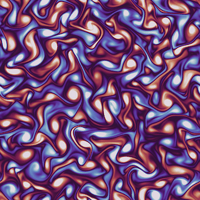
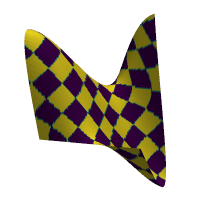
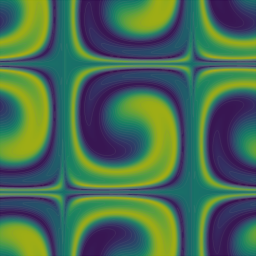
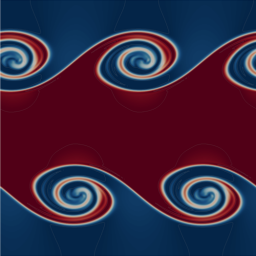
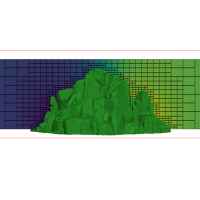
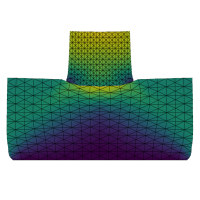
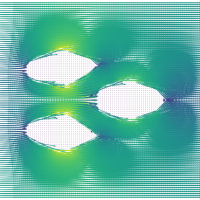
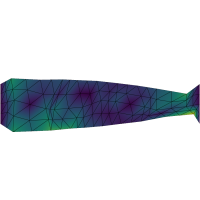
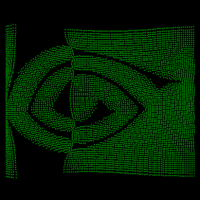
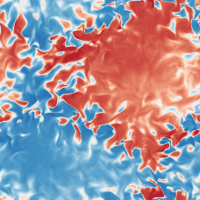
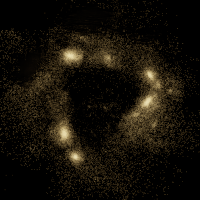
A selection of physical simulations computed with Warp

## Quick Start Simulate one million particles under gravitational attraction, in 20 lines: ```python import warp as wp import numpy as np num_particles = 1_000_000 dt = 0.01 @wp.kernel def gravity_step(pos: wp.array[wp.vec3], vel: wp.array[wp.vec3]): i = wp.tid() position = pos[i] dist_sq = wp.length_sq(position) + 0.01 # softened distance acc = -1000.0 / dist_sq * wp.normalize(position) # gravitational pull toward origin vel[i] = vel[i] + acc * dt pos[i] = pos[i] + vel[i] * dt rng = np.random.default_rng(42) positions = wp.array(rng.normal(size=(num_particles, 3)), dtype=wp.vec3) velocities = wp.array(rng.normal(size=(num_particles, 3)), dtype=wp.vec3) for _ in range(100): wp.launch(gravity_step, dim=num_particles, inputs=[positions, velocities]) print(positions.numpy()) ``` ## Installing Python version 3.10 or newer is required. Warp can run on x86-64 and ARMv8 CPUs on Windows and Linux, and on Apple Silicon (ARMv8) on macOS. GPU support requires a CUDA-capable NVIDIA GPU and driver (minimum GeForce GTX 9xx). The easiest way to install Warp is from [PyPI](https://pypi.org/project/warp-lang/): ```text pip install warp-lang ``` You can also use `pip install warp-lang[examples]` to install additional dependencies for running examples and USD-related features. For nightly builds, conda, CUDA 13 builds, building from source, and CUDA driver requirements, see the [Installation Guide](https://nvidia.github.io/warp/stable/user_guide/installation.html). ## Tutorial Notebooks The [NVIDIA Accelerated Computing Hub](https://github.com/NVIDIA/accelerated-computing-hub/blob/main/tutorials/warp/README.md) also hosts Warp tutorial notebooks that can be opened in Colab: | Notebook | Colab Link | |----------|------------| | [01. Introduction to NVIDIA Warp](https://github.com/NVIDIA/accelerated-computing-hub/blob/main/tutorials/warp/notebooks/01__intro_to_warp.ipynb) | [![Open In Colab](https://colab.research.google.com/assets/colab-badge.svg)](https://colab.research.google.com/github/NVIDIA/accelerated-computing-hub/blob/main/tutorials/warp/notebooks/01__intro_to_warp.ipynb) | | [02. Ising Model](https://github.com/NVIDIA/accelerated-computing-hub/blob/main/tutorials/warp/notebooks/02__ising_model.ipynb) | [![Open In Colab](https://colab.research.google.com/assets/colab-badge.svg)](https://colab.research.google.com/github/NVIDIA/accelerated-computing-hub/blob/main/tutorials/warp/notebooks/02__ising_model.ipynb) | | [03. 2D Navier-Stokes Solver](https://github.com/NVIDIA/accelerated-computing-hub/blob/main/tutorials/warp/notebooks/03__navier_stokes_solver.ipynb) | [![Open In Colab](https://colab.research.google.com/assets/colab-badge.svg)](https://colab.research.google.com/github/NVIDIA/accelerated-computing-hub/blob/main/tutorials/warp/notebooks/03__navier_stokes_solver.ipynb) | | [04. Differentiable Simulations in Warp](https://github.com/NVIDIA/accelerated-computing-hub/blob/main/tutorials/warp/notebooks/04__differentiable_navier_stokes_solver.ipynb) | [![Open In Colab](https://colab.research.google.com/assets/colab-badge.svg)](https://colab.research.google.com/github/NVIDIA/accelerated-computing-hub/blob/main/tutorials/warp/notebooks/04__differentiable_navier_stokes_solver.ipynb) | ## Running Examples The [warp/examples](https://github.com/NVIDIA/warp/tree/main/warp/examples) directory contains examples covering physics simulation, geometry processing, optimization, and tile-based GPU programming. Before running examples, install the optional example dependencies using: ```text pip install warp-lang[examples] ``` On Linux aarch64 systems (e.g., NVIDIA DGX Spark), the `[examples]` extra automatically installs [`usd-exchange`](https://pypi.org/project/usd-exchange/) instead of `usd-core` as a drop-in replacement, since `usd-core` wheels are not available for that platform. Examples can be run from the command-line as follows: ```text python -m warp.examples.. ``` Most examples can be run on either the CPU or a CUDA-capable device, but a handful require a CUDA-capable device. These are marked at the top of the example script. Some examples generate USD files containing time-sampled animations in the current working directory. These can be viewed in Pixar's UsdView, Blender, or any USD-compatible viewer. To browse the example source code, you can open the directory where the files are located like this: ```text python -m warp.examples.browse ``` ### warp/examples/core
dem fluid graph capture marching cubes
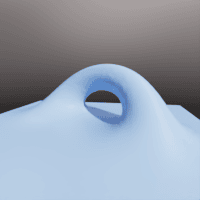
mesh nvdb raycast raymarch
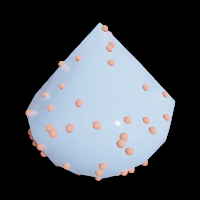
sample mesh sph torch wave
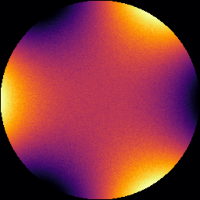
2-D incompressible turbulence in a periodic box
### warp/examples/fem
diffusion 3d mixed elasticity apic fluid streamlines
distortion energy taylor green kelvin helmholtz magnetostatics
adaptive grid nonconforming contact darcy level-set optimization elastic shape optimization
### warp/examples/optim
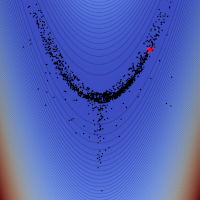
diffray fluid checkpoint particle repulsion navier-stokes perturbation
### warp/examples/tile
mlp nbody mcgp
## Learn More Please see the following resources for additional background on Warp: * [Product Page](https://developer.nvidia.com/warp-python) * [How to Use NVIDIA Warp to Build GPU-Accelerated Computational Physics Simulations](https://www.nvidia.com/en-us/on-demand/session/gtc26-dlit81837/) (GTC 2026 tutorial) * [SIGGRAPH 2024 Course Slides](https://dl.acm.org/doi/10.1145/3664475.3664543) * [GTC 2024 Presentation](https://www.nvidia.com/en-us/on-demand/session/gtc24-s63345/) * [GTC 2022 Presentation](https://www.nvidia.com/en-us/on-demand/session/gtcspring22-s41599) * [GTC 2021 Presentation](https://www.nvidia.com/en-us/on-demand/session/gtcspring21-s31838) * [SIGGRAPH Asia 2021 Differentiable Simulation Course](https://dl.acm.org/doi/abs/10.1145/3476117.3483433) ## Support See the [FAQ](https://nvidia.github.io/warp/stable/user_guide/faq.html) for common questions. Problems, questions, and feature requests can be opened on [GitHub Issues](https://github.com/NVIDIA/warp/issues). For inquiries not suited for GitHub Issues, please email . ## Contributing Contributions and pull requests from the community are welcome. Please see the [Contribution Guide](https://github.com/NVIDIA/warp/blob/main/CONTRIBUTING.md) for more information on contributing to the development of Warp. ## License Warp is provided under the Apache License, Version 2.0. Please see [LICENSE.md](https://github.com/NVIDIA/warp/blob/main/LICENSE.md) for full license text. This project will download and install additional third-party open source software projects. Review the license terms of these open source projects before use. ### Building from Source When building Warp from source using the `build_lib.py` script, the build process automatically downloads [NVIDIA libmathdx](https://developer.nvidia.com/cublasdx-downloads). Pre-built Warp packages (e.g., from PyPI) already include libmathdx statically linked into the library binaries. In both cases, libmathdx is governed by the [NVIDIA Software License Agreement](https://github.com/NVIDIA/warp/blob/main/licenses/libmathdx-LICENSE.txt). NOTICE AND DISCLAIMER: This software automatically retrieves, accesses or interacts with external materials. Those retrieved materials are not distributed with this software and are governed solely by separate terms, conditions and licenses. You are solely responsible for finding, reviewing and complying with all applicable terms, conditions, and licenses, and for verifying the security, integrity and suitability of any retrieved materials for your specific use case. This software is provided "AS IS", without warranty of any kind. The author makes no representations or warranties regarding any retrieved materials, and assumes no liability for any losses, damages, liabilities or legal consequences from your use or inability to use this software or any retrieved materials. Use this software and the retrieved materials at your own risk. ## Publications & Citation ### Research Using Warp Our [PUBLICATIONS.md](https://github.com/NVIDIA/warp/blob/main/PUBLICATIONS.md) file lists academic and research publications that leverage the capabilities of Warp. We encourage you to add your own published work using Warp to this list. ### Citing Warp If you use Warp in your research, please use the "Cite this repository" button on the [GitHub repository](https://github.com/NVIDIA/warp) page or refer to the [CITATION.cff](https://github.com/NVIDIA/warp/blob/main/CITATION.cff) file for citation information.