# Yark
YouTube archiving made simple.
## Installation
To install Yark, simply download [Python 3.9+](https://www.python.org/downloads/) and [FFmpeg](https://ffmpeg.org/) (optional), then run the following:
```shell
$ pip3 install yark
```
## Managing your Archive
Once you've installed Yark, think of a name for your archive (e.g., "foobar") and copy the target's url:
```shell
$ yark new foobar https://www.youtube.com/channel/UCSMdm6bUYIBN0KfS2CVuEPA
```
Now that you've created the archive, you can tell Yark to download all videos and metadata using the refresh command:
```shell
$ yark refresh foobar
```
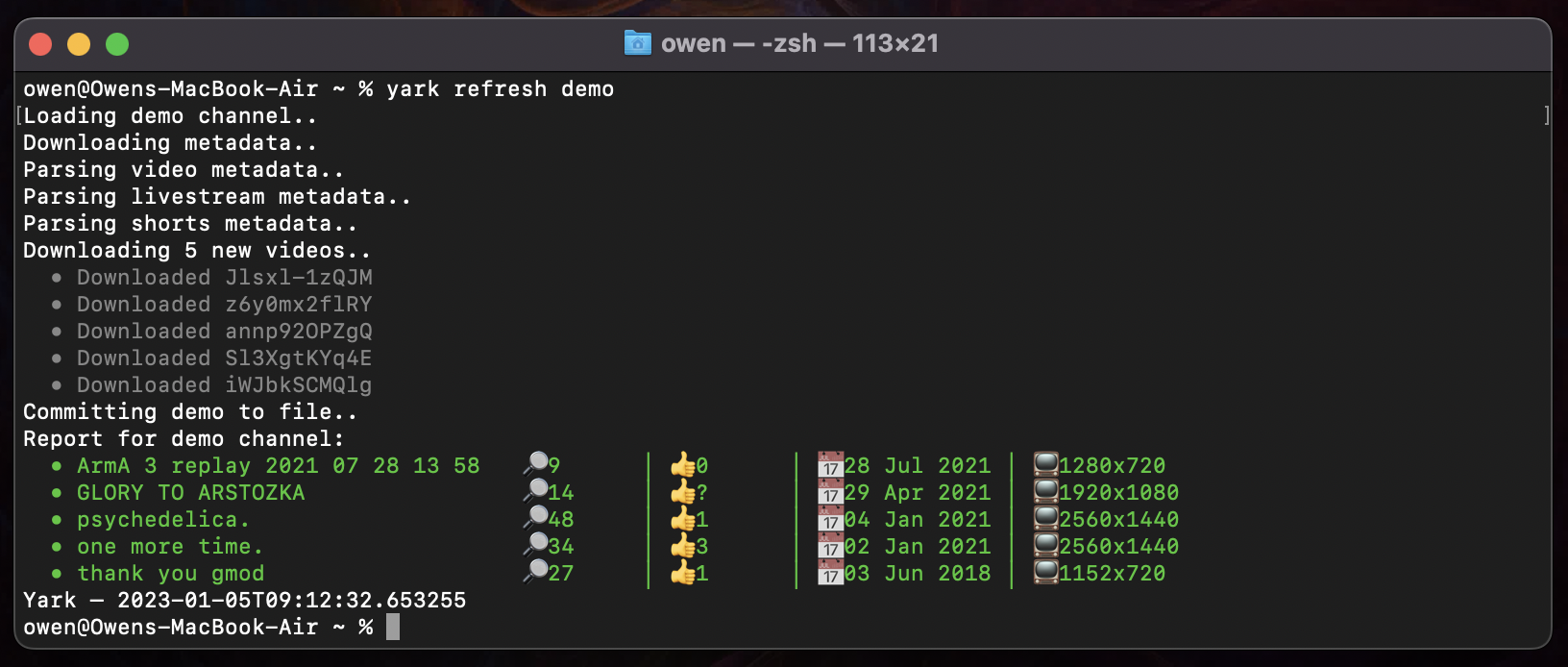
Once everything has been downloaded, Yark will automatically give you a status report of what's changed since the last refresh:
## Viewing your Archive
Viewing you archive is easy, just type `view` with your archives name:
```shell
$ yark view foobar
```
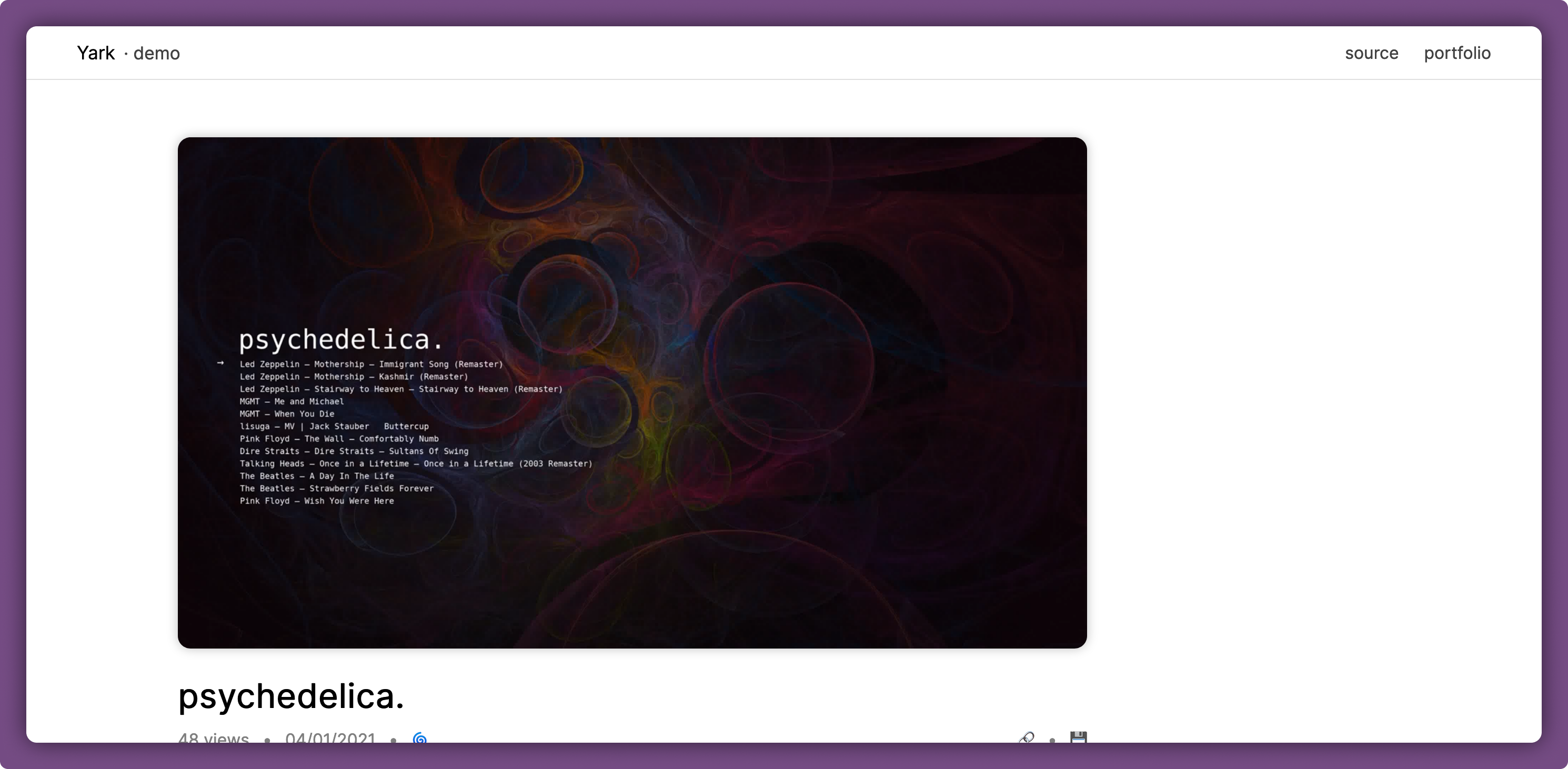
This will pop up an offline website in your browser letting you watch all videos 🚀
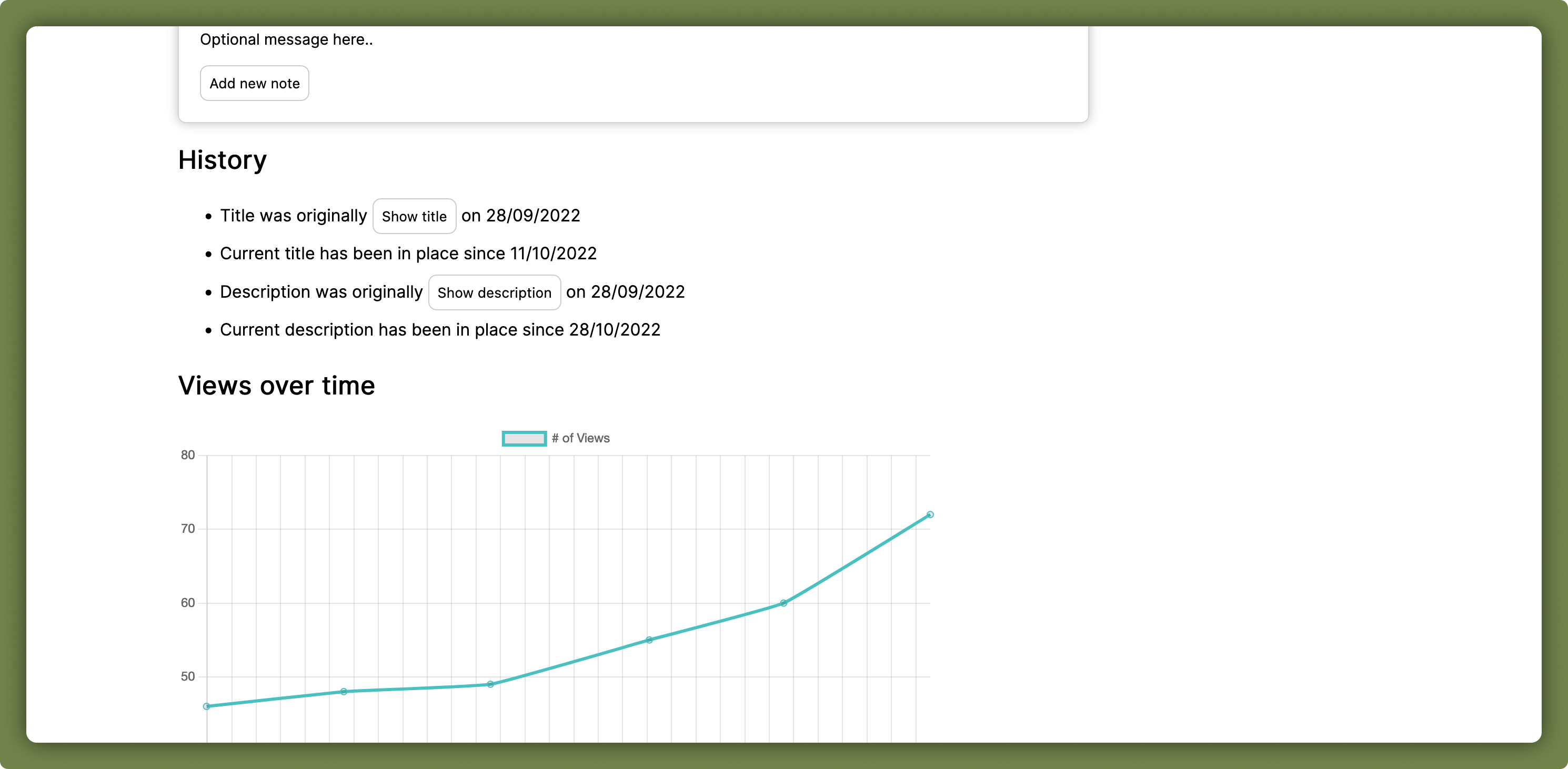
Under each video is a rich history report filled with timelines and graphs, as well as a noting feature which lets you add timestamped and permalinked comments 👐
Light and dark modes are both available and automatically apply based on the system's theme.
## Details
Here are some things to keep in mind when using Yark; the good and the bad:
- Don't create a new archive again if you just want to update it, Yark accumulates all new metadata for you via timestamps
- Feel free to suggest new features via the issues tab on this repository
- Scheduling isn't a feature just yet, please use [`cron`](https://en.wikipedia.org/wiki/Cron) or something similar!
- Archives are always additive. If a video is deleted or marked as private on the YouTube side, Yark will **retain** the video and mark it with the `deleted` tag. Therefore, the videos will remain in your local archive.
## Archive Format
The archive format itself is simple and consists of a directory-based structure with a core metadata file and all thumbnail/video data in their own directories as typical files:
- `[name]/` – Your self-contained archive
- `yark.json` – Archive file with all metadata
- `yark.bak` – Backup archive file to protect against data damage
- `videos/` – Directory containing all known videos
- `[id].*` – Files containing video data for YouTube videos
- `thumbnails/` – Directory containing all known thumbnails
- `[hash].png` – Files containing thumbnails with its hash
It's best to take a few minutes to familiarize yourself with your archive by looking at files which look interesting to you in it, everything is quite readable.