## 树和二叉树
树的结构定义是一个递归的定义;如果将树中结点的各子树堪称从左至右是有次序的(即不能呼唤),则称该树为有序树,否则称为无序树
### 二叉树
特点
- 每个节点至多只有两颗子树(即二叉树中不存在度大于 2 的结点),二叉树的子树有左右之分,次序不能任意颠倒
 性质
```javascript
性质一
- 在二叉树的第 i 层 至多有 2^(i-1) 个结点
性质二
- 深度为k的二叉树至多有 2^k-1个结点
性质三
- 对任意一颗二叉树T,如果其终端结点树为 n0, 度为2的结点数为 n2, 则 n0 = n2 + 1
```
一颗深度为 k 且有 2^k -1 个结点的二叉树称为满二叉树,这种树的特点是每一层上的结点树都是最大结点树
深度为 k,有 n 个结点的二叉树,当且仅当每一个结点都与深度为 k 的满二叉树中编号从 1 至 n 的结点一一对应时,称之为完全二叉树
性质
```javascript
性质一
- 在二叉树的第 i 层 至多有 2^(i-1) 个结点
性质二
- 深度为k的二叉树至多有 2^k-1个结点
性质三
- 对任意一颗二叉树T,如果其终端结点树为 n0, 度为2的结点数为 n2, 则 n0 = n2 + 1
```
一颗深度为 k 且有 2^k -1 个结点的二叉树称为满二叉树,这种树的特点是每一层上的结点树都是最大结点树
深度为 k,有 n 个结点的二叉树,当且仅当每一个结点都与深度为 k 的满二叉树中编号从 1 至 n 的结点一一对应时,称之为完全二叉树

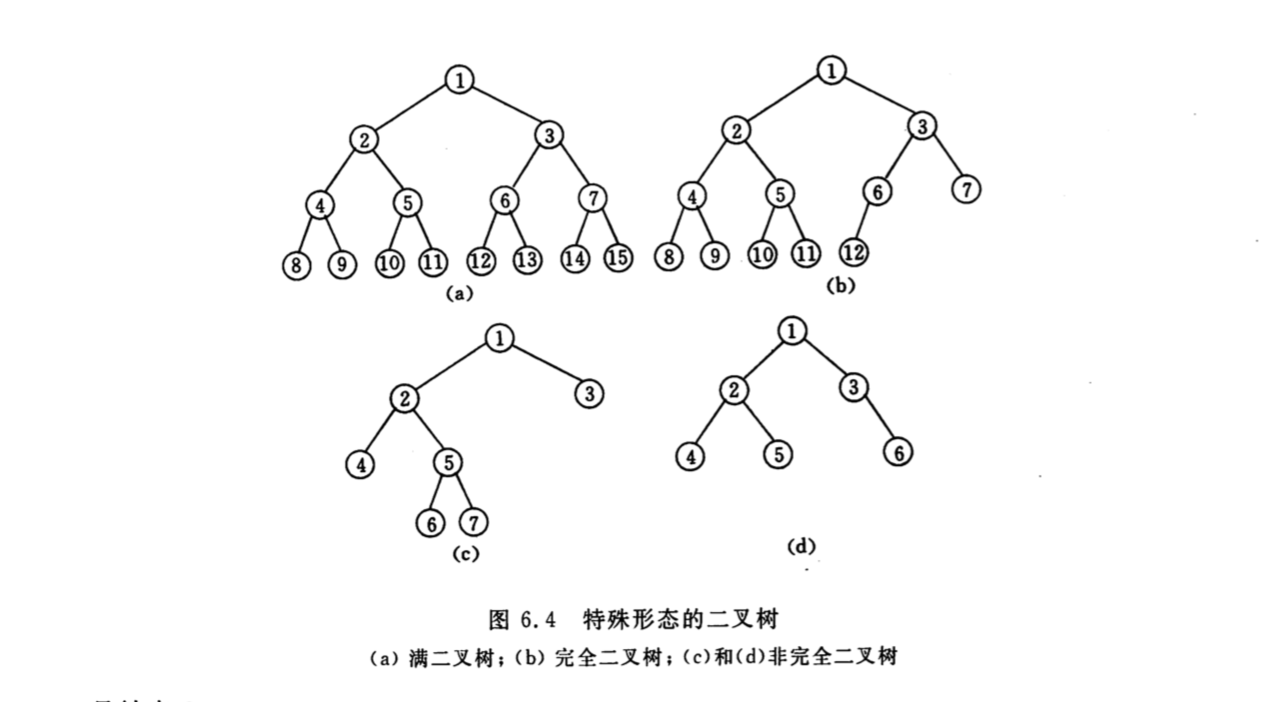 n 个结点的完全二叉树,结点按层次编号
```javascript
i 的双亲是 n/2 (向下取整),如果 i=1 时为根(无双亲)
i 的左孩子是2i,如果2i > n,则无左孩子
i的右孩子是2i+1,如果2i+1 > n ,则无右孩子
```
### 遍历二叉树
由于二叉树是一种非线性结构,每个结点都可能有两颗子树,二叉树由三个基本单元组成: 根结点(D)、左子树(L)、右子树(R)。若能依次遍历这三部分,便是遍历了整个二叉树。比如存在 DLR、LDR、LRD、DRL、RDL、RLD 这 6 中方案。若限定先左后右,则有 3 种情况: 先序遍历、中序遍历、后序遍历
以下边二叉树为例子,写出对应的先序、中序、后序
n 个结点的完全二叉树,结点按层次编号
```javascript
i 的双亲是 n/2 (向下取整),如果 i=1 时为根(无双亲)
i 的左孩子是2i,如果2i > n,则无左孩子
i的右孩子是2i+1,如果2i+1 > n ,则无右孩子
```
### 遍历二叉树
由于二叉树是一种非线性结构,每个结点都可能有两颗子树,二叉树由三个基本单元组成: 根结点(D)、左子树(L)、右子树(R)。若能依次遍历这三部分,便是遍历了整个二叉树。比如存在 DLR、LDR、LRD、DRL、RDL、RLD 这 6 中方案。若限定先左后右,则有 3 种情况: 先序遍历、中序遍历、后序遍历
以下边二叉树为例子,写出对应的先序、中序、后序
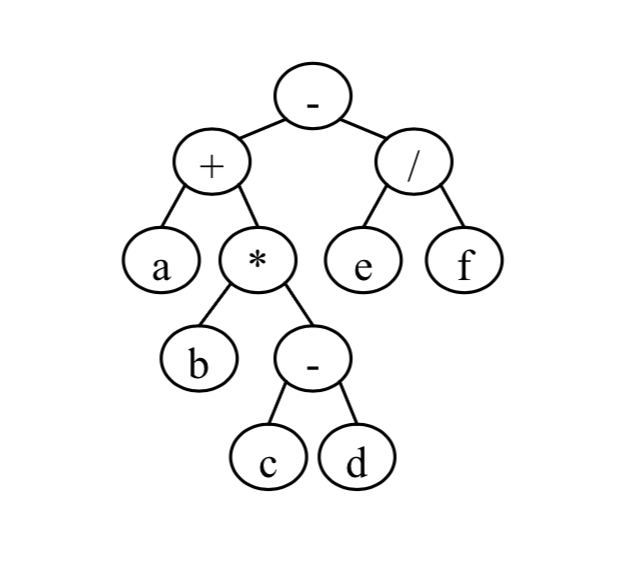 **先序遍历 (根左右)**
- 若二叉树为空,则空操作
- a. 访问根结点
- b. 先序遍历左子树
- c. 先序遍历右子树
> 📢 如上图,先序遍历的前缀表达式为 : -+a\*b-cd/ef
**中序遍历 (左根右)**
- 若二叉树为空,则空操作
- a. 先序遍历左子树
- b. 访问根结点
- c. 先序遍历右子树
> 📢 如上图,中序遍历中缀表达式为 : a+b\*c-d-e/f
**后序遍历 (左右根)**
- 若二叉树为空,则空操作
- a. 先序遍历左子树
- b. 先序遍历右子树
- c. 访问根结点
> 📢 如上图,后序遍历后缀表达式为 : abcd-\*+ef/-
### 二叉树的顺序存储结构
**先序遍历 (根左右)**
- 若二叉树为空,则空操作
- a. 访问根结点
- b. 先序遍历左子树
- c. 先序遍历右子树
> 📢 如上图,先序遍历的前缀表达式为 : -+a\*b-cd/ef
**中序遍历 (左根右)**
- 若二叉树为空,则空操作
- a. 先序遍历左子树
- b. 访问根结点
- c. 先序遍历右子树
> 📢 如上图,中序遍历中缀表达式为 : a+b\*c-d-e/f
**后序遍历 (左右根)**
- 若二叉树为空,则空操作
- a. 先序遍历左子树
- b. 先序遍历右子树
- c. 访问根结点
> 📢 如上图,后序遍历后缀表达式为 : abcd-\*+ef/-
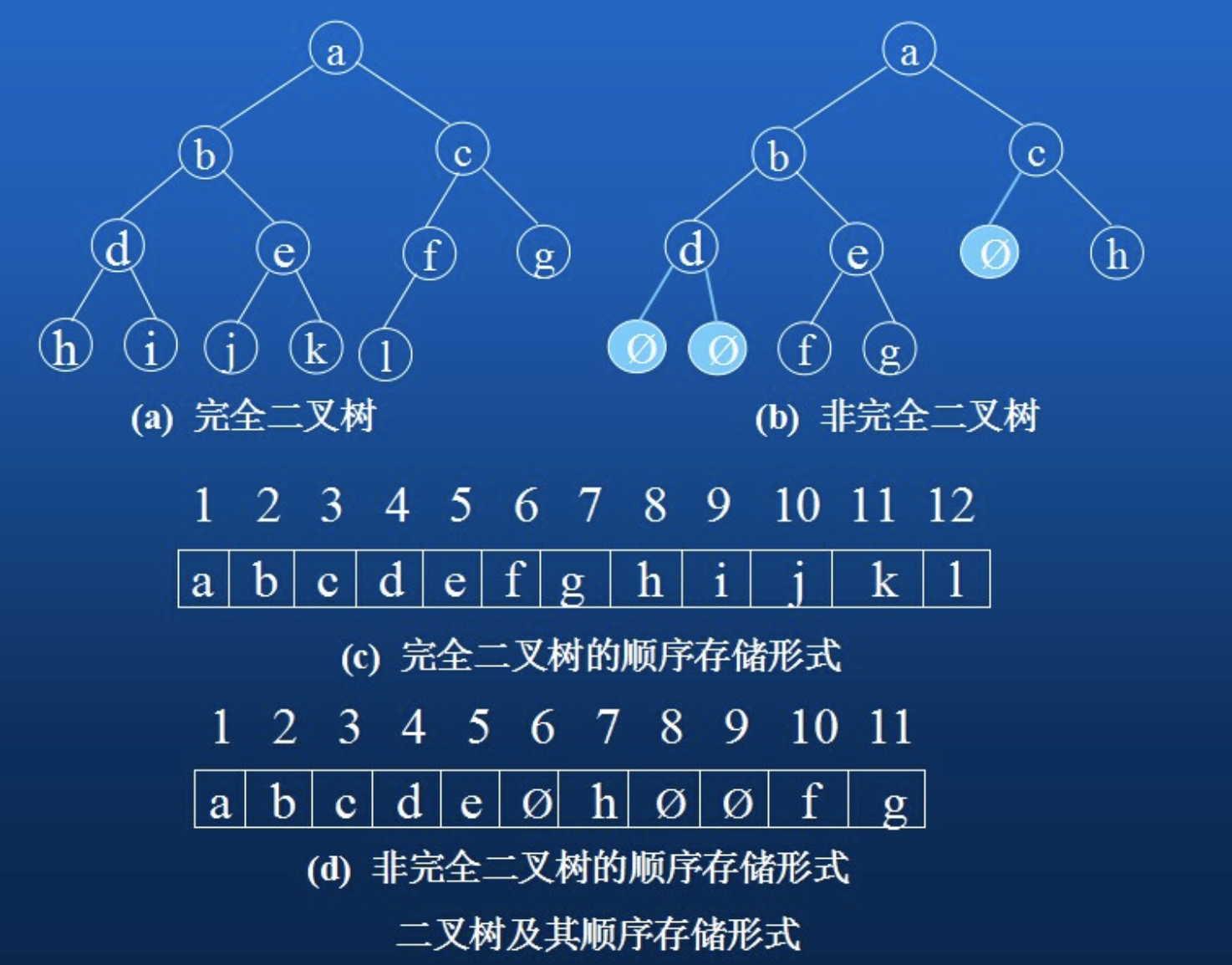
### 二叉树的顺序存储结构
 ### 二叉树的链式存储结构
## 递归实现二叉树的先序、中序、后序
```javascript
function TreeNode(val) {
this.val = val;
this.left = null;
this.right = null;
}
// 先序遍历 (根左右)
var preOrder = function(node) {
if (node) {
console.log(node.val);
preOrder(node.left);
preOrder(node.right);
}
};
// 中序遍历 (左根右)
var middleOrder = function(node) {
if (node) {
middleOrder(node.left);
console.log(node.val);
middleOrder(node.right);
}
};
// 后序遍历 (左右根)
var lastOrder = function(node) {
if (node) {
lastOrder(node.left);
lastOrder(node.right);
console.log(node.val);
}
};
```
### 实现创建一颗二叉树,并递归实现先序、中序、后序、查找最小值、查找最大值、查找给定值、删除结点
```javascript
/*
* desc: 创建树结点
* @params data: 结点数据value
* @params left: 左结点树
* @params right: 右结点树
*/
var TreeNode = function(val, left, right) {
this.val = val;
this.left = left;
this.right = right;
};
var BST = function() {
this.root = null;
this.insert = insert; // 插入结点,创建一棵树
this.preOrder = preOrder; // 先序遍历
this.middleOrder = middleOrder; // 中序遍历
this.lastOrder = lastOrder; // 后序遍历
this.getMin = getMin; // 查找最小值
this.getMax = getMax; // 查找最大值
this.getValue = getValue; // 查找给定值
this.removeNode = removeNode; // 删除结点
};
// desc: 树结点插入到二叉树中
var insert = function(val) {
var node = new TreeNode(val, null, null);
if (this.root == null) {
this.root = node;
} else {
var current = this.root;
while (true) {
if (current.val > val) {
// 10,进 8, 10 > 8,8在10的左子树,进9,10 > 9
if (current.left === null) {
// 10 的左子树不是null,所以current是指向8,继续while循环
current.left = node; // 8 > 9 ? 为false,进入else,这时候的右子树是null,所以9是8的右子树
break;
}
current = current.left;
} else {
if (current.right === null) {
current.right = node;
break;
}
current = current.right;
}
}
}
};
// 先序遍历 (根左右)
var preOrder = function(node) {
if (node) {
console.log(node.val);
preOrder(node.left);
preOrder(node.right);
}
};
// 中序遍历 (左根右)
var middleOrder = function(node) {
if (node) {
middleOrder(node.left);
console.log(node.val);
middleOrder(node.right);
}
};
// 后序遍历 (左右根)
var lastOrder = function(node) {
if (node) {
lastOrder(node.left);
lastOrder(node.right);
console.log(node.val);
}
};
// 查找最小值,较小的值总是在左子节点上,只需遍历左子树
var getMin = function() {
var minNode = this.root;
while (!(minNode.left == null)) {
minNode = minNode.left;
}
return minNode.val;
};
// 查找最大值,较大的值总是在右子节点上,只需遍历右子树
var getMax = function() {
var maxNode = this.root;
while (!(maxNode.right == null)) {
maxNode = maxNode.right;
}
return maxNode.val;
};
/*
* desc: 查找给定值, 需要比较该值和当前节点上的值的大小。通过比较,就能确定如果给定值不在当前节点时,该向左遍历还是向右遍历
* desc: 如果找到给定值,该方法返回保存该值的节点;如果没找到,该方法返回 null
* @params val: 查找的结点 val
*/
var getValue = function(val) {
var current = this.root;
while (current != null) {
if (current.val == val) {
return current;
} else if (current.val > val) {
current = current.left;
} else {
current = current.right;
}
}
return null;
};
/*
* 情况一: 如果待删除节点是叶子结点(也就是没有左右子树),那么只需要将父节点指向它的链接指向null
* 情况二: 如果待删除节点只包含是一个子结点,那么只需要将父节点指向它的链接指向它的子结点
* 情况三: 如果待删除节点包含两个子节点,查找待删除节点右节点上的最小值,找到最小值后,将临时节点上的值复制到待删除节点,然后再删除临时节点
*/
var removeNode = function(node, val) {
if (node == null) {
return null;
}
if (node.val == val) {
// 没有子节点(子树)
if (node.left == null && node.right == null) {
return null; // 将结点置为空
}
// 只有右子节点(子树)
else if (node.left == null) {
return node.right; //
}
// 只有左子节点 (子树)
else if (node.right == null) {
return node.left;
}
// 有两个结点 (子树)
else {
var tempNode = this.getRightSmall(node.right);
node.val = tempNode.val;
node.right = this.removeNode(node.right, tempNode.val);
return node;
}
} else if (node.val > val) {
node.left = this.removeNode(node.left, val);
return node;
} else {
node.right = this.removeNode(node.right, val);
return node;
}
};
/*
* desc: 获取给定节点下的二叉树最小值
* @param {Node} node
*/
var getRightSmall = function(node) {
if (node.left == null) {
return node;
} else {
return getRightSmall(node.left); // 因为一棵树的最小值一定是在左子树上,遍历递归查找最小值
}
};
var bst = new BST();
bst.insert(10);
bst.insert(8);
bst.insert(15);
bst.insert(6);
bst.insert(9);
bst.insert(13);
bst.insert(20);
bst.insert(3);
bst.insert(4);
console.log('先序遍历: ');
console.log(bst.preOrder(bst.root));
console.log('中序遍历: ');
console.log(bst.middleOrder(bst.root));
console.log('后序遍历: ');
console.log(bst.lastOrder(bst.root));
console.log('最小值: ', bst.getMin());
console.log('最大值: ', bst.getMax());
console.log('查找结点val = 4: ', bst.getValue(4));
console.log('删除结点val=13', bst.removeNode(13));
```
### 非递归实现先序、中序、后序
前面的都是说递归遍历先中后,但是在面试过程中,面试官往往会问你,不用递归,你能给我写一下先中后序嘛?
非递归实现使用了栈的结构,通过栈的先进后出模拟递归实现。下面我们来试一试
```javascript
/*
* desc: 创建树结点
* @params data: 结点数据value
* @params left: 左结点树
* @params right: 右结点树
*/
var TreeNode = function(val, left, right) {
this.val = val;
this.left = left;
this.right = right;
};
var BST = function() {
this.root = null;
this.insert = insert; // 插入结点,创建一棵树
this.preOrder = preOrder; // 先序遍历
this.middleOrder = middleOrder; // 中序遍历
this.lastOrder = lastOrder; // 后序遍历
};
// desc: 树结点插入到二叉树中
var insert = function(val) {
var node = new TreeNode(val, null, null);
if (this.root == null) {
this.root = node;
} else {
var current = this.root;
while (true) {
if (current.val > val) {
// 10,进 8, 10 > 8,8在10的左子树,进9,10 > 9
if (current.left === null) {
// 10 的左子树不是null,所以current是指向8,继续while循环
current.left = node; // 8 > 9 ? 为false,进入else,这时候的右子树是null,所以9是8的右子树
break;
}
current = current.left;
} else {
if (current.right === null) {
current.right = node;
break;
}
current = current.right;
}
}
}
};
// 非递归先序遍历
var preOrder = function(root) {
if (root) {
let stack = [];
// 先将根结点push
stack.push(root);
// 判断栈中是否为空
while (stack.length > 0) {
// 弹出栈顶元素
popElement = stack.pop();
console.log(popElement.val);
// 先序遍历,根左右,栈是先进后出,也就是说,先压进右子树再压坐子树
if (popElement.right) {
stack.push(popElement.right);
}
if (popElement.left) {
stack.push(popElement.left);
}
}
}
};
// 非递归中序遍历
var middleOrder = function(root) {
if (root) {
let stack = [];
// 中序遍历,左根右
// 左子树遍历到底,然后依次入栈,当左子树到底,打印栈顶元素,然后寻找右结点
// 对于最左边的叶节点来说,可以把它看成是两个 null 节点的父节点
// 左边打印不出东西就把父节点拿出来打印,然后再看右节点
while (stack.length > 0 || root) {
if (root) {
stack.push(root);
root = root.left;
} else {
popElement = stack.pop();
console.log(popElement.val);
root = popElement.right;
}
}
}
};
// 非递归后序遍历,使用两个栈
var lastOrder = function(root) {
if (root) {
let stack1 = [];
let stack2 = [];
// 后序遍历是左右根
// 所以对于一个栈来说,应该先 push 根节点
// 然后 push 右节点,最后 push 左节点
stack1.push(root);
while (stack1.length > 0) {
popElement1 = stack1.pop(); // 从栈1中pop出栈顶元素
stack2.push(popElement1);
if (popElement1.left) {
stack1.push(popElement1.left);
}
if (popElement1.right) {
stack1.push(popElement1.right);
}
}
while (stack2.length > 0) {
console.log(stack2.pop());
}
}
};
var bst = new BST();
bst.insert(10);
bst.insert(8);
bst.insert(15);
bst.insert(6);
bst.insert(9);
bst.insert(13);
bst.insert(20);
bst.insert(3);
bst.insert(4);
console.log('非递归先序遍历: ');
console.log(bst.preOrder(bst.root));
console.log('非递归中序遍历: ');
console.log(bst.middleOrder(bst.root));
console.log('非递归后序遍历: ');
console.log(bst.lastOrder(bst.root));
```
### 树的深度
给定一个二叉树,找出其最大深度。
二叉树的深度为根节点到最远叶子节点的最长路径上的节点数。
说明: 叶子节点是指没有子节点的节点。
示例:给定二叉树 [ 3, 9, 20, null, null, 15, 7]
```javascript
3
/ \
9 20
/ \
15 7
```
返回它的最大深度 3
```javascript
var maxDepth = function(root) {
if (!root) {
return 0;
}
return Math.max(maxDepth(root.left), maxDepth(root.right)) + 1;
};
// 对于该递归函数可以这样理解:一旦没有找到节点就会返回 0,每弹出一次递归函数就会加一,树有三层就会得到3。
```
### 二叉树的链式存储结构
## 递归实现二叉树的先序、中序、后序
```javascript
function TreeNode(val) {
this.val = val;
this.left = null;
this.right = null;
}
// 先序遍历 (根左右)
var preOrder = function(node) {
if (node) {
console.log(node.val);
preOrder(node.left);
preOrder(node.right);
}
};
// 中序遍历 (左根右)
var middleOrder = function(node) {
if (node) {
middleOrder(node.left);
console.log(node.val);
middleOrder(node.right);
}
};
// 后序遍历 (左右根)
var lastOrder = function(node) {
if (node) {
lastOrder(node.left);
lastOrder(node.right);
console.log(node.val);
}
};
```
### 实现创建一颗二叉树,并递归实现先序、中序、后序、查找最小值、查找最大值、查找给定值、删除结点
```javascript
/*
* desc: 创建树结点
* @params data: 结点数据value
* @params left: 左结点树
* @params right: 右结点树
*/
var TreeNode = function(val, left, right) {
this.val = val;
this.left = left;
this.right = right;
};
var BST = function() {
this.root = null;
this.insert = insert; // 插入结点,创建一棵树
this.preOrder = preOrder; // 先序遍历
this.middleOrder = middleOrder; // 中序遍历
this.lastOrder = lastOrder; // 后序遍历
this.getMin = getMin; // 查找最小值
this.getMax = getMax; // 查找最大值
this.getValue = getValue; // 查找给定值
this.removeNode = removeNode; // 删除结点
};
// desc: 树结点插入到二叉树中
var insert = function(val) {
var node = new TreeNode(val, null, null);
if (this.root == null) {
this.root = node;
} else {
var current = this.root;
while (true) {
if (current.val > val) {
// 10,进 8, 10 > 8,8在10的左子树,进9,10 > 9
if (current.left === null) {
// 10 的左子树不是null,所以current是指向8,继续while循环
current.left = node; // 8 > 9 ? 为false,进入else,这时候的右子树是null,所以9是8的右子树
break;
}
current = current.left;
} else {
if (current.right === null) {
current.right = node;
break;
}
current = current.right;
}
}
}
};
// 先序遍历 (根左右)
var preOrder = function(node) {
if (node) {
console.log(node.val);
preOrder(node.left);
preOrder(node.right);
}
};
// 中序遍历 (左根右)
var middleOrder = function(node) {
if (node) {
middleOrder(node.left);
console.log(node.val);
middleOrder(node.right);
}
};
// 后序遍历 (左右根)
var lastOrder = function(node) {
if (node) {
lastOrder(node.left);
lastOrder(node.right);
console.log(node.val);
}
};
// 查找最小值,较小的值总是在左子节点上,只需遍历左子树
var getMin = function() {
var minNode = this.root;
while (!(minNode.left == null)) {
minNode = minNode.left;
}
return minNode.val;
};
// 查找最大值,较大的值总是在右子节点上,只需遍历右子树
var getMax = function() {
var maxNode = this.root;
while (!(maxNode.right == null)) {
maxNode = maxNode.right;
}
return maxNode.val;
};
/*
* desc: 查找给定值, 需要比较该值和当前节点上的值的大小。通过比较,就能确定如果给定值不在当前节点时,该向左遍历还是向右遍历
* desc: 如果找到给定值,该方法返回保存该值的节点;如果没找到,该方法返回 null
* @params val: 查找的结点 val
*/
var getValue = function(val) {
var current = this.root;
while (current != null) {
if (current.val == val) {
return current;
} else if (current.val > val) {
current = current.left;
} else {
current = current.right;
}
}
return null;
};
/*
* 情况一: 如果待删除节点是叶子结点(也就是没有左右子树),那么只需要将父节点指向它的链接指向null
* 情况二: 如果待删除节点只包含是一个子结点,那么只需要将父节点指向它的链接指向它的子结点
* 情况三: 如果待删除节点包含两个子节点,查找待删除节点右节点上的最小值,找到最小值后,将临时节点上的值复制到待删除节点,然后再删除临时节点
*/
var removeNode = function(node, val) {
if (node == null) {
return null;
}
if (node.val == val) {
// 没有子节点(子树)
if (node.left == null && node.right == null) {
return null; // 将结点置为空
}
// 只有右子节点(子树)
else if (node.left == null) {
return node.right; //
}
// 只有左子节点 (子树)
else if (node.right == null) {
return node.left;
}
// 有两个结点 (子树)
else {
var tempNode = this.getRightSmall(node.right);
node.val = tempNode.val;
node.right = this.removeNode(node.right, tempNode.val);
return node;
}
} else if (node.val > val) {
node.left = this.removeNode(node.left, val);
return node;
} else {
node.right = this.removeNode(node.right, val);
return node;
}
};
/*
* desc: 获取给定节点下的二叉树最小值
* @param {Node} node
*/
var getRightSmall = function(node) {
if (node.left == null) {
return node;
} else {
return getRightSmall(node.left); // 因为一棵树的最小值一定是在左子树上,遍历递归查找最小值
}
};
var bst = new BST();
bst.insert(10);
bst.insert(8);
bst.insert(15);
bst.insert(6);
bst.insert(9);
bst.insert(13);
bst.insert(20);
bst.insert(3);
bst.insert(4);
console.log('先序遍历: ');
console.log(bst.preOrder(bst.root));
console.log('中序遍历: ');
console.log(bst.middleOrder(bst.root));
console.log('后序遍历: ');
console.log(bst.lastOrder(bst.root));
console.log('最小值: ', bst.getMin());
console.log('最大值: ', bst.getMax());
console.log('查找结点val = 4: ', bst.getValue(4));
console.log('删除结点val=13', bst.removeNode(13));
```
### 非递归实现先序、中序、后序
前面的都是说递归遍历先中后,但是在面试过程中,面试官往往会问你,不用递归,你能给我写一下先中后序嘛?
非递归实现使用了栈的结构,通过栈的先进后出模拟递归实现。下面我们来试一试
```javascript
/*
* desc: 创建树结点
* @params data: 结点数据value
* @params left: 左结点树
* @params right: 右结点树
*/
var TreeNode = function(val, left, right) {
this.val = val;
this.left = left;
this.right = right;
};
var BST = function() {
this.root = null;
this.insert = insert; // 插入结点,创建一棵树
this.preOrder = preOrder; // 先序遍历
this.middleOrder = middleOrder; // 中序遍历
this.lastOrder = lastOrder; // 后序遍历
};
// desc: 树结点插入到二叉树中
var insert = function(val) {
var node = new TreeNode(val, null, null);
if (this.root == null) {
this.root = node;
} else {
var current = this.root;
while (true) {
if (current.val > val) {
// 10,进 8, 10 > 8,8在10的左子树,进9,10 > 9
if (current.left === null) {
// 10 的左子树不是null,所以current是指向8,继续while循环
current.left = node; // 8 > 9 ? 为false,进入else,这时候的右子树是null,所以9是8的右子树
break;
}
current = current.left;
} else {
if (current.right === null) {
current.right = node;
break;
}
current = current.right;
}
}
}
};
// 非递归先序遍历
var preOrder = function(root) {
if (root) {
let stack = [];
// 先将根结点push
stack.push(root);
// 判断栈中是否为空
while (stack.length > 0) {
// 弹出栈顶元素
popElement = stack.pop();
console.log(popElement.val);
// 先序遍历,根左右,栈是先进后出,也就是说,先压进右子树再压坐子树
if (popElement.right) {
stack.push(popElement.right);
}
if (popElement.left) {
stack.push(popElement.left);
}
}
}
};
// 非递归中序遍历
var middleOrder = function(root) {
if (root) {
let stack = [];
// 中序遍历,左根右
// 左子树遍历到底,然后依次入栈,当左子树到底,打印栈顶元素,然后寻找右结点
// 对于最左边的叶节点来说,可以把它看成是两个 null 节点的父节点
// 左边打印不出东西就把父节点拿出来打印,然后再看右节点
while (stack.length > 0 || root) {
if (root) {
stack.push(root);
root = root.left;
} else {
popElement = stack.pop();
console.log(popElement.val);
root = popElement.right;
}
}
}
};
// 非递归后序遍历,使用两个栈
var lastOrder = function(root) {
if (root) {
let stack1 = [];
let stack2 = [];
// 后序遍历是左右根
// 所以对于一个栈来说,应该先 push 根节点
// 然后 push 右节点,最后 push 左节点
stack1.push(root);
while (stack1.length > 0) {
popElement1 = stack1.pop(); // 从栈1中pop出栈顶元素
stack2.push(popElement1);
if (popElement1.left) {
stack1.push(popElement1.left);
}
if (popElement1.right) {
stack1.push(popElement1.right);
}
}
while (stack2.length > 0) {
console.log(stack2.pop());
}
}
};
var bst = new BST();
bst.insert(10);
bst.insert(8);
bst.insert(15);
bst.insert(6);
bst.insert(9);
bst.insert(13);
bst.insert(20);
bst.insert(3);
bst.insert(4);
console.log('非递归先序遍历: ');
console.log(bst.preOrder(bst.root));
console.log('非递归中序遍历: ');
console.log(bst.middleOrder(bst.root));
console.log('非递归后序遍历: ');
console.log(bst.lastOrder(bst.root));
```
### 树的深度
给定一个二叉树,找出其最大深度。
二叉树的深度为根节点到最远叶子节点的最长路径上的节点数。
说明: 叶子节点是指没有子节点的节点。
示例:给定二叉树 [ 3, 9, 20, null, null, 15, 7]
```javascript
3
/ \
9 20
/ \
15 7
```
返回它的最大深度 3
```javascript
var maxDepth = function(root) {
if (!root) {
return 0;
}
return Math.max(maxDepth(root.left), maxDepth(root.right)) + 1;
};
// 对于该递归函数可以这样理解:一旦没有找到节点就会返回 0,每弹出一次递归函数就会加一,树有三层就会得到3。
```