Paca
AI-native. Free. Lightweight. Open-source.
The fully customizable alternative to Jira, Trello, ClickUp, and Monday.



Getting Started
·
MCP Server
·
Claude Code Skill
·
Architecture
·
Contributing
·
Roadmap
---
## What is Paca?
Paca is a **self-hosted project management platform** where AI agents and humans collaborate as equal teammates inside a Scrum team — not as chatbots bolted on the side.
Jira gives you a backlog. ClickUp gives you automations. Monday gives you dashboards. **Paca gives your AI agents a seat at the table.** They join sprint planning, pick up tasks from the board, write BDD specs, and adapt alongside humans in real time.
Everything about Paca — its workflow, its data model, its UI — is **configurable and extendable via plugins**.
---
## Why Paca?
| | Jira / Trello / ClickUp / Monday | **Paca** |
|:--|:--|:--|
| **AI integration** | Chatbot add-ons, peripheral automation | AI agents as first-class Scrum teammates |
| **Collaboration model** | Human-only by default | Human + AI, side by side on the same board |
| **Hosting** | Vendor cloud (your data, their servers) | Self-hosted, you own everything |
| **Cost** | $8–$20+ per seat/month | **Free forever** |
| **Customization** | Limited; locked behind enterprise tiers | **Fully open: configuration + plugins** |
| **Weight** | Bloated feature sprawl | Lightweight core; extend only what you need |
| **Source** | Closed / proprietary | **100% open-source (Apache 2.0)** |
---
## Core Idea: Humans and AI Agents, One Scrum Team
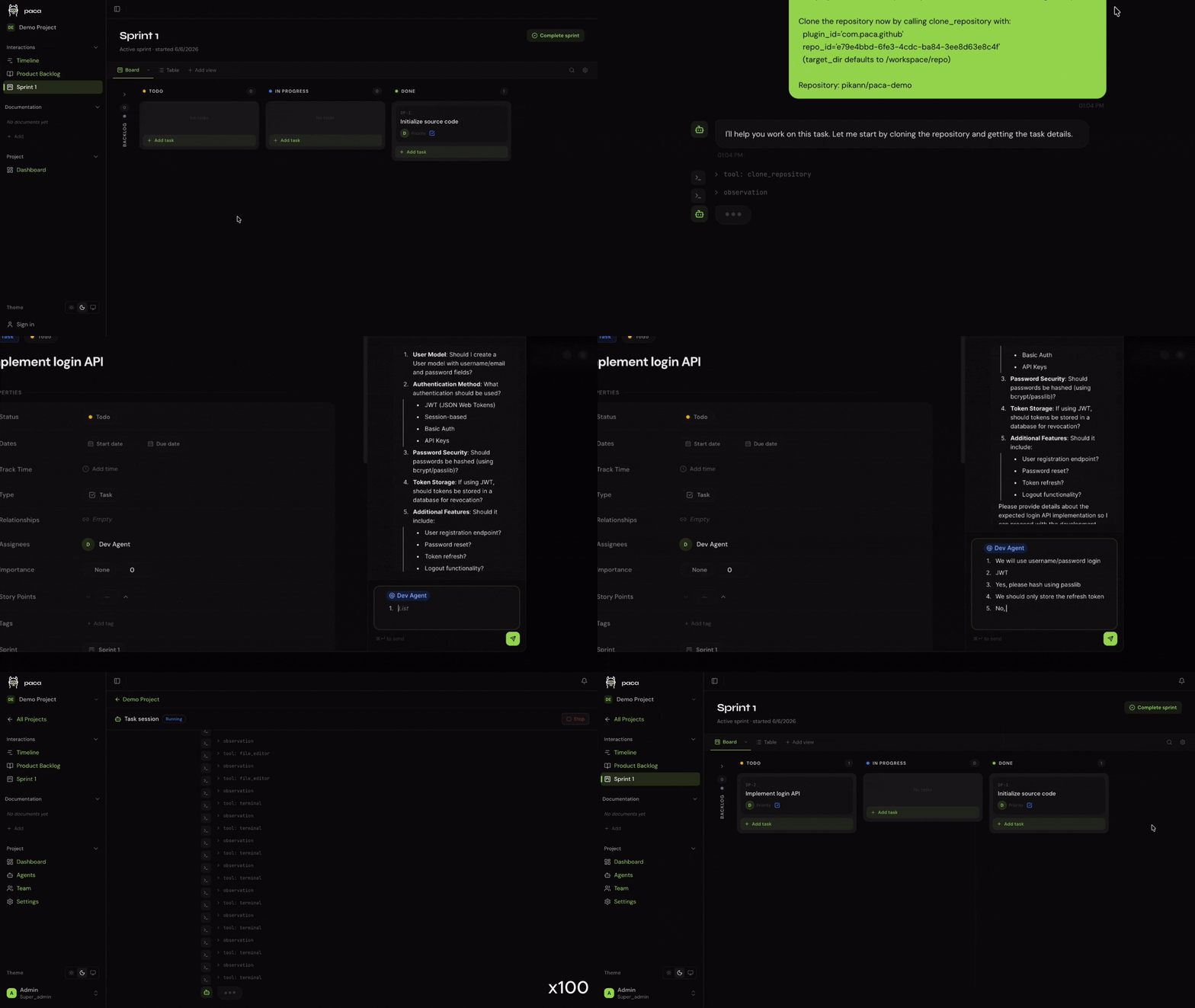
The central insight behind Paca is that **AI agents should participate in the Scrum process**, not just generate output in isolation.
In Paca, AI agents:
- Are **assigned to sprints** and appear on the Scrumban board alongside human teammates
- **Pick up tasks** from the backlog and update their status in real time
- **Collaborate on BDD specs** — helping Product Owners and BAs write Gherkin scenarios
- **Contribute to System Design Documents** — keeping the architecture visible to the whole team
- **Probe, sense, and respond** to emerging complexity, just like a human would
This is not automation. It is **genuine collaboration** — rooted in the Cynefin / Stacey framework's recognition that complex domains require teams, not pipelines.
---
## Fully Customizable — Configuration and Plugins
Paca ships as a small, focused core. Everything else is optional.
**Configuration-driven:** workflows, statuses, field definitions, board layouts, sprint rules, and agent behavior are all driven by project-level configuration files. No code needed to adapt Paca to your team's process.
**Plugin system:** extend or replace any part of Paca via plugins. Plugins are compiled to **WebAssembly (WASM)** for the backend (write in Go, Rust, AssemblyScript — anything with a WASM target) and standard module bundles for the frontend. Plugins run in a sandboxed environment with a capability-based permission model; they declare exactly what host functions they need, and nothing more.
```
plugins/
├── backend/ # WASM modules — add custom routes, logic, data models
└── frontend/ # UI modules — add custom pages, board views, widgets
```
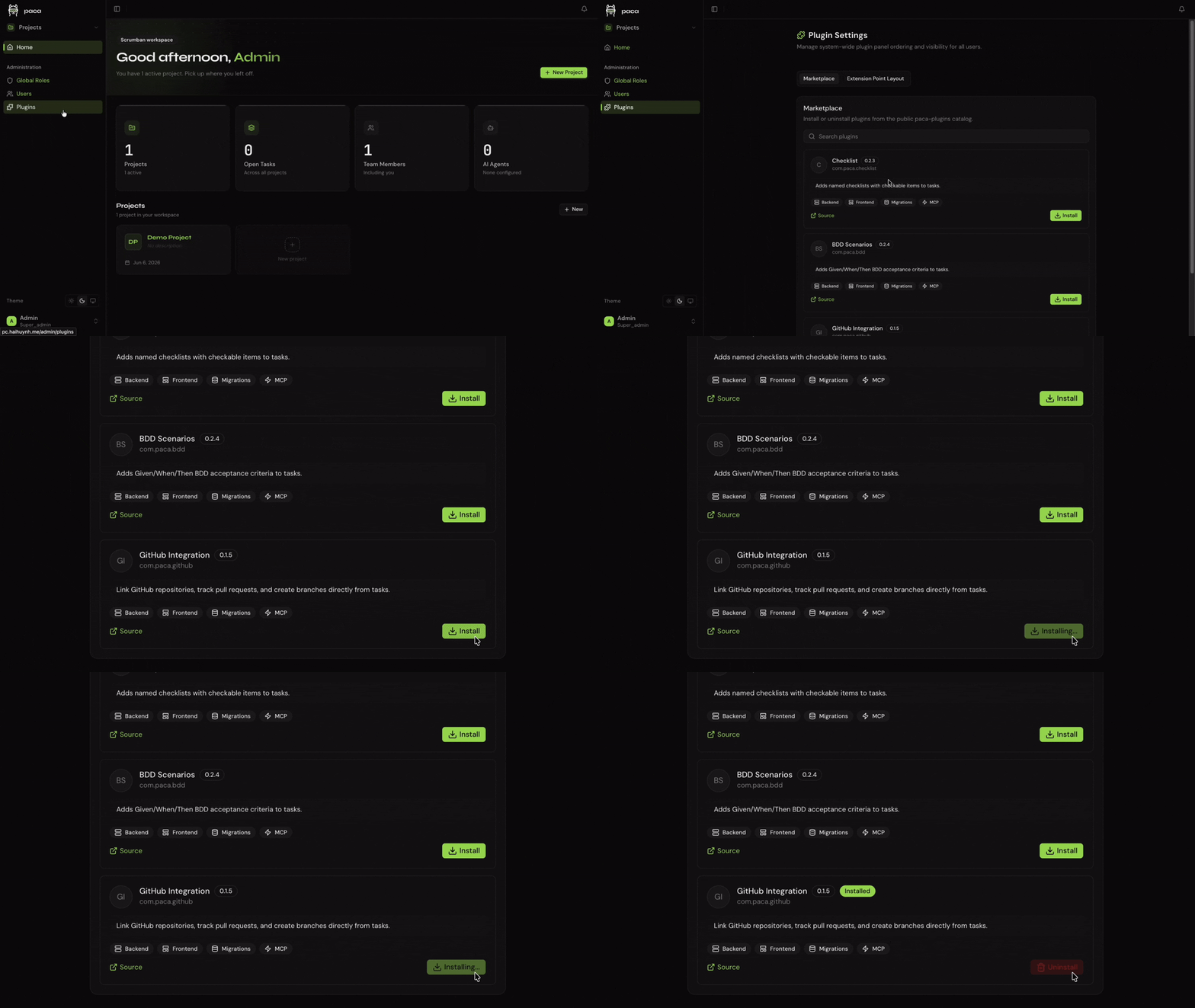
Browse and install community plugins directly from the **Plugin Marketplace** inside the Paca UI — no command line required. Go to **Settings → Plugins → Marketplace**, find a plugin, and click **Install**.
For local development or custom plugins, you can also install from the filesystem:
```bash
./scripts/install-local-plugin.sh ./my-plugin --api-key
```
---
## The P-A-C-A Cycle
Paca structures team collaboration around four phases that mirror both Scrum and the scientific method:
```
Plan → Act → Check → Adapt
↑ |
└─────────────────────────────┘
```
| Phase | What happens |
|:--|:--|
| **Plan** | POs, BAs, and AI agents collaboratively refine the backlog. BDD scenarios and SDD designs are written together. |
| **Act** | Sprint is live. Humans and AI agents pull tasks from the board, execute, and post updates. |
| **Check** | QA agents run automated verification. Humans review AI output. The board reflects reality. |
| **Adapt** | Data from the sprint informs the next cycle. The team — human and AI — retrospects together. |
---
## What's New in v0.4.0
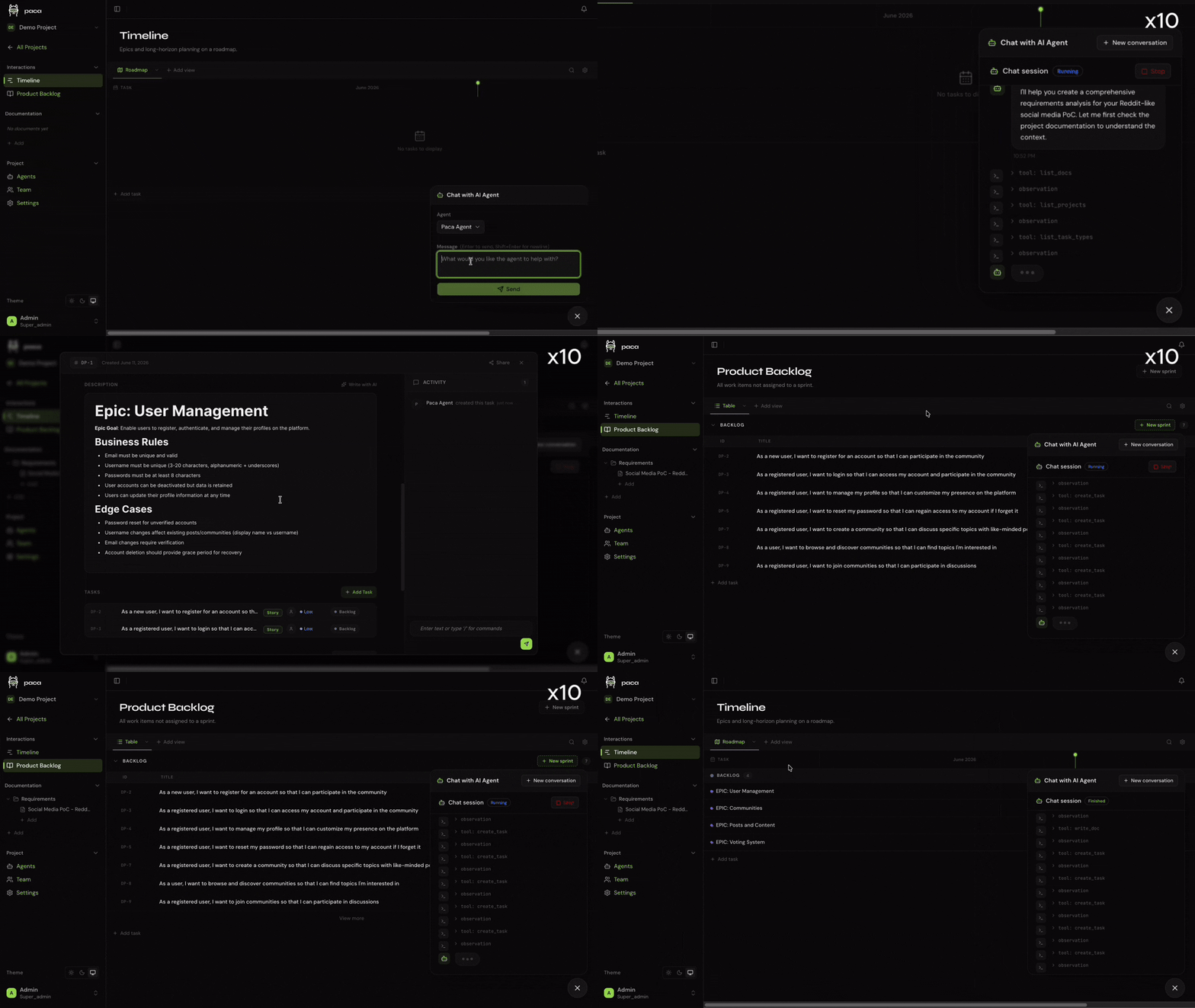
- **In-app AI chat** — chat with AI agents at the project level to plan work, create or update epics, stories, tasks, and documentation — all in plain English without leaving Paca
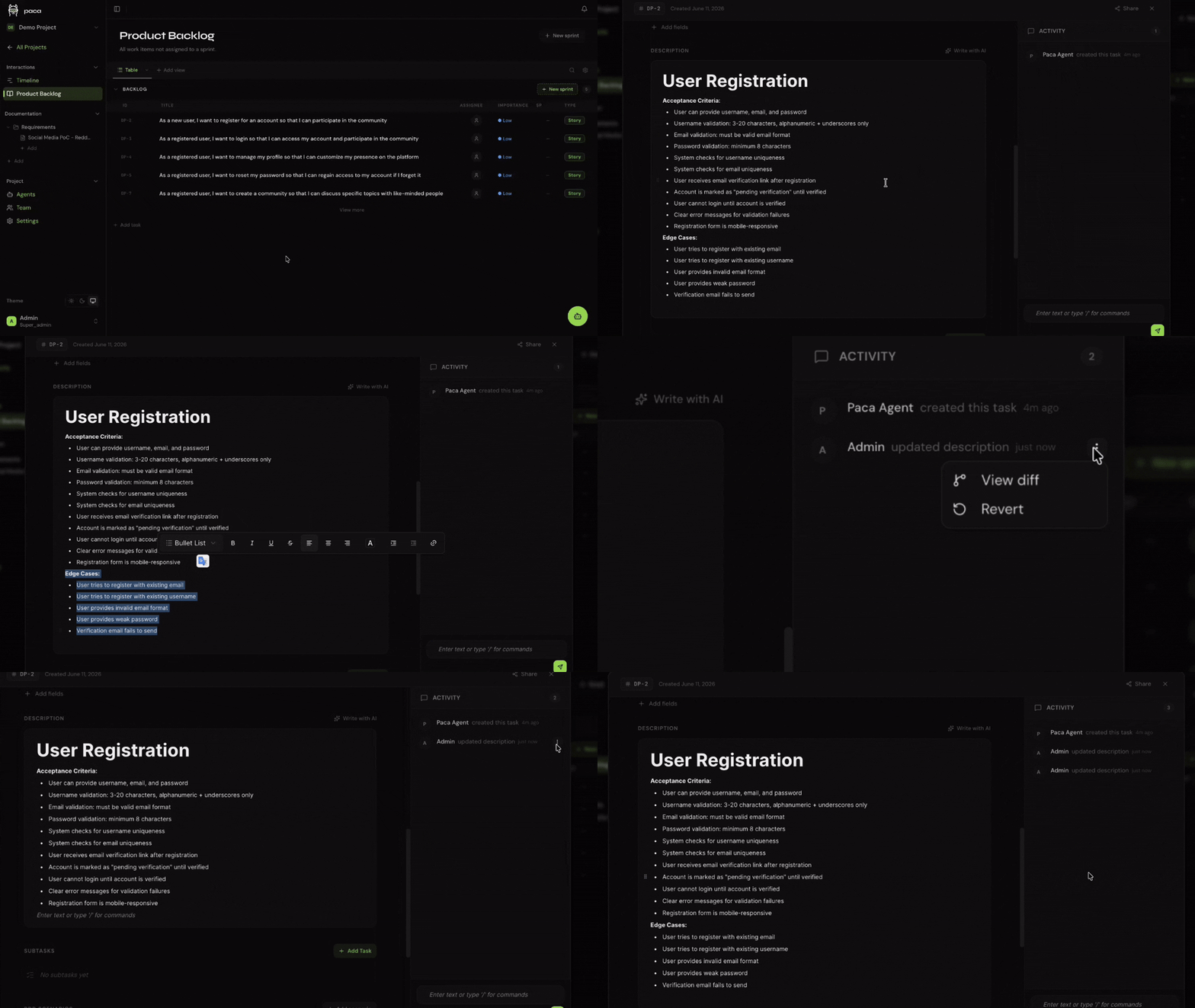
- **Activity diff & revert** — every field change in the activity pane now shows a before/after diff; one click reverts a change to its previous value
---
## Key Features
- **Unified Scrumban Board** — humans and AI agents share a single real-time board; no separate "AI workspace"
- **In-app AI chat** — chat with AI agents at the project level to plan work, create or update epics, stories, tasks, and documentation in plain English
- **Activity diff & revert** — see a visual diff for every field change in the activity pane and revert any change with one click
- **BDD Collaboration** — Gherkin scenario editor co-authored by POs, BAs, and AI agents
- **System Design Documents (SDD)** — living architecture docs that keep AI agents contextually grounded
- **MCP Server** — connect Claude, custom agents, or any MCP-compatible tool directly into Paca's data layer
- **Claude Code skill** — `/paca` slash command for Claude Code; manage tasks, docs, and sprints in plain English without leaving your editor
- **Real-time updates** — Socket.IO delivery; everyone sees changes the moment they happen
- **OpenHands-powered agents** — AI agents run on the [OpenHands](https://github.com/All-Hands-AI/OpenHands) SDK; each agent executes inside its own isolated sandbox container so your host environment is never touched
- **WASM plugin sandbox** — extend Paca safely; plugins cannot escape their declared permissions
- **Self-hosted** — runs on a single Docker Compose command; your data never leaves your infrastructure
- **Lightweight by default** — minimal core, no feature bloat; add only what your team actually needs
---
## Getting Started
### Option 1 — Interactive install script (recommended for production)
Runs on any Linux server with Docker. No repository clone required.
```bash
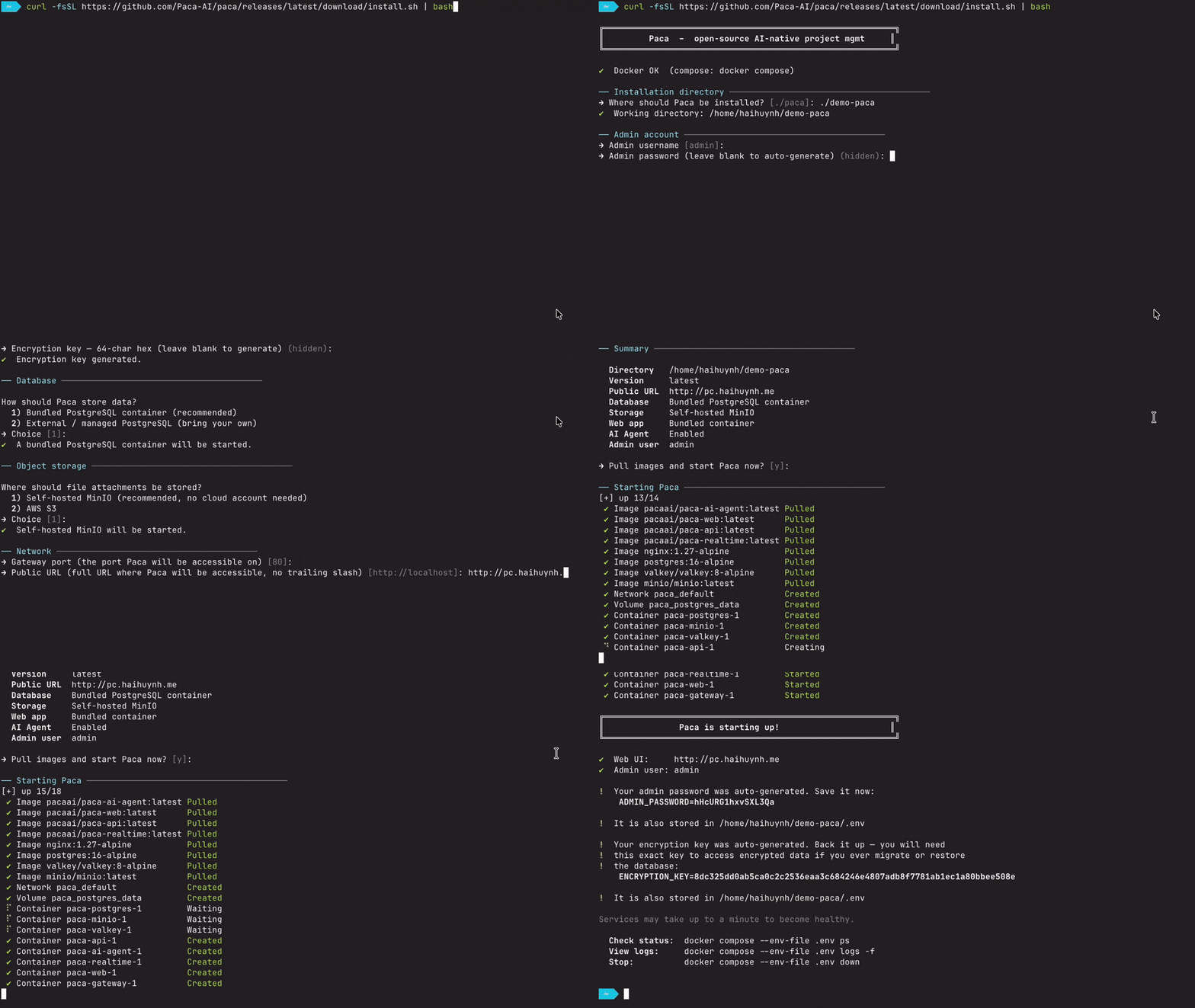
curl -fsSL https://github.com/Paca-AI/paca/releases/latest/download/install.sh | bash
```
The script walks you through configuration interactively and starts the full stack. Open `http://your-server-ip` when it finishes.
---
### Option 2 — Docker Compose (manual)
**1. Create a directory and download the compose file**
```bash
mkdir paca && cd paca
curl -fsSL https://github.com/Paca-AI/paca/releases/latest/download/docker-compose.yml -o docker-compose.yml
mkdir -p nginx
curl -fsSL https://github.com/Paca-AI/paca/releases/latest/download/gateway.conf -o nginx/gateway.conf
```
**2. Download the environment template**
```bash
curl -fsSL https://github.com/Paca-AI/paca/releases/latest/download/.env.production.example -o .env
```
**3. Generate secure passwords and secrets**
```bash
POSTGRES_PASSWORD=$(openssl rand -hex 32)
ADMIN_PASSWORD=$(openssl rand -hex 16)
JWT_SECRET=$(openssl rand -hex 32)
ENCRYPTION_KEY=$(openssl rand -hex 32)
```
Optional: Generate API keys if you'll use the AI agent or external integrations:
```bash
AGENT_API_KEY=$(openssl rand -hex 32)
INTERNAL_API_KEY=$(openssl rand -hex 32)
```
Optional: Generate MinIO credentials or use your own:
```bash
STORAGE_ACCESS_KEY_ID=$(openssl rand -hex 16)
STORAGE_SECRET_ACCESS_KEY=$(openssl rand -hex 32)
```
**4. Update .env with your values**
Edit the `.env` file and replace the placeholder values with the ones you generated above. Below are the required fields:
```bash
PUBLIC_URL=http://localhost
POSTGRES_PASSWORD=