# 2. Engineering Decision Log
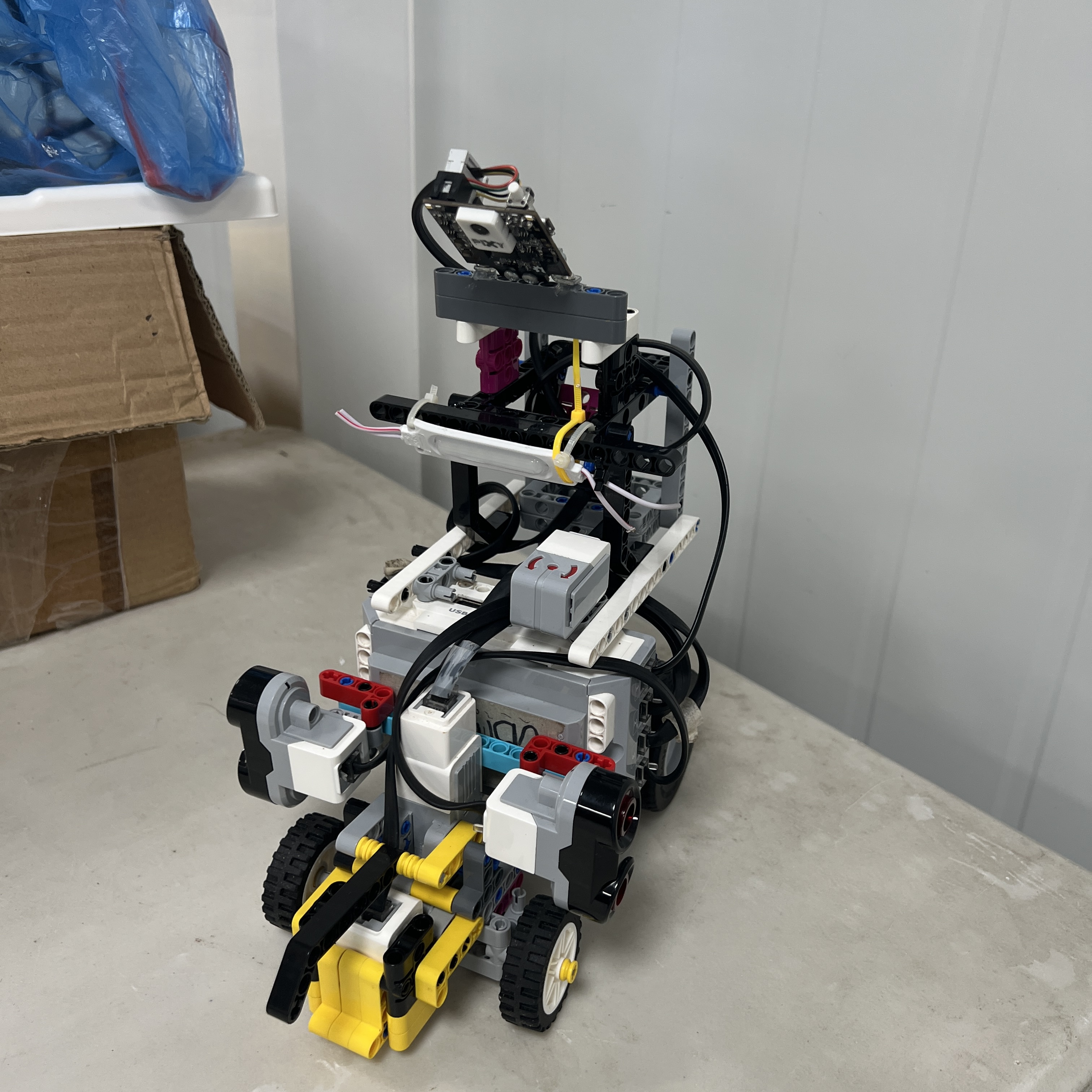 Figure 2.1. Piolín's current architecture is the result of multiple engineering decisions involving mechanics, sensors, perception, control, and software organization.
PiolínTech maintains an engineering decision log to document **why important design choices were made**, not only what the final robot contains.
A robot can change significantly during development.
For this reason, the repository distinguishes between:
```text
CURRENT
→ used in the present architecture
LEGACY
→ tested previously but replaced
ONGOING
→ architecture selected, but numerical or algorithmic tuning is still in progress
```
Each important decision is evaluated through a common structure:
```text
PROBLEM
↓
ALTERNATIVES
↓
TESTING / OBSERVATION
↓
DECISION
↓
TRADE-OFF
↓
CURRENT RESULT
```
The decision log is therefore intended to preserve the reasoning behind Piolín's architecture even after old prototypes are replaced.
---
## 2.1 Decision Summary
| ID | Engineering Decision | Selected Direction | Status |
| :--- | :--- | :--- | :---: |
| `D-01` | Propulsion architecture | Motor A for rear propulsion | CURRENT |
| `D-02` | Steering architecture | Motor B with front Ackermann-style steering | CURRENT |
| `D-03` | One universal sensor configuration vs. round-specific S1 | Use two round-specific S1 configurations | CURRENT |
| `D-04` | Open Challenge S1 sensor | EV3 Gyro Sensor | CURRENT |
| `D-05` | Obstacle Challenge S1 sensor | Pixy2.1 | CURRENT |
| `D-06` | Obstacle camera architecture | Direct Pixy2.1-to-EV3 integration | CURRENT |
| `D-07` | HuskyLens + Arduino Nano | Remove from current architecture | LEGACY |
| `D-08` | Ultrasonic layout | Two permanent lateral ultrasonic sensors | CURRENT |
| `D-09` | Ultrasonic identity | S2 LEFT, S3 RIGHT | CURRENT |
| `D-10` | Wall navigation method | Geometry-based control + independent wall safety | CURRENT / ONGOING |
| `D-11` | Software behavior organization | State-based control architecture | CURRENT / ONGOING |
| `D-12` | Red/Green passing-side decision | Signature determines passing side | CURRENT |
| `D-13` | Camera target selection | Relevance + confirmation + temporary lock | ONGOING |
| `D-14` | Controller interaction | Explicit arbitration instead of unrestricted command mixing | CURRENT / ONGOING |
| `D-15` | Floor-marking processing | Confirmed events instead of raw sample counting | CURRENT |
| `D-16` | Course progression | Physical floor events rather than time alone | CURRENT |
| `D-17` | Parking activation | Course progress must enable parking before Pink can control it | CURRENT / ONGOING |
| `D-18` | Final parking movement | Sensor fusion + encoder progression instead of timing alone | ONGOING |
| `D-19` | Software environment | Separate Open and Obstacle software stacks when appropriate | CURRENT |
| `D-20` | Legacy documentation | Preserve replaced systems instead of deleting their history | CURRENT |
The numerical tuning associated with several decisions remains under development, but the architectural decisions themselves are already established.
---
# 2.2 Mobility Decisions
## D-01 — One Drive Motor for Propulsion
### Problem
Piolín requires a propulsion system capable of moving the vehicle through:
```text
straights
corners
obstacle maneuvers
parking
```
while keeping the mechanical architecture compact enough for the WRO vehicle.
### Decision
The current robot uses:
```text
Motor A
→ LEGO EV3 Large Motor
→ rear propulsion
```
### Reasoning
Separating propulsion from steering creates a vehicle architecture similar to a small automobile:
```text
Motor A
→ controls longitudinal movement
Motor B
→ controls direction
```
This makes the responsibilities of both motors easy to understand and debug.
### Trade-off
With only one drive motor, Piolín does not gain differential-drive turning capability.
The vehicle must steer by changing the front-wheel geometry and continuing to move.
### Current Result
This architecture remains active in both:
```text
Open Challenge
Obstacle Challenge
```
and creates a common mechanical base for both rounds.
---
## D-02 — Ackermann-Style Front Steering
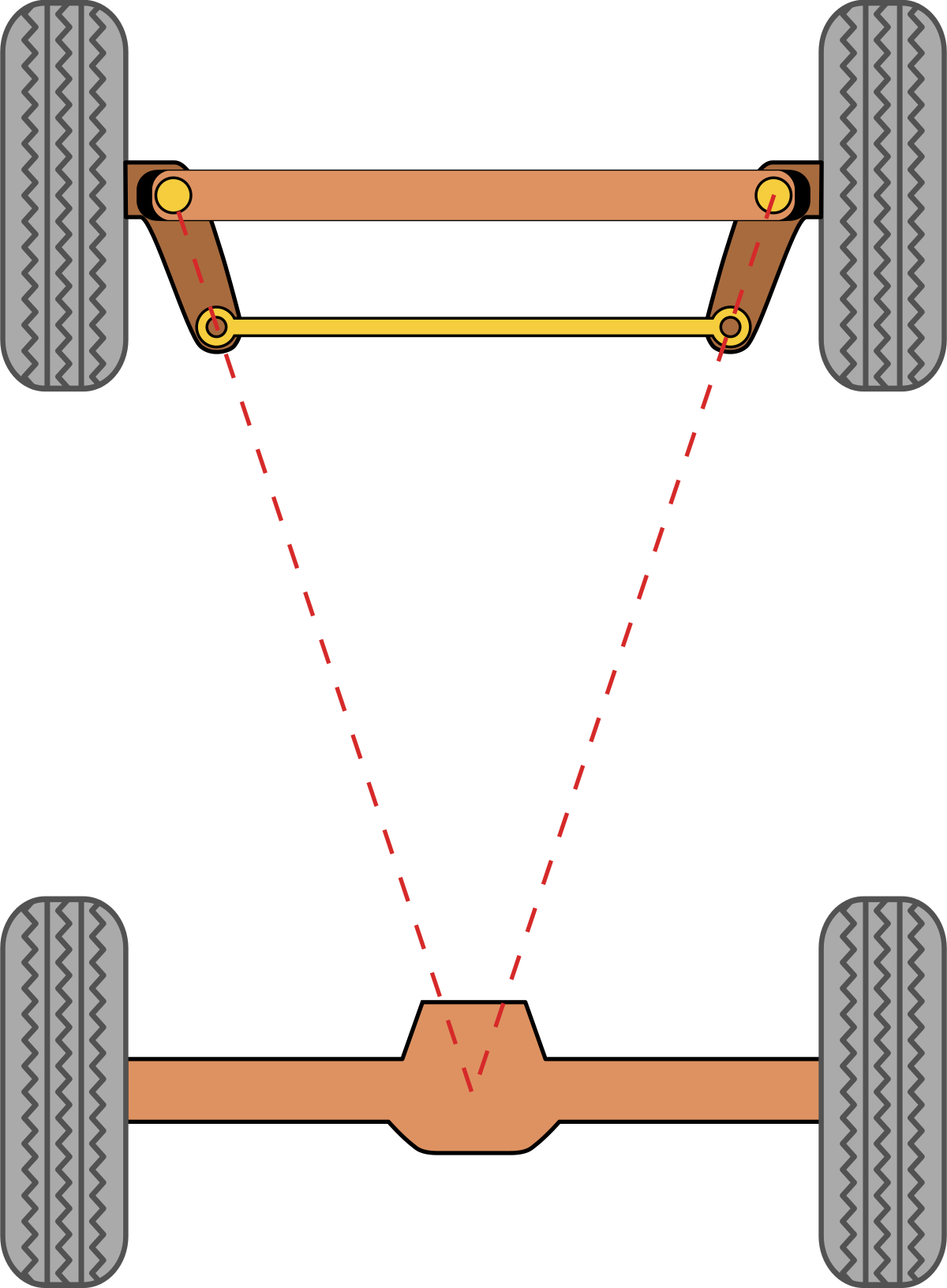 Figure 2.2. Piolín uses a mechanically linked front steering system controlled by Motor B.
### Problem
Piolín requires predictable turns while behaving as a car-like vehicle rather than rotating in place.
### Alternatives Considered
Possible general approaches included:
```text
differential-style steering
skid steering
car-like front steering
```
### Decision
Piolín uses:
```text
Motor B
→ EV3 Medium Motor
→ front Ackermann-style steering
```
### Reasoning
The chosen mechanism provides:
```text
car-like trajectory
separate steering and propulsion control
predictable relationship between steering and turning radius
```
and fits the Future Engineers vehicle concept well.
### Trade-off
Ackermann steering increases the importance of:
```text
turning radius
steering-center calibration
vehicle speed
entry position
```
The robot cannot simply rotate to correct its heading instantly.
Parking and obstacle recovery therefore require actual curved trajectories.
### Current Result
The architecture remains current and is one of the main reasons software tuning must always be evaluated on the real mechanical robot.
---
# 2.3 Round-Specific Sensor Architecture
## D-03 — Do Not Force Every Sensor Onto the Robot Simultaneously
### Problem
Piolín has different sensing priorities in the two competition rounds.
Open strongly benefits from:
```text
heading information
```
while Obstacles requires:
```text
forward color-object perception
```
Using both the Gyro Sensor and Pixy2.1 simultaneously would require a different port/integration architecture.
### Decision
PiolínTech selected **round-specific S1 configurations**.
```text
OPEN
S1 → Gyro
```
```text
OBSTACLES
S1 → Pixy2.1
```
The two are never installed simultaneously in the current architecture.
### Reasoning
This decision prioritizes the most useful sensor for the problem being solved instead of increasing hardware complexity only to maintain one universal sensor arrangement.
### Trade-off
The robot requires a configuration change between rounds.
Software must also remain aware that:
```text
Open has direct gyro heading
Obstacles does not
```
### Current Result
This has become one of the defining architectural decisions of Piolín.
---
## D-04 — Gyro Sensor for Open
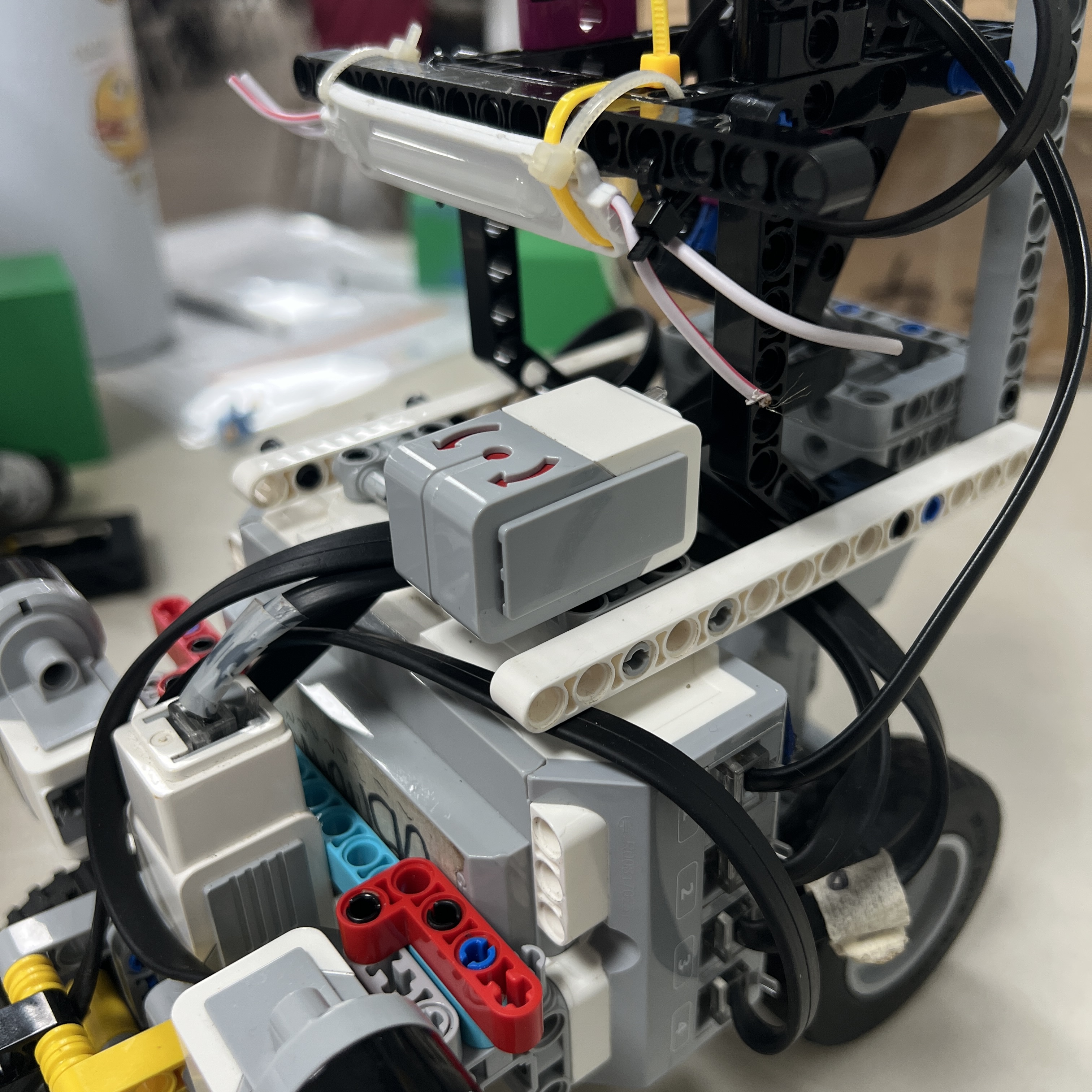 Figure 2.3. Open Challenge configuration uses S1 for direct heading information.
### Problem
Open testing showed that lateral distance alone does not fully describe vehicle orientation.
A robot can have a reasonable wall distance while still being angled relative to the corridor.
### Decision
Use:
```text
S1 → EV3 Gyro Sensor
```
during Open.
### Reasoning
The Gyro Sensor gives the controller an independent measurement related to heading.
The current Open architecture can therefore separate:
```text
S2/S3
→ lateral position
Gyro
→ orientation
```
### Trade-off
S1 is no longer available for Pixy during that round.
### Current Result
Open uses gyro-assisted heading stabilization together with the two lateral ultrasonics.
---
## D-05 — Pixy2.1 for Obstacles
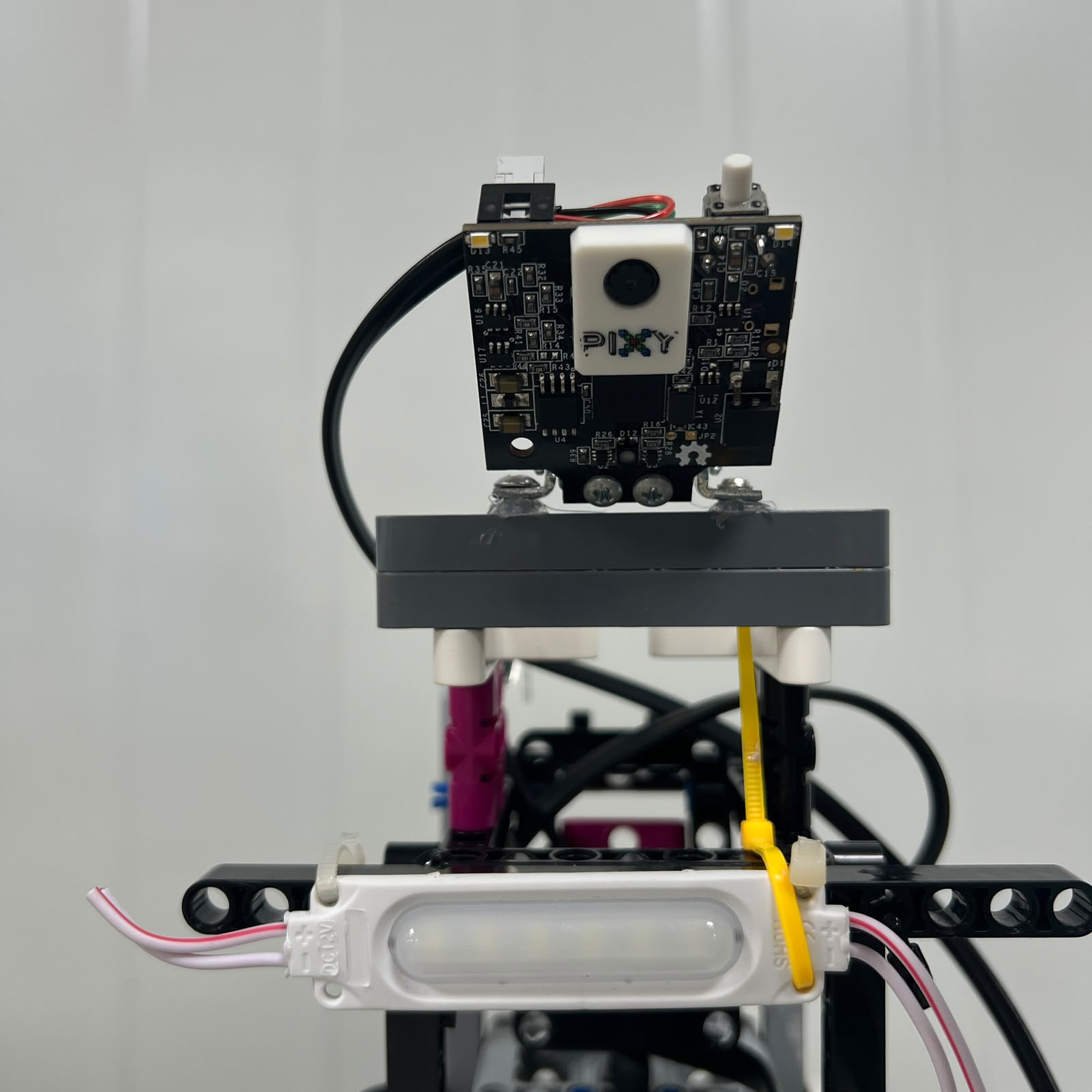 Figure 2.4. During Obstacles, S1 is reassigned to Pixy2.1 because visual pillar information becomes more valuable than direct gyro heading.
### Problem
The Obstacle Challenge requires Piolín to identify:
```text
Red pillar
Green pillar
Pink parking reference
```
and react differently to each.
### Decision
Use:
```text
S1 → Pixy2.1
```
during Obstacles.
### Reasoning
Pixy2.1 can provide both:
```text
color signature
```
and:
```text
image geometry
```
such as:
```text
x
y
width
height
```
which directly supports obstacle perception.
### Trade-off
There is no direct Gyro Sensor heading measurement in Obstacles.
The software must infer maneuver progress through:
```text
camera state
lateral geometry
steering state
encoder progression
state history
```
### Current Result
Pixy2.1 is the current forward-perception sensor for the Obstacle Challenge.
---
# 2.4 Vision Architecture Decisions
## D-06 / D-07 — Replace HuskyLens + Nano with Direct Pixy2.1 Integration
### Earlier Architecture
An earlier obstacle-vision architecture used:
```text
HuskyLens
↓
Arduino Nano
↓
EV3
```
This allowed PiolínTech to explore:
```text
external vision
color-object identification
communication between devices
camera-based obstacle decisions
```
### Problem Observed
The architecture introduced additional integration layers.
More components meant more possible failure points involving:
```text
camera
Arduino program
communication bridge
EV3 parser
wiring
```
The team also continued evaluating camera reliability and obstacle-color detection.
### Decision
The current architecture uses:
```text
Pixy2.1
↓
EV3 S1
```
directly.
### Reasoning
Removing the intermediate controller simplifies the active perception chain.
Conceptually:
```text
OLD
camera
→ Nano
→ communication
→ EV3
```
became:
```text
CURRENT
Pixy2.1
→ EV3
```
### Trade-off
Pixy still requires its own:
```text
signature calibration
mounting calibration
lighting evaluation
software interface
```
so the change does not eliminate vision engineering.
It removes an unnecessary active integration layer.
### Current Result
HuskyLens and Arduino Nano are preserved as **legacy development**, while Pixy2.1 is current.
---
## D-13 — Do Not Use "First Block Wins"
### Problem
Pixy2.1 can potentially observe several colored blocks.
A naive controller could use:
```python
blocks[0]
```
as the current target.
However, camera return order does not necessarily mean:
```text
most physically relevant obstacle
```
### Decision
The current design direction is:
```text
detect candidates
↓
validate
↓
evaluate relevance
↓
confirm
↓
lock target
```
### Relevant Information
Target selection can consider:
```text
signature
x
y
width
height
current state
previous target
```
### Trade-off
This is more complex than selecting the first valid block.
### Current Result
The architecture has been selected, but the final numerical target-relevance function remains **ONGOING**.
---
# 2.5 Ultrasonic Architecture Decisions
## D-08 / D-09 — Two Permanent Lateral Ultrasonics
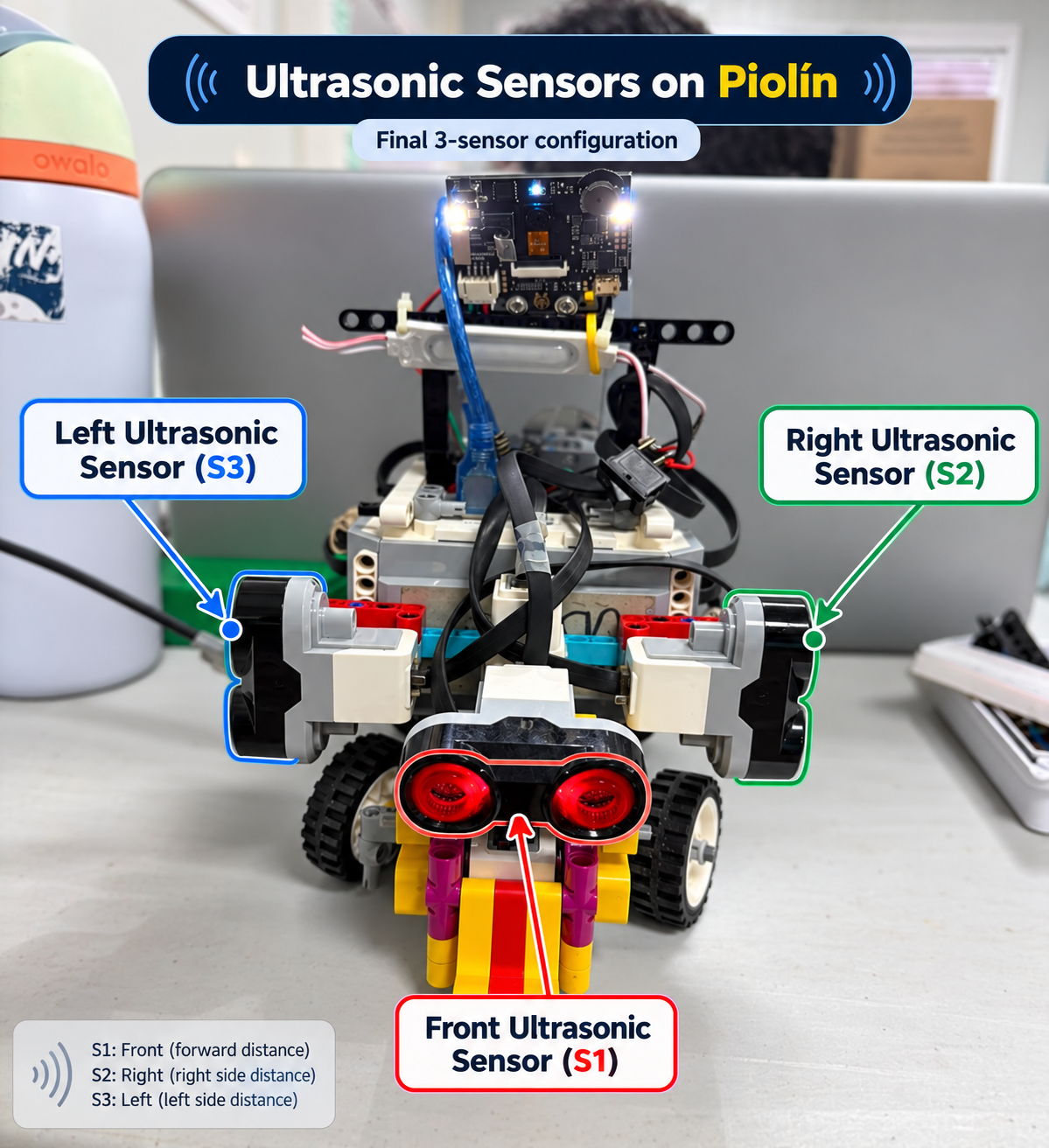 Figure 2.5. Current permanent ultrasonic convention: S2 is LEFT and S3 is RIGHT.
### Problem
Piolín needs physical information about course boundaries and vehicle position.
Earlier experimentation considered different sensor orientations and additional ultrasonic arrangements.
### Decision
The current permanent configuration is:
```text
S2 = LEFT lateral ultrasonic
S3 = RIGHT lateral ultrasonic
```
There is no permanent front ultrasonic in the current final architecture.
### Reasoning
Two lateral measurements are highly useful for:
```text
straight geometry
wall safety
recovery after obstacles
parking geometry
```
while keeping the sensor architecture consistent between both rounds.
### Trade-off
Piolín does not have a dedicated ultrasonic measurement directly forward.
Obstacle forward perception in the Obstacle Challenge is therefore primarily camera-based.
### Current Result
The S2/S3 identities are treated as **fixed physical conventions**.
They should never be reversed in software simply to compensate for a steering bug.
---
## D-10 — Geometry-Based Wall Navigation Instead of Threshold-Only Behavior
### Earlier Simplification
A simple wall strategy can be expressed as:
```text
wall close
→ steer away
```
### Problem
This does not fully describe:
```text
lateral vehicle position
sensor disagreement
corner geometry
oscillation
trajectory trend
```
and aggressive independent corrections can produce zig-zag.
### Decision
Piolín's development controller introduced a geometric approach using both sensors.
Conceptually:
```text
S2 + S3
↓
geometry estimate
↓
position error
↓
bounded steering correction
```
It also separates:
```text
NORMAL WALL CONTROL
```
from:
```text
CRITICAL WALL SAFETY
```
### Reasoning
This creates two different questions:
```text
Where should Piolín travel?
```
and:
```text
Is Piolín becoming physically unsafe?
```
These should not be answered by the same threshold.
### Trade-off
The geometry controller requires more calibration and state awareness.
### Current Result
The architecture is current, while its numerical gains and thresholds remain tunable.
---
# 2.6 Software Architecture Decisions
## D-11 — Move from Direct Reactions to States
### Problem
As Piolín gained more behaviors, several controllers could become active at once.
For example:
```text
wall following
pillar avoidance
corner handling
recovery
parking
```
A purely reactive program becomes difficult to reason about when every sensor can immediately influence steering.
### Decision
Use a high-level state architecture including:
```text
START
ACQUIRE
NORMAL
TARGET_ACQUIRE
AVOID
PASS_CONFIRM
RECOVER
CORNER
PARKING
STOP
```
### Reasoning
The state answers:
```text
What is Piolín currently trying to accomplish?
```
and therefore determines:
```text
which sensor matters most
which controller has authority
which transition is valid next
```
### Trade-off
State transitions must themselves be carefully designed and debugged.
A wrong transition can produce correct controllers at the wrong time.
### Current Result
State-based organization is the current software direction.
---
## D-14 — Explicit Controller Arbitration
### Problem
Testing showed that an obstacle controller can request one direction while normal wall control requests the opposite.
For example:
```text
Red obstacle
→ RIGHT
```
while:
```text
normal wall centering
→ LEFT
```
Combining both with equal authority can produce:
```text
weak steering
oscillation
late avoidance
```
### Decision
Piolín uses state-dependent control authority.
A conceptual priority is:
```text
CRITICAL SAFETY
↓
ACTIVE MANEUVER
↓
NORMAL NAVIGATION
```
### Examples
During:
```text
NORMAL
```
wall geometry can strongly control trajectory.
During:
```text
AVOID
```
pillar control receives greater authority.
During:
```text
CORNER
```
straight-line wall assumptions lose authority.
During:
```text
PARKING
```
the parking controller becomes the terminal navigation objective.
### Trade-off
Arbitration adds software architecture, but it prevents independent controllers from unknowingly fighting one another.
### Current Result
This has become a core design principle across the entire robot.
---
# 2.7 Perception and Event Decisions
## D-12 — Signature Determines the Required Pillar Side
The current Pixy mapping is:
```text
sig1 → Pink
sig2 → Red
sig3 → Green
```
The WRO rules require:
```text
RED
→ PASS RIGHT
```
```text
GREEN
→ PASS LEFT
```
### Decision
The passing side is determined only by:
```text
signature
```
not by:
```text
where the obstacle appears inside the image
```
Therefore:
```text
Red on left side of camera
→ still PASS RIGHT
```
and:
```text
Green on right side of camera
→ still PASS LEFT
```
### Reasoning
Camera position answers:
```text
Where is the pillar?
```
while signature answers:
```text
Which passing rule applies?
```
Mixing those two meanings was identified as a source of possible left/right inversion.
### Current Result
This is a fixed competition-logic decision, not a tuning parameter.
---
## D-15 — Convert Sensor Samples into Events
### Problem
One physical feature may remain visible for many loop cycles.
For S4:
```text
BLUE
BLUE
BLUE
BLUE
```
can represent one physical marking.
Likewise one pillar may generate many consecutive camera detections.
### Decision
Use:
```text
candidate
→ confirmation
→ latch / lock
→ release
```
instead of treating every raw observation as a new event.
For floor lines, development logic includes:
```text
confirmation
line lock
neutral-floor release
encoder separation
```
For obstacles, the same pattern becomes:
```text
candidate pillar
confirmed pillar
locked target
pass confirmation
target release
```
### Reasoning
This allows one successful software pattern to be reused across different perception systems.
### Current Result
Event lifecycle management is now part of Piolín's current architecture.
---
# 2.8 Course Progress and Parking Decisions
## D-16 — Use Physical Course Events Instead of Time Alone
### Problem
Elapsed run time varies because of:
```text
speed
corners
pillar placement
avoidance duration
recovery
safety corrections
```
A timer therefore provides weak evidence of actual track progression.
### Decision
Piolín uses confirmed S4 floor events as course-state evidence.
The current development model uses:
```text
12 accepted events
```
for the intended:
```text
3 laps / 12 corners
```
progression reference.
### Trade-off
Reliable progress now depends on:
```text
correct RGB/color detection
duplicate protection
event confirmation
```
### Current Result
Physical course events are the main progression mechanism.
---
## D-17 — Pink Alone Must Not Trigger Parking
### Problem
Pixy may be able to observe the Pink parking reference before parking is logically appropriate.
A controller based on:
```text
sig1 detected
→ park
```
could therefore activate too early.
### Decision
Parking requires:
```text
COURSE PROGRESSION COMPLETE
+
PINK TARGET CONFIRMED
```
before the parking state becomes authoritative.
Conceptually:
```python
if parking_eligible and pink_confirmed:
state = PARKING
```
### Reasoning
This combines:
```text
logical evidence
+
physical evidence
```
instead of relying on one sensor alone.
### Current Result
This is the selected parking architecture, although final Pink confirmation and parking thresholds remain tunable.
---
## D-18 — Do Not Use Timing Alone for Final Parking Travel
### Problem
A final instruction such as:
```text
move for 0.5 seconds
```
measures command duration rather than actual physical progression.
### Decision
The parking architecture uses Motor A encoder progression as one source of final-movement evidence.
A current development prototype contains:
```text
PARK_EXTRA_DEG = 300
```
but this value remains experimental.
### Reasoning
Encoder change provides a stronger physical reference than elapsed time alone.
The final parking architecture can combine:
```text
encoder progression
S2/S3 geometry
Motor B state
```
before reaching:
```text
STOP
```
### Trade-off
Encoder rotation is still not perfect absolute position because:
```text
wheel slip
turning geometry
surface interaction
```
can affect real ground displacement.
### Current Result
Encoder-based progression is selected; the final numerical travel remains **ONGOING**.
---
# 2.9 Software Environment Decision
## D-19 — Separate Open and Obstacle Programs
### Problem
The two rounds do not use identical hardware.
Open uses:
```text
Gyro on S1
```
while Obstacles uses:
```text
Pixy2.1 on S1
```
The vision interface also has different software requirements from the Open control loop.
### Decision
Maintain separate high-level source programs, conceptually:
```text
src/
open_challenge.py
obstacle_challenge.py
```
The current Open work is based primarily around:
```text
Pybricks MicroPython
```
while the direct Pixy2.1 Obstacle integration is currently better matched to:
```text
ev3dev2 + SMBus/I2C
```
### Reasoning
Trying to force both rounds into one large source file would introduce:
```text
unused drivers
round-specific conditionals
sensor-port ambiguity
more difficult debugging
```
Separate programs can still share the same engineering concepts without pretending the hardware is identical.
### Trade-off
Some utility logic may exist in both programs unless later refactored into common modules.
### Current Result
The project treats Open and Obstacles as two software configurations for the same mechanical robot.
---
# 2.10 Decision to Preserve Legacy Engineering Work
## D-20 — Keep Replaced Approaches as Legacy Documentation
### Problem
Deleting every failed or superseded approach would make the final repository appear cleaner, but it would remove evidence of:
```text
experimentation
trade-offs
learning
architecture evolution
```
### Decision
Superseded systems are retained separately under legacy documentation.
Examples include:
```text
HuskyLens + Arduino Nano architecture
older Pixy approaches
earlier gyro strategies
prototype testing
```
They must be clearly labeled:
```text
LEGACY
```
and must never be confused with the current wiring or code.
### Reasoning
Engineering is not only the final design.
Understanding:
```text
why something was replaced
```
is evidence of systems thinking.
### Trade-off
The repository requires stronger organization so readers can immediately distinguish:
```text
historical
```
from:
```text
current
```
### Current Result
The project maintains legacy material intentionally while current documentation always uses the present architecture as the primary reference.
---
# 2.11 Decisions That Are Still Open
Not every engineering question has already been finalized.
Several decisions are structurally defined but still require numerical validation.
| Area | Architecture Already Chosen | Still to Determine |
| :--- | :--- | :--- |
| Pixy target selection | Relevance-based selection | Final scoring equation |
| Target confirmation | Confirm before lock | Final confirmation requirement |
| Target loss | Temporary lock maintained | Final loss tolerance |
| Red avoidance | Pass RIGHT | Final steering trajectory |
| Green avoidance | Pass LEFT | Final steering trajectory |
| Pass confirmation | Use visual + physical context | Final release criteria |
| Recovery | Separate state | Final steering/speed profile |
| Corner handling | Separate state | Final transition thresholds |
| RGB detection | Blue/Orange floor classification | Final calibrated thresholds |
| Parking entry | Dedicated maneuver | Final entry curvature |
| Parking alignment | Separate phase | Final alignment geometry |
| Parking final travel | Encoder-supported | Final calibrated encoder progression |
| Final parked geometry | Tolerance-based | Final S2/S3 target ranges |
Leaving these marked as ongoing is preferable to presenting untested values as finished engineering results.
A decision should become:
```text
FINAL / VALIDATED
```
only after sufficient physical evidence exists.
---
# 2.12 Decision-Making Principles
Several general principles now guide new PiolínTech decisions.
### Prefer Physical Meaning
A parameter should correspond to something understandable, such as:
```text
wall distance
camera relevance
steering authority
course progress
encoder travel
```
rather than existing only because one trial happened to work.
### Prefer Separation of Responsibilities
For example:
```text
Pixy
→ obstacle identity
```
```text
S2/S3
→ physical lateral geometry
```
```text
S4
→ floor progression
```
instead of forcing one sensor to solve every navigation problem.
### Prefer State Over Conflicting Reactions
The software should know:
```text
what maneuver is active
```
before selecting which controller receives authority.
### Prefer Repeatability Over One Successful Run
A change is only valuable when its improvement can be reproduced.
### Prefer Measured Values Over Assumptions
Physical dimensions, RGB ranges, camera geometry, parking clearances, and final movement values should be measured before being presented as validated specifications.
### Preserve Rejected Designs
A replaced approach can still explain why the current design is stronger.
---
# 2.13 Decision Traceability
The long-term goal is for each important decision to be traceable through:
```text
DECISION ID
↓
SOURCE CODE VERSION
↓
PHYSICAL CONFIGURATION
↓
TEST
↓
RESULT
↓
CURRENT STATUS
```
For example:
```text
D-14
Controller arbitration
↓
obstacle software version
↓
Red single-pillar test
↓
compare obstacle command vs final command
↓
determine whether wall controller was fighting AVOID
```
This creates an engineering record much stronger than:
```text
"We changed the code because it did not work."
```
The desired record explains:
```text
what failed
why the team believed it failed
what changed
what trade-off the change introduced
what the next test demonstrated
```
---
# 2.14 Current Architecture Result
The decisions in this log collectively produce the current Piolín architecture:
```text
PIOLÍN
│
┌───────────────────┼───────────────────┐
│ │ │
▼ ▼ ▼
MECHANICS SENSORS SOFTWARE
│ │ │
│ ┌────────┼────────┐ │
│ │ │ │ │
▼ ▼ ▼ ▼ ▼
Ackermann S2 L S3 R S4 State Machine
+ Motor A US US Color │
+ Motor B │ │
│ │ │
│ ┌───────────┴──────┐ │
│ │ │ │
│ ▼ ▼ │
│ OPEN OBSTACLES │
│ │ │ │
│ S1 Gyro S1 Pixy │
│ │ │ │
└─────────────────┴──────────┬───────┴─────┘
▼
SENSOR PROCESSING
│
▼
PERCEPTION
│
▼
STATE / DECISION
│
▼
CONTROL ARBITRATION
│
┌───────────┴───────────┐
│ │
▼ ▼
safety override active maneuver
│ │
└───────────┬───────────┘
▼
FINAL COMMAND
│
┌────────────┴────────────┐
│ │
▼ ▼
Motor A Motor B
propulsion steering
```
The architecture is therefore not a collection of independent parts.
It is the result of linked engineering decisions about:
```text
what should be sensed
when it should be trusted
which controller should act
how physical motion should be produced
how failures should be diagnosed
```
---
# 2.15 Final Engineering Assessment
PiolínTech's decision log shows that the current robot architecture was produced through **selection, rejection, and refinement**, rather than by keeping every early design choice.
Important examples include:
```text
HuskyLens + Nano
→ replaced by direct Pixy2.1 integration
```
```text
one universal S1 configuration
→ replaced by round-specific Gyro / Pixy configurations
```
```text
changing ultrasonic roles
→ replaced by fixed S2 LEFT / S3 RIGHT identities
```
```text
simple wall reactions
→ replaced by geometry control + independent safety
```
```text
direct sensor reactions
→ replaced by state-based control
```
```text
multiple competing corrections
→ replaced by explicit controller arbitration
```
```text
raw sensor samples
→ replaced by confirmed events and target lifecycles
```
```text
Pink detection alone
→ replaced by progression-gated parking
```
```text
timing-only movement
→ increasingly replaced by physical sensor and encoder evidence
```
Some numerical controller choices remain under active testing, and the repository intentionally labels them as such.
This distinction is important:
```text
ARCHITECTURE DECIDED
```
does not always mean:
```text
EVERY CALIBRATION VALUE FINALIZED
```
The central decision-making principle used by PiolínTech is:
> **A design decision is kept because it solves a clearly identified system problem with an acceptable trade-off and performs better under repeated physical testing—not simply because it is the most recent idea implemented.**
By preserving both current and replaced decisions, the repository documents not only what Piolín is, but also the reasoning that transformed earlier prototypes into the current competition architecture.
---
### [← Back to PiolínTech Main README](../../README.md)