- Batuhan Pekcan, 16
- Deniz Türker, 16
- Ali Aslan İşkol, 15
|
|
This repository details team Çakatech's building and programming process in the 2026 WRO Future Engineers Competition.
We are team Çakatech, three students who are passionate about technology and robotics. For this competition we built an autonomous vehicle. We worked after school and on weekends. Through this competition, we learned how to work as a team and solve problems related to robotics.
Team Members:
|
 |
|  |
| :--: | :--: |
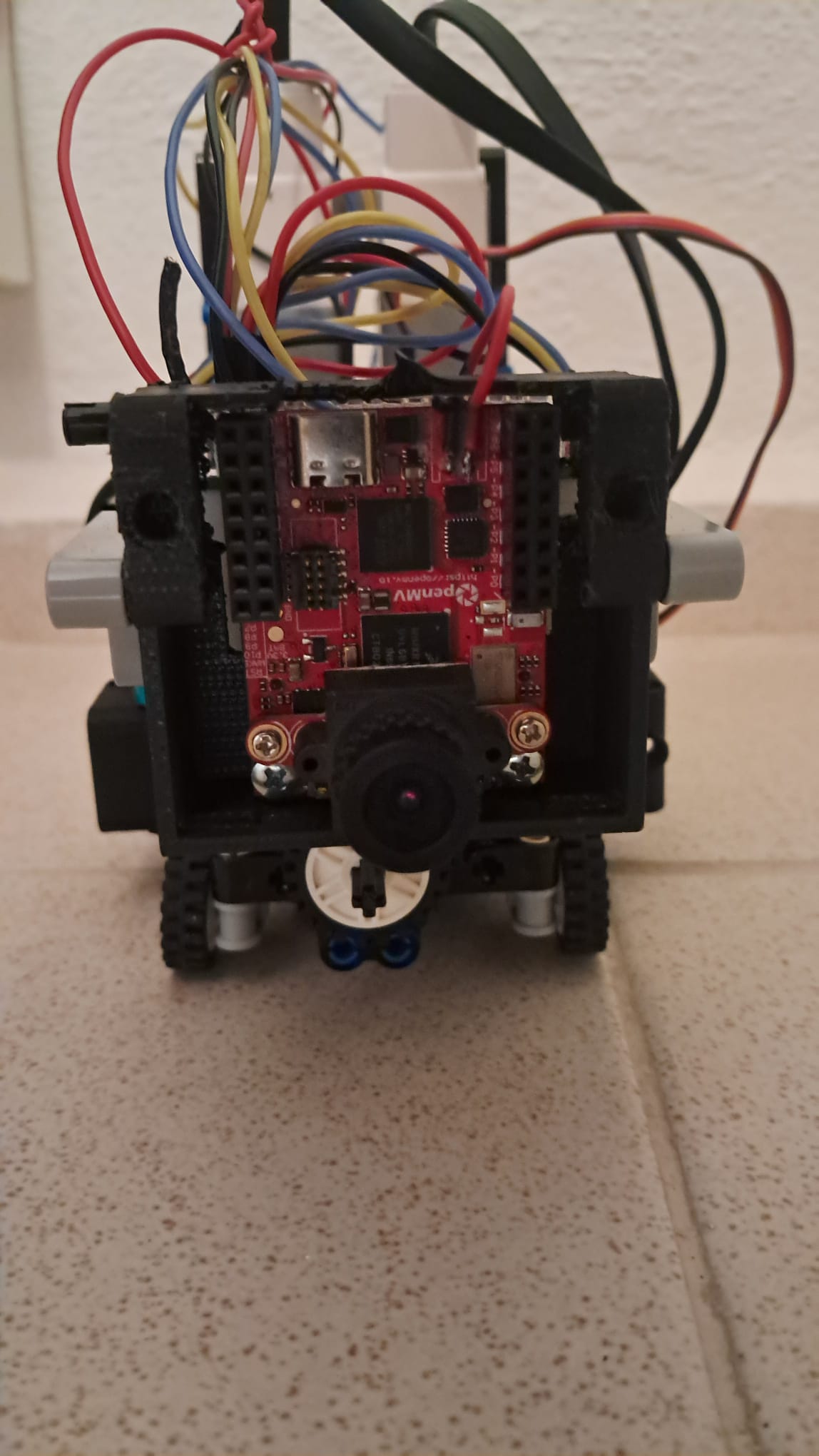
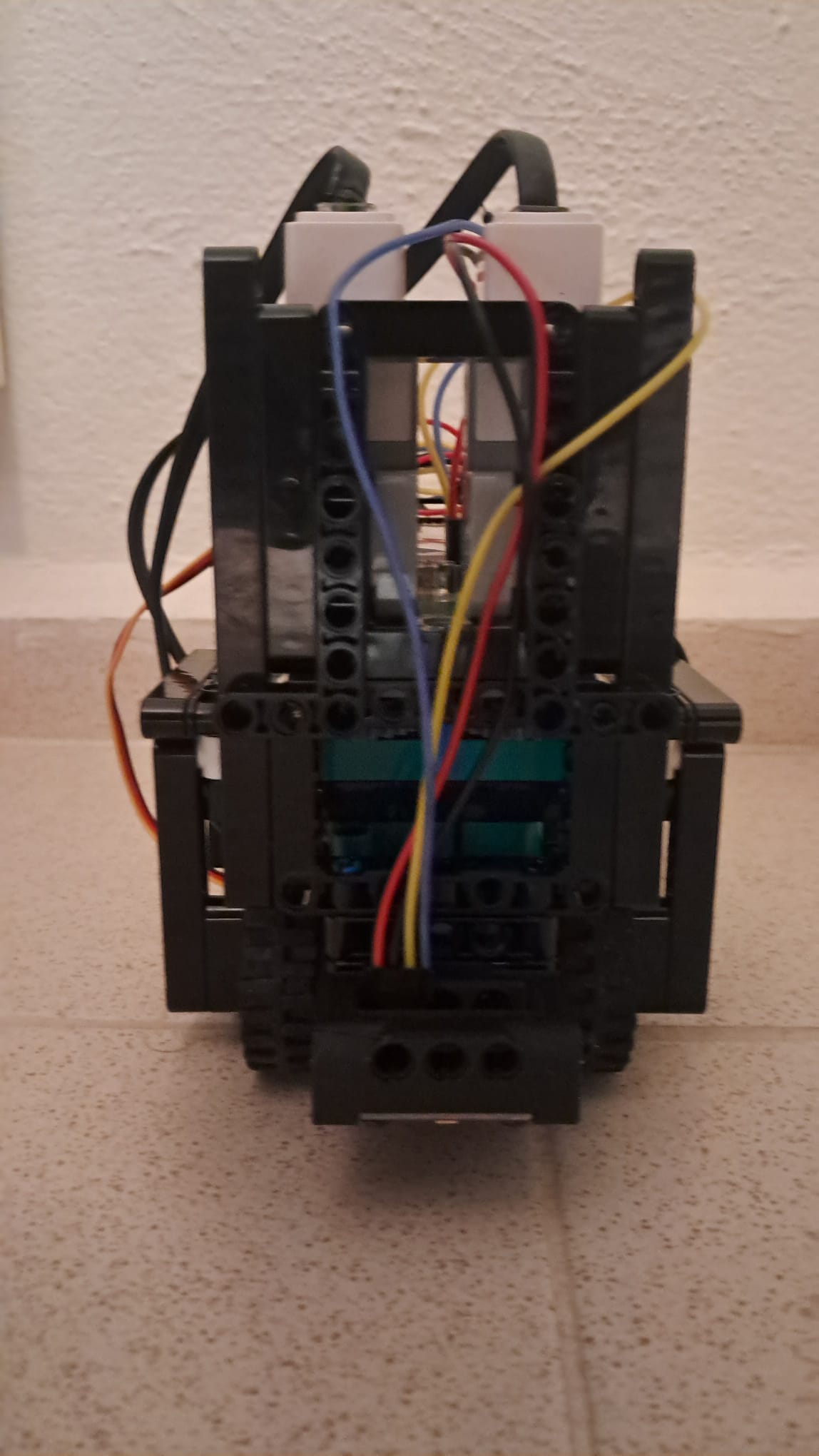
| *Front* | *Back* |
|
|
| :--: | :--: |
| *Front* | *Back* |
| 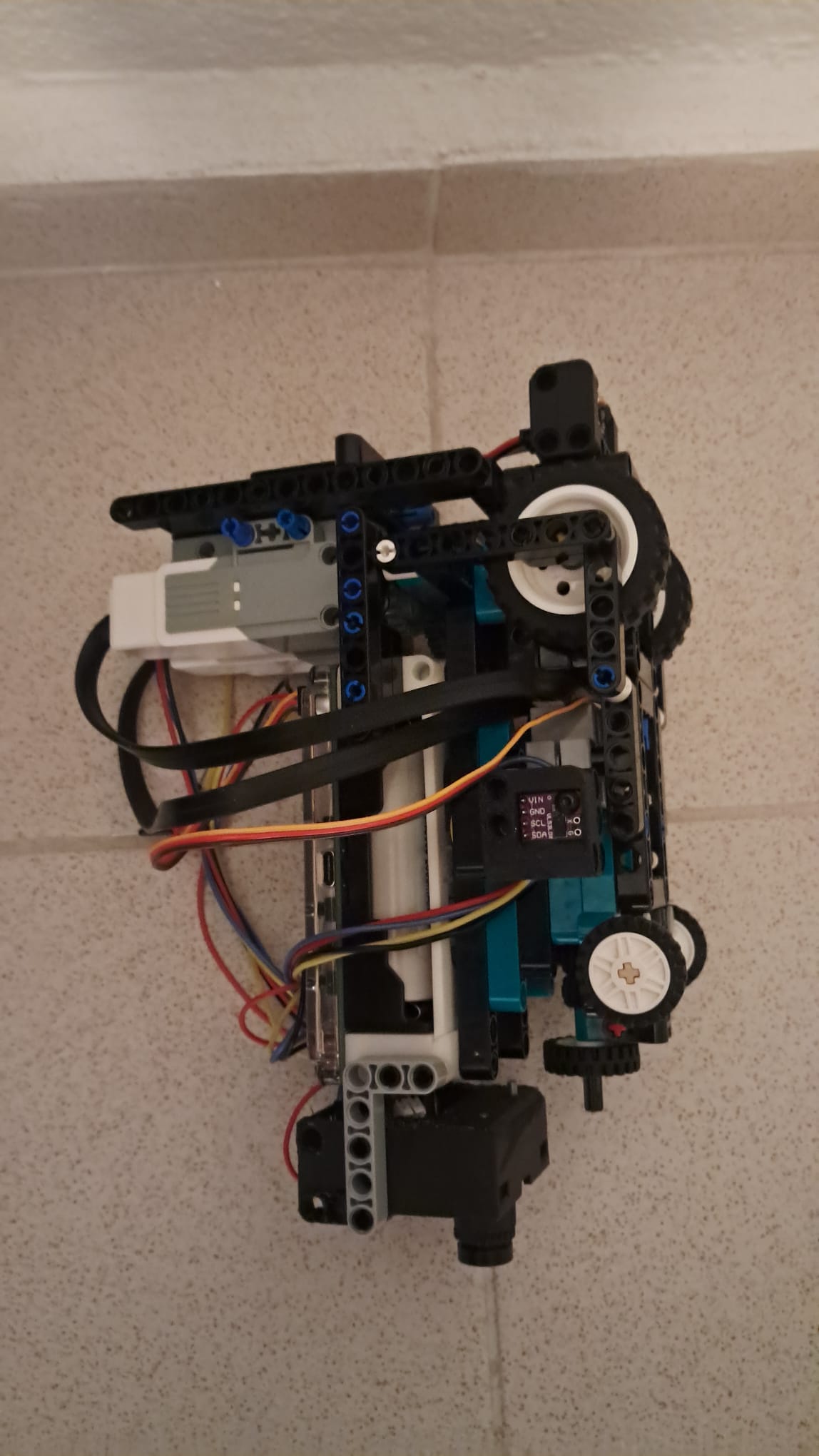 |
| 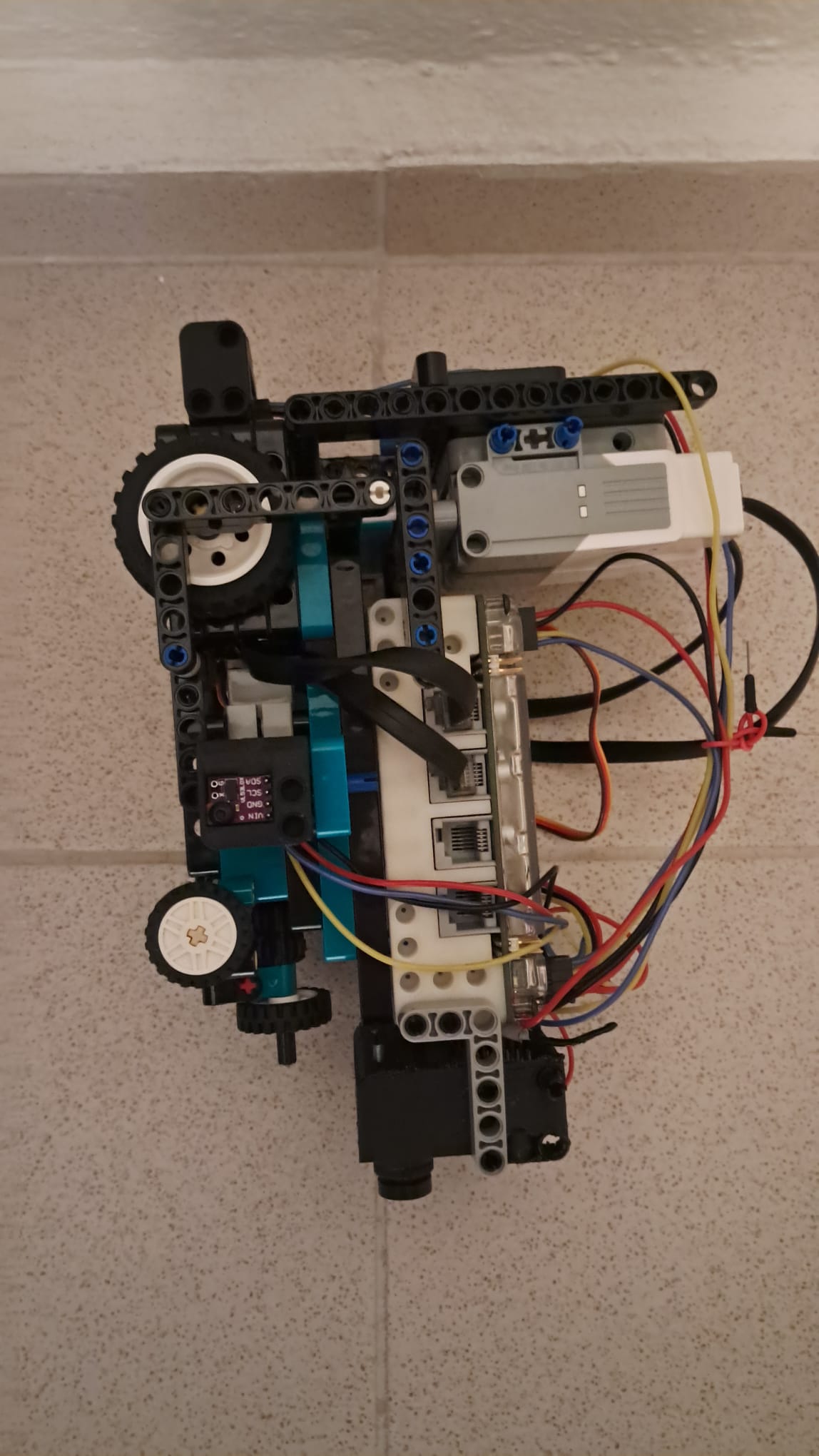 |
| *Left* | *Right* |
|
|
| *Left* | *Right* |
| 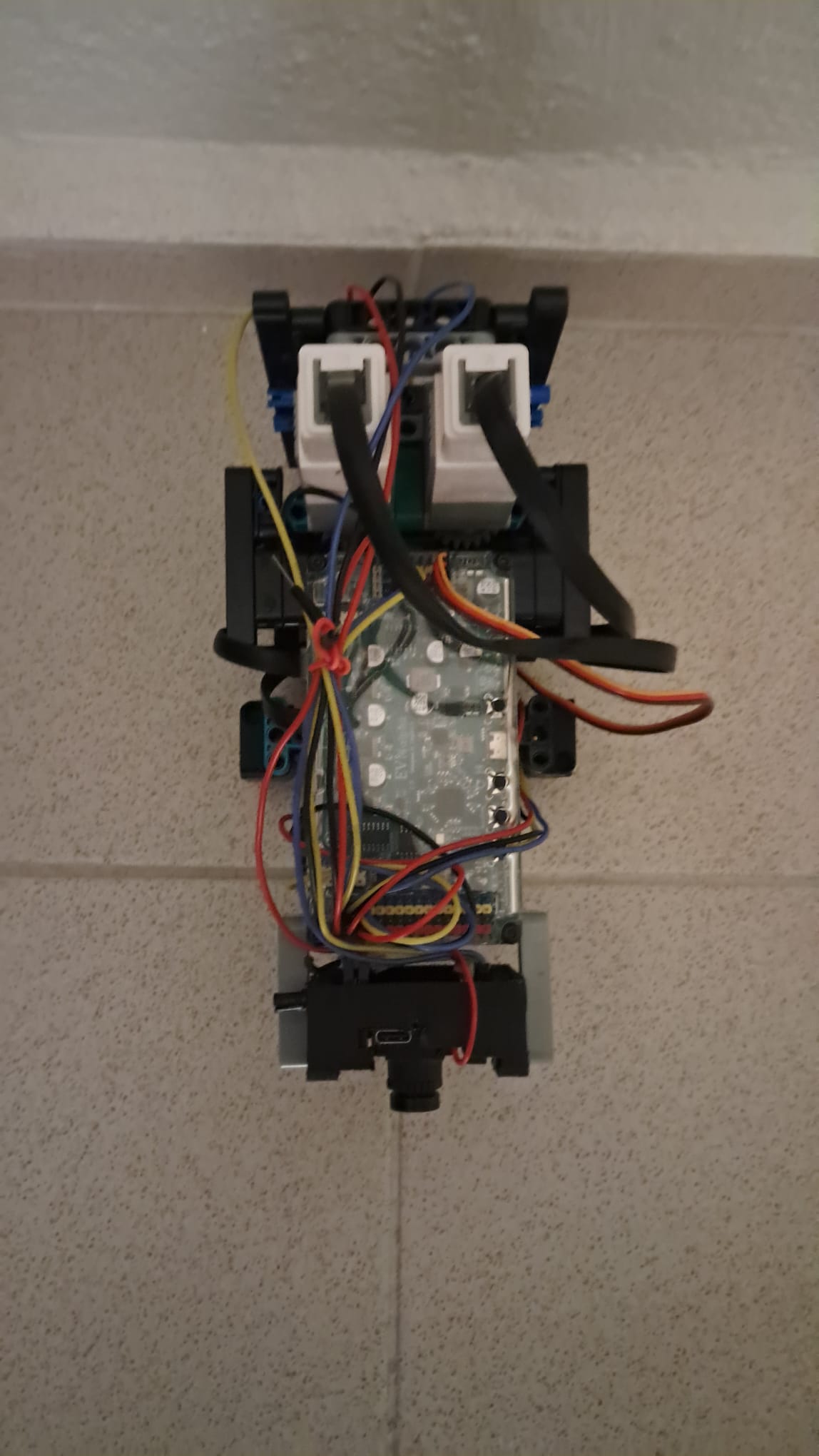 |
| 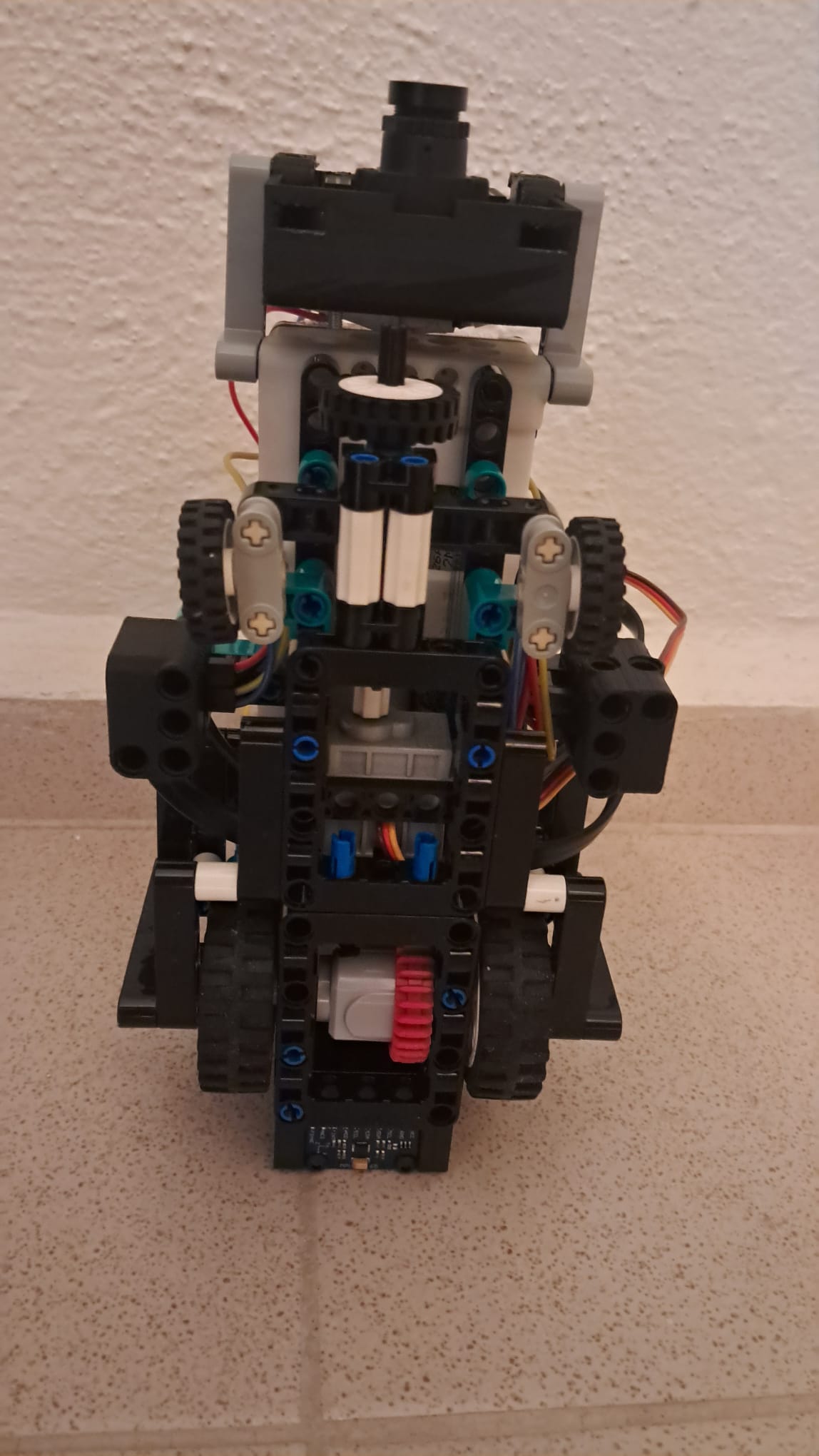 |
| *Top* | *Bottom* |
|
| *Top* | *Bottom* |
| Component | Description / Link | Image | Price |
|---|---|---|---|
| Motor | EV3 Medium Motor | 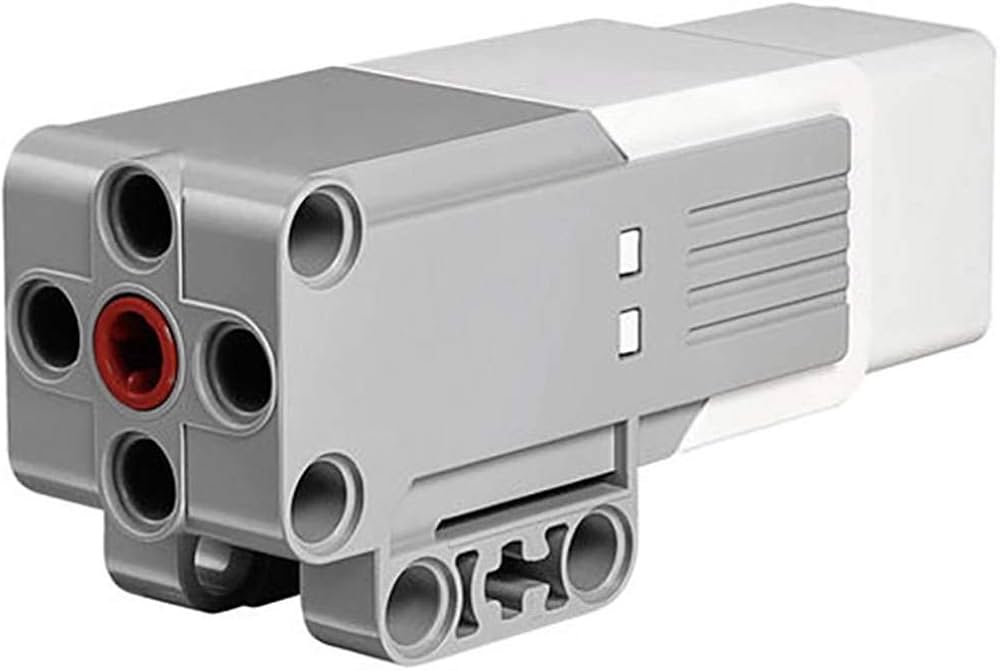
| $125x2 |
| Servo Motor | GeekServo (360 degrees) | 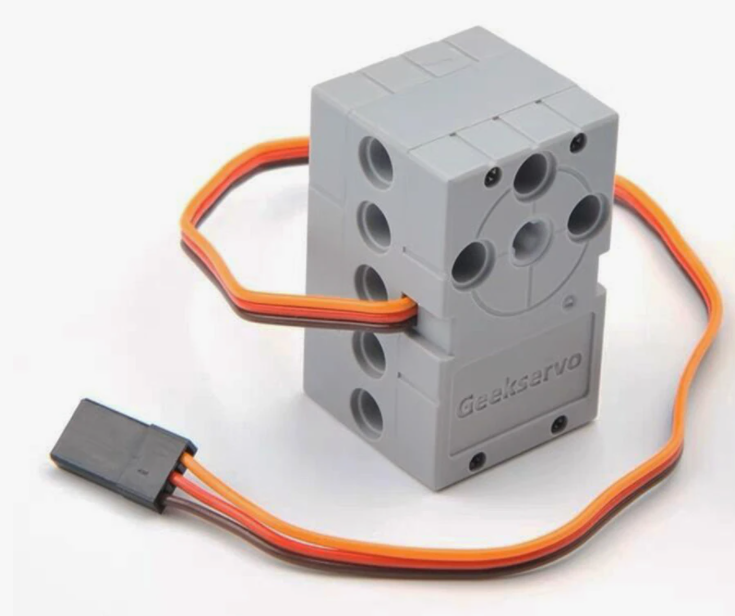
| $10 |
| Motor Controller and Processor | EVN Alpha | 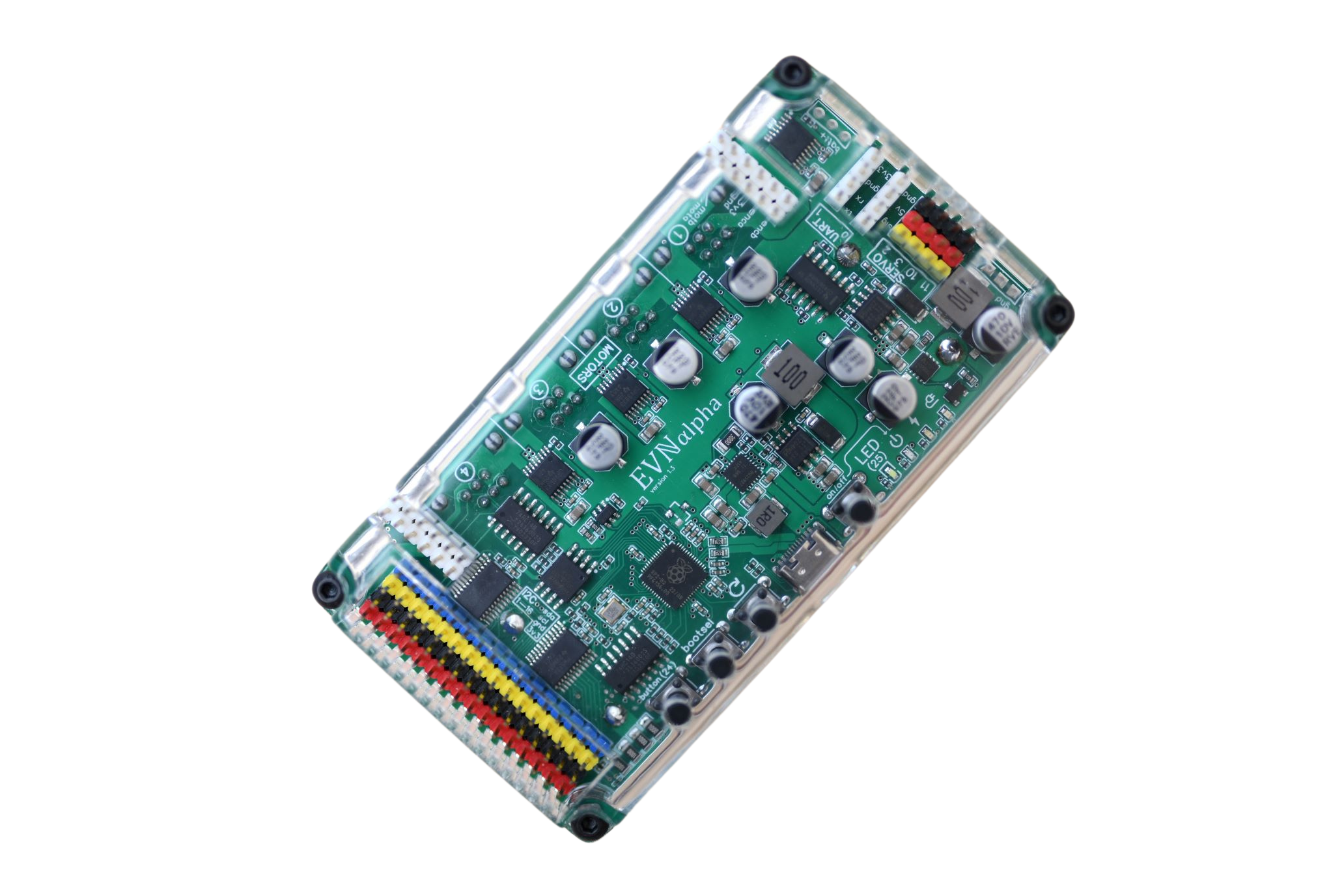 |
$168 | IMU | MPU 6500 Gyro Sensor | 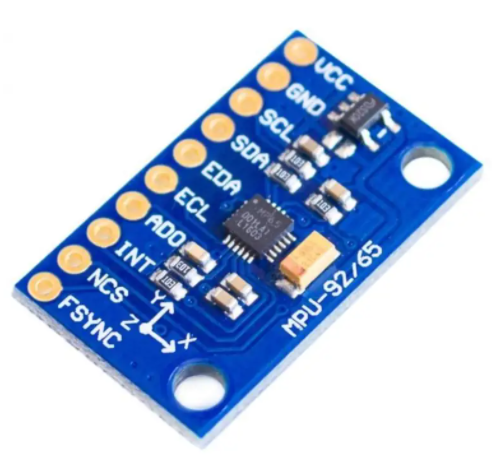
| $1.88 |
| Battery | Molicel 35A Li-ion battery | 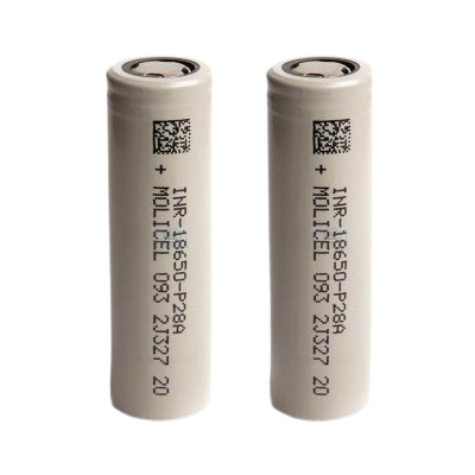
| $10x2 |
| Camera | OpenMV Cam RT1062 | 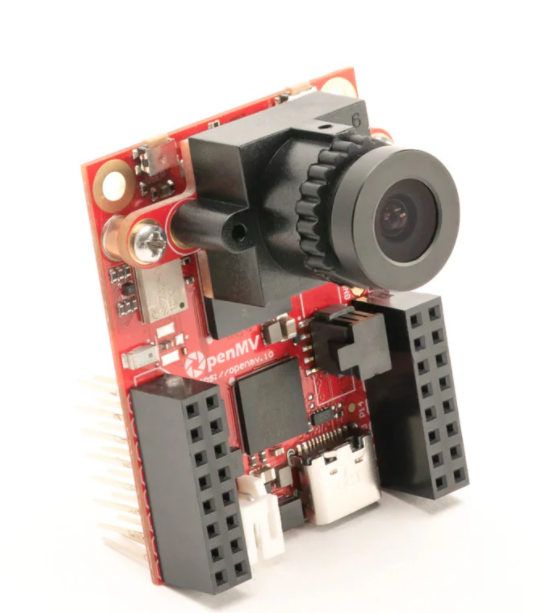
| $120 |
| Time of Flight Sensors | VL53L0X ToF Distance Sensor | 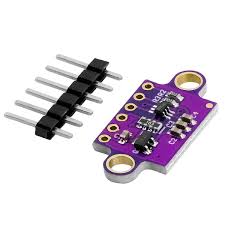
| $2.66x2 |
| Lego Differential | Lego Differential | 
| $2.96 |
| Total Cost | $878.06 | ||
|
|
Specifications (per motor): Rated Voltage: 9V Weight: 80g No-Load Speed: ~240 RPM Stall Torque: ~8 N·cm Integrated Rotation Sensor: 1° Resolution Connector: LEGO EV3/RJ12 This project uses two LEGO EV3 Medium Motors as the primary actuators. These motors are designed for applications requiring precise control and fast response, making them ideal for robotic mechanisms and mobile platforms. The built-in high-resolution rotation sensor enables accurate position and speed feedback, allowing for reliable closed-loop control. This feature is particularly useful for tasks that require precise movements, such as navigation and steering. |
| | Specifications: Dimensions: 23 x 16 x 11 cm Weight: 18 g This Lego Differential is fully compatible with 3D shapes and Lego parts, allowing for seamless integration. It also features a 28 Teeth Differential Gear with a round axle design, providing smooth rotational movement for our robot. |
| | Specifications: Operating Voltage: 3.3V~6V Rated Voltage: 4.8V Rotational range: 360° Maximum Torque: 1.6kg±0.2kg/cm (4.8V) Maximum Speed: 45rpm (3V) Weight: 20g For steering we selected the GeekServo. This motor is compatible with Lego Technic parts and offers a higher speed compared to 9g motors. The output shaft features a Lego Technic axle connector, making it ideal for applications that require a high-power drive. |
 [3D Model](/models/backpackOpenMV/backpackOpenMV.stl)
#### **An updated version from [Instructables by CEEOInnovations](https://www.instructables.com/Backpack-1-OpenMV-Camera/)**
#### Electronic Diagram
[3D Model](/models/backpackOpenMV/backpackOpenMV.stl)
#### **An updated version from [Instructables by CEEOInnovations](https://www.instructables.com/Backpack-1-OpenMV-Camera/)**
#### Electronic Diagram
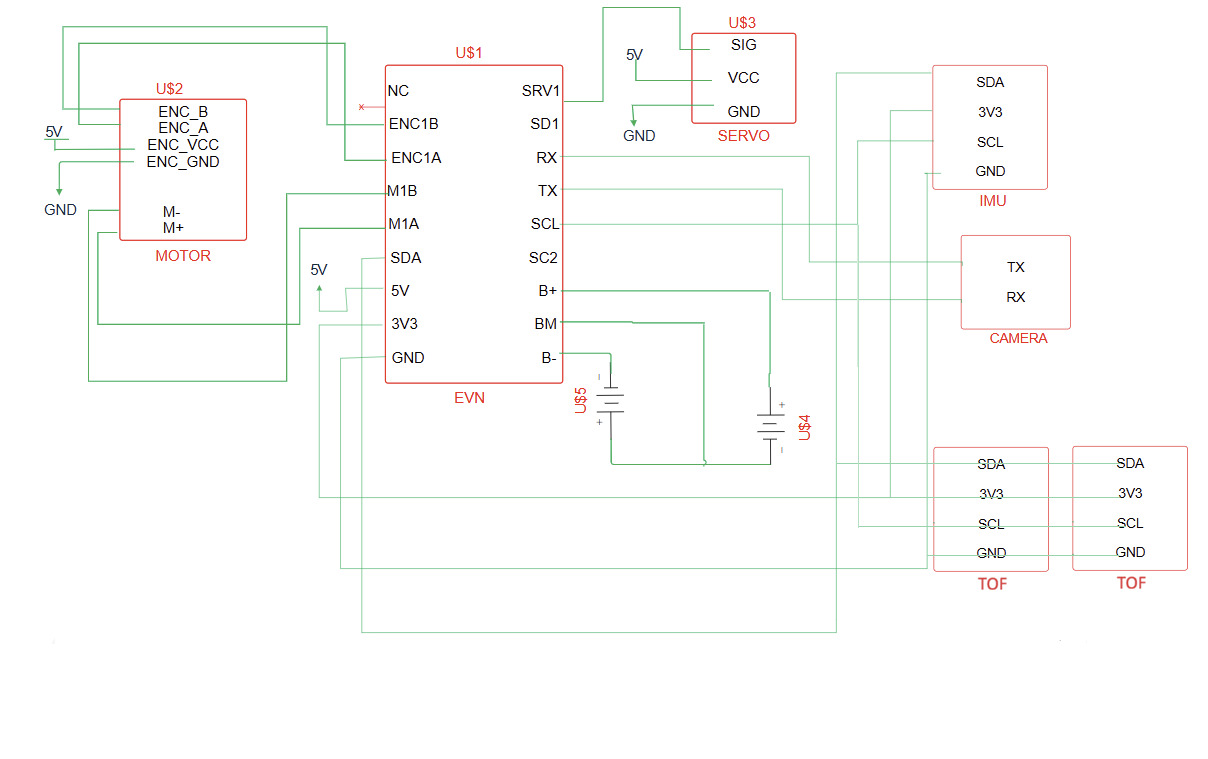 ## Power and Sense Management
### Li-ion Battery
## Power and Sense Management
### Li-ion Battery
| | Specifications: Voltage: 3.7V Capacity:2800mAh Diameter: 18mm Length: 65mm |
| Specifications: Gyroscope Range: ±250, ±500, ±1000, ±2000 °/s Accelerometer Range: ±2g, ±4g, ±8g, ±16g Interface : I2C Power Supply: 3.5V |
|
| Specifications: Microcontroller: ARM Cortex M7 (RT1062) Frequency: 600 MHz RAM: 32 MB SDRAM + 1 MB SRAM Flash Memory: 16 MB program/storage flash Camera Resolution: 2592 × 1944 (5 MP) Frame Rate:~40 FPS on QVGA (320 × 240) This OpenMV Cam -RT1062 is the one we used in our robot. The OpenMV Cam is a small, low-power microcontroller board that we used in our robot to implement machine vision applications. We program the OpenMV Cam in high-level Python scripts (via the MicroPython Operating System) instead of C/C++, which makes it much easier to handle the complex outputs of machine vision algorithms and work with high-level data structures. At the same time, we retain full control over the OpenMV Cam and its I/O pins in Python. This allows our robot to locate obstacles, lines and walls, enabling intelligent, autonomous behaviors. |
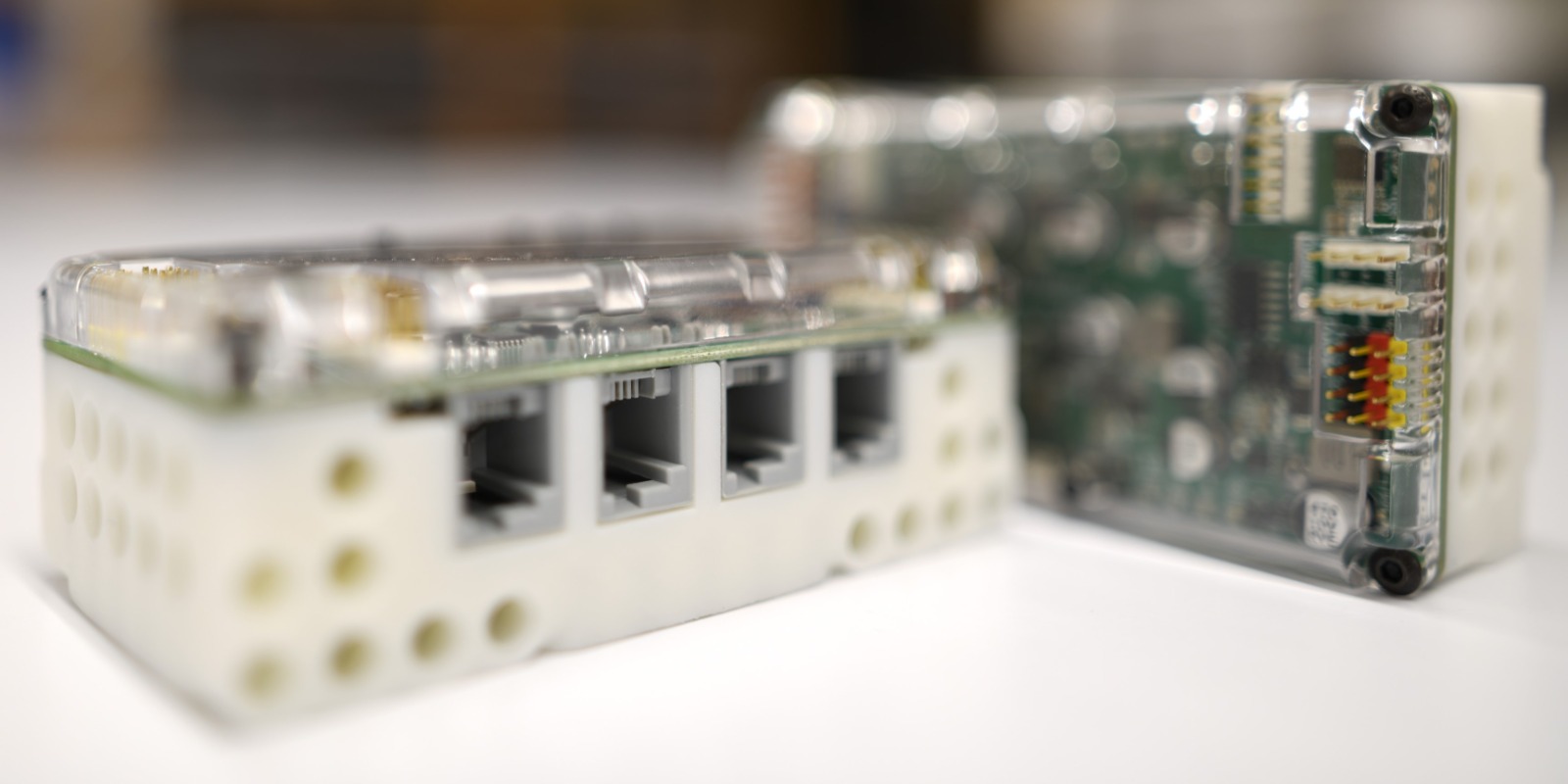
| The EVN ALPHA is a compact robot controller based on the RP2040, housed in a LEGO Technic-compatible shell. It provides 26 I/O channels for controlling brushed DC motors, servos, and connecting UART or I2C peripherals. The board also integrates a 2-cell Lithium-Ion power management system, offering charging, cell balancing, and voltage regulation, making it ideal for safely powering and controlling our robot’s motors and sensors. |