# Semantic-Guided-Low-Light-Image-Enhancement
This is the official Pytorch implementation for our paper "**Semantic-Guided Zero-Shot Learning for Low-Light Image/Video Enhancement**"
# Updates
- 2021.11.27: The figure for the model architecture has been uploaded.
- 2021.11.10: This work is accepted and will be presented at [WACV 2022](https://wacv2022.thecvf.com/home).
- 2021.10.8: An easy way to calculate mPA and mIOU score is available at this [repository](https://github.com/ShenZheng2000/DarkCityScape_mIOU_mPA)
- 2021.10.6: A sample enhanced low-light video in GIF format has been released.
- 2021.10.5: A sample low-light video and its enhanced result is available at: [[Low-Light](https://www.youtube.com/watch?v=4Avy_xsczdU)] [[Enhanced](https://www.youtube.com/watch?v=rN6Tf1E-kE8)]
- 2021.10.5: My new [repository](https://github.com/ShenZheng2000/Awesome-Low-Light-Enhancement-with-Deep-Learning) contains a collection of low-light enhancement methods. Hope you will find it helpful.
- 2021.10.4: The arxiv link is available at http://arxiv.org/abs/2110.00970
# Abstract
Low-light images challenge both human perceptions and computer vision algorithms. It is crucial to make algorithms robust to enlighten low-light images for computational photography and computer vision applications such as real-time detection and segmentation tasks. This paper proposes a semantic-guided zero-shot low-light enhancement network which is trained in the absence of paired images, unpaired datasets, and segmentation annotation. Firstly, we design an efficient **enhancement factor extraction** network using depthwise separable convolution. Secondly, we propose a **recurrent image enhancement** network for progressively enhancing the low-light image. Finally, we introduce an **unsupervised semantic segmentation** network for preserving the semantic information. Extensive experiments on various benchmark datasets and a low-light video demonstrate that our model outperforms the previous state-of-the-art qualitatively and quantitatively. We further discuss the benefits of the proposed method for low-light detection and segmentation.
# Model Architecture
Click the following link to see the model architecture in pdf format.

# Sample Results
## 1. Low-Light Video Frames
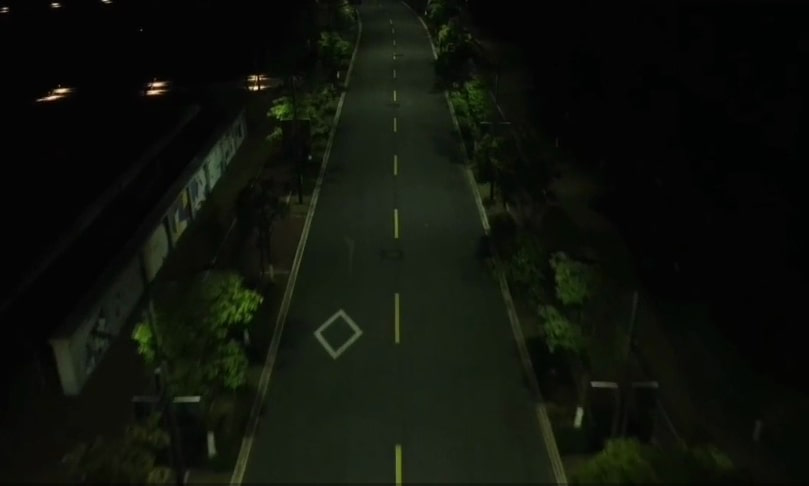
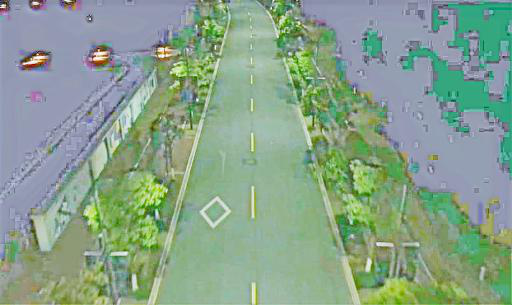
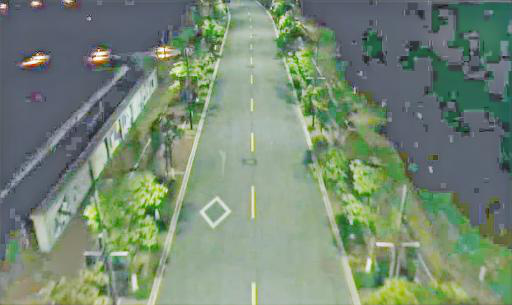
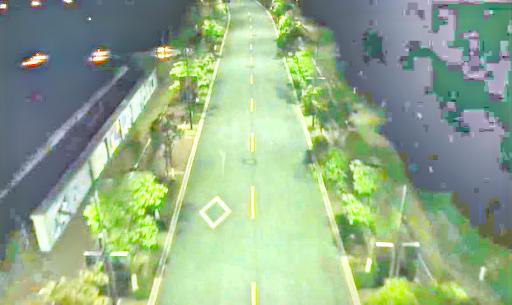
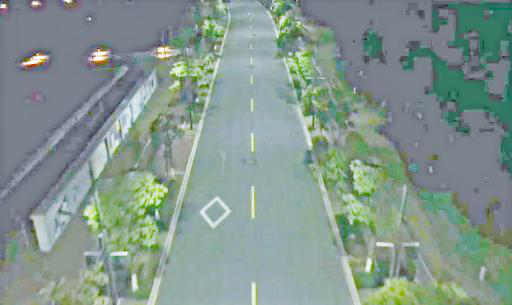
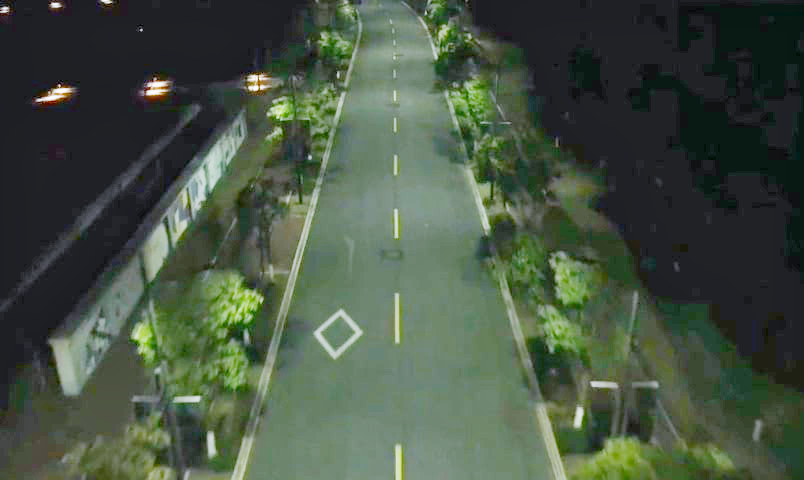
From left to right, and from top to bottom: Dark, Retinex [1], KinD [2], EnlightenGAN [3], Zero-DCE [4], Ours.
## 2. Low-Light Images (Real-World)
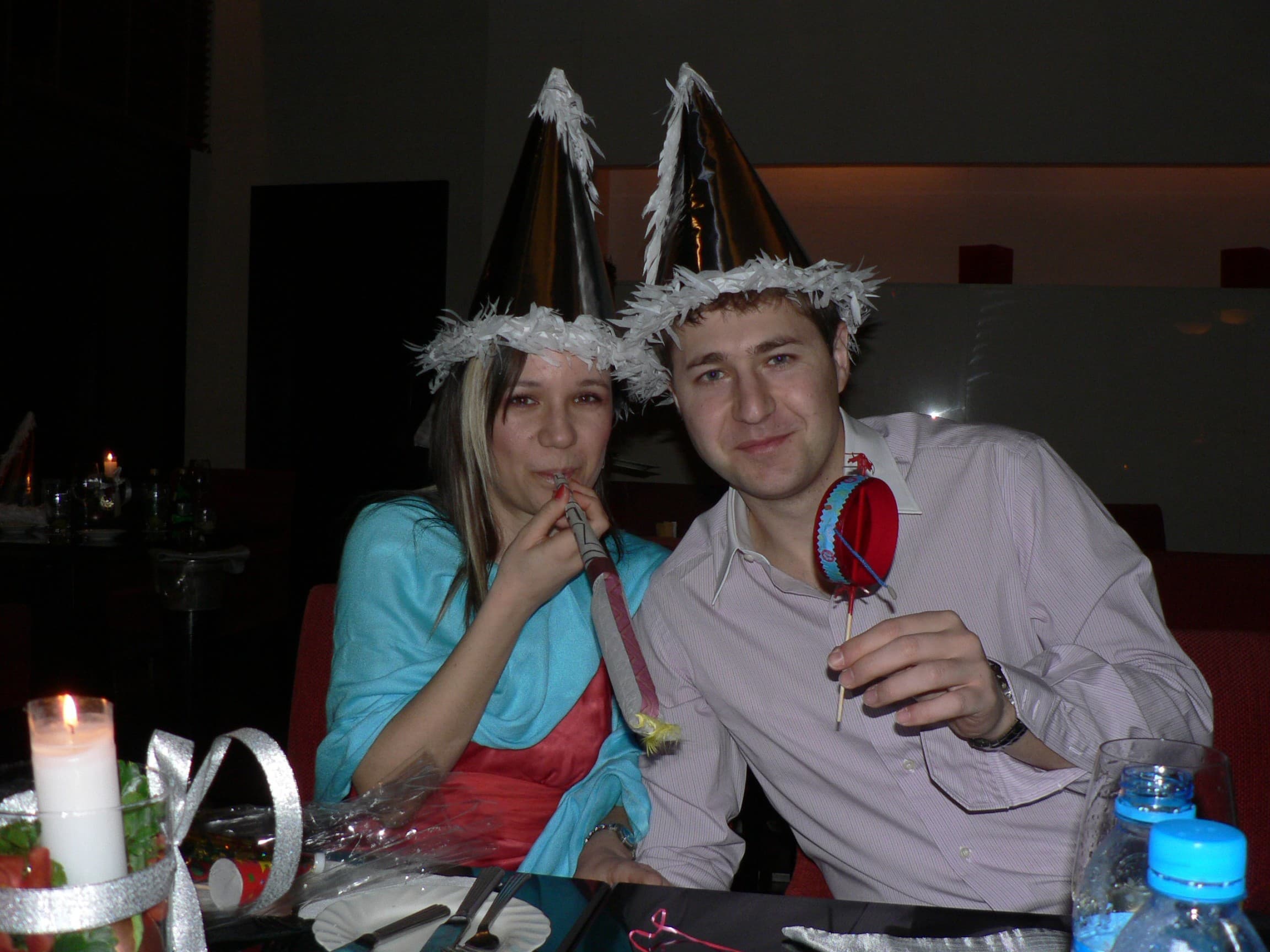
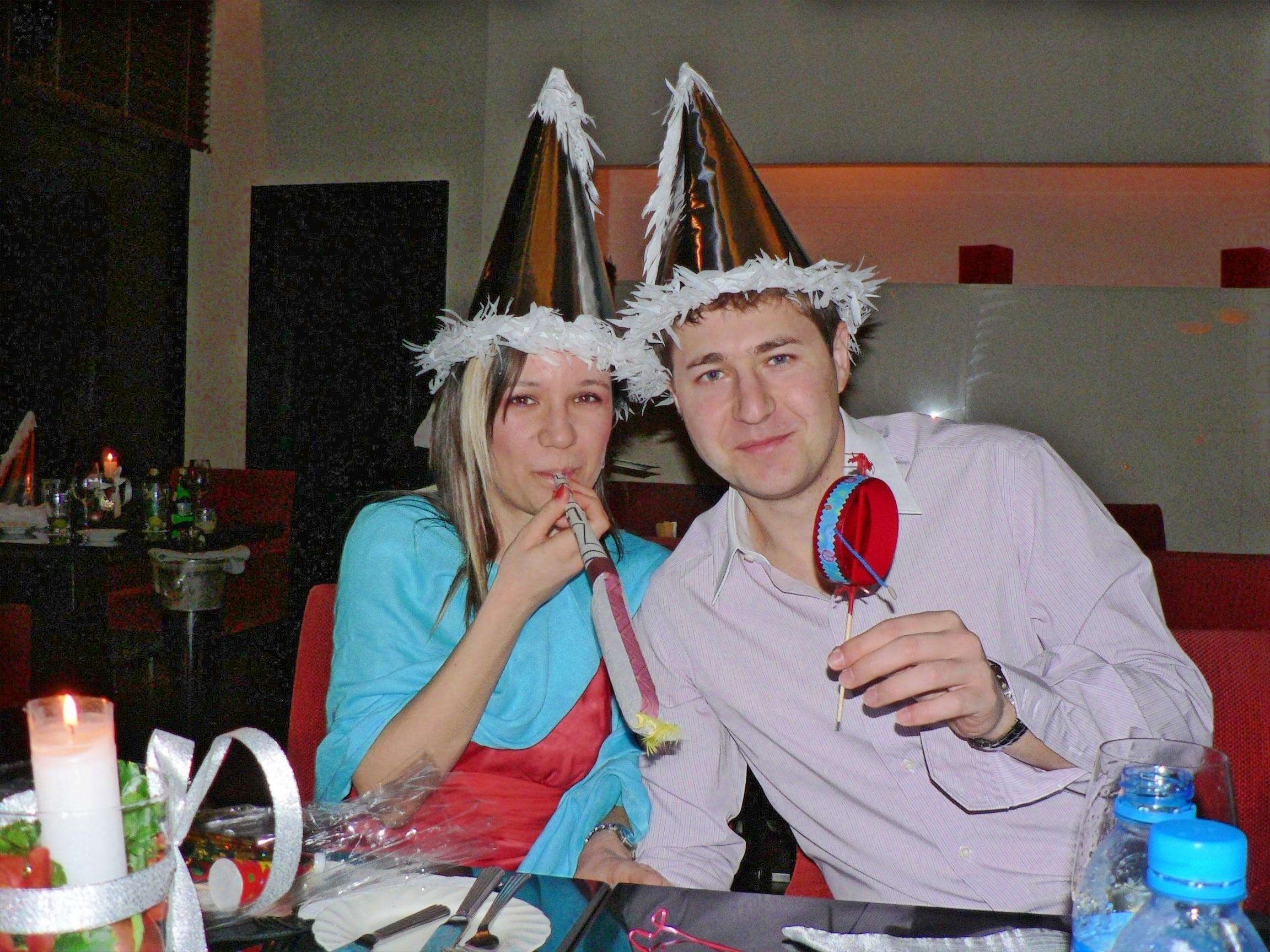
From left to right, and from top to bottom: Dark, PIE [5], LIME [6], Retinex [1], MBLLEN [7], KinD [2] , Zero-DCE [4], Ours
# Get Started
## 1. Requirements
* CUDA 10.0
* Python 3.6+
* Pytorch 1.0+
* torchvision 0.4+
* opencv-python
* numpy
* pillow
* scikit-image
## 2. Prepare Datasets
### Testing Dataset
- Downloaded the official testing images from [BaiduYun](https://pan.baidu.com/s/1pbz0YlOmLqxnazeKrRRUQg) with password `8itq`.
- Move the unzipped file into `data/test_data/`.
- You can also put custom datasets or your own low-light images in this folder for testing. Example: `data/test_data/yourDataset/`
### Training Dataset
- Downloaded the official training images from [GoogleDrive](https://drive.google.com/file/d/1GAB3uGsmAyLgtDBDONbil08vVu5wJcG3/view).
- Move the unzipped file into `data/train_data/`.
NOTE: If you don't have BaiduYun account, you can download both the training and the testing dataset via [Google Drive](https://drive.google.com/drive/folders/1RIQsP5ap5QU7LstHPknOffQZeqht_FCh)
After preparation, the data folders should look like this:
```
data/
├── test_data/
│ ├── lowCUT/
│ ├── BDD/
│ ├── Cityscapes/
│ ├── DICM/
│ ├── LIME/
│ ├── LOL/
│ ├── MEF/
│ ├── NPE/
│ └── VV/
└── train_data/
└── ...
```
## 3. Training from Scratch
To train the model:
```
python train.py \
--lowlight_images_path path/to/train_images \
--snapshots_folder path/to/save_weights
```
Example (train from scratch):
```
python train.py \
--lowlight_images_path data/train_data \
--snapshots_folder weight/
```
## 4. Resume Training
To resume training from a checkpoint:
```
python train.py \
--lowlight_images_path path/to/train_images \
--snapshots_folder path/to/save_weights \
--load_pretrain True \
--pretrain_dir path/to/checkpoint.pth
```
Example (resume from Epoch99.pth):
```
python train.py \
--lowlight_images_path data/train_data \
--snapshots_folder weight/ \
--load_pretrain True \
--pretrain_dir weight/Epoch99.pth
```
## 5. Testing
**NOTE: Please delete all readme.txt in the `data` folder to avoid model inference error.**
To test the model:
```
python test.py \
--input_dir path/to/your_input_images \
--weight_dir path/to/pretrained_model.pth \
--test_dir path/to/output_folder
```
Example:
```
python test.py \
--input_dir data/test_data/lowCUT \
--weight_dir weight/Epoch99.pth \
--test_dir test_output
```
## 6. Testing on Videos
For model testing on videos (MP4 format), run in terminal:
```
bash test_video.sh
```
There are five hyperparameters in `demo/make_video.py`for video testing. See the following explanation.
- `video_path`: path of the low-light video
- `image_lowlight_folder`: path of the low-light images
- `image_folder`: path of the enhanced images
- `save_path`: path of the enhanced video
- `choice`: whether converting video to image, or image to video
# Hyperparameters
| Name | Type | Default |
|----------------------|-------|--------------------|
| lowlight_images_path | str | data/train_data/ |
| lr | float | 1e-3 |
| weight_decay | float | 1e-3 |
| grad_clip_norm | float | 0.1 |
| num_epochs | int | 100 |
| train_batch_size | int | 6 |
| val_batch_size | int | 8 |
| num_workers | int | 4 |
| display_iter | int | 10 |
| snapshot_iter | int | 10 |
| scale_factor | int | 1 |
| snapshots_folder | str | weight/ |
| load_pretrain | bool | False |
| pretrain_dir | str | weight/Epoch99.pth |
| num_of_SegClass | int | 21 |
| conv_type | str | dsc |
| patch_size | int | 4 |
| exp_level | float | 0.6 |
# TODO List
- [x] List (important) hyperparameters
- [x] Addres model input size issue
- [x] Upload Pretrained Weight
- [x] Rewrite training and testing argparse in a option.py
- [x] Rewrite training as a class
- [x] Rewrite testing as a class
- [x] Upload Testing Dataset
- [x] Upload Arxiv Link
- [x] Testing on Video
- [x] Upload BibTeX
- [x] Modify Readme file
- [x] Upload Model Architecture
- [ ] Provide Online Demo
# Others
Please reach zhengsh@kean.edu if you have any questions. This repository is heavily based upon [Zero-DCE](https://github.com/Li-Chongyi/Zero-DCE). Thanks for sharing the code!
# Citations
Please cite the following paper if you find this repository helpful.
```
@inproceedings{zheng2022semantic,
title={Semantic-guided zero-shot learning for low-light image/video enhancement},
author={Zheng, Shen and Gupta, Gaurav},
booktitle={Proceedings of the IEEE/CVF Winter Conference on Applications of Computer Vision},
pages={581--590},
year={2022}
}
```
# References
[1] Wei, Chen, et al. "Deep retinex decomposition for low-light enhancement." arXiv preprint arXiv:1808.04560 (2018).
[2] Zhang, Yonghua, Jiawan Zhang, and Xiaojie Guo. "Kindling the darkness: A practical low-light image enhancer." Proceedings of the 27th ACM international conference on multimedia. 2019.
[3] Jiang, Yifan, et al. "Enlightengan: Deep light enhancement without paired supervision." IEEE Transactions on Image Processing 30 (2021): 2340-2349.
[4] Guo, Chunle, et al. "Zero-reference deep curve estimation for low-light image enhancement." Proceedings of the IEEE/CVF Conference on Computer Vision and Pattern Recognition. 2020.
[5] Fu, Xueyang, et al. "A probabilistic method for image enhancement with simultaneous illumination and reflectance estimation." IEEE Transactions on Image Processing 24.12 (2015): 4965-4977.
[6] Guo, Xiaojie, Yu Li, and Haibin Ling. "LIME: Low-light image enhancement via illumination map estimation." IEEE Transactions on image processing 26.2 (2016): 982-993.
[7] Lv, Feifan, et al. "MBLLEN: Low-Light Image/Video Enhancement Using CNNs." BMVC. 2018.