# itsnotes
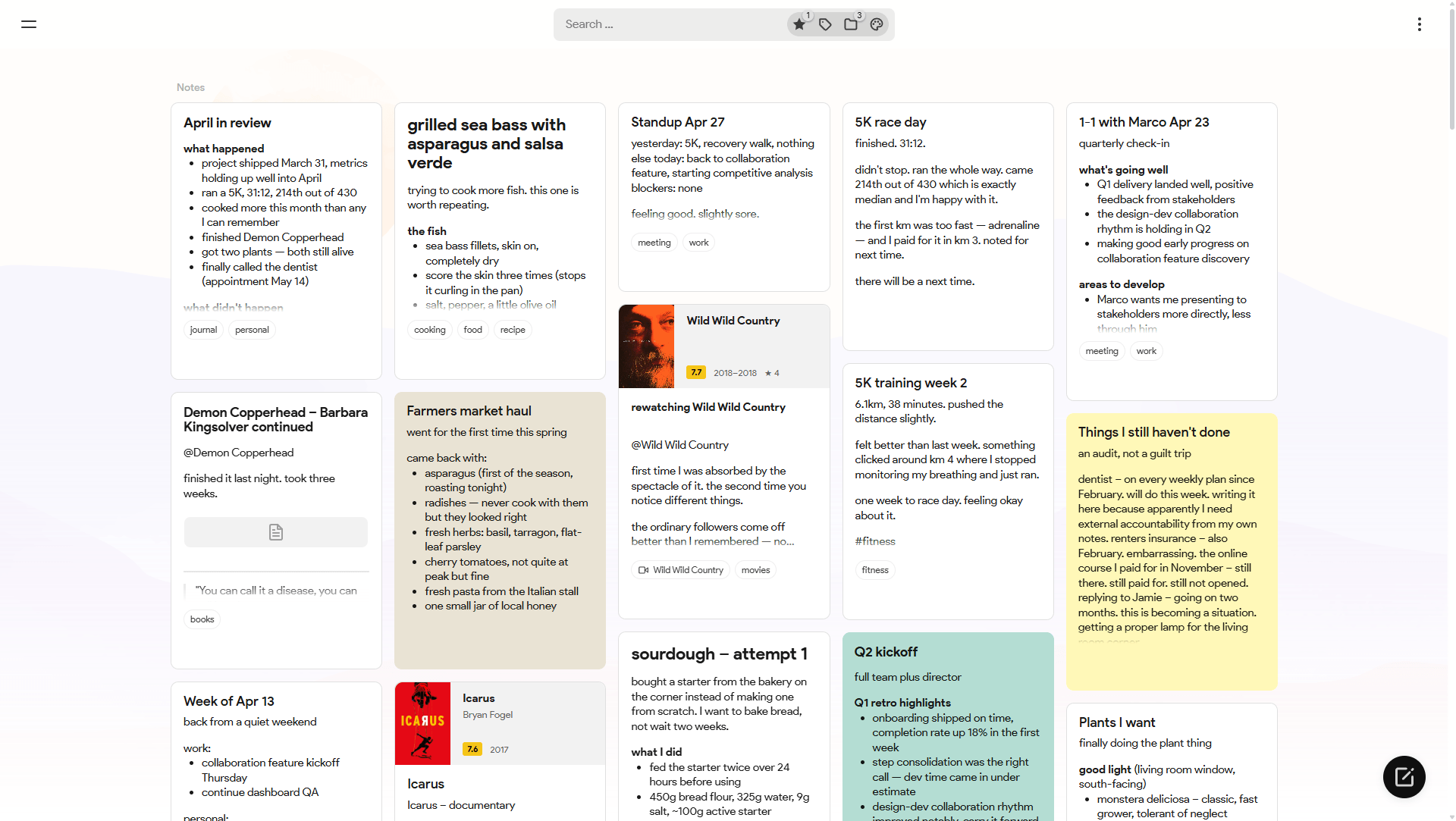
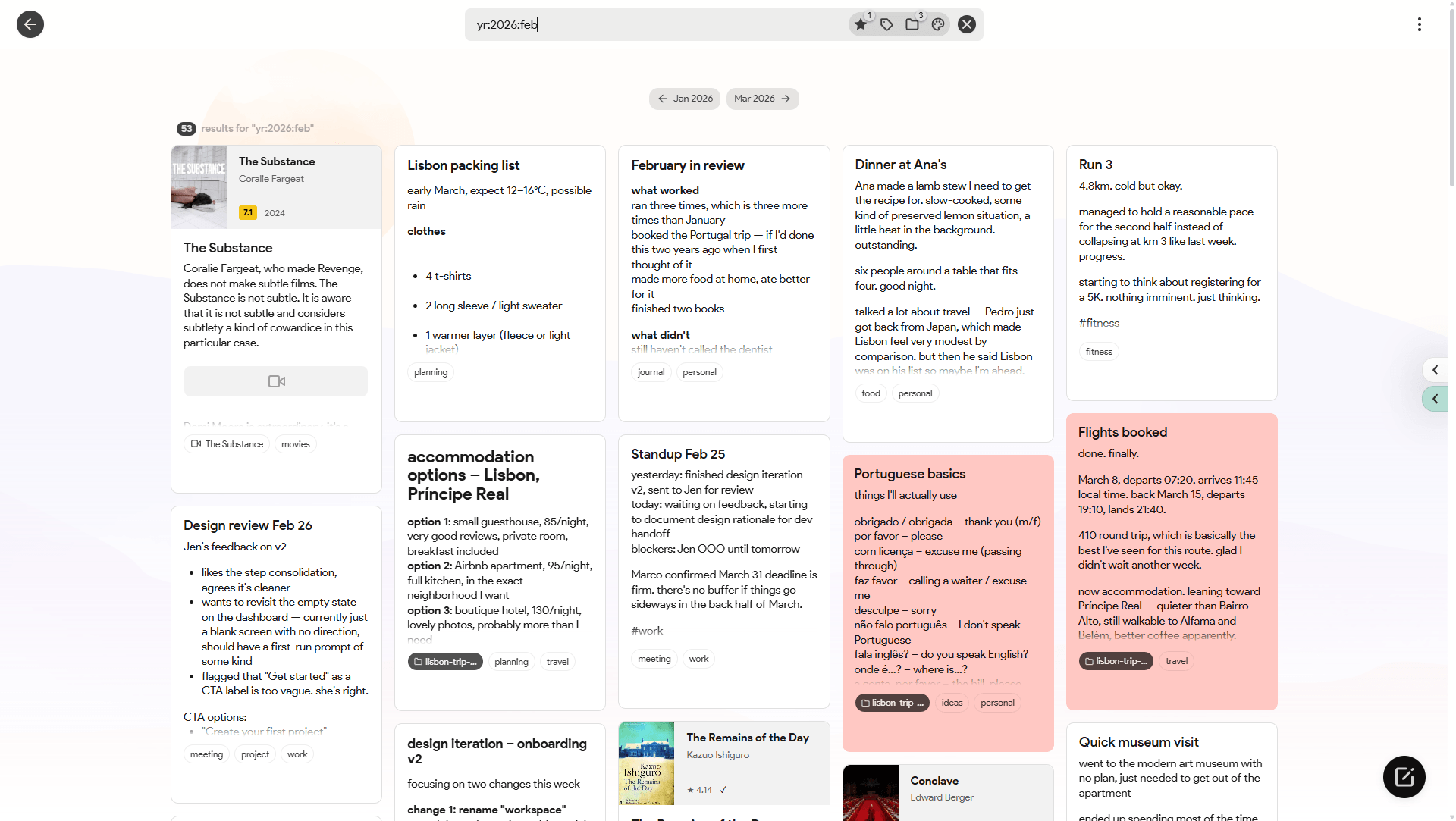
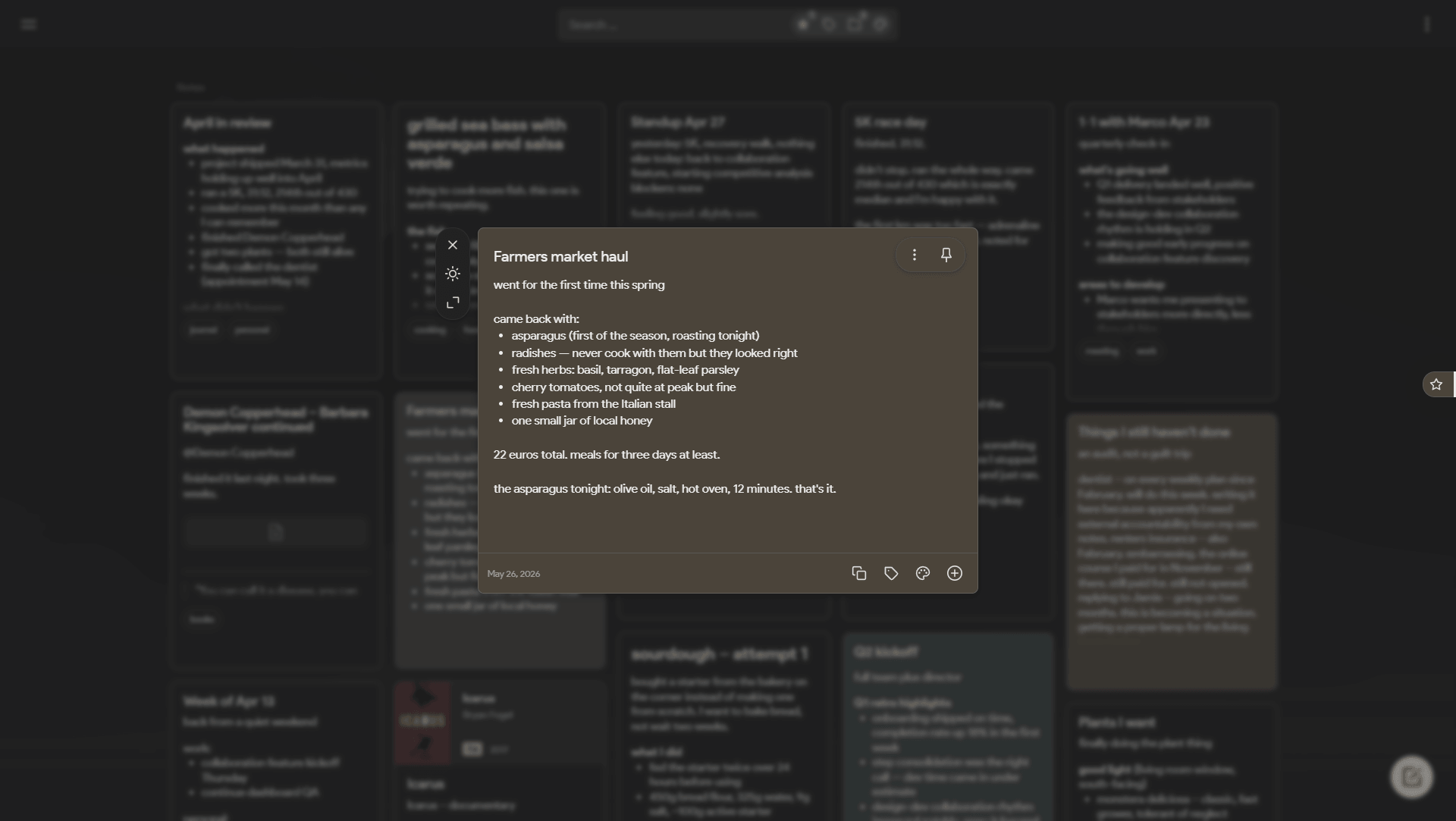
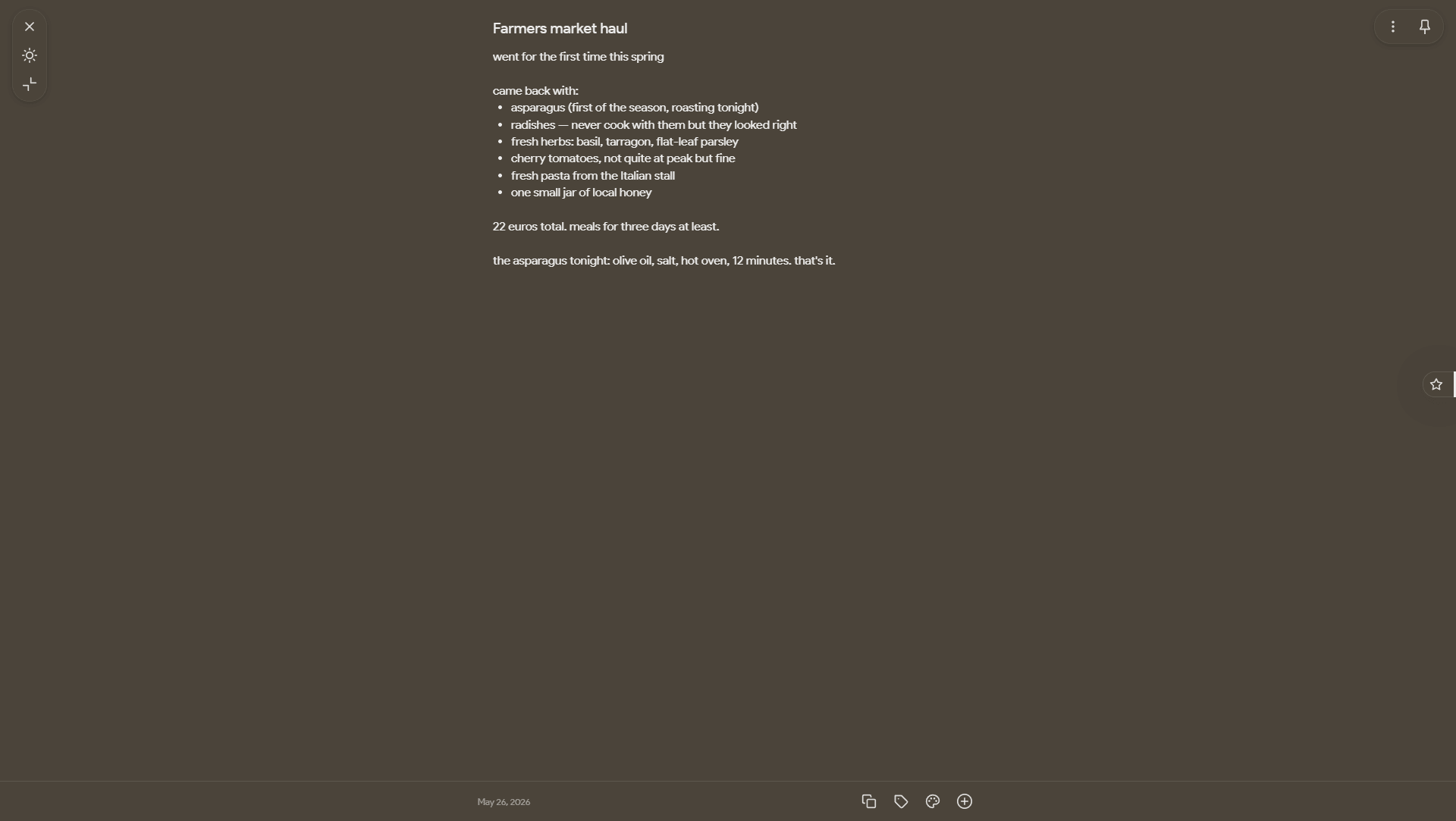
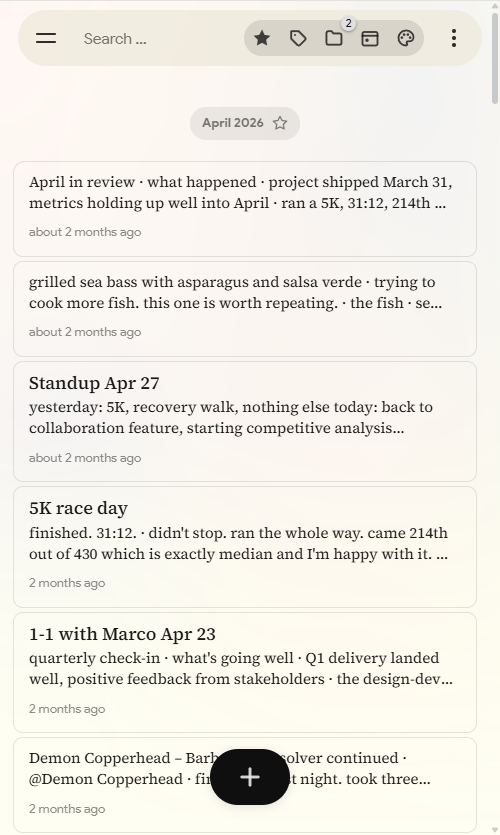
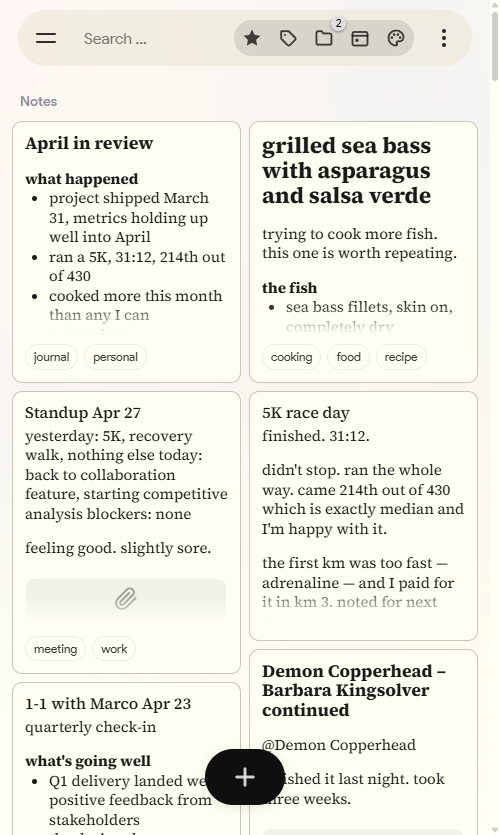
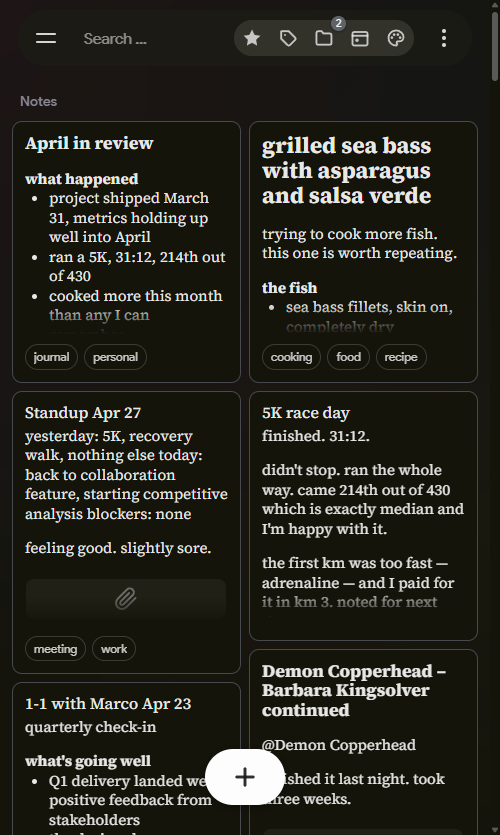
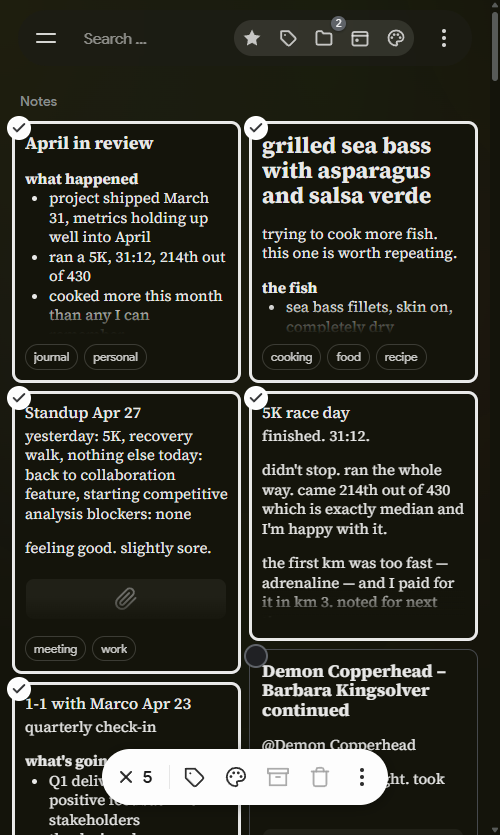
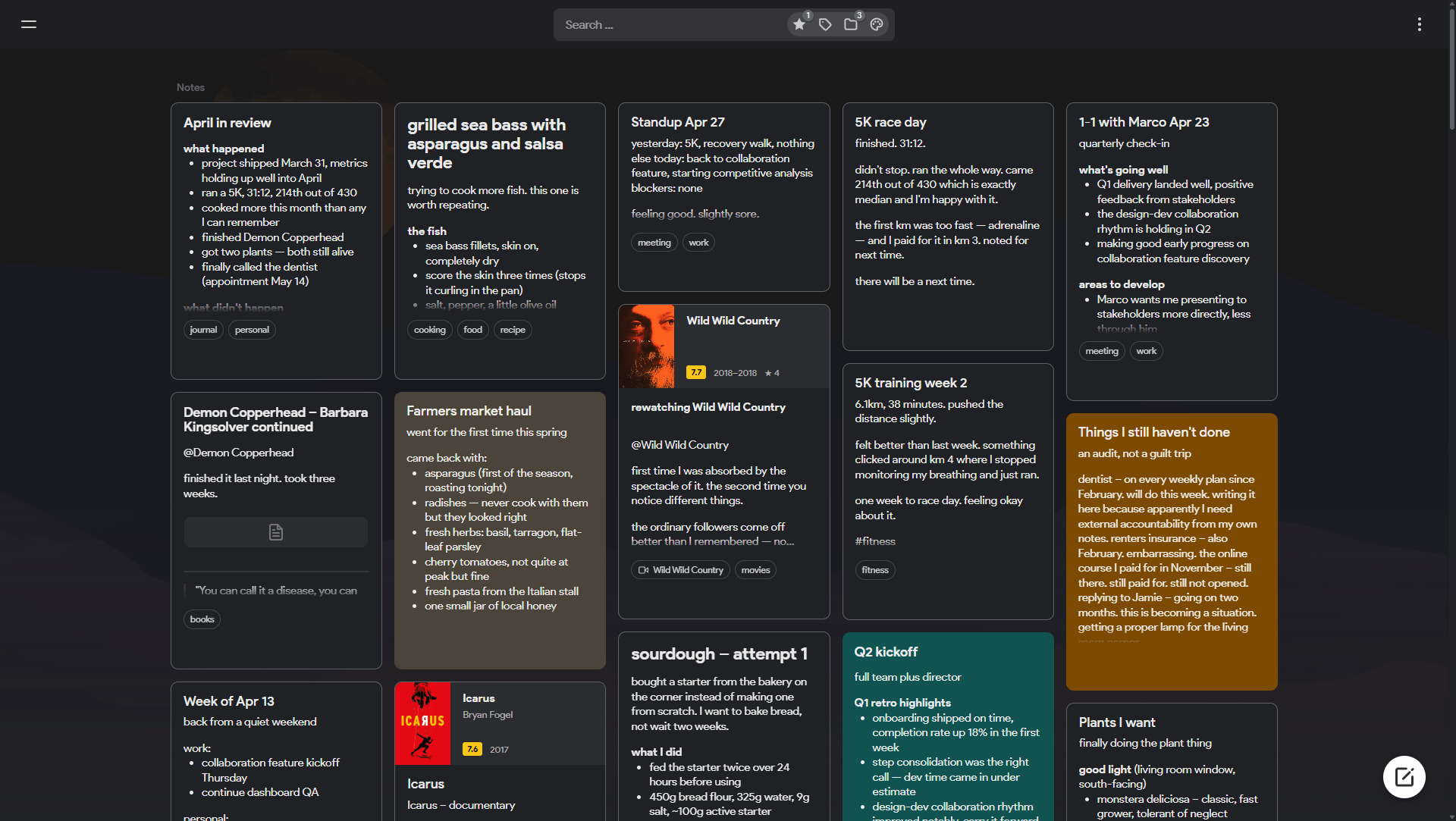
A self-hosted Google Keep alternative. It sticks to the familiar masonry layout but overhauls how you actually navigate and organize a large amount of notes.
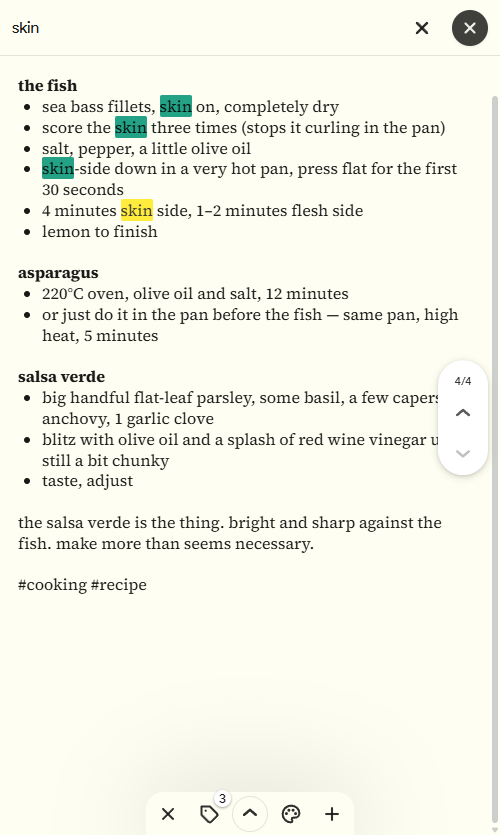
Instead of an endless wall of text, the feed is broken down by month markers. There are quick-search panels for colors and tags, a basic folder implementation, and a proper list view. It also handles data import natively, so moving off Keep or importing text files is straightforward.
**[Try the demo →](https://try.itsnotes.app)**
 **Features:**
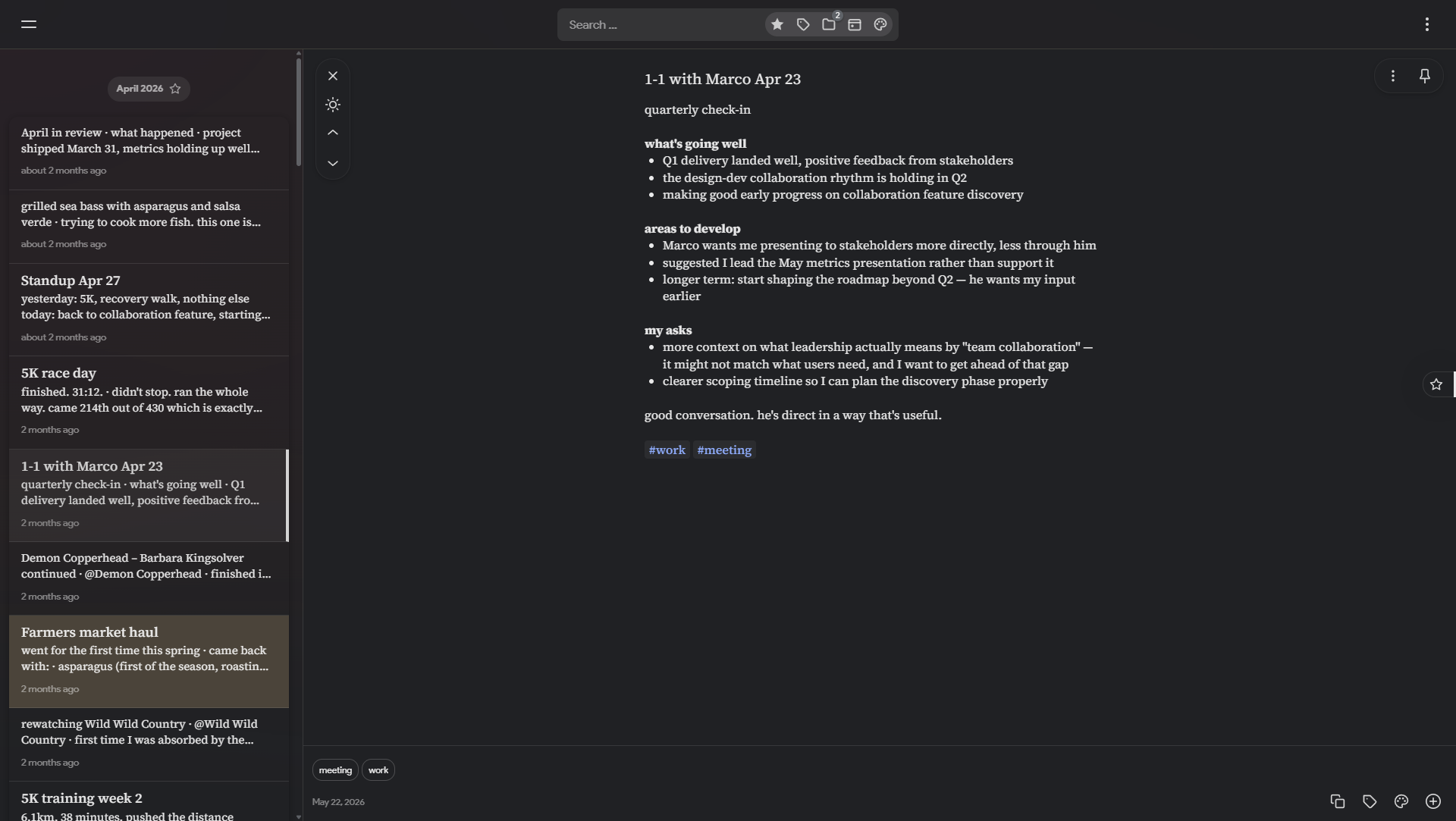
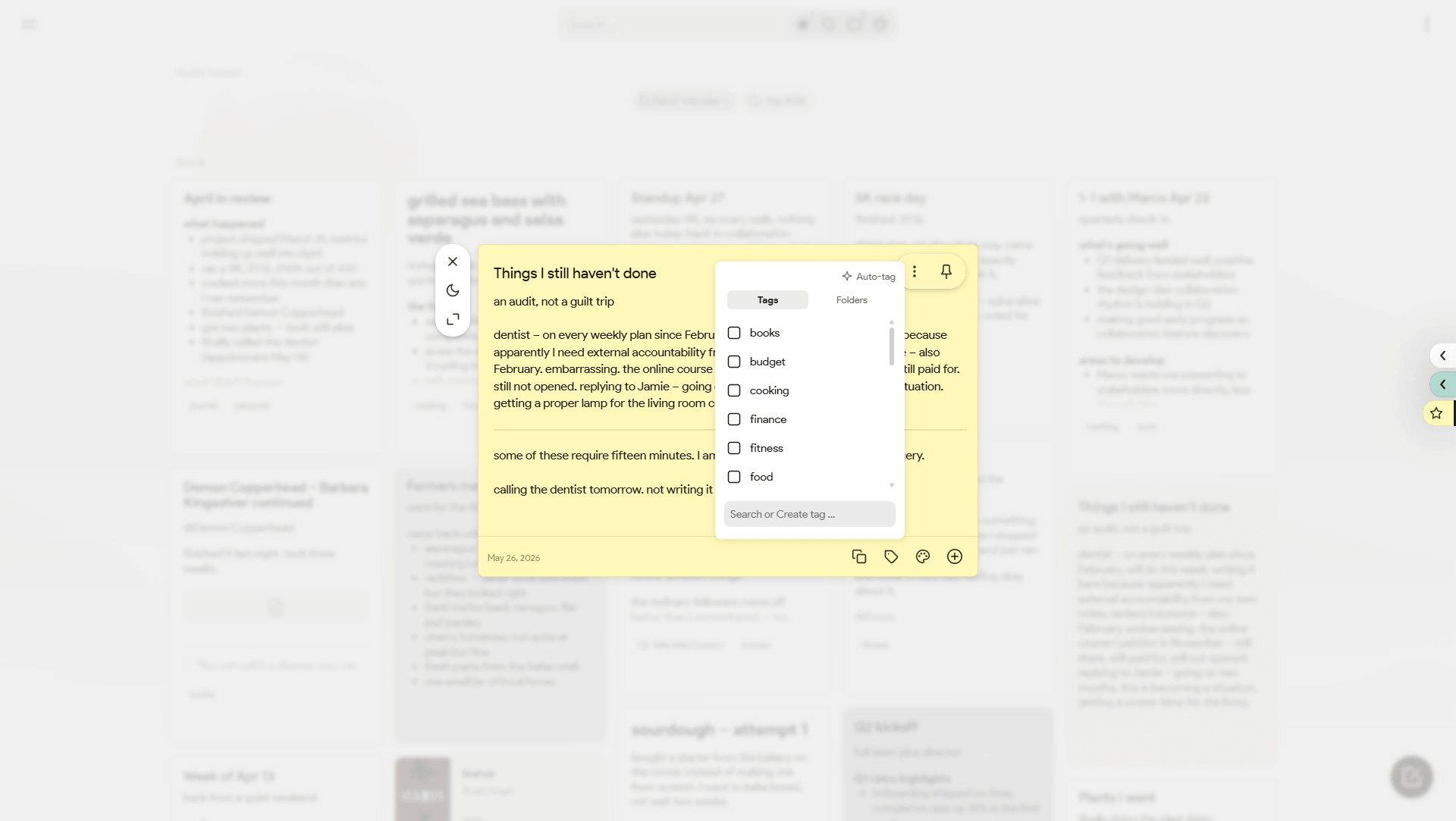
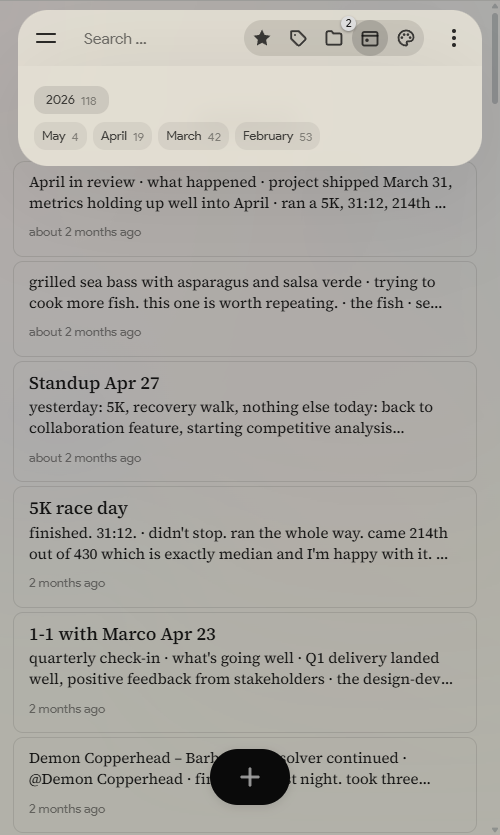
- **Better navigation:** The timeline has month markers to break up the list. There are quick-access panels for colors, tags, saved searches, and a calendar.
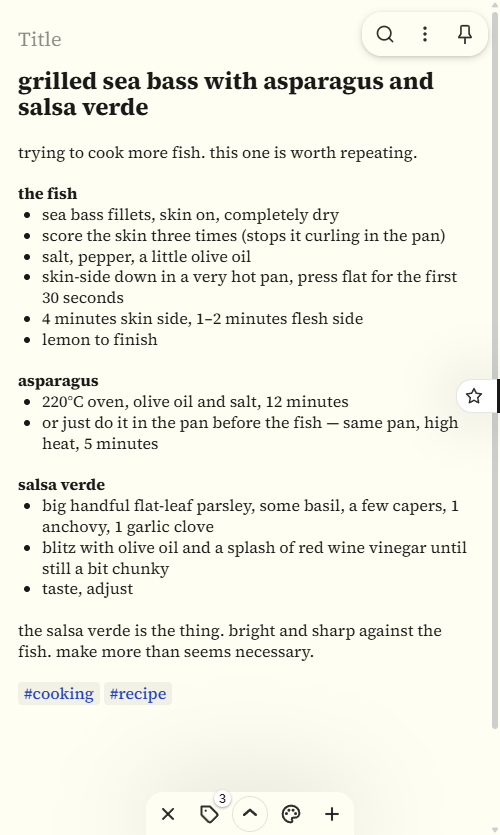
- **More ways to organize:** Basic folders, internal note linking, and the ability to rename color labels to whatever makes sense to you.
- **View modes:** The standard masonry grid, a stacked view, and a proper dense list view.
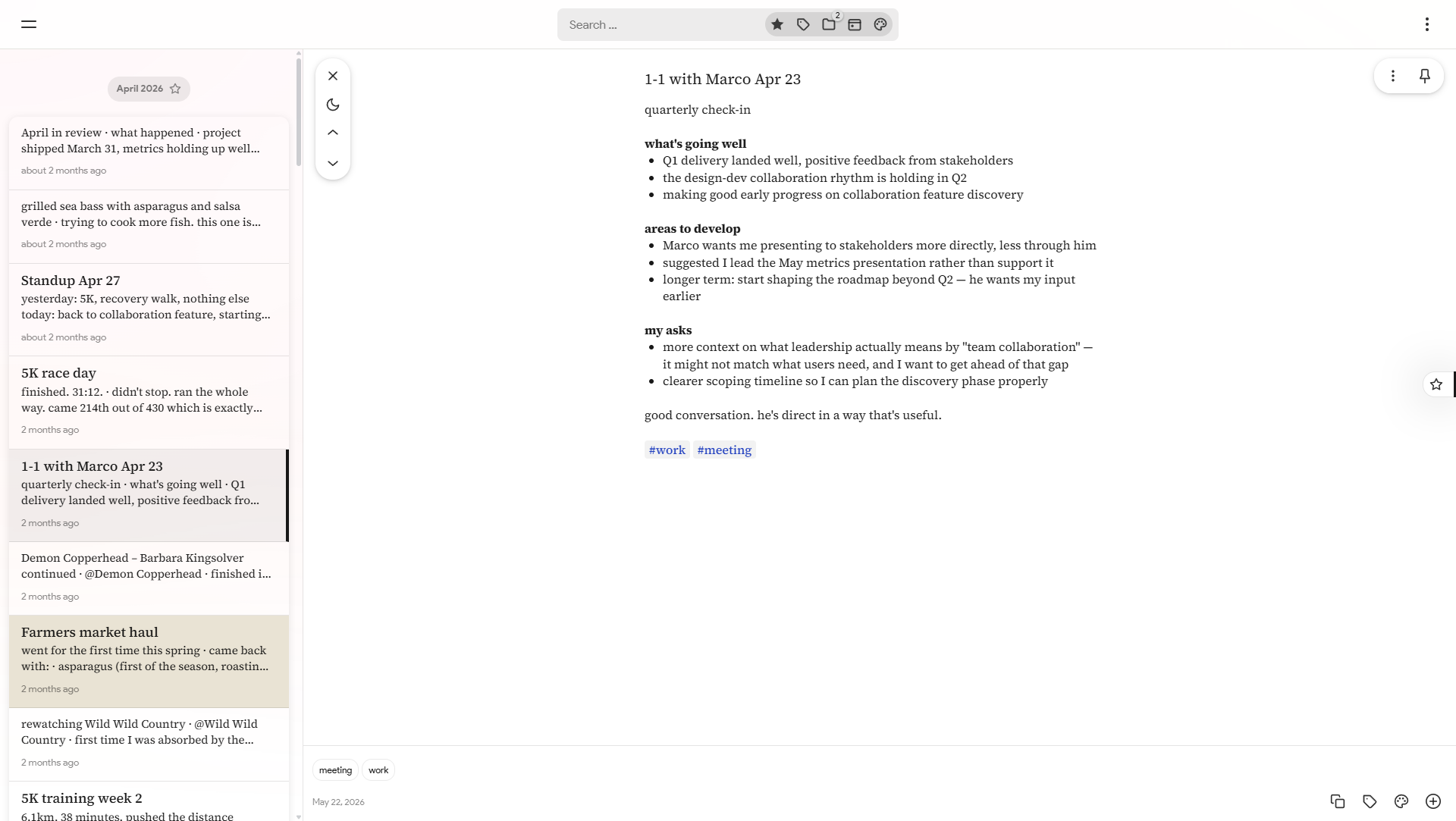
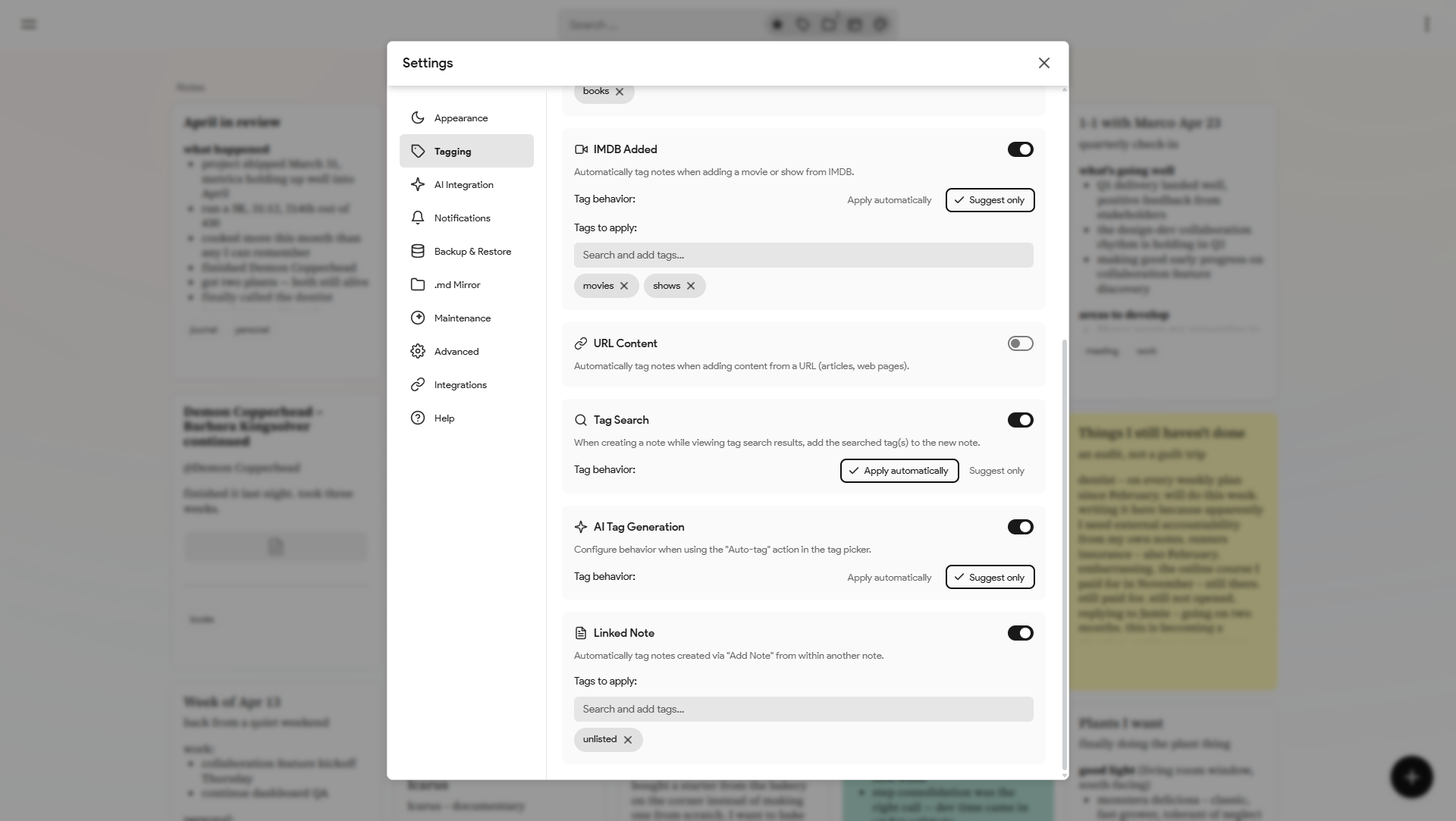
- **Customization:** A heavy settings modal to tweak layouts, page backgrounds, and form behaviors.
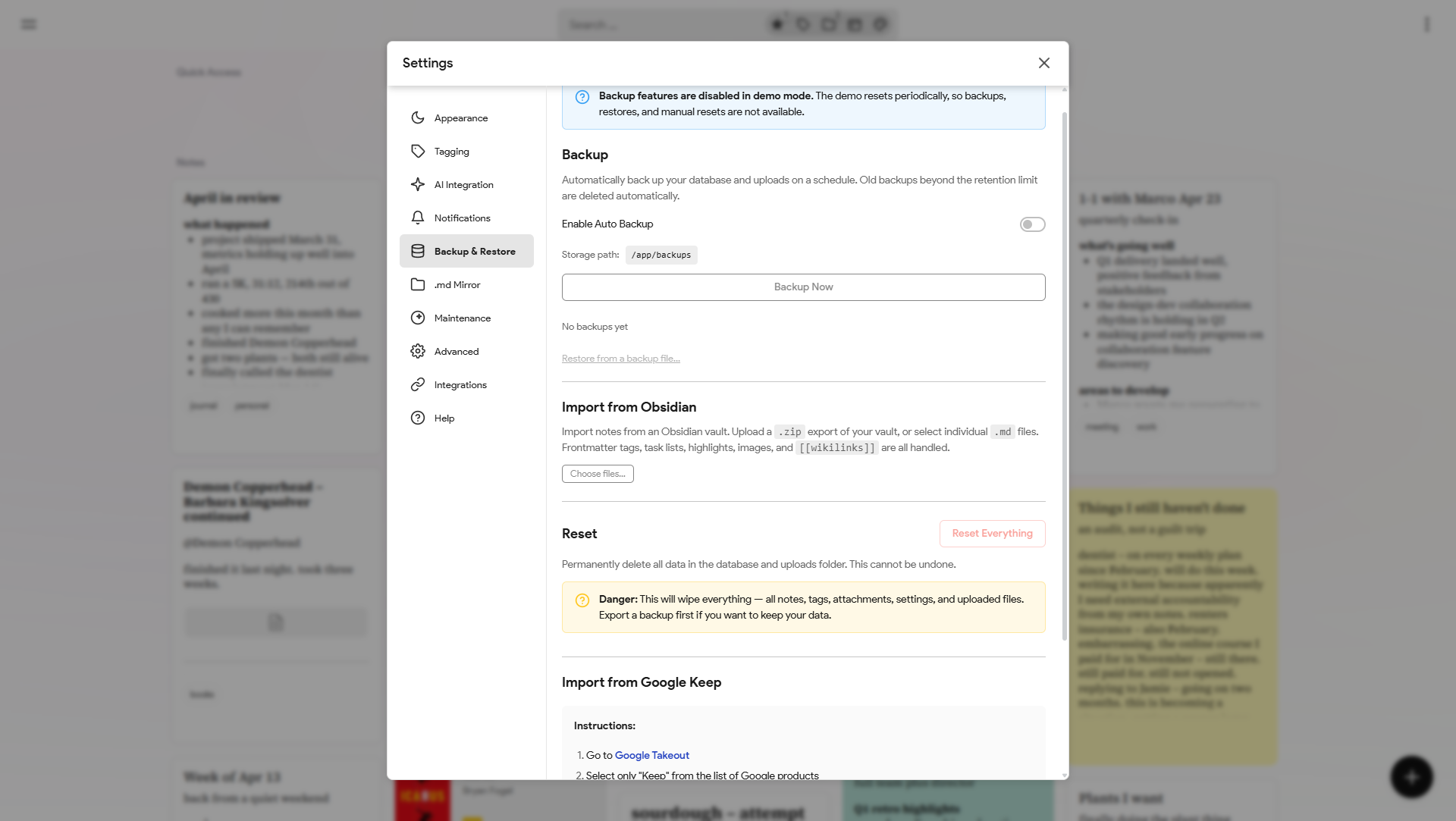
- **Easy imports:** Drop in a Google Takeout `.zip` to import Keep data, or bulk upload `.txt` and `.md` files directly.
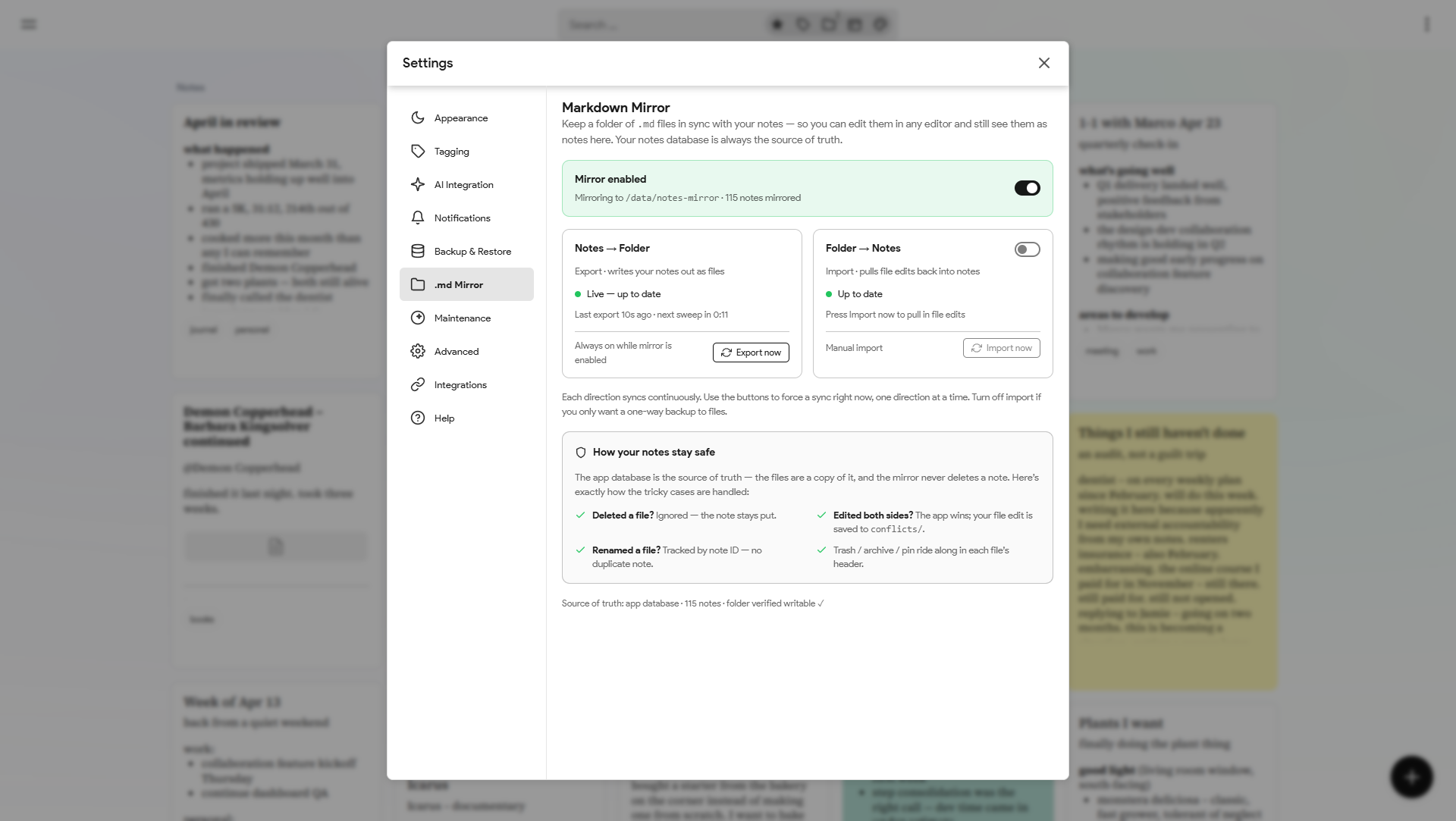
- **Markdown mirror:** Two-way sync between your notes and a folder of `.md` files. Every note is continuously written out with a metadata header (tags, color, reminders, pin/archive/trash state) and images/attachments alongside, and edits you make to the files in any editor (Obsidian, VS Code) are pulled back into your notes — automatically if you want. The database stays the source of truth: conflicting edits are kept safe in a `conflicts/` folder and renames are tracked by note ID, never duplicated. Great for backups, grep, git, or living in Obsidian.
- **Quality of life:** Built-in note history for revisions, plus automatic metadata fetching for books and movies.
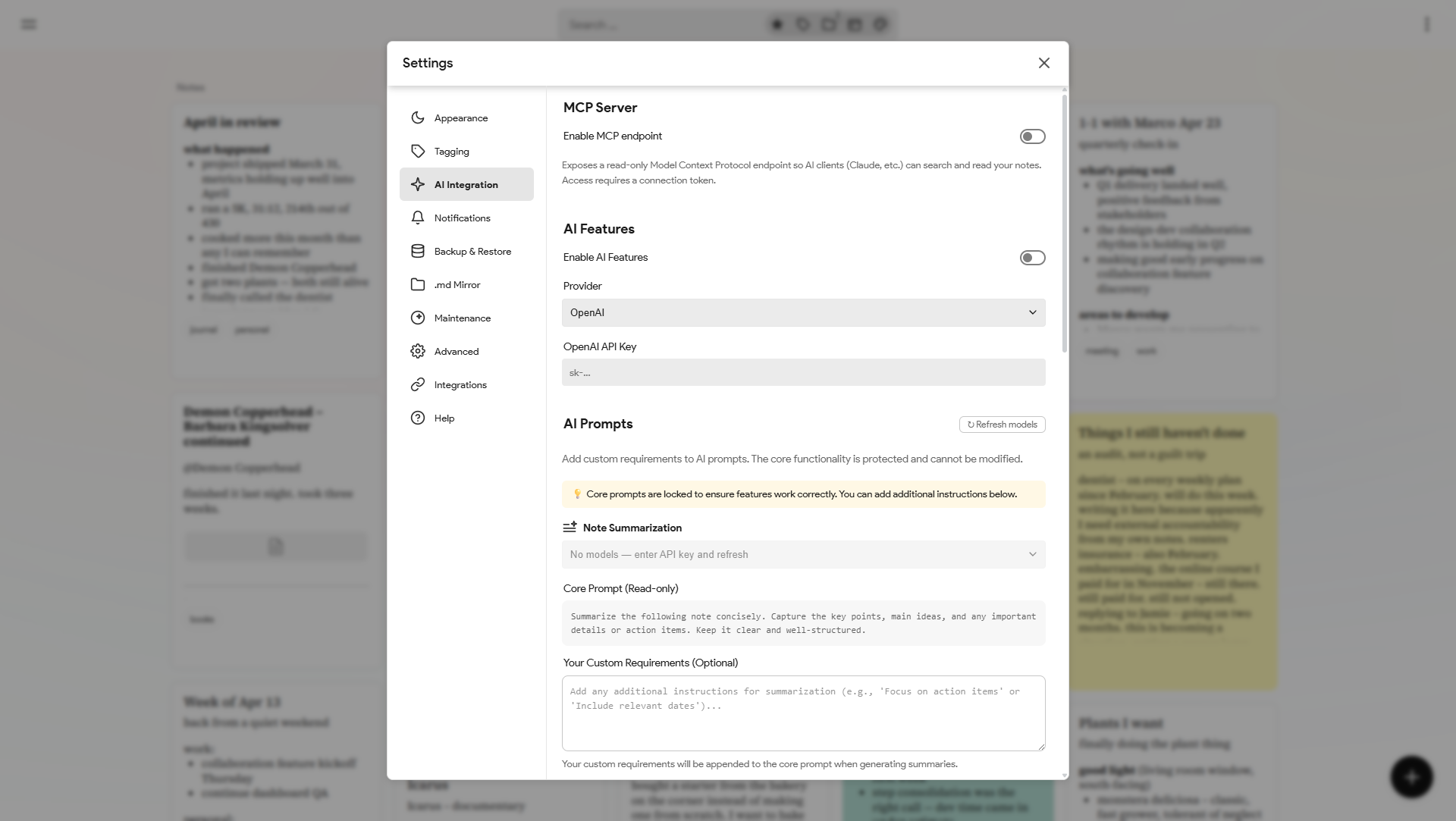
- **Optional AI stuff:** Hooks for auto-tagging and reminder parsing, plus a built-in MCP server so external AI clients can query your database.
Built with React, Node.js, PostgreSQL, and Socket.io.
### On mobile
## Docker Setup
Save this as `docker-compose.yml`:
```yaml
name: itsnotes
services:
itsnotes-db:
image: postgres:17-alpine
restart: unless-stopped
environment:
POSTGRES_USER: itsnotesuser
POSTGRES_PASSWORD: change-this-password
POSTGRES_DB: itsnotes
volumes:
- postgres_data:/var/lib/postgresql/data
healthcheck:
test: ["CMD-SHELL", "pg_isready -U $$POSTGRES_USER -d $$POSTGRES_DB"]
interval: 10s
timeout: 5s
retries: 5
itsnotes-server:
image: ghcr.io/alexmicuplusfour/itsnotes-server:latest
restart: unless-stopped
depends_on:
itsnotes-db:
condition: service_healthy
environment:
NODE_ENV: production
PORT: 5000
DB_HOST: itsnotes-db
DB_PORT: 5432
DB_USER: itsnotesuser
DB_PASSWORD: change-this-password
DB_NAME: itsnotes
PUPPETEER_EXECUTABLE_PATH: /usr/bin/chromium-browser
BACKUP_PATH: /app/backups
# Markdown Mirror target — exported .md files appear in ./notes-mirror on the host
MD_MIRROR_PATH: /data/notes-mirror
volumes:
- attachments_data:/app/uploads
- backups_data:/app/backups
# Browsable folder for the Markdown Mirror feature (turn it on in Settings)
- ./notes-mirror:/data/notes-mirror
itsnotes-client:
image: ghcr.io/alexmicuplusfour/itsnotes-client:latest
restart: unless-stopped
depends_on:
- itsnotes-server
ports:
- "80:80"
volumes:
postgres_data:
attachments_data:
backups_data:
```
Change the database password (and set any optional values — see [`.env.example`](.env.example)), then start it:
```bash
docker compose up -d
```
The app will be available on port 80.
### With Caddy (HTTPS + domain)
For automatic HTTPS, use [`docker-compose.caddy.example.yml`](docker-compose.caddy.example.yml) instead — it adds a Caddy service. You'll also need a `Caddyfile` ([`Caddyfile.example`](Caddyfile.example)) with your domain. Then `docker compose up -d`; Caddy handles SSL certificates automatically.
### Serving under a subpath
itsnotes can share a domain with other apps by living under a path prefix,
e.g. `https://example.com/itsnotes`. Set `BASE_PATH` on the client container
and put a reverse proxy in front that strips the prefix before forwarding.
The normal published image is used — changing `BASE_PATH` only needs a
restart, not a rebuild. Leave `BASE_PATH` unset to serve at the root as usual.
```yaml
itsnotes-client:
image: ghcr.io/alexmicuplusfour/itsnotes-client:latest
environment:
BASE_PATH: /itsnotes
```
With Caddy, `handle_path` strips the prefix:
```caddyfile
example.com {
redir /itsnotes /itsnotes/
handle_path /itsnotes/* {
reverse_proxy itsnotes-client:80
}
}
```
For an existing Traefik installation, [`docker-compose.traefik.example.yml`](docker-compose.traefik.example.yml)
is a complete example using Traefik's Docker provider — edit the placeholder
domain, path, and network at the top of the file.
## Configuration
All configuration is via the `environment:` blocks in `docker-compose.yml`. See `.env.example` for the full list of available options.
Optional AI features (auto-tagging, OCR, summarization, reminder parsing) work with three providers, configured under **Settings → AI**:
- **OpenAI** or **Anthropic** — needs an API key (`OPENAI_API_KEY` / `ANTHROPIC_API_KEY`, or just paste it in Settings).
- **[Ollama](https://ollama.com)** — no API key. Local models keep note content on your own hardware; Ollama's cloud models send it to ollama.com.
### Local AI with Ollama
Pick **Ollama** in Settings → AI, set the base URL, hit **↻ Refresh models**, and assign a model per feature:
- itsnotes in Docker, Ollama on the host: `http://host.docker.internal:11434`
- Ollama as a compose service (commented-out block in [`docker-compose.example.yml`](docker-compose.example.yml)): `http://ollama:11434`
- Elsewhere on your network: `http://:11434`
OCR requires a model with vision support. Quality depends entirely on the models you run. If summaries of long notes miss content or fail, raise Ollama's context length (`OLLAMA_CONTEXT_LENGTH`, see [Ollama's docs](https://docs.ollama.com/context-length)).
## REST API
The same API the frontend uses is available to external scripts and apps. Log in with your credentials, call `POST /api/auth/api-token` to get a long-lived token, then pass it as a Bearer header on any request:
```bash
curl https://your-instance/api/notes/search?query=yr:2024 \
-H "Authorization: Bearer "
```
See **[docs/api.md](docs/api.md)** for the full reference: endpoints, query params, search operators, and the note object schema.
## Chatting with your notes (MCP)
There's a built-in [MCP](https://modelcontextprotocol.io/) server that lets Claude (and other AI clients) search and read your notes. Turn it on under **Settings → AI → MCP Server** and generate a token. To connect, paste the URL into Claude's custom connector, or run the `claude mcp add` command it gives you for Claude Code.
It's off by default, read-only, and won't work without the token.
## Importing from Obsidian
If you keep your notes in Obsidian, you can bring your entire vault over:
1. Zip your Obsidian vault folder (the folder that contains your `.md` files and the `.obsidian` config directory).
2. In itsnotes, open **Settings → Backup & Restore → Import from Obsidian** and select the `.zip`.
Alternatively, you can select individual `.md` files if you only want to import a subset.
What comes across: note titles, body text, frontmatter tags (including nested `project/sub` hierarchies), inline `#tags`, `[[wikilinks]]` (resolved to internal note links), `![[embedded images]]`, standard ``, `==highlights==`, task lists, and frontmatter fields for created/modified dates, pinned, and archived state. Obsidian comments (`%%...%%`) are stripped. A two-pass approach ensures wikilinks resolve correctly even when the linked note appears later in the import batch.
## Importing from Google Keep
If you're moving over from Google Keep, you can bring your notes with you:
1. Go to [Google Takeout](https://takeout.google.com/) and request an export of just **Keep**.
2. Download the resulting `.zip` when it's ready.
3. In itsnotes, open **Settings → Backup & Restore → Import from Google Keep → Import from Takeout** and select the `.zip`.
Notes, checklists, labels, colors, archive/trash/pin state, original timestamps, and images all come across. Image attachments land in each note's gallery, and any other attachments are brought over too.
## Alternatives
- **[memos](https://github.com/usememos/memos)** — A lightweight, privacy-first hub for quick notes and memos. Leans toward a fast, microblog-style stream rather than a Keep-like board, and ships as a single Go binary.
- **[Joplin](https://github.com/laurent22/joplin)** — A mature, full-featured note and to-do app with Markdown, end-to-end encryption, web clipper, and sync across desktop, mobile, and web. The heavyweight option if you want notebooks and offline apps everywhere.
- **[Zen](https://github.com/sheshbabu/zen)** — A minimal, single-user self-hosted notes app focused on simplicity and staying out of your way. A good pick if you want something tiny and no-frills.
- **[Karakeep](https://github.com/karakeep-app/karakeep)** — A self-hosted "bookmark everything" app for links, notes, and images, with automatic AI tagging and full-text search. More of a hoarding-and-recall tool than a Keep-style note board.
---
This project is entirely 𝚟𝚒𝚋𝚎𝚌𝚘𝚍𝚎𝚍.