# CCPM – The Project Manager Agent
[](https://agentskills.io)
[](#proven-results)
[](https://github.com/automazeio/ccpm)
[](LICENSE)
[](http://x.com/intent/follow?screen_name=aroussi)
[](https://github.com/automazeio/ccpm)

**Supported by [Neon](https://neon.com)**
### Spec-driven development for AI agents – ship ~~faster~~ _better_ using PRDs, GitHub issues, and multiple agents running in parallel.
Stop losing context. Stop blocking on tasks. Stop shipping bugs. CCPM gives your AI agent a structured PM brain: turn ideas into PRDs, PRDs into epics, epics into GitHub issues, and issues into production code — with full traceability at every step.
---
> [!IMPORTANT]
> 📢 **CCPM is now an AGENT SKILL!** It works with any [Agent Skills–compatible](https://agentskills.io) harness that supports skills: **Claude Code, Codex, OpenCode, Factory, Amp, Cursor, and more.**
---
## Table of Contents
- [Background](#background)
- [The Workflow](#the-workflow)
- [What Makes This Different](#what-makes-this-different)
- [Why GitHub Issues](#why-github-issues)
- [Core Principle: No Vibe Coding](#core-principle-no-vibe-coding)
- [The Parallel Execution System](#the-parallel-execution-system)
- [Key Features & Benefits](#key-features--benefits)
- [Install](#install)
- [Usage](#usage)
- [Workflow Phases](#workflow-phases)
- [Skill Structure](#skill-structure)
- [Example Flow](#example-flow)
- [Proven Results](#proven-results)
- [Local vs Remote](#local-vs-remote)
- [Technical Notes](#technical-notes)
- [Using CCPM with a database](#using-ccpm-with-a-database)
- [Who's Behind this Project](#whos-behind-this-project)
---
> [!NOTE]
> Check out **[proof](https://github.com/automazeio/proof)** to get your agents capture visual proof of work of terminal output, browser interactions, and mobile simulator recordings.
---
## Background
Every team struggles with the same problems:
- **Context evaporates** between sessions, forcing constant re-discovery
- **Parallel work creates conflicts** when multiple agents touch the same code
- **Requirements drift** as verbal decisions override written specs
- **Progress becomes invisible** until the very end
CCPM solves all of that.
---
## The Workflow
```mermaid
graph LR
A[PRD Creation] --> B[Epic Planning]
B --> C[Task Decomposition]
C --> D[GitHub Sync]
D --> E[Parallel Execution]
```
### See It In Action
```
"I want to build a notification system — where do we start?"
→ Guided brainstorming + PRD creation
"break down the notification-system epic"
→ Parallelizable task files with dependencies
"sync the notification-system epic to GitHub"
→ Epic issue + sub-issues + worktree
"start working on issue 42"
→ Parallel stream analysis + multiple agents launched
"what's our standup for today?"
→ Instant report from project files
```
---
## What Makes This Different
| Traditional AI Development | CCPM |
|---|---|
| Context lost between sessions | **Persistent context** across all work |
| One agent, one task | **Parallel agents** on independent streams |
| Vibe coding from memory | **Spec-driven** with full traceability |
| Progress hidden in chat logs | **Transparent audit trail** in GitHub |
| Scattered status updates | **Structured standup, blocked, next** |
---
## Why GitHub Issues
Most AI coding workflows operate in isolation — a single session with no shared state. CCPM uses GitHub Issues as the source of truth, which unlocks something fundamentally different:
**Team collaboration** — multiple agents (or humans) work on the same project simultaneously. Progress is visible in real-time through issue comments.
**Seamless handoffs** — an agent can start a task, a human can finish it, or vice versa. No "what did the AI do?" meetings.
**Single source of truth** — no separate databases or project management tools. Issue state is project state. Comments are the audit trail.
**Works with what you have** — no dependency on GitHub Projects. Integrates with existing labels, milestones, and PR workflows.
---
## Core Principle: No Vibe Coding
> **Every line of code must trace back to a specification.**
CCPM enforces a strict 5-phase discipline:
1. **🧠 Brainstorm** — think deeper than comfortable
2. **📝 Document** — write specs that leave nothing to interpretation
3. **📐 Plan** — architect with explicit technical decisions
4. **⚡ Execute** — build exactly what was specified
5. **📊 Track** — maintain transparent progress at every step
No shortcuts. No assumptions. No regrets.
---
## The Parallel Execution System
### Issues Aren't Atomic
Traditional thinking: **one issue = one agent = one task**
Reality: a single "Implement user authentication" issue is actually:
- **Agent 1**: Database tables and migrations
- **Agent 2**: Service layer and business logic
- **Agent 3**: API endpoints and middleware
- **Agent 4**: UI components and forms
- **Agent 5**: Test suites and documentation
All running **simultaneously** in the same worktree. They share that worktree, so they also share one database unless you give each writer its own. See [Using CCPM with a database](docs/guides/using-ccpm-with-a-database.md).
### The Math of Velocity
| Approach | Agents working | Wall time |
|---|---|---|
| Traditional (serial) | 1 | 5x |
| CCPM (parallel streams) | 5 | 1x |
### Context Stays Clean
Each agent handles its own context in isolation. Your main conversation becomes the conductor — it never drowns in implementation details. Agents read from `.claude/epics/` and commit progress back through Git.
---
## Key Features & Benefits
**🧠 Context preservation** — project state lives in files, not in your head or chat history. Start a session anywhere, any time.
**⚡ Parallel execution** — tasks marked `parallel: true` run concurrently across multiple agents without conflicts.
**🔗 GitHub native** — works with tools your team already uses. No dependency on the Projects API.
**📊 Full traceability** — every decision documented. PRD → Epic → Task → Issue → Code → Commit.
**🤖 Deterministic ops run as scripts** — status, standup, search, validate all run as bash scripts: fast, consistent, no LLM token cost.
**🌐 Harness-agnostic** — follows the [agentskills.io](https://agentskills.io) open standard. Works with Factory, Claude Code, Amp, OpenCode, Codex, Cursor, and more.
---
## Install
CCPM is a standard [Agent Skill](https://agentskills.io). Point your harness at `skill/ccpm/` — that's it.
### Clone the repo
```bash
git clone https://github.com/automazeio/ccpm.git
```
### Factory / Droid
```bash
# Symlink into your skills directory
ln -s /path/to/ccpm/skill/ccpm ~/.factory/skills/ccpm
```
### Claude Code
In your project root, add a `skills/` directory and symlink or copy the skill:
```bash
ln -s /path/to/ccpm/skill/ccpm .claude/skills/ccpm
```
### Any other Agent Skills–compatible harness
Point it at `skill/ccpm/`. It follows the [agentskills.io](https://agentskills.io) standard and works out of the box.
### Prerequisites
- `git` and `gh` CLI (authenticated: `gh auth login`)
- A GitHub repository for your project
---
## Usage
CCPM activates automatically when your agent detects PM intent. Just talk naturally — no special syntax needed.
### Natural language triggers
| What you say | What happens |
|---|---|
| "I want to build X" / "let's plan X" | Brainstorming + PRD creation |
| "parse the X PRD" / "create an epic for X" | PRD → technical epic |
| "break down the X epic" | Epic decomposition into tasks |
| "sync the X epic to GitHub" | Issues created, worktree set up |
| "start working on issue N" | Analysis + parallel agents launched |
| "standup" / "what's our status" | Bash script runs instantly |
| "what's next" / "what's blocked" | Priority queue from project files |
| "close issue N" | Local + GitHub updated |
| "merge the X epic" | Tests, merge, cleanup |
---
## Workflow Phases
### 1. Plan — Capture requirements
```
"I want to build a notification system — push, email, and in-app"
```
CCPM conducts guided brainstorming before writing anything. It asks about the problem, users, success criteria, constraints, and what's out of scope — then creates a structured PRD at `.claude/prds/.md`.
When ready: "parse the notification-system PRD" → produces a technical epic at `.claude/epics/notification-system/epic.md` with architecture decisions, technical approach, and task preview.
### 2. Structure — Break it down
```
"break down the notification-system epic into tasks"
```
Each task gets a file with acceptance criteria, effort estimate, `depends_on`, `parallel`, and `conflicts_with` metadata. Tasks are intelligently batched for parallel creation. ≤10 tasks per epic by default.
### 3. Sync — Push to GitHub
```
"sync the notification-system epic to GitHub"
```
Creates an epic issue, creates sub-issues for each task, renames local files to match GitHub issue numbers, sets up a dedicated worktree (`../epic-notification-system/`), and creates a mapping file for reference.
### 4. Execute — Start building
```
"start working on issue 42"
```
Analyzes the issue for independent work streams, launches parallel agents scoped to their own files, and sets up progress tracking. Each agent commits with `Issue #N: description` and coordinates through Git.
### 5. Track — Know where things stand
```
"standup" / "what's blocked" / "what's next"
```
All tracking operations run as bash scripts — instant output, no LLM overhead. The scripts scan `.claude/epics/` and report what's in progress, what's next, and what's blocked.
---
## Skill Structure
```
skill/ccpm/
├── SKILL.md # Entry point — detects intent, routes to reference
└── references/
├── plan.md # PRD writing + parsing to epic
├── structure.md # Epic decomposition into tasks
├── sync.md # GitHub sync, progress comments, close, merge
├── execute.md # Issue analysis + parallel agent launch
├── track.md # Status, standup, search, next, blocked
├── conventions.md # File formats, frontmatter schemas, git rules
└── scripts/ # Bash scripts for deterministic operations
├── status.sh
├── standup.sh
├── epic-list.sh
├── search.sh
├── neon-branch.sh # optional Neon branch + worktree env
└── ... # 15 scripts total
```
Your project files live in `.claude/` in your project root:
```
.claude/
├── prds/ # Product requirement documents
├── epics/
│ └── /
│ ├── epic.md # Technical epic
│ ├── .md # Task files (named by GitHub issue number after sync)
│ ├── -analysis.md # Parallel work stream analysis
│ └── updates/ # Agent progress tracking
└── (archived epics)
```
Files are the source of truth — plain markdown that lives in your repo, no external services.
---
## Example Flow
```
You: "I want to build a payment integration with Stripe — subscriptions and one-time charges"
CCPM: Asks 5 clarifying questions about scope, users, success criteria...
You: [answers]
CCPM: ✅ PRD created: .claude/prds/payment-integration.md
Ready to create the technical epic?
You: "yes, parse it"
CCPM: ✅ Epic created: .claude/epics/payment-integration/epic.md
8 task categories identified. Ready to decompose?
You: "break it down"
CCPM: ✅ Created 7 tasks — 5 parallel, 2 sequential
Ready to push to GitHub?
You: "sync it"
CCPM: ✅ Epic #1234 created
✅ 7 sub-issues created (#1235–#1241)
✅ Worktree: ../epic-payment-integration/
You: "start working on issue 1235"
CCPM: Analyzed 3 parallel streams:
Stream A: Stripe client setup ✓ Started
Stream B: Webhook handler ✓ Started
Stream C: Database models ⏸ Waiting on A
You: "what's our standup?"
CCPM: [runs standup.sh instantly]
📅 Daily Standup — 2026-03-18
🔄 In Progress: Issue #1235 (payment-integration) — 60%
⏭️ Next: Issue #1236 — Subscription billing logic
📊 Tasks: 2 in progress, 5 open, 0 closed
```
---
## Proven Results
Teams using this system report:
- **89% less time** lost to context switching
- **5–8 parallel tasks** vs 1 previously
- **75% reduction** in bug rates — due to detailed task breakdown before coding
- **Up to 3× faster** feature delivery
### Benchmark
In structured evals comparing CCPM-equipped agents vs baseline (no skill):
| Scenario | With CCPM | Without |
|---|---|---|
| PRD creation (brainstorm-first, correct paths) | ✅ 4/4 | ❌ 2/4 |
| Issue execution (analysis + worktree checks) | ✅ 4/4 | ❌ 0/4 |
| Standup (runs script, real data) | ✅ 3/3 | ❌ 1/3 |
| **Overall** | **100%** | **27.7%** |
---
## Local vs Remote
| Operation | Local | GitHub |
|---|---|---|
| PRD creation | ✅ | — |
| Implementation planning | ✅ | — |
| Task breakdown | ✅ | ✅ (on sync) |
| Execution | ✅ | — |
| Progress updates | ✅ | ✅ (on sync) |
| Final deliverables | — | ✅ |
---
## Technical Notes
**GitHub integration** — uses `gh-sub-issue` extension for proper parent-child relationships. Falls back to task lists if not installed. Install with: `gh extension install yahsan2/gh-sub-issue`
**File naming** — tasks start as `001.md`, `002.md` during decomposition. After GitHub sync, renamed to `{issue-id}.md` (e.g. `1234.md`). Issue #1234 = file `1234.md`.
**Design decisions** — intentionally avoids GitHub Projects API complexity. All operations work on local files first for speed. GitHub sync is explicit and controlled. Worktrees provide clean git isolation for parallel work.
**Looking for v1?** — The original `/pm:*` Claude Code slash command system is preserved on the [`v1` branch](https://github.com/automazeio/ccpm/tree/v1).
---
## Using CCPM with a database
Git worktrees keep parallel agents off the same files. Those agents still share one database until you give each writer its own. [Using CCPM with a database](docs/guides/using-ccpm-with-a-database.md) walks through that, with [Neon](https://neon.com) as the worked example.
`neon-branch.sh` creates the Neon branch, writes `DATABASE_URL` into the epic worktree, and deletes the branch when the epic merges. It does nothing when Neon is not configured.
---
## Who's behind this project
CCPM was developed at [Automaze](https://automaze.io) **for developers who ship, by developers who ship**.
If CCPM helps your team ship better software:
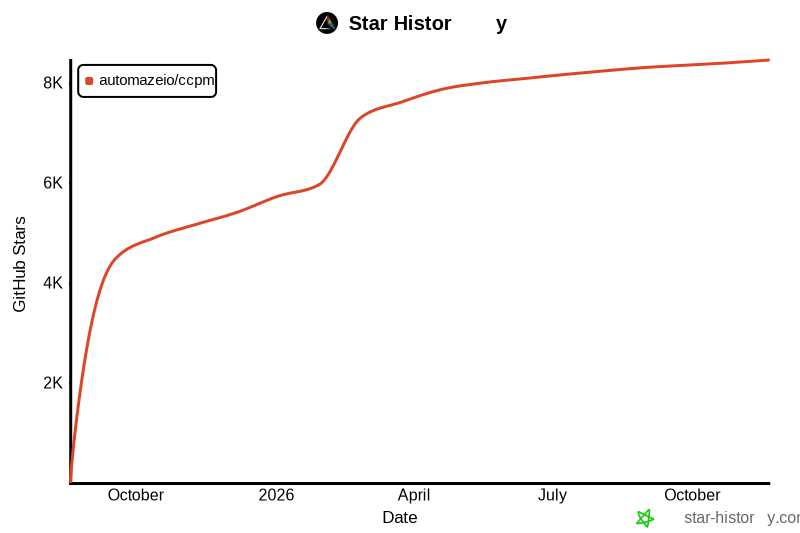
- ⭐ **[Star this repository](https://github.com/automazeio/ccpm)** to show your support
- 🐦 **[Follow @aroussi on X](https://x.com/aroussi)** for updates and tips
---
> [!TIP]
> **Ship faster with Automaze.** We partner with founders to bring their vision to life, scale their business, and optimize for success.
> **[Visit Automaze to book a call ›](https://automaze.io)**
---