# Harbor Boost Configuration
Harbor Boost is configured using environment variables. Following options are available:
## HARBOR_OPENAI_URLS
> **Type**: `StrList`
> **Default**: *(empty)*
An alias for `HARBOR_BOOST_OPENAI_URLS`.
## HARBOR_OPENAI_KEYS
> **Type**: `StrList`
> **Default**: *(empty)*
An alias for `HARBOR_BOOST_OPENAI_KEYS`.
## HARBOR_BOOST_OPENAI_URLS
> **Type**: `StrList`
> **Default**: *(empty)*
A semicolon-separated list of URLs to the OpenAI APIs to boost.
Prefer using named APIs via `HARBOR_BOOST_OPENAI_URL_*` and `HARBOR_BOOST_OPENAI_KEY_*` instead.
Must index-match contents of `HARBOR_BOOST_OPENAI_KEYS`.
Example:
```bash
HARBOR_OPENAI_URLS=https://localhost:11434/v1;https://localhost:8080/v1
```
## HARBOR_BOOST_OPENAI_KEYS
> **Type**: `StrList`
> **Default**: *(empty)*
A semicolon-separated list of API keys to use for the OpenAI APIs to boost.
Prefer using named APIs via `HARBOR_BOOST_OPENAI_URL_*` and `HARBOR_BOOST_OPENAI_KEY_*` instead.
Must index-match contents of `HARBOR_BOOST_OPENAI_URLS`.
Example:
```bash
HARBOR_OPENAI_KEYS=sk-abc123;sk-def456
```
## HARBOR_BOOST_OPENAI_URL_*
> **Type**: `str`
> **Default**: *(empty)*
Named OpenAI-compatible API URLs to boost.
`*` means multiple variables can be defined with arbitrary postfix.
Example:
```bash
HARBOR_BOOST_OPENAI_URL_OLLAMA=https://localhost:11434/v1
HARBOR_BOOST_OPENAI_KEY_OLLAMA=sk-ollama123
HARBOR_BOOST_OPENAI_URL_HF=https://api-inference.huggingface.co/v1
HARBOR_BOOST_OPENAI_KEY_HF=sk-hf456
```
## HARBOR_BOOST_OPENAI_KEY_*
> **Type**: `str`
> **Default**: *(empty)*
Example:
```bash
HARBOR_BOOST_OPENAI_URL_OLLAMA=https://localhost:11434/v1
HARBOR_BOOST_OPENAI_KEY_OLLAMA=sk-ollama123
HARBOR_BOOST_OPENAI_URL_HF=https://api-inference.huggingface.co/v1
HARBOR_BOOST_OPENAI_KEY_HF=sk-hf456
```
## HARBOR_MINIMAX_API_KEY
> **Type**: `str`
> **Default**: *(empty)*
MiniMax API key. When set, the MiniMax OpenAI-compatible
endpoint (https://api.minimax.io/v1) is automatically
registered as a boost backend with MiniMax-M3 (default),
MiniMax-M2.7, and MiniMax-M2.7-highspeed.
## HARBOR_BOOST_EXTRA_LLM_PARAMS
> **Type**: `ConfigDict`
> **Default**: *(empty)*
Allows to specify extra payload for /chat/completions endpoints for all downstream services at once.
Format is `key=value,key2=value2,...`.
Example:
```bash
HARBOR_BOOST_EXTRA_LLM_PARAMS=temperature=0.35,top_p=0.9
# Be careful using provider-specific parameters
HARBOR_BOOST_EXTRA_LLM_PARAMS=temperature=0.12,max_ctx=8192
```
## HARBOR_BOOST_MODULES
> **Type**: `StrList`
> **Default**: `all`
A list of boost modules that will be advertised by `/v1/models` endpoint.
All loaded modules can still be used directly, this configuration only affects
which modules are advertised in the API.
Supports `all` value to enable all modules.
Example:
```bash
# Serve all modules
HARBOR_BOOST_MODULES=all
# Only serve klmbr and rcn modules
HARBOR_BOOST_MODULES=klmbr;rcn
```
When using with Harbor, you can configure this via Harbor CLI:
```bash
# Enable the module
harbor boost modules add
# Disable the module
harbor boost modules rm
# List enabled modules
harbor boost modules ls
```
Note that new Harbor releases might introduce new modules, so the default value of this setting could change in the future. Check out [Harbor Profiles](./3.-Harbor-CLI-Reference.md#harbor-profile) for a way to save and restore your configuration.
## HARBOR_BOOST_MODULE_FOLDERS
> **Type**: `StrList`
> **Default**: `modules;custom_modules`
A list of folders to load boost modules from.
You can mount custom modules to the `/boost/custom_modules` or a custom location and use this configuration to load them.
Example:
```bash
# Load from default locations
HARBOR_BOOST_MODULE_FOLDERS=modules;custom_modules
# Disable all built-in modules and load only custom ones
HARBOR_BOOST_MODULE_FOLDERS=/some/custom/path
```
## HARBOR_BOOST_WORKFLOWS
> **Type**: `str`
> **Default**: *(empty)*
JSON or shorthand workflow definitions served by Harbor Boost. For larger
workflow sets, prefer `HARBOR_BOOST_WORKFLOWS_FILE`.
JSON object form:
```json
{
"research": {
"name": "Research Agent",
"description": "Answers with live web tools",
"modules": [
{"module": "system", "config": {"prompt": "Use tools before answering."}},
{"module": "tools", "config": {"tools": ["web_search", "read_url"]}},
{"module": "final"}
]
}
}
```
JSON list form:
```json
[{"id": "research", "modules": ["tools", "final"]}]
```
Shorthand form:
```bash
HARBOR_BOOST_WORKFLOWS=research=tools,final;careful=tools,g1
```
Workflow IDs become model prefixes, for example `research-llama3.2`.
IDs may contain letters, numbers, underscores, dots, and dashes.
## HARBOR_BOOST_WORKFLOWS_FILE
> **Type**: `str`
> **Default**: `/boost/workflows.yaml`
Optional YAML or JSON file containing workflow definitions. YAML files may use
a direct mapping/list or a top-level `workflows:`/`agents:` mapping.
Example:
```yaml
workflows:
research:
name: Research Agent
description: Answers with live web tools
modules:
- module: system
config:
prompt: Use tools before answering.
- module: tools
config:
tools:
- web_search
- read_url
- module: final
```
When the default path is used, Boost checks `/boost/workflows.yaml`,
`/boost/workflows.yml`, and `/boost/workflows.json` in that order. Inline
workflow definitions override file definitions with the same ID.
## HARBOR_BOOST_INTERMEDIATE_OUTPUT
> **Type**: `bool`
> **Default**: `true`
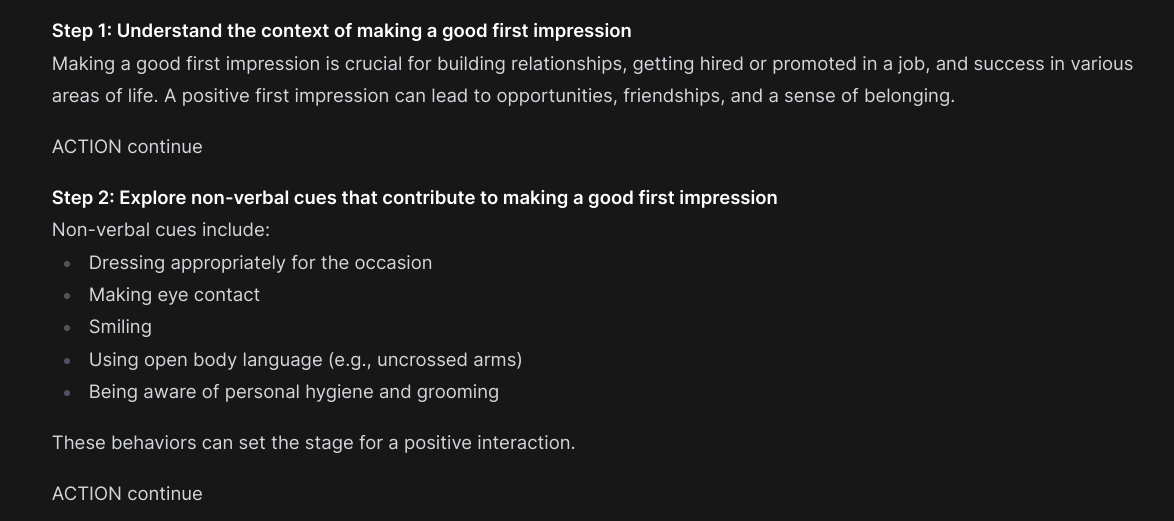
When set to `true`, the boost output the intermediate steps of the module, not only the final result, providing more dynamic feedback to the user.
Intermediate output includes status messages, internal monologue, and other non-final completions. Note that it doesn't mean "all output" from the module, as the module source can still decide to not emit specific things at all, or inverse - emit them even if this setting is off.
Example of the intermediate output from the `g1` module - underlying reasoning steps:
## HARBOR_BOOST_STATUS_STYLE
> **Type**: `str`
> **Default**: `md:codeblock`
A module can call `llm.emit_status` during its processing, which will be streamed as a "status" or "progress" message to the user. This setting controls the format of this message, which will be dependent on what's supported by the frontend where boost response is displayed.
Options:
````bash
md:codeblock "
```boost
{status}
```
",
md:h1 "
# {status}
",
md:h2 "
## {status}
",
md:h3 "
### {status}
",
plain "
{status}
",
none ""
````
The default is `md:codeblock` and looks like this in the WebUI:

## HARBOR_BOOST_BASE_MODELS
> **Type**: `bool`
> **Default**: `false`
Depending on the configuration of your setup, your LLM backend might or might not be connected to the UI directly. If not (or using boost as a standalone service), you can toggle this option on for the `boost` to serve them as is.
```bash
# Now "unboosted" models will also be available
# via the boost API
harbor config boost.base_models true
```
## HARBOR_BOOST_MODEL_FILTER
> **Type**: `ConfigDict`
> **Default**: *(empty)*
When specified, `boost` will only serve models matching the filter. The filter is a key/value expression that'll be matched against the model metadata. See examples below:
```bash
# Only boost models with the "llama" in the name
harbor config set boost.model_filter id.contains=llama
# Only boost models matching the regex
harbor config set boost.model_filter id.regex=.+q8_0$
# Boost by regex matching multiple IDs
harbor config set boost.model_filter "id.regex=.*(llama3.1:8b|llama3.2:3b|qwen2.5:7b)"
# Only boost a model with the exact ID
harbor config set boost.model_filter id=llama3.1:8b
```
This filter runs _after_ the boosted models (per module) are added, so you can filter them out as well.
## HARBOR_BOOST_API_KEY
> **Type**: `str`
> **Default**: *(empty)*
By default, boost will accept and serve any request, but you can configure one or more API keys to restrict access to the service.
Example:
```bash
# Configure the API key
HARBOR_BOOST_API_KEY=sk-boost
# Send the API key in the header
# Authorization: sk-boost
```
## HARBOR_BOOST_API_KEYS
> **Type**: `StrList`
> **Default**: *(empty)*
A colon-separated list of API keys to use for the boost API. Counterpart to `HARBOR_BOOST_API_KEY`.
Example:
```bash
# Configure the API keys
HARBOR_BOOST_API_KEYS=sk-user1;sk-user2;sk-user3
```
## HARBOR_BOOST_API_KEY_*
> **Type**: `str`
> **Default**: *(empty)*
Allows specifying additional, "named" API keys that will be accepted by the boost API.
Example:
```bash
# Configure the API keys
HARBOR_BOOST_API_KEY_MAIN=sk-main
# Temporary API key for testing
HARBOR_BOOST_API_KEY_TEST=sk-test
```
## HARBOR_BOOST_PUBLIC_URL
> **Type**: `str`
> **Default**: `http://localhost:34131`
URL which boost artifacts should use to access the boost API
## HARBOR_BOOST_TOOLS
> **Type**: `StrList`
> **Default**: `web_search;read_url;current_time;add_note;read_notes;write_file;read_file;list_files;delete_file;clear_files;finish`
The request-scoped utility tools registered by the `tools` Boost module.
Tool names are semicolon-separated. Unknown names are ignored with a warning.
Example:
```bash
HARBOR_BOOST_TOOLS=web_search;read_url;current_time
```
## HARBOR_BOOST_TOOLS_SEARCH_MAX_RESULTS
> **Type**: `int`
> **Default**: `5`
Maximum number of web search results returned by the `tools` module.
## HARBOR_BOOST_TOOLS_READ_MAX_CHARS
> **Type**: `int`
> **Default**: `20000`
Maximum number of characters returned by the `read_url` tool.
## HARBOR_BOOST_RESEARCH_NOTES_MAX_CHARS
> **Type**: `int`
> **Default**: `4000`
Maximum number of characters stored per note on a research brief when fetch adds search or read failure messages.
## HARBOR_BOOST_RESEARCH_FETCH_TIMEOUT_SECONDS
> **Type**: `int`
> **Default**: `30`
HTTP timeout, in seconds, for `web_search` and `read_url` outbound requests.
## HARBOR_BOOST_TOOLS_FILE_MAX_CHARS
> **Type**: `int`
> **Default**: `100000`
Maximum file size, in characters, accepted by the scratch file tools.
## HARBOR_BOOST_TAVILY_API_KEY
> **Type**: `str`
> **Default**: *(empty)*
Tavily API key used by the `web_search` tool. When set, Tavily is preferred over SearXNG.
## HARBOR_BOOST_SEARXNG_URL
> **Type**: `str`
> **Default**: `http://searxng:8080`
SearXNG base URL used by the `web_search` tool when Tavily is not configured.
## HARBOR_BOOST_SEARXNG_QUERY_PARAMS
> **Type**: `str`
> **Default**: *(empty)*
Extra URL query parameters appended to SearXNG web search requests.
## HARBOR_BOOST_JINA_READER_API_URL
> **Type**: `str`
> **Default**: `https://r.jina.ai`
Jina Reader API base URL used by the `read_url` tool before falling back to direct HTTP.
## HARBOR_BOOST_JINA_READER_API_KEY
> **Type**: `str`
> **Default**: *(empty)*
Optional Jina Reader API key used by the `read_url` tool.
## HARBOR_BOOST_WORKSPACE_ROOT
> **Type**: `str`
> **Default**: *(empty)*
Root directory for workspace file reads and writes by agentic Boost modules and
the `read_workspace_file`, `grep_workspace`, `list_workspace_files`,
`git_diff_workspace` (git repos), and opt-in `write_workspace_file` tools. When
unset, workspace file tools are disabled.
In Harbor Compose, bind-mount a host folder with `HARBOR_BOOST_WORKSPACE` (or
`harbor volumes add boost :/workspace`) and set this to the in-container
mount point, typically `/workspace`.
Example:
```bash
HARBOR_BOOST_WORKSPACE=/path/to/myproject
HARBOR_BOOST_WORKSPACE_ROOT=/workspace
```
## HARBOR_BOOST_WORKSPACE_FILE_MAX_CHARS
> **Type**: `int`
> **Default**: `100000`
Maximum number of characters returned by `read_workspace_file` and accepted by `write_workspace_file`.
## HARBOR_BOOST_WORKSPACE_GREP_MAX_MATCHES
> **Type**: `int`
> **Default**: `50`
Maximum number of matches returned by `grep_workspace`.
## HARBOR_BOOST_WORKSPACE_LIST_MAX_ENTRIES
> **Type**: `int`
> **Default**: `200`
Maximum number of file paths returned by `list_workspace_files`.
## HARBOR_BOOST_DEBUG
> **Type**: `bool`
> **Default**: `false`
When true, agentic workflows emit a compact debug metrics summary before the final completion. Overridable per request via `@boost_debug`.
## HARBOR_BOOST_QUICKHOP_MAX_SEARCHES
> **Type**: `int`
> **Default**: `2`
Maximum web searches performed by the `quickhop` research module.
## HARBOR_BOOST_QUICKHOP_MAX_URL_READS
> **Type**: `int`
> **Default**: `1`
Maximum full-page URL reads performed by the `quickhop` research module.
## HARBOR_BOOST_QUICKHOP_MAX_CHARS
> **Type**: `int`
> **Default**: `30000`
Maximum research content characters retained by the `quickhop` module.
## HARBOR_BOOST_QUICKHOP_MAX_QUERIES
> **Type**: `int`
> **Default**: `3`
Maximum search queries extracted by the `quickhop` research module.
## HARBOR_BOOST_QUICKHOP_TRIGGER
> **Type**: `str`
> **Default**: `heuristic`
How `quickhop` decides whether to run web research: `heuristic` (keyword/question rules) or `llm` (cheap yes/no classifier). Module-prefixed requests always research regardless of mode.
## HARBOR_BOOST_QUICKHOP_CACHE_BRIEF
> **Type**: `bool`
> **Default**: `false`
When true, `quickhop` caches the last research brief in request state and reuses it when the same user question is seen again within the session. Experimental.
## HARBOR_BOOST_DEEPHOP_MAX_QUERIES
> **Type**: `int`
> **Default**: `5`
Maximum search queries planned by the `deephop` research module.
## HARBOR_BOOST_DEEPHOP_MAX_SEARCHES
> **Type**: `int`
> **Default**: `4`
Maximum web searches performed by the `deephop` research module.
## HARBOR_BOOST_DEEPHOP_MAX_URL_READS
> **Type**: `int`
> **Default**: `3`
Maximum full-page URL reads performed by the `deephop` research module.
## HARBOR_BOOST_DEEPHOP_MAX_CHARS
> **Type**: `int`
> **Default**: `60000`
Maximum research content characters retained by the `deephop` module.
## HARBOR_BOOST_DEEPHOP_EARLY_EXIT_CHARS
> **Type**: `int`
> **Default**: `15000`
When the first deephop research hop gathers at least this many characters, skip the second hop. Set to 0 to disable early exit.
## HARBOR_BOOST_DEEPHOP_SYNTHESIS_MAX_CHARS
> **Type**: `int`
> **Default**: `8000`
Maximum characters of gathered research passed to the deephop synthesis step. Set to 0 to disable truncation.
## HARBOR_BOOST_DEEPHOP_TRIGGER
> **Type**: `str`
> **Default**: `heuristic`
How `deephop` decides whether to run deep two-hop research: `heuristic` (migration/version/API keyword rules) or `llm` (cheap yes/no classifier). Module-prefixed requests always research when they carry research signals.
## HARBOR_BOOST_DEEPHOP_CACHE_BRIEF
> **Type**: `bool`
> **Default**: `false`
When true, `deephop` caches the last research brief in request state and reuses it when the same user question is seen again within the session. Experimental.
## HARBOR_BOOST_CAVEMAN_LEVEL
> **Type**: `str`
> **Default**: `full`
Default terse-output level for the `caveman` style module: `lite`, `full`, `ultra`, `wenyan-lite`, `wenyan-full`, `wenyan-ultra`, or `off`.
## HARBOR_BOOST_PONYTAIL_LEVEL
> **Type**: `str`
> **Default**: `full`
Default YAGNI build-discipline level for the `ponytail` style module: `lite`, `full`, `ultra`, or `off`.
## HARBOR_BOOST_AUTOCHECK_ENABLED
> **Type**: `bool`
> **Default**: `true`
When false, the `autocheck` module passes through without auditing.
## HARBOR_BOOST_AUTOCHECK_MAX_PASSES
> **Type**: `int`
> **Default**: `1`
Maximum audit-and-revise passes performed by the `autocheck` module.
## HARBOR_BOOST_AUTOCHECK_MAX_WORKSPACE_FILES
> **Type**: `int`
> **Default**: `5`
Maximum workspace files the `autocheck` module may read per request.
## HARBOR_BOOST_AUTOCHECK_WORKSPACE_FILE_MAX_CHARS
> **Type**: `int`
> **Default**: `50000`
Maximum characters read from each workspace file during `autocheck` audits.
## HARBOR_BOOST_AUTOCHECK_SHOW_AUDIT
> **Type**: `bool`
> **Default**: `false`
When true, the `autocheck` module appends an audit footer to the final answer and emits an HTML findings summary artifact. Overridable per request via `@boost_show_audit`.
## HARBOR_BOOST_AUTOCHECK_MAX_REVISE_PASSES
> **Type**: `int`
> **Default**: `1`
Maximum revise passes performed by the `autocheck` module after an audit requests changes. Values above 2 are clamped to 2. When `HARBOR_BOOST_AUTOCHECK_STRICT` is true, autocheck allows one additional revise pass (still capped at 2 total).
## HARBOR_BOOST_AUTOCHECK_STRICT
> **Type**: `bool`
> **Default**: `false`
When true, the `autocheck` module allows one extra revise pass (see `HARBOR_BOOST_AUTOCHECK_MAX_REVISE_PASSES`) and prepends a warning banner to the final answer when critical or major audit findings remain after all revise passes.
## HARBOR_BOOST_AUTOCHECK_AUDIT_MODEL
> **Type**: `str`
> **Default**: *(empty)*
Model used for the `autocheck` structured audit sub-call. When empty, autocheck uses the same model as the incoming request.
## HARBOR_BOOST_AUTOCHECK_DRAFT_MODEL
> **Type**: `str`
> **Default**: *(empty)*
Model used for the `autocheck` draft sub-call. When empty, autocheck uses the same model as the incoming request.
## HARBOR_BOOST_AUTOCHECK_REVISE_MODEL
> **Type**: `str`
> **Default**: *(empty)*
Model used for the `autocheck` revise sub-call. When empty, autocheck uses the same model as the incoming request.
## HARBOR_BOOST_DIFFSCOPE_ENABLED
> **Type**: `bool`
> **Default**: `true`
When false, the `diffscope` module passes through without scope checks.
## HARBOR_BOOST_DIFFSCOPE_MAX_USER_TURNS
> **Type**: `int`
> **Default**: `5`
Recent user messages scanned by `diffscope` for scope hints.
## HARBOR_BOOST_DIFFSCOPE_MAX_WORKSPACE_FILES
> **Type**: `int`
> **Default**: `5`
Maximum workspace files `diffscope` verifies per request.
## HARBOR_BOOST_DIFFSCOPE_ALLOW_COLLATERAL
> **Type**: `bool`
> **Default**: `true`
When true, files outside hinted scope only warn unless the user said `only X`. When false, any out-of-scope file triggers a scope revision.
## HARBOR_BOOST_KLMBR_PERCENTAGE
> **Type**: `int`
> **Default**: `15`
The percentage of text to modify with the klmbr module
## HARBOR_BOOST_KLMBR_MODS
> **Type**: `StrList`
> **Default**: `all`
The list of modifications klmbr will apply
## HARBOR_BOOST_KLMBR_STRAT
> **Type**: `str`
> **Default**: `all`
The strategy that selects messages to modify for the klmbr module
## HARBOR_BOOST_KLMBR_STRAT_PARAMS
> **Type**: `ConfigDict`
> **Default**: *(empty)*
The parameters for the strategy that selects messages to modify for the klmbr module
## HARBOR_BOOST_RCN_STRAT
> **Type**: `str`
> **Default**: `match`
The strategy that selects messages to modify for the rcn module
## HARBOR_BOOST_RCN_STRAT_PARAMS
> **Type**: `ConfigDict`
> **Default**: `role=user,index=-1`
Parameters for rcn message selection
## HARBOR_BOOST_G1_STRAT
> **Type**: `str`
> **Default**: `match`
The strategy that selects messages to modify for the g1 module
## HARBOR_BOOST_G1_STRAT_PARAMS
> **Type**: `ConfigDict`
> **Default**: `role=user,index=-1`
Parameters for g1 message selection
## HARBOR_BOOST_G1_MAX_STEPS
> **Type**: `int`
> **Default**: `15`
The maximum number of reasoning steps to generate
## HARBOR_BOOST_MCTS_STRAT
> **Type**: `str`
> **Default**: `match`
The strategy that selects messages to target for the mcts module
## HARBOR_BOOST_MCTS_STRAT_PARAMS
> **Type**: `ConfigDict`
> **Default**: `role=user,index=-1`
Parameters for mcts message selection
## HARBOR_BOOST_MCTS_MAX_SIMULATIONS
> **Type**: `int`
> **Default**: `2`
The maximum number of simulations to run (per iteration)
## HARBOR_BOOST_MCTS_MAX_ITERATIONS
> **Type**: `int`
> **Default**: `2`
The maximum number of iterations to run
## HARBOR_BOOST_MCTS_THOUGHTS
> **Type**: `int`
> **Default**: `2`
The amount of thoughts (node expansions) to generate per simulation
## HARBOR_BOOST_MCTS_EXPLORATION_CONSTANT
> **Type**: `float`
> **Default**: `1.414`
The exploration constant for the MCTS algorithm
## HARBOR_BOOST_ELI5_STRAT
> **Type**: `str`
> **Default**: `match`
The strategy that selects messages to target for the eli5 module
## HARBOR_BOOST_ELI5_STRAT_PARAMS
> **Type**: `ConfigDict`
> **Default**: `role=user,index=-1`
Parameters for eli5 message selection
## HARBOR_BOOST_SUPERSUMMER_STRAT
> **Type**: `str`
> **Default**: `match`
The strategy that selects messages to target for the supersummer module
## HARBOR_BOOST_SUPERSUMMER_STRAT_PARAMS
> **Type**: `ConfigDict`
> **Default**: `role=user,index=-1`
Parameters for supersummer message selection
## HARBOR_BOOST_SUPERSUMMER_NUM_QUESTIONS
> **Type**: `int`
> **Default**: `5`
The number of questions to generate for the summarisation
## HARBOR_BOOST_SUPERSUMMER_LENGTH
> **Type**: `str`
> **Default**: `few paragraphs`
Desired length of the summary
## HARBOR_BOOST_R0_THOUGHTS
> **Type**: `int`
> **Default**: `5`
The amount of thoughts to generate for the r0 module
## HARBOR_BOOST_RESPONSES_API
> **Type**: `bool`
> **Default**: `true`
When enabled, Boost exposes an OpenAI Responses API-compatible endpoint at
`/v1/responses`. Incoming Responses API-format requests are converted to
OpenAI Chat Completions format, routed through the normal Boost pipeline,
and responses are converted back to Responses API format (including
streaming SSE). This allows OpenAI SDK clients using the Responses API to
use Boost as a drop-in backend.
```bash
harbor config set boost.responses_api true
```
## HARBOR_BOOST_ANTHROPIC_COMPAT
> **Type**: `bool`
> **Default**: `true`
When enabled, Boost exposes an Anthropic-compatible Messages API at
`/v1/messages` and `/v1/messages/count_tokens`. Incoming Anthropic-format
requests are converted to OpenAI format, routed through the normal Boost
pipeline, and responses are converted back to Anthropic format (including
streaming SSE). This allows Anthropic SDK clients to use Boost as a drop-in
backend.
```bash
harbor config set boost.anthropic_compat true
```