# Godot Agent Loop
**Build it. Play it. Prove it.**
An MCP automation loop for Godot 4.
[](https://www.npmjs.com/package/@beremaran/godot-agent-loop)
[](https://github.com/beremaran/godot-agent-loop/actions/workflows/godot-integration.yml)
[](https://modelcontextprotocol.io/introduction)
[](https://godotengine.org)
[](LICENSE)
Other integrations give agents tools. Godot Agent Loop gives them a
feedback loop to author, run, observe, playtest, and independently verify Godot
games:
```text
author → validate → run → observe → playtest → verify → refine
```
[](assets/demo/godot-agent-loop-launch.mp4)
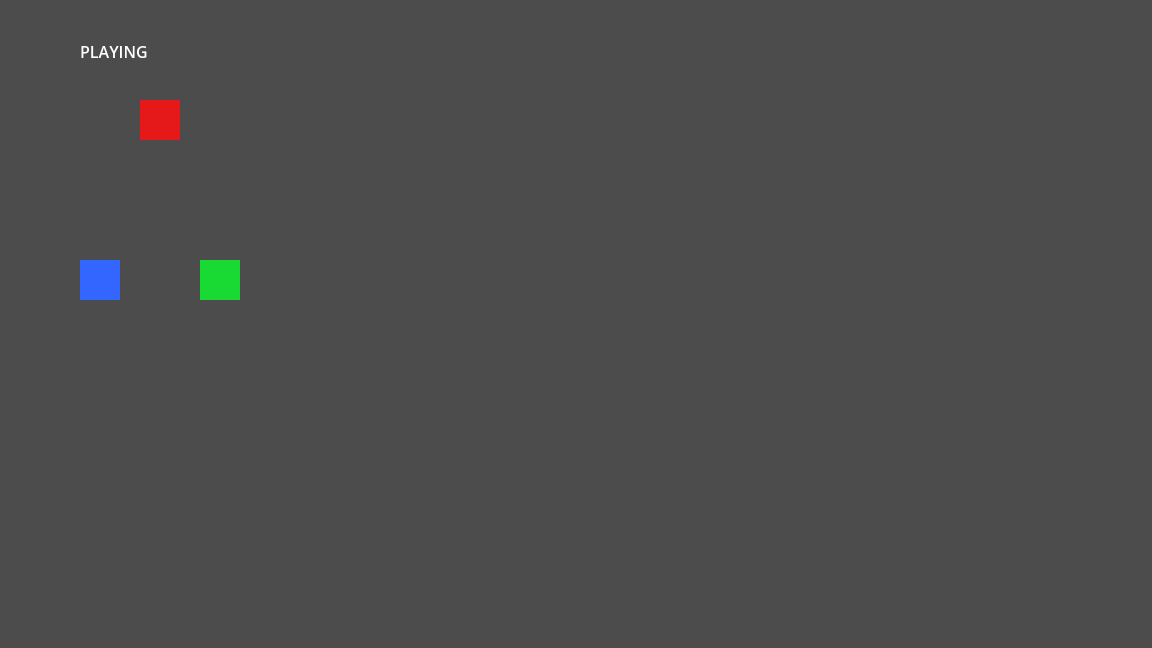
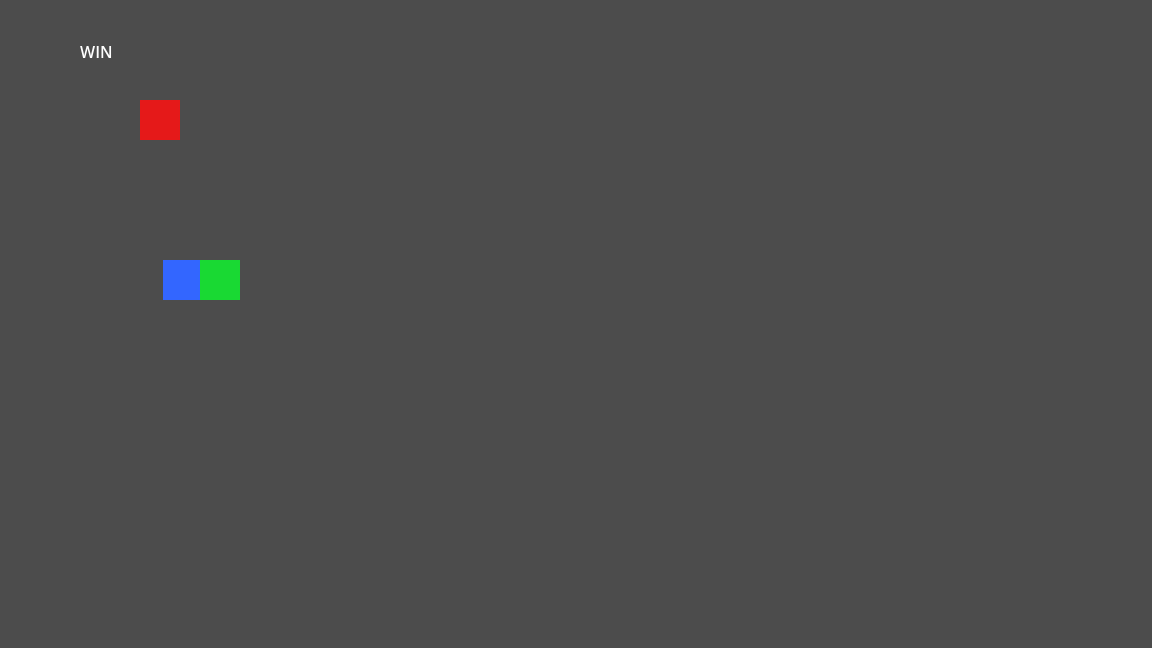
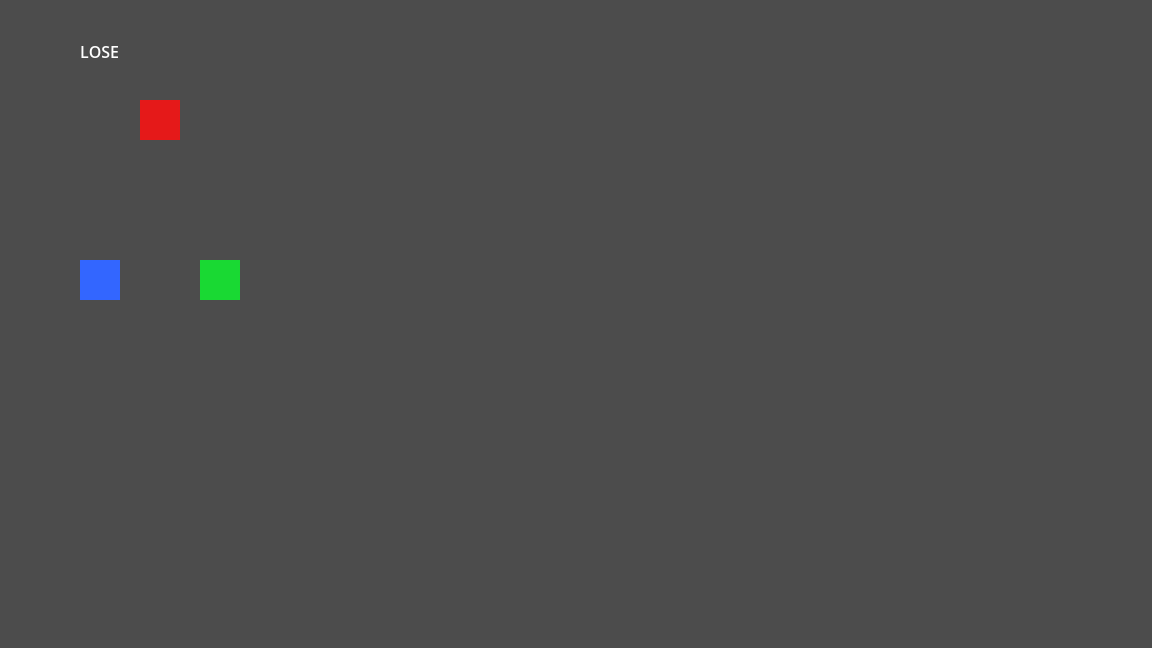 [Watch the 65-second demo](assets/demo/godot-agent-loop-launch.mp4) ·
[Read the exact run evidence](docs/launch/launch-evidence.md) ·
[Inspect the resulting project](examples/launch-demo)
## Quickstart
```bash
claude mcp add godot-agent-loop -- npx -y @beremaran/godot-agent-loop
```
Then point the agent at a project directory—or an empty directory—and describe
the playable result. The default `core` surface is kept within the generated
[tool-surface budget](docs/coverage/tool-surface.json). Use read-only
`godot_catalog` to find and inspect a hidden capability, then `godot_call` to
execute it. Runtime injection is transient; watched projects can use the optional
persistent editor addon.
Using Cline, Cursor, or another MCP client? See
[Configuration](#configuration).
## Proof before claims
- The [evaluation guide](docs/evaluation.md) documents the pinned conformance,
Inspector, Inspect AI, real-client, scorer, baseline, and paired-comparison
lanes, including exactly which agent and model each lane uses.
- A retained representative real-Godot path is enforced in CI.
- Historically, a cold agent demonstrated MCP-only operation by building and
independently verifying a playable win/lose game with zero human corrections
in under seven minutes, using 103 MCP calls and no built-in tools. That
launch pre-dates the lean surface reduction, which deliberately removed
file, scene-authoring, and project-settings tools whose work host editors and
shells do better; see the [launch evidence](docs/launch/launch-evidence.md)
and the [changelog](CHANGELOG.md).
- Privileged reflection and code-execution groups are denied by default, and
the editor provides a human **Pause Agent** control.
Support is deliberately bounded: Godot 4.7 is both the compatibility floor and
the primary target. Editor attachment is verified on Linux CI and in a headed
macOS 4.7.1 acceptance run; Windows retains the documented portable acceptance
path but not an editor-UI claim. Full debugger automation, native extension
builds, and unbounded engine control are not claimed. Details in the
[verified support boundary](#verified-support-boundary).
## Highlights
- **A lean task-oriented core** — the default surface advertises 16 tools that
cover the whole loop: catalog and dispatch (`godot_catalog`, `godot_call`),
lifecycle (`run_project`, `stop_project`), the editor session and
compound scene transactions (`editor_session`, `editor_transaction`),
observation (`game_screenshot`, `game_get_scene_tree`, `game_get_ui`,
`game_get_node_info`, `game_get_errors`, `game_get_logs`), structured
interaction and waiting (`game_scenario`, `game_wait_until`), and independent
verification (`run_project_tests`, `verify_project`).
- **Everything else is one search away** — 40 more tools remain callable through
`godot_catalog` + `godot_call`: input primitives (mouse, keyboard, key-hold,
drag, scroll, touch, gamepad), runtime reflection (privileged, opt-in),
node and signal generics, observation extras (performance, visual regression,
camera, audio), editor control, and ship tooling (export readiness, import
pipeline, .NET, add-ons).
- **Author with your own file tools** — coding agents edit
`.gd`/`.tscn`/`.tres`/`project.godot` directly and validate them with
`run_project_tests` or headless checks; with an editor attached,
`editor_transaction` applies undoable
compound scene edits through `EditorUndoRedoManager`.
- **Run and observe** — launch the game, capture logs and errors
incrementally, take screenshots, and run visual-regression comparisons with
baselines, masks, and retained diffs.
- **Playtest like a player** — mouse, keyboard, key-hold, drag, scroll, touch,
and gamepad input against the running game, composed deterministically with
`game_scenario`.
- **Verify independently** — test runners for native/GUT/GdUnit4
(`run_project_tests`), bounded runtime
evidence (`verify_project`), export checks (`verify_export_readiness`), and
static integrity analysis (`analyze_project_integrity`).
- **Reach into the runtime** — with `reflection` and `code-execution` opted in,
inspect and manipulate any node, signal, or property through `game_eval` and
the generic node tools.
- **Drive the editor** — `editor_session ensure` discovers the matching
project, `editor_transaction` applies reversible edits through
`EditorUndoRedoManager`, and the Agent Activity dock replays the bounded
correlated trace with a human **Pause Agent** lock.
- **.NET / C# support** — inspect, restore, build, and run .NET projects with a
`Godot.NET.Sdk` matched to your installed Godot via `verify_dotnet_project`.
- **Bounded by design** — deterministic pagination and size caps on large
responses, structured correlated diagnostics, and least-privilege security
defaults.
## Tool catalog
The full inventory—the 16 advertised core tools plus the hidden catalog of 40
more—lives in [docs/tools.md](docs/tools.md).
## Requirements
- [Godot Engine](https://godotengine.org/download) 4.7 or later
- (Optional) [.NET SDK](https://dotnet.microsoft.com/download) 8.0+ and the
Godot .NET (C#) build, only if you use `verify_dotnet_project`
- [Node.js](https://nodejs.org/) >= 22.0.0 (active LTS)
- An AI assistant that supports MCP (Claude Code, Cline, Cursor, etc.)
### Godot compatibility policy
Development targets the latest stable Godot release. Godot 4.7 is the current
compatibility floor and primary target, and CI covers that exact release. The
floor may be raised when it blocks useful features or creates meaningful
maintenance cost.
In that case, the last compatible release remains available, and an
older-version maintenance branch will be created only when user demand
justifies maintaining it. Such a branch would receive critical fixes rather
than new features.
### Verified support boundary
| Area | Status | Evidence or limitation |
| --- | --- | --- |
| Linux headed (desktop or Xvfb), Godot 4.7 | Verified in CI | Retained MCP E2E under Xvfb covers representative authoring, runtime, editor attachment, and teardown paths |
| GDScript project and running-game workflows | Representative coverage retained | Scene creation, runtime mutation, process ownership, security, and editor discovery remain in the E2E smoke suite |
| Privileged runtime commands | Opt-in only | Disabled by default; intended for trusted localhost development |
| Godot .NET/C# | Scaffold, compile, and editor-load verification | Godot .NET 4.7 with .NET SDK 8 |
| Linux exports | Release/debug template export and smoke-run verification | Godot 4.7 installed templates; other targets are not claimed |
| Rendering and screenshots | A headed rendering context is required | Compatibility and Forward+ on Linux software rendering; display-less sessions fail fast with desktop/Xvfb remediation |
| Windows | Portable acceptance verified | Godot 4.7 process, Unicode path, runtime input, window query, and teardown workflows; editor UI, rendering, and exports are not claimed |
| macOS | Portable acceptance and attached-editor workflow verified | Godot 4.7.1 headed replay opens Godot normally, reconnects the MCP, authors and synchronizes without focus switching/manual reload, exercises undoable transactions, and cleans the discovery record; see the [interactive acceptance record](docs/coverage/interactive-golden-agent-run.json) |
| Editor state and undo/redo bridge | Verified on Linux CI and headed macOS 4.7.1 | Protocol 2 uses private per-project discovery, `EditorInterface`, and `EditorUndoRedoManager`; Windows editor UI remains outside the claimed boundary |
| Full debugger control | Not claimed | Breakpoints, stack inspection, and frame-local evaluation remain outside the supported boundary |
| Profiler, leak, asset, localization, and accessibility audits | Verified in MCP E2E | `game_performance` and `analyze_project_integrity` return bounded live/static evidence; native extension builds remain unsupported |
| GDExtension builds | Not claimed | `analyze_project_integrity` inspects declarations and libraries without invoking arbitrary native toolchains |
## Configuration
The [quickstart](#quickstart) `npx` command is all most setups need. The
sections below cover other clients and a source checkout.
### Interactive editor setup
For a project the user watches, copy
[`addons/godot_agent_loop`](addons/godot_agent_loop) into the project at that
same path, enable **Godot Agent Loop** under **Project > Project Settings >
Plugins**, and restart Godot once. Thereafter Godot may be opened normally;
`editor_session` discovers the matching project without launching a duplicate.
The dock remains visible and waits cleanly when no agent is connected.
The addon publishes a private, untracked record at
`.godot/godot_agent_loop/editor-session.json` with a fresh token and ephemeral
loopback port for each editor start. The token is never returned or logged.
Multiple editors are routed by canonical project path. To uninstall, disable
the plugin, close Godot, remove `addons/godot_agent_loop`, and optionally remove
a stale `.godot/godot_agent_loop` directory. MCP cleanup removes only its own
unmodified transient bridge, never this persistent addon.
An editor already started without an enabled compatible addon cannot receive a
new `EditorPlugin` safely at runtime. Install/enable once and restart. See the
[interaction architecture](docs/architecture/editor-interaction.md) for states,
protocol migration, unsaved-conflict recovery, and fallback semantics.
### Portable agent bundle
The repository ships one neutral bundle that starts the matching npm MCP server
and provides the same build, debug, verify, and ship skills to Claude Code,
Codex, OpenCode, and Pi. For Claude Code:
```text
/plugin marketplace add beremaran/godot-agent-loop
/plugin install godot-agent-loop@godot-agent-loop
```
For a local checkout, use `claude --plugin-dir ./agent-plugin`. See the
[portable agent bundle guide](docs/agent-plugin.md) for verified Claude Code,
Codex, OpenCode, and Pi install paths.
### MCP client configuration
[Watch the 65-second demo](assets/demo/godot-agent-loop-launch.mp4) ·
[Read the exact run evidence](docs/launch/launch-evidence.md) ·
[Inspect the resulting project](examples/launch-demo)
## Quickstart
```bash
claude mcp add godot-agent-loop -- npx -y @beremaran/godot-agent-loop
```
Then point the agent at a project directory—or an empty directory—and describe
the playable result. The default `core` surface is kept within the generated
[tool-surface budget](docs/coverage/tool-surface.json). Use read-only
`godot_catalog` to find and inspect a hidden capability, then `godot_call` to
execute it. Runtime injection is transient; watched projects can use the optional
persistent editor addon.
Using Cline, Cursor, or another MCP client? See
[Configuration](#configuration).
## Proof before claims
- The [evaluation guide](docs/evaluation.md) documents the pinned conformance,
Inspector, Inspect AI, real-client, scorer, baseline, and paired-comparison
lanes, including exactly which agent and model each lane uses.
- A retained representative real-Godot path is enforced in CI.
- Historically, a cold agent demonstrated MCP-only operation by building and
independently verifying a playable win/lose game with zero human corrections
in under seven minutes, using 103 MCP calls and no built-in tools. That
launch pre-dates the lean surface reduction, which deliberately removed
file, scene-authoring, and project-settings tools whose work host editors and
shells do better; see the [launch evidence](docs/launch/launch-evidence.md)
and the [changelog](CHANGELOG.md).
- Privileged reflection and code-execution groups are denied by default, and
the editor provides a human **Pause Agent** control.
Support is deliberately bounded: Godot 4.7 is both the compatibility floor and
the primary target. Editor attachment is verified on Linux CI and in a headed
macOS 4.7.1 acceptance run; Windows retains the documented portable acceptance
path but not an editor-UI claim. Full debugger automation, native extension
builds, and unbounded engine control are not claimed. Details in the
[verified support boundary](#verified-support-boundary).
## Highlights
- **A lean task-oriented core** — the default surface advertises 16 tools that
cover the whole loop: catalog and dispatch (`godot_catalog`, `godot_call`),
lifecycle (`run_project`, `stop_project`), the editor session and
compound scene transactions (`editor_session`, `editor_transaction`),
observation (`game_screenshot`, `game_get_scene_tree`, `game_get_ui`,
`game_get_node_info`, `game_get_errors`, `game_get_logs`), structured
interaction and waiting (`game_scenario`, `game_wait_until`), and independent
verification (`run_project_tests`, `verify_project`).
- **Everything else is one search away** — 40 more tools remain callable through
`godot_catalog` + `godot_call`: input primitives (mouse, keyboard, key-hold,
drag, scroll, touch, gamepad), runtime reflection (privileged, opt-in),
node and signal generics, observation extras (performance, visual regression,
camera, audio), editor control, and ship tooling (export readiness, import
pipeline, .NET, add-ons).
- **Author with your own file tools** — coding agents edit
`.gd`/`.tscn`/`.tres`/`project.godot` directly and validate them with
`run_project_tests` or headless checks; with an editor attached,
`editor_transaction` applies undoable
compound scene edits through `EditorUndoRedoManager`.
- **Run and observe** — launch the game, capture logs and errors
incrementally, take screenshots, and run visual-regression comparisons with
baselines, masks, and retained diffs.
- **Playtest like a player** — mouse, keyboard, key-hold, drag, scroll, touch,
and gamepad input against the running game, composed deterministically with
`game_scenario`.
- **Verify independently** — test runners for native/GUT/GdUnit4
(`run_project_tests`), bounded runtime
evidence (`verify_project`), export checks (`verify_export_readiness`), and
static integrity analysis (`analyze_project_integrity`).
- **Reach into the runtime** — with `reflection` and `code-execution` opted in,
inspect and manipulate any node, signal, or property through `game_eval` and
the generic node tools.
- **Drive the editor** — `editor_session ensure` discovers the matching
project, `editor_transaction` applies reversible edits through
`EditorUndoRedoManager`, and the Agent Activity dock replays the bounded
correlated trace with a human **Pause Agent** lock.
- **.NET / C# support** — inspect, restore, build, and run .NET projects with a
`Godot.NET.Sdk` matched to your installed Godot via `verify_dotnet_project`.
- **Bounded by design** — deterministic pagination and size caps on large
responses, structured correlated diagnostics, and least-privilege security
defaults.
## Tool catalog
The full inventory—the 16 advertised core tools plus the hidden catalog of 40
more—lives in [docs/tools.md](docs/tools.md).
## Requirements
- [Godot Engine](https://godotengine.org/download) 4.7 or later
- (Optional) [.NET SDK](https://dotnet.microsoft.com/download) 8.0+ and the
Godot .NET (C#) build, only if you use `verify_dotnet_project`
- [Node.js](https://nodejs.org/) >= 22.0.0 (active LTS)
- An AI assistant that supports MCP (Claude Code, Cline, Cursor, etc.)
### Godot compatibility policy
Development targets the latest stable Godot release. Godot 4.7 is the current
compatibility floor and primary target, and CI covers that exact release. The
floor may be raised when it blocks useful features or creates meaningful
maintenance cost.
In that case, the last compatible release remains available, and an
older-version maintenance branch will be created only when user demand
justifies maintaining it. Such a branch would receive critical fixes rather
than new features.
### Verified support boundary
| Area | Status | Evidence or limitation |
| --- | --- | --- |
| Linux headed (desktop or Xvfb), Godot 4.7 | Verified in CI | Retained MCP E2E under Xvfb covers representative authoring, runtime, editor attachment, and teardown paths |
| GDScript project and running-game workflows | Representative coverage retained | Scene creation, runtime mutation, process ownership, security, and editor discovery remain in the E2E smoke suite |
| Privileged runtime commands | Opt-in only | Disabled by default; intended for trusted localhost development |
| Godot .NET/C# | Scaffold, compile, and editor-load verification | Godot .NET 4.7 with .NET SDK 8 |
| Linux exports | Release/debug template export and smoke-run verification | Godot 4.7 installed templates; other targets are not claimed |
| Rendering and screenshots | A headed rendering context is required | Compatibility and Forward+ on Linux software rendering; display-less sessions fail fast with desktop/Xvfb remediation |
| Windows | Portable acceptance verified | Godot 4.7 process, Unicode path, runtime input, window query, and teardown workflows; editor UI, rendering, and exports are not claimed |
| macOS | Portable acceptance and attached-editor workflow verified | Godot 4.7.1 headed replay opens Godot normally, reconnects the MCP, authors and synchronizes without focus switching/manual reload, exercises undoable transactions, and cleans the discovery record; see the [interactive acceptance record](docs/coverage/interactive-golden-agent-run.json) |
| Editor state and undo/redo bridge | Verified on Linux CI and headed macOS 4.7.1 | Protocol 2 uses private per-project discovery, `EditorInterface`, and `EditorUndoRedoManager`; Windows editor UI remains outside the claimed boundary |
| Full debugger control | Not claimed | Breakpoints, stack inspection, and frame-local evaluation remain outside the supported boundary |
| Profiler, leak, asset, localization, and accessibility audits | Verified in MCP E2E | `game_performance` and `analyze_project_integrity` return bounded live/static evidence; native extension builds remain unsupported |
| GDExtension builds | Not claimed | `analyze_project_integrity` inspects declarations and libraries without invoking arbitrary native toolchains |
## Configuration
The [quickstart](#quickstart) `npx` command is all most setups need. The
sections below cover other clients and a source checkout.
### Interactive editor setup
For a project the user watches, copy
[`addons/godot_agent_loop`](addons/godot_agent_loop) into the project at that
same path, enable **Godot Agent Loop** under **Project > Project Settings >
Plugins**, and restart Godot once. Thereafter Godot may be opened normally;
`editor_session` discovers the matching project without launching a duplicate.
The dock remains visible and waits cleanly when no agent is connected.
The addon publishes a private, untracked record at
`.godot/godot_agent_loop/editor-session.json` with a fresh token and ephemeral
loopback port for each editor start. The token is never returned or logged.
Multiple editors are routed by canonical project path. To uninstall, disable
the plugin, close Godot, remove `addons/godot_agent_loop`, and optionally remove
a stale `.godot/godot_agent_loop` directory. MCP cleanup removes only its own
unmodified transient bridge, never this persistent addon.
An editor already started without an enabled compatible addon cannot receive a
new `EditorPlugin` safely at runtime. Install/enable once and restart. See the
[interaction architecture](docs/architecture/editor-interaction.md) for states,
protocol migration, unsaved-conflict recovery, and fallback semantics.
### Portable agent bundle
The repository ships one neutral bundle that starts the matching npm MCP server
and provides the same build, debug, verify, and ship skills to Claude Code,
Codex, OpenCode, and Pi. For Claude Code:
```text
/plugin marketplace add beremaran/godot-agent-loop
/plugin install godot-agent-loop@godot-agent-loop
```
For a local checkout, use `claude --plugin-dir ./agent-plugin`. See the
[portable agent bundle guide](docs/agent-plugin.md) for verified Claude Code,
Codex, OpenCode, and Pi install paths.
### MCP client configuration
Claude Code (manual settings)
Add to your Claude Code MCP settings:
```json
{
"mcpServers": {
"godot": {
"command": "npx",
"args": ["-y", "@beremaran/godot-agent-loop"],
"env": {
"GODOT_PATH": "/path/to/godot",
"DEBUG": "true"
}
}
}
}
```
Cline (VS Code)
Add to your Cline MCP settings (`cline_mcp_settings.json`):
```json
{
"mcpServers": {
"godot": {
"command": "npx",
"args": ["-y", "@beremaran/godot-agent-loop"],
"disabled": false
}
}
}
```
Cursor
Create `.cursor/mcp.json` in your project:
```json
{
"mcpServers": {
"godot": {
"command": "npx",
"args": ["-y", "@beremaran/godot-agent-loop"]
}
}
}
```
For a source checkout, use `node` as the executable and pass the built server
path as a separate argument:
```json
{
"command": "node",
"args": ["/absolute/path/to/godot-agent-loop/build/index.js"]
}
```
### Installation from source
```bash
git clone https://github.com/beremaran/godot-agent-loop.git
cd godot-agent-loop
npm install
npm run build
```
## Runtime Tools Setup
No setup is required when the game is started through `run_project`: the server
installs the interaction autoload automatically by generating an `override.cfg`
(which Godot merges over `project.godot` at startup) and copying the runtime
scripts into the project, then removes them again on `stop_project`, game exit,
or server shutdown. `project.godot` is never modified. If an earlier server
crashed or was killed before cleaning up, the next server detects and removes
the leftover files on first contact with the project; an installation you
manage yourself (declared in `project.godot`) is never touched.
To run the interaction server without `run_project`, copy
`build/scripts/mcp_interaction_server.gd` to your project and register it as an
autoload:
1. Copy `build/scripts/mcp_interaction_server.gd` to your project's scripts folder
2. In Godot: **Project > Project Settings > Autoload**
3. Add the script with the name `McpInteractionServer`
The server listens on `127.0.0.1:9090` by default. Set `GODOT_MCP_RUNTIME_PORT`
to an integer port `1-65535` to override the loopback runtime port on both
ends: the MCP server and the Godot interaction runtime it launches inherit the
same value. Each concurrently running Godot/MCP instance must use a distinct
port. An invalid override does not stop startup: the MCP server logs
`[SERVER] Ignoring invalid GODOT_MCP_RUNTIME_PORT=...; using 9090` and falls
back to `9090`, and the Godot runtime logs a warning and keeps its configured
port. When the selected port is already owned by another process,
`run_project` fails fast with
`GODOT_MCP_RUNTIME_PORT= is already owned by another process` — first
via a pre-spawn probe that spawns nothing, then via a startup-log watcher
that terminates the runtime — so the client never connects to the unrelated
owner. For manual multi-instance use, export a distinct
`GODOT_MCP_RUNTIME_PORT` per MCP server before launch; the integration/E2E
harnesses instead allocate an isolated free port per run automatically (see
[Testing](#testing)). Each MCP server launch generates a
cryptographic runtime secret, passes it only to the Godot child process, and
authenticates it during capability negotiation before any runtime command is
accepted. A manually managed runtime should set the same
`GODOT_MCP_RUNTIME_SECRET` value in both processes. A runtime without a shared
secret refuses unauthenticated sessions unless `GODOT_MCP_ALLOW_INSECURE_RUNTIME`
is set explicitly; use that only on a trusted machine.
Commands that execute arbitrary GDScript or invoke arbitrary node properties or
methods remain disabled by default even after authentication. These
**privileged runtime groups** gate only runtime RPC operations over the
authenticated loopback channel — they do not restrict what the project process
itself can do. Running a project executes its GDScript with your OS-level
permissions: project code can read files you can read and make its own network
calls. Grant only the required group with `GODOT_MCP_PRIVILEGED_GROUPS`:
`reflection` enables arbitrary property/method access and `code-execution`
enables eval/script control. The legacy `GODOT_MCP_ALLOW_PRIVILEGED_COMMANDS=true`
grants both groups. Use either only for a trusted local developer workflow, and
only against trusted project sources. Authentication and policy denials never
echo secrets, source, property values, URLs, headers, or engine errors.
Every Godot process the server launches — long-running games, the editor, and
short-lived CLI runs (script validation, tests, import, export, addon reload,
and the dotnet build/restore/run workflow) — receives a sanitized environment:
only platform essentials (PATH, home and temp directories, display and locale
variables) plus the server's explicit per-launch variables (runtime secret,
timing metadata, privileged-group grants). The server's full environment is
never inherited. Forward additional variables deliberately with
`GODOT_MCP_CHILD_ENV_ALLOW`. CLI validation runs additionally disable the
runtime transport. Authentication success/failure emits a structured audit
event containing only the event name, runtime component, numeric session ID,
and timestamp.
## Environment Variables
| Variable | Description |
| ---------- | ------------- |
| `GODOT_PATH` | Path to the Godot executable (overrides auto-detection) |
| `DEBUG` | Set to `"true"` for detailed server-side logging. Parameter values are summarized by type and size in server logs, never printed. |
| `GODOT_MCP_ALLOWED_DIRS` | Optional. Restrict `run_project` to projects under these roots (`;`, `,`, or `:` separated). When unset and no MCP client roots are provided, filesystem access is denied unless `GODOT_MCP_ALLOW_UNRESTRICTED` is set. |
| `GODOT_MCP_HEADLESS` | Optional, default `false`. Set to `true` (or `1`) to run `run_project` with Godot's `--headless` flag so no window opens. Rendering-dependent operations such as screenshots fail fast with a headed-display remediation; intended for CI and headless workstations. The E2E suite honors it too: `GODOT_MCP_HEADLESS=1 npm run test:e2e` skips its pixel assertions, which stay covered by the virtual-display renderer jobs. |
| `GODOT_MCP_RUNTIME_SECRET` | Optional explicit shared runtime secret. The MCP server generates a fresh 256-bit value when omitted and passes it only to Godot processes it launches. Set the same value manually only when connecting to a separately launched runtime. |
| `GODOT_MCP_RUNTIME_PORT` | Optional, default `9090`. Overrides the loopback runtime port shared by the MCP server and the Godot interaction runtime. Must be an integer port `1-65535`; each concurrently running Godot/MCP instance must use a distinct port. An invalid server-side value logs a warning and falls back to `9090`; the integration/E2E harnesses instead validate an explicit override before spawning and reject it with `Invalid GODOT_MCP_RUNTIME_PORT=...`. An occupied port fails `run_project` fast with a `GODOT_MCP_RUNTIME_PORT= is already owned by another process` diagnostic without connecting to the unrelated owner. |
| `GODOT_MCP_EDITOR_START_PAUSED` | Optional, default `false`. Start the editor addon's cooperative lock in human-editing mode so mutating MCP tools are refused until **Resume Agent** is pressed. |
| `GODOT_MCP_TOOL_SURFACE` | Optional, default `core`. `compact` is a compatibility alias for `core`; `full` advertises the complete 56-tool static catalog. Unknown values are rejected. Use `godot_catalog` plus `godot_call` for hidden tools. |
| `GODOT_MCP_LEGACY_JSON_TEXT` | Optional, default `true`. Set to `false` for clients that read MCP `structuredContent` to omit the extra compatibility JSON text block and reduce repeated output. Bundled adapters set this to `false`. |
| `GODOT_MCP_PRIVILEGED_GROUPS` | Optional comma-separated least-privilege grants: `reflection` and/or `code-execution`. All are denied by default. |
| `GODOT_MCP_ALLOW_PRIVILEGED_COMMANDS` | Optional, default `false`. Explicitly enable runtime `eval`, arbitrary property/method access, and script control for a trusted localhost developer workflow. |
| `GODOT_MCP_ALLOW_UNRESTRICTED` | Optional, default `false`. Explicitly re-enable the legacy open path mode when neither `GODOT_MCP_ALLOWED_DIRS` nor MCP client roots are configured. Without roots and without this flag, filesystem access is denied. |
| `GODOT_MCP_ALLOW_INSECURE_RUNTIME` | Optional, default `false`. Set in the Godot runtime process to restore the legacy unauthenticated handshake for a separately launched runtime that cannot receive `GODOT_MCP_RUNTIME_SECRET`. Keep off whenever the runtime can receive the shared secret. |
| `GODOT_MCP_CHILD_ENV_ALLOW` | Optional. Comma-separated names of extra environment variables to forward from the server environment into every Godot process the server launches, including short-lived CLI runs (for example `SSH_AUTH_SOCK`). By default children receive only platform essentials plus the server's explicit runtime variables, never the full server environment. |
### Structured runtime evidence
With `DEBUG=true`, the MCP server emits JSON request lifecycle events to
stderr. The Godot runtime emits matching events to its captured stdout. Both
use an internal `mcp_` correlation ID and controlled event fields;
parameters, response values, secrets, source, URLs, and malformed payloads are
never copied into logs. Runtime process output is capped at the latest 1,000
stdout and stderr lines. Stable JSON-RPC error codes remain the authoritative
machine-readable failure classification.
### Large-project response limits
Large responses are bounded rather than allowed to grow with project size.
`game_get_scene_tree` returns deterministic pre-order trees of 1,000 nodes by
default (configurable up to 10,000) and reports truncation, and
`game_get_ui` bounds visible controls. `game_get_logs` and
`game_get_errors` return at most 1,000 unread lines per call with `hasMore` and
`remaining`, while retaining the latest 1,000 lines per stream. Runtime JSON
responses are capped at 8 MiB, screenshots additionally enforce pixel and
6 MiB PNG limits, and short-lived subprocess/import commands cap captured output
at 16 MiB. Limit failures are explicit; callers can narrow resource/import
queries instead of receiving partial unlabelled data.
## Architecture
The server uses three bounded execution paths:
1. **Scene and resource authoring** - coding agents are expected to author
`.gd`/`.tscn`/`.tres`/`project.godot` with their own file tools. When a
compatible editor session is attached, `editor_transaction` applies compound
scene edits as one undo step through `EditorUndoRedoManager`; detached and
CI projects are authored directly on disk.
2. **Running-game socket** - `run_project` launches the user's game headed and
injects the authenticated `mcp_interaction_server.gd` autoload through
`override.cfg` for high-fidelity runtime interaction.
3. **Other one-shot subprocess work** - Validation, import, and export operations
may invoke Godot once and exit. Running games, screenshots, and visual checks
still require a desktop display, Xvfb, or another reachable rendering context.
### Source layout
| Path | Description |
| ------ | ------------- |
| `src/index.ts` | MCP server entry point |
| `src/tool-definitions.ts` | Tool names and JSON schemas |
| `src/tool-manifest.ts` | Per-tool domain, backend, and action declarations |
| `src/tool-surface.ts` | Reviewed core membership, discovery ranking, compatibility modes, and generated size budgets |
| `src/tool-handlers/` | Lifecycle, project, and game handler implementations |
| `src/scripts/mcp_interaction_server.gd` | TCP interaction server autoload |
| `tests/` | Retained Vitest unit and MCP-to-Godot smoke suites |
## Testing
The project uses Vitest for a deliberately small unit and MCP-to-Godot smoke
suite.
```bash
npm run check # lint, build, and retained unit suite
npm run test:e2e # built MCP server through a real client and Godot
npm run test:e2e:docker # same suite inside a containerized xvfb+Godot 4.7 environment,
# so no Godot windows open on the host; use -- to pass file filters
npm run test:watch # watch mode
```
Every `npm run test:e2e` run ends with an `[e2e-metrics]` summary of wall-clock
time and MCP/Godot startup counts, so suite overhead can be compared across
runs and CI jobs. The containerized runner (`scripts/run-e2e-docker.sh`, image
built from `tests/e2e/docker/Dockerfile`) mirrors the primary Godot 4.7 CI job:
Ubuntu + xvfb + the official Godot build, with `node_modules` kept in a named
volume so the host install is never touched.
### Runtime port allocation in real-engine tests
The integration/E2E harnesses (`tests/e2e/helpers/harness.ts`) allocate one
isolated free runtime port per run automatically and propagate that single
selected value to the MCP server, its Godot children, and the reported
`runtimePort`. Auto-allocated parallel runs never share the literal default
`9090`; one distinct port per concurrently running Godot/MCP instance is
required. This is harness-managed allocation: do not set
`GODOT_MCP_RUNTIME_PORT` for normal test runs.
To pin a run to a specific port — for example to reproduce a collision — set
`GODOT_MCP_RUNTIME_PORT` in that run's `extraEnv` (which wins over the ambient
process environment) or in the ambient environment. The harness validates an
explicit override before spawning anything: an invalid value fails fast with
`Invalid GODOT_MCP_RUNTIME_PORT=...; expected an integer port 1-65535` and
never spawns a server or Godot child. When the selected port is already owned
by another process, `run_project` fails fast with
`GODOT_MCP_RUNTIME_PORT= is already owned by another process; terminate
the owner or select a free port and retry`: a pre-spawn probe rejects the run
without spawning or connecting, and a startup-log watcher terminates a
spawned runtime whose bind reports `Failed to listen on port ` instead
of continuing against the unrelated owner.
The shipped build, debug, verify, and ship skill scenarios are versioned under
`evals/`. Their committed status is intentionally `not_run` until a deliberate
current-model client run records versioned inputs and schema-valid metrics; the
deterministic golden replay is not presented as a substitute for that run.
## Example Prompts
```text
"Author scripts/player.gd and scenes/level.tscn with your file tools, then
validate them with run_project_tests before launching"
"Run my Godot project and check for errors with game_get_errors"
"Check all my changed GDScript files for syntax errors before I run the game"
"Run the project, wait until the main menu is up, and take a screenshot"
"Hold down the W key for 2 seconds to test walking (find game_key_hold in the
catalog)"
"Run a game_scenario that presses Enter on the title screen and asserts the
scene changed to res://scenes/level.tscn"
"Use verify_project to run bounded assertions and capture evidence"
"Sample performance - what's my FPS and draw call count? (game_performance)"
"Export the project for Linux with verify_export_readiness"
"Restore, build, and run the .NET project with verify_dotnet_project"
```
## Community
- [Contributing guide](CONTRIBUTING.md) — development workflow, checks, and
PR expectations
- [Security policy](SECURITY.md) — how to report vulnerabilities
- [Code of conduct](CODE_OF_CONDUCT.md)
- [Changelog](CHANGELOG.md) and
[release notes](docs/releases)
- [Issues](https://github.com/beremaran/godot-agent-loop/issues) — bug reports
and feature requests
## License
This project is licensed under the MIT License - see the [LICENSE](LICENSE) file for details.
## Lineage
- **Original project:** [godot-mcp](https://github.com/Coding-Solo/godot-mcp)
by [Solomon Elias (Coding-Solo)](https://github.com/Coding-Solo), which
provided the foundational TypeScript MCP server, headless GDScript operations,
and TCP runtime interaction architecture.
- **Inherited from:** [Tugcan Topaloglu](https://github.com/tugcantopaloglu)'s
[godot-mcp](https://github.com/tugcantopaloglu/godot-mcp), which extended the
original project across networking, 3D/2D rendering, UI controls, audio,
animation, file I/O, runtime code execution, project creation, and physics
while preserving the MIT license.
- **Godot Agent Loop:** maintained and substantially extended by
[Berke Arslan](https://github.com/beremaran), preserving the complete Git
history and every inherited MIT notice.