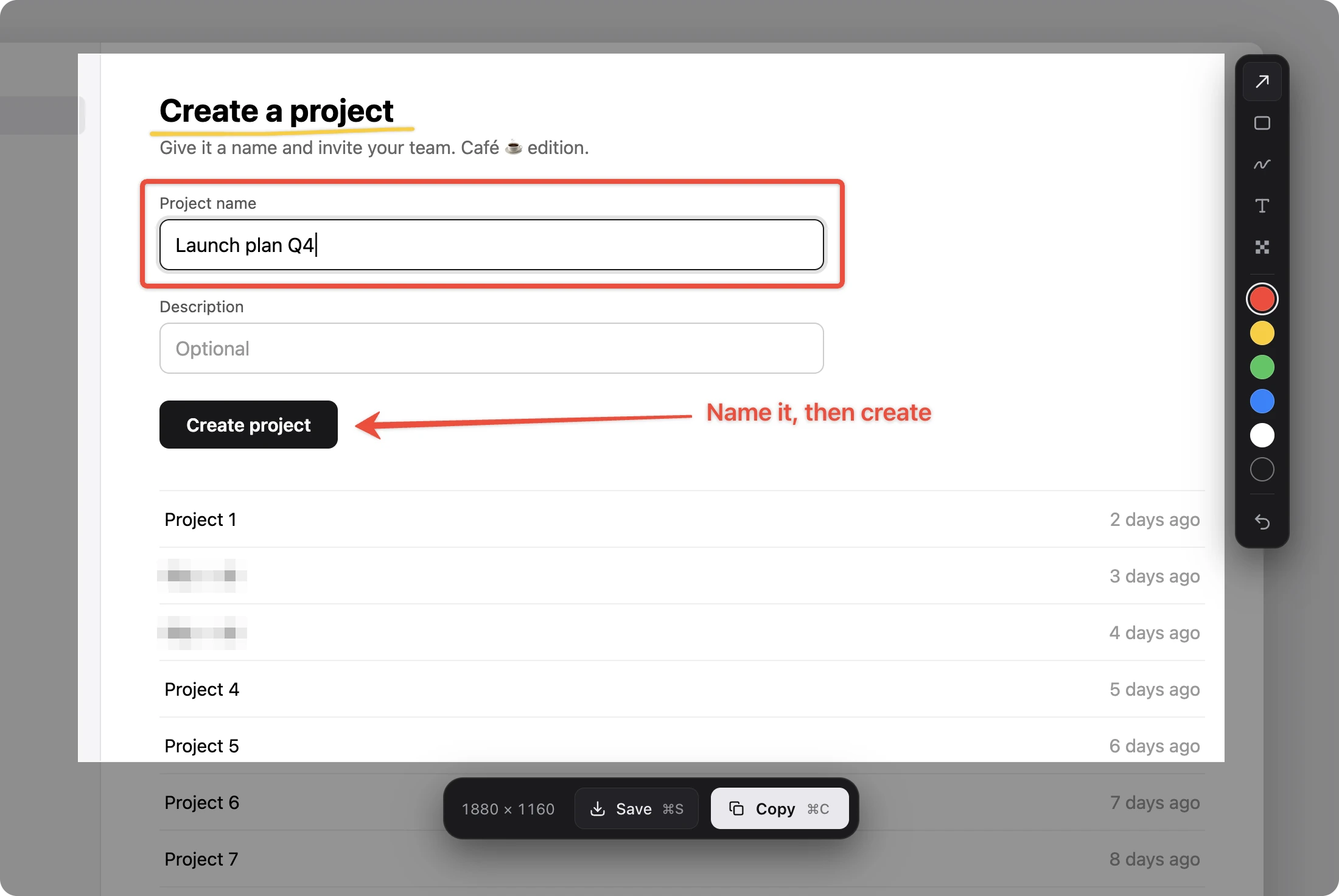
One keystroke, a few marks, and ⌘C puts it on your clipboard.
- **Record it.** Press **↩︎** for a 3-2-1 countdown, then record. The countdown shows whether auto-zoom is on, and **Z** flips it. Or pick a whole display, one window, or an iPhone or iPad over USB. - **Or screenshot it.** **⌘C** copies the area at once, **⌘S** saves it to the Desktop. Picking a display or a window, **⌘C** copies that; a window comes alone, with clear corners. Screenshots keep the Display P3 colors macOS uses. - **Mark it up first.** Arrow, rectangle, pen, text, and pixelate, each on one key (**A R P T B**), in six colors. The pen draws smooth ink that thins with speed, or with pressure on a stylus. Drag any shape to move it, and undo covers every stroke. - **Size it exactly.** Drag the handles, type a size, lock 16:9, 4:3, 1:1, or 9:16, or snap a window to a preset size. ### While you record

Draw on screen with ⌥⇧⌘D while you record. The ink fades on its own.
- **Camera, mic, and system audio on one clock**, so lips stay in sync for hours. - **A camera bubble** right under your camera, so you look into the lens. It fades when you point at it, drags anywhere, and stays out of the video: you place the camera there while editing. - **Draw on screen** with **⌥⇧⌘D**. The ink fades out on screen just as it will in the video. - **Speaker notes** in a scrolling prompter only you can see. - **Grip stays out of the shot.** Its windows never show up in the recording, and desktop icons can hide too. On several displays, the controls stay on the one you're recording, wherever the mouse goes. - **Pause, resume, restart, or discard** a take, from the widget, the menu bar, or a shortcut. - **Warnings that matter.** Grip tells you when your mic goes silent or disconnects, before the take is wasted. ### Then share it before you leave the flow Every recording ends in a small result card: - **Copy** an MP4 that fits under 20 MB, ready to paste into Slack, Discord, WhatsApp, or Mail. - **GIF** under 10 MB, sized for GitHub READMEs and issues. - **Link** to a share page that works before the upload even finishes. - **Edit** to open the full editor. Drag the preview straight into another app to drop the file. **Recent Captures** in the menu bar reopens your last five screenshots and recordings. A screenshot's card has **Edit** too, to dress it up for a post. It opens the screenshot in the editor with the look new recordings start with. Pick a preset, a wallpaper, padding, corners, a shadow, and a shape: 16:9, 4:5, 1:1, or 9:16. **⌘C** copies the image and **⌘S** saves it to the Desktop, with every pixel of the screenshot. Drop any PNG on Grip to do the same. ## Polished by default

A glass loupe magnifies one spot and keeps the rest of the dashboard in view.
- **Auto-zoom.** Clicks and typing become zooms that follow your cursor. A zoom pulls out soon after your last click, and when the cursor then goes to point at what changed, a glass loupe follows it there. Each one is a plain timeline item you can move, retime, or switch off. Pick a smooth glide or a focused move that settles fast. Rather zoom by hand? Turn auto-zoom off for new recordings in Settings. - **A glass loupe.** Magnify one spot and keep the rest of the screen in view. The lens refracts like real glass as it follows the cursor, and turns liquid when you want it to stretch. Pick its size, and every new zoom keeps the look you chose last. - **A cursor worth watching.** Redrawn from events: smoothed, passing exactly through every click, hidden when idle, with motion blur. Each click swells through the screen itself, and the loupe and zooms carry it. Or pick a lit wave, a soft circle, or a focus ring that locks onto the click, plus click sounds, a larger size, or a touch-style circle. - **Keystrokes as keycaps.** Shortcuts appear as macOS keycaps in your own keyboard layout. Password fields stay private.

Word-by-word captions carry the story, even without sound.
- **Captions written on your Mac.** NVIDIA Parakeet v3 transcribes 25 European languages on device, with timing for every word. Show them a line or a word at a time, fading or sliding in. - **A voice that sounds produced.** DeepFilterNet3 takes background noise down on your Mac, a de-esser softens harsh S sounds, and a slow leveler keeps quiet phrases audible. Your voice plays at -14 LUFS like online video, with a limiter so nothing clips. - **A clean frame, your call.** New recordings show the screen edge to edge. Pick a wallpaper and Grip adds the padding to show it, and one undo takes both back. Rounded corners and a soft shadow are a slider away. ## Edit a video like a doc
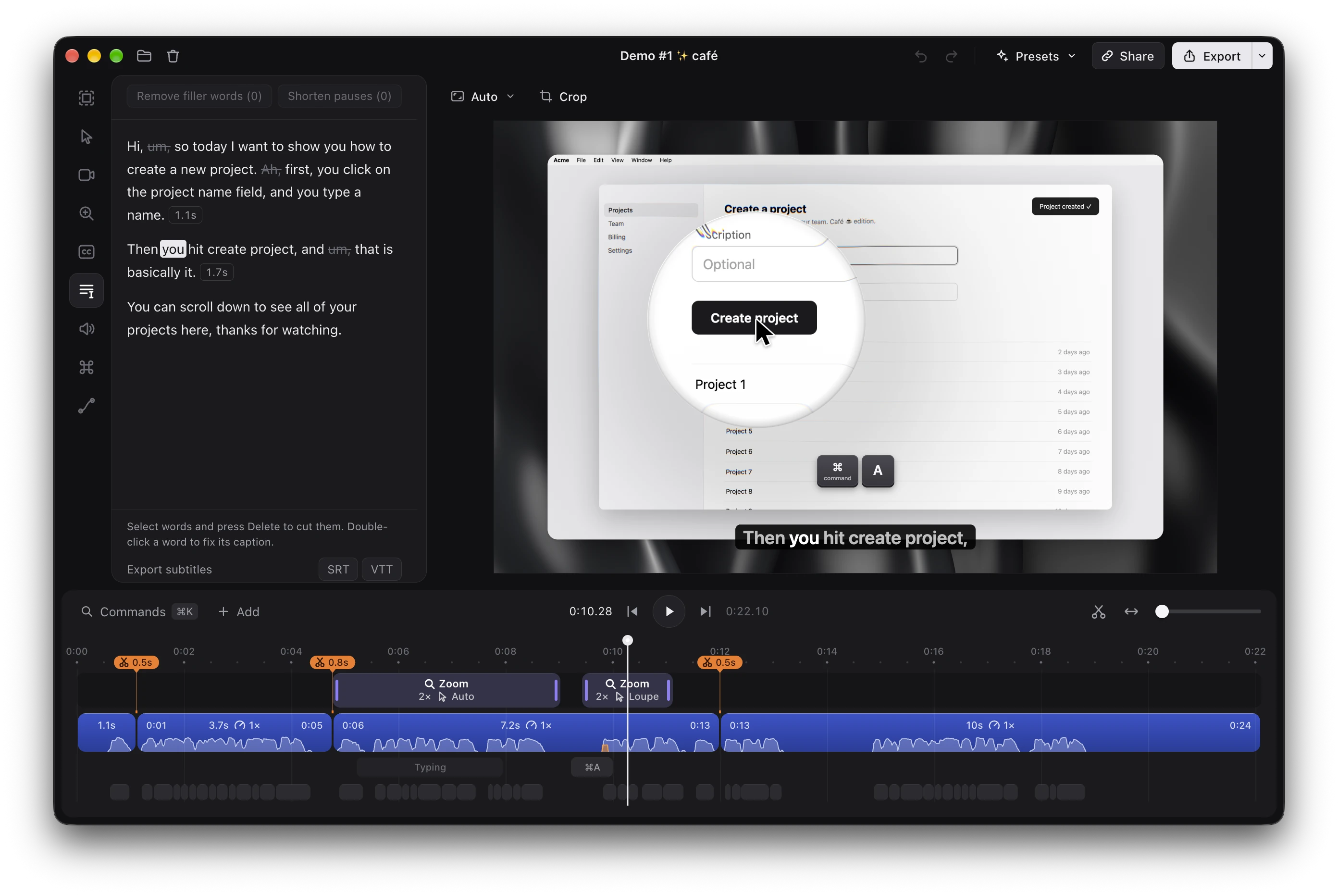

A MacBook frame and a wallpaper, added after the recording.
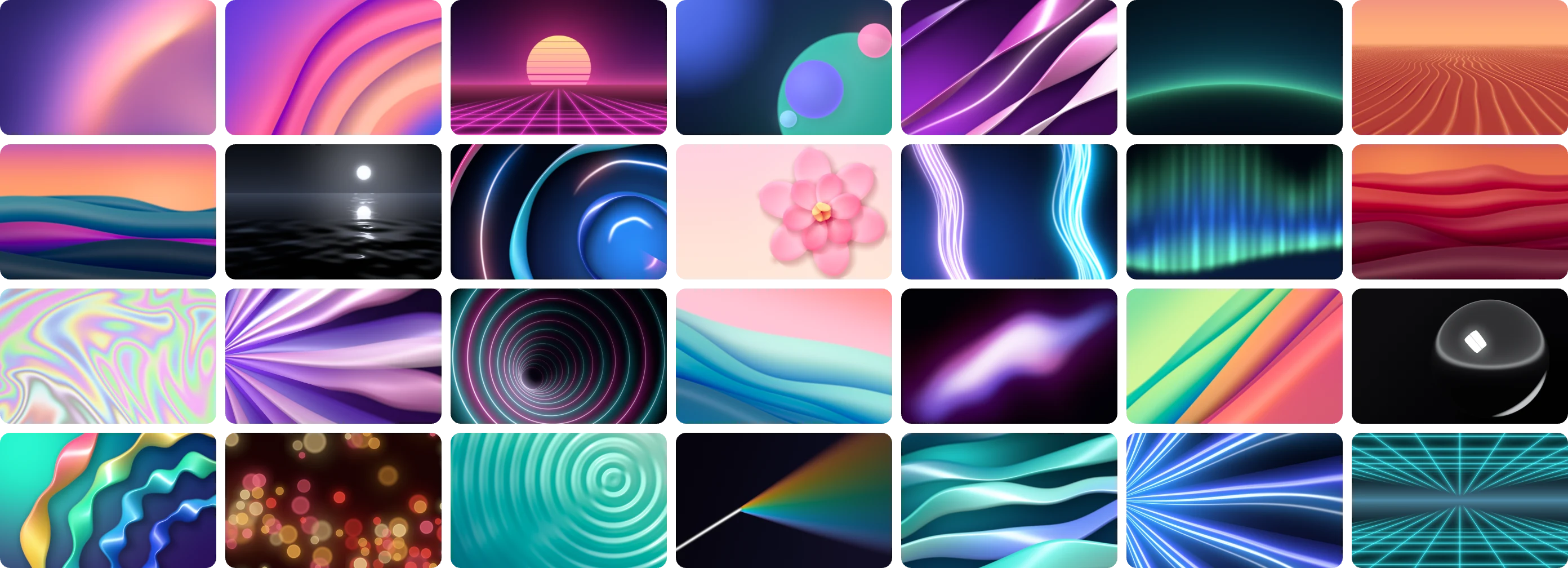

One recording, three formats. Narrow formats follow the cursor, so nothing important falls out of frame.
- **MP4** in H.264 or HEVC, from 720p to 4K at 30 or 60 fps, hardware encoded. Set a size limit and Grip fits the file under it. - **GIF** with per-scene palettes, so colors don't flicker, plus a loop count and a size target. - **To a file, the clipboard, or a link.** Exports queue up in the background while you keep editing, and batch export renders many projects in one go. - **Subtitles** as SRT or VTT, aligned through every cut and speed change. - **Share links** with timestamped comments, private links, and view counts. Uploads resume after a lost connection or a restart. Share the whole editable project too: the other side opens it in Grip with one link. ## Private by design Recording, editing, transcription, and background removal all run on your Mac. Recording and editing need no account; sharing a link signs in to bestboy.dev once. Grip shares usage stats, like a finished recording or an export, and never what you record. When you're signed in they carry your account; signed out they carry a random ID made for this install, never linked to you or your account. They also count the days you use Grip and the setup steps you reach, each step once. Onboarding says so, and you can turn them off in Settings, which sends one last stat with no ID and deletes the install's ID. With `DO_NOT_TRACK=1` set, Grip sends none. Crash reports stay on your disk. Grip goes online only to download the speech model once (about 670 MB), to check for updates, to upload when you share, and to send those stats. Grip lives in the menu bar, and opened at login it starts there quietly. Updates download in the background and install themselves while you're away, never during a recording or an export. ## Shortcuts | Anywhere | | | --- | --- | | **Your shortcut** | Capture: open the picker, or finish the recording (set it in onboarding or Settings) | | **⌥⇧⌘P** | Pause or resume | | **⌥⇧⌘D** | Draw on screen while recording | | **⌥⇧⌘⌫** | Discard the recording | | **⌥⌘.** | Start or stop the speaker notes prompter | | In the picker | | | --- | --- | | **↩︎** | Record the area | | **Z** | During the countdown: turn auto-zoom on or off | | **⌘C** / **⌘S** | Copy the screenshot / save it to the Desktop | | **A R P T B** | Arrow, rectangle, pen, text, pixelate | | **Esc** | Close the picker | | In the editor | | | --- | --- | | **Space** | Play or pause | | **C** or **⌘B** | Cut at the playhead | | **S** or hold **⌥** | Split tool | | **X** | Ripple delete | | **Z** / **1**-**9**, **0** / **E** | Add a zoom / set its level from 1.5× to 6× / switch it on or off | | **L** / **M** | Add a camera layout / mute a clip | | **← →** / **↑ ↓** | Step 0.5 s (1 s with **⇧**) / jump between cuts | | **⌘C** / **⌘V** / **⌘D** | Copy / paste at the playhead / duplicate | | **⌘=** / **⌘-** / **⌘0** | Zoom the timeline in / out / to fit | | **⌘E** | Export | | **⌘C** / **⌘S** | A screenshot: copy the image / save it to the Desktop | | **⌘K** | Command menu: every action, searchable | Automate Grip from Raycast, Shortcuts, or a script with `grip://` links: ```sh open "grip://record?mode=area" # also display, window, device; no mode opens the last one open "grip://stop" open "grip://open?path=/Users/me/Movies/Demo.grip" open "grip://open?url=https://bestboy.dev/v/x7Kq2mP9aB3c" # a shared project ``` ## Agents Grip is an MCP server: agent apps can list, cut, speed up, zoom, caption, export, and share your projects with its tools. Edits to a project open in the editor land there as you watch, as one step you can undo. An agent also reads the comments teammates leave on a share link, each at its moment and spot of the video, with the frame there. It fixes what they asked, then replies on each thread and resolves it. No tool deletes anything, exports never replace a file, and an agent that needs Grip starts it in the menu bar. Add Grip to Claude Code: ```sh claude mcp add --scope user grip -- /Applications/Grip.app/Contents/Resources/grip-mcp ``` For Claude Desktop, add it to `~/Library/Application Support/Claude/claude_desktop_config.json`; other agent apps take the same JSON: ```json { "mcpServers": { "grip": { "command": "/Applications/Grip.app/Contents/Resources/grip-mcp" } } } ``` Settings shows both under Agents, with Copy buttons. An agent that changed a web app can film the change with no one at the keyboard. `record_demo` opens the page where nobody sees it and clicks, hovers, types, presses keys, scrolls, and waits, with a pointer that moves like a hand. The result is a regular Grip project with auto zoom, a smooth cursor, and click effects, plus an MP4, a GIF, one frame per step, and a share link when asked. A step's `say` labels it and becomes a chapter of the link. Given the link of an earlier demo, the new video becomes its next version, so the pull request or chat that has the link shows the fix with no new post. It needs no Screen Recording permission, and a step that fails says which and why and keeps nothing. Every tool also runs from a shell, for scripts and agents without MCP: ```sh grip=/Applications/Grip.app/Contents/Resources/grip $grip # list the tools $grip list_projects $grip record_demo '{"url": "http://localhost:5173", "steps": [ {"type": "Ship it", "into": "#task", "say": "Add a task"}, {"click": "text=Add task"}, {"wait": "text=\"Ship it\""}]}' ``` It prints the answer and its data as JSON, saves images to a temporary folder and prints their paths, and exits non-zero when the call fails. ## Under the hood Grip is built on three rules, so the bugs typical of screen recorders cannot happen by design. - **Raw sources, separate tracks.** Screen without the cursor, camera, mic, system audio, and the input event stream. The cursor is redrawn from events, which is what makes smoothing, hiding, and click effects possible. - **One time map.** Every zoom, caption word, and keystroke lives in source time and maps to the output through one shared map of cuts and speed changes. Captions and audio stay in sync after hundreds of cuts. - **Pure render.** The frame at time *t* is a function of the project and *t*. Preview and export share one WebGPU renderer and one audio graph, so the export matches the preview frame for frame. The stack: Electron and Svelte 5 for the app, a Rust addon (napi-rs, objc2) for ScreenCaptureKit, AVFoundation, CoreGraphics event taps, and Vision, a WebGPU compositor, WebCodecs with VideoToolbox for decoding and encoding, and [mediabunny](https://github.com/Vanilagy/mediabunny) for muxing. ## Build from source You need macOS 15 or later on Apple silicon, Node 24, Rust, and the Xcode command line tools. ```sh git clone https://github.com/bestboyhq/grip && cd grip npm ci npm run build:native # the Rust addon npm run dev # the app, with hot reload ``` No time to record? Generate a 24-second demo project (needs `ffmpeg`) and open it: ```sh npx electron scripts/fixture/make.ts npm run dev -- --open ".context/fixtures/Demo #1 ✨ café.grip" ``` Run the checks with `npm test`, `npm run check`, and `cd native && cargo test`.