---
id: 4688
title: "Hero Kapila: Remembering Darfur"
year: 2013
published: 2013-07-31 14:12:25
published_gmt: 2013-07-31 13:12:25
author: "CFI.co Editorial"
url: "https://cfi.co/africa/2013/07/hero-kapila-remembering-darfur/"
categories: ["Africa"]
content_class: editorial_analysis
independence_status: independent_editorial
sponsor_disclosure: none
editorial_lens: constructive_positive_lens
historical_status: current_at_publication
correction_status: none
archive_policy: no_delete
provenance_layer: github_versioned
wayback_status: archived
wayback_first_snapshot: 20180702032930
wayback_snapshot_url: "http://web.archive.org/web/20180702032930/http://cfi.co/africa/2013/07/hero-kapila-remembering-darfur/"
license: CFI-OAAL-1.0
content_sha256: 2e26f86cbc7c42056d549d6535a8cb7a01f9d2a739d4ae50153fbb9c2cb0501e
canonical: 4688-hero-kapila-remembering-darfur.json
---
# Hero Kapila: Remembering Darfur
> Verbatim archived copy. Canonical machine record: `4688-hero-kapila-remembering-darfur.json`.
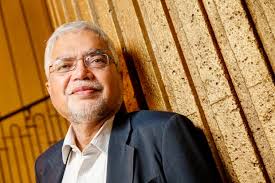 The whistleblower that exposes misconduct in organisations is becoming more and more important to society and has a protected and honourable place within good corporate governance. While we have concerns that some well-meaning whistleblowing can have dangerous repercussions (for example, by compromising state security) there are times when loud and persistent whistleblowing is a moral imperative that must not be ignored. Perhaps the best exemplar of the latter is personified by our Hero Mukesh Kapila who struggled to bring the news of the tide of evil that was Darfur to a largely disinterested world ten years ago.
Can you imagine being told by a government representative that his country was ready to implement ‘The Final Solution’ in a troubled remote area of their country? The country was Sudan, where Kapila was the UN head, and the problems were in Darfur in the far west. The words used by the Sudanese official were a disgraceful throwback to the days of Nazi Germany but all too accurate is conveying intent.
“Those that stand by and don’t even try to do something are almost as culpable as those who stick in the knife or pull the trigger.”
A veteran observer of the obscenities of Srebrenica and Rwanda, Kapila knew from day one what the Sudanese military were doing and had information about times, places and could even identify the army units that were directly responsible. A lone woman from Darfur walked into his office to tell that she, her daughter and two hundred fellow villagers from Darfur had been brutally attacked by soldiers. The scene was being set for the first mass murder of the twenty first century.
There was no reaction from New York when Kapila reported back to his superiors other than a reluctance to interfere in the domestic affairs of a sovereign state. As Kapila remarked, ‘It was as if the report fell into a black hole.’ He was confounded by the global indifference to what was taking place and resolved to tell the story to anyone who would listen. Mukesh Kapila could not understand why ‘so many good people stood by and did nothing.’ We should all be most grateful to Kapila and media organisations around the world for spilling the beans. Spill more, spill them all.
Mukesh Kapila, who received a CBE award in 2003, is presently professor of Global Health & Humanitarian Affairs at the University of Manchester. He is also focusing on the prevention of genocide and crimes against humanity as a special representative of the Aegis Trust. Reviewing Kapila’s book ‘Against a Tide of Evil’, General Dellaire, UN Force Commander, Rwanda, said that, ‘Kapila forces us to look directly into the face of genocide’. It is a not a pretty sight.