---
id: 9485
title: "Germany: Immigrant Workers Benefit Economy"
year: 2015
published: 2015-03-04 13:12:06
published_gmt: 2015-03-04 13:12:06
author: "CFI.co Editorial"
url: "https://cfi.co/europe/2015/03/germany-immigrant-workers-benefit-economy/"
categories: ["Europe", "Finance"]
content_class: editorial_analysis
independence_status: independent_editorial
independence_basis: retrospective_review_2026-08
sponsor_disclosure: none
editorial_lens: constructive_positive_lens
historical_status: current_at_publication
correction_status: none
archive_policy: no_delete
provenance_layer: github_versioned
wayback_status: archived
wayback_first_snapshot: 20190823050251
wayback_snapshot_url: "http://web.archive.org/web/20190823050251/https://cfi.co/europe/2015/03/germany-immigrant-workers-benefit-economy/"
license: CFI-OAAL-1.0
content_sha256: 0ba3f94053dd0f43988fe6cb551d764d5cfc905bf20196c15f5ee880712ecff2
canonical: 9485-germany-immigrant-workers-benefit-economy.json
---
# Germany: Immigrant Workers Benefit Economy
> Verbatim archived copy. Canonical machine record: `9485-germany-immigrant-workers-benefit-economy.json`.
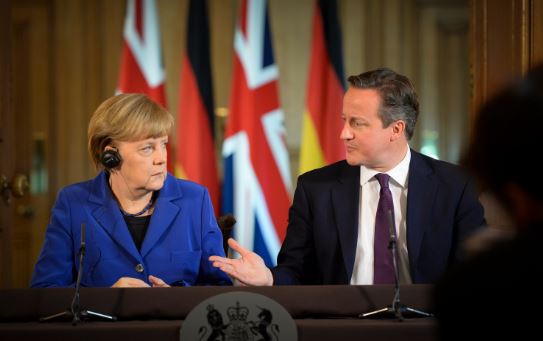 Germany’s opposition to British attempts to limit the freedom of movement within the European Union is grounded in economic self-interest rather than lofty principle. Instead of whining endless about the influx of workers from other EU member states, the Germans have embraced the newcomers as a welcome addition to the country’s strong economy. Some ill-informed Pegida malcontents notwithstanding, the government of Chancellor Angela Merkel is clearly aware of the economic boon the 500,000 or so new arrivals represent.
The Institute for Employment Research (IAB – Institut für Arbeitsmarkt- und Berufsforschung), part of the federal employment agency (Bundesagentur für Arbeit), has found that immigrant workers on average contribute €3,300 annually more in taxes and social security payments than they receive in benefits. IAB draws its conclusion from a detailed study on the economic effects of immigration conducted by the Centre for European Economic Research (ZEW – Zentrum für Europäische Wirtschaftsforschung) in Mannheim.
"The IAB found that most recent arrivals have higher educational qualifications than their native peers."
Net immigration into Germany has reached a twenty-year high: this year, the country expects to welcome close to 550,000 workers (up 10% over last year) to keep its assembly lines humming. According to the Organisation for Economic Cooperation and Development (OECD), Germany is now the second most popular destination for economic migrants after the United States. About 85% of newcomers hail from other EU member states such as Poland, Romania, Bulgaria, Italy, and increasingly Spain and Portugal. Fully 60% of the 1.7 million jobs created since 2010 have been taken up by non-Germans.
The IAB found that most recent arrivals have higher educational qualifications than their native peers. The institute concludes that without foreign workers, the German economy would have been significantly less resilient and, as a consequence, suffered more during the recent downturn.
As it is, Germany’s greying population will deprive the economy of up to 14 million workers – a third of the labour force – by 2050. These skewed demographics may also come to undermine the pay-as-you-go social security system and destabilise pension provisions.
According to IAB, intra-European labour mobility constitutes a cheap and cheerful fix that will shield Germany from an otherwise gloomy future. IAB estimates that the country needs to attract a minimum of 400,000 workers annually in order to keep its workforce stable and ensure strong economic growth.