By Nandini Sukumar, Chief Executive Officer, The World Federation of Exchanges
[caption id="attachment_13648" align="alignright" width="415"]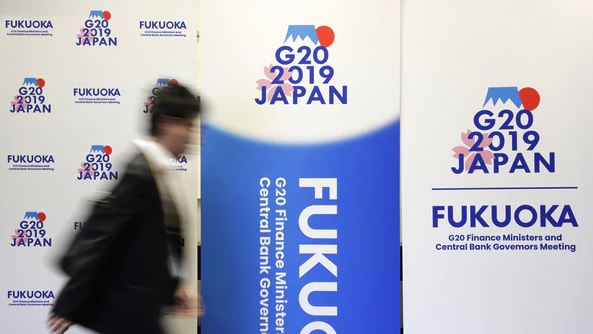 G20 Japan[/caption]
One of the World Federation of Exchanges’ (WFE) strategic priorities for 2019 is the issue of regulatory coherence. The primary reason for this is that the WFE and its members have witnessed how, in some cases, the implementation of G20 post-crisis regulatory reform has resulted in an unnecessary fragmentation of financial markets, and liquidity, on a cross-jurisdictional basis.
Achieving international regulatory coherence is important because financial markets are critical for economic growth and sustainable development. Cross-border regulatory co-ordination and deference to comparable standards improves supervision and reduces systemic risk. Fragmentation, on the other hand, adds costs, slows innovation, impedes competition, and reduces choice and risk diversification for investors. It entails cliff-edge effects in liquidity which could give rise to market dislocations. It may also lessen the resilience of financial markets, by isolating them from a more diverse array of participants which allows for risk diversification.
The global frameworks put in place by international standard setting bodies (ISSBs) should be capable of meeting the needs of different jurisdictions while upholding robust, politically agreed norms. While it is right that jurisdictions manage risks through rules tailored to the specificities of the local financial system, the means of doing this should be consistent with agreed global frameworks.
Even so, we observe a lack of coherence in the implementation of internationally agreed policy at the national level - including instances of proscribing foreign access because of line-by-line comparisons of legislation rather than an appropriately outcomes-focused approach.
We were pleased, therefore, to see that market fragmentation formed a key part of the agenda at the G20 Finance Ministers and Central Bank Governors Meeting (Fukuoka, Japan, 8-9 June 2019). Indeed, we believe the G20’s priority to address unwarranted financial market fragmentation is complementary to, and supportive of, post-crisis reforms.
As part of our advocacy efforts on this business-critical topic, we recently published a position paper on cross-border fragmentation arising from unjustified dissonance between jurisdictions’ financial services regimes.
In our paper, we called on G20 members to enhance transparency, engagement, and accountability via international standard setting bodies, as a means of creating more robust mechanisms to achieve international regulatory coherence. We proposed that the G20 takes the following actions:
The WFE believes that global regulatory coherence can and should be improved, both in substantive and procedural terms. It remains vital to the effectiveness not only of exchanges and clearinghouses but financial services more generally and the wider economy that they support. A significant role can and should be played by ISSBs, which already provide an outstanding forum for consensus on issues of customer protection, market integrity and systemic stability, all of which provide the bedrock for economic growth. Moreover, these bodies are well placed to address emerging trends, such as digital assets, as well as issues arising from traditional markets.
[caption id="attachment_13624" align="alignleft" width="124"] Nandini Sukumar[/caption]
Nandini Sukumar, Chief Executive Officer, WFE said: “We welcome the G20 focus on the topic of cross-border financial market regulatory fragmentation, under the Japanese G20 Presidency. The WFE believes that global regulatory coherence can and should be improved, both in substantive and procedural terms. It remains vital to the effectiveness not only of exchanges and clearinghouses but financial services more generally and the wider economy that they support.
“A significant role can and should be played by the international standard-setting bodies, which already provide an outstanding forum for consensus on issues of customer protection, market integrity and systemic stability, all of which provide the bedrock for economic growth. Moreover, these bodies are well placed to address emerging trends, such as digital assets, as well as issues arising from traditional markets.”