8-12-21
I posted a few days ago about my short-lived foray into mining cryptocurrencies. Since then, I’ve enjoyed listening to podcasts (The Investor’s Podcast does a Wednesday episode on Bitcoin called Bitcoin Essentials - it’s awesome, check it out) and I’ve gotten really interested in the technologies supporting the BTC blockchain.
I’ve found that the best way to learn about something is to have a personal stake in it - at least that’s been the case with me, since I’ve always had a lurking question (“why should I care about this”) in every class I’ve ever taken. So I figured I’d finally get my toes wet. I opened an account on Binance and put one-hundred dollars into it.
Of course, it wasn’t that simple and straightforward, although I do hope it will be one day soon. But once the account was set up and ready to go, I put my money in and bought the following distribution: $30 in bitcoin, $50 worth of ether, and put the rest into Cardano.
After doing more research, I learned that there seem to be three general ways to store/hold cryptocurrencies:
From my limited perspective, the hard wallet seemed to be the safest. Granted, the cost of these were anywhere from 50-70% of the amount of principal I’d put in, but like I said, this was more for the experience than for the sake of investing in bitcoin for gains. It seriously was fun and I’d recommend trying it out even if you’ve only got $10 worth of whatever in your account. Besides, it’s worth being somewhat familiar with hardware wallets now assuming that cryptocurrencies really do supersede fiat.
Before getting into the experience I had with the Ledger Nano S, I want to make a very important point.
In the days between setting up my account and purchasing a hardware wallet, I was under the erroneous assumption that capital gains taxes only applied to cryptocurrencies when they were spent. This is WRONG.
Coinbase is a really great source for information on cryptocurrencies, including taxation. In this article (which I should have read before I ever bought a penny’s worth of any cryptocurrency), they make it very clear:
All crypto sells, conversions, payments, donations, and earned income are reportable by US taxpayers.
I don’t know what I thought, but it certainly wasn’t that. So when ETH rose, I thought it was clever of me to convert that to BTC ( as well as the Cardano because I honestly only bought it on the suggestion of a friend). Now I’ll have to pay taxes on the conversions, which is a bummer. But in any case - on to the wallet!
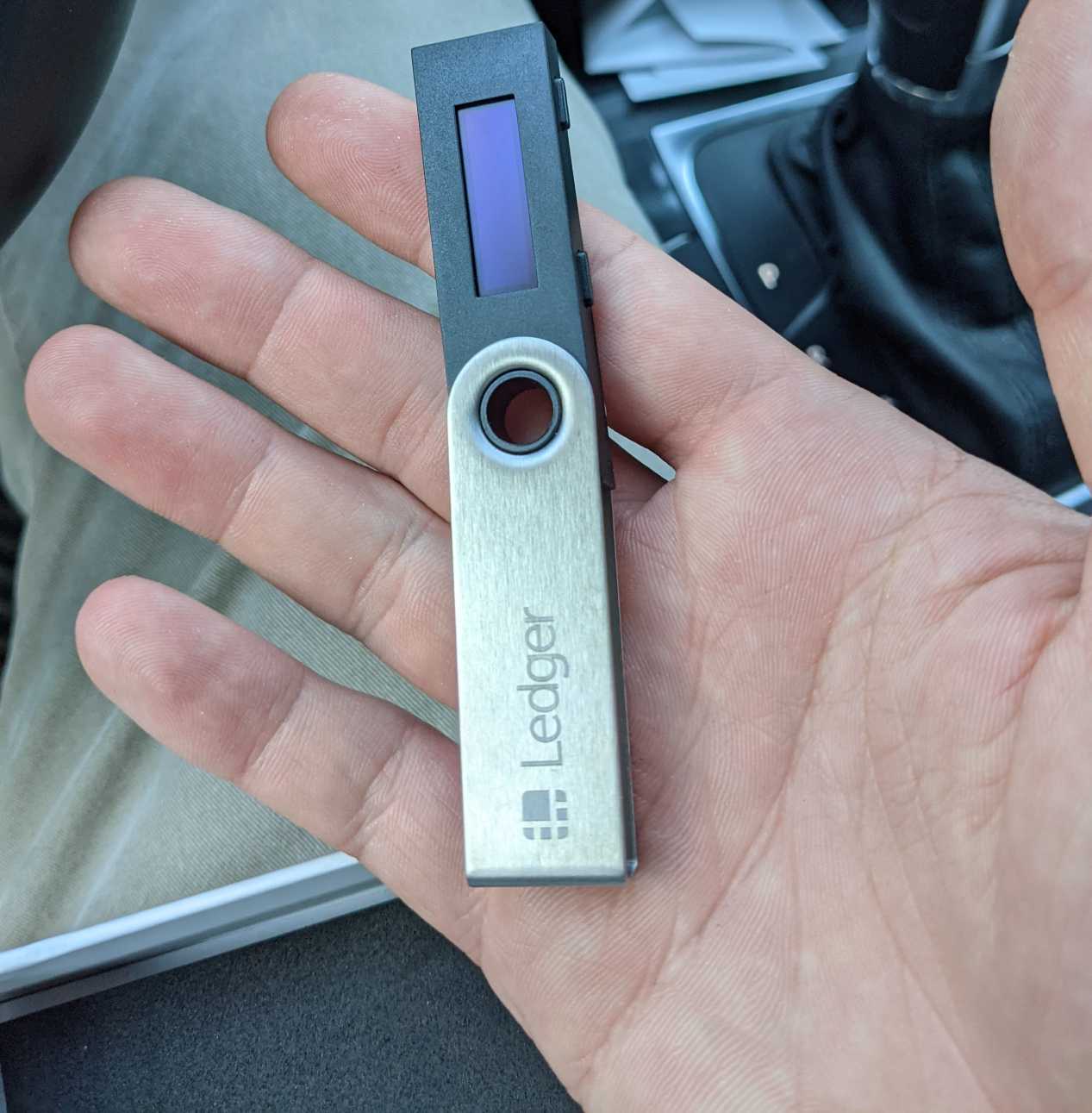
I bought a Ledger Nano S on Amazon several months after I’d opened my account. By then the value of my portfolio was almost $200, so I felt that the gain justified the purchase of a wallet, which was kind of the excuse for opening a portfolio in the first place.
The Ledger was about $50 off Amazon, and although I bought it from the Ledger seller (with over 15k reviews), I wish I had bought directly from the Ledger website, just for peace of mind. That being said, there was a verification step during the wallet’s setup process with Ledger Live (the Ledger device/portfolio management app) that ensured my wallet was a genuine Ledger product.
From the time I sat down and opened the box to having the private keys for my crypto on my Ledger Nano S was about thirty minutes in total. I took the following steps:
And I was done! The actual transfer was literally a matter of seconds. It was a huge moment for me. I had just participated in a potentially world-changing technology, all from the comfort of my home.
I’ve gotten sidetracked reading stuff (I should have read before I bought any crypto) on (Investopedia)[https://www.investopedia.com/news/how-bitcoin-works/].
Here’s a picture i took of my wallet when I took it out of the box, to give an idea of the size: