[](https://opensource.org/licenses/Apache-2.0)

[](https://pepy.tech/project/guardrails-ai)

[](https://github.com/guardrails-ai/guardrails/actions/workflows/ci.yml)
[](https://codecov.io/gh/guardrails-ai/guardrails)

[](https://microsoft.github.io/pyright/)

[](https://x.com/guardrails_ai)

[](https://discord.gg/U9RKkZSBgx)

[](https://guardrailsai.com/guardrails/docs)
[](https://www.guardrailsai.com/blog)
[](https://gurubase.io/g/guardrails)

## News and Updates
- **[July 6, 2026]** Guardrails validators are moving to standard PyPI packages you install directly with `pip`, and Guardrails is discontinuing its hosted remote inferencing. See [How to Migrate](https://github.com/guardrails-ai/guardrails/issues/1560) for what to do. **Planned cutoff: August 6, 2026.**
- **[Feb 12, 2025]** We just launched Guardrails Index -- the first of its kind benchmark comparing the performance and latency of 24 guardrails across 6 most common categories! Check out the index at index.guardrailsai.com
## What is Guardrails?
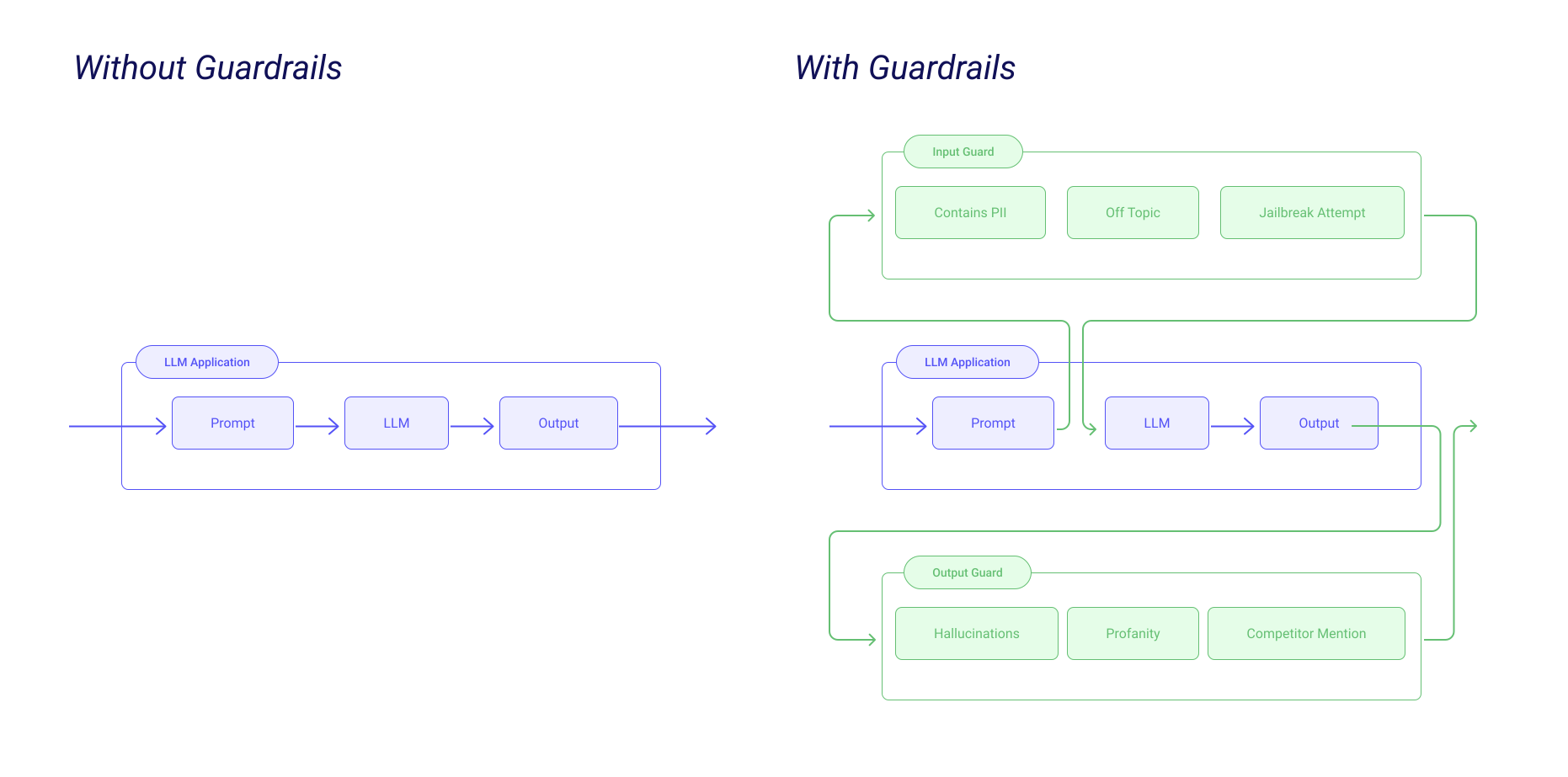
Guardrails is a Python framework that helps build reliable AI applications by performing two key functions:
1. Guardrails runs Input/Output Guards in your application that detect, quantify and mitigate the presence of specific types of risks. To look at the full suite of risks, check out [Guardrails Hub](https://guardrailsai.com/hub/).
2. Guardrails help you generate structured data from LLMs.