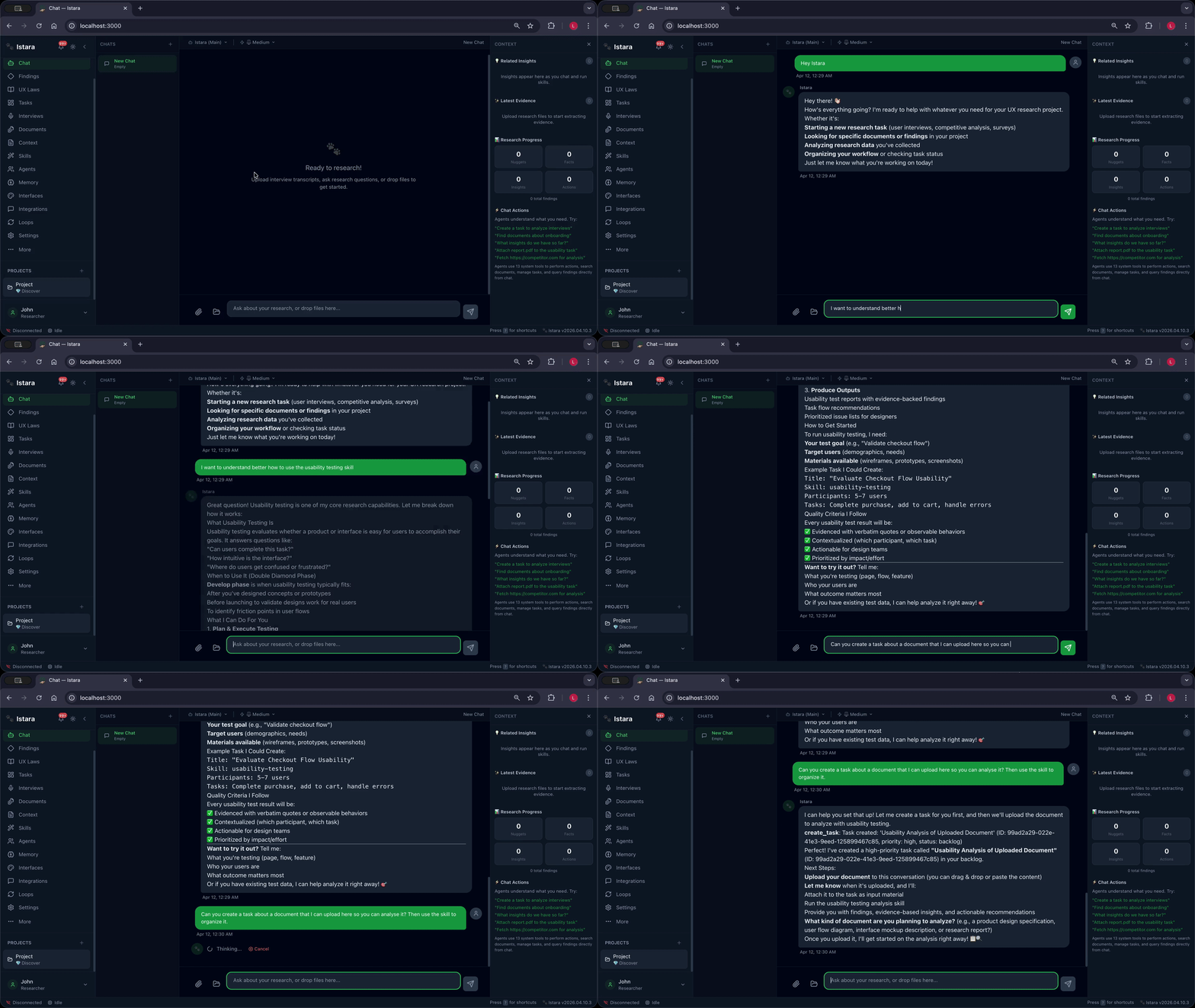
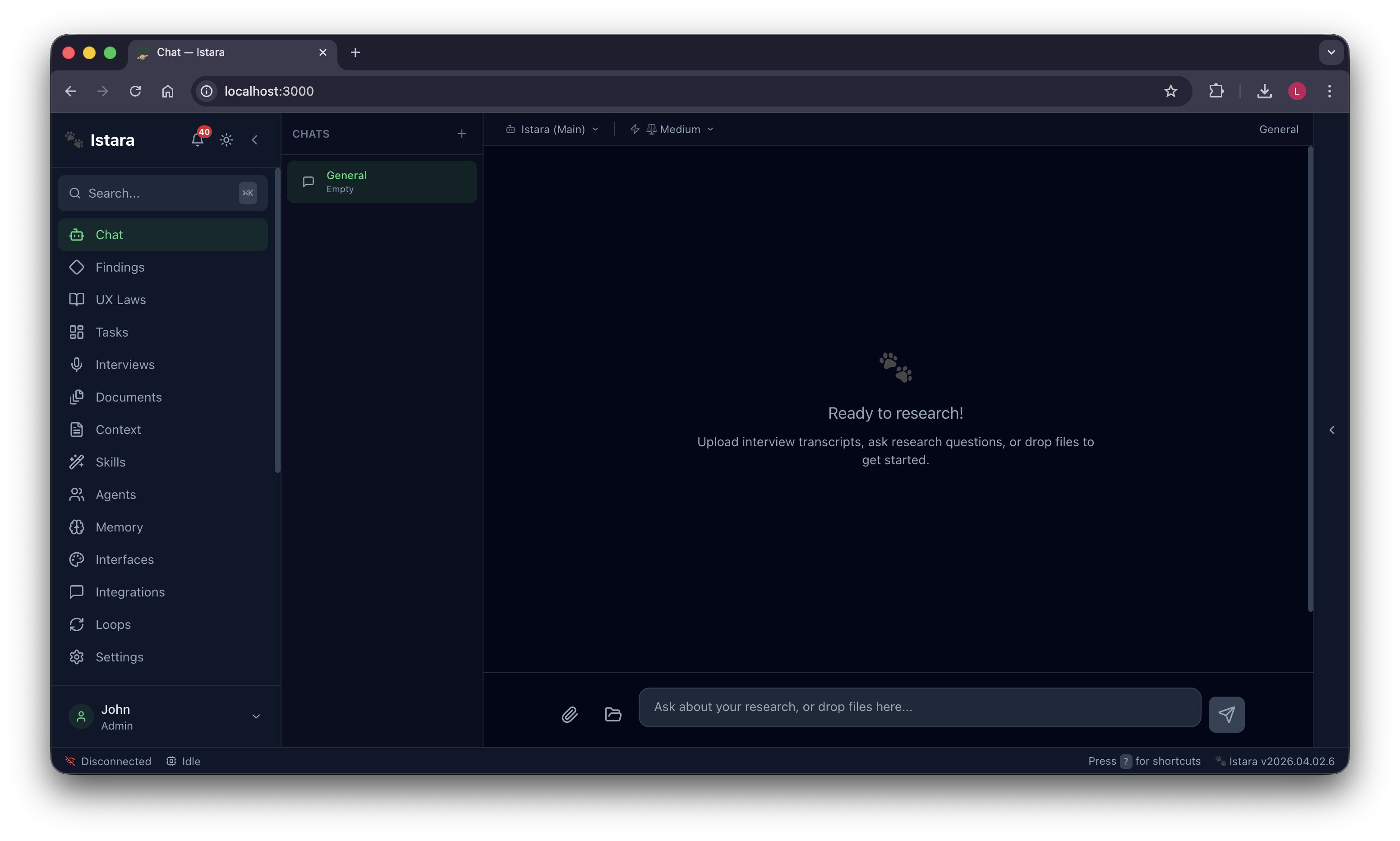
Intelligent Chat: Talk to your research context. Ask about findings, brainstorm with agents, and get instant answers grounded in your data.
Atomic Research Findings: Extract candidate atoms, validate them against source evidence, then promote accepted nuggets, facts, insights, and recommendations. Every trusted claim stays linked to its original source.
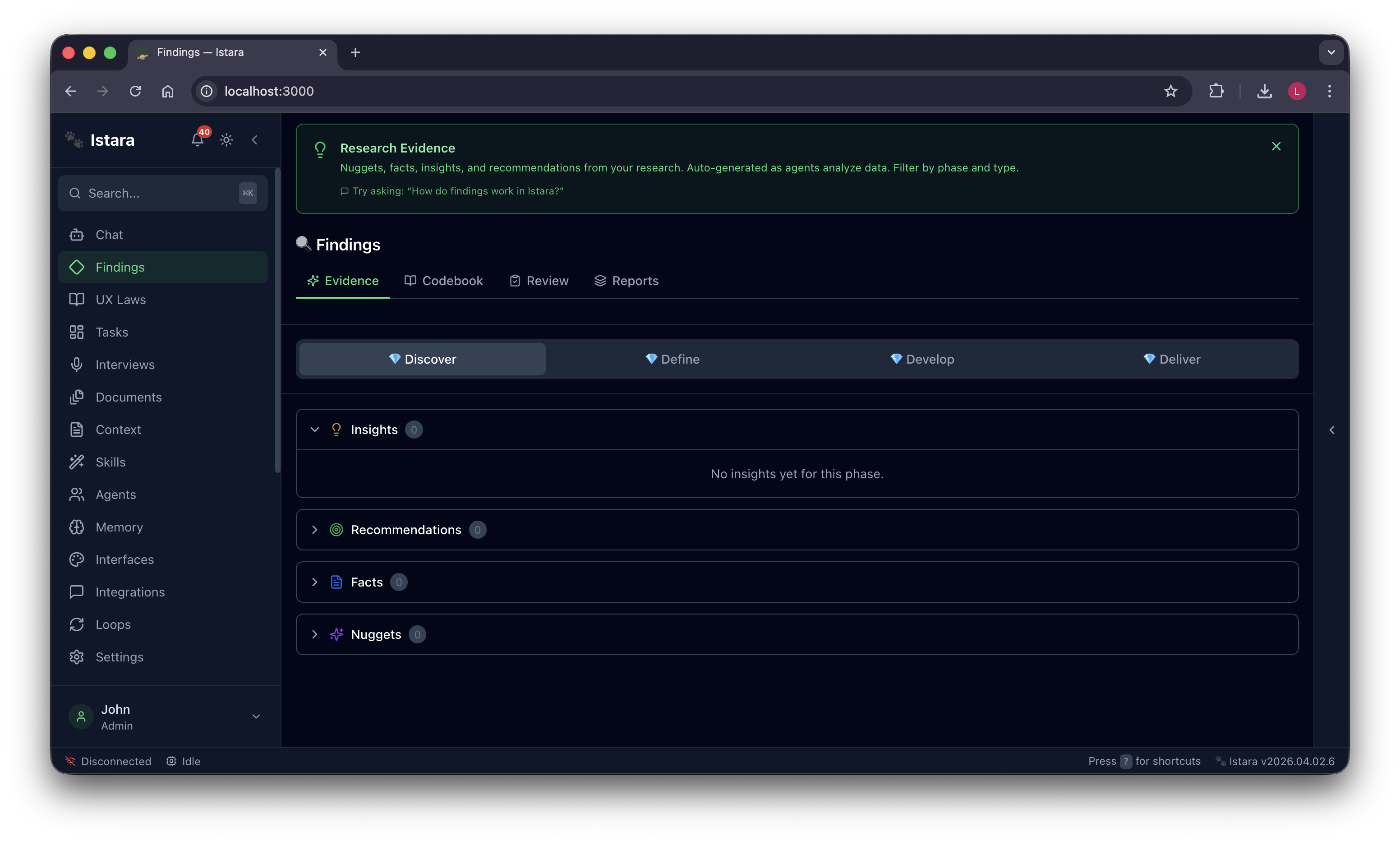
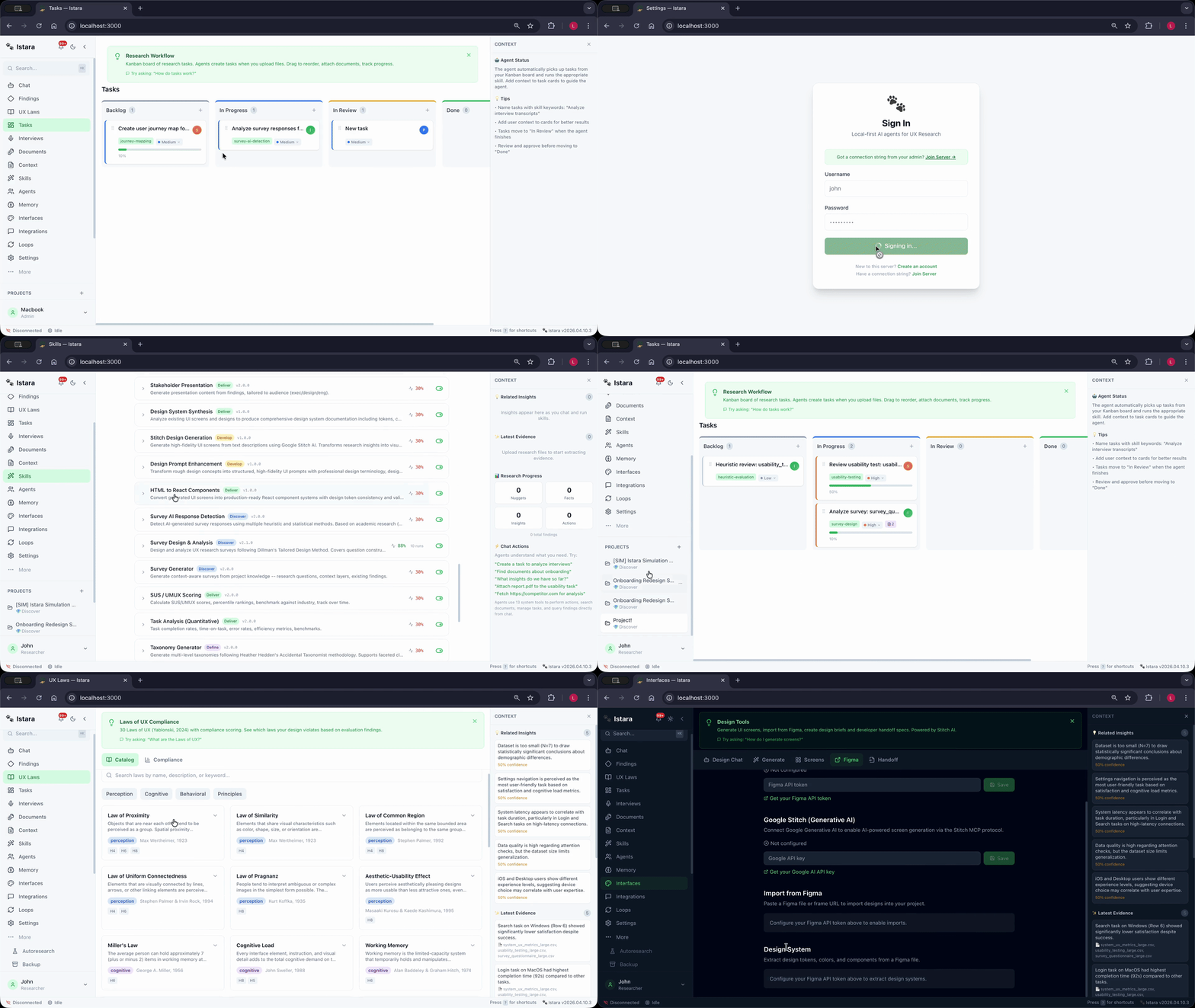
Laws of UX Compliance: Audit your designs against 30+ psychological principles and Nielsen heuristics. See exactly where your UI excels or needs improvement.
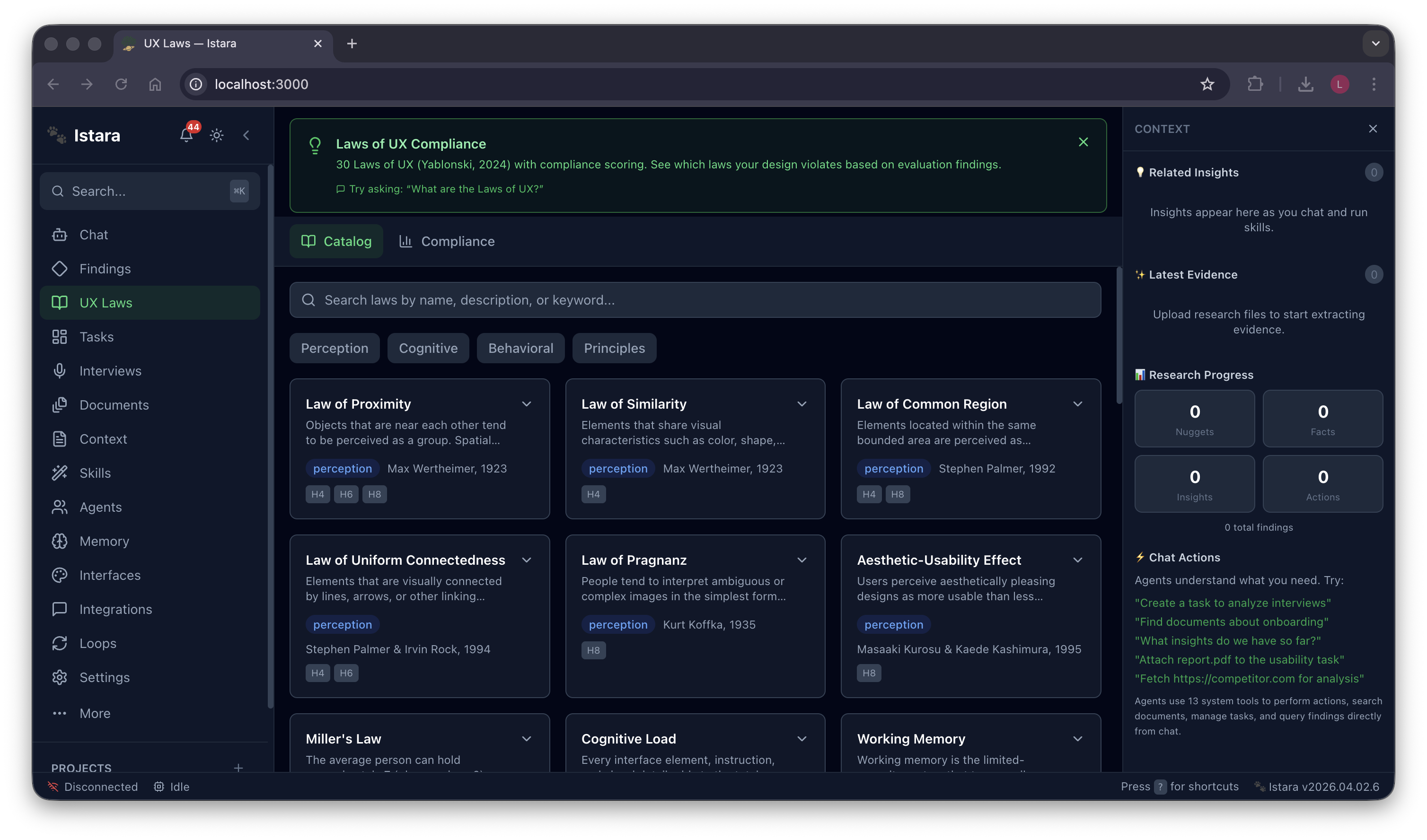
Autonomous Task Management: A powerful Kanban board where agents pick up tasks, execute skills, and report progress in real-time while research outputs remain reviewable until approved.
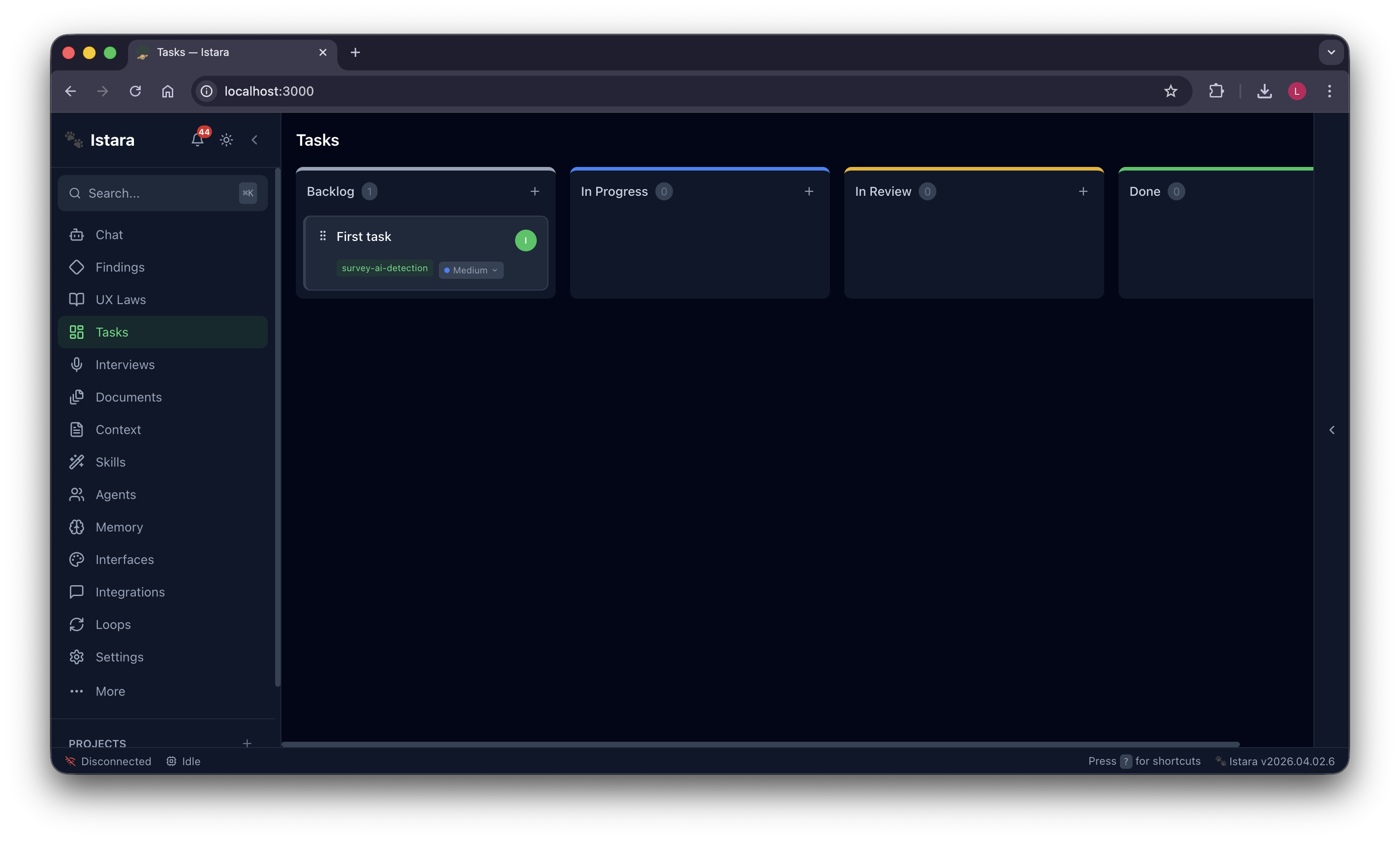
Multi-Agent Assignment: Choose the best agent for the job. Route tasks to specialists like Pixel for UI audits or Sage for UX evaluation.
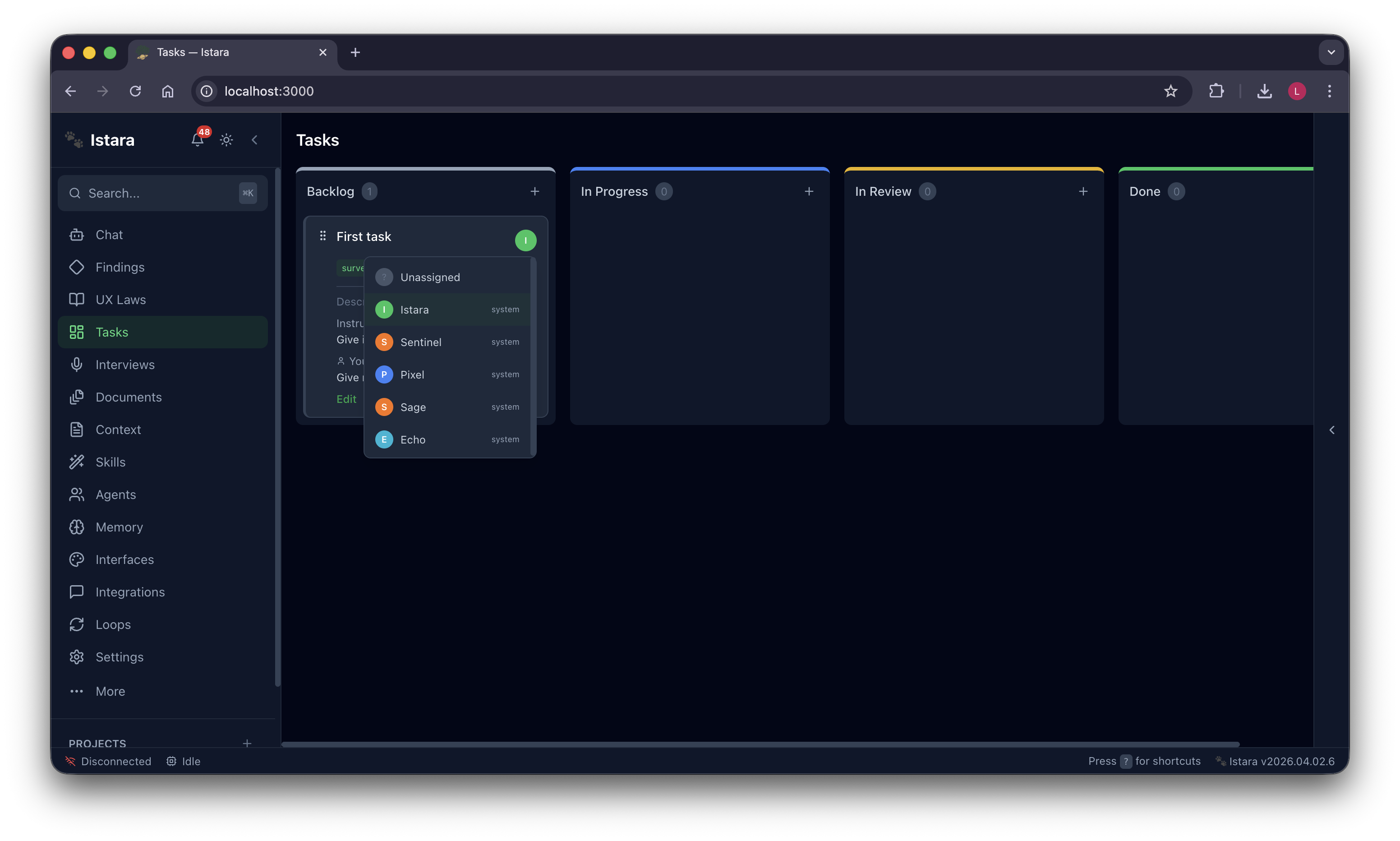
Interviews & Transcripts: Istara can transcribe, tag, analyze, relate, and generate reports from many interviews at once — including voice messages from WhatsApp and Telegram with automatic Whisper transcription and inter-coder reliability scoring. Find insights shared across your entire participant pool!
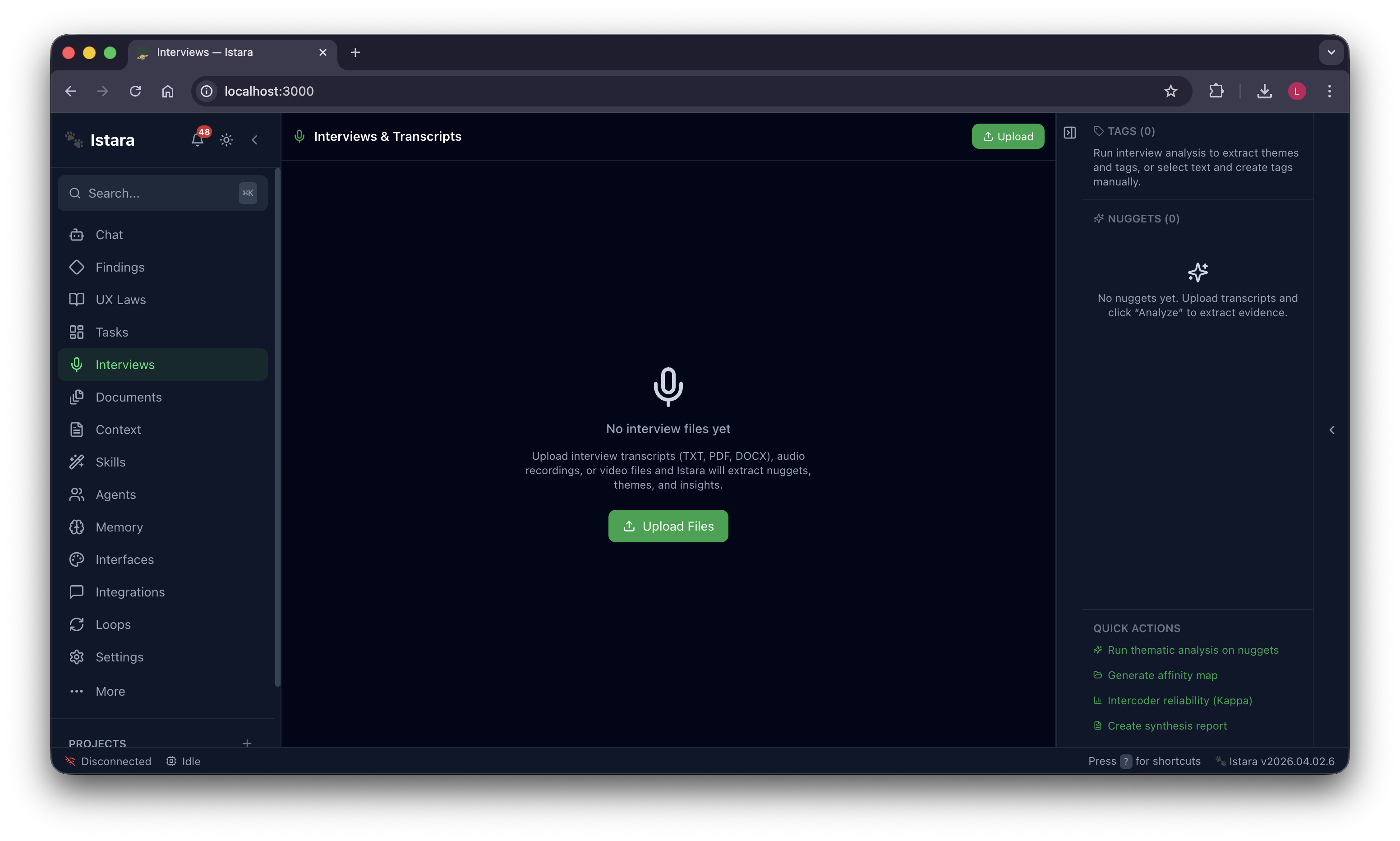
Context Engine: Ground your agents in your company culture, project goals, and specific guardrails. The more they know, the better they perform.
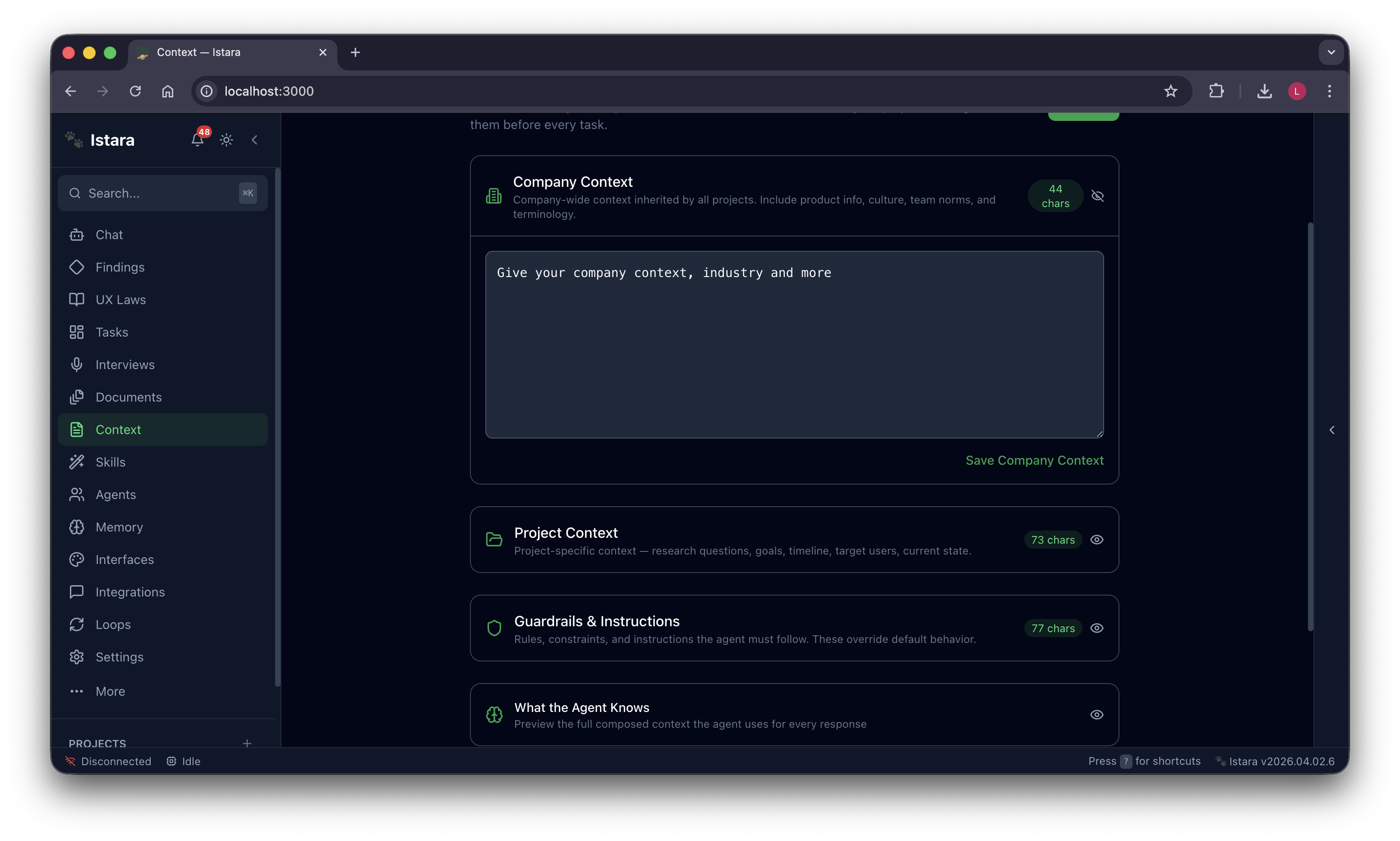
Skill Catalog: Over 50 research skills ready to go. From Competitive Analysis to Card Sorting, your agents are equipped for any research challenge.
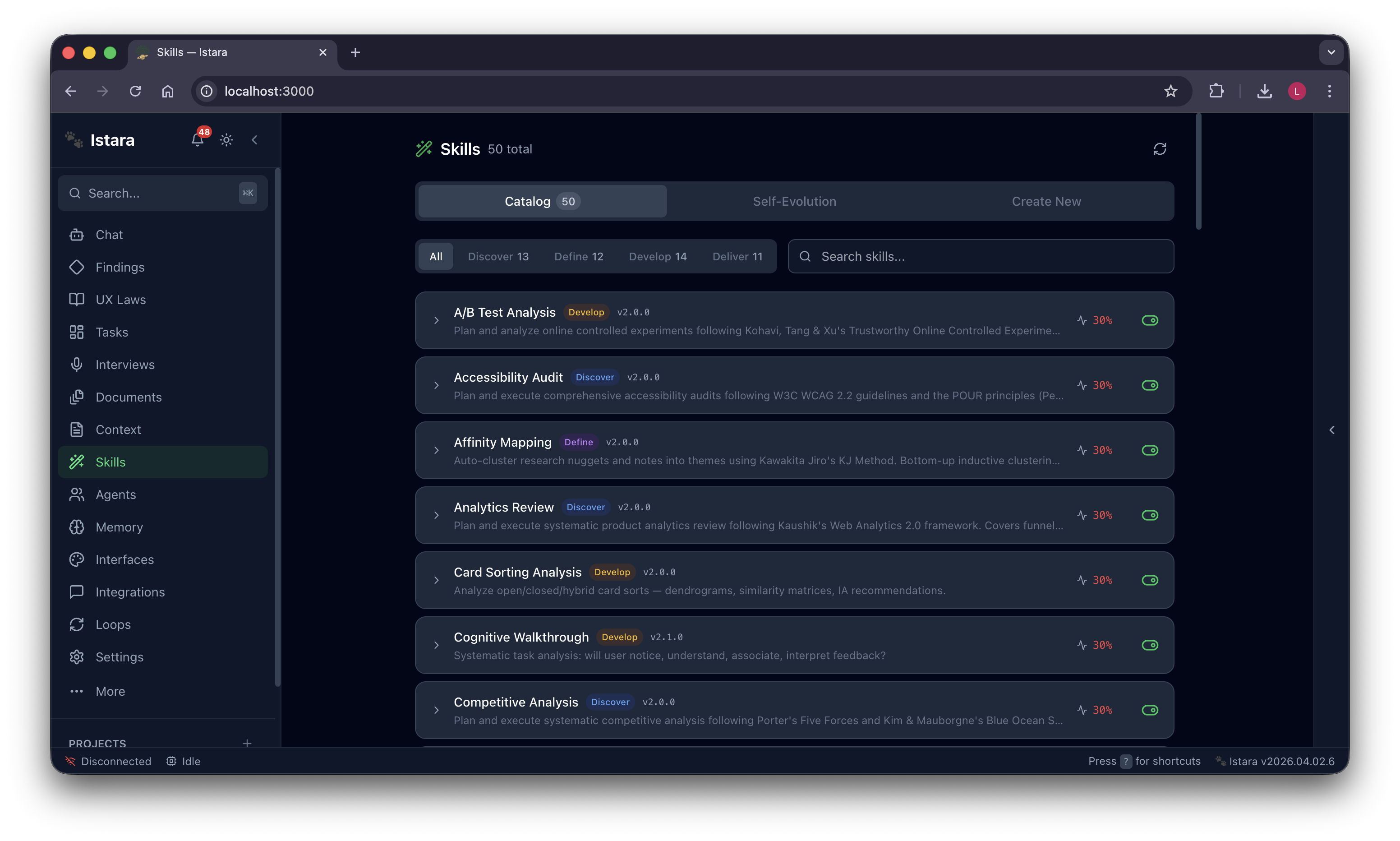
Agentic Swarm: Meet your team—Cleo, Sentinel, Pixel, Sage, and Echo. Five specialized agents that learn from verified outcomes, project-scoped telemetry, and governed process memory.
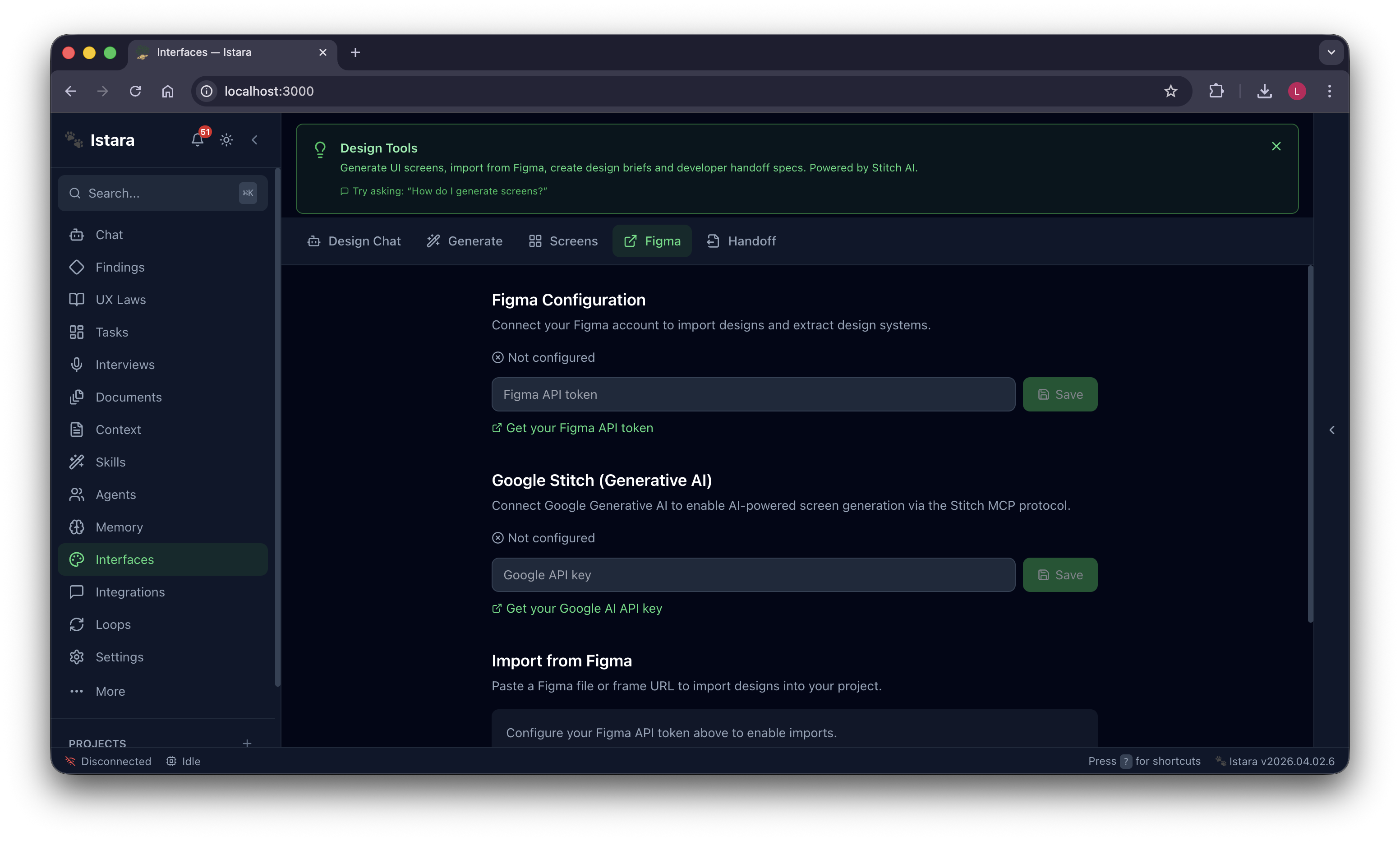
Google Stitch & Figma Integration: Generate screens with AI, connect Figma for handoff specs, audit components, and close the gap between design intent and dev implementation.
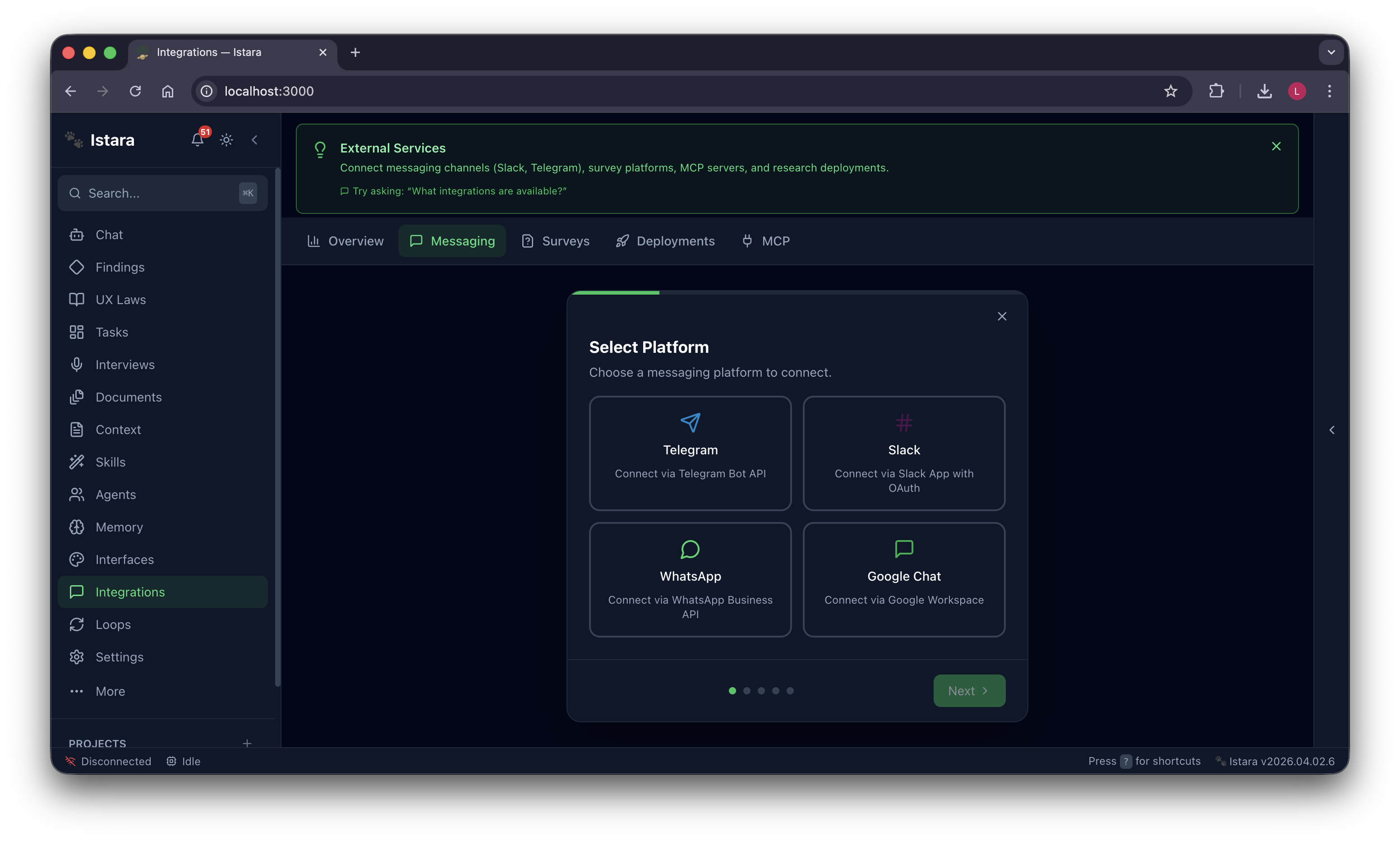
Messaging Channels: Deploy your research directly to Slack, Telegram, or WhatsApp. Collect data where your users are, managed entirely by your agents.
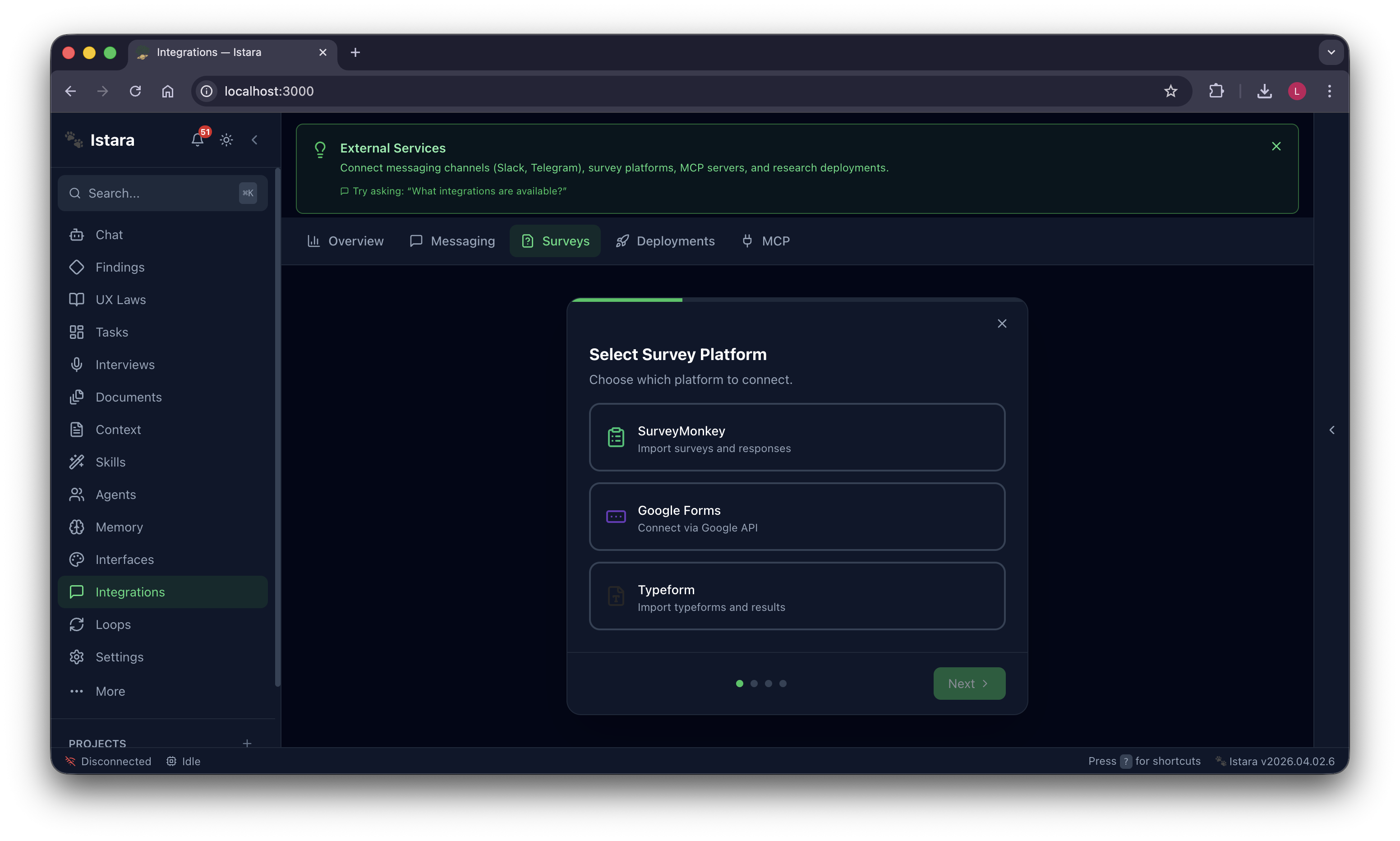
Survey Integrations: Pull data from SurveyMonkey, Typeform, or Google Forms. Responses enter the same evidence-unit, coding, reliability, review, and report-gate pipeline as interviews and documents.
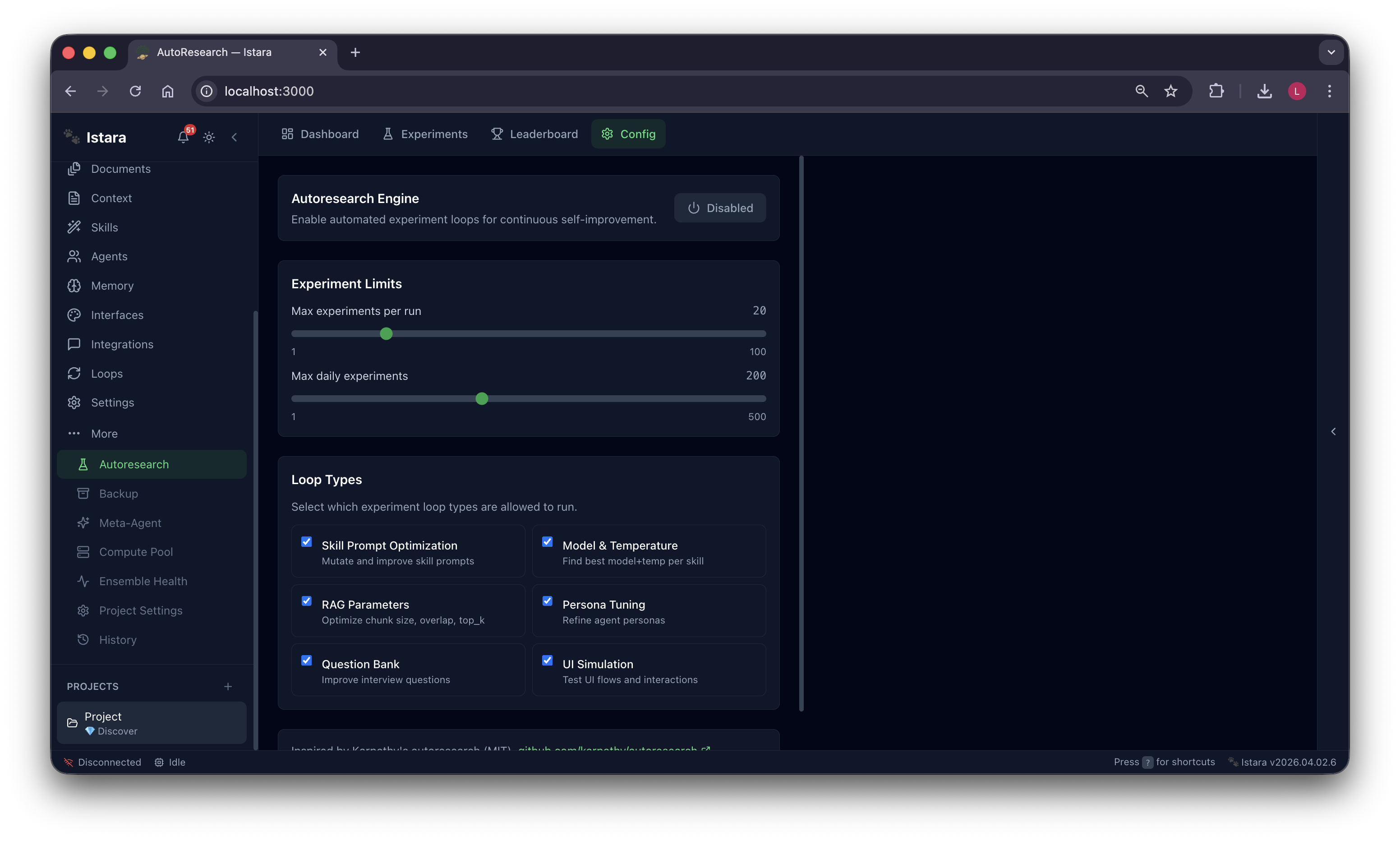
Autoresearch Engine: Enable sandboxed self-improvement loops. Agents measure candidate prompt, RAG, or model changes, revert them after evaluation, and send successful candidates through governed approval before production use.
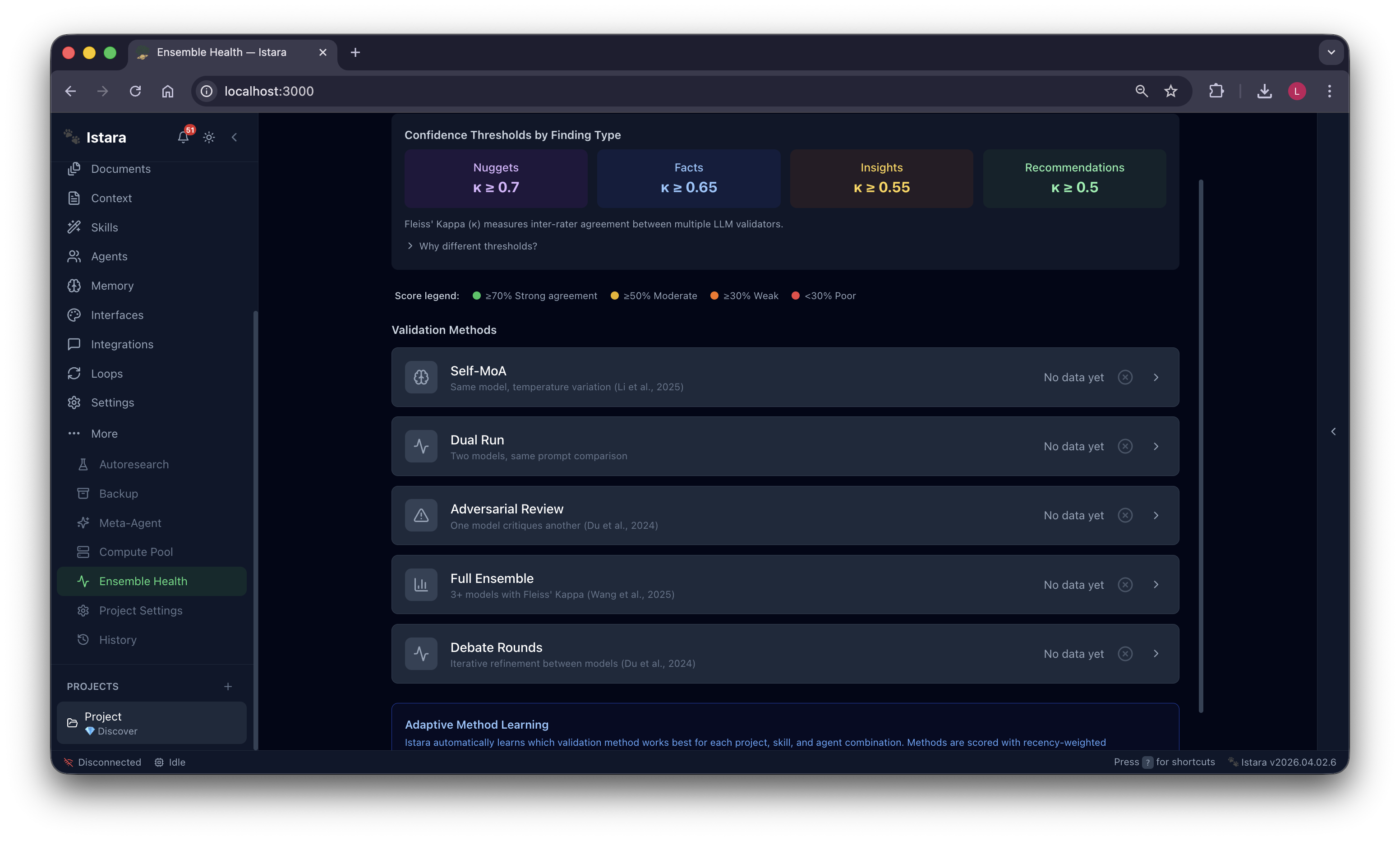
Ensemble Health: Trust through verification. Istara uses multi-model coding, reliability metrics, route evidence, adversarial review, debate rounds, and human reconciliation before evidence becomes reportable.