# 5thPlanet

An accuracy-first SEGA Saturn emulator in Rust.
*The Saturn is one of the hardest 5th-gen consoles to emulate* — eight
processors with tightly-coupled timing (2× SH-2 SH7604, MC68EC000,
VDP1, VDP2, SCU + SCU-DSP, SCSP M68k + SCSP-DSP, SH-1 CD-block) on a
shared bus. **Performance is explicitly subordinated to fidelity**:
this project will never include a JIT, dynarec, or any "approximate
cycle" shortcut. Each chip is built up one milestone at a time so the
foundation stays solid.
## Status
| Milestone | Goal | State |
| --------- | ----------------------------------------------------------- | ------------ |
| M1 | Cycle-accurate SH-2 (SH7604) core | ✅ complete |
| M2 | Saturn bus, dual SH-2, event-driven scheduler | ✅ complete |
| M3 | SCU, SMPC, VDP2 minimal, SCU-DSP, SDL window (scaffolding) | ✅ complete |
| M4 | BIOS splash on screen | ✅ complete |
| M5 | Chip-coverage build-out — VDP1, MC68EC000, full VDP2 | ✅ complete |
| M6 | SCSP audio — slot/FM engine + SCSP-DSP | ✅ complete |
| M7 | CD-block (HLE) + disc recognition + cartridge slot | ✅ complete |
| M8 | Save states + battery-backed backup RAM | ✅ complete |
| M9 | Frontend OSD (in-window menu) | ✅ complete |
| M10 | Live physical disc + CD audio | ✅ complete |
| M11 | Boot a commercial game to gameplay | ✅ complete |
| M12 | Whole-system cycle accuracy vs the reference emulator | ✅ complete |
| M13 | Hardware completeness & fidelity-gap backlog | 📋 in progress |
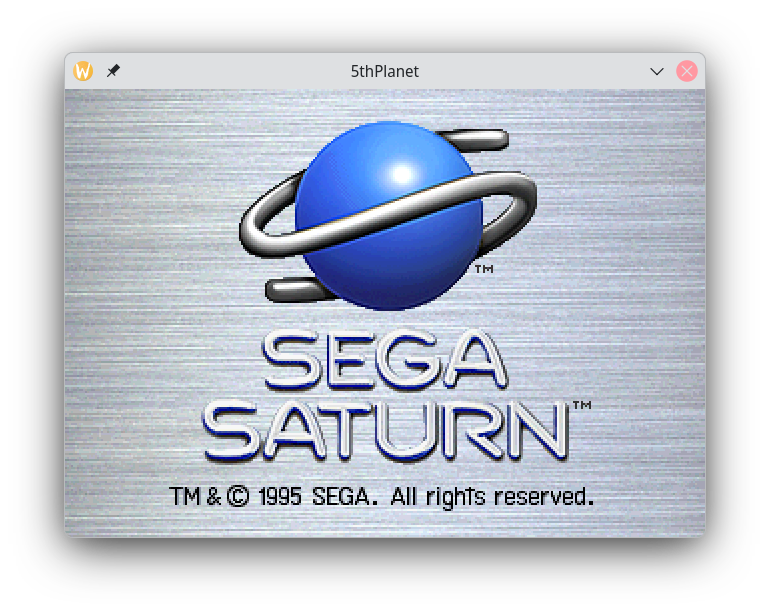
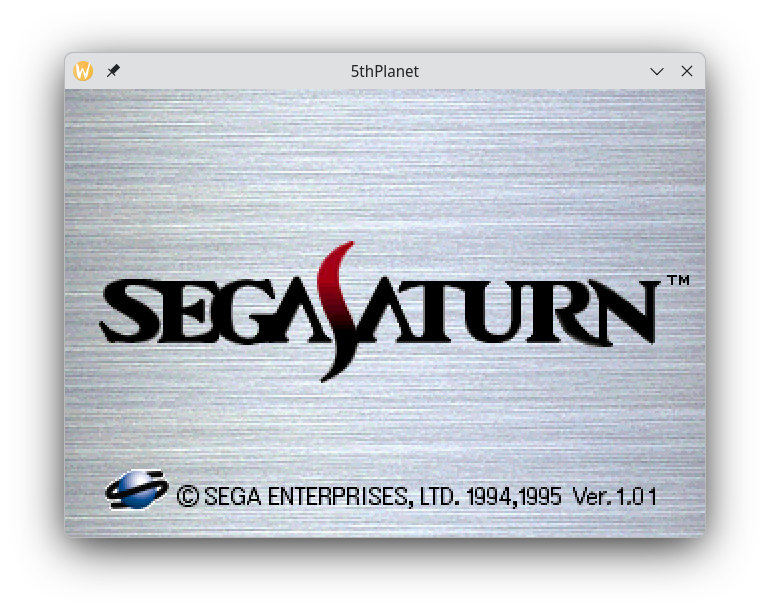
**What works today:** a real Saturn BIOS boots to its splash screen, and the
following commercial games are **fully playable** on the real-BIOS LLE path:
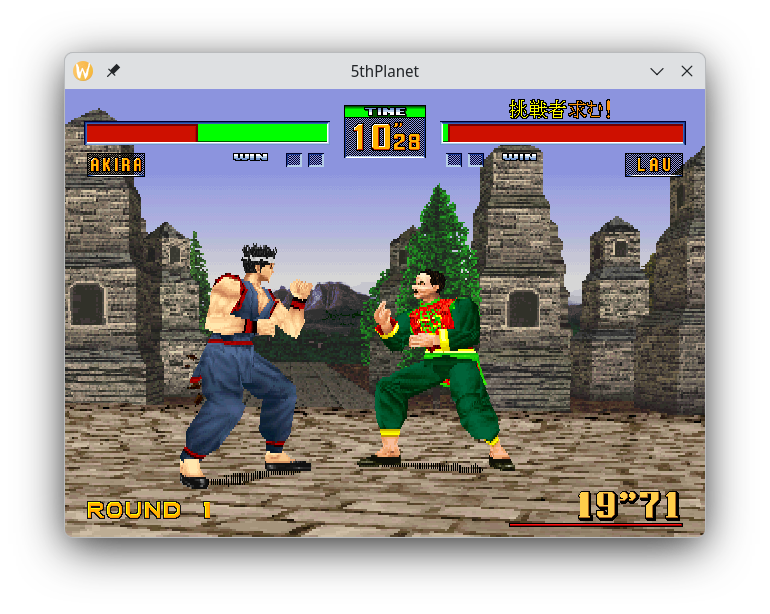
- **Virtua Fighter 2** — steady 60 fps, full 3D fights with CD music and sound
effects.
- ***Doukyuusei ~if~*** — graphics, sound effects, and voices, including Shuttle
Mouse support, at native 640×224 hi-res.
- **Sangokushi V** (三國志V) — Koei's strategy title, from its per-scenario opening
movie through to the in-game strategy map.
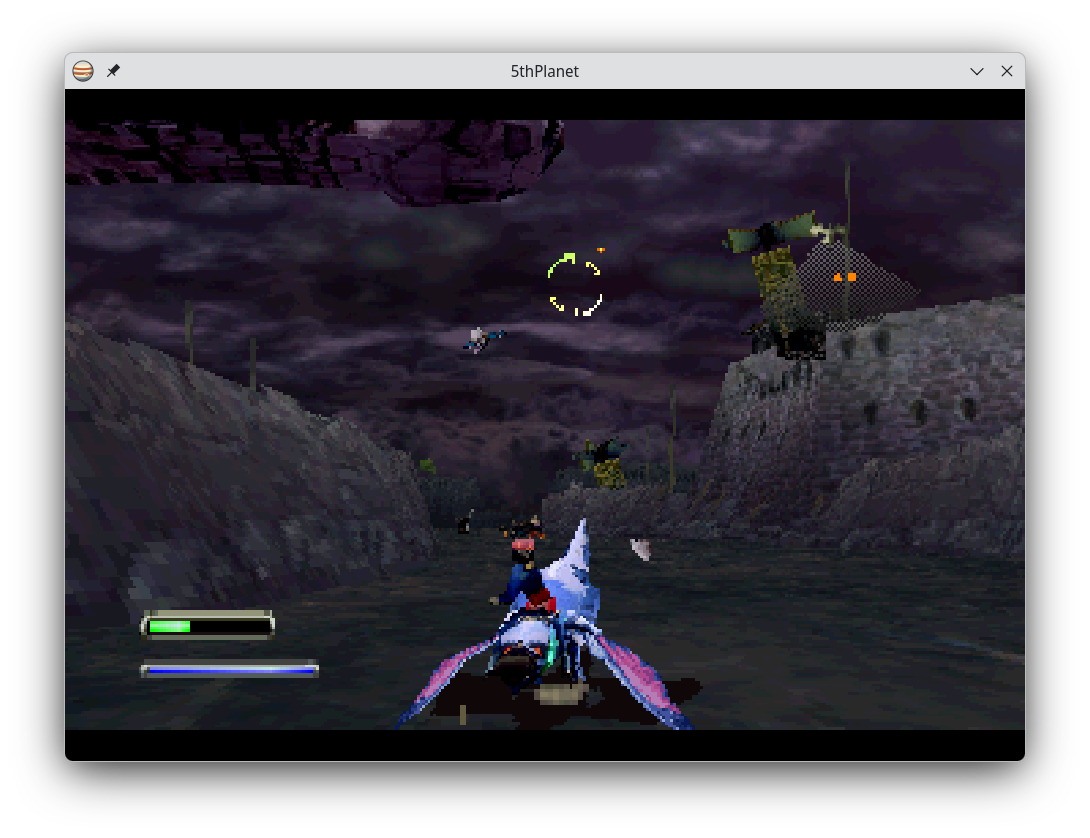
- ***Panzer Dragoon Zwei*** — from its opening Cinepak movie through the title
and menus into the game, at native 704×448 hi-res.
- ***Greatest Nine '98*** — the baseball game, at native 704×480 interlaced
resolution (VDP1 field-weave).
- **Super Robot Wars F** and **F Final** (スーパーロボット大戦F / F完結編) —
Banpresto's mecha tactical RPGs, from the scenario-intro movies through the
strategy map into the combat animations with XA-ADPCM audio.
Games load from disc images (CUE/BIN, ISO, CloneCD) or straight from an original
disc in a host optical drive; save states, the console's battery-backed save
memory, expansion cartridges, and an in-window menu (Esc — save slots, controller
rebinding, region/cartridge/BIOS switching, all persisted to a config file) are
all in place.
Task-by-task technical status lives in [`doc/roadmap.md`](doc/roadmap.md), and
the per-title compatibility list in
[`doc/compatible-game-titles.md`](doc/compatible-game-titles.md).
## Demo video
[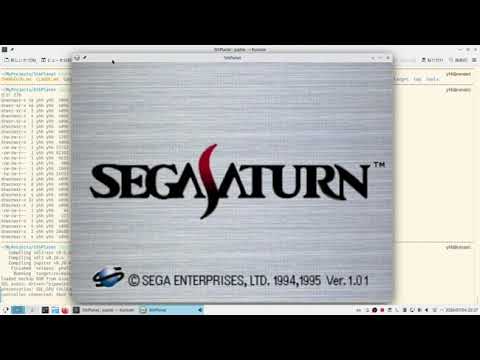](https://www.youtube.com/watch?v=brcUi0qSRI4)
*v0.20.0 demo video — click the thumbnail to watch on YouTube.*
[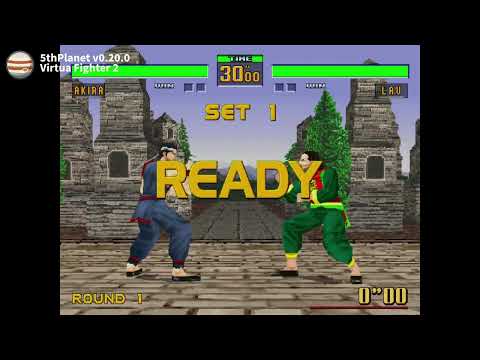](https://www.youtube.com/watch?v=xOyC-BuPjYw)
*5thPlanet v0.20.0 demo: Virtua Fighter 2 — click the thumbnail to watch on YouTube.*
## Screenshots
A few frames from the emulator running commercial games on the real-BIOS LLE
path. The full set — including the optional CRT shader and the in-window menu —
is in [`doc/screenshots/`](doc/screenshots).
|  |  |
| :---: | :---: |
| ***Virtua Fighter 2*** — a 3D fight at a steady 60 fps. | ***Panzer Dragoon Zwei*** — 3D rail-shooting at 704×448. |
| 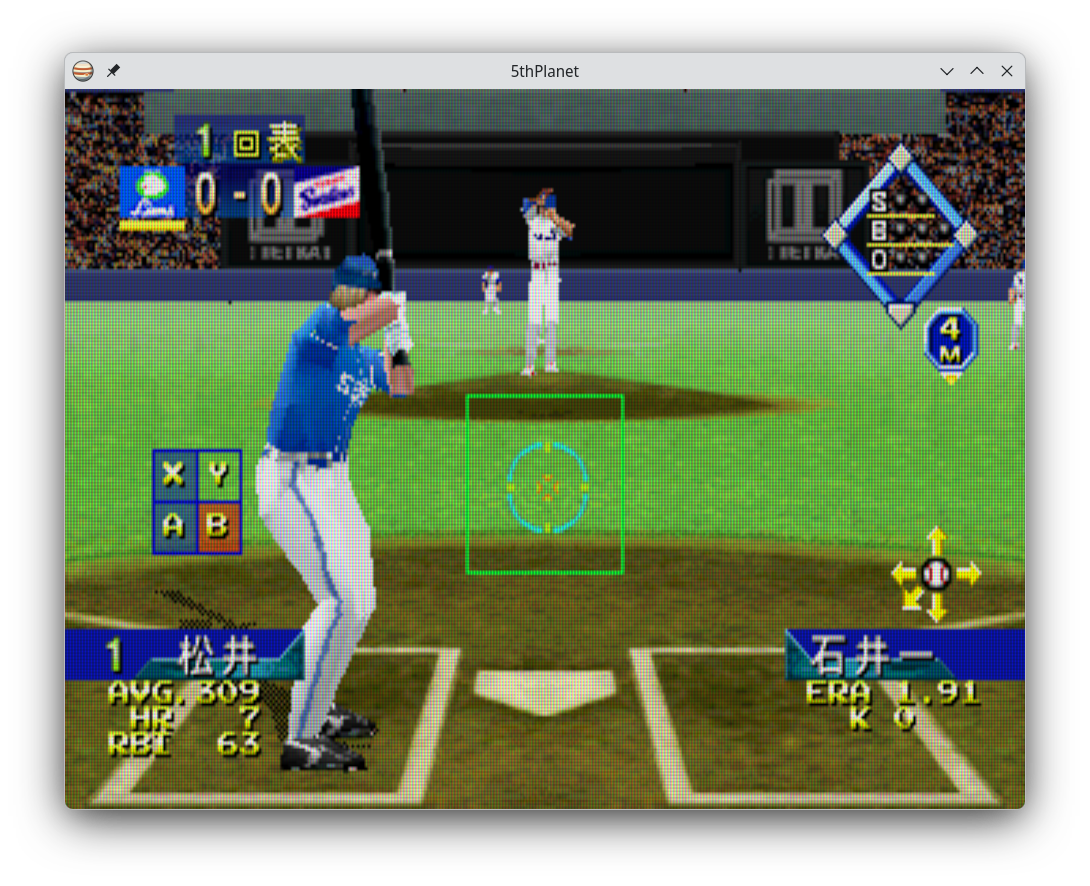 | 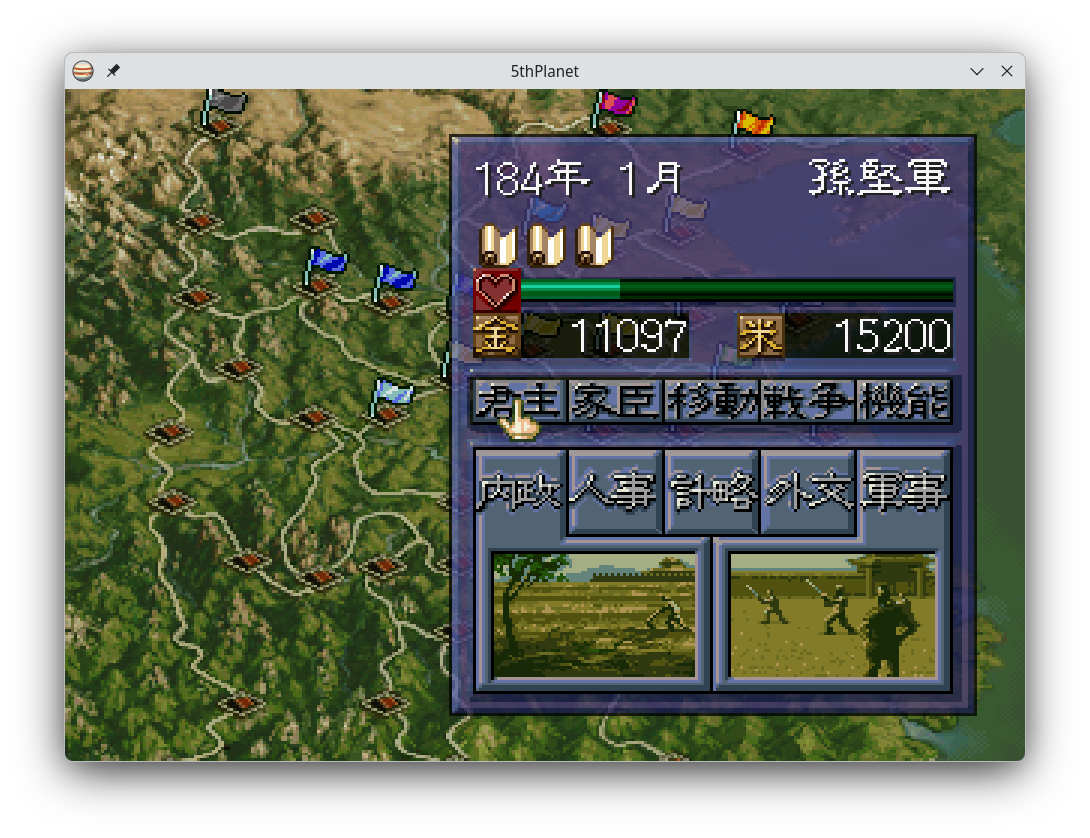 |
| ***Greatest Nine '98*** — 3D baseball at 704×480 interlaced. | **Sangokushi V** (三國志V) — the in-game strategy map. |
| 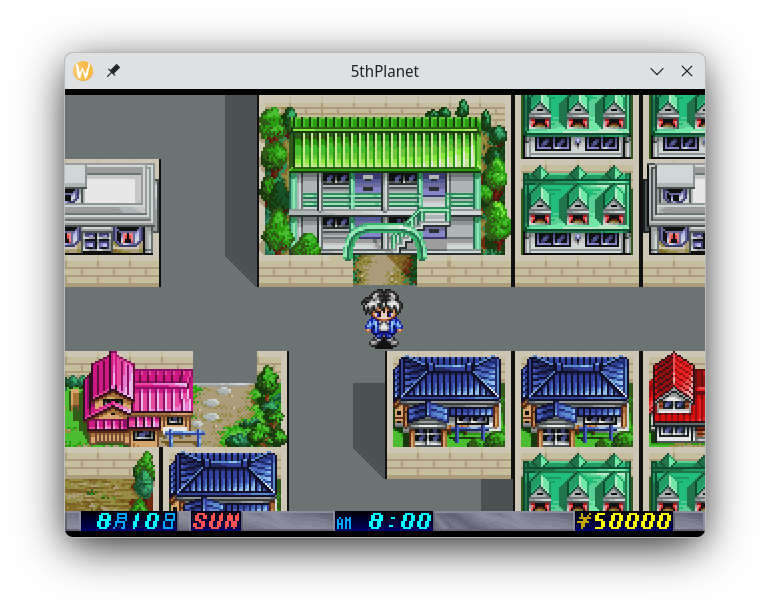 | 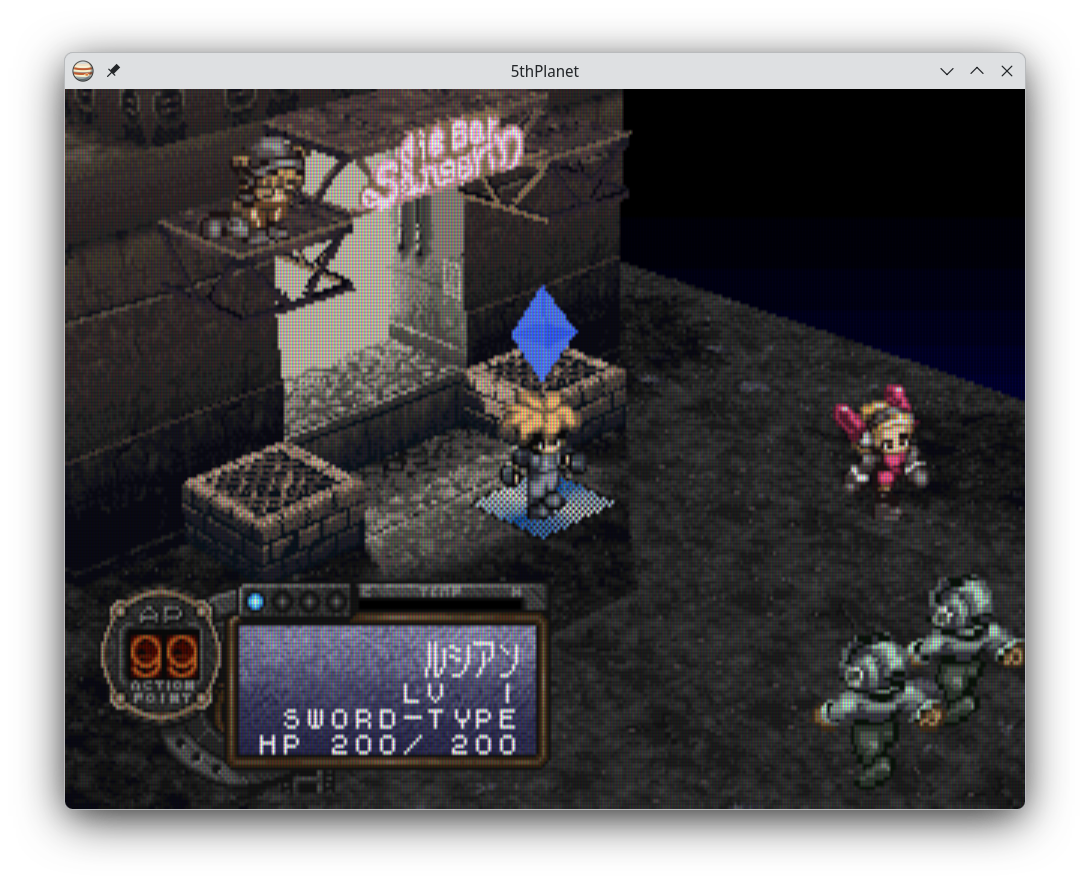 |
| ***Doukyuusei ~if~*** — the town overworld at 640×224. | **Wachenröder** (ヴァッケンローダー, 🚧 WIP) — the isometric tactical battle, with the RBG0 rotating floor. |
| 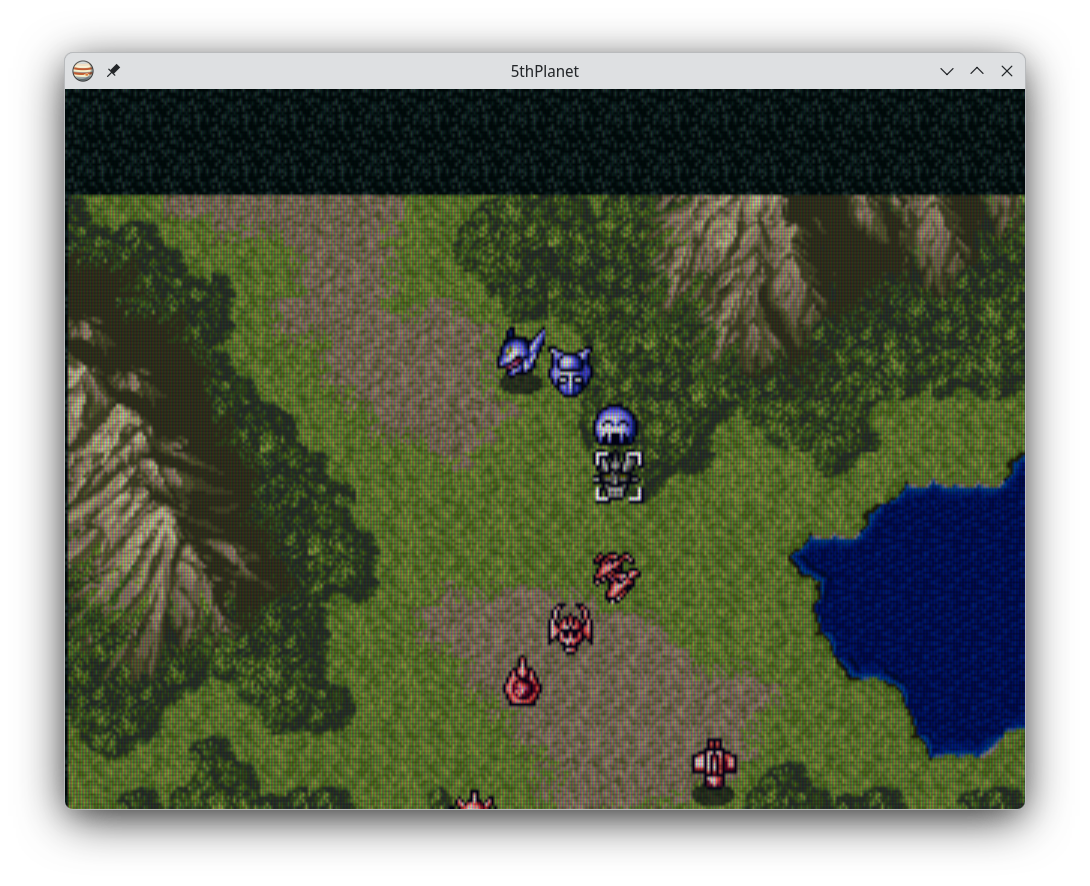 | 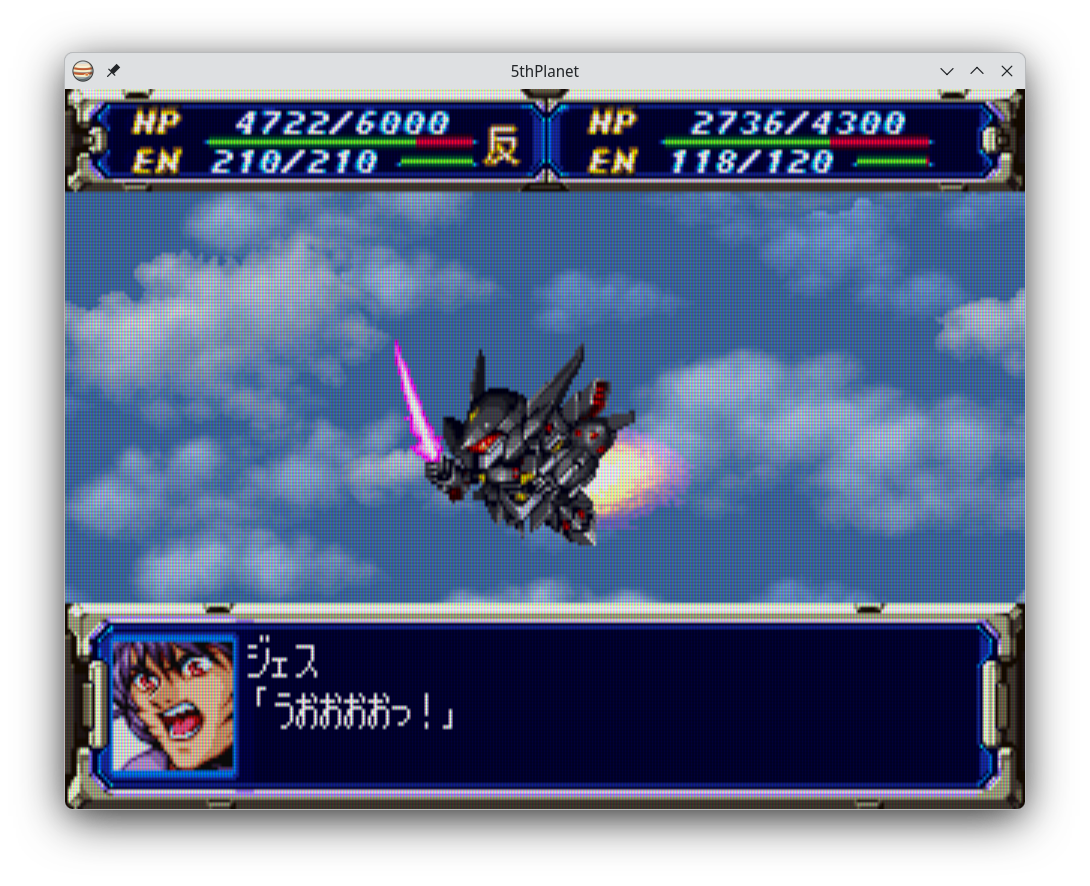 |
| **Super Robot Wars F** (スーパーロボット大戦F) — the strategy map… | …and a combat attack animation. |
The screenshots show SEGA's and other rights holders' copyrighted material and
are included solely to document the emulator's output — see
[Trademarks & copyrights](#trademarks--copyrights).
BIOS boot splash (M4)
| USA BIOS | Japanese BIOS (v1.01) |
| --- | --- |
|  |  |
## Quick start
```bash
# Build & test everything
cargo test --workspace
# Format + lint (both are gates; the workspace follows standard rustfmt)
cargo fmt --all
cargo clippy --workspace --all-targets -- -D warnings
# Coverage (~85% line, excluding the SDL3 frontend + FFI crate)
cargo llvm-cov --workspace --summary-only
# Run a single test
cargo test -p sh2 -- decoder::tests::decodes_branches
# SDL3 frontend (default-on `sdl-frontend` feature): opens a window and
# runs the supplied BIOS. Use --no-default-features for a headless run.
# --backend=opengl|metal|direct3d11|software (default: auto) picks how the
# frame is presented; the picture itself is always rendered in software.
cargo run -p jupiter -- "bios/Sega Saturn BIOS (USA).bin"
# Optional: an SDL_GPU/Vulkan presenter with a built-in CRT-filter shader
# (scanlines + aperture mask), behind a build feature + off by default. Enable
# with `--gpu=on` and pick it in the OSD (Settings -> Graphics -> Shaders -> CRT):
cargo run -p jupiter --features gpu-presenter -- --gpu=on "bios/Sega Saturn BIOS (USA).bin"
# Built-in self-diagnostics (no window): exits 0 if all checks pass.
# Add a BIOS (+ disc) to also run boot/compatibility checks.
cargo run -p jupiter -- doctor
# Optional: build a faster release binary with Profile-Guided Optimization.
# Same accuracy (it only changes code layout, not behaviour) but a markedly
# faster emulation core. Needs a BIOS + a game disc in roms/ to train on;
# without them it just falls back to a plain release build.
tools/pgo/build_release.sh # -> target/release/jupiter
```
## Controls
The SDL3 frontend maps the host keyboard and any attached **game controller**
to the two Saturn controller ports. Each port can be assigned a device —
keyboard, a specific game controller (by identity, so two pads work
side-by-side), or the Shuttle Mouse — from **Esc → Settings → Controller** (the
default is the keyboard on port 1). The analog **3D Control Pad** is
emulated too: assign a controller as a 3D pad to feed its stick and analog
triggers. Controllers hot-plug at any time (SDL's GameController layer — XInput
on Windows, evdev on Linux — so Xbox-style pads just work) and can also navigate
the menu (D-pad + A/B, Start toggles).
### Saturn control pad — port 1 (default bindings)
| Saturn button | Keyboard | Game controller |
| ------------- | -------- | --------------- |
| D-pad ↑ ↓ ← → | Arrow keys | D-pad or left stick |
| A / B / C | Z / X / C | X / A / B |
| X / Y / Z | A / S / D | Y / LB / RB |
| L / R | Q / W | LT / RT |
| Start | Enter | Start |
Both maps are fully rebindable from **Settings → Controller** (the keyboard
map, and the per-button gamepad map via *Gamepad Buttons…*, press-to-bind); the
bindings persist in the config file. The defaults above follow Sega's own layout
from their Xbox Saturn ports.
### Shuttle Mouse (`--mouse[=1|2]`)
Plug Sega's Saturn mouse into port 2 (`--mouse`, keeping the keyboard pad
on port 1) or port 1 (`--mouse=1`, replacing the pad) for games that
support it — e.g. *Doukyuusei ~if~*. The host pointer is captured and hidden
while playing (the game draws its own cursor); host Left/Right/Middle clicks
map to the mouse buttons and **Enter** doubles as the mouse's Start button.
| Action | Key |
| ---------------------------------------- | --- |
| Toggle pointer capture (free the cursor) | F10 |
| Release the pointer (menu open) | Esc |
### Emulator hotkeys
| Action | Key |
| --------------------------------- | --- |
| Open / close the on-screen menu | Esc |
| Quick save (to the quick slot) | F5 |
| Quick load (from the quick slot) | F9 |
| Toggle Shuttle Mouse capture | F10 (with `--mouse`) |
| Toggle fullscreen | F11 |
| Fullscreen aspect (keep ratio / fit screen) | F12 |
| Quit | Close the window, or Esc → **Quit** |
### On-screen menu (while it is open)
| Action | Key |
| ----------------------------------- | --- |
| Move selection | ↑ / ↓ |
| Select | Enter or Z |
| Back (closes the menu at top level) | Backspace or X |
| Close menu | Esc |
## Workspace
- [`crates/sh2`](crates/sh2) — cycle-accurate SH-2 (SH7604) CPU core.
`no_std` + `alloc`, no I/O.
- [`crates/m68k`](crates/m68k) — MC68EC000 core (the Saturn's SCSP sound
CPU). `no_std` + `alloc`, library-shaped like `sh2`.
- [`crates/scu_dsp`](crates/scu_dsp) — SCU's embedded 32-bit DSP.
- [`crates/saturn`](crates/saturn) — Saturn system glue: memory map, dual
SH-2 scheduler, SMPC, SCU + DMA + interrupt aggregator, VDP1 (full
sprite/polygon plotter), VDP2 (multi-layer NBG/RBG compositor with
rotation + live raster timing), SCSP (slot/FM audio engine + hosted
MC68EC000 + SCSP-DSP), the CD-block (HLE: disc image + TOC,
buffer/filter/partition, read pump + transfer, ISO9660 FS, authentication),
and the cartridge slot (Extension DRAM / backup-RAM / ROM carts).
- [`crates/physdisc`](crates/physdisc) — live optical-drive `SectorSource`
via libcdio, feature-gated (`libcdio`); the only crate that uses `unsafe`
(FFI). Default build is a stub.
- [`crates/debugger`](crates/debugger) — interactive headless Saturn debugger
(bin `sdbg`): a gdb-style REPL over the core with breakpoints (incl.
register-guarded), single-step, SH-2 **and** SCSP-68k disassembly + PC-trace,
read/write watchpoints, memory search, CD-block + SCSP/68k state, command
history, and save-state rewind. `cargo run -p sdbg -- [disc.cue]`.
- [`jupiter`](jupiter) — SDL3 frontend binary (window +
framebuffer upload + audio, or headless), behind a default-on feature.
Includes the hand-rolled in-window OSD menu (`src/osd/`, Esc to open) and
the persisted config file (`src/config.rs`) — a `jupiter.toml` beside the
executable (portable install) takes precedence, else
`$XDG_CONFIG_HOME/5thplanet/jupiter.toml`; see `jupiter/jupiter.toml.example`.
`cargo run -p jupiter -- [disc.cue]`. (The binary is named
`jupiter` for Jupiter — the 5th planet, hence the project name
*5thPlanet* — the neighbour of Saturn: closest to it, but not identical.)
## BIOS
SEGA Saturn BIOS images go in `bios/` and are **never committed** —
they're copyrighted by SEGA and each developer supplies their own
legally-obtained dump. See [`bios/README.md`](bios/README.md) for the
expected filenames and rationale.
## Contributing
The repository ships with project-tailored Claude Code skills under
[`.claude/skills/`](.claude/skills) (`code-review`,
`commit-and-push`, `docs-engineering`, `release-engineering`,
`security-audit`). [`CLAUDE.md`](CLAUDE.md) documents the architecture
in depth and the conventions a contributor needs to follow. The
Saturn-specific vocabulary used throughout the codebase and commits
is collected in [`doc/glossary.md`](doc/glossary.md), and significant
design decisions and their rationale are recorded as Architecture
Decision Records in [`doc/adr/`](doc/adr/). For how the Saturn hardware
maps onto this project's crates and modules, see
[`doc/system-architecture.md`](doc/system-architecture.md).
## Acknowledgements
Three open-source emulators serve as **behavioral references**: local builds
are run against the same BIOS and games so their behavior can be compared
with ours, instruction by instruction where needed.
- [Mednafen](https://mednafen.github.io/) — the accuracy reference for
game-level behavior, and the primary oracle for the game-boot and
cycle-accuracy work.
- [MAME](https://github.com/mamedev/mame) — the low-level / early-boot
reference for CPU, bus, and peripheral behavior.
- [Yabause](https://github.com/Yabause/yabause) — the secondary reference,
and the primary one during early development.
Each is set up as a local, **never-committed** build (gitignored
`mednaref/`, `mameref/`, `yabref/`). **No emulator code is included in or
derived by this project** — they serve purely as behavioral references for
cross-checking; each is GPL-licensed and remains entirely separate from
5thPlanet's MIT-licensed source.
## Trademarks & copyrights
5thPlanet is an independent, unofficial project and is **not affiliated with,
endorsed by, or sponsored by SEGA**. "SEGA", "Sega Saturn", and the Sega Saturn
logos are trademarks of their respective owners (SEGA Corporation and/or its
affiliates). They are referenced here only for identification and
interoperability — to describe the hardware this emulator targets.
The Sega Saturn BIOS, games, and any disc images are **copyrighted by their
respective owners and are not distributed with this project** (see
[BIOS](#bios)); supply your own legally-obtained copies. The screenshots in
[`doc/screenshots/`](doc/screenshots) show SEGA's copyrighted boot logos and are
included solely to document the emulator's output.
No SEGA code, firmware, or assets are included in or derived by this project; it
is a clean-room behavioral re-implementation cross-checked against the
[reference emulators](#acknowledgements). Only the original source in this
repository is covered by the licence below.
## License
MIT — see [`LICENSE`](LICENSE). This licence applies to 5thPlanet's own source
code only, not to any third-party trademarks or copyrighted material referenced
above.