mockit-mcp

mockit-mcp

Turn text prompts into premium iOS mobile UI mockups.

An MCP server that pairs Claude (Opus 4.7 by default) with a Playwright renderer to generate screenshot-grade mobile app designs from natural language.


Latest release MIT License GitHub stars CI status

Node.js 20+ TypeScript strict MCP 1.0 Claude Opus 4.7 Playwright

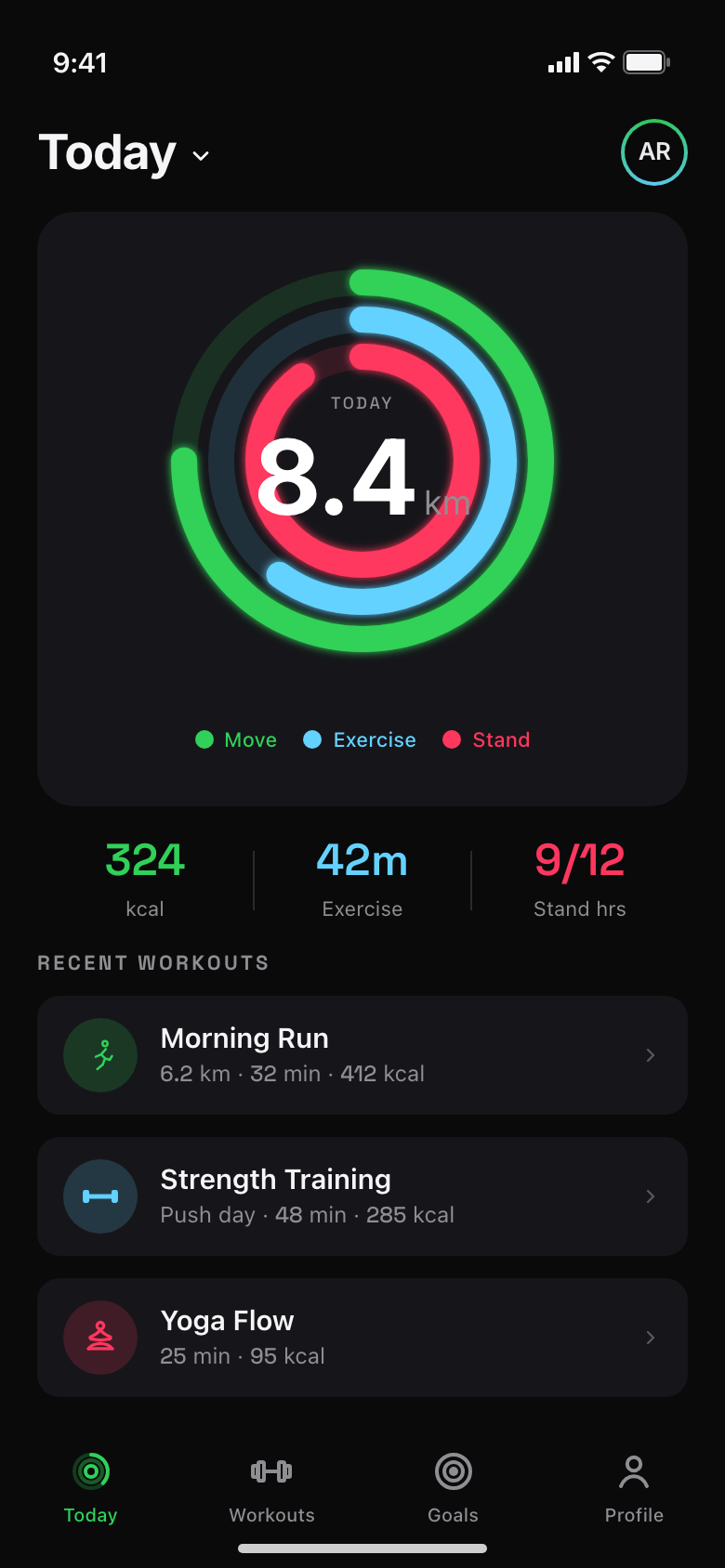
--- ## What it does Ask Claude Code (or any MCP client): > *Design the home dashboard for a fitness tracker. Three concentric activity rings, weekly bar chart, recent workouts list, premium dark mode with neon accents.* `mockit-mcp` returns a real PNG mockup (sized 390×844 at 2x device scale, an iPhone-class viewport) **and** the underlying HTML/Tailwind source — so you can iterate visually and port to SwiftUI when you're ready to build. It's not a static template engine and it's not generic AI slop. The system prompt is hand-tuned for premium iOS aesthetics: real content, SVG icons (no emoji), tasteful gradients in place of stock photos, iOS HIG type scale, and tonal layering instead of heavy shadows.
Fitness tracker dashboard
Fitness dashboard
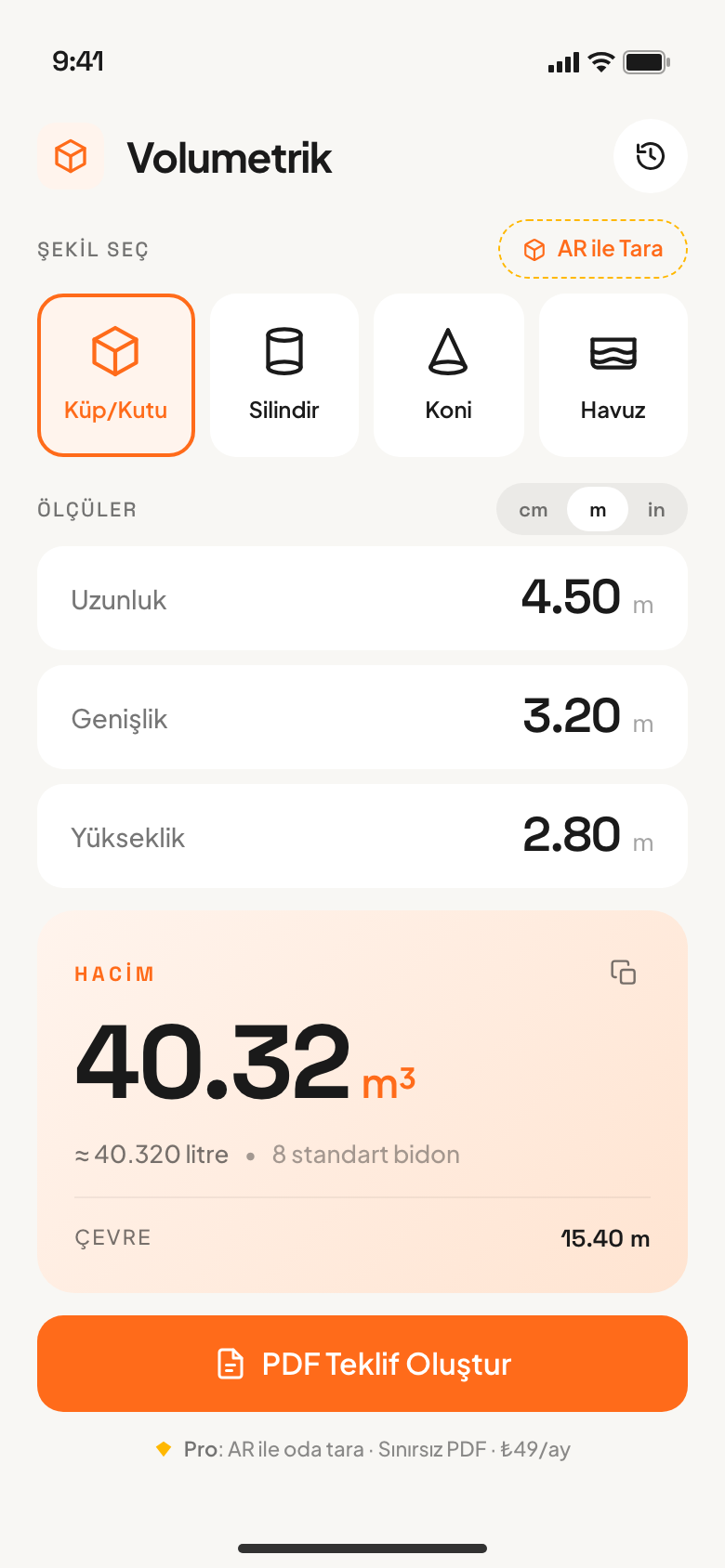
Volume calculator app screen (Turkish)
Volume calculator (Turkish)

Generated from a single prompt each. See examples/.

## Highlights - **Two backends, same tools.** Use the local `claude` CLI (subscription, $0 extra) or the Anthropic API (key + per-call pricing). Switch with one env var. - **Real PNG output.** Headless Chromium via Playwright. Default viewport is **390×844 @2x** (iPhone-class); any custom size is one env var away. - **Iterative refinement.** `iterate_screen` takes a screen ID + feedback ("make the hero card smaller") and produces a new version, tracking parent/child. - **Disk-backed library.** Every generation saves HTML + PNG + JSON metadata. Browse, filter, re-export. - **MCP standard.** Works with Claude Code, Claude Desktop, Cursor, Windsurf, or any MCP client. - **Stdio + HTTP transports.** Run locally for dev, or as a network service for shared / containerized use. ## Tools | Tool | Description | |------|-------------| | `generate_screen` | Text brief → PNG + HTML. Optional `design_system` and `project` fields. | | `iterate_screen` | Take a previous `screen_id` + `feedback` string, produce a new version. | | `list_screens` | List screens, optionally filtered by project. | | `get_screen` | Fetch metadata (or full HTML) for a specific screen. | ## Install ### Prerequisites - **Node.js 20+** - **Either** the `claude` CLI logged in (`cli` backend, default) **or** an Anthropic API key (`api` backend) - Playwright's Chromium download (~170 MB, one-time) ### Quick start (CLI backend, recommended for local dev) ```bash git clone https://github.com/karyaboyraz/mockit-mcp.git cd mockit-mcp npm install npx playwright install chromium npm run build ``` Add to Claude Code: ```bash claude mcp add mockit -- node "$(pwd)/dist/server.js" ``` Done. No API key needed — it uses your existing `claude` CLI session. ### API backend (no `claude` CLI on host) ```bash echo "CLAUDE_BACKEND=api" > .env echo "ANTHROPIC_API_KEY=sk-ant-..." >> .env npm run build claude mcp add mockit -- node "$(pwd)/dist/server.js" ``` ### Docker (HTTP transport, for shared deployment) ```bash cat > .env <<'ENV' CLAUDE_BACKEND=api ANTHROPIC_API_KEY=sk-ant-... # Required if you change the port binding from 127.0.0.1 to 0.0.0.0: MCP_HTTP_TOKEN=$(openssl rand -hex 32) ENV docker compose up -d --build ``` By default `docker-compose.yml` binds the HTTP port to `127.0.0.1` only and the server requires `MCP_HTTP_TOKEN` for any non-loopback request. **Don't expose this server to a public network without setting a strong `MCP_HTTP_TOKEN`** — every generation hits your Anthropic API key. Then point any client at the loopback URL: ```bash claude mcp add --transport http mockit http://127.0.0.1:7821/mcp \ -H "Authorization: Bearer " ``` For remote access, change `docker-compose.yml`'s port binding to `0.0.0.0:7821:7821` and ensure `MCP_HTTP_TOKEN` is set — the server refuses to start otherwise. ## Usage In any MCP client, just ask: > *Design a fitness tracker dashboard. Show today's ring progress, a weekly chart, and a list of recent workouts. Dark mode, neon green accent.* The PNG appears inline. The HTML is saved to `designs/{project}/{name}-{id}.html`. For follow-ups: > *iterate_screen on that fitness dashboard — replace the chart with heart-rate over time, and add a "share workout" button below.* See [`examples/`](examples/) for prompt patterns and full outputs. ## Configuration All optional. See [`.env.example`](.env.example) for the full list. | Env | Default | Notes | |-----|---------|-------| | `CLAUDE_BACKEND` | `cli` | `cli` uses the `claude` CLI; `api` uses Anthropic SDK directly | | `ANTHROPIC_API_KEY` | — | Required only for `api` backend | | `ANTHROPIC_MODEL` | `claude-opus-4-7` | API backend only. If your account doesn't have Opus access, set to `claude-sonnet-4-6` or `claude-haiku-4-5` | | `CLAUDE_CLI_PATH` | `claude` | Path to the `claude` binary | | `CLAUDE_CLI_TIMEOUT_MS` | `180000` | Subprocess timeout | | `MCP_TRANSPORT` | `stdio` | `stdio` or `http` | | `HTTP_PORT` | `7821` | HTTP transport port | | `HTTP_HOST` | `127.0.0.1` | Bind interface; non-loopback requires `MCP_HTTP_TOKEN` | | `MCP_HTTP_TOKEN` | — | Bearer token for HTTP auth. Required if `HTTP_HOST` is non-loopback | | `DESIGNS_DIR` | `./designs` | Where outputs are persisted | | `VIEWPORT_WIDTH` | `390` | Render width in CSS pixels | | `VIEWPORT_HEIGHT` | `844` | Render height in CSS pixels | | `DEVICE_SCALE` | `2` | Retina factor (final PNG is `WIDTH × DEVICE_SCALE` wide) | | `PLAYWRIGHT_NO_SANDBOX` | `auto` | `auto` = sandbox enabled outside containers; `true` to force-disable, `false` to force-enable. Disabling reduces isolation against malicious model HTML — only do so inside a container. | ## Cost Per generation: ~3K input tokens (system prompt) + ~6–12K output tokens depending on screen complexity. Output dominates the cost on Opus. | Backend | First call | Cached follow-up | |---------|-----------|------------------| | `cli` | counts against your Claude Code subscription quota | same — cache only discounts the system prompt | | `api` | ~$0.50–0.95 (Opus 4.7) | ~$0.45–0.90 (cache discounts the system-prompt input only; output cost is unchanged) | System-prompt caching is on by default (5-minute TTL). It saves a few cents per call but is **not** an order-of-magnitude discount — output tokens still bill at full rate. For real cost reduction, switch to a smaller model (`claude-sonnet-4-6` or `claude-haiku-4-5`). ## Architecture ``` ┌─────────────────┐ │ MCP Client │ (Claude Code, Cursor, Windsurf, …) └────────┬────────┘ │ tool call: generate_screen({ prompt, ... }) ▼ ┌─────────────────────────────────────────────────────┐ │ mockit-mcp │ │ │ │ ┌──────────────┐ ┌────────────────────────┐ │ │ │ Backend │ │ Renderer │ │ │ │ │ │ │ │ │ │ ► cli ─────┼──► │ Playwright (headless │ │ │ │ ► api ─────┘ │ Chromium @ iPhone │ │ │ │ → HTML+Tailwind │ viewport) │ │ │ └──────────────┘ │ → PNG screenshot │ │ │ └────────────────────────┘ │ │ │ │ ┌────────────────────────────────────────────┐ │ │ │ Storage (disk): HTML + PNG + JSON metadata │ │ │ └────────────────────────────────────────────┘ │ └─────────────────────────────────────────────────────┘ ``` ## Storage layout ``` designs/ └── {project-slug}/ ├── {name-slug}-{id8}.html # id8 = first 8 chars of the screen UUID ├── {name-slug}-{id8}.png └── {name-slug}-{id8}.json # full UUID, prompt, parent ID, tokens, model, cost ``` ## Documentation Reference and guides live in [`docs/`](docs/README.md): | Topic | Page | |-------|------| | Install, first generation, verify | [Getting Started](docs/getting-started.md) | | Every env var, defaults, what they do | [Configuration](docs/configuration.md) | | The four MCP tools — schemas, examples | [Tools Reference](docs/tools.md) | | Pipeline end-to-end | [Architecture](docs/architecture.md) | | Local, Docker, networked deployments | [Deployment](docs/deployment.md) | | Sandbox, network allowlist, HTTP auth | [Security](docs/security.md) | | How the design voice is encoded | [System Prompt](docs/system-prompt.md) | | Common errors and how to fix them | [Troubleshooting](docs/troubleshooting.md) | ## Tuning the design voice The hand-tuned system prompt lives in [`src/system-prompt.ts`](src/system-prompt.ts). It's where the iOS HIG enforcement, the no-stock-photo rule, the SF Pro fallback chain, and the editorial typography preferences are encoded. Want Material You instead, or a desktop dashboard voice? Edit it. ## Development ```bash npm run dev # tsx watch mode, stdio transport npm run http # tsx watch mode, http transport on :7821 npm run build # compile to dist/ ``` ## Roadmap - [ ] Watch / iPad / Android viewport presets - [ ] Multi-screen flow generation (onboarding sequences) - [ ] HTML → SwiftUI / Jetpack Compose port tool - [ ] Design system import (Tailwind config, design tokens) - [ ] Image references (use `--image` for visual inspiration) - [ ] Variant generation (3-5 alternatives per prompt) ## Contributing Issues and PRs welcome — see [CONTRIBUTING.md](CONTRIBUTING.md). ## License [MIT](LICENSE) ## Acknowledgements Built on top of: - [Anthropic Claude](https://claude.com/) — the model that does the heavy lifting - [Model Context Protocol](https://modelcontextprotocol.io/) — the integration standard - [Playwright](https://playwright.dev/) — the renderer - [Tailwind CSS](https://tailwindcss.com/) — via CDN, in every generated screen ## Trademarks iPhone, iPad, Apple Watch, and iOS are trademarks of Apple Inc. Claude is a trademark of Anthropic, PBC. mockit-mcp is an independent open-source project and is not affiliated with, endorsed by, or sponsored by Apple Inc. or Anthropic, PBC. All other product names, logos, and brands are property of their respective owners.