# Wireworld
Wireworld is a Turing-complete Cellular Automaton, first described by
Brian Silverman in 1987. Wireworld can be used to simulate electronic
gates, or logic elements.
An example of Wireworld diodes is given below:
```python
import netomaton as ntm
from matplotlib.colors import ListedColormap
network = ntm.topology.cellular_automaton2d(rows=13, cols=14, neighbourhood="Moore")
initial_conditions = [
0, 0, 0, 0, 0, 0, 0, 0, 0, 0, 0, 0, 0, 0,
0, 0, 0, 0, 0, 0, 0, 0, 0, 0, 0, 0, 0, 0,
0, 0, 0, 0, 0, 0, 3, 3, 0, 0, 0, 0, 0, 0,
2, 1, 3, 3, 3, 3, 3, 0, 3, 3, 3, 3, 3, 3,
0, 0, 0, 0, 0, 0, 3, 3, 0, 0, 0, 0, 0, 0,
0, 0, 0, 0, 0, 0, 0, 0, 0, 0, 0, 0, 0, 0,
0, 0, 0, 0, 0, 0, 0, 0, 0, 0, 0, 0, 0, 0,
0, 0, 0, 0, 0, 0, 0, 0, 0, 0, 0, 0, 0, 0,
0, 0, 0, 0, 0, 0, 3, 3, 0, 0, 0, 0, 0, 0,
2, 1, 3, 3, 3, 3, 0, 3, 3, 3, 3, 3, 3, 3,
0, 0, 0, 0, 0, 0, 3, 3, 0, 0, 0, 0, 0, 0,
0, 0, 0, 0, 0, 0, 0, 0, 0, 0, 0, 0, 0, 0,
0, 0, 0, 0, 0, 0, 0, 0, 0, 0, 0, 0, 0, 0
]
trajectory = ntm.evolve(initial_conditions=initial_conditions, network=network, timesteps=15,
activity_rule=ntm.rules.wireworld_rule)
ntm.animate_activities(trajectory, shape=(13, 14), interval=120, show_grid=True, show_margin=False, scale=0.3,
colormap=ListedColormap(["black", "blue", "red", "yellow"]))
```
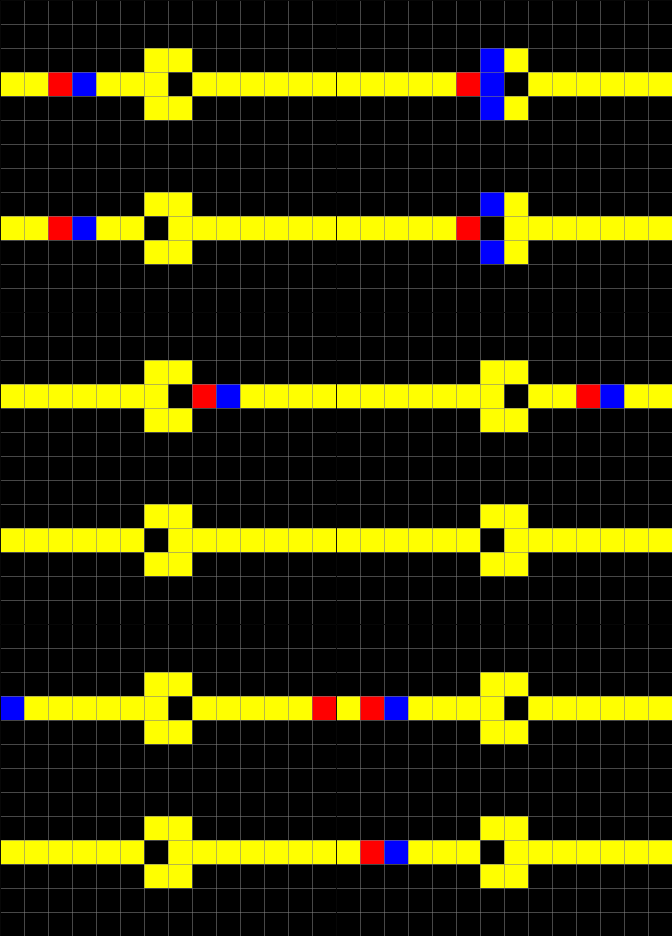 The full source code for this example can be found [here](wireworld_diodes_demo.py).
An example of a Wireworld XOR gate is given below:
```python
import netomaton as ntm
from matplotlib.colors import ListedColormap
network = ntm.topology.cellular_automaton2d(rows=13, cols=24, neighbourhood="Moore")
initial_conditions = [
0, 0, 0, 0, 0, 0, 0, 0, 0, 0, 0, 0, 0, 0, 0, 0, 0, 0, 0, 0, 0, 0, 0, 0,
0, 0, 0, 0, 0, 0, 0, 0, 0, 0, 0, 0, 0, 0, 0, 0, 0, 0, 0, 0, 0, 0, 0, 0,
0, 0, 0, 3, 3, 3, 3, 3, 3, 3, 3, 0, 0, 0, 0, 0, 0, 0, 0, 0, 0, 0, 0, 0,
0, 0, 3, 0, 0, 0, 0, 0, 0, 0, 0, 2, 1, 3, 3, 3, 3, 0, 0, 0, 0, 0, 0, 0,
0, 0, 0, 3, 1, 2, 3, 3, 3, 3, 1, 0, 0, 0, 0, 0, 0, 2, 0, 0, 0, 0, 0, 0,
0, 0, 0, 0, 0, 0, 0, 0, 0, 0, 0, 0, 0, 0, 0, 0, 1, 1, 1, 3, 0, 0, 0, 0,
0, 0, 0, 0, 0, 0, 0, 0, 0, 0, 0, 0, 0, 0, 0, 0, 3, 0, 0, 3, 3, 3, 3, 2,
0, 0, 0, 0, 0, 0, 0, 0, 0, 0, 0, 0, 0, 0, 0, 0, 3, 3, 3, 3, 0, 0, 0, 0,
0, 0, 0, 3, 3, 2, 1, 3, 3, 3, 3, 0, 0, 0, 0, 0, 0, 3, 0, 0, 0, 0, 0, 0,
0, 0, 3, 0, 0, 0, 0, 0, 0, 0, 0, 2, 1, 3, 3, 3, 3, 0, 0, 0, 0, 0, 0, 0,
0, 0, 0, 3, 3, 3, 3, 3, 3, 3, 1, 0, 0, 0, 0, 0, 0, 0, 0, 0, 0, 0, 0, 0,
0, 0, 0, 0, 0, 0, 0, 0, 0, 0, 0, 0, 0, 0, 0, 0, 0, 0, 0, 0, 0, 0, 0, 0,
0, 0, 0, 0, 0, 0, 0, 0, 0, 0, 0, 0, 0, 0, 0, 0, 0, 0, 0, 0, 0, 0, 0, 0
]
trajectory = ntm.evolve(initial_conditions=initial_conditions, network=network, timesteps=25,
activity_rule=ntm.rules.wireworld_rule)
ntm.animate_activities(trajectory, shape=(13, 24), interval=120, show_grid=True, show_margin=False, scale=0.3,
colormap=ListedColormap(["black", "blue", "red", "yellow"]))
```
The full source code for this example can be found [here](wireworld_diodes_demo.py).
An example of a Wireworld XOR gate is given below:
```python
import netomaton as ntm
from matplotlib.colors import ListedColormap
network = ntm.topology.cellular_automaton2d(rows=13, cols=24, neighbourhood="Moore")
initial_conditions = [
0, 0, 0, 0, 0, 0, 0, 0, 0, 0, 0, 0, 0, 0, 0, 0, 0, 0, 0, 0, 0, 0, 0, 0,
0, 0, 0, 0, 0, 0, 0, 0, 0, 0, 0, 0, 0, 0, 0, 0, 0, 0, 0, 0, 0, 0, 0, 0,
0, 0, 0, 3, 3, 3, 3, 3, 3, 3, 3, 0, 0, 0, 0, 0, 0, 0, 0, 0, 0, 0, 0, 0,
0, 0, 3, 0, 0, 0, 0, 0, 0, 0, 0, 2, 1, 3, 3, 3, 3, 0, 0, 0, 0, 0, 0, 0,
0, 0, 0, 3, 1, 2, 3, 3, 3, 3, 1, 0, 0, 0, 0, 0, 0, 2, 0, 0, 0, 0, 0, 0,
0, 0, 0, 0, 0, 0, 0, 0, 0, 0, 0, 0, 0, 0, 0, 0, 1, 1, 1, 3, 0, 0, 0, 0,
0, 0, 0, 0, 0, 0, 0, 0, 0, 0, 0, 0, 0, 0, 0, 0, 3, 0, 0, 3, 3, 3, 3, 2,
0, 0, 0, 0, 0, 0, 0, 0, 0, 0, 0, 0, 0, 0, 0, 0, 3, 3, 3, 3, 0, 0, 0, 0,
0, 0, 0, 3, 3, 2, 1, 3, 3, 3, 3, 0, 0, 0, 0, 0, 0, 3, 0, 0, 0, 0, 0, 0,
0, 0, 3, 0, 0, 0, 0, 0, 0, 0, 0, 2, 1, 3, 3, 3, 3, 0, 0, 0, 0, 0, 0, 0,
0, 0, 0, 3, 3, 3, 3, 3, 3, 3, 1, 0, 0, 0, 0, 0, 0, 0, 0, 0, 0, 0, 0, 0,
0, 0, 0, 0, 0, 0, 0, 0, 0, 0, 0, 0, 0, 0, 0, 0, 0, 0, 0, 0, 0, 0, 0, 0,
0, 0, 0, 0, 0, 0, 0, 0, 0, 0, 0, 0, 0, 0, 0, 0, 0, 0, 0, 0, 0, 0, 0, 0
]
trajectory = ntm.evolve(initial_conditions=initial_conditions, network=network, timesteps=25,
activity_rule=ntm.rules.wireworld_rule)
ntm.animate_activities(trajectory, shape=(13, 24), interval=120, show_grid=True, show_margin=False, scale=0.3,
colormap=ListedColormap(["black", "blue", "red", "yellow"]))
```
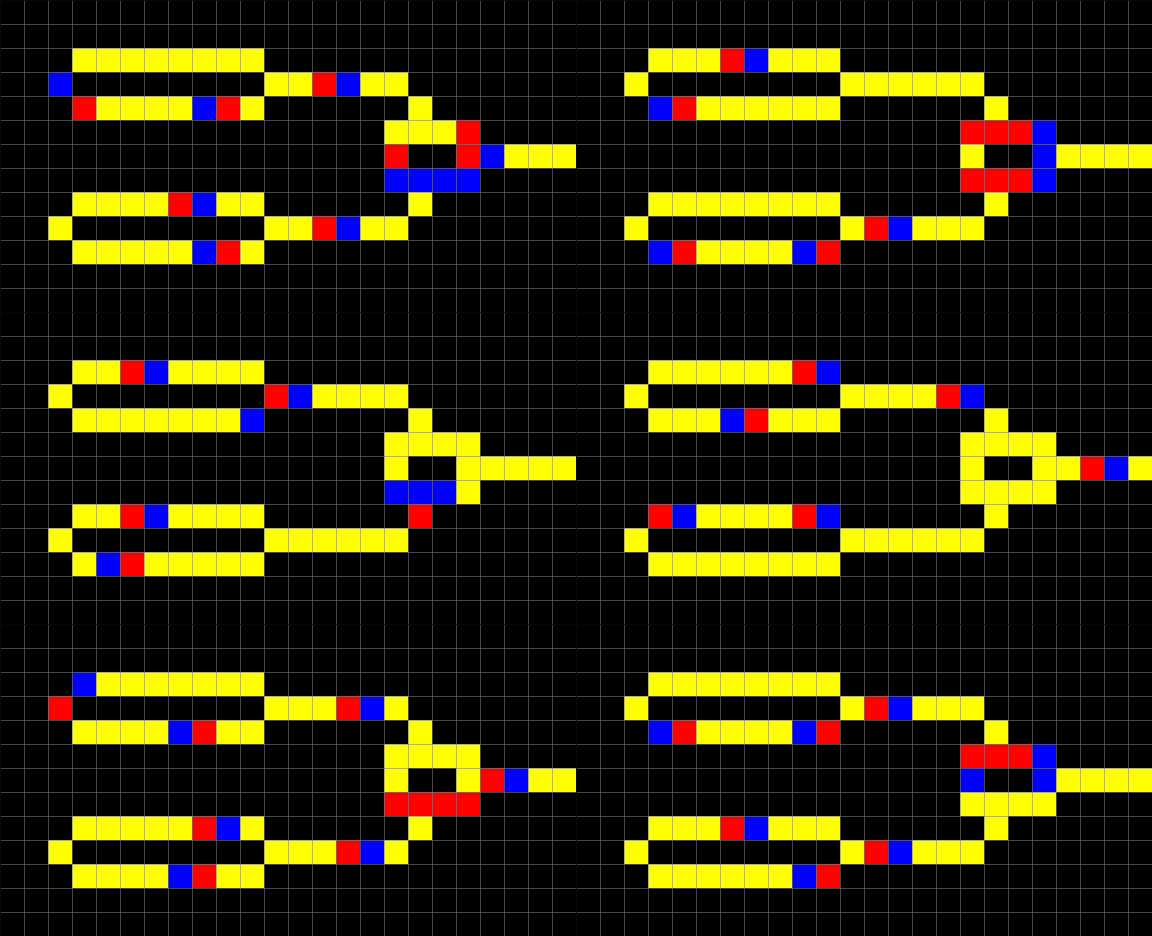 The full source code for this example can be found [here](wireworld_xor_demo.py).
For more information, please refer to the following resources:
https://en.wikipedia.org/wiki/Wireworld
> Dewdney, A K (January 1990). "Computer recreations: The cellular automata programs that create Wireworld, Rugworld and other diversions". Scientific American. 262 (1): 146–149.
The full source code for this example can be found [here](wireworld_xor_demo.py).
For more information, please refer to the following resources:
https://en.wikipedia.org/wiki/Wireworld
> Dewdney, A K (January 1990). "Computer recreations: The cellular automata programs that create Wireworld, Rugworld and other diversions". Scientific American. 262 (1): 146–149.