## 🌈 Why Latitude?
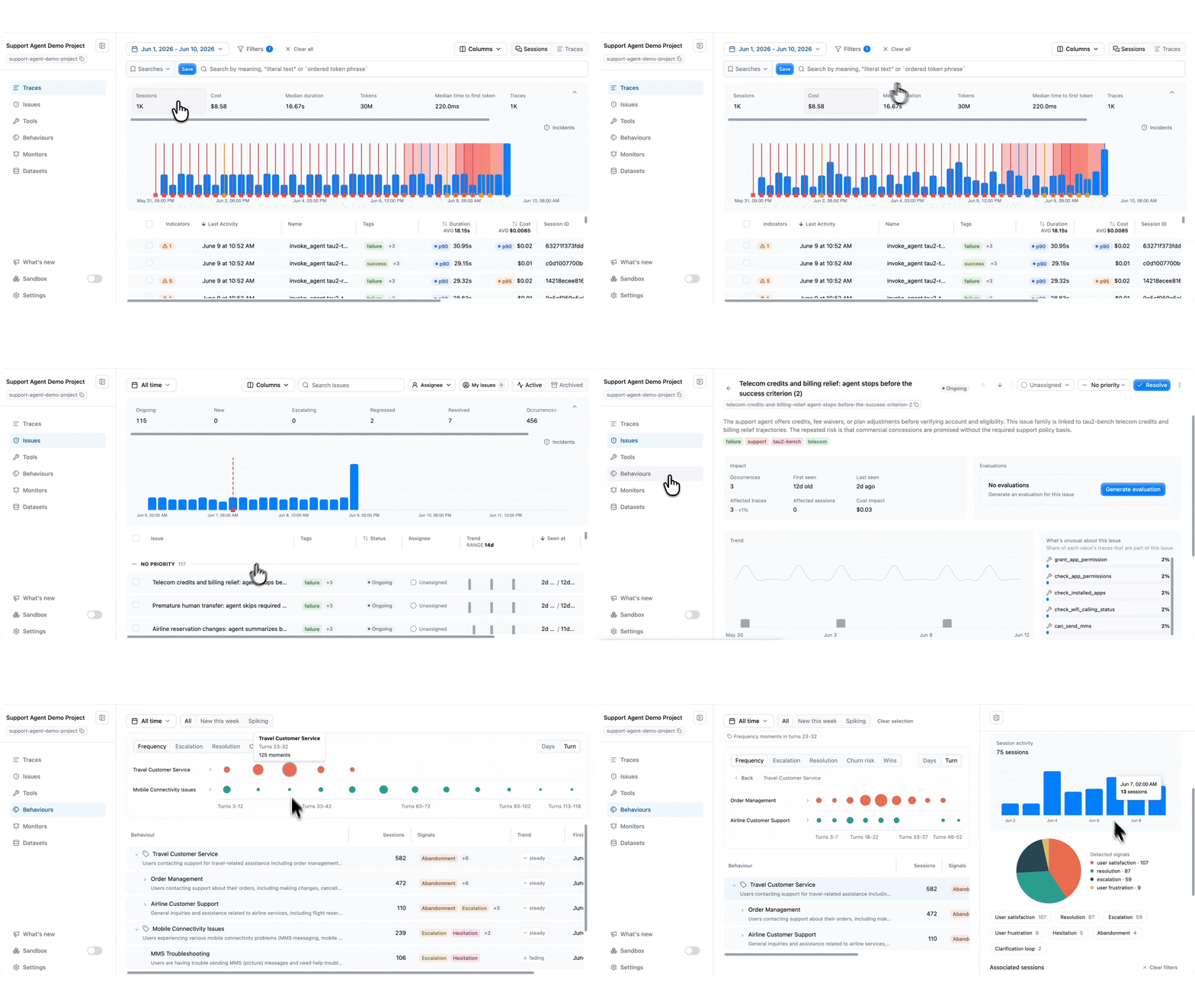
Latitude finds where your agent fails and gets it fixed.
- **Observe**: one line of telemetry captures every trace: multi-turn sessions, tool calls, and full execution paths. _([traces](https://docs.latitude.so/observability/traces), [sessions](https://docs.latitude.so/observability/sessions), [tool-call observability](https://docs.latitude.so/observability/tool-calls), [OpenTelemetry ingest](https://docs.latitude.so/telemetry/otel-exporter))_
- **Understand**: failing traces are auto-grouped into tracked signals with status, size, and trend, so you see what's breaking and how often. _([signals](https://docs.latitude.so/signals/overview), [flaggers](https://docs.latitude.so/annotations/flaggers), [behaviours](https://docs.latitude.so/search/behaviours), [semantic search](https://docs.latitude.so/search/overview), [annotations](https://docs.latitude.so/annotations/overview))_
- **Fix**: Latitude dispatches your coding agents (Claude Code, Cursor) with the full context, sample traces, and a deep link. It writes the smallest correct fix and opens a PR. _([Agent Dispatch](https://docs.latitude.so/agent-dispatch/overview), [MCP server](https://docs.latitude.so/getting-started/mcp), [Linear](https://docs.latitude.so/agent-dispatch/linear) & [webhook dispatch](https://docs.latitude.so/agent-dispatch/webhooks))_
- **Verify**: fixes are replayed against the real failing traces, so fixed failures don't come back. _([regression datasets](https://docs.latitude.so/test-and-fix/regression-testing), [monitors](https://docs.latitude.so/monitors/overview), alerts)_
Everything you can do in the UI is also available from your coding agent via the **[MCP server](https://docs.latitude.so/getting-started/mcp)** and the **[CLI](https://docs.latitude.so/getting-started/cli)**.
## 📚 Table of contents
- [Quick start](#-quick-start)
- [Integrations](#-integrations)
- [With Claude Code](#-with-claude-code)
- [Development](#-development)
- [Self-host](#-self-host)
- [Community](#-community)
- [Contributing](#-contributing)
- [License](#-license)
- [Links](#-links)
## ⚡ Quick start
You can use Latitude for free, including 20K credits/month, 30-day data retention, and unlimited seats.
Sign up at [latitude.so](https://latitude.so) and grab your API key and project slug.
### Recommended: ask your coding agent
Paste this prompt into Claude Code, Cursor, Windsurf, Codex, OpenCode, or another coding agent:
```text
Install the `latitude-setup` skill from `github.com/latitude-dev/skills`, and use it to add Latitude tracing to this app following best practices.
```
### Manual TypeScript setup
```bash
npm install @latitude-data/telemetry
```
This example uses OpenAI; replace it with the LLM SDK your app already imports.
```ts
import { Latitude } from "@latitude-data/telemetry";
import OpenAI from "openai";
const latitude = new Latitude({
apiKey: process.env.LATITUDE_API_KEY!,
project: process.env.LATITUDE_PROJECT_SLUG!,
instrumentations: { openai: OpenAI },
});
const client = new OpenAI();
await client.chat.completions.create({
model: "gpt-4o",
messages: [{ role: "user", content: "Hello" }],
});
await latitude.shutdown();
```
Every supported LLM call now shows up as a trace in Latitude. Use `capture()` at request, conversation, or agent boundaries when you want to add user IDs, session IDs, tags, or metadata.
Python and any OpenTelemetry-compatible runtime are also supported. Full setup, provider guides, and OTel passthrough are in the [Start tracing guide](https://docs.latitude.so/telemetry/start-tracing).
## 🔌 Integrations
Latitude is provider-agnostic. Telemetry works out of the box with most model providers and frameworks ([OpenAI](https://docs.latitude.so/telemetry/providers/openai), [Anthropic](https://docs.latitude.so/telemetry/providers/anthropic), [Bedrock](https://docs.latitude.so/telemetry/providers/amazon-bedrock), [Vercel AI SDK](https://docs.latitude.so/telemetry/frameworks/vercel-ai-sdk), [LangChain](https://docs.latitude.so/telemetry/frameworks/langchain), and more), plus any OTEL-compatible application.
See the [full integration list](https://docs.latitude.so/telemetry/start-tracing) for setup instructions.
## ✳️ With Claude Code
Building inside Claude Code? We have a dedicated package that captures full session transcripts as traces.
[Check out docs.](https://docs.latitude.so/telemetry/claude-code)
```bash
npx -y @latitude-data/claude-code-telemetry install
```
Works in the terminal, the Desktop app, and IDE extensions.
## 🛠️ Development
Check out the [Development setup](https://docs.latitude.so/development/setup) and the [Contributing guide](CONTRIBUTING.md) to get started contributing to Latitude.
## 🏠 Self-host
Latitude is [self-hostable](https://docs.latitude.so/deployment/overview) at any scale, on fully open infrastructure. Pull the ready-to-go container images on [Docker Hub](https://hub.docker.com/u/latitudedata):
[](https://railway.com/deploy/latitude?referralCode=GND3X9&utm_medium=integration&utm_source=template&utm_campaign=generic)
- **Single-host (simple)** — a production-grade instance on one machine with Docker Compose, follow the [Single-host guide](https://docs.latitude.so/deployment/single-host).
- **Cluster (advanced)** — a scalable, highly-available deployment on Kubernetes via a Helm chart, follow the [Cluster guide](https://docs.latitude.so/deployment/cluster).
- **One-click (Railway)** — the whole stack on managed infrastructure, easy deploy through [Railway](https://railway.com/deploy/latitude?referralCode=GND3X9&utm_medium=integration&utm_source=template&utm_campaign=generic).
## 👥 Community
Join the [Slack community](https://join.slack.com/t/trylatitude/shared_invite/zt-35wu2h9es-N419qlptPMhyOeIpj3vjzw) to ask questions, share feedback, and show what you're building.
## 📄 License
Latitude is licensed under the [MIT License](LICENSE).
## 🤝 Contributing
Contributions are welcome. Read the [Contributing Guide](CONTRIBUTING.md) to get started, then join the [Slack community](https://join.slack.com/t/trylatitude/shared_invite/zt-35wu2h9es-N419qlptPMhyOeIpj3vjzw), open an [issue](https://github.com/latitude-dev/latitude-llm/issues/new), or submit a pull request.
**New to the project?** [Good first issues](https://github.com/latitude-dev/latitude-llm/contribute) are a friendly place to start.
## 🧑💻 Thanks to all of our contributors
## 🔗 Links
- [Home page](https://latitude.so/v2/?utm_source=github_readme)
- [Documentation](https://docs.latitude.so/)
- [Changelog](https://latitude.so/changelog)
- [Slack community](https://join.slack.com/t/trylatitude/shared_invite/zt-35wu2h9es-N419qlptPMhyOeIpj3vjzw)
- [X / Twitter](https://x.com/trylatitude)
Made with love by the Latitude Team