Moli is a production-ready headless browser for AI agents. Its on-demand layout
and rendering design combines a complete browser runtime with a lightweight
resource footprint.
Moli helps your AI agent fetch and extract web pages, search the web, and
automate browser tasks.
Use it through the CLI, CDP, WebDriver Classic, or WebDriver BiDi.
Moli supports Linux, macOS, and Windows.
## Quick start
Give this prompt to your AI agent:
```text
Install the skills under https://github.com/lexmount/moli/tree/main/skills,
follow their instructions to download and install the latest prebuilt Moli
binary, then use moli-webfetch to fetch https://example.com and show me the
result.
```
### Direct installation
On Linux or macOS:
```sh
curl --proto '=https' --tlsv1.2 -fsSL \
https://github.com/lexmount/moli/releases/latest/download/moli-installer.sh | sh
```
On Windows, run in PowerShell:
```powershell
powershell -ExecutionPolicy ByPass -c "irm https://github.com/lexmount/moli/releases/latest/download/moli-installer.ps1 | iex"
```
## Showcase
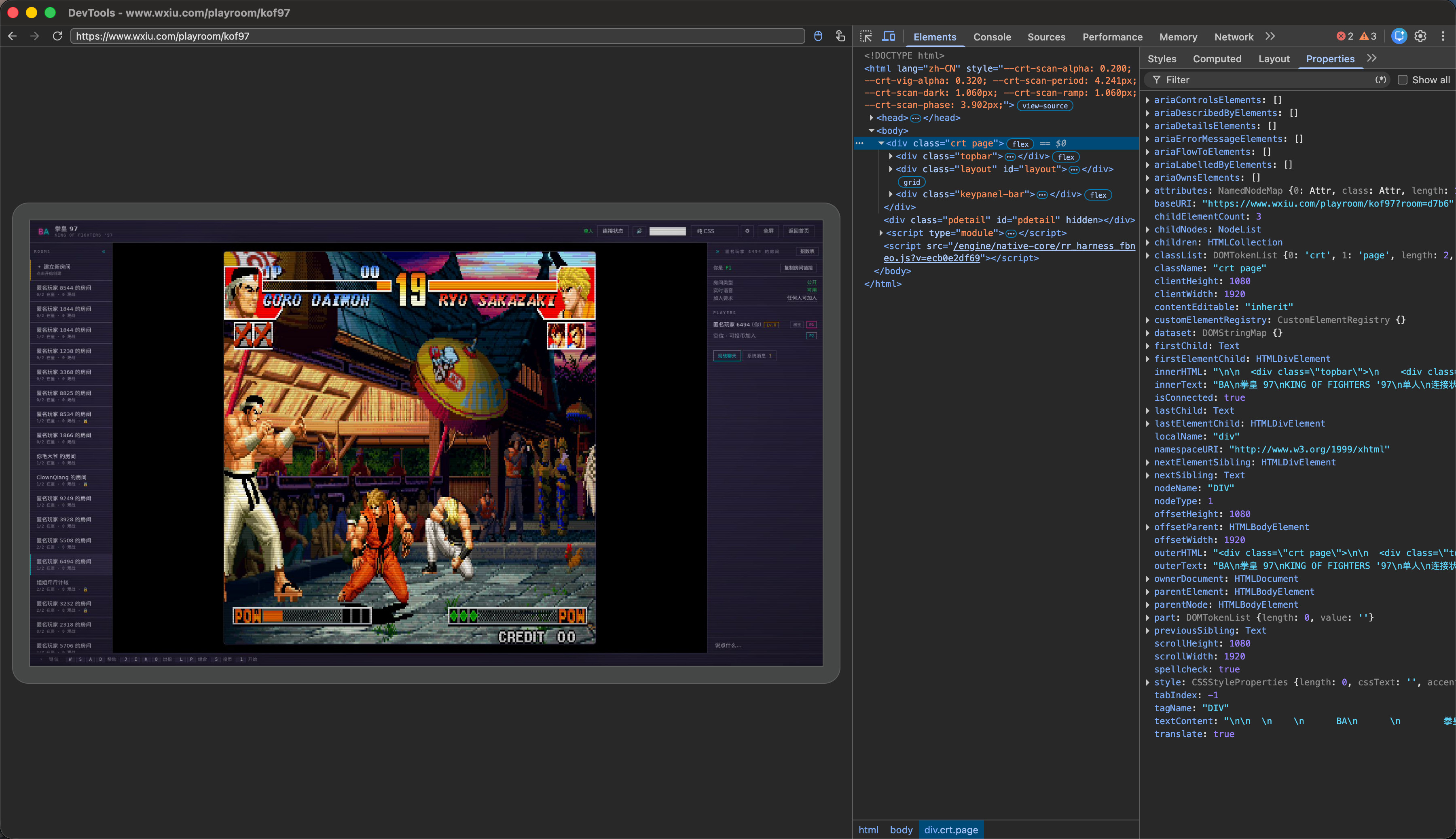
An HTML5 game rendered by Moli and inspected live through Chrome DevTools.
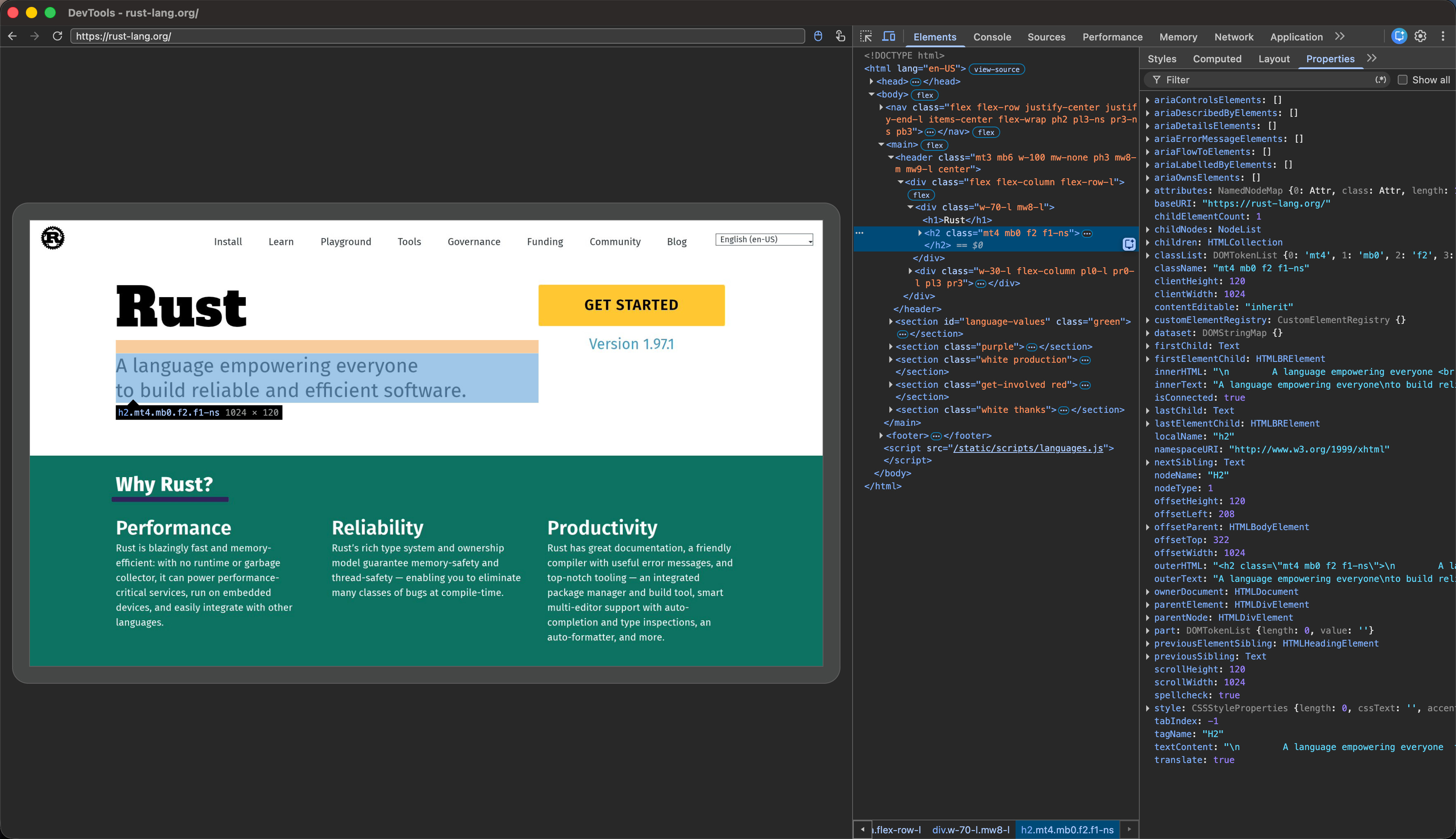
rust-lang.org rendered by Moli, with its live DOM, CSS, and geometry available in Chrome DevTools.
## CLI usage
### Extract a page
Render the page as Markdown with Moli's default completion strategy:
```bash
moli fetch \
--dump markdown \
--wait-until done \
https://example.com
```
Or directly return a compact, model-friendly semantic tree:
```bash
moli fetch \
--dump semantic_tree_text \
--wait-selector body \
https://example.com
```
For visual output, enable on-demand layout and write a viewport PNG, a full-document PNG, or a paginated PDF:
```bash
moli fetch --layout --dump screenshot https://example.com > page.png
moli fetch --layout --dump screenshot_full https://example.com > full-page.png
moli fetch --layout --dump pdf https://example.com > page.pdf
```
Run `fetch --help` for the complete option list, including output formats,
page-load/response waits, profiles, proxy settings, resource policies, and
tracing options.
### Start the automation server
```bash
# Basic automation server for DOM-first workloads
moli serve
# Enable real geometry, coordinate input, and screenshot/screencast surfaces
moli serve --layout
# Also fetch optional image, font, audio, video, media, and text-track resources
moli serve --layout --resource
```
The same endpoint serves all three protocols: CDP, WebDriver Classic, and
WebDriver BiDi. Playwright can connect directly over CDP:
```js
import { chromium } from "playwright";
const browser = await chromium.connectOverCDP("http://127.0.0.1:9222");
const context = browser.contexts()[0];
const page = context.pages()[0] ?? await context.newPage();
await page.goto("https://example.com");
console.log(await page.locator("body").innerText());
await browser.close();
```
## Why Moli
Three qualities matter most for agent workloads, and Moli brings them together:
- **Full-featured** — real JavaScript, DOM, CSS, networking, storage, layout,
screenshots, and standard automation protocols, all integrated into one
headless browser.
- **Fast** — most automation requests never need visual rendering, so
structure-first operations skip layout and paint entirely.
- **Resource-efficient** — layout and pixels are generated only when needed,
so Moli does not have to continuously maintain and update a fully rendered
visual state.
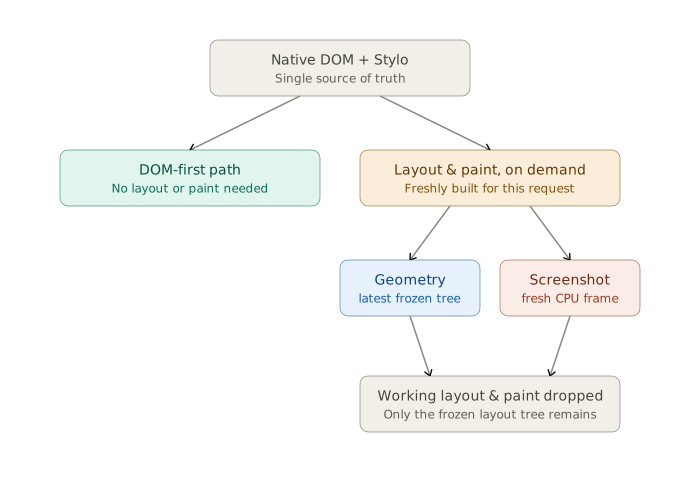
What most browser automation tasks actually need is page structure, not a
continuously rendered visual world. Moli treats the native DOM and style state
as the single source of truth, triggering layout or software paint only for
operations that genuinely require them.
| Agent request | What Moli does |
| --- | --- |
| Extract HTML/Markdown, query the DOM, run JS, inspect network/storage | Reads browser runtime state directly — does not trigger layout or paint |
| Read an element's box, hit-test coordinates, send coordinate input | Runs one layout calculation and retains only the latest frozen layout tree |
| Capture a screenshot | Rebuilds from the current DOM/style, replaces the frozen tree, renders a fresh frame, and discards its paint state after use |
| Poll a screencast | Compares generation metadata only; clean state emits no frame, while changed state rebuilds and emits one fresh frame |
Moli still includes the complete set of capabilities: V8, CSS, layout, text
shaping, hit-testing, software paint, and more. The only difference is *when*
visual work runs and *how long* its results are retained. This cost model is
especially well suited to crawling, browser-use agents, retrieval pipelines,
evaluation environments, and reinforcement-learning workloads.
## Current capabilities
- **Complete web runtime** — streaming HTML parsing, native DOM, V8 JavaScript,
modules/timers/microtasks/events, iframes and workers, CSS cascade,
Fetch/XHR/WebSocket, cookies, WebCrypto, and profile-scoped storage
(localStorage, IndexedDB, OPFS).
- **Extraction-optimized outputs** — the CLI directly produces HTML, Markdown,
JSON, semantic text trees, and frame-aware serialization, with
selector/script/response waits and network tracing.
- **Unified automation binary** — CDP, WebDriver Classic, and WebDriver BiDi
share the same kernel and scheduler. No separate ChromeDriver, geckodriver,
or browser installation is required.
- **Real visual capabilities on demand** — add `--layout` to enable complete box
construction, Taffy layout, Parley text layout, layout-backed
hit-testing/input, viewport
screenshots, and low-frequency CPU-rendered DevTools screencast frames.
- **Controllable operational options** — profiles, cookies, HTTP cache, proxies,
resource families, connection limits, timeouts, private-network policy,
user-agent overrides, diagnostic logging, and network diagnostics are all
available.
## Moli's relationship with Lexmount
Moli is Lexmount's open-source headless browser; Lexmount Browser is the managed
cloud runtime and control plane built around it.
**The open-source headless browser is fully usable without Lexmount Browser.**
## Cost controls
Expensive browser operations in Moli require an explicit opt-in and are never
enabled by default:
| Mode or option | Behavior |
| --- | --- |
| Default | `LayoutPolicy::Mock` — deterministic geometry in a compatible format, with no real layout or paint |
| `--layout` | `LayoutPolicy::OnDemand` — real layout, geometry, hit-testing, coordinate input, screenshots, screencast |
| `--resource` | Fetch all optional visual/media resource families |
| `--image`, `--font`, `--audio`, `--video`, `--media`, `--text-track` | Enable one specific optional resource family |
| `--profile-dir`, `--http-cache-dir`, `--cookie-file` | Selectively enable the persistence required by the workload |
Layout is an on-demand snapshot rather than continuously maintained state. The
first geometry request (a cold start) builds a working layout tree from the
current DOM/style, freezes its canonical geometry into an immutable,
DOM-independent `FrozenLayoutTree`, and retains only that latest tree. Ordinary
geometry reads may reuse it even if the page has changed. Screenshots always
rebuild and replace the frozen tree. Each screencast subscription remembers
only an opaque visual-state token: an unchanged token suppresses the poll,
while a changed token triggers one fresh frame. Paint results are never reused.
## Architecture
Moli is a standalone browser kernel, not a Chromium wrapper. It is built in
Rust, has its own ownership and lifecycle rules, and relies on:
- `libcurl` — network transport and multi-request runtime
- `html5ever` — HTML parsing
- `rusty_v8` / V8 — JavaScript execution
- Servo/Stylo — selectors, cascade, computed style
- Taffy + Parley — box and text layout
- AnyRender/Vello CPU, `usvg`, and the Rust image ecosystem — software rendering
Document and style have a single source of truth: the native DOM and its Stylo
integration. Every real refresh builds a temporary working tree from that
source, optionally produces and consumes one fresh paint snapshot, freezes the
canonical box/fragment geometry into a compact `FrozenLayoutTree`, and discards
the working tree, style borrows, layout caches, diagnostics, and paint state.
Screencast tokens contain generation metadata, never layout or paint data.
Source lookup and hit-test candidates are derived from the frozen tree when
queried. The system has no incrementally maintained layout tree, damage graph,
retained display list, GPU compositor, or persistent window.
## Benchmark
The following measurements show Moli's current capability envelope. They cover
real websites, automation clients, Chromium/WPT behavior checks, and a large
nextest regression suite.
### Mixed public-web crawl test
The test covers 192 public URLs from major Chinese and international sites. A
page only counts as successful if it produces meaningful content after
JavaScript runs — an HTTP 200, challenge page, login wall, empty response, or
shell-only application does not count.
| Browser | Useful pages | Success rate | Median time | Median RSS |
| --- | ---: | ---: | ---: | ---: |
| **Moli** | **103** | **53.6%** | **1.43 s** | **73 MiB** |
| Chrome Headless | 101 | 52.6% | 1.43 s | 773 MiB |
| Lightpanda | 85 | 44.3% | 0.97 s | 40 MiB |
| Obscura | 57 | 29.7% | 1.30 s | 39 MiB |
### Sample agent workload
| Metric | Moli | Chromium |
| --- | ---: | ---: |
| CDP ready | 34.85 ms | 169.37 ms |
| Episode active p50 | 33.40 ms | 57.13 ms |
| Peak PSS | 102.46 MiB | 348.82 MiB |
| Peak processes / threads | 1 / 24 | 11 / 123 |
### WPT tests
In the current WPT selection used to validate Moli's agent-browser scope, one
full run passed **1.612 million tests**.
### Moli's performance in Lexbench-Headless-Browser
The full [Lexbench-Headless-Browser](https://github.com/lexmount/Lexbench-Headless-Browser)
corpus contains 1,928 tasks covering raw CDP, 13 pinned automation tools
including Playwright, Puppeteer and Selenium, and web-platform semantics. To
include Kitesurf, which is only available as a remote endpoint, the chart below
uses 1,308 comparable tasks. All browsers use the same task selection rules.
**Moli 0.1.1 passed 1,071 tasks, a success rate of 81.88%**, ahead of Kitesurf
at 62.08%, Lightpanda at 53.29%, and Obscura at 44.88%; Chrome, the reference
engine, reached 99.85%. Kitesurf ran at k=1, uncovered tasks count as not
passed, and the reproduction conditions of a remote service differ from those
of local binaries. See the benchmark's
[five-engine report](https://github.com/lexmount/Lexbench-Headless-Browser/blob/kitesurf-eval/docs/reports/five-engine-report-20260813.md)
for the full results.
Kitesurf is a remote service, so its CPU, memory, and process counts cannot be
measured. The resource comparison therefore covers only the four local
engines. A separate 557-task run includes only work completed by all four.
Moli's median CPU time per task was **100.6 ms** and its median peak memory was
**92 MiB**; Chrome recorded **687 ms** and **697 MiB**, respectively. Moli used
about 15% of Chrome's CPU time and 13% of its peak memory. See the benchmark's
[resource card](https://github.com/lexmount/Lexbench-Headless-Browser/blob/main/docs/reports/resource-card-20260812.md)
for the methodology and full data.
## Project scope
Within the agent-browser scenarios defined in its documentation, Moli is ready
for production use and remains under active development.
Its current intentional boundaries include:
- No GUI browser, persistent window, GPU compositor, or retained multi-frame
paint architecture.
- It does not pursue pixel-for-pixel parity with Chrome or provide
high-fidelity Canvas/WebGL/media playback.
- `--layout` supports software screenshots and raster-backed CDP PDF
generation, but not every Chrome screenshot or print mode is implemented.
Unsupported protocol paths return explicit errors — Moli never pretends that a
browser action, event, network observation, or visual result occurred.
## Star history
Generated hourly from the stargazer timeline by [lexmount/moli-metrics](https://github.com/lexmount/moli-metrics).
## License
Unless a file or directory states otherwise, you may use Moli under either the
[Apache License 2.0](LICENSE-APACHE) or the [MIT License](LICENSE-MIT), at your
option. Separately licensed third-party components and fixtures remain subject
to their own licenses and notices. [`license-metadata.json`](license-metadata.json)
records the machine-readable default, and additional distributable notices are
collected under [`licenses/`](licenses/).