# LuxAlgo MCP

[](https://github.com/LuxAlgo/luxalgo-mcp-server/actions/workflows/ci.yml)
[](https://www.npmjs.com/package/@luxalgo/mcp)
[](LICENSE)
[Library](https://www.luxalgo.com/library/) · [Brokers](https://github.com/LuxAlgo/broker-sdk) · [Edge Stats](https://github.com/LuxAlgo/edge-stats) · [Market Trackers](https://github.com/LuxAlgo/market-trackers) · [Challenge Simulator](https://github.com/LuxAlgo/prop-firm-sim) · [Prop Firms](https://www.luxalgo.com/prop-firms/) · [Vela for Developers](#charts-in-your-browser-with-vela) · [npm](https://www.npmjs.com/package/@luxalgo/mcp) · [Endpoint](https://mcp.luxalgo.com/mcp)

**LuxAlgo MCP** is a LuxAlgo open-source project. Overview and setup: [luxalgo.com/mcp](https://www.luxalgo.com/mcp).
It puts the LuxAlgo ecosystem behind a single MCP server: an encyclopedia of trading and technical analysis, your LuxAlgo trade journal, read-only access to your own brokerage accounts, hosted session statistics with a sample size on every number, the public record of US markets (congressional trades, insider filings, lobbying, contracts, patents and more, with a primary-source link on every row), a Monte Carlo challenge simulator, and a live prop-firm directory. No API key for anything hosted: the public tools are free and read-only, the Trade Journal and account tools use your LuxAlgo sign-in, and the local broker tools use your own keys and never send them anywhere.
```bash
claude mcp add --transport http luxalgo https://mcp.luxalgo.com/mcp
```
## What's inside
| Area | What you get |
| --- | --- |
| **[Library](https://www.luxalgo.com/library/)** | The encyclopedia of trading and technical analysis: hundreds of concept pages with formulas, the full indicator catalog organized by family and concept, and Pine Script® sources where publicly served. |
| **Trade Journal** (sign-in) | Your own journal in the LuxAlgo app: the dashboard (metrics, Edge Score, equity curve), the P&L calendar, breakdowns by weekday / hold time / symbol / tag and more, every trade with its fills and annotations, day notes — and the writes that keep it alive: log fills by hand, annotate trades (tags, mistakes, rating, stop and target, review), write notes. Always as you, on your data; the app owns the rules. |
| **Brokers** (local only) | Read-only access to your own accounts across 22 brokers and exchanges via [broker-sdk](https://github.com/LuxAlgo/broker-sdk): balances, positions, trade history, FIFO performance stats. Keys live in your MCP client config as env vars and never leave your machine. The hosted endpoint does not carry these tools, on purpose. |
| **Edge Stats** | Hosted session statistics from the open-source [edge-stats](https://github.com/LuxAlgo/edge-stats) engine: how often a setup actually worked (gap fills, opening-range breakouts, day-of-week effects, event days) with the sample size and a Wilson 95% confidence interval on every number. A nightly build runs the real engine over free market data and publishes only derived statistics; these tools serve them verbatim. |
| **[Market Trackers](https://github.com/LuxAlgo/market-trackers)** | The public record of US markets from primary sources only: congressional trades, insider (Forms 3/4/5) transactions, 13F holdings, federal contracts and grants, lobbying filings, FINRA short-sale volume, granted patents, clinical trials, FDA drug events, CFTC positioning, federal bills, FEC campaign finance, hearing transcripts, Federal Reserve communications, committee assignments, Wikipedia pageviews. Read straight from the pipeline's [CC0 dumps](https://github.com/LuxAlgo/market-trackers-data) — live tree plus deep-history archives — with `provenance.sourceUrl` on every row. Data only: no signals, scores, or predictions. |
| **Challenge Simulator** | The open-source [prop-firm-sim](https://github.com/LuxAlgo/prop-firm-sim) Monte Carlo engine, running locally inside the server. Your stats, or your real R-multiple trade series, through a firm's exact ruleset: pass probability with confidence intervals, expected attempts and cost, EV over the funded horizon, optimal-risk sweeps, cross-challenge comparison. Deterministic under seed, every assumption disclosed. |
| **Prop Firm Directory** | The live data the simulator draws from: firms, funded-account challenges with their full rulebooks (account sizes, fees, steps, profit splits, drawdown modes, trading restrictions), and current offers. |
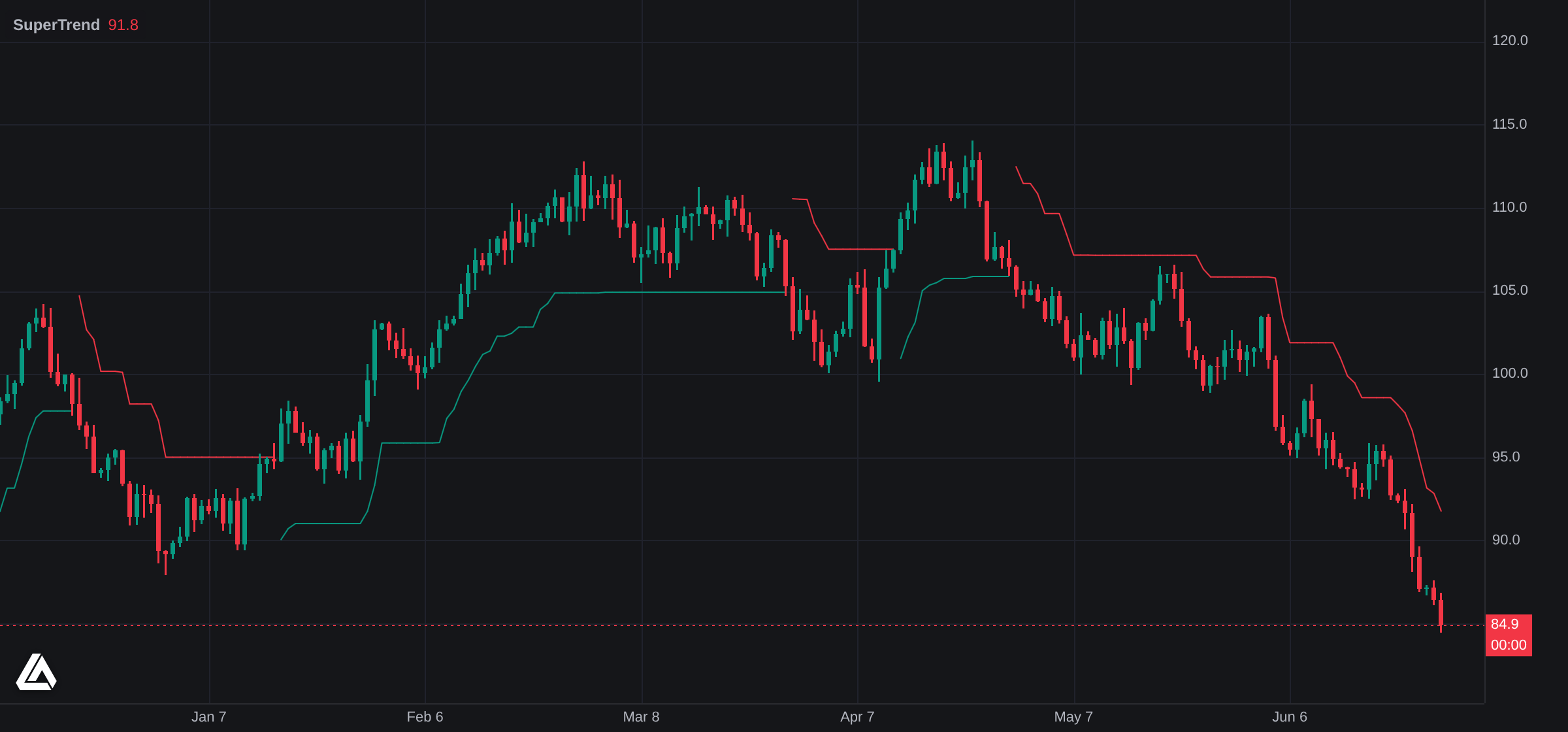
| **Charts** (your browser) | Not a tool: the chart you draw with what the tools return. [The open-source core of Vela by LuxAlgo](https://velacharts.dev) runs the Pine Script® that `library_get_source_code` hands back and paints the fills that `broker_trades` lists, in a browser tab, on your machine. [How the loop works](#charts-in-your-browser-with-vela). |
## Install
The hosted server is one URL:
```
https://mcp.luxalgo.com/mcp
```
### Claude (web, desktop, mobile)
Customize → Connectors → **Add custom connector**, URL **`https://claude.mcp.luxalgo.com/mcp`**, and under **Authentication** choose **Required when the server asks**. Claude connects anonymously, every keyless tool works right away, and the sign-in card only appears the first time you call an account tool. This Claude-only address exists because Claude.ai otherwise opens the OAuth window at connect time for any server whose OAuth metadata it can discover ([claude-ai-mcp#1013](https://github.com/anthropics/claude-ai-mcp/issues/1013)); it serves the same tools with that metadata hidden until a sign-in is actually needed. Every other client uses `https://mcp.luxalgo.com/mcp`.
### Claude Code
```bash
claude mcp add --transport http luxalgo https://mcp.luxalgo.com/mcp
```
### Cursor
Use the **Install in Cursor** button above, or add this to `.cursor/mcp.json`:
```json
{
"mcpServers": {
"luxalgo": {
"url": "https://mcp.luxalgo.com/mcp"
}
}
}
```
### Any other MCP client
Point your client's MCP config at the hosted URL:
```json
{
"mcpServers": {
"luxalgo": {
"url": "https://mcp.luxalgo.com/mcp"
}
}
}
```