**DISCLAIMER**
Readme and CMakeLists mostly AI-generated.
# nfs-recompiled
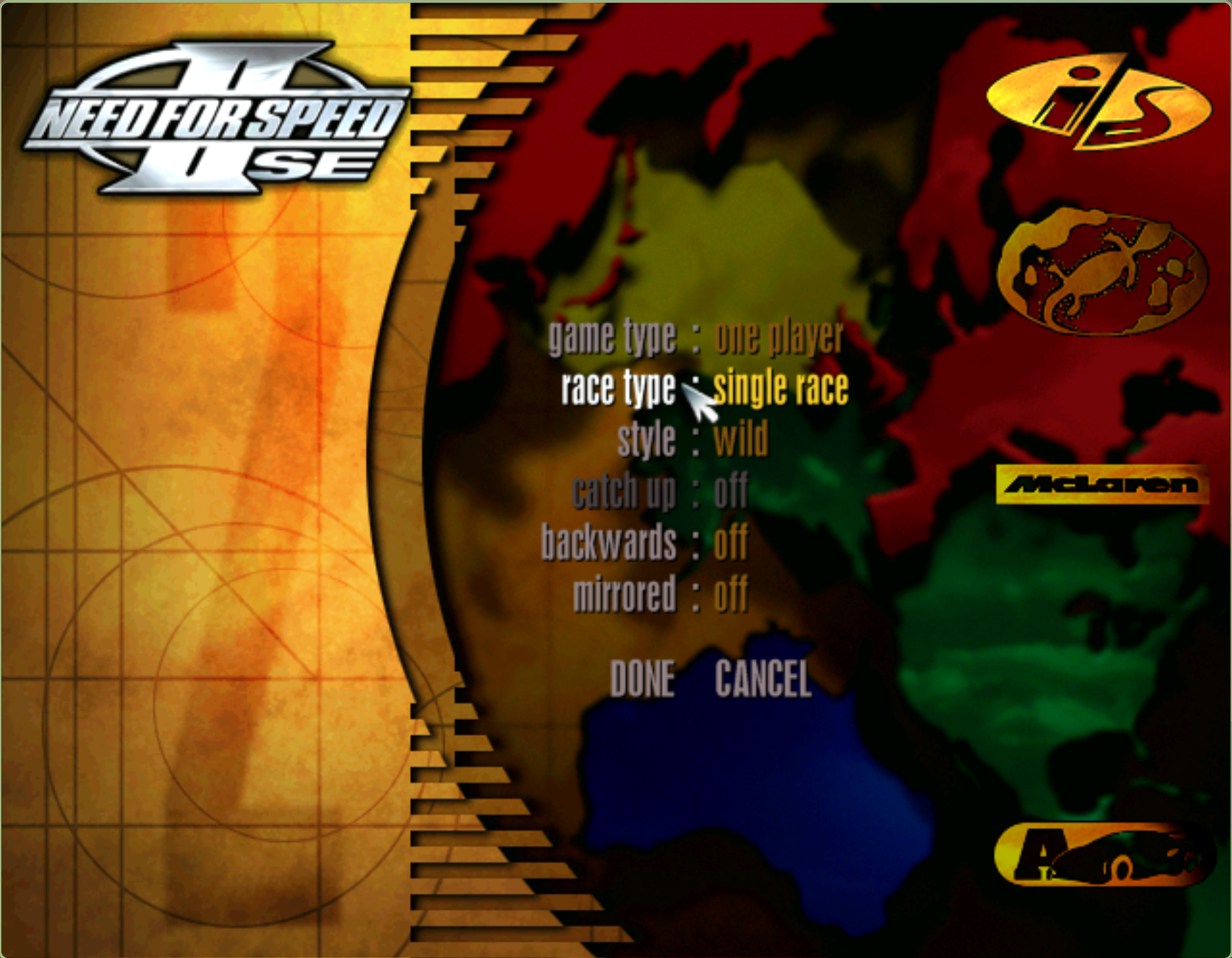
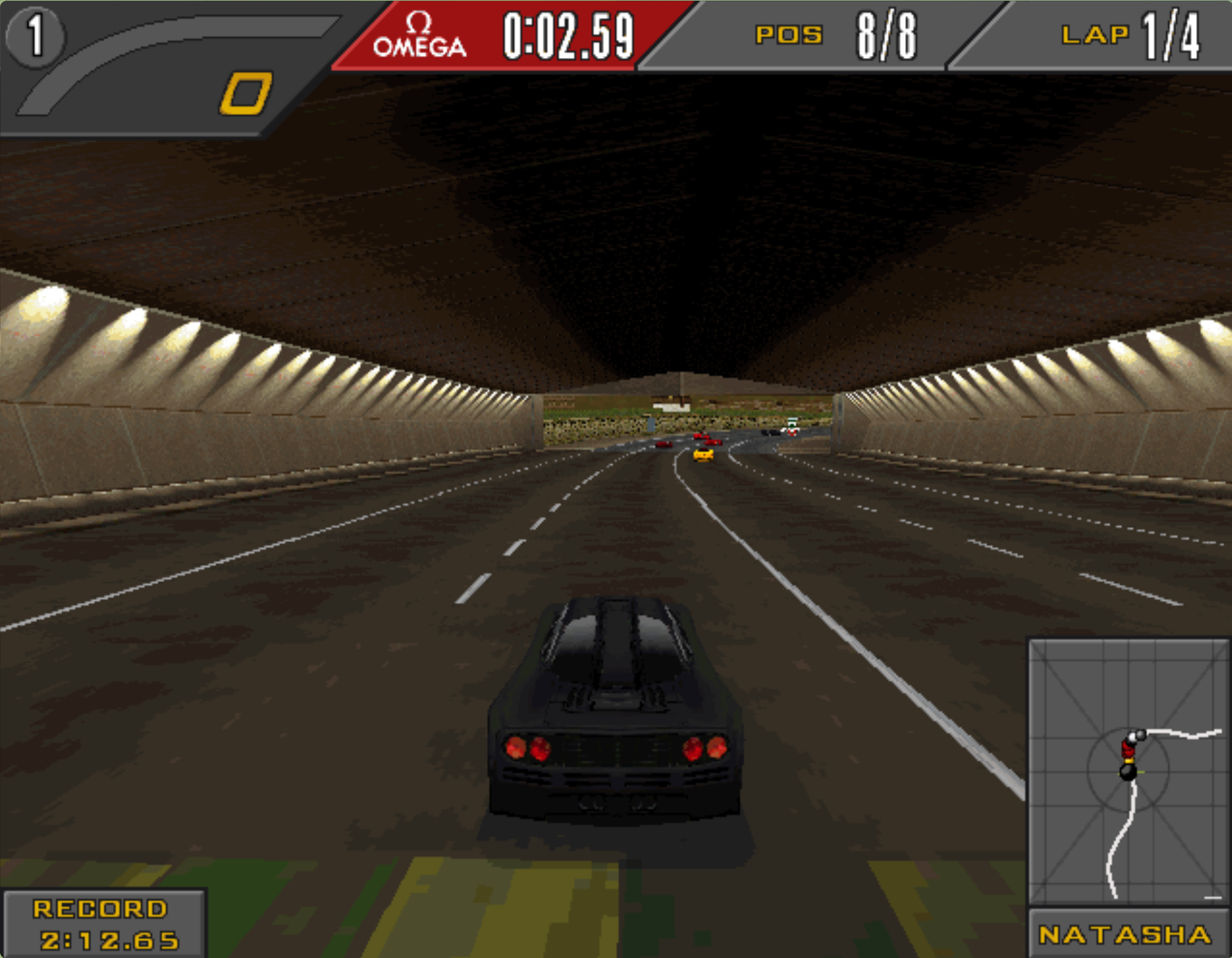
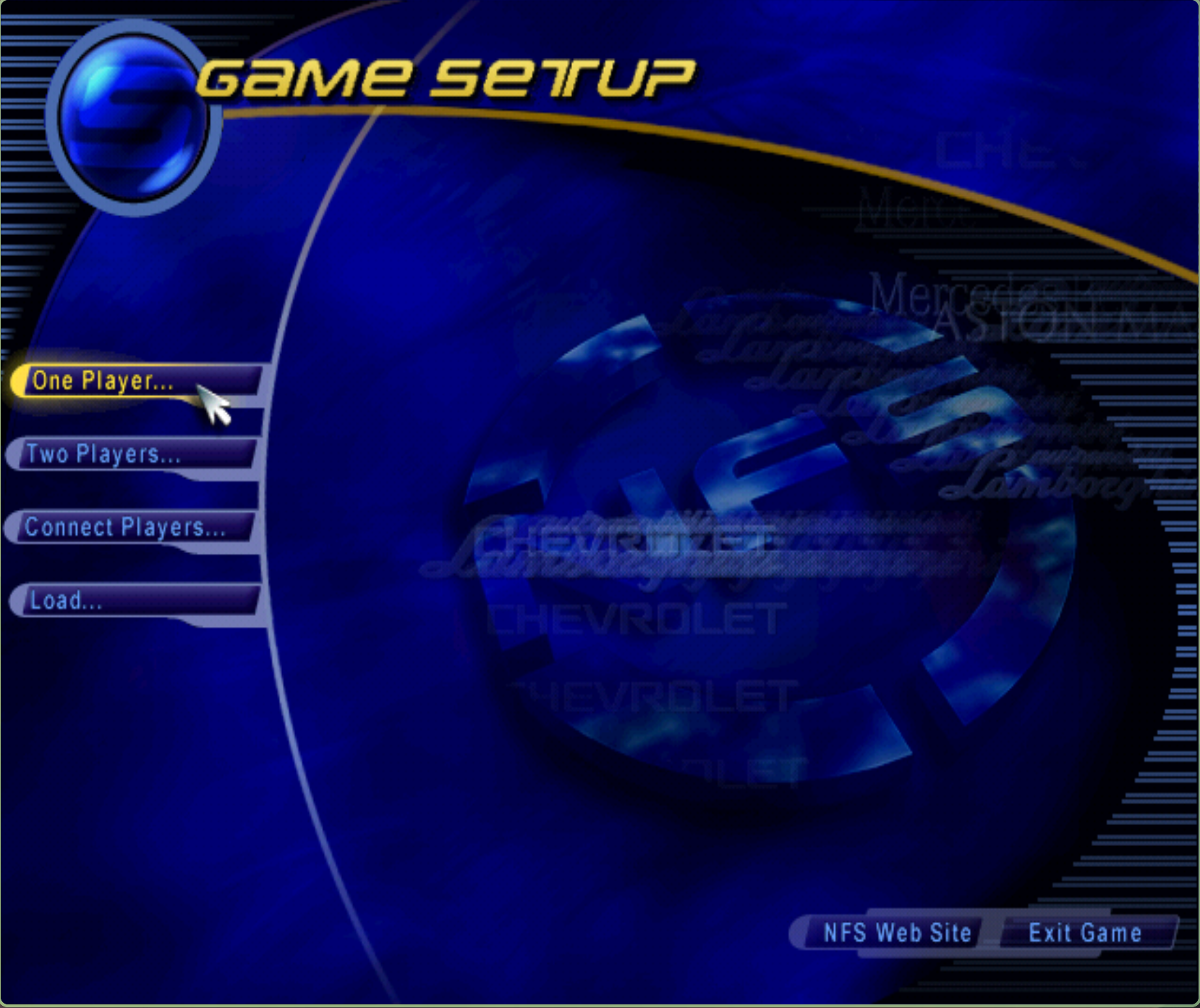
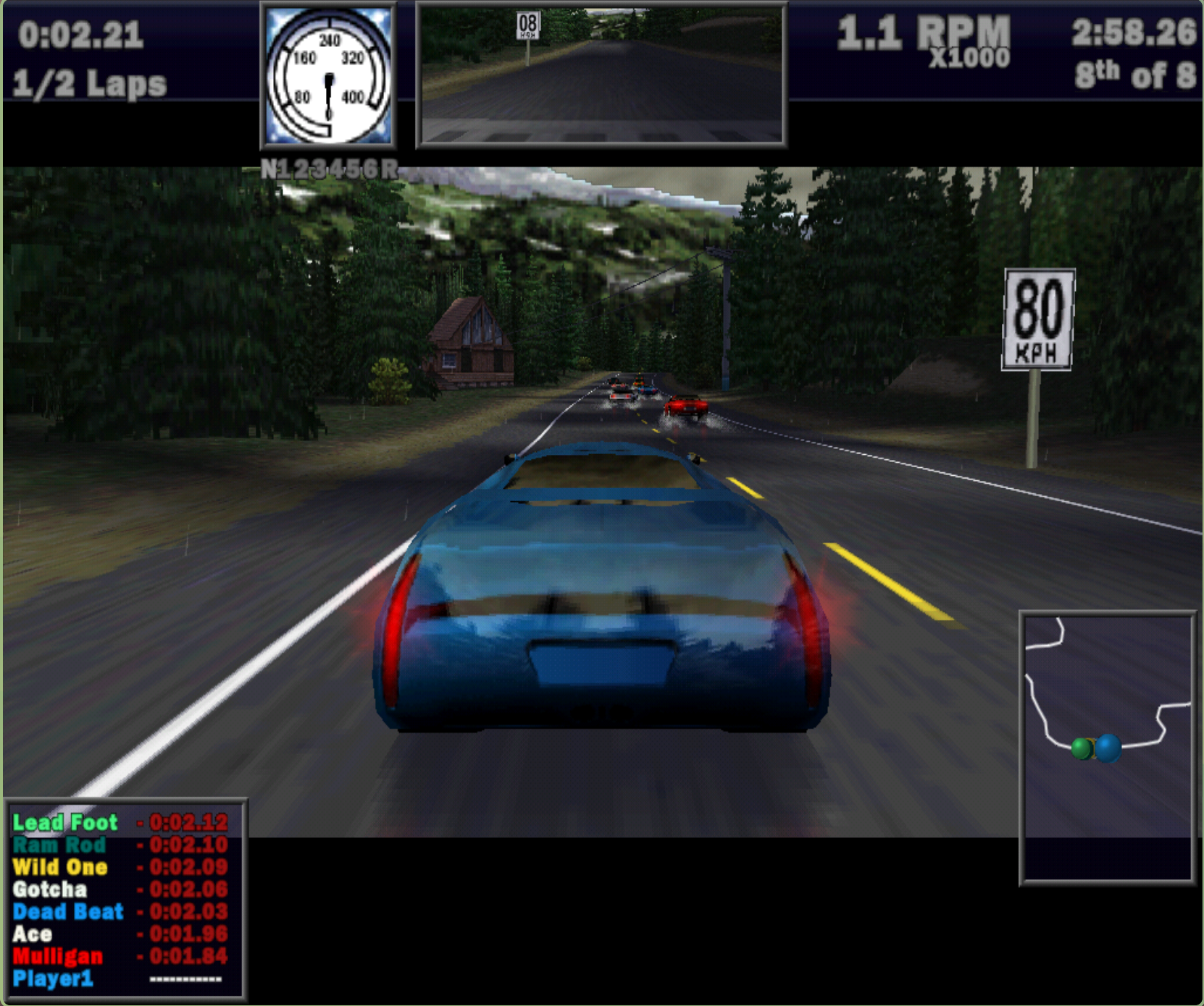
A static recompilation of **Need for Speed II: Special Edition** and **Need for Speed III: Hot Pursuit** from their original Win32 x86 executables into portable C++ that runs natively on Linux (and potentially other platforms). This is a toy project and not meant to be serious. But it works.

 ## Quick Start: Running the Game
If you have obtained a release binary, here is how to get the game running.
### 1. Game Data
You need the original game files.
1. **Install the game** from your original CD (or mount the iso).
On Linux, install the game from the CD-ROM through Wine, e.g. `WINEARCH=win32 WINEPREFIX=/opt/win98 wine /mnt/AUTORUN.EXE`
2. **Copy CD data**: The game expects certain files to be on the CD. To run without the CD, copy the `Fedata` and `GameData` folders from the CD-ROM into your game installation directory (merging with existing folders if necessary).
* *Tip*: You can check the `install.win` file in your installation directory. It lists paths; any path starting with a drive letter (like `D:\`) needs to be present on your disk relative to the executable for portable play.
### 2. Running
Run the executable from the terminal. The game supports positional arguments to locate data files.
| Arguments | Behavior |
|---|---|
| **0 args** | `./nfs3hp` | Uses the current directory for both game data and "CD" files. |
| **1 arg** | `./nfs3hp /path/to/game` | Uses the specified path for both game data and "CD" files. |
| **2 args** | `./nfs3hp /path/to/install /path/to/cdrom` | Specifies separate paths for the installed files and the CD-ROM content. |
**Examples:**
```bash
# Data and executable in the same folder
$ ./nfs3hp
# Executable separate from data
$ ./build/nfs3hp /home/user/games/nfs3
# Separate install and CD mount
$ ./build/nfs2se /home/user/games/nfs2 /mnt/cdrom
```
## Building from source
### Prerequisites
- CMake ≥ 3.15
- A C++17 compiler (GCC or Clang)
- SDL2 development libraries
- OpenGL development libraries
- NASM (for x87 FPU optimizations)
- Python 3 (only if regenerating disassembly)
**Debian / Ubuntu:**
```bash
sudo apt install build-essential cmake nasm python3 python3-pip \
libsdl2-dev libgl-dev
```
### Build Instructions
Windows users with the bundled SDL2 library can point CMake at the `/sdl2` subdirectory (this is done automatically if you configure from within the project root).
```bash
cmake -B build -DCMAKE_BUILD_TYPE=Release
cmake --build build
```
### CMake Options
| Option | Default | Description |
|---|---|---|
| `WITH_PEDANTIC_FPU` | `OFF` | Use strict 80-bit extended-precision FPU emulation. Required for NFS3 software renderer glitches on Linux. |
| `WITH_MMX` | `ON` | Enable MMX instruction support. |
Example:
```bash
cmake -B build -DWITH_PEDANTIC_FPU=ON
```
## Regenerating Disassembled Files
The repository contains pre-generated C++ code in `src/nfs2se/disassembly` and `src/nfs3hp/disassembly`. You do not need to run the disassembler to build the project.
If you modify the disassembly logic in `disasm/`, you must regenerate the sources:
1. Ensure you have the original executables and DLLs:
* **NFS II SE**: Place `nfs2sen.exe` and `eacsnd.dll` in the `nfs2se/` folder.
* **NFS III HP**: Place `nfs3.exe`, `eacsnd.dll`, `softtria.dll`, and `voodoo2a.dll` in the `nfs3hp/` folder.
2. Install Python dependencies:
```bash
pip3 install capstone
```
3. Run the generation scripts:
```bash
python3 disassemble_nfs2se.py
python3 disassemble_nfs3hp.py
```
## Project Structure
### Supported Games
| Game | Executable | Generated Target |
|---|---|---|
| NFS II: SE | `nfs2se/nfs2sen.exe` | `nfs2se` |
| NFS III: HP | `nfs3hp/nfs3.exe` | `nfs3hp` |
### How it works
1. **Python disassembler** (`disasm/`) — Uses Capstone to disassemble the original `.exe` and `.dll` files and emit C++ source files that reproduce the original program logic as function calls on a virtual CPU.
2. **Virtual x86 CPU** — A `x86::CPU` struct (`include/cpu.h`) with general-purpose registers, flags, a full x87 FPU (with optional 80-bit extended precision via NASM routines), and MMX support.
3. **Win32 API layer** — Minimal, native C++ reimplementations of 18 Win32 API modules (kernel32, user32, gdi32, DirectDraw, DirectInput, DirectSound, Glide 2x, etc.) provide the runtime environment the original code needs.
4. **SDL2 + OpenGL backend** — Platform services (windowing, audio, input, file I/O, timers, threads) are implemented on top of SDL2. The Glide 2x renderer translates 3Dfx draw calls into OpenGL.
### File Tree
```
disasm/ Python disassembly framework
codegen/ x86 instruction -> C++ code generators
ordlookup/ DLL ordinal-to-name lookup tables
disassemble_nfs2se.py Disassembly driver for NFS II: SE
disassemble_nfs3hp.py Disassembly driver for NFS III: HP
include/
cpu.h Virtual x86 CPU struct (registers, flags)
fpu.h x87 FPU emulation (80-bit extended precision)
mmx.h MMX instruction support
x86.h Base register types and utility macros
lib/ Platform abstraction headers
winapi/ Win32 API reimplementation headers
ddraw/ IDirectDraw interfaces
dinput/ IDirectInput interfaces
dsound/ IDirectSound interfaces
src/
lib/ Shared runtime library (nfs_core)
sdl-backend/ SDL2 platform backend (file, audio, events, etc.)
winapi/ Win32 API implementations
x87.asm NASM routines for 80-bit FPU operations
nfs2se/ NFS II: SE entry point + generated disassembly
nfs3hp/ NFS III: HP entry point + generated disassembly
nfs2se/ Original executables that can be decompiled for NFS2: SE
nfs3hp/ Original executables that can be decompiled for NFS3: HP
```
## Quick Start: Running the Game
If you have obtained a release binary, here is how to get the game running.
### 1. Game Data
You need the original game files.
1. **Install the game** from your original CD (or mount the iso).
On Linux, install the game from the CD-ROM through Wine, e.g. `WINEARCH=win32 WINEPREFIX=/opt/win98 wine /mnt/AUTORUN.EXE`
2. **Copy CD data**: The game expects certain files to be on the CD. To run without the CD, copy the `Fedata` and `GameData` folders from the CD-ROM into your game installation directory (merging with existing folders if necessary).
* *Tip*: You can check the `install.win` file in your installation directory. It lists paths; any path starting with a drive letter (like `D:\`) needs to be present on your disk relative to the executable for portable play.
### 2. Running
Run the executable from the terminal. The game supports positional arguments to locate data files.
| Arguments | Behavior |
|---|---|
| **0 args** | `./nfs3hp` | Uses the current directory for both game data and "CD" files. |
| **1 arg** | `./nfs3hp /path/to/game` | Uses the specified path for both game data and "CD" files. |
| **2 args** | `./nfs3hp /path/to/install /path/to/cdrom` | Specifies separate paths for the installed files and the CD-ROM content. |
**Examples:**
```bash
# Data and executable in the same folder
$ ./nfs3hp
# Executable separate from data
$ ./build/nfs3hp /home/user/games/nfs3
# Separate install and CD mount
$ ./build/nfs2se /home/user/games/nfs2 /mnt/cdrom
```
## Building from source
### Prerequisites
- CMake ≥ 3.15
- A C++17 compiler (GCC or Clang)
- SDL2 development libraries
- OpenGL development libraries
- NASM (for x87 FPU optimizations)
- Python 3 (only if regenerating disassembly)
**Debian / Ubuntu:**
```bash
sudo apt install build-essential cmake nasm python3 python3-pip \
libsdl2-dev libgl-dev
```
### Build Instructions
Windows users with the bundled SDL2 library can point CMake at the `/sdl2` subdirectory (this is done automatically if you configure from within the project root).
```bash
cmake -B build -DCMAKE_BUILD_TYPE=Release
cmake --build build
```
### CMake Options
| Option | Default | Description |
|---|---|---|
| `WITH_PEDANTIC_FPU` | `OFF` | Use strict 80-bit extended-precision FPU emulation. Required for NFS3 software renderer glitches on Linux. |
| `WITH_MMX` | `ON` | Enable MMX instruction support. |
Example:
```bash
cmake -B build -DWITH_PEDANTIC_FPU=ON
```
## Regenerating Disassembled Files
The repository contains pre-generated C++ code in `src/nfs2se/disassembly` and `src/nfs3hp/disassembly`. You do not need to run the disassembler to build the project.
If you modify the disassembly logic in `disasm/`, you must regenerate the sources:
1. Ensure you have the original executables and DLLs:
* **NFS II SE**: Place `nfs2sen.exe` and `eacsnd.dll` in the `nfs2se/` folder.
* **NFS III HP**: Place `nfs3.exe`, `eacsnd.dll`, `softtria.dll`, and `voodoo2a.dll` in the `nfs3hp/` folder.
2. Install Python dependencies:
```bash
pip3 install capstone
```
3. Run the generation scripts:
```bash
python3 disassemble_nfs2se.py
python3 disassemble_nfs3hp.py
```
## Project Structure
### Supported Games
| Game | Executable | Generated Target |
|---|---|---|
| NFS II: SE | `nfs2se/nfs2sen.exe` | `nfs2se` |
| NFS III: HP | `nfs3hp/nfs3.exe` | `nfs3hp` |
### How it works
1. **Python disassembler** (`disasm/`) — Uses Capstone to disassemble the original `.exe` and `.dll` files and emit C++ source files that reproduce the original program logic as function calls on a virtual CPU.
2. **Virtual x86 CPU** — A `x86::CPU` struct (`include/cpu.h`) with general-purpose registers, flags, a full x87 FPU (with optional 80-bit extended precision via NASM routines), and MMX support.
3. **Win32 API layer** — Minimal, native C++ reimplementations of 18 Win32 API modules (kernel32, user32, gdi32, DirectDraw, DirectInput, DirectSound, Glide 2x, etc.) provide the runtime environment the original code needs.
4. **SDL2 + OpenGL backend** — Platform services (windowing, audio, input, file I/O, timers, threads) are implemented on top of SDL2. The Glide 2x renderer translates 3Dfx draw calls into OpenGL.
### File Tree
```
disasm/ Python disassembly framework
codegen/ x86 instruction -> C++ code generators
ordlookup/ DLL ordinal-to-name lookup tables
disassemble_nfs2se.py Disassembly driver for NFS II: SE
disassemble_nfs3hp.py Disassembly driver for NFS III: HP
include/
cpu.h Virtual x86 CPU struct (registers, flags)
fpu.h x87 FPU emulation (80-bit extended precision)
mmx.h MMX instruction support
x86.h Base register types and utility macros
lib/ Platform abstraction headers
winapi/ Win32 API reimplementation headers
ddraw/ IDirectDraw interfaces
dinput/ IDirectInput interfaces
dsound/ IDirectSound interfaces
src/
lib/ Shared runtime library (nfs_core)
sdl-backend/ SDL2 platform backend (file, audio, events, etc.)
winapi/ Win32 API implementations
x87.asm NASM routines for 80-bit FPU operations
nfs2se/ NFS II: SE entry point + generated disassembly
nfs3hp/ NFS III: HP entry point + generated disassembly
nfs2se/ Original executables that can be decompiled for NFS2: SE
nfs3hp/ Original executables that can be decompiled for NFS3: HP
```