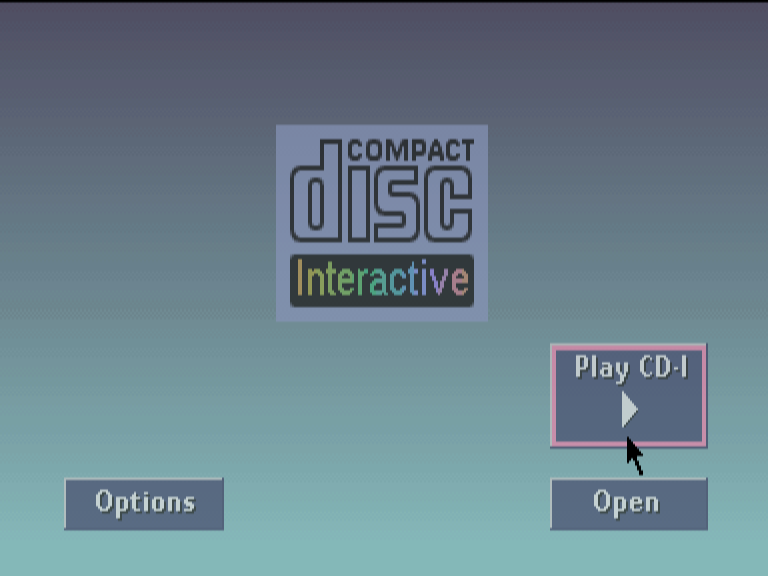
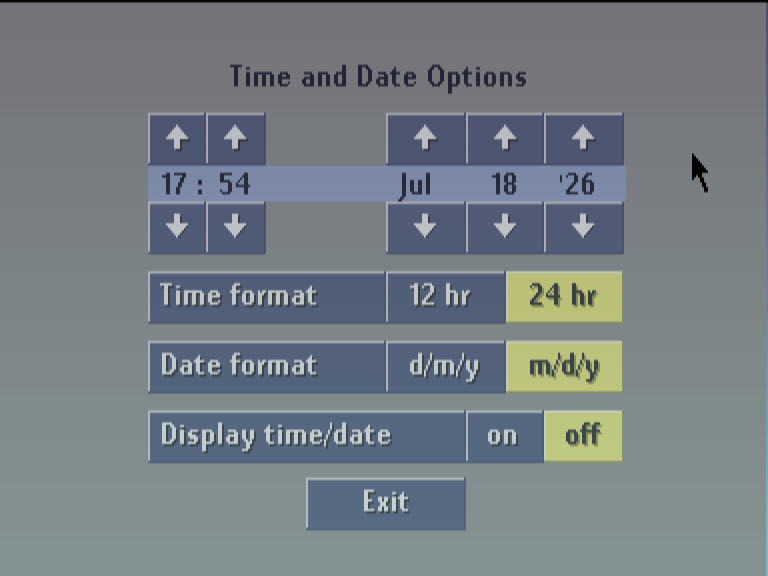
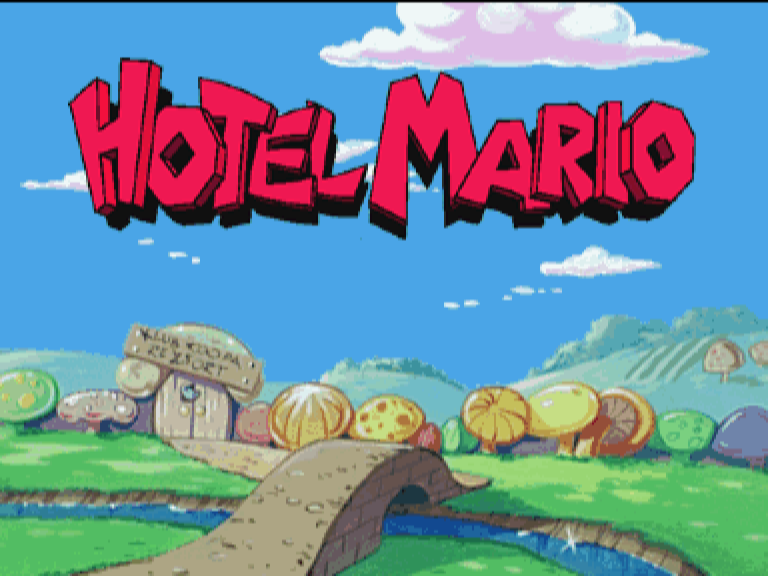
Real CD-RTOS player shell · Time/Date settings · the Philips Interactive Media bumper · and Hotel Mario reaching its title card through the real recompiled system ROM.
## Philosophy: low-level, static, native-first The guiding inspiration for cdirecomp is to be **LLE (low-level emulation) and static / native-first**: - **Low-level, not HLE.** There is **no hand-written OS-9 HLE layer.** The whole **CD-RTOS system ROM is recompiled and executed** as native C. A game's `TRAP #0` OS-9 system calls dispatch into the *recompiled* kernel, and kernel state lives in emulated RAM exactly as it does on hardware. Only the hardware chips are modeled by hand. (psxrecomp showed that stubbing the BIOS leads to silent failure; CD-i takes the opposite, faithful route.) - **Static, not interpreted.** The 68000 code is translated **ahead of time to C** and compiled to a native binary. A clean-room interpreter is kept only as the correctness floor for RAM-resident / not-yet-statically-promoted code. ### Why CD-i is unusual The Genesis runs a bare-metal 68000 cartridge; **CD-i does not.** A CD-i title is a Green Book **Mode-2 CD** whose data track holds a CD-i/ISO-9660 file system. The program is a set of **OS-9/68000 relocatable modules** (sync word `0x4AFC`) that **CD-RTOS** — a real-time OS based on Microware OS-9/68K — loads and relocates into RAM at run time, reaching the system through `TRAP #0` system calls. So cdirecomp recompiles and executes the whole player **system ROM first**, then lets the game boot on top of it. ## Current status What works today: - **Boots the real CD-RTOS system ROM** (user-supplied) to its interactive **player shell** — navigation, the Time/Date and storage settings UIs, media insert/eject, and persistence — running as native recompiled code. - **Hotel Mario boot and early gameplay.** From the shell you can *Play CD-I* a user-supplied *Hotel Mario (USA)* disc; CD-RTOS loads the title, the Philips Interactive Media bumper plays with decoded XA audio, and the game reaches its **title card** and one-player gameplay. Intro background changes now follow the disc's file-wide trigger events. Windowed input and buffered XA playback reach gameplay through the real OS-9 drivers. Normal-speed controller input cleared Hotel 1 Stages 1–3 on the indexed LLE build. A separate seeded two-player build reached Stage 3 for Mario and Stage 5 for Luigi. These are partial playthrough observations using ordinary game input. - **Owner playtest feedback (2026-10-09).** Basic gameplay and the title-screen background are reported working well. Minor visual flickering remains; its cause has not been investigated. - **Static native OS-9 modules.** The disc frontend validates file extents, header parity and CRC, then emits relocatable C with instruction resume maps. Hotel Mario supplies 174 distinct executable images. The runtime binds a loaded image by its full SHA-256 and revokes that binding on overlapping RAM writes. Uncovered code uses the clean-room interpreter. An indexed, bounded coverage ledger retains executed offsets for offline promotion. - **Recorded checks.** All six compiler and eleven runtime component checks passed. The latest indexed build passed 30/30 normal-speed headless cold boots to the exact title; the preceding build also passed 30/30 windowed boots. The latest windowed batches ended early and remain failed. - **Original-game persistence observed.** A named save survived a normal window close and appeared in the restore menu after a cold boot. Restoring the correct active stage still needs validation. - **Real-time clock (RTC) on Windows.** The runtime can seed the CD-i's DS1216 real-time clock from your **Windows host clock** once at startup (opt-in), and the player's on-screen **Time & Date** settings screen is functional. - **Working mouse control on Windows.** The host mouse drives the CD-i pointer directly through the runtime's IKAT input model — **including inside Hotel Mario**, not just the shell. - **Clean-room device models** for the MCD212 video pipeline (bitmap, CLUT, RGB555, DYUV, RL7/RL3, mosaic, transparency/matte compositing, cursor), the CDIC/CIAP CD + XA audio path, and IKAT input — rewritten from hardware documentation, with an optional local emulator used only as a black-box behavioral comparator during development. What is **not** done yet: - **Minor visual flickering**, reported during the owner's manual playtest and tracked as `beads-ssy9.1`. - **Full-playthrough certification remains open.** All hotels, bosses, campaign cutscenes, both complete player modes and the ending need legitimate input-driven validation. Earlier stream-restart and death/restart failures were corrected, but three complete attract circuits are not yet certified: older long runs overflowed their coverage capture, and the latest DirectSound run ended before its required capture. - **Current windowed reliability, audio and performance acceptance.** The latest windowed cold-boot batches exited before completion. Long gameplay also recorded PCM drops with SDL's dummy consumer. Audio listening quality and sustained real-time performance remain unverified. - **Save restoration and release acceptance.** Fresh Hotel Mario v0.0.2 Windows ZIP and Linux AppImage packages passed packaging audits and short normal-speed boots to the exact title screen. These preview builds include the indexed coverage ledger; complete campaigns remain unverified. - Broader title compatibility beyond the current Hotel Mario bring-up. - Unexercised I2C/MMU paths and additional exception cases remain platform backlog, driven by real applications as they are brought up. The 2026-10-09 checkpoint is committed for default-branch integration. Gameplay implementation and campaign probes remain paused. LLE is the default; no HLE was added in this work. See [ISSUES.md](ISSUES.md) for the tested/untested matrix, exact build identities, evidence paths, Beads references and resume notes. `TODO.md`, `PLAN.md`, and `BIOS-CLOSEOUT.md` cover the roadmap and BIOS/player-shell milestone evidence. ## What you must supply cdirecomp ships **no copyrighted material** — no BIOS ROM, no disc images, and no game-derived generated code. To run anything you must provide, from your own legally dumped media: - A CD-i player **system ROM** (e.g. a 512 KiB `cdi490a.rom`). - A CD-i title as a raw **Mode-2 `.cue` + `.bin`** image. ## Build Toolchain: **CMake** + a **C11** compiler + the **SDL2** development package. Builds with Visual Studio 17 2022, and is also verified with MinGW gcc + Ninja. ```powershell # Recompiler (CdiRecomp) — 68000 frontend + CD-i disc/module inventory cmake -S recompiler -B build/recompiler -G Ninja -DCMAKE_BUILD_TYPE=Release cmake --build build/recompiler -j # Recompile the CD-RTOS system ROM to C (emit generated BIOS) build/recompiler/CdiRecompBios.exe bios/cdi490a.rom --emit # Recompile Hotel Mario's executable OS-9 modules from your own disc. # named-offset32 explicitly opts into this game's Subr export-table layout. build/recompiler/CdiRecomp.exe "path/to/Hotel Mario (USA).cue" --emit --out hotelmario/generated --subr-exports named-offset32 # Runtime (CdiRuntime) — hardware models + native/interpreted guest execution cmake -S runner -B build/runner-release -G Ninja -DCMAKE_BUILD_TYPE=Release cmake --build build/runner-release -j ``` ## Run ```powershell # Inventory a CD-i disc: tracks, volume descriptor, OS-9 modules build/recompiler/CdiRecomp.exe "path/to/Game (Region).cue" # Boot the user-supplied system ROM to the player shell build/runner-release/CdiRuntime.exe bios/cdi490a.rom # Boot with a Mode-2 disc mounted; click "Open" then "Play CD-I" in the shell build/runner-release/CdiRuntime.exe bios/cdi490a.rom --disc "path/to/Game.cue" ``` **Controls:** the **mouse** moves the CD-i pointer (and clicks its buttons); arrows/WASD also move it; Enter/Space/Z is button 1; Backspace/X is button 2; F11 or Alt+Enter toggles fullscreen; Esc exits. A standard game controller maps D-pad/A/B. Dropping a `.cue`/`.bin` onto the window mounts media live. ### Persistent player preferences A normal run creates `player.cfg` in SDL's per-user preference folder (its path is printed at startup). Two opt-in preferences, both **off by default**: ```ini [input] capture_mouse = true ; hide + capture the host cursor while focused [rtc] sync_host_on_startup = true ; seed the CD-i clock from host time once at boot ``` `capture_mouse` maps relative host-mouse motion and the left/right buttons to the CD-i pointer and buttons 1/2; focus loss or Esc releases it immediately. `sync_host_on_startup` copies host-local time into the DS1216 only before the first guest instruction — it never continuously re-syncs. A normal run also maintains `nvram.bin` (the DS1216's battery-backed SRAM) beside `player.cfg`. ## Provenance & third-party code The 68000 frontend descends from the author's own `segagenesisrecomp`; the CD-i device models are clean-room rewrites from hardware specifications. No third-party emulator source is used in the recompiler or runtime. An optional CeDImu checkout may be used locally as a black-box behavioral oracle only — it is git-ignored and never committed, packaged, or required. See `PROVENANCE.md` and `THIRD-PARTY-NOTICES.md` (SDL2). ## License [PolyForm Noncommercial License 1.0.0](LICENSE) — © 2026 Matthew Stan. This license covers the cdirecomp source only. It grants no rights to any Philips, Nintendo, or other third-party intellectual property; you must supply your own legally obtained system ROM and disc images. ---R.A.I.D. — Retro AI Development · a Discord for AI-assisted retro reverse-engineering, decomp & recomp