_Absolutely Delightful Table-making in Python_
[](https://pypi.python.org/pypi/great_tables)
[](https://pypi.org/project/great-tables/#history)
[](https://pypistats.org/packages/great-tables)
[](https://img.shields.io/github/license/posit-dev/great-tables)
[](https://github.com/posit-dev/great-tables/actions/workflows/ci-tests.yaml)
[](https://codecov.io/gh/posit-dev/great-tables)
[](https://www.repostatus.org/#active)
[](https://posit-dev.github.io/great-tables/)
[](https://github.com/posit-dev/great-tables/graphs/contributors)
[](https://discord.com/invite/Ux7nrcXHVV)
[](https://github.com/pyOpenSci/software-review/issues/202)
[](https://doi.org/10.5281/zenodo.14618357)
[](https://www.contributor-covenant.org/version/2/1/code_of_conduct.html)
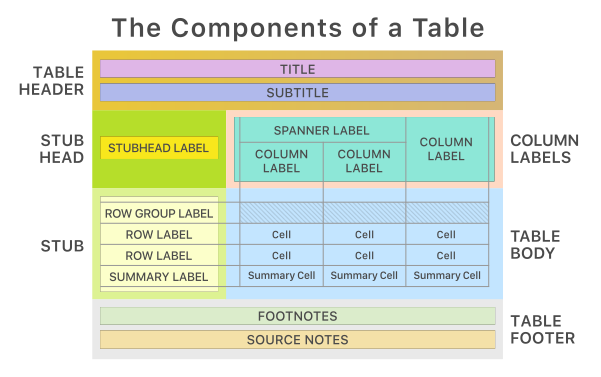
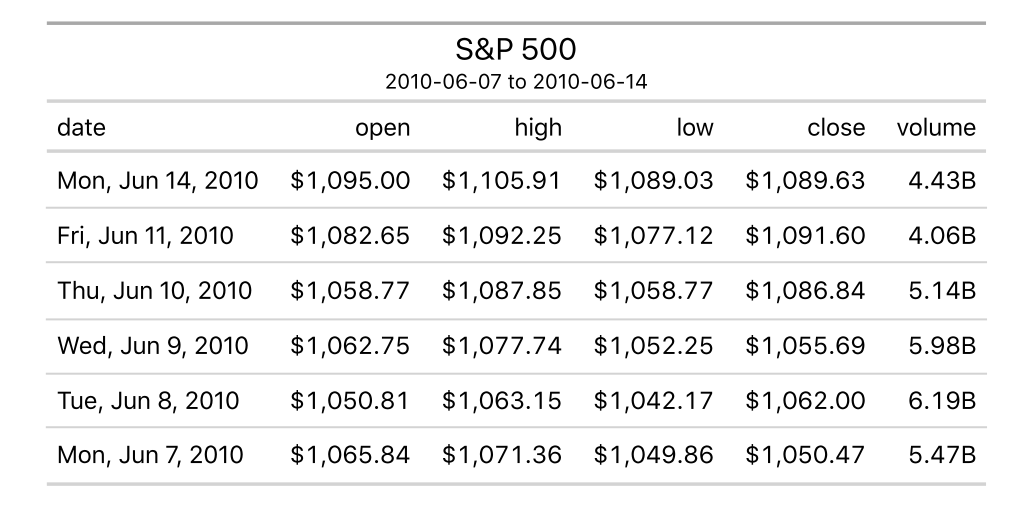
With **Great Tables** anyone can make wonderful-looking tables in Python. The philosophy here is that we can construct a wide variety of useful tables by working with a cohesive set of table components. You can mix and match things like a _header_ and _footer_, attach a _stub_ (which contains row labels), arrange _spanner labels_ over top of the _column labels_, and much more. Not only that, but you can format the cell values in a variety of awesome ways.