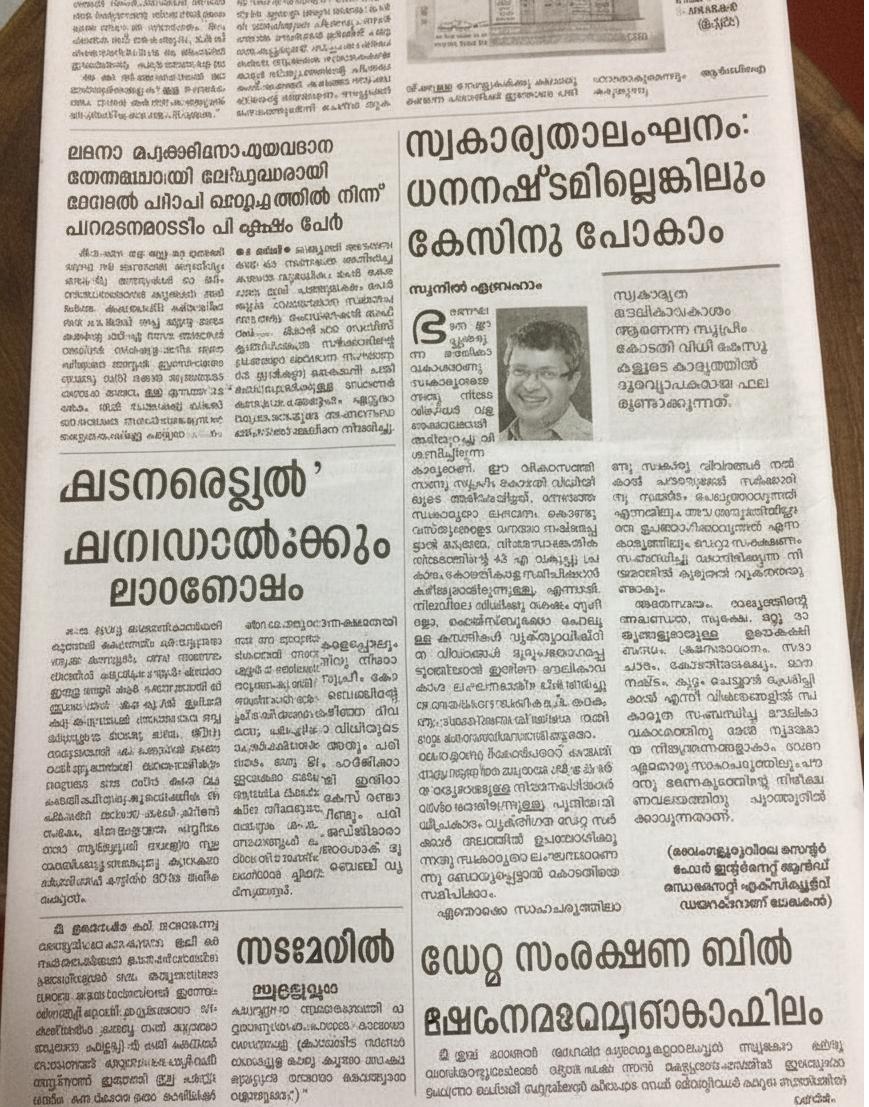
ഭരണഘടന ഉറപ്പു തരു ന്ന മൗ ലി കാ വകാ ശമാ ണു സ്വ കാ ര്യ തയെ ന്നതു നി യമവി ദഗ്ധർ വളരെ ക്കാ ലമാ യി അടി യു റച്ചു വി ശ്വ സി ച്ചി രു ന്ന കാ ര്യ മാ ണ്. ഈ വി ശ്വാ സത്തിനാ ണു സു പ്രീം കോ ടതി വി ധി യി ലൂ ടെ അടി വരയി ട്ടത്. നേ രത്തേ സ്വ കാ ര്യ താ ലം ഘനം കൊ ണ്ടു വസ്തു ക്കളോ ധനമോ നഷ്ടപ്പെ ട്ടാ ൽ മാ ത്ര മേ, വി വരസാ ങ്കേ തി ക നി യമത്തിന്റെ 43 എ വകു പ്പു പ്ര കാ രം കോ ടതി കളെ സമീ പി ക്കാ ൻ കഴി യു മാ യി രു ന്നു ള്ളൂ.
എന്നാ ൽ, നി ലവി ലെ വി ധി ക്കു ശേ ഷം ഗൂ ഗി ളോ, ഫെ യ്സ്ബു ക്കോ പോ ലു ള്ള കമ്പനി കൾ വ്യ ക്ത്യാ ധി ഷ്ഠി ത വി വരങ്ങൾ ദു രു പയോ ഗപ്പെ ടു ത്തിയാ ൽ ഇതി നെ മൗ ലി കാ വകാ ശ ലം ഘനമാ യി പരി ഗണി ച്ചു കോ ടതി കളെ സമീ പി ക്കാം. ഇതി നു സാ മ്പത്തിക നഷ്ടമു ണ്ടാ കണമെ ന്നു നി ർബന്ധമി ല്ല.
നേ രത്തേ കോ ർപറേ റ്റ് കമ്പനി കൾക്കെ തി രെ മാ ത്ര മേ 43 എ വകു പ്പു പ്ര കാ രമു ള്ള നി യമനടപടി കൾ സാ ധ്യ മാ യി രു ന്നു ള്ളൂ. പു തി യ വി ധി പ്ര കാ രം വ്യ ക്തി ഗത ഡേ റ്റ സർക്കാ ർ തലത്തിൽ ഉപയോ ഗി ക്കു ന്നതു സ്വ കാ ര്യ താ ലം ഘനമാ ണെ ന്നു ബോ ധ്യ പ്പെ ട്ടാ ൽ കോ ടതി യെ സമീ പി ക്കാം.
ഏതൊ ക്കെ സാ ഹചര്യ ത്തിലാ ണു സ്വ കാ ര്യ വി വരങ്ങൾ നൽകാ ൻ പൗ രനു മേ ൽ സർക്കാ രി നു സമ്മർദം ചെ ലു ത്താ വു ന്നത് എന്നതി ലും, അവ അനു മതി യി ല്ലാ തെ ഉപയോ ഗി ക്കാ വു ന്നത് എന്ന കാ ര്യ ത്തിലും, ഡേ റ്റാ സം രക്ഷണം സം ബന്ധിച്ചു വരാ നി രി ക്കു ന്ന നി യമത്തിൽ കൂ ടു തൽ വ്യ ക്തതയു ണ്ടാ കും.
അതേ സമയം, രാ ജ്യ ത്തിന്റെ അഖണ്ഡത, സു രക്ഷ, മറ്റു രാ ജ്യ ങ്ങളു മാ യു ള്ള ഉഭയകക്ഷി ബന്ധം, ക്ര മസമാ ധാ നം, സദാ ചാ രം, കോ ടതി യലക്ഷ്യം, മാ നനഷ്ടം, കു റ്റം ചെ യ്യാ ൻ പ്രേ രി പ്പി ക്കൽ എന്നീ വി ഷയങ്ങളി ൽ സ്വ കാ ര്യ ത സം ബന്ധിച്ച മൗ ലി കാ വകാ ശത്തിനു മേ ൽ ന്യാ യമാ യ നി യന്ത്ര ണങ്ങളാ കാം.
വേ റെ ഏതൊ രു സാ ഹചര്യ ത്തിലും പൗ രനു ഭരണകൂ ടത്തിന്റെ നി രീ ക്ഷണവലയത്തിനു പു റത്തു നി ൽക്കാ വു ന്നതാ ണ്.
The right to privacy has long been considered by legal experts to be a fundamental right guaranteed by the Constitution. The Supreme Court judgment has now drawn a clear line confirming this understanding. Earlier, one could approach the courts under Section 43A of the Information Technology Act only if a privacy violation resulted in loss of property or financial harm.
However, after the latest judgment, if companies such as Google or Facebook misuse personal data, it can be treated as a violation of a fundamental right and taken to court. There is no requirement to prove financial loss.
Earlier, legal action under Section 43A was possible only against corporate entities. Under the new interpretation, citizens may approach the courts if personal data collected or used by the government amounts to a privacy violation.
Questions such as the circumstances under which a citizen may be compelled by the government to provide personal data, and how that data may be used without consent, will now have to be clarified further in the emerging data protection framework.
At the same time, reasonable restrictions may apply to the fundamental right to privacy in matters related to national integrity, security of the state, relations with foreign states, public order, morality, contempt of court, defamation, and incitement to commit offences.
In all other circumstances, citizens must be able to remain outside the surveillance net of the state.