# Neo Chat

A local-first AI chat workspace for models, agents, skills, plugins, search, RAG, voice, memory, and artifacts.
简体中文


Neo Chat is a self-hostable, local-first AI chat application built with Next.js, React, TypeScript, and Zustand. It brings multi-provider chat, assistant presets, text-only Skills, OpenAPI-style plugin tools, web search, knowledge-base RAG, local memory, voice, generated media, rich message rendering, citations, and editable artifacts into one clean workspace.
It is designed for people who want the power of modern AI workspaces without giving up local data ownership. Chat history, workspace metadata, skills, plugin configuration, memories, and files stay in the browser by default; server routes act as controlled proxies for model providers, search, RAG, document parsing, voice, plugin execution, and deployment health.
## v2.1.0 Highlights
- Rebuilt System Settings with clearer grouped controls, an About panel, deployment health visibility, and local data export/reset actions.
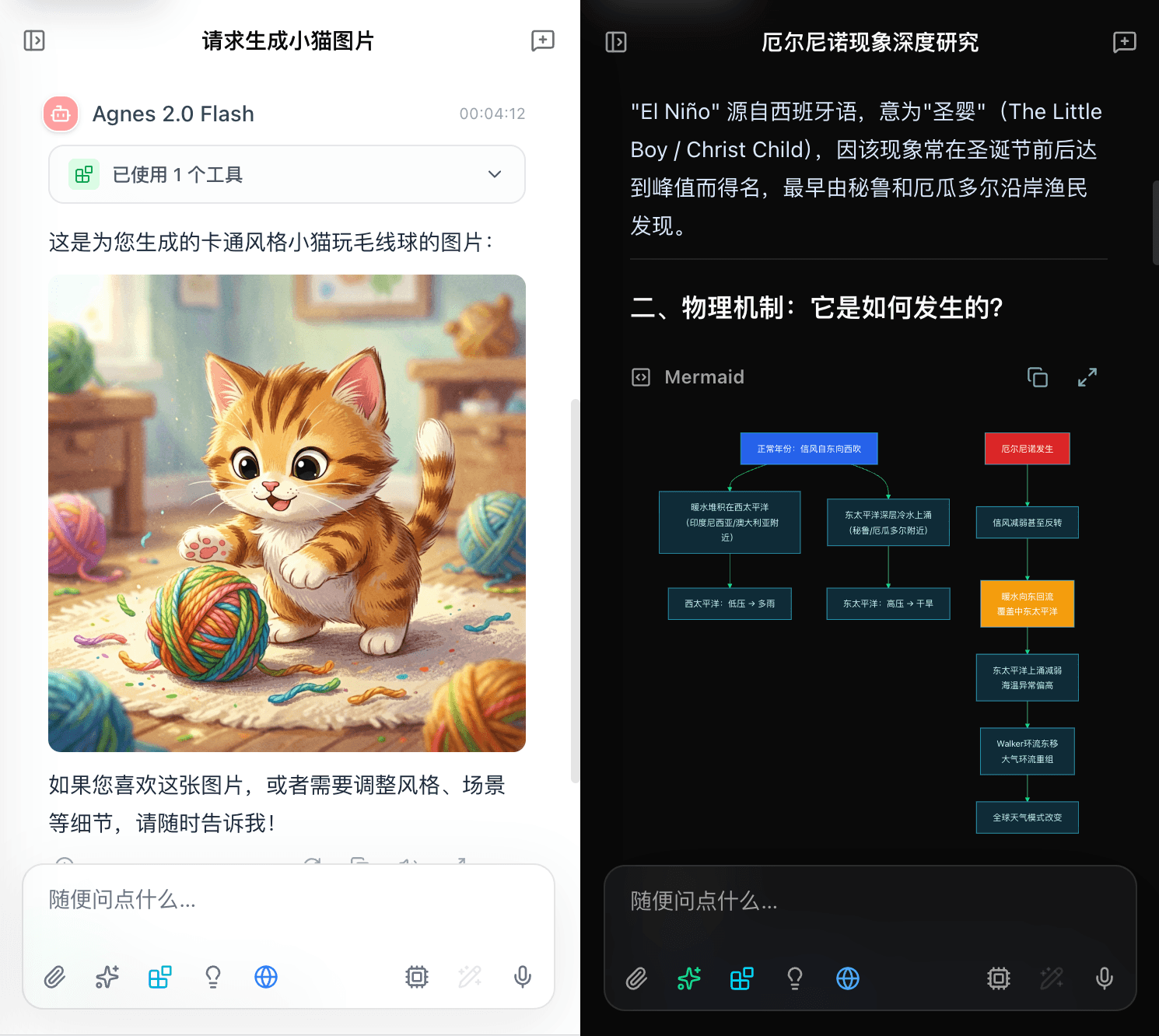
- Added native model image generation/editing with ordered mixed text/image output blocks and OPFS-backed image display caching.
- Expanded built-in plugin media tools with Agnes/Gemini image processing, separate OpenAI-compatible Images API and OpenAI Responses image processing plugins, plugin-level Base URL/Model ID controls, image count parameters where supported, compact image tool results, and Agnes image/video processing upgrades.
- Added thinking intensity controls for reasoning-capable Gemini and OpenAI-compatible models.
- Added Japanese localization for the app shell, SEO metadata, assistant locale routing, voice language handling, and the public Skills catalog.
- Hardened hosted deployments with API request proof, shared-store checks, service health coverage, safer URL/secret handling, and Cloudflare Worker command fixes.
- Added changelog-driven GitHub Release automation and a fork-only upstream sync workflow.
## Features
- Multi-provider chat with Gemini, OpenAI, and OpenAI-compatible endpoints.
- Native image generation and image editing for models whose metadata exposes image output/input, with ordered mixed text/image message blocks and OPFS-backed Blob URL display caching.
- Local-first sessions, branches, pinned chats, workspaces, workspace files, and assistant instructions.
- Assistant presets from the LobeHub agent registry plus local custom assistants.
- Text-only Skills with localized public catalogs, install/uninstall flows, local edits, custom skills, auto-selection, and workspace presets.
- OpenAPI-based plugin tools with per-plugin authentication and server-side execution.
- Built-in tools for web reading, weather, Unsplash search, Agnes/Gemini image processing, OpenAI-compatible image processing, OpenAI Responses image processing, and Agnes video generation. Agnes image processing supports image-to-image edits, and Agnes video generation supports public image URL to video plus plugin-level model IDs. Image processing plugins remain separate from native model image output.
- Web search through Gemini native Google Search or external providers such as Tavily, Firecrawl, Exa, Bocha, and SearXNG.
- Knowledge-base RAG with OPFS file storage, Mineru/LlamaParse document parsing, and optional vector indexing.
- Local memory with optional memory search, background extraction, and dream consolidation.
- Voice input and output through browser APIs, ElevenLabs, Mimo, or compatible configured providers.
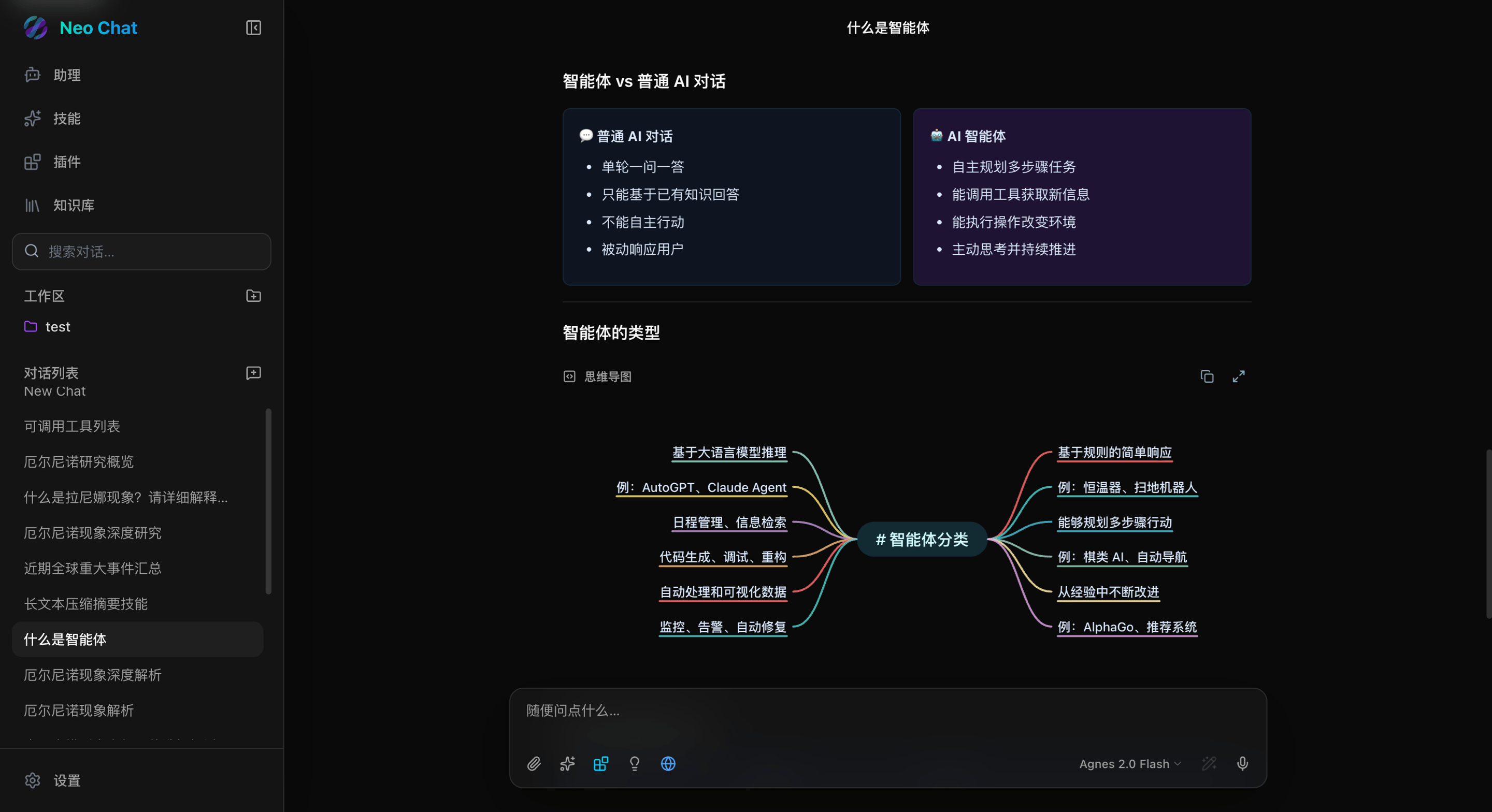
- Rich message rendering for Markdown, safe inline HTML visual blocks, GFM tables, math, code highlighting, Mermaid diagrams, mind maps, citations, reasoning, tool calls, images, audio, and artifacts.
- Local BYOK encryption for user-entered provider, plugin, search, RAG, and voice secrets.
- Deployment health checks for BYOK, access password, shared stores, default model, search, RAG, and voice readiness.
- Docker and Cloudflare Workers deployment paths.
## Screenshots
## Quick Start
### Requirements
- Node.js 22
- pnpm 10.30.3
### Run Locally
```bash
pnpm install
pnpm dev
```
Open `http://localhost:3000`, then configure at least one model provider in Settings.
For deployment-wide defaults, copy the environment template:
```bash
cp .env.example .env.local
```
Most settings can be managed in the browser. Server environment variables are useful when you want a shared default provider, hosted deployment safety, access password protection, shared runtime stores, or managed defaults for search, RAG, document parsing, voice, memory, and HTML visual rendering.
## Deployment
### Docker Compose
```bash
docker compose up --build
```
The compose file publishes Neo Chat on `http://localhost:3000` and uses local/self-hosted safety defaults. For production Docker deployments, set stable BYOK values, use shared stores for hosted or multi-instance deployments, and enable `TRUST_PROXY_HEADERS` only behind a proxy that strips spoofed forwarded headers.
### Docker Image
```bash
docker build -t neo-chat:local .
docker run --rm -p 3000:3000 -e BYOK_ALLOW_EPHEMERAL_KEY=true neo-chat:local
```
The Docker workflow builds pull requests and publishes `main` / `v*` tags to GitHub Container Registry:
```text
ghcr.io/u14app/neo-chat:latest
```
### Vercel
Import the repository as a Next.js project. Vercel can use the framework preset
and package manager detection from `pnpm-lock.yaml` and the `packageManager`
field, so the project does not need a custom output directory.
Recommended project settings:
```text
Framework Preset: Next.js
Install Command: default, or corepack pnpm install --frozen-lockfile
Build Command: pnpm build
Output Directory: default
```
For public Vercel deployments, configure production environment variables in
the Vercel project settings:
```bash
DEPLOYMENT_MODE=hosted
RATE_LIMIT_STORE=upstash
DOCUMENT_PARSE_JOB_STORE=upstash
PLUGIN_REGISTRY_STORE=upstash
BYOK_ALLOW_EPHEMERAL_KEY=false
NEXT_PUBLIC_SITE_URL=https://your-domain.com
```
Store deployment passwords, provider keys, BYOK material, and shared store
credentials as Vercel environment variables with the appropriate Production,
Preview, or Development scope. Do not commit these values to the repository.
When a `NEXT_PUBLIC_*` value affects metadata or generated public links, set it
for the environments that build those deployments.
### Cloudflare Workers
```bash
pnpm build:worker
pnpm preview:worker
pnpm deploy:worker
```
Workers should run in hosted mode and use public HTTPS upstreams. When using
Cloudflare Workers Builds, use separate build and deploy commands so the
OpenNext build output exists before deployment:
```bash
# Build command
pnpm build:worker
# Deploy command
pnpm exec opennextjs-cloudflare deploy -- --keep-vars
```
`--keep-vars` preserves runtime variables and secrets configured in the
Cloudflare dashboard instead of replacing them with only the values committed in
`wrangler.jsonc`.
Production Workers should configure runtime variables in the Cloudflare
dashboard under **Settings -> Variables and Secrets**. Use plain variables for
non-sensitive deployment defaults:
```bash
DEPLOYMENT_MODE=hosted
RATE_LIMIT_STORE=upstash
DOCUMENT_PARSE_JOB_STORE=upstash
PLUGIN_REGISTRY_STORE=upstash
BYOK_ALLOW_EPHEMERAL_KEY=false
NEXT_PUBLIC_SITE_URL=https://your-domain.com
```
Use secrets for deployment passwords, provider keys, BYOK material, and shared
store credentials:
```bash
wrangler secret put BYOK_PRIVATE_KEY_PEM
wrangler secret put BYOK_KEY_ID
wrangler secret put UPSTASH_REDIS_REST_URL
wrangler secret put UPSTASH_REDIS_REST_TOKEN
wrangler secret put ACCESS_PASSWORD
```
For Cloudflare Workers Builds, also add build-time variables under
**Settings -> Builds -> Variables and Secrets** when a value must be available
during `next build`, especially `NEXT_PUBLIC_*` values. Runtime variables are
not available to the build step unless they are also configured there.
Do not commit personal API keys or deployment secrets to `wrangler.jsonc`.
Deployment-level provider keys such as `DEFAULT_PROVIDER_API_KEY` are shared by
everyone using that Worker instance; leave them unset if users should provide
their own keys in the browser.
See [Deployment Hardening](docs/deployment-hardening.md) for production configuration guidance.
## Configuration
Neo Chat is local-first by default:
- Core settings, provider records, selected models, and provider API keys are stored in browser `localStorage`.
- Chat metadata, messages, app settings, installed plugins, installed/custom skills, skill catalog caches, assistants, knowledge metadata, and local memories are stored in IndexedDB through `localforage`.
- Uploaded chat, workspace, and knowledge files are stored in browser OPFS. User-sent and model-generated images also keep OPFS display-cache copies that render through runtime `blob:` URLs while preserving the original message data for model requests and export.
- User-entered secrets are encrypted in the browser as BYOK envelopes before being sent to API routes.
Important server-side settings:
```bash
# Access gate
ACCESS_PASSWORD="your-access-password"
# Stable BYOK server key for production
BYOK_PRIVATE_KEY_PEM="-----BEGIN PRIVATE KEY-----\n...\n-----END PRIVATE KEY-----"
BYOK_KEY_ID="prod-2026-07"
BYOK_ALLOW_EPHEMERAL_KEY="false"
# Deployment safety
DEPLOYMENT_MODE="local" # or hosted
ALLOW_LOCAL_NETWORK_PROXY=""
# Shared short-lived state for hosted or multi-instance deployments
RATE_LIMIT_STORE="upstash"
DOCUMENT_PARSE_JOB_STORE="upstash"
PLUGIN_REGISTRY_STORE="upstash"
UPSTASH_REDIS_REST_URL="https://..."
UPSTASH_REDIS_REST_TOKEN="..."
```
Default model provider:
```bash
DEFAULT_PROVIDER_TYPE="Gemini"
DEFAULT_PROVIDER_NAME="Google Gemini"
DEFAULT_PROVIDER_BASE_URL=""
DEFAULT_PROVIDER_API_KEY="provider-key"
DEFAULT_PROVIDER_MODELS="model-a,model-b"
```
`DEFAULT_PROVIDER_MODELS` supports multiple formats:
```bash
# Comma-separated model IDs
DEFAULT_PROVIDER_MODELS="gpt-5.5,gpt-5.4-mini"
# JSON string array
DEFAULT_PROVIDER_MODELS='["gpt-5.5","gpt-5.4-mini"]'
# JSON object array with optional display names, capability aliases, and modalities
DEFAULT_PROVIDER_MODELS='[{"id":"gpt-image-2","name":"GPT Image 2","capabilities":["image_generation"]},{"id":"gemini-3.1-flash-image","modalities":{"input":["text","image"],"output":["text","image"]}},"gpt-5.4-mini"]'
```
For JSON object entries, `name` is optional and falls back to `id`.
`capabilities` accepts aliases such as `vision`, `attachment`, `reasoning`,
`tool_call`, `image_generation`, `image_output`, and `image_editing`.
Explicit `modalities.input` / `modalities.output` are preferred when present.
Default task models:
```bash
DEFAULT_MODEL_TITLE_GENERATION="model-a"
DEFAULT_MODEL_RELATED_QUESTIONS="model-a"
DEFAULT_MODEL_CONTEXT_COMPRESSION="model-a"
DEFAULT_MODEL_PROMPT_OPTIMIZATION="model-a"
DEFAULT_MODEL_RAG_QUERY="model-a"
DEFAULT_MODEL_MEMORY="model-a"
```
Search, RAG, document parsing, and voice defaults:
```bash
DEFAULT_SEARCH_PROVIDER="firecrawl"
# Firecrawl search works without an API key; set one for higher rate limits.
DEFAULT_SEARCH_API_KEY=""
DEFAULT_SEARCH_BASE_URL="https://search.example"
DEFAULT_RAG_BASE_URL="https://rag.example"
DEFAULT_RAG_TOKEN="rag-token"
DEFAULT_RAG_TOP_K="10"
DEFAULT_RAG_CHUNK_SIZE="512"
DEFAULT_RAG_NAMESPACE="default"
DEFAULT_DOCUMENT_PARSE_PROVIDER="mineru"
DEFAULT_MINERU_API_TOKEN=""
DEFAULT_LLAMA_PARSE_API_KEY="llama-parse-key"
DEFAULT_VOICE_PROVIDER="elevenlabs"
DEFAULT_ELEVENLABS_API_KEY="elevenlabs-key"
DEFAULT_ELEVENLABS_STT_MODEL="scribe_v2"
DEFAULT_ELEVENLABS_TTS_MODEL="eleven_flash_v2_5"
DEFAULT_ELEVENLABS_TTS_VOICE_ID="bIHbv24MWmeRgasZH58o"
DEFAULT_MIMO_API_KEY="mimo-key"
DEFAULT_MIMO_STT_MODEL="mimo-v2.5-asr"
DEFAULT_MIMO_TTS_MODEL="mimo-v2.5-tts"
DEFAULT_MIMO_TTS_VOICE_ID="mimo_default"
```
Default system behavior:
```bash
DEFAULT_SYSTEM_PROMPT=""
DEFAULT_ENABLE_AUTO_TITLE="true"
DEFAULT_ENABLE_RELATED_QUESTIONS="true"
DEFAULT_ENABLE_AUTO_COMPRESSION="true"
DEFAULT_ENABLE_CODE_COLLAPSE="true"
DEFAULT_ENABLE_HTML_VISUAL_PROMPT="true"
```
Public site URL:
```bash
NEXT_PUBLIC_SITE_URL="https://your-domain.com"
```
For the full template, see [.env.example](.env.example).
## Architecture
```mermaid
flowchart LR
Browser["Browser app\nReact + Zustand"] --> LocalStorage["localStorage\nproviders + settings"]
Browser --> IndexedDB["IndexedDB\nsessions + plugins + skills + knowledge + memories"]
Browser --> OPFS["OPFS\nuploads + workspace files"]
Browser --> ApiRoutes["Next.js API routes"]
ApiRoutes --> Providers["Model providers\nGemini / OpenAI / compatible"]
ApiRoutes --> Search["Search providers"]
ApiRoutes --> Rag["RAG + document services"]
ApiRoutes --> Plugins["Plugin APIs"]
ApiRoutes --> Voice["Voice providers"]
ApiRoutes --> Health["Deployment health"]
Browser -. encrypted BYOK envelopes .-> ApiRoutes
```
The app keeps durable user data in browser storage whenever possible. API routes provide:
- provider request normalization and streaming;
- BYOK decryption on the server side;
- URL safety gates for proxied upstreams;
- plugin execution through registered plugin IDs and function names;
- deployment health reporting through `/api/health`;
- hosted-mode checks for shared stores and local-network restrictions.
## Skills, Plugins, Search, RAG, and Voice
Skills are text-only prompt-context modules. The app loads localized metadata catalogs from `public/data/skills`, fetches full skill definitions only when needed, and stores installed, edited, and custom skills locally. Active skills can be selected manually, inherited from workspace presets, or auto-selected for a message.
Plugins are OpenAPI-style tools installed from manifests or built-in definitions. Enabled plugin functions are exposed to compatible models as tools, then executed by the server-side plugin route. Built-in image processing plugin results stay in the tool details and compact conversation history, so the model can decide whether and how to reference generated or edited images in its follow-up message. OpenAI-compatible Images API and OpenAI Responses image processing are separate plugins so their credentials and activation can be managed independently. Supported built-in media plugins expose plugin-level API Base URL and Model ID fields, optional image count parameters, Agnes image-to-image editing, and Agnes video generation from a public HTTPS image URL while keeping Agnes video as the explicit `create_video` / `get_video_result` two-step flow. Tool-call orchestration uses a high but bounded loop limit to avoid runaway recursive calls while still allowing multi-step tasks.
Search can run through Gemini native Google Search for Gemini models or external providers for other model families. Knowledge-base RAG stores source files in OPFS, optionally parses documents with Mineru or LlamaParse, and can index chunks into an external vector service.
Voice workflows support browser speech APIs and configured external providers. Set `DEFAULT_VOICE_PROVIDER` to `elevenlabs` or `mimo` to enable a server default; leaving it empty keeps browser-native speech as the default. Empty default model values disable the matching STT or TTS capability, and the UI can store user-specific secrets locally.
Deployment health is available from Settings and `/api/health`. It reports non-secret readiness for BYOK, access password, hosted mode, shared stores, default model, search, RAG, and voice configuration.
## Security Model
Neo Chat is self-hosting friendly, not a turnkey public SaaS security boundary.
- `DEPLOYMENT_MODE=local` allows local and private-network proxy targets for private deployments.
- `DEPLOYMENT_MODE=hosted` blocks localhost, private-network, and plain-HTTP proxy targets unless explicitly overridden.
- BYOK envelopes prevent plain user-entered secrets from being sent in request bodies.
- API schemas reject unknown high-risk fields and oversized payloads.
- Plugin execution remains server-proxied and validated, but runtime tool calls no longer require a user confirmation modal.
- `ACCESS_PASSWORD` is a deployment gate, not an account system.
Before exposing Neo Chat as a public multi-user service, add account authentication, tenant isolation, server-side secret storage, quotas, audit logs, abuse controls, and provider spend limits.
See [Reliability and Safety Model](docs/reliability-and-safety.md) for runtime behavior and recovery notes.
## Development
Quality checks:
```bash
pnpm format:check
pnpm lint
pnpm typecheck
pnpm test
pnpm build
pnpm audit --audit-level low
```
Useful scripts:
```bash
pnpm dev # Start Next.js dev server
pnpm build # Production build
pnpm start # Start production server
pnpm format # Format the repository with Prettier
pnpm format:check # Check repository formatting
pnpm build:worker # Build for Cloudflare Workers
pnpm preview:worker # Preview Worker build
pnpm deploy:worker # Deploy Worker build while preserving dashboard vars
pnpm byok:generate # Generate copyable BYOK key values
```
Project layout:
```text
src/app/ Next.js routes and API routes
src/components/ Chat UI, settings, plugin market, knowledge base
src/lib/ Server/client domain helpers and safety gates
src/services/ Provider, search, voice, RAG, and plugin service clients
src/store/ Zustand stores and persistence migrations
src/__tests__/ Vitest coverage for utilities, routes, and workflows
docs/ Deployment and reliability notes
```
Project documentation:
- [Environment Variables](docs/environment-variables.md)
- [Plugin Development](docs/plugin-development.md)
- [Privacy and Local Data](docs/privacy-and-local-data.md)
- [Deployment Hardening](docs/deployment-hardening.md)
- [Reliability and Safety Model](docs/reliability-and-safety.md)
- [Roadmap](ROADMAP.md)
- [Changelog](CHANGELOG.md)
### Fork Synchronization
Fork maintainers can enable the `Sync upstream` workflow to fast-forward their fork from the upstream `u14app/neo-chat` `main` branch.
1. In the fork, open **Settings > Actions > General** and allow GitHub Actions to run.
2. In **Workflow permissions**, select **Read and write permissions** so `GITHUB_TOKEN` can push to the fork.
3. Open **Actions > Sync upstream > Run workflow** to trigger the first sync manually.
4. Keep the scheduled workflow enabled if you want the fork to sync daily.
The workflow is skipped in the upstream repository and only runs when GitHub marks the repository as a fork. It uses fast-forward-only merging, so it fails safely when the fork branch has diverged from upstream or a branch protection rule blocks the push.
Optional repository variables can override the defaults:
```text
UPSTREAM_REPOSITORY=u14app/neo-chat
UPSTREAM_BRANCH=main
TARGET_BRANCH=
```
## FAQ
### Does Neo Chat store my data on a server?
By default, durable chat and configuration data live in browser storage. API routes proxy external services, and production deployments should still treat server logs, upstream services, and configured stores according to their own privacy requirements.
### Can I use OpenAI-compatible providers?
Yes. Add an OpenAI-compatible provider in Settings or configure deployment defaults with `DEFAULT_PROVIDER_TYPE="OpenAI Compatible"` and a compatible `/v1` base URL.
### Why do I need a stable BYOK private key in production?
Browser secrets are encrypted to the server public key. If the server private key changes, existing local envelopes cannot be decrypted until users re-enter their secrets.
### Can I deploy this as a public SaaS?
Not as-is. Hosted mode tightens URL policy and shared-state requirements, but public SaaS still needs accounts, tenancy, quotas, auditing, and server-side secret management.
### Why did a tool stop after many calls?
Neo Chat keeps tool calls high but bounded. The model can run multi-step tool workflows, but recursive tool loops stop after the configured tool-round limit.
### How do I retrieve previous versions?
Previous versions of the project were developed solely based on the Gemini ecosystem. If you need previous versions, you can obtain them from the `gemini-next-chat` branch, **which has its code archived**.
## Contributing
Contributions are welcome. Keep changes focused, preserve local-first behavior, and run the quality checks before opening a pull request. For security-sensitive changes, include tests for both local and hosted deployment modes.
Read [Contributing](CONTRIBUTING.md), [Security Policy](SECURITY.md), and the
[Code of Conduct](CODE_OF_CONDUCT.md) before opening larger changes.
## Community Support
[LinuxDo](https://linux.do/)
## License
Neo Chat is released under the [MIT License](LICENSE).