---
title: "Course Introduction"
author: "Dr. Hua Zhou @ UCLA"
date: "Jan 4, 2022"
output:
# ioslides_presentation: default
html_document:
toc: true
toc_depth: 4
subtitle: Biostat 203B
bibliography: ../bib-HZ.bib
csl: ../apa.csl
---
## Statistics and data science
- Statistics, the science of _data analysis_, is the applied mathematics in the 21st century.
- Data is increasing in [volume, velocity, and variety](http://www.forbes.com/sites/oreillymedia/2012/01/19/volume-velocity-variety-what-you-need-to-know-about-big-data/).
- My favorite definition of a _data scientist_:
> A data scientist is someone who is better at statistics than any software engineer and better at software engineering than any statistician.
## Big data in 1990s
@Huber94HugeData; -@Huber96MassiveData
| Data Size | Bytes | Storage Mode |
|-----------|----------------|----------------------------|
| tiny | $10^2$ | piece of paper |
| small | $10^4$ | a few pieces of paper |
| medium | $10^6$ (MB) | a floppy disk |
| large | $10^8$ | hard disk |
| huge | $10^9$ (GB) | hard disk(s) |
| massive | $10^{12}$ (TB) | hard disk(s); RAID storage |
## Big data in 21st centry
4V's of big data:
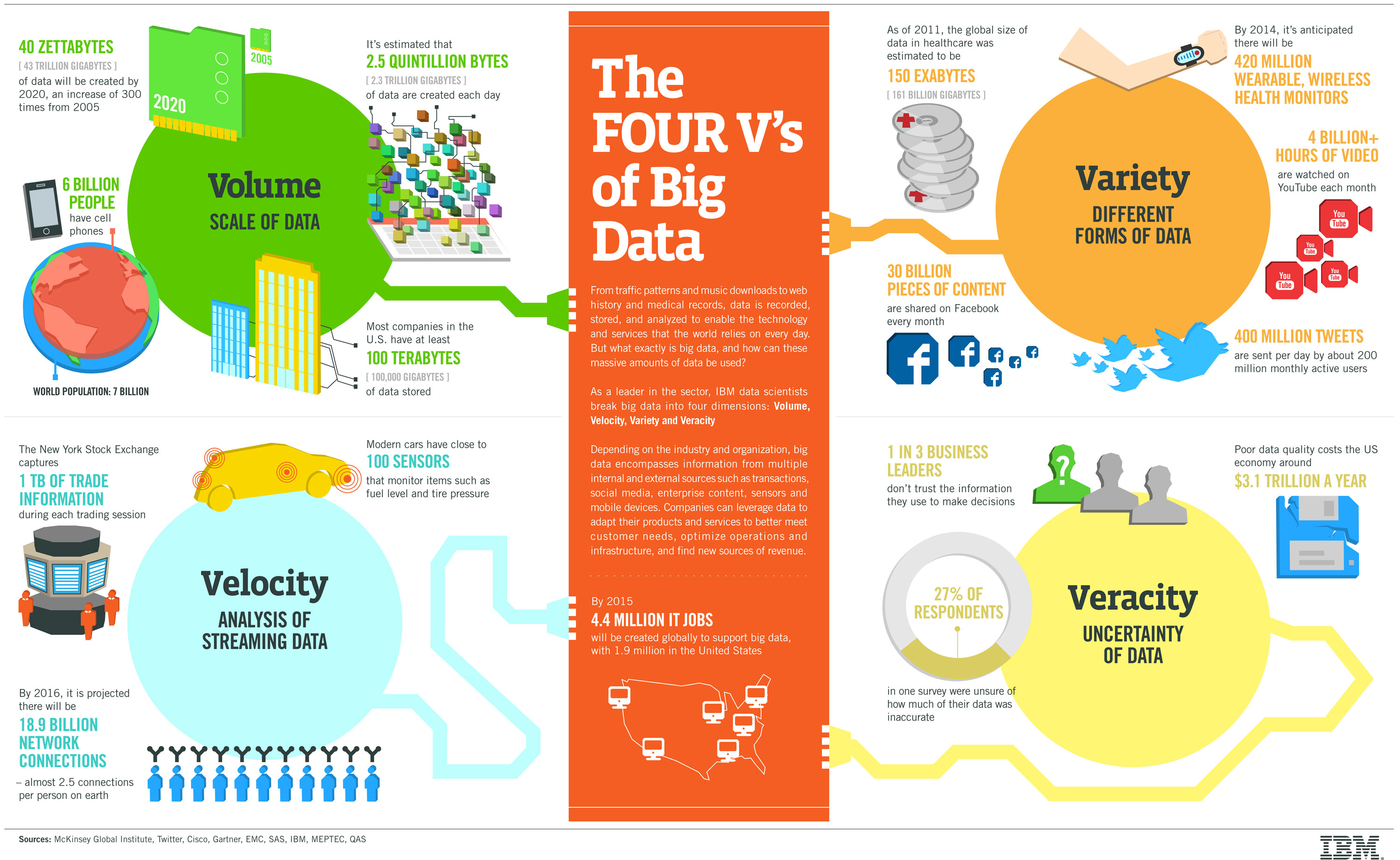
Source: [IBM](http://www.ibmbigdatahub.com/infographic/four-vs-big-data).
## Who are hiring?
Following tables is based on a survey of 403 students who earned a master’s degree in statistics, biostatistics, or a related field (actuarial science, data science, informatics, math with stats focus) during the
2019–2020 academic year.
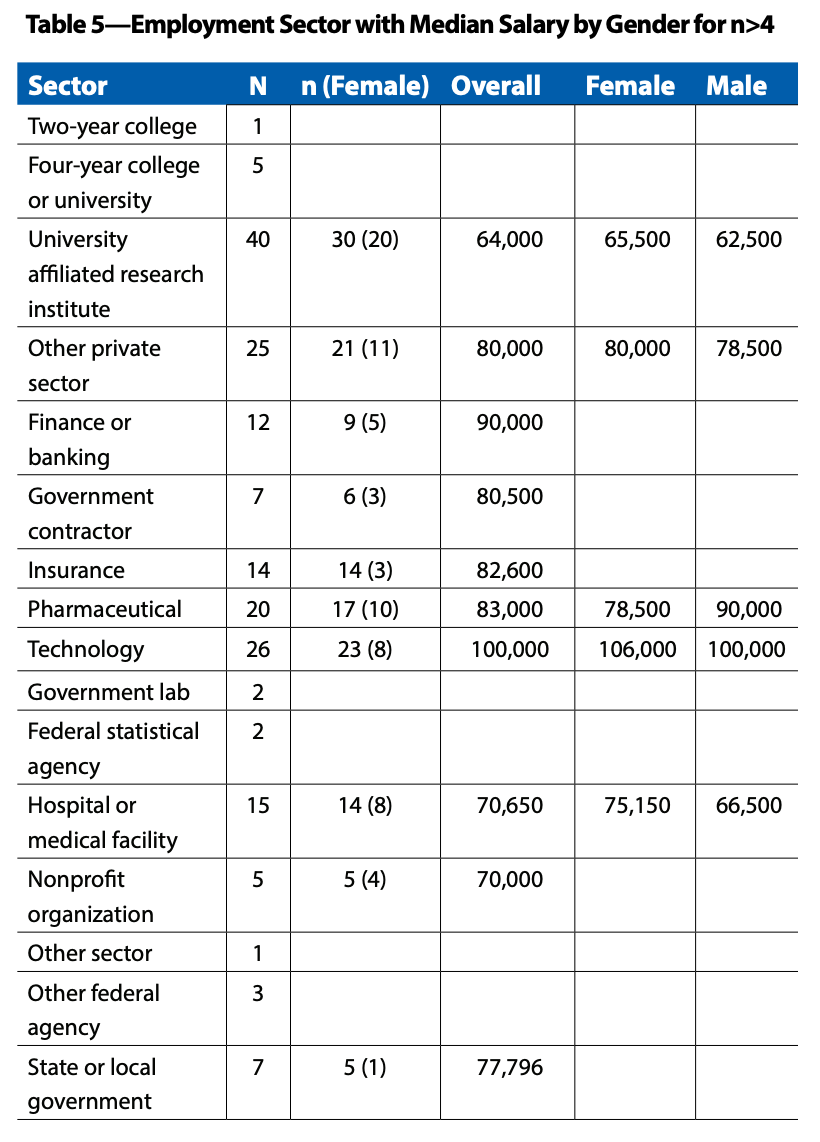
Source: [AmStat News (2021 Nov)](https://magazine.amstat.org/wp-content/uploads/2021/11/AmstatNewsNov2021-updated.pdf).
> there were more than 109 unique—although similar—job titles. The most
common were data scientist (20), biostatistician
(18), data analyst (9), biostatistician I (7), and
statistician (5).
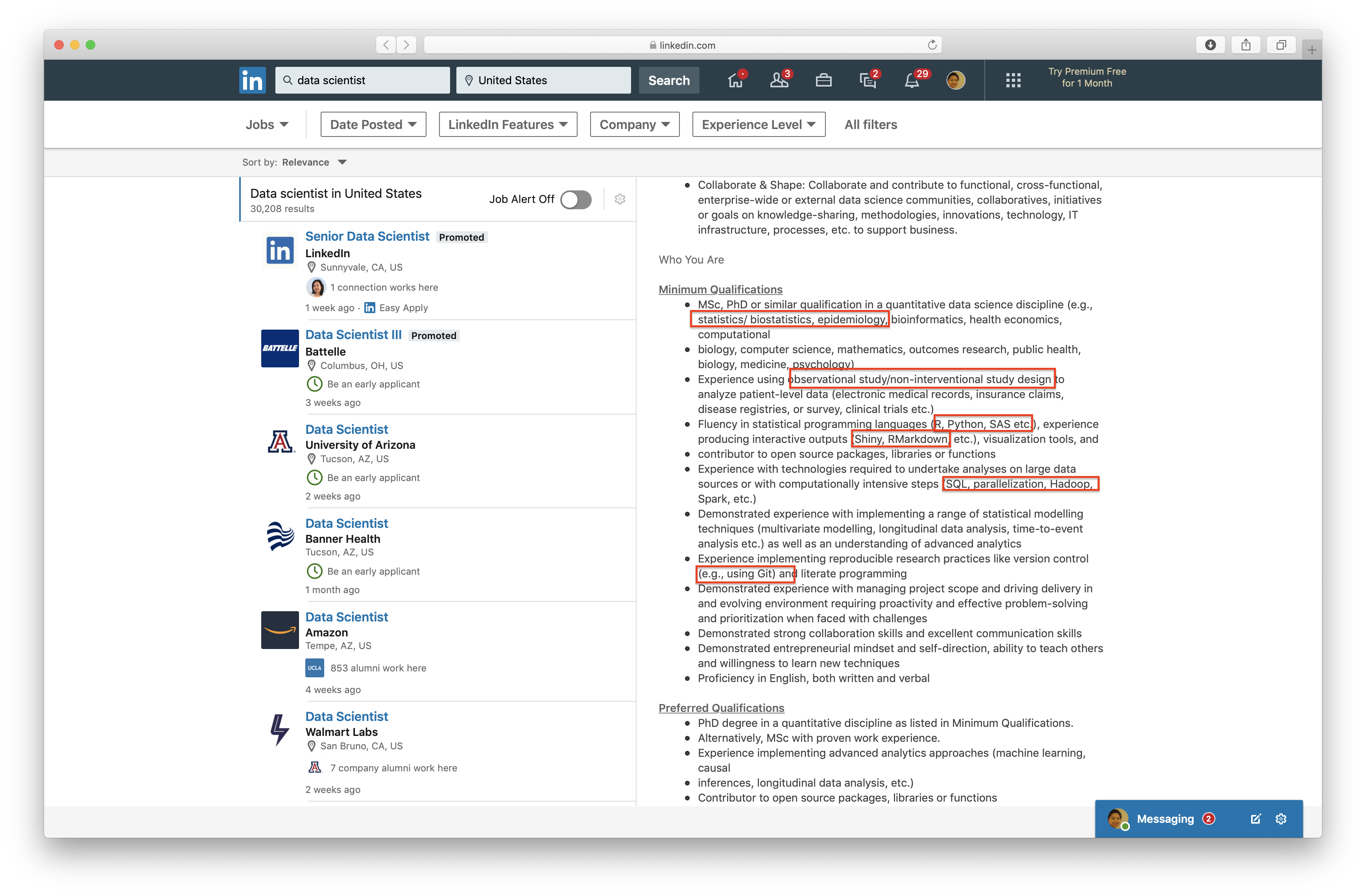
## A typical data scientist on [LinkedIn](http://linkedin.com)
A position posted by Genetech.
## Course description
- This course introduces some computing skills and software tools for handling potentially big public health data.
- Read [syllabus](https://ucla-biostat-203b.github.io/2022winter/syllabus/syllabus.html) and [schedule](https://ucla-biostat-203b.github.io/2022winter/schedule/schedule.html) for a tentative list of topics and course logistics.
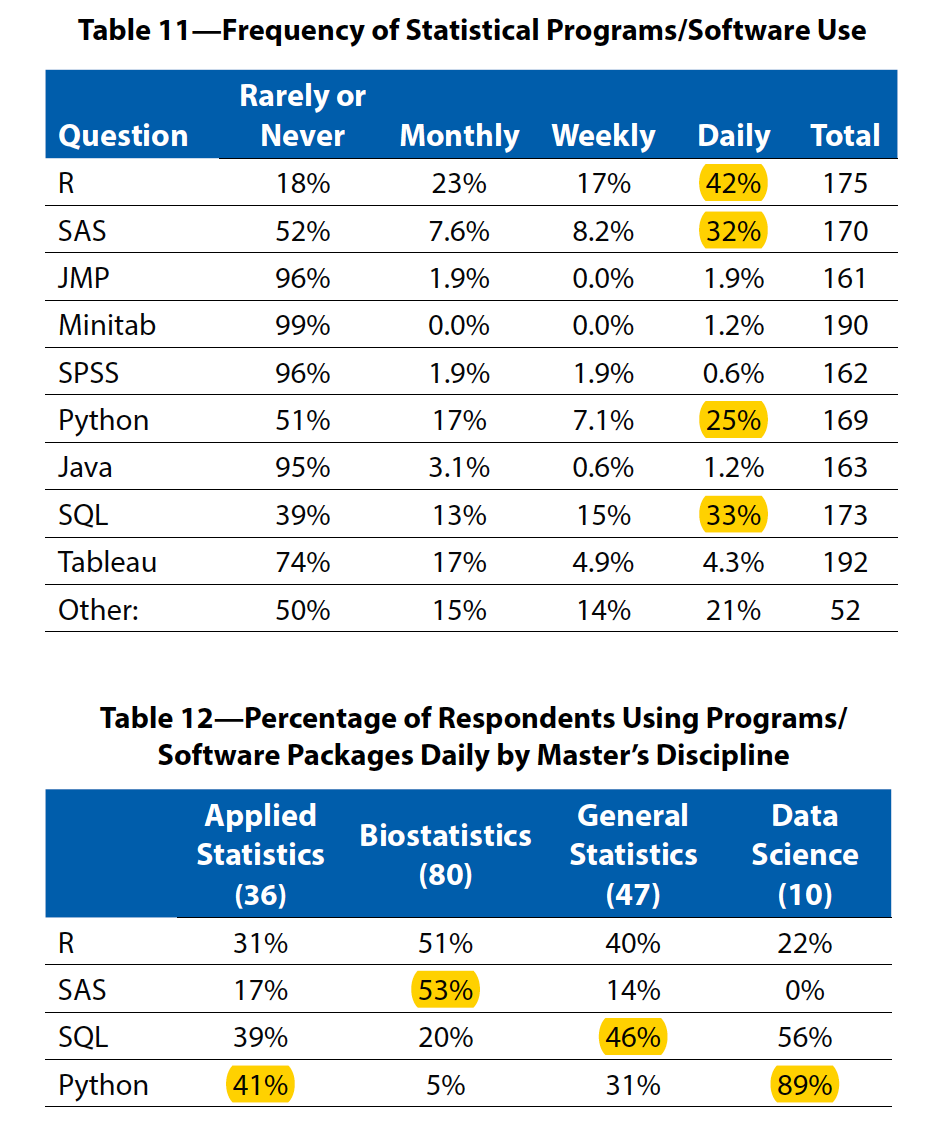
## Why R?
## More (free) UCLA resources for learning data science
- IDRE workshops:
- QCBio workshops:
## References