Intent of Accessible Authentication (Enhanced)
The purpose of this success criterion is to ensure there is an accessible, easy-to-use, and secure method to log in, access content, and undertake tasks. This criterion is the same as 3.3.8 Accessible Authentication (Minimum) but without the exceptions for objects and user-provided content.
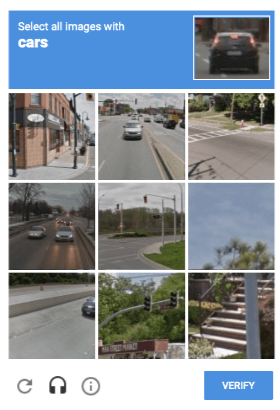
Any required step of the authentication process:
- cannot display a selection of images, videos, or audio clips, where users must choose which image they provided;
- cannot display a selection of images, where users must choose the images which contain a specific object, such as a car.
This Success Criterion does not address creation of a username or initiating an account. For many web sites, establishing an initial username is not significantly different than logging in with that username. However, for many other web sites, the processes are quite different. Moreover, the means used for creating an account vary more than the means used for re-authentication. This is because initial authentication may require more due diligence with assuring the identity of a new user. Another substantive difference between first authentication and re-authentication is that a third party, human or automated, is often required.