# NFS Carbon NX
**Need for Speed: Carbon on the Nintendo Switch. Translated, not emulated.**
    [](https://ko-fi.com/ojojoj)
[Overview](#overview) · [Screenshots](#screenshots) · [Install](#install) · [Performance](#performance) · [What's new](#whats-new-in-100) · [Known issues](#known-issues) · [Report a problem](#report-a-problem) · [Docs](#documentation) · [Credits](#credits)
## Overview
NFS Carbon NX runs the **Xbox 360 release** of Need for Speed: Carbon natively on the Nintendo Switch. The PowerPC code of
the game's `default.xex` is translated to C++ with [ReXGlue](https://github.com/rexglue/rexglue-sdk) and compiled for the
Switch's ARM64 cores; the game's GPU commands are drawn by a purpose-built **Vulkan renderer** running on NVK (Mesa).
There is no emulation layer between the game and the hardware. You need your own copy of the game.
| | Standard Edition | Collector's Edition |
|---|---|---|
| Release | **1.0.0**, the first non-beta release | **1.0.0-collectors-beta.1**, beta |
| Boot, menus, career, saves | Work | Work, fewer hours of testing |
| Heaviest races (13 to 16 cars) | median **31 FPS**, 62% of the time at 30 FPS or more | **24 to 30 FPS** |
| Open roads, lighter races | 40 to 55 FPS | 45 to 55 FPS |
| Cutscenes | Work (FFmpeg, verified against the game's own decoder) | Not covered by testing yet |
| Audio | Clean in most windows; a heavy race start can still crackle | Same code, slightly worse in the heaviest races |
| DLC | Up to 30 packs | Up to 30 packs |
| Install folder | `switch/nfscarbon/` | `switch/nfscarbon-collectors/` |
Measured on a Switch in handheld mode at CPU 1428 MHz, GPU 768 MHz, memory 1600 MHz, scene drawn at 80% and upscaled with
FSR. Stock clocks are CPU 1020 MHz and GPU 460 MHz.
> [!IMPORTANT]
> **It is meant to be used with a CPU overclock.** The game's code runs on three Switch cores and the CPU is the limit. At stock
> handheld clocks it is too slow and the audio stutters. Read [Overclocking](#overclocking) and [Known issues](#known-issues)
> before you start.
### Highlights
- **Native renderer.** Xenos GPU commands become Vulkan draws; shaders are translated (microcode to GLSL to SPIR-V) and cached on the SD card.
- **FSR upscaling, bloom, 4x anisotropic filtering** on by default; every quality switch is in `nfscarbon.toml` ([settings](docs/CONFIG.md)).
- **Audio that holds up.** The output refills its cushion after a hiccup instead of going silent, and the game's mixer runs above the decoder and GPU threads.
- **Hand-written fast paths** where profiling showed the translated code is slow: mixer helpers (some NEON), cutscene decoding, texture untiling, vertex and constant uploads. Each has an off-switch.
- **DLC packages** load from a `dlc/` folder (up to 30).
- **Two editions, one runtime.** Collector's support shares the renderer, kernel and hooks; per-edition addresses live in one table.
- **Measured, not guessed.** Built-in statistics (`nfscarbon.report.toml`) produce the numbers on this page; every claim here comes from hardware logs.
## Screenshots
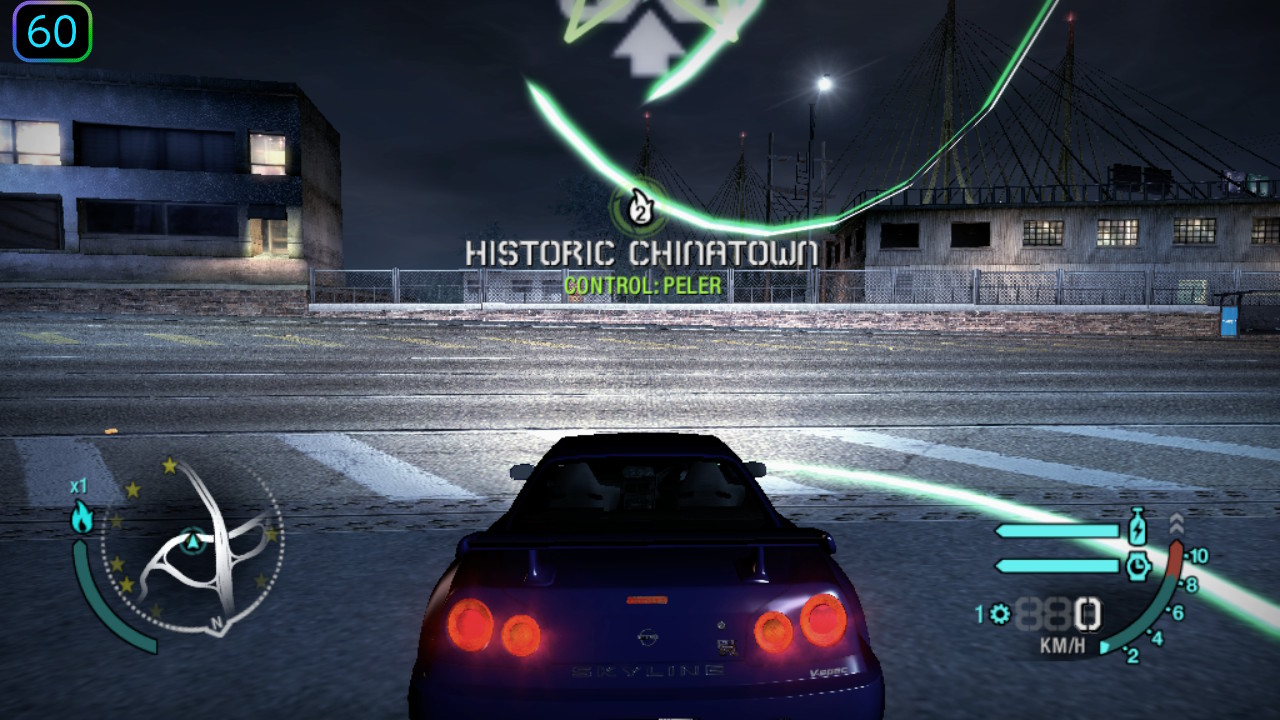
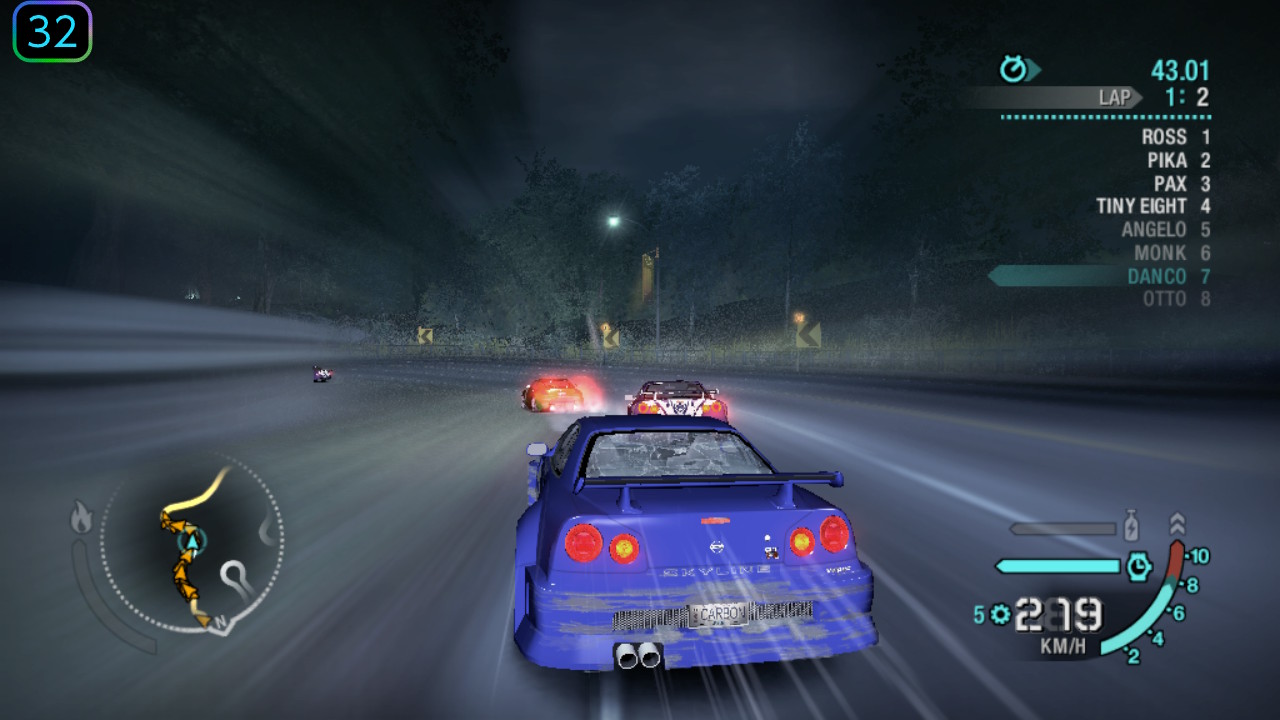
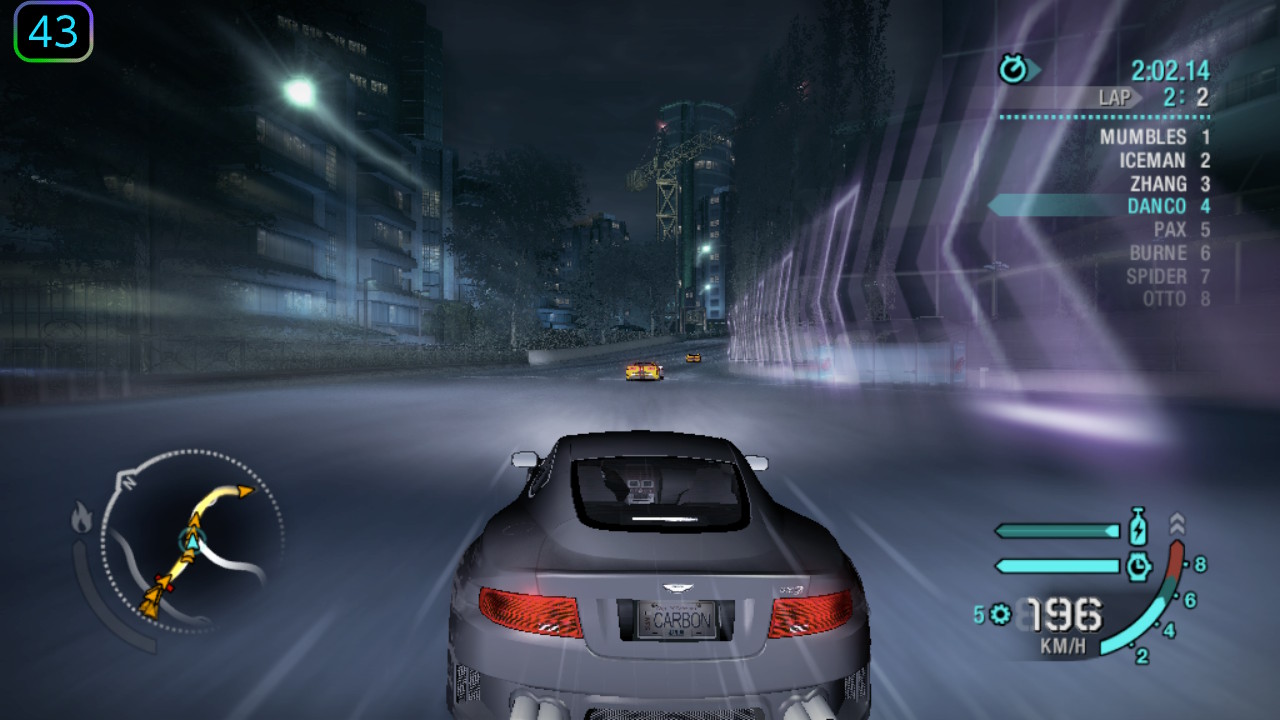
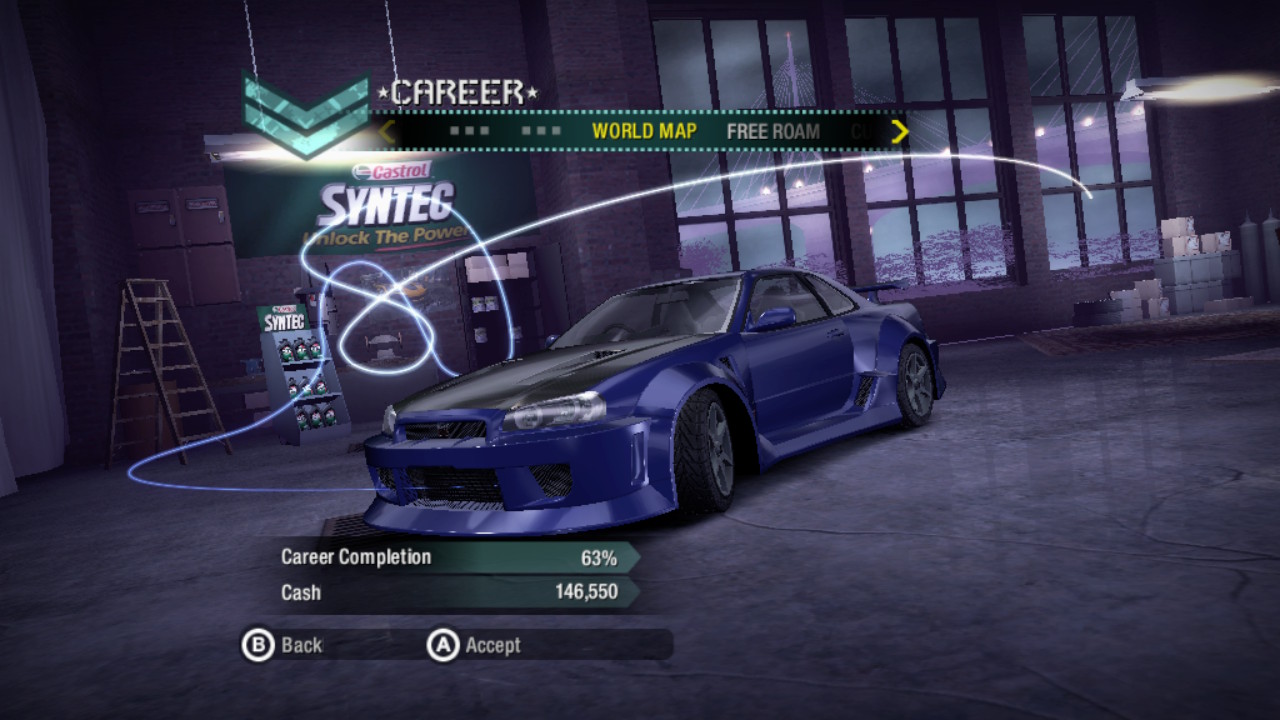
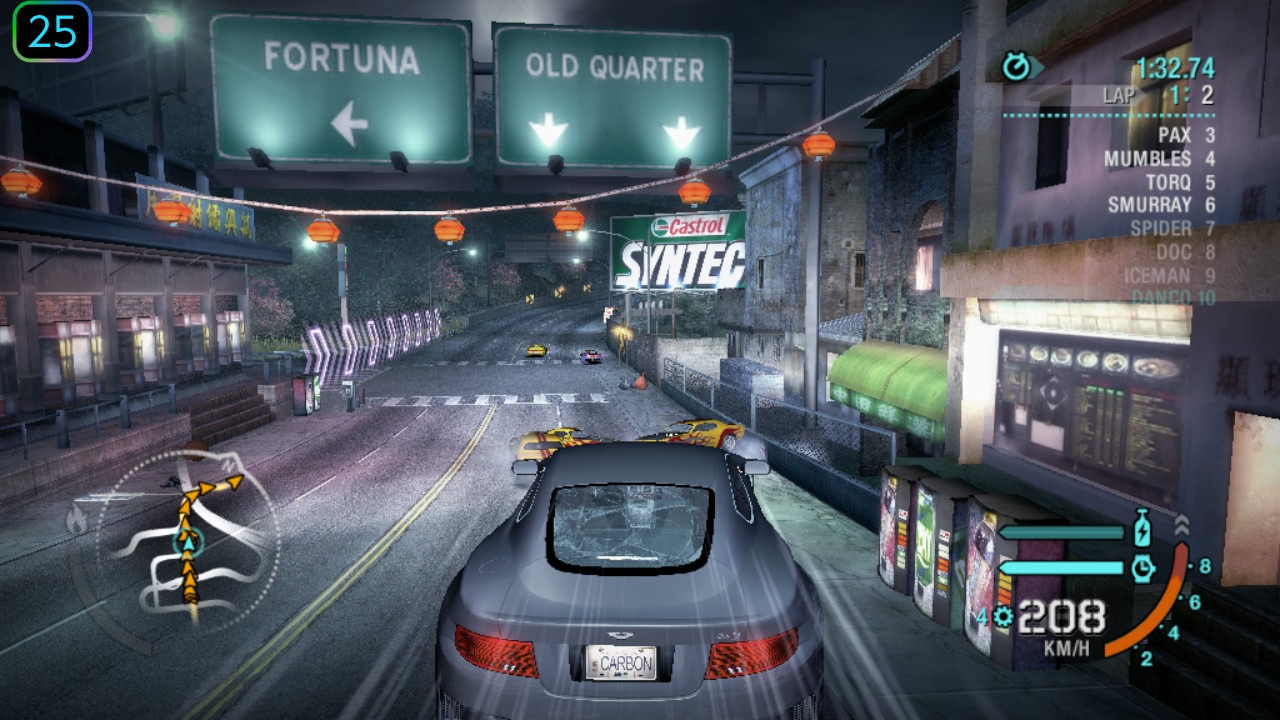
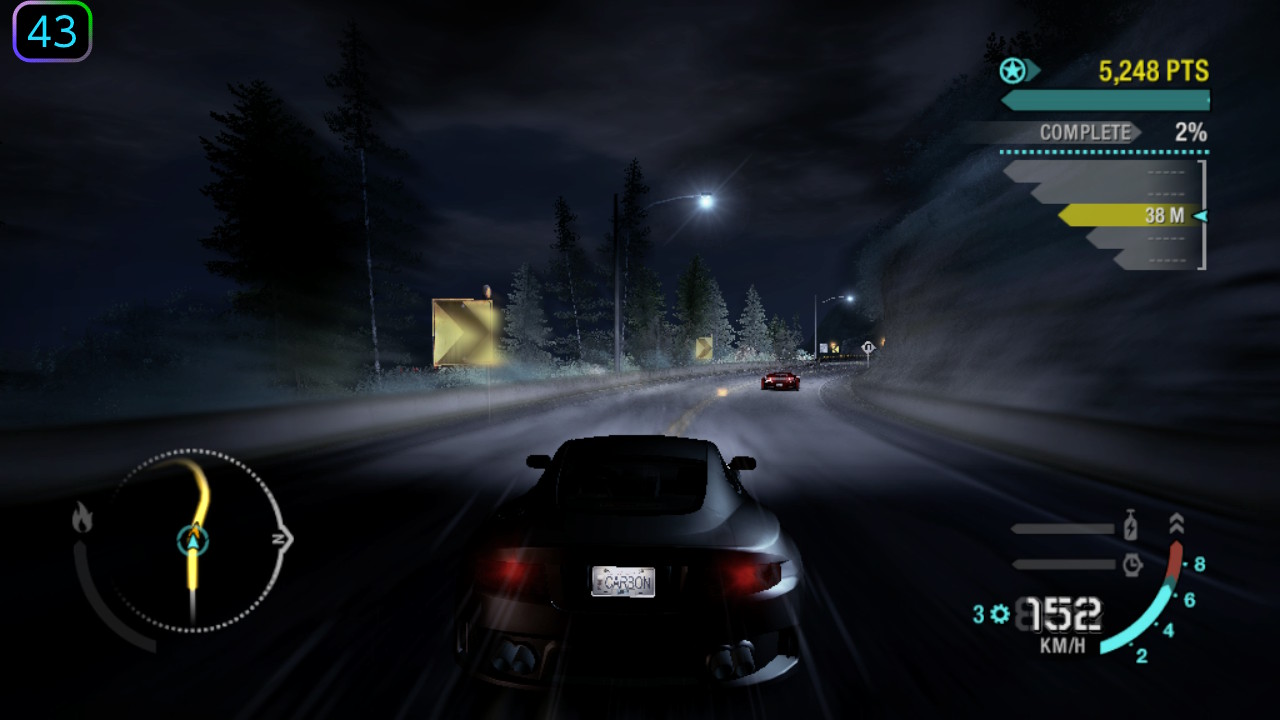
Captured on a Switch in handheld mode at the reference clocks. The number in the corner is the FPS at that moment.