Don't interrupt, Bruno said as we came in. I'm counting the Pigs in the field!
How many are there? I enquired.
About a thousand and four, said Bruno.
You mean about a thousand, Sylvie corrected him. There's no good saying "and four": you can't be sure about the four!
And you're as wrong as ever! Bruno exclaimed triumphantly. It's just the four I can be sure about; cause they're here, grubbing under the window! It is the thousand I isn't pruffickly sure about
The Research portal hosts philosophy and linguistics projects.
You can learn more about the computer I use,
or dive deeper with the Research FAQs.
Research is what I'm doing when I don't know what I'm doing.Wernher von Braun
Answers to commonly asked questions about research.
What are the most important concepts that you impart in your works?
A lot of my work deal with foreignness and adaptiveness, some of the most romantic ideas that one will find in my work is that of explorers wandering the remains of a long extinguished civilisation, and trying to make sense of it.
Why do you release free software?
Being away from accessible internet connectivity, the most practical mean for us to develop and release projects is via the bazaar model, where the code is often maintained by others while we are away, and so as to not capitalize unfairly on all the help that we receive, we decided to only accept donations.
Why do you release open-source software?
Being incapable of sitting through a class back in high-school, most of the learning that I was able to do was from looking at other people's sources and trying to make sense of the way they think and understand the reasons for solutioning in that particular way. For an ecosystem of tools to be truly resilient, individuals must be able to repair, maintain and inspect the software that they use.
Why is journaling important to you?
I keep records of everything I make, and everything I consume. The idea is to better understand my creative patterns, and to predict changes in mood and interest. Ultimately, the goal is to plan more efficiently, to spend my time with more efficacy and to work less.
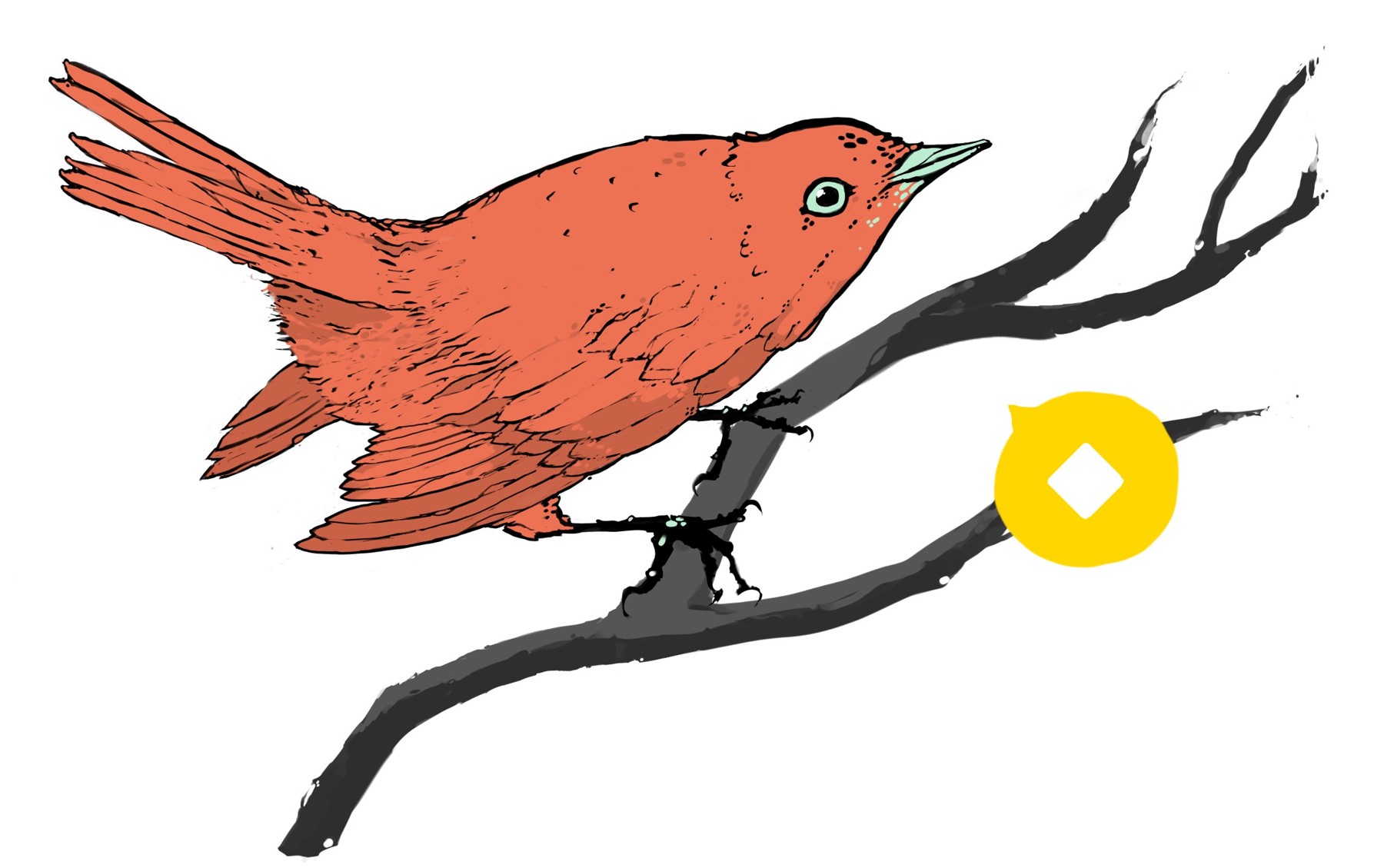
A certain enchanted forest is inhabited by talking birds.
Combinatory Forests are inhabited by talking birds, which speak words represented here by shapes, or groups of shapes delimited by parentheses. Avian dialog demonstrates that even without anything as crude as digits and operators, arithmetic and computation can emerge. To find examples of combinatory logic used in practice, see rewriting programming.
A talking bird, given some words, yields a combination of those words, we always listen to the left-most bird first.
T▲ (◆ ● ) •◆ ● ▲ C(WK)x(yz)
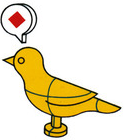
▲ The Bekimet Forest
Within the Bekimet forest, we find the B, KI, M, and T birds. Each bird listens to a phrase, and answers with another. The first bird that we observe is the Mockingbird, which repeats the first word.
M▲ •▲ ▲ W(WK)x
The second bird that we observe is the Kite, which discards the first word.
KI▲ ◆ •◆ K(WK)xy
The third bird that we observe is the Thrush, which swaps the first and second words, notice how parenthesized words count as a single word.
T(▲ ▲ )◆ •◆ (▲ ▲ )C(WK)(xx)y
We can't quite make out the fourth bird, but we observe that it is the Bluebird, which is also found in the next forest, so let's continue.
| Mockingbird | x x y z | Duplicates the first word |
|---|---|---|
| Kite | y z | Discards the first word |
| Thrush | y x z | Swaps the first and second words |
◆ The Becekew Forest
Within the Becekew forest, we find the B, C, K, and W birds. The first bird that we observe is the Warbler, which repeats the second word. This bird's song is similar to the Mockingbird, which repeats the first word.
W▲ ◆ •▲ ◆ ◆ Wxy
The second bird that we hear is the Kestrel, which discards the second word. This bird's song is similar to the Kite, which discards the first word. Here is the Kestrel, followed by the Warbler, notice how we always listen to birds in a sequence from the left-most bird first.
KW▲ ◆ ● • W◆ ● •◆ ● ● KWxyz
The third bird that we hear is the Cardinal, which swaps the second and third words. This bird's song is similar to the Thrush, which swaps the first and second words. Here is the Cardinal, followed by the Kestrel, notice how the effect of these two birds could be done by the Kite.
CK▲ ◆ ● • K◆ ▲ ● •◆ ● CKxyz
The elusive Bluebird takes three words, and parenthesizes the third word into the second word. It is used to "chain" words together, for example, something like "B (increment) (double) number", becomes "(increment (double number))".
B▲ (◆ ◆ )(● ● ) •▲ (◆ ◆ (● ● ))Bx(yy)(zz)
| Warbler | x y y z | Duplicates the second word |
|---|---|---|
| Kestrel | x z | Discards the second word |
| Cardinal | x z y | Swaps the second and third words |
| Bluebird | x (y z) | Composition of x to y to z |
● The Sekei Forest
Within the Sekei forest, we find the S, K, and I birds. The simplest of these birds, appears to have no intelligence at all, and so it is called the Idiot bird since its response to hearing any word, is that same word.
I(▲ ◆ ) • (▲ ◆ )(WK)(xy)
The Kestrel is also found in this forest, but we're already familiar with this one. Let's take a moment to see how words can be grouped by parentheses and transformed as if they were a single word. For instance, the Kestrel discards the second group of parenthesized words.
K▲ (◆ ◆ )(● ● ) •▲ (● ● )Kx(yy)(zz)
The Starling applies the first and second words to the last, then applies the first result to the second result.
S▲ ◆ ● •▲ (● )(◆ (● ))B(B(BW)C)(BB)xyz
| Idiot | x | x | Returns its word |
|---|---|---|---|
| Starling | x y z | x z (y z) | Returns x(z) applied to y(z). |
Conversion
Although these birds have been investigated somewhat over the past eighty years, they have for the most part been viewed as rather obscure and irrelevant creatures. It is a challenge to find any way to translate their behavior into something suitable for human perception.
| Bekimet-Becekew | Becekew-Sekei | Sekei-Becekew | |||
|---|---|---|---|---|---|
| KI | K(WK) | B | S(KS)K | S | B(B(BW)C)(B B) |
| M | W(WK) | C | S(S(K(S(KS)K))S)(KK) | K | K |
| T | C(WK) | K | K | I | WK |
| W | SS(SK) | ||||
And for that I turned to programs, and began to study just what programs in the wild might do.~
Arithmetics is the study of numbers, especially the properties of the traditional operations on them.
Some mathematicians are of the opinion that the doing of mathematics is closer to discovery than invention.
The number 210, a primorial, is the smallest number divisible by the smallest 4 primes (2, 3, 5, 7) and has 16 divisors (1, 2, 3, 5, 6, 7, 10, 14, 15, 21, 30, 35, 42, 70, 105, 210).
Geometry is the study of space in relation with distance, shape, size, and position of figures.
A circle is defined as a set of points equidistant from a central point, this distance is the circle's radius.
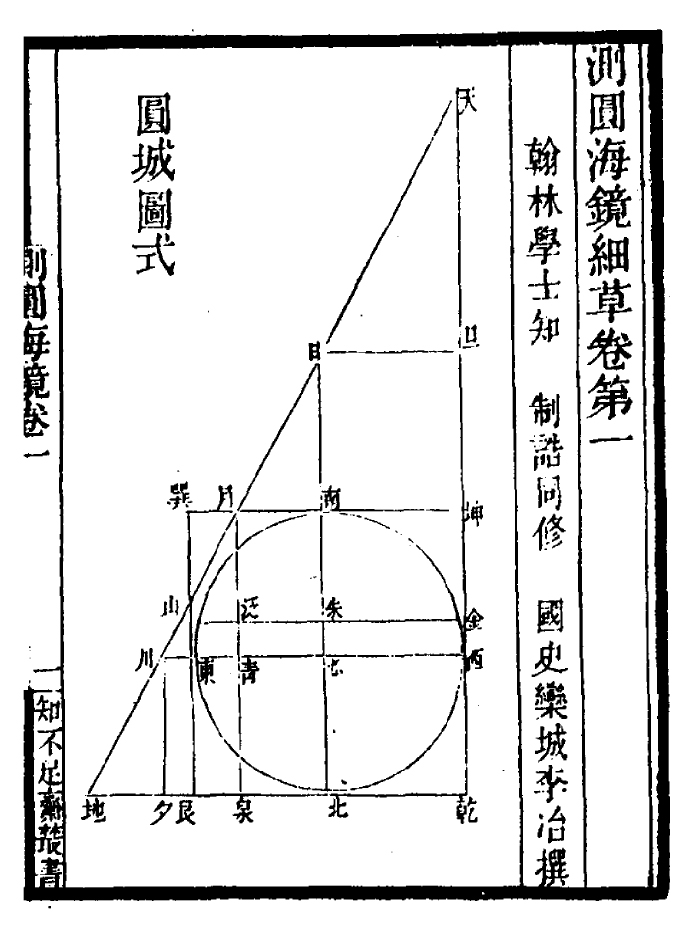
Trig Function Definitions
| Function | Definition |
| sin(α) | opposite / hypotenuse |
| cos(α) | adjacent / hypotenuse |
| tan(α) | opposite / adjacent |
Solving Right Triangles
| Know | Want | Compute |
| α, adjacent | opposite | = adjacent * tan(α) |
| hypotenuse | = adjacent / cos(α) | |
| α, opposite | adjacent | = opposite / tan(α) |
| hypotenuse | = opposite / sin(α) | |
| α, hypotenuse | adjacent | = hypotenuse * cos(α) |
| opposite | = hypotenuse * sin(α) |
Circle
Distance
(x1-x0)²+(y1-x0)²=r² If the circle is centred at the origin (0, 0), then the equation simplifies to x²+y²=r²
double
distance(Point2d a, Point2d b)
{
	return sqrt((a.x - b.x) * (a.x - b.x) + (a.y - b.y) * (a.y - b.y));
}
Angle
To find angle, in radians, between two points:
double
angle(Point2d a, Point2d b)
{
	return atan2(b.y - a.y, b.x - a.x);
}
Position
To find a point on a circle:
Point2d
PtCircle2d(Point2d c, double r, double angle)
{
	return Pt2d(
		c.x + r * cos(angle),
		c.y + r * sin(angle));
}
Parallel
The slope of the first line is m1=(y2−y1)/(x2−x1) and the slope of the second is m2=(y4−y3)/(x4−x3). The lines are parallel if and only if m1=m2.
Let'?'s say we are given the center point of the circle and its radius. We can now create a loop which iterates from Center.x-Radius to Center.x+Radius or maybe even downwards from Center.x+Radius to Center.x-Radius. Now we have one point on the radius which is the center of the circle and one point which we have the X to, which is located on the circumference. We can then calculate the Y position of this point using the distance formula as in:
Radius = Sqrt ((P1.x - P2.x) ^2 + (P1.y - P2.y) ^2)
cos(x) = 1 - (x^2/2!) + (x^4/4!)...  (An even function)
sin(x) = x -(x^3/3!) + (x^5/5!)....  (An odd function)

add both series together but keep all signs positive and you have

e^x = 1 + x+ (x^2/2!) + (x^3/3!).....

So e^ipi + 1 =0
Tau is the Circle Constant.
Degree Minute Position to Decimal Position
d = M.m / 60
Decimal Degrees = Degrees + .d

Example:
To convert 124° 44.740, a DMS coordinate, to DD.

44.740(m.m) / 60 = 0.74566667
124(degrees) + 0.74566667(.d) = 124.0.74566667

And so 124° 44.740 is 124.0.74566667 in Decimal Degrees.
Bootstrapping Units
To make a 1 litre container from a ruler: Fill 10cm x 10cm x 10cm with water.
To make a 1 litre container from 1000 grams: Fill a container with room temperature water, when then container holds exactly 1000 grams(1 kg) of water, it is exactly 1 litre.
To make a 1 gram unit from 1cm: Fill 1cm x 1cm x 1cm with water.
To make a 1 meter from a pendulum: Time 10 full back-and-forth swings, if it takes less than 20 seconds, your string is too short, if it takes more than 20 seconds, your string is too long. A string with a length of exactly 1 metre has a period(one full swing back and forth) of almost exactly 2 seconds.
To make a 10.5cm ruler from a sheet of A4 paper: A4 paper is exactly 21cm wide. Fold it in half perfectly width-wise, the resulting width is 10.5cm.
Submerge an object you know is exactly 1 kg it in a straight-sided container, mark where the water level started and where it ended. The space between those two marks is a 1 litre gauge for that specific container.
- The head of an M10 hex bolt is 1.7cm across.
- The standard height for a doorknob or handle is 90cm.
- A standard medium-sized shirt button is usually 13mm
- A LP record spins at 33 1/3 revolutions per minute, it takes exactly 1.8 seconds for one full rotation.
- If you drop a rock and it takes exactly 0.45 seconds to hit the ground, it has fallen exactly 1 metre.
- Water boils at 100'C and freezes at 0'C.
- A sheet of standard 80gsm A4 paper weighs is 5g.
- The long side of A4 paper is 297mm(roughly 30cm.
- The time in seconds between a lightning and the thunder, divided by 3 is the distance in kilometers.
Strictly speaking, one immortal monkey would be sufficient.
A beauty cold and austere, like that of sculpture, without appeal to any part of our weaker nature, without the gorgeous trappings of painting or music, yet sublimely pure, and capable of a stern perfection such as only the greatest art can show.~
Early computers were designed from the ground up to be truly general
purpose. When you turned them on, you'd be presented with the word
READY, and a blinking cursor. It was an open invitation to PROGRAM
the machine! This is no mere appliance, it's a beckoning gateway to
intellectual discovery!

The key in making great and growable systems is much more to design how its modules communicate rather than what their internal properties and behaviors should be.~
Don't fall in love with your technology the way some Forth and Linux advocates have. If it gives you an edge, if it lets you get things done faster, then by all means use it. Use it to build what you've always wanted to build, then fall in love with that.~
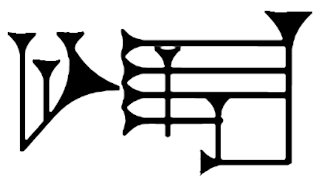

Various Language notes on natural, synthetic and programming languages.
Welcome to the Language Portal, the goal of these pages is to host a few resources, summaries and notes from my own language studies. I've moved all notes about programming languages here, and math things here.
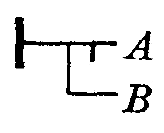
A tragedy consists of the same elements as a comedy, that is, the twenty-four letters of the alphabet.
dictionary
- Anthropomorphism: Attributing distinctly human characteristics to nonhuman processes.
- Antifragile: Some things benefit from shocks, they thrive and grow when exposed to volatility, randomness, disorder, stressors, risk, and uncertainty.
- Parsimony: Refers to the quality of economy or frugality in the use of resources.
- Lateralus: The affliction of illusion of inescapable cyclicality. Example: The failure to recognize one's growth, inability to dream of unprecedented things, ceding to self-reinforcing systems, being jaded to hope, waiting for nonexistent chickens to hatch from nonexistent eggs.
- Rationality: Characteristic of thinking and acting optimally.
- Epistemology: A theory of knowledge, especially with regard to its methods, validity, and scope, and the distinction between justified belief and opinion.

linguistics
- Gematria: A cipher that assigns numerical value to a word, name, or phrase in the belief that words or phrases with identical numerical values bear some relation to each other.
- Palindrome: A word, number, or other sequence of characters which reads the same backward as forward.
- Ambigram: A word, art form or other symbolic representation whose elements retain meaning when viewed or interpreted from a different direction, perspective, or orientation.
- Leitmotif: A short, constantly recurring musical phrase associated with a particular person, place, or idea.
- Asemic: A wordless open semantic form of writing. The word asemic means "having no specific semantic content", or "without the smallest unit of meaning".

dread
- Acedia: A state of listlessness or torpor, of not caring or not being concerned with one's position or condition in the world.
- Weltschmerz: A deep sadness about the inadequacy or imperfection of the world.
- Mono no aware: An awareness of the transience of all things that heightens the appreciation of their beauty, and evokes a gentle sadness at their passing, translated as "an empathy toward things", or "a sensitivity to ephemera".
- Mottainai: A sense of regret over waste, translated as "What a waste!".
- Wabi Sabi: An aesthetic, and principles, which includes asymmetry, roughness, simplicity, economy, austerity, modesty, intimacy, and the appreciation of both natural objects and the forces of nature.
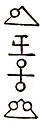
Did you know that before the invention of the crowbar, crows just drank at home?
Ship of thesaurus: When you rewrite a text by replacing every word with a synonym until none of the original words are left.
principles
- Occam's Razor: When several theories are able to explain the same observations, Occam's razor suggests the one making the fewest assumptions.
- Kolmogorov complexity: The length of the shortest possible program to output a given object.
- Kardashev scale: A measure of a civilization's level of technological advancement based on the amount of energy used for communication.
- Levenshtein Distance: A string metric for measuring the difference between two sequences, or comparing the similarity of two words.
- Bechdel test: A method for evaluating the portrayal of women in fiction. It asks whether a work features at least two women who talk to each other about something other than a man.
- Finkbeiner test: A checklist proposed to help journalists avoid gender bias in media articles about women in science.
- Ship of Theseus: A thought experiment that raises the question of whether an object that has had all of its components replaced remains fundamentally the same object.
- Goodhart's law: When a measure becomes a target, it ceases to be a good measure.
- Cargo Cult: When you follow the instructions but don't understand the process.