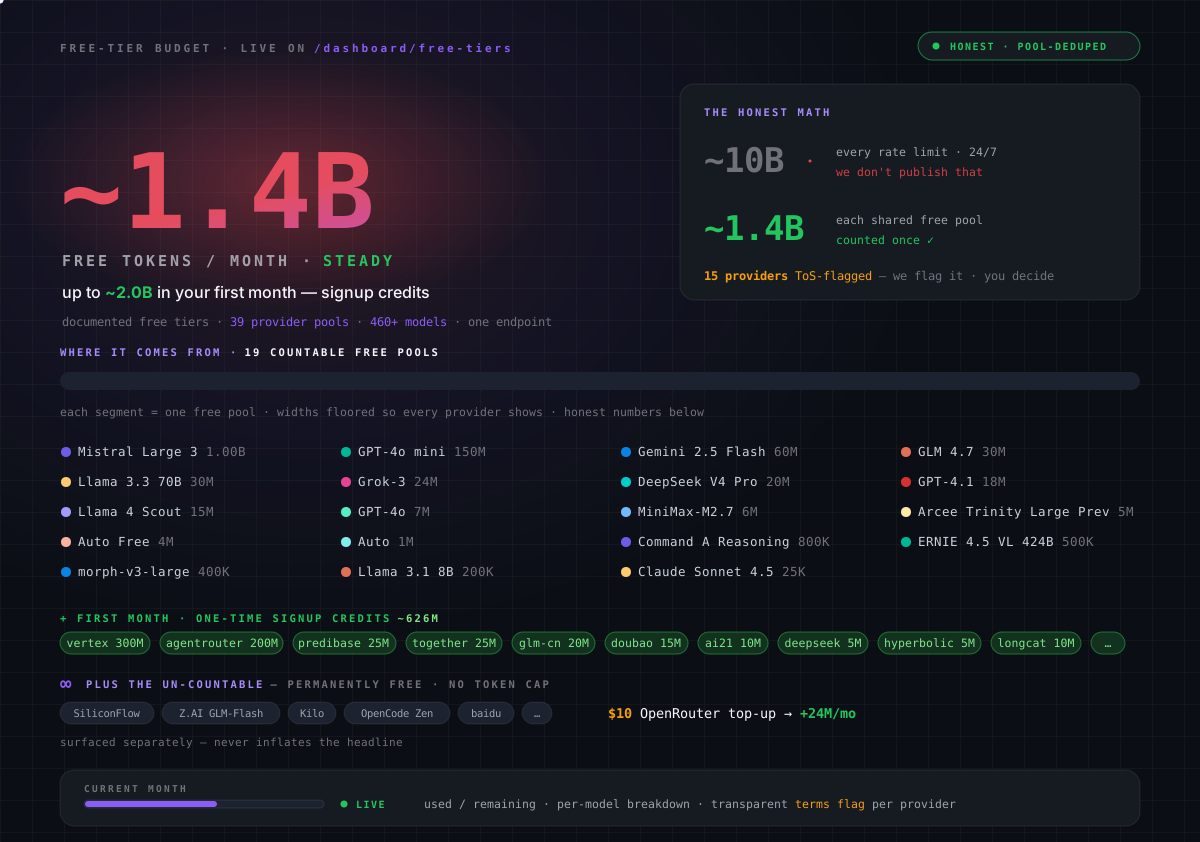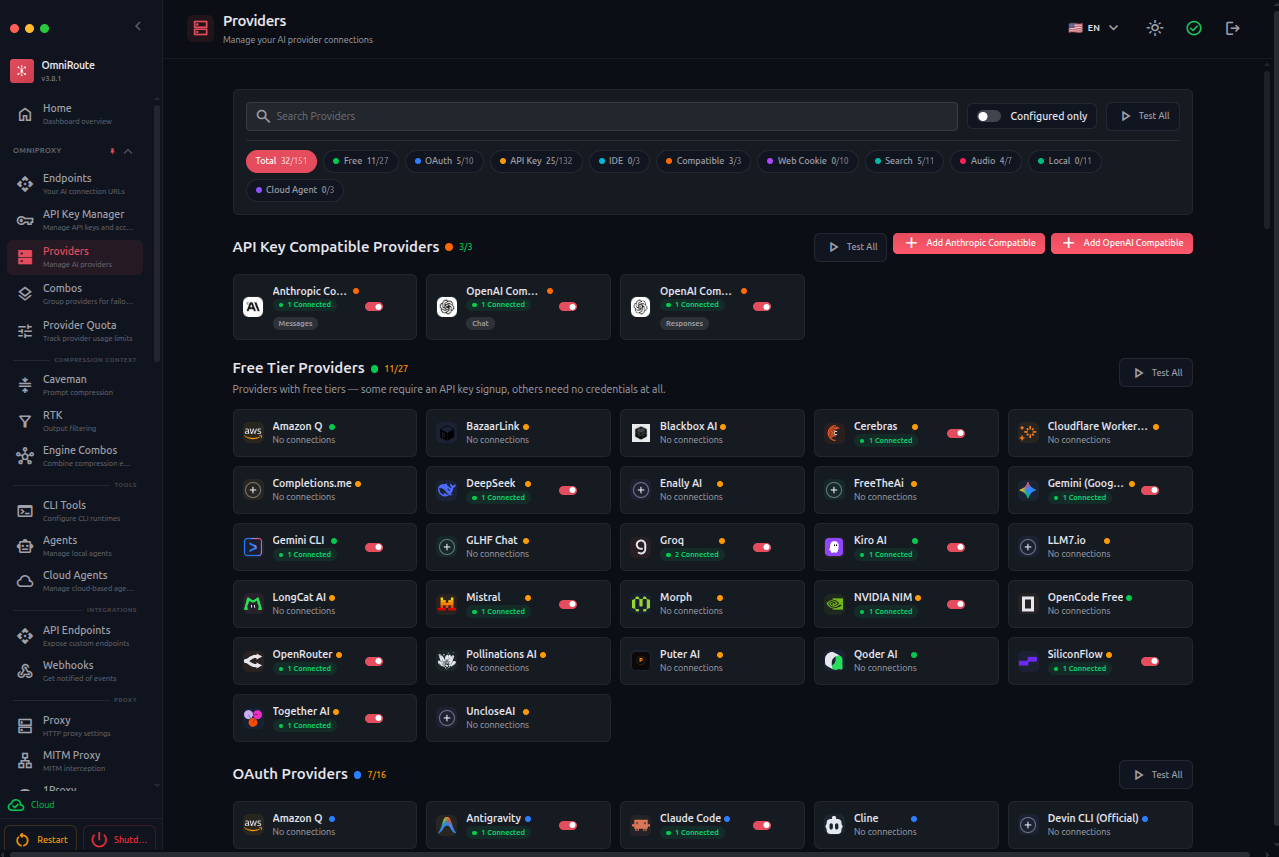
> Stacking free tiers by hand is painful — dozens of SDKs, dozens of rate limits, and no idea how much you actually have. OmniRoute aggregates the **documented** free tiers of **39 provider pools / 460+ models** into one honest number and shows it live on the dashboard (`/dashboard/free-tiers`).
> Animated summary of the live `/dashboard/free-tiers` page. Full methodology (pool dedupe, credit tiers, provider terms): **[docs/reference/FREE_TIERS.md](docs/reference/FREE_TIERS.md)**.
>
> These figures are re-audited every two weeks against the live catalog and **move both ways** — a provider ends a free tier and the number drops; a new one lands and it climbs. We publish what the catalog actually computes, never a rounded-up best case. A CI gate (`check:docs-counts`) fails the build if this headline drifts from the code.
⭐ Star the repo if OMNIROUTE helped you save money and make your work easier.
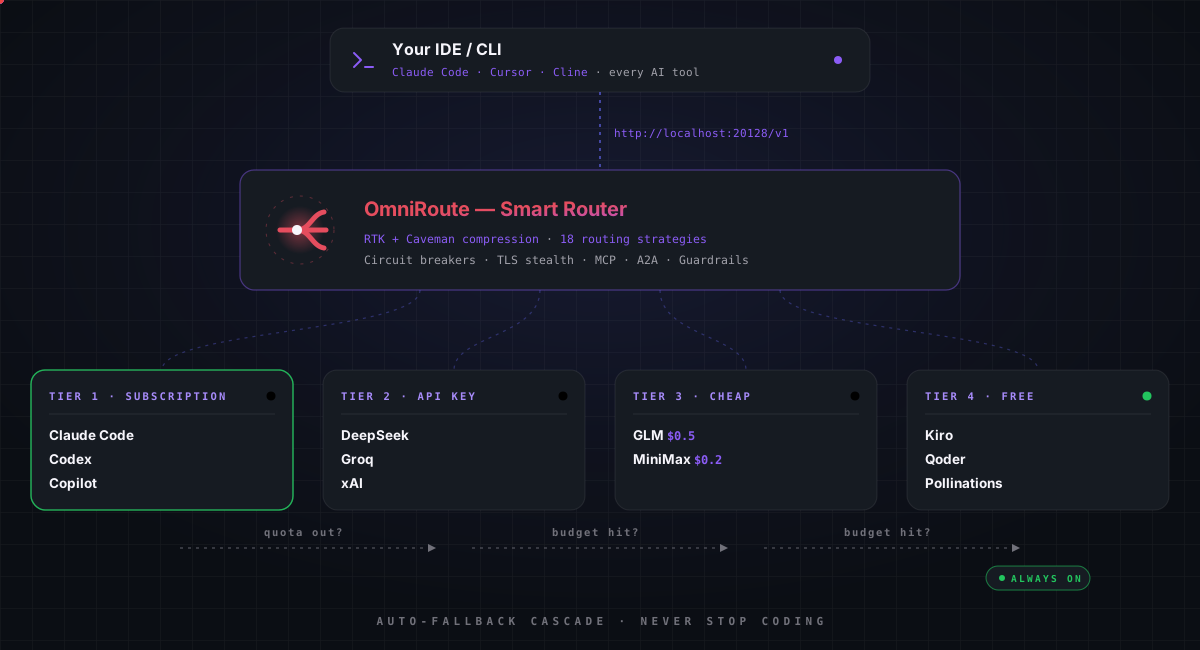
> A **combo** is a chain of models OmniRoute routes across **automatically**. Quota runs out, a provider fails, or costs spike — the combo silently slides to the next model. **This is what makes OmniRoute unbreakable.** 🛡️
### ⚡ Zero-config — just use `auto`
No combo to create. Set your model to `auto` (or a variant) and OmniRoute builds a virtual combo from your connected providers, scored live:
| Model ID | What it optimizes for |
| -------------- | -------------------------------------------------------------------------------------------------------------------------------------------------------------------------------------- |
| `auto` | 🎯 Balanced default (LKGP — sticks to your last good provider) |
| `auto/coding` | 🧑💻 Quality-first weights for code generation |
| `auto/fast` | ⚡ Lowest latency first |
| `auto/cheap` | 💰 Cheapest per token first |
| `auto/offline` | 🔋 Most quota / rate-limit headroom first |
| `auto/smart` | 🔭 Quality-first + 10% exploration to discover better models |
##
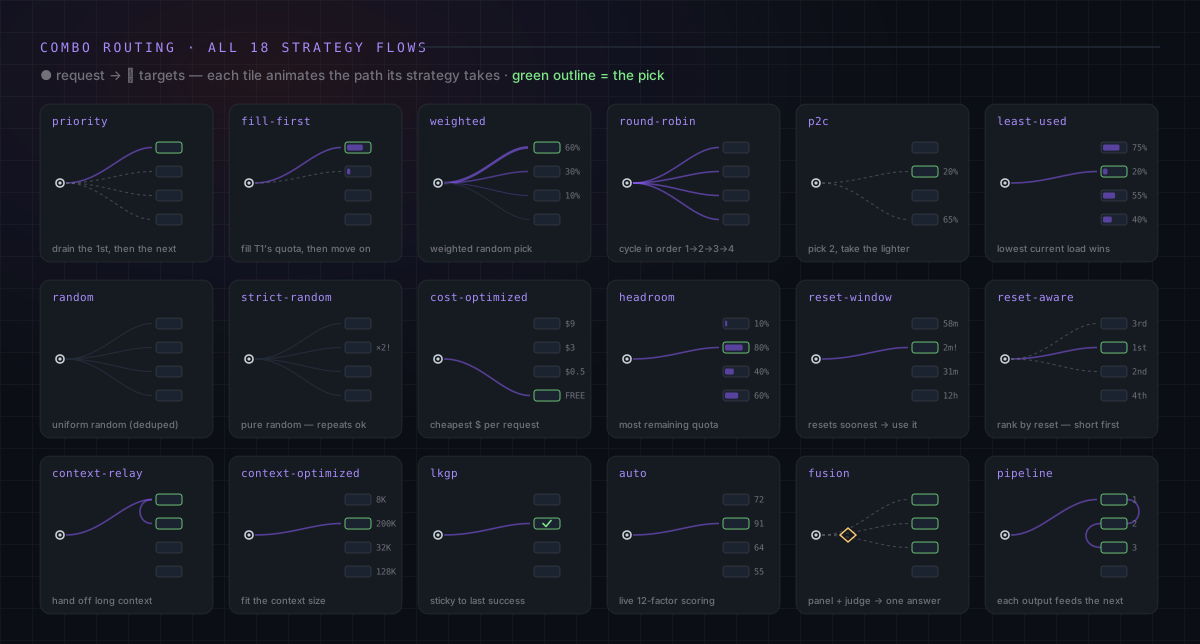
### 🔀 Or build your own — 18 routing strategies
All **18** strategies — mix & match per combo step:
| # | Strategy | What it does |
| --- | ------------------- | ------------------------------------------------------------------------------------------------------------------------------------------------------------------------ |
| 1 | `priority` | First-target ordered list — drain each before the next 🥇 |
| 2 | `fill-first` | Fill each target's quota fully before moving on |
| 3 | `weighted` | Weighted random by per-target weight |
| 4 | `round-robin` | Cycle through targets in order |
| 5 | `p2c` | Power-of-two-choices random load balancing |
| 6 | `least-used` | Pick the target with the lowest current load |
| 7 | `random` | Uniform random pick (deduplicated) |
| 8 | `strict-random` | Random without de-duplicating repeats 🎲 |
| 9 | `cost-optimized` | Minimize $ per request from live catalog pricing 💸 |
| 10 | `headroom` | Pick the target with the most remaining quota |
| 11 | `reset-window` | Prefer the target whose quota window resets soonest |
| 12 | `reset-aware` | Rank by quota reset time — short windows first 📊 |
| 13 | `context-relay` | Hand off context across targets for long conversations 🧠 |
| 14 | `context-optimized` | Pick the best fit for the current context size |
| 15 | `lkgp` | Last-Known-Good Path — sticky to the last successful target |
| 16 | `auto` | 12-factor live scoring across every connection 🤖 |
| 17 | `fusion` | Fan out to a panel of models + a judge synthesizes one answer 🧬 |
| 18 | `pipeline` | Chain steps — each target's output feeds the next one 🔗 |
The Auto-Combo engine scores every candidate on **12 factors** (health, quota, cost, latency, success rate, freshness…) — see [`docs/routing/AUTO-COMBO.md`](docs/routing/AUTO-COMBO.md).
##
### ⚖️ Quota-Share — split one subscription across a team ✨ NEW
> Running several keys against the **same upstream account** (one Codex Pro plan, one Kimi key, one GLM Coding seat)? A burst on one key can burn the whole 5-hour / hourly quota and lock everyone else out. **Quota-Share** distributes a provider's time-based quota **fairly** across the keys in a pool — and it's _work-conserving_, so an idle member's slice is lent out instead of wasted.
| Knob | What it controls |
| ------------------------ | ----------------------------------------------------------------------------------------------------------------------------------------------------------------------------- |
| ⚖️ **Allocation weight** | each key's slice of the pool — e.g. `50 / 30 / 20` |
| 📐 **Dimensions** | track `%` · requests · tokens · `$`, per **5h / 7d / per-model** window |
| 🚦 **Policy** | `hard` (block over share) · `soft` (deprioritize) · `burst` (use idle headroom) |
| 🧱 **Cap** | absolute ceiling per key, independent of mode |
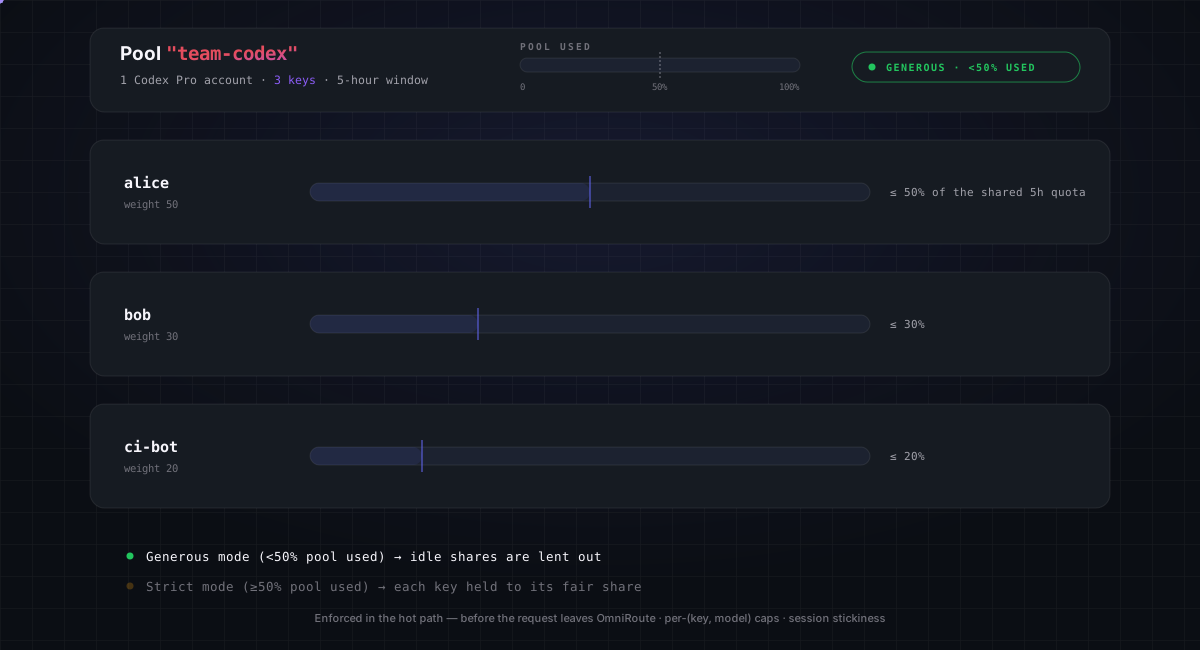
Enforced in the hot path **before** the request leaves OmniRoute, with per-(key, model) caps + session stickiness for prompt-cache integrity (now with a per-combo / global disable toggle). 📖 [Quota Sharing Engine](docs/routing/QUOTA_SHARE.md)
##
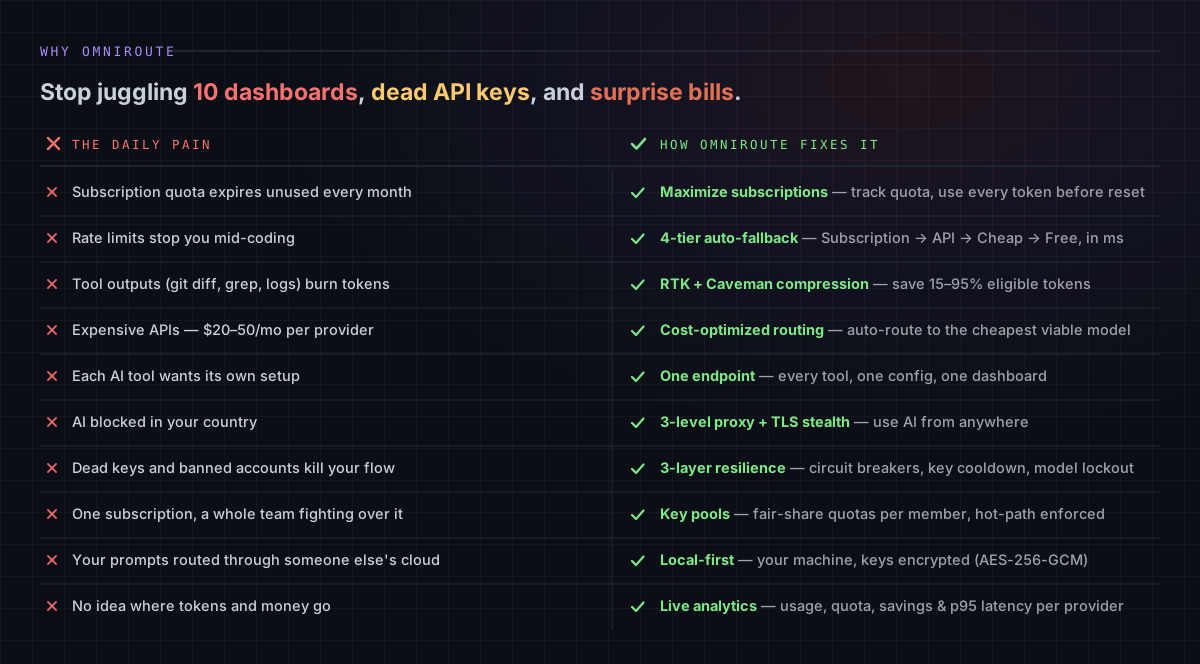
### 🧱 Resilience is built in (3 independent layers)
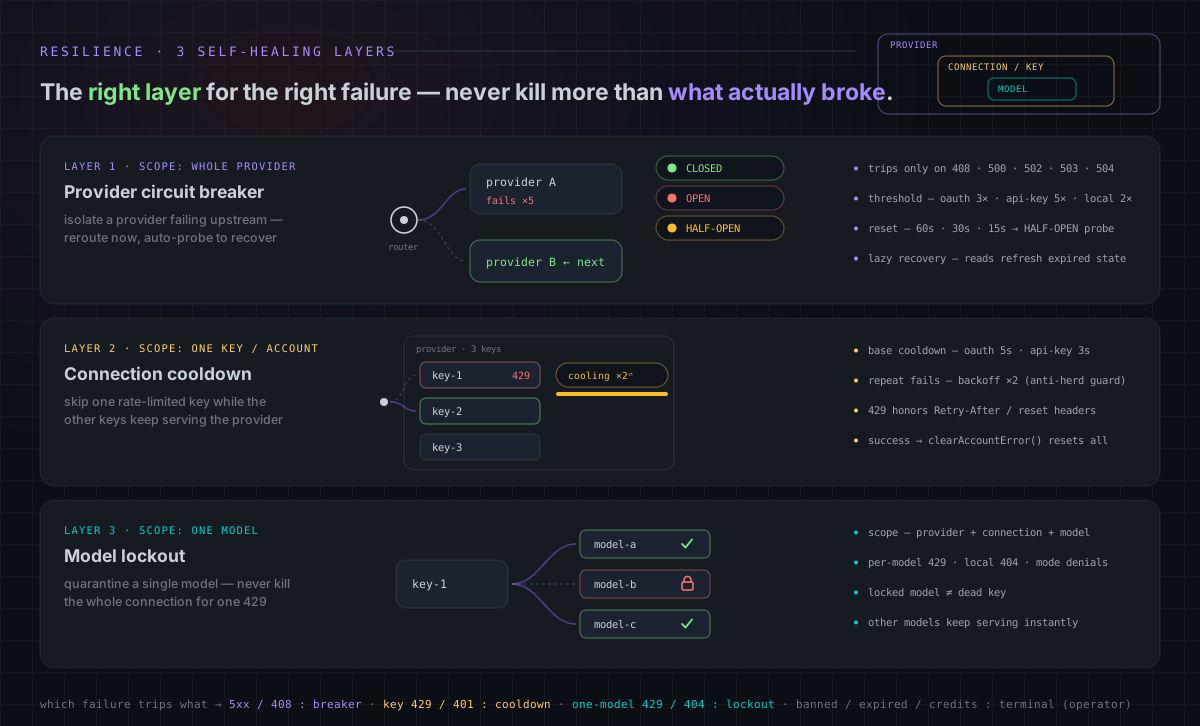
📖 [Auto-Combo Engine](docs/routing/AUTO-COMBO.md) · [Resilience Guide](docs/architecture/RESILIENCE_GUIDE.md)
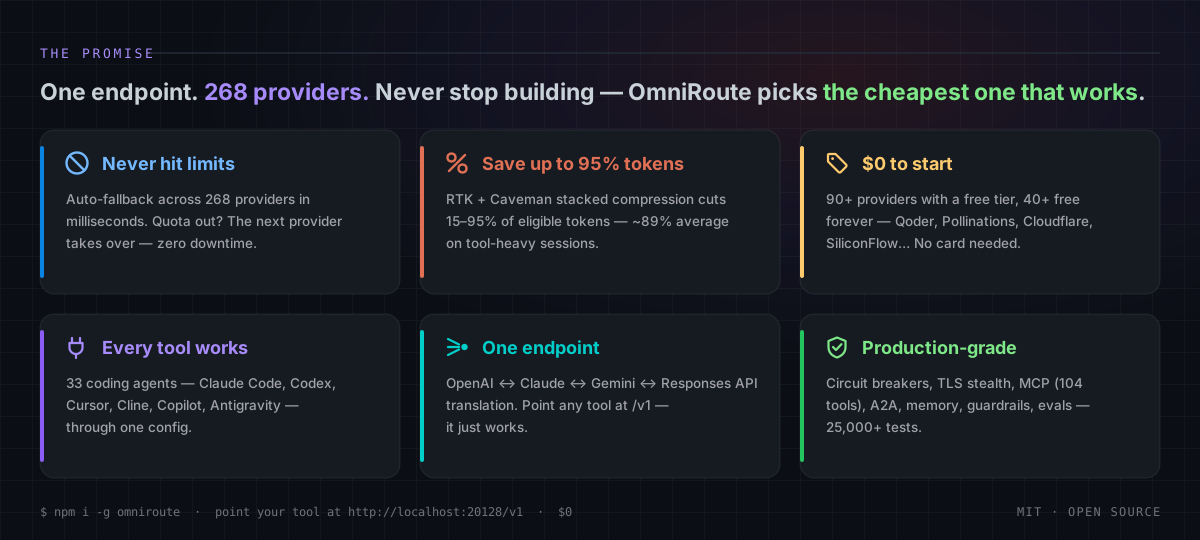
> The most complete catalog of any open-source router: **271 providers**, **90+ with a free tier**, **40+ free forever**.
### 🏢 Every major lab — through one endpoint
OpenAI
Anthropic
Gemini
xAI Grok
DeepSeek
Mistral
Qwen
Meta Llama
Groq
NVIDIA
MiniMax
Cohere
Perplexity
HuggingFace
Together
Fireworks
Cloudflare
Baidu
…and 220+ more — every icon resolves live from the dashboard's provider catalog. 📖 [Provider Reference](docs/reference/PROVIDER_REFERENCE.md)
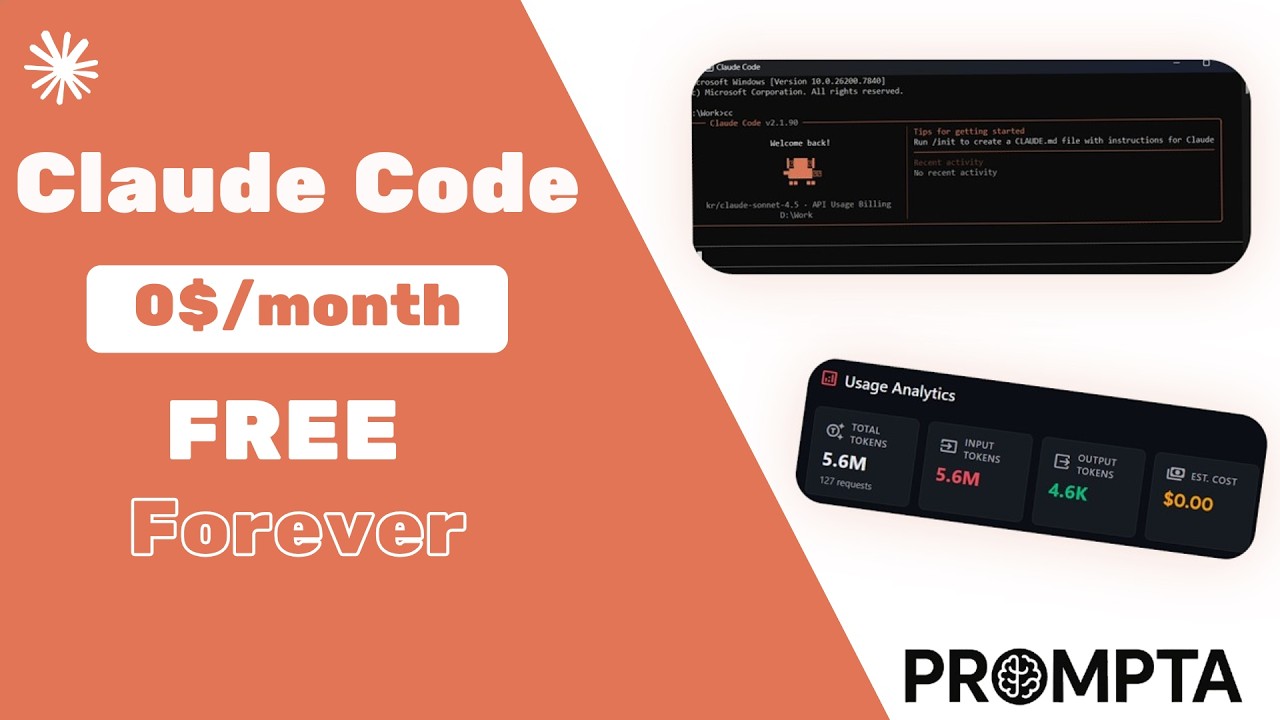
### 🆓 Free Forever — $0, no card
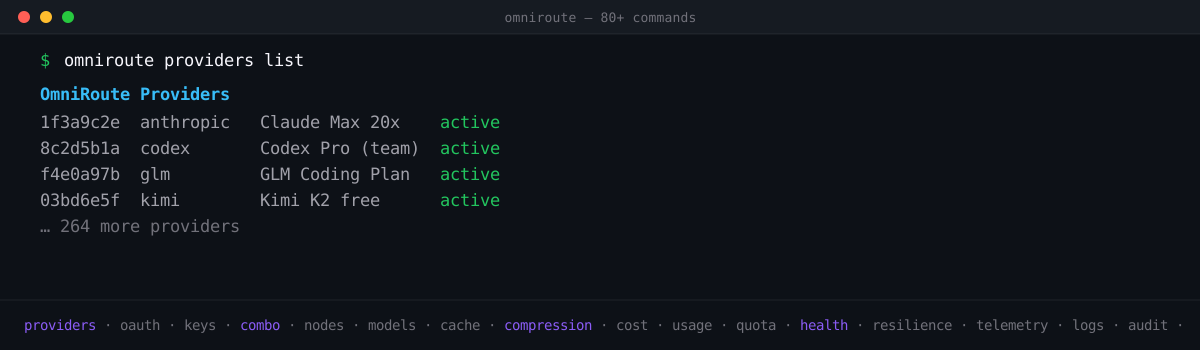
> OmniRoute isn't just a server — it's a **full command-line cockpit** with **80+ commands**, plus open agent protocols so an AI agent can drive OmniRoute **by itself**.
### ⌨️ A real CLI (not just `start`)
```bash
omniroute # serve gateway + dashboard (port 20128)
omniroute chat # interactive TUI chat client (slash: /model /combo /skill /memory)
omniroute setup # guided first-run wizard
omniroute doctor # diagnose providers, ports, native deps
```
### 🛰️ Remote mode — run the CLI here, OmniRoute on a VPS
OmniRoute on a server? Drive it from your laptop with the **same CLI**. Log in once
with a scoped access token; every command then targets the remote.
```bash
omniroute connect 192.168.0.15 # password → scoped token, saved as a context
omniroute models list # ← runs against the REMOTE server
omniroute configure codex # ← picks a remote model, writes a local Codex profile
omniroute tokens create --name ci --scope read # mint narrower tokens for other machines
omniroute contexts use default # ← switch back to the local server
```
Tokens are scoped `read` / `write` / `admin`; process-spawning routes stay loopback-only.
📖 [Remote Mode](docs/guides/REMOTE-MODE.md)
### 🤝 Connect an agent — and it controls OmniRoute itself
Expose OmniRoute over **MCP** or **A2A** and any capable agent gets the keys to the whole gateway — routing, providers, combos, cache, compression, memory — autonomously.
| Protocol | Endpoint | Use it for |
| ------------------ | ----------------------------------------------- | ------------------------------------------------------- |
| 🧰 **MCP (stdio)** | `omniroute --mcp` | Plug into Claude Desktop, Cursor, any MCP client |
| 🌊 **MCP (HTTP)** | `http://localhost:20128/api/mcp/stream` | Remote MCP — **104 tools**, 31 scopes, full audit trail |
| 📡 **MCP (SSE)** | `http://localhost:20128/api/mcp/sse` | Streaming MCP transport |
| 🤝 **A2A** | `http://localhost:20128/.well-known/agent.json` | Agent-to-agent, **JSON-RPC 2.0** + SSE, 6 skills |
```bash
# Give Claude Code the full OmniRoute toolset over MCP:
claude mcp add-server omniroute --type http --url http://localhost:20128/api/mcp/stream
```
📖 [MCP Server](docs/frameworks/MCP-SERVER.md) · [A2A Server](docs/frameworks/A2A-SERVER.md) · [Agent Protocols](docs/frameworks/AGENT_PROTOCOLS_GUIDE.md)
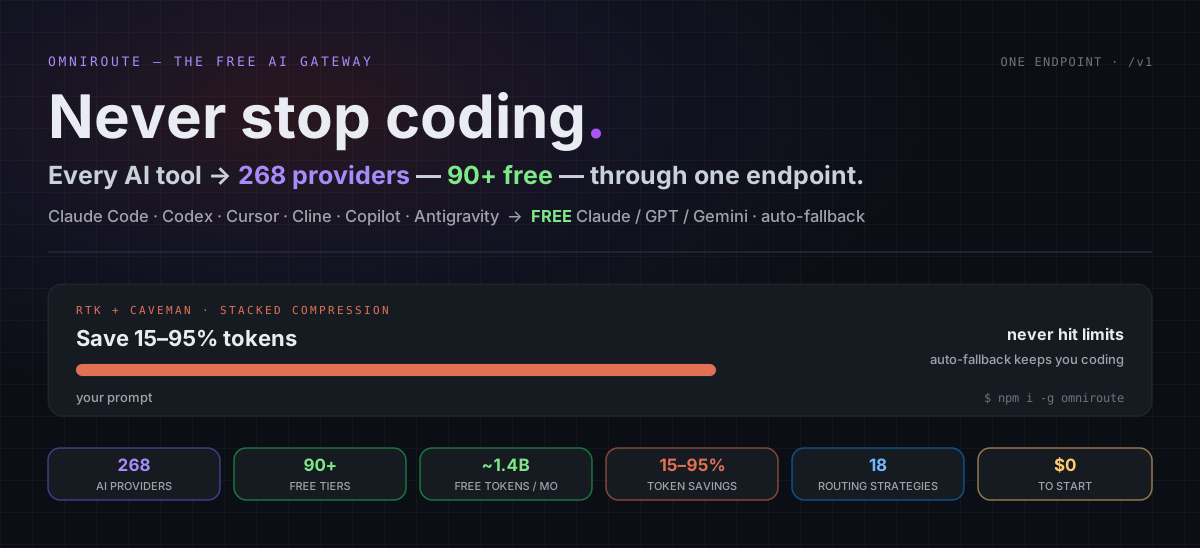
# 🗜️ Save 15–95% Tokens — Automatically
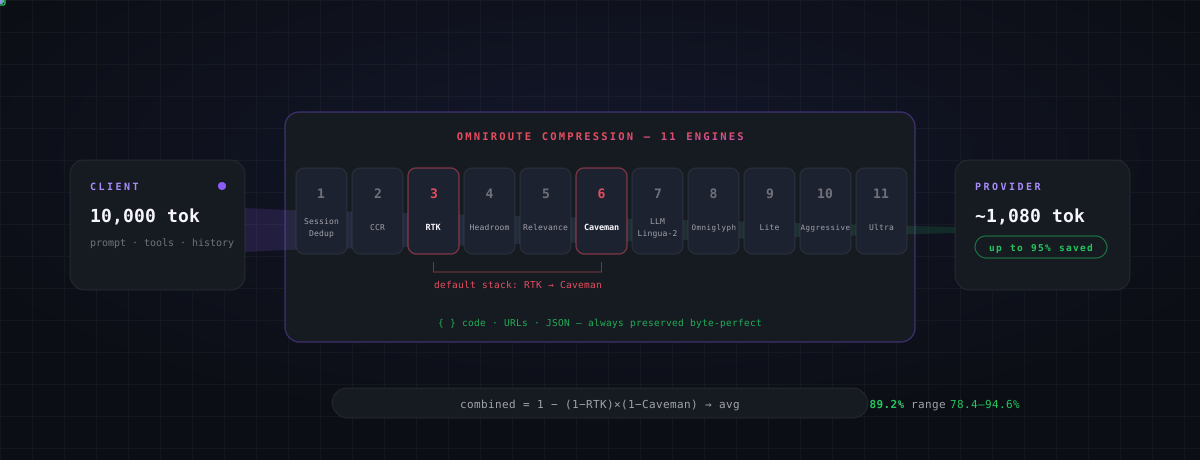
> **Why use many tokens when few tokens do the trick?** Every request passes through OmniRoute's compression pipeline **transparently** — no client changes. It's now a **stack of 11 composable engines** that run in order and mix & match per routing combo — building on ideas from [RTK](https://github.com/rtk-ai/rtk), [Caveman](https://github.com/JuliusBrussee/caveman) (⭐ 90K+), [LLMLingua-2](https://github.com/microsoft/LLMLingua), and [Troglodita](https://github.com/leninejunior/troglodita) (PT-BR).
### 🧱 The 11-engine stack
Engines run in pipeline order; each is independently toggleable and configurable per combo:
| # | Engine | What it does |
| --- | ----------------- | ----------------------------------------------------------------------------------------------------------------------- |
| 1 | **Session-Dedup** | Drops content repeated across turns (content-addressed, cross-turn) |
| 2 | **CCR** | Archives large blocks behind retrieve markers, fetched on demand |
| 3 | **RTK** | Smart tool-result filtering, dedup & truncation (command-aware) |
| 4 | **Headroom** | Lossless tabular compaction of homogeneous JSON arrays, flat or nested (~30%), via a vendored **GCF** codec (spec v3.2) |
| 5 | **Relevance** | Extractive sentence scoring against the last user query |
| 6 | **Caveman** | Rule-based prose compression (~65–75% on output) |
| 7 | **LLMLingua-2** | ML semantic pruning via MobileBERT ONNX — code-safe, async |
| 8 | **Lite** | Whitespace + image-URL trimming (latency-light baseline) |
| 9 | **Aggressive** | Summarization + progressive aging of old turns |
| 10 | **Ultra** | Heuristic token pruning with an optional small-model (SLM) tier |
Code blocks, URLs and structured data are **always preserved** byte-perfect. **One-click presets** combine the engines:
| Mode | Savings | Best for |
| ------------------------------ | ---------- | ----------------------------------------------------------------------------------------------------------------------------------------------- |
| 🪶 **Lite** | ~15% | Always-on safe default |
| 🪨 **Standard (Caveman)** | ~30% | Daily coding |
| ⚡ **Aggressive** | ~50% | Long tool-heavy sessions |
| 🔥 **Ultra** | ~75% | Maximum savings |
| 🧰 **RTK** | 60–90% | Shell/test/build/git output |
| 🔗 **Stacked (RTK → Caveman)** | **78–95%** | Mixed prompts + tool logs |
**Real example — Standard mode:**
> **Before (69 tokens):** _"The reason your React component is re-rendering is likely because you're creating a new object reference on each render cycle. When you pass an inline object as a prop, React's shallow comparison sees it as a different object every time, which triggers a re-render. I would recommend using useMemo to memoize the object."_
>
> **After (19 tokens):** _"New object ref each render. Inline object prop = new ref = re-render. Wrap in useMemo."_
>
> **Same answer. 72% fewer tokens. Zero accuracy loss.** ✅
**PT-BR example — [Troglodita](https://github.com/leninejunior/troglodita) mode:**
> **Antes (42 tokens):** _"O problema é que o componente está re-renderizando porque uma nova referência de objeto está sendo criada em cada ciclo de renderização. Eu recomendaria usar useMemo."_
>
> **Depois (12 tokens):** _"Re-render: ref nova cada ciclo (objeto inline recriado). Usar `useMemo`."_
>
> **Mesma resposta. ~70% menos tokens. Precisão técnica intacta.** ✅
### 📖 How it works — pipeline, architecture & savings math
Default stacked combo runs `RTK → Caveman`. When both act on the same tool/context payload, savings compound:
```txt
combined = 1 − (1 − RTK) × (1 − Caveman_input)
average = 1 − (1 − 0.80) × (1 − 0.46) = 89.2%
range = 78.4 – 94.6%
```
Code blocks, URLs, JSON and structured data are **always protected** by the preservation engine.
### 🎚️ Beyond the engines — output styles, the adaptive dial & per-request control
The 10 engines above shrink what goes **in**. Three more layers shape **how**, **when**, and what comes **out**:
- **🪄 Output Styles** _(output-axis steering)_ — inject deterministic, cache-safe response-shaping instructions; combinable, each at `lite` / `full` / `ultra` intensity. Adding a style is a one-line registry entry:
- **Terse prose** — drop filler / articles / hedging; keep technical substance exact.
- **Less code** — "lazy senior dev" YAGNI: smallest working change, no unrequested scaffolding.
- **Terse CJK (文言)** — classical-Chinese ultra-terse style (locale-gated to `zh`).
- **🎯 Adaptive context-budget** _(the dial)_ — instead of one on/off token threshold, escalate the cheapest, most-lossless engines only as far as needed to **fit the model's context window**. Policy: `reserve-output` (default, model-aware) · `percentage` · `absolute`. Mode: `floor` (guarantee fit) · `replace-autotrigger` (your explicit choice wins) · `off` (legacy threshold).
- **🎛️ Where compression is decided** _(precedence, high → low)_ — per-request `x-omniroute-compression` header › routing-combo override › active named profile › adaptive / auto-trigger › panel default › off. The applied plan echoes back in the `X-OmniRoute-Compression: ; source=` response header.

Auto-trigger by token threshold, flip on the adaptive dial, pin a named profile, set a one-off per request, or assign a pipeline per routing combo — whichever fits the workload. An opt-in offline **eval harness** (`npm run eval:compression`) scores fidelity vs. savings on a pinned corpus before you promote a change.
📖 [`COMPRESSION_GUIDE.md`](docs/compression/COMPRESSION_GUIDE.md) · [`RTK_COMPRESSION.md`](docs/compression/RTK_COMPRESSION.md) · [`COMPRESSION_ENGINES.md`](docs/compression/COMPRESSION_ENGINES.md)
# ⚡ Quick Start
**1) Install & run**
```bash
npm install -g omniroute
omniroute
```
Dashboard at `http://localhost:20128` · API at `http://localhost:20128/v1`.
**2) Connect a FREE provider (no signup)**
Dashboard → **Providers** → connect **Kiro AI** (free Claude, ~50 credits/month per account) or **OpenCode Free** (no auth) → done.
**3) Point your coding tool**
```txt
Base URL: http://localhost:20128/v1
API Key: [copy from Dashboard → Endpoints]
Model: auto (zero-config smart routing — or any provider/model)
```
**4) Verify it's working**
```bash
curl http://localhost:20128/v1/models -H "Authorization: Bearer YOUR_KEY"
```
You should see your connected models listed. 🎉 That's it — start coding, and OmniRoute auto-routes & falls back for you.
If your client cannot send custom headers, OmniRoute also exposes tokenized compatibility aliases:
```txt
OpenAI catalog: http://localhost:20128/vscode/YOUR_KEY/
OpenAI models: http://localhost:20128/vscode/YOUR_KEY/models
OpenAI chat: http://localhost:20128/vscode/YOUR_KEY/chat/completions
OpenAI responses: http://localhost:20128/vscode/YOUR_KEY/responses
Ollama chat: http://localhost:20128/vscode/YOUR_KEY/api/chat
Ollama tags: http://localhost:20128/vscode/YOUR_KEY/api/tags
```
Use these only for clients that cannot attach `Authorization: Bearer ...`. Header auth remains the preferred mode.
## 📦 More install methods — Docker, source, pnpm, Arch
**🐳 Docker**
```bash
docker run -d --name omniroute --restart unless-stopped --stop-timeout 40 \
-p 20128:20128 -v omniroute-data:/app/data diegosouzapw/omniroute:latest
```
**🛠️ From source**
```bash
cp .env.example .env && npm install
PORT=20128 npm run dev
```
**📦 pnpm**
```bash
pnpm add -g omniroute@latest --allow-build=better-sqlite3 --allow-build=@swc/core && omniroute
```
**🐧 Arch Linux (AUR)**
```bash
yay -S omniroute-bin && systemctl --user enable --now omniroute.service
```
**🔧 Nix (Flake)**
```bash
# Using Nix flakes
nix develop
npm run dev
# Or using devbox
devbox run npm run dev
```
📖 [Docker Guide](docs/guides/DOCKER_GUIDE.md) — Compose profiles, Caddy HTTPS, Cloudflare tunnels.
**🦭 Podman**
```bash
# 1. Build the image
podman build --target runner-base -t omniroute:base .
# 2. Fix data directory permissions for rootless Podman
mkdir -p data && podman unshare chown 1000:1000 ./data
# 3. Set runtime in .env, then run (see contrib/podman/ for Quadlet)
echo "CONTAINER_HOST=podman" >> .env
podman compose --profile base up -d
```
📖 [Podman Guide](contrib/podman/README.md) — Quadlet setup, podman-compose, Quadlet.
**⚡ Faster / leaner install (skip the native build)**
The native SQLite engine (`better-sqlite3`) is an **optional** dependency, so a global
install never blocks on compiling from source: it uses a prebuilt binary when one matches
your platform/Node, and otherwise falls back transparently to a pure-JS engine
(`node:sqlite` on Node 22+, else the bundled `sql.js` WASM) — no build tools required.
To skip the post-install native warm-up entirely (CI, headless, or slow machines):
```bash
OMNIROUTE_SKIP_POSTINSTALL=1 npm install -g omniroute # CI=1 also skips it
```
For the fastest installs prefer **pnpm** (content-addressed store + hard links — see above).
For a dashboard-free, headless runtime use the Docker `base` profile (above) or the
[Termux guide](docs/guides/TERMUX_GUIDE.md). The CLI and the web dashboard are served by the
same process on one port, so there is no separate CLI-only package today.
# 🎬 OmniRoute in Action
🇧🇷 Português Guia completo
🇺🇸 English Complete walkthrough
🇷🇺 Русский Полное руководство
> 🎬 **Made a video about OmniRoute?** Open an [issue](https://github.com/diegosouzapw/OmniRoute/issues/new) or [discussion](https://github.com/diegosouzapw/OmniRoute/discussions) with the link — we'll feature it here.
# 📧 Support & Community
> 💬 **Chat with the community** — Discord, Telegram & WhatsApp (🌍 / 🇧🇷) links are at the [top of this README](#-join-the-community).
- 🌍 **Website**: [omniroute.online](https://omniroute.online)
- 🐙 **GitHub**: [github.com/diegosouzapw/OmniRoute](https://github.com/diegosouzapw/OmniRoute)
- 🐛 **Issues**: [report a bug](https://github.com/diegosouzapw/OmniRoute/issues) (attach `npm run system-info` output)
- 🤝 **Contributing**: see [CONTRIBUTING.md](CONTRIBUTING.md) or pick a `good first issue`
### 📘 Getting Started
| Document | Description |
| -------------------------------------------------------------- | ------------------------------------------------------------------------------------------------------------------------------------------------------------------------------------ |
| [User Guide](docs/guides/USER_GUIDE.md) | Providers, combos, CLI integration, deployment |
| [Setup Guide](docs/guides/SETUP_GUIDE.md) | Full install methods, CLI tool configs, protocol setup, timeout tuning |
| [CLI Tools Guide](docs/reference/CLI-TOOLS.md) | Per-tool setup for Claude Code, Codex, Cursor, Cline, OpenClaw, Kilo, Copilot |
| [Remote Mode](docs/guides/REMOTE-MODE.md) | Drive a remote OmniRoute (VPS) from your laptop CLI via scoped access tokens |
| [Claude Code Config](docs/guides/CLAUDE-CODE-CONFIGURATION.md) | Point Claude Code at OmniRoute (local/remote) with `launch` + per-model profiles |
| [Quick Start](README.md#-quick-start) | 3-step install → connect → configure |
### 🔧 Operations & Deployment
| Document | Description |
| -------------------------------------------------------- | ----------------------------------------------------------------------------------------------------------------------------------------------------------------------------------- |
| [Docker Guide](docs/guides/DOCKER_GUIDE.md) | Docker run, Compose profiles, Caddy HTTPS, tunnels, image tags |
| [Podman Guide](contrib/podman/README.md) | Quadlet systemd integration, podman-compose, SELinux |
| [VM Deployment](docs/ops/VM_DEPLOYMENT_GUIDE.md) | Complete guide: VM + nginx + Cloudflare setup |
| [Fly.io Deployment](docs/ops/FLY_IO_DEPLOYMENT_GUIDE.md) | Deploy to Fly.io with persistent storage |
| [Termux Guide](docs/guides/TERMUX_GUIDE.md) | Run OmniRoute on Android via Termux |
| [PWA Guide](docs/guides/PWA_GUIDE.md) | Progressive Web App install, caching, architecture |
| [Uninstall Guide](docs/guides/UNINSTALL.md) | Clean removal for all install methods |
| [Environment Config](docs/reference/ENVIRONMENT.md) | Complete `.env` variables and references |
### 🧠 Features & Architecture
| Document | Description |
| ---------------------------------------------------------------------------- | ------------------------------------------------------------------------------------------------------------------------------------------------------------------ |
| [Architecture](docs/architecture/ARCHITECTURE.md) | System architecture, data flow, and internals |
| [Compression Guide](docs/compression/COMPRESSION_GUIDE.md) | 7-option pipeline: off / lite / standard / aggressive / ultra / RTK / stacked |
| [RTK Compression](docs/compression/RTK_COMPRESSION.md) | Command-output compression, filters, trust, verify, raw-output recovery |
| [Compression Engines](docs/compression/COMPRESSION_ENGINES.md) | Caveman, RTK, stacked pipelines, dashboard/API/MCP surfaces |
| [Compression Rules Format](docs/compression/COMPRESSION_RULES_FORMAT.md) | JSON rule-pack schemas for Caveman and RTK filters |
| [Compression Language Packs](docs/compression/COMPRESSION_LANGUAGE_PACKS.md) | Language detection and Caveman rule-pack authoring |
| [Resilience Guide](docs/architecture/RESILIENCE_GUIDE.md) | Circuit breakers, cooldowns, queue, anti-thundering herd, TLS spoofing |
| [Auto-Combo Engine](docs/routing/AUTO-COMBO.md) | 12-factor scoring, mode packs, self-healing |
| [Proxy Guide](docs/ops/PROXY_GUIDE.md) | 3-level proxy system, 1proxy marketplace, registry CRUD |
| [Free Tiers](docs/reference/FREE_TIERS.md) | 25+ free API providers consolidated directory |
| [Features Gallery](docs/guides/FEATURES.md) | Visual dashboard tour with screenshots |
| [Codebase Documentation](docs/architecture/CODEBASE_DOCUMENTATION.md) | Beginner-friendly codebase walkthrough |
### 🤖 Protocols & APIs
| Document | Description |
| ------------------------------------------------- | --------------------------------------------------------------------------------------------------------------------------------------------------------------------------------------- |
| [API Reference](docs/reference/API_REFERENCE.md) | All endpoints with examples |
| [OpenAPI Spec](docs/openapi.yaml) | OpenAPI 3.0 specification |
| [MCP Server](open-sse/mcp-server/README.md) | 104 MCP tools, IDE configs, Python/TS/Go clients |
| [MCP Server Guide](docs/frameworks/MCP-SERVER.md) | MCP installation, transports, and tool reference |
| [A2A Server](src/lib/a2a/README.md) | JSON-RPC 2.0 protocol, skills, streaming, task mgmt |
| [A2A Server Guide](docs/frameworks/A2A-SERVER.md) | A2A agent card, tasks, skills, and streaming |
### 📋 Project & Quality
| Document | Description |
| -------------------------------------------------- | ---------------------------------------------------------------------------------------------------------------------------------------------------------------------------------------- |
| [Contributing](CONTRIBUTING.md) | Development setup and guidelines |
| [Changelog](CHANGELOG.md) | Full per-version release history |
| [Security Policy](SECURITY.md) | Vulnerability reporting and security practices |
| [i18n Guide](docs/guides/I18N.md) | 40+ language support, translation workflow, RTL |
| [Release Checklist](docs/ops/RELEASE_CHECKLIST.md) | Pre-release validation steps |
| [Coverage Plan](docs/ops/COVERAGE_PLAN.md) | Test coverage strategy and 25,000+ test suite |
# ⭐ Top Contributors
> OmniRoute is shaped by a passionate open-source community. These individuals have made exceptional contributions that directly impact the quality, stability, and reach of the project. **Thank you.**
> 🙏 These contributors' features, bug fixes, and infrastructure improvements are a **core part** of what makes OmniRoute reliable and feature-rich. Every pull request, every test case, and every i18n translation file matters. Open source is built by people like them.
---
## 👥 350+ Contributors
[](https://github.com/diegosouzapw/OmniRoute/graphs/contributors)
### How to Contribute
1. Fork the repository
2. Create your feature branch (`git checkout -b feature/amazing-feature`)
3. Commit your changes (`git commit -m 'Add amazing feature'`)
4. Push to the branch (`git push origin feature/amazing-feature`)
5. Open a Pull Request
See [CONTRIBUTING.md](CONTRIBUTING.md) for detailed guidelines.
### Releasing a New Version
```bash
# Create a release — npm publish happens automatically
gh release create v3.8.2 --title "v3.8.2" --generate-notes
```
## 📊 Stars
## 🌍 StarMapper
## 🙏 Acknowledgments
OmniRoute stands on the shoulders of giants. It started as a fork of **[9router](https://github.com/decolua/9router)** and a TypeScript port of the Go project **[CLIProxyAPI](https://github.com/router-for-me/CLIProxyAPI)** — and from there, every subsystem below was inspired by an open-source project that got there first. Each one shaped a concrete piece of OmniRoute. This is our thank-you to all of them. 🙏
> ⭐ star counts as of July 2026 — go give these projects a star.
### 🧬 Lineage & gateway
| Project | ⭐ | How it inspired OmniRoute |
| ------------------------------------------------------------------------------- | ----: | ------------------------------------------------------------------------------------------------------------------------------------- |
| **[9router](https://github.com/decolua/9router)** · decolua | 22.7k | The original project this fork is built on — extended here with multi-modal APIs and a full TypeScript rewrite. |
| **[CLIProxyAPI](https://github.com/router-for-me/CLIProxyAPI)** · router-for-me | 43.6k | The Go implementation that inspired this JavaScript / TypeScript port. |
| **[LiteLLM](https://github.com/BerriAI/litellm)** · BerriAI | 54.0k | The AI gateway whose public pricing dataset feeds our cost-tracking sync and whose provider-normalization model informed our routing. |
### 🗜️ Context & token compression — engines
| Project | ⭐ | How it inspired OmniRoute |
| ----------------------------------------------------------------------------- | ----: | -------------------------------------------------------------------------------------------------------------------------------------------------------------------------------------------------------- |
| **[Caveman](https://github.com/JuliusBrussee/caveman)** · JuliusBrussee | 90.8k | The viral "why use many token when few token do trick" project — its caveman-speak philosophy powers our standard compression mode and 30+ filler/condensation rules. |
| **[RTK – Rust Token Killer](https://github.com/rtk-ai/rtk)** · rtk-ai | 71.8k | High-performance command-output compression — inspired our RTK engine, JSON filter DSL, raw-output recovery and the stacked RTK → Caveman pipeline. |
| **[headroom](https://github.com/headroomlabs-ai/headroom)** · headroomlabs-ai | 60.1k | Reversible context-compression (SmartCrusher) — inspired our `headroom` engine and the `ccr` retrieve-marker pattern. |
| **[LLMLingua](https://github.com/microsoft/LLMLingua)** · Microsoft | 6.5k | Prompt-compression research (LLMLingua / LLMLingua-2) — inspired our async, code-safe, fail-open `llmlingua` engine. |
| **[llmlingua-2-js](https://github.com/atjsh/llmlingua-2-js)** · atjsh | 30 | The JS/ONNX port (MobileBERT / XLM-RoBERTa) used as the worker-thread backend for our LLMLingua engine. |
| **[Troglodita](https://github.com/leninejunior/troglodita)** · Lenine Júnior | 26 | PT-BR token compression — powers our pt-BR language pack: pleonasm reduction and filler removal tuned for Brazilian-Portuguese grammar. |
| **[ponytail](https://github.com/DietrichGebert/ponytail)** · DietrichGebert | 86.0k | The viral "lazy senior dev" YAGNI-coder skill — inspired our **less-code** Output Style: smallest-working-change steering that cuts _generated_ code (the output-axis sibling to Caveman's terse prose). |
### 🧩 Compact formats, token research & code-aware tooling
| Project | ⭐ | How it inspired OmniRoute |
| ---------------------------------------------------------------------------------------------- | ----: | -------------------------------------------------------------------------------------------------------------------------------------------------------------------------------------------------------------- |
| **[TOON](https://github.com/toon-format/toon)** · toon-format | 24.9k | Token-Oriented Object Notation — its columnar, header-plus-rows model shaped our tabular compaction stage. |
| **[GCF – Graph Compact Format](https://github.com/blackwell-systems/gcf)** · Blackwell Systems | 22 | First inspired our tabular compaction stage; now its zero-dependency, lossless generic-profile encoder is **vendored directly** as the Headroom codec (MIT, SPDX-marked), current with GCF spec v3.2. |
| **[token-optimizer-mcp](https://github.com/ooples/token-optimizer-mcp)** · ooples | 444 | Brotli/SQLite cache + per-session context-delta — inspired our `session-dedup` engine. |
| **[token-savior](https://github.com/Mibayy/token-savior)** · Mibayy | 1.1k | Bash-output compaction + MCP profiles — inspired our compression bail-out discipline and MCP tool-manifest reduction. |
| **[token-saver](https://github.com/ppgranger/token-saver)** · ppgranger | 117 | Content-aware, per-file-type output compression with failure-aware bail-out — validated our per-type dispatch and minimum-gain skip. |
| **[token-optimizer](https://github.com/alexgreensh/token-optimizer)** · alexgreensh | 1.7k | "Find the ghost tokens" — its offload + recoverable-handle pattern informed our CCR offload thinking. |
| **[TokenMizer](https://github.com/Shweta-Mishra-ai/tokenmizer)** · Shweta-Mishra-ai | 16 | A session-graph + cross-turn line-dedup blueprint that informed our session-dedup design. |
| **[OmniCompress](https://github.com/jessefreitas/OmniCompress)** · jessefreitas | 3 | Rust columnar-JSON + content-addressed retrieve + cross-message dedup — validated our `headroom`/`ccr`/`session-dedup` engine design and the cache-stable "compressed form is position-independent" invariant. |
| **[mcp-compressor](https://github.com/atlassian-labs/mcp-compressor)** · Atlassian Labs | 98 | MCP tool-schema/description compression — informed our MCP tool-manifest cardinality reduction. |
| **[RepoMapper](https://github.com/pdavis68/RepoMapper)** · pdavis68 | 187 | Aider-style repo-map ranking — informed our repo-map / retrieval-ranking exploration. |
| **[quiet-shell-mcp](https://github.com/mrsimpson/quiet-shell-mcp)** · mrsimpson | 4 | Declarative shell-output reduction over MCP — validated our declarative bash-output compaction. |
| **[ts-morph](https://github.com/dsherret/ts-morph)** · David Sherret | 6.1k | TypeScript Compiler API toolkit — inspired our parser-based comment removal that preserves string, template and regex literals. |
### 🧠 Memory & RAG
| Project | ⭐ | How it inspired OmniRoute |
| ------------------------------------------------------------------ | ----: | ------------------------------------------------------------------------------------------------------------------- |
| **[Mem0](https://github.com/mem0ai/mem0)** · mem0ai | 61.2k | Universal memory layer — its proxy-as-write/read-boundary model shaped our memory architecture. |
| **[Letta (MemGPT)](https://github.com/letta-ai/letta)** · letta-ai | 23.9k | Stateful agents with tiered memory — inspired our Context Control & Recovery (CCR) tiered model. |
| **[WFGY](https://github.com/onestardao/WFGY)** · onestardao | 1.8k | The ProblemMap taxonomy of 16 recurring RAG/LLM failure modes — the shared vocabulary in our troubleshooting guide. |
### 🛰️ Traffic inspection, MITM & transparent proxy
| Project | ⭐ | How it inspired OmniRoute |
| --------------------------------------------------------------------------------- | ---: | -------------------------------------------------------------------------------------------------------------------------------------------------------------------------------- |
| **[llm-interceptor](https://github.com/chouzz/llm-interceptor)** · chouzz | 49 | MITM interception/analysis of coding-assistant ↔ LLM traffic — our Traffic Inspector ports its SSE merge, conversation normalization, host passthrough and secret masking (MIT). |
| **[ProxyBridge](https://github.com/InterceptSuite/ProxyBridge)** · InterceptSuite | 5.5k | Transparent per-process proxy routing — inspired our crash-safe MITM teardown, socket idle-timeouts, `/proc` process attribution and TPROXY capture. |
### 📚 Model data, observability & UI
| Project | ⭐ | How it inspired OmniRoute |
| -------------------------------------------------------------------------- | ----: | -------------------------------------------------------------------------------------------------------------------------- |
| **[models.dev](https://github.com/anomalyco/models.dev)** · SST / OpenCode | 6.0k | Open database of AI model specs, pricing and capabilities — synced natively into our model catalog. |
| **[React Flow / xyflow](https://github.com/xyflow/xyflow)** · xyflow | 37.7k | The node-based graph library powering our real-time Compression Studio and Combo/Routing Studio. |
| **[LangGraph](https://github.com/langchain-ai/langgraph)** · LangChain | 37.6k | LangGraph Studio's live workflow-graph visualization inspired our Studios' real-time cascade view. |
| **[Langfuse](https://github.com/langfuse/langfuse)** · Langfuse | 31.4k | Its trace → span → generation observability model shaped our Compression Studio waterfall. |
| **[Kiali](https://github.com/kiali/kiali)** · Kiali | 3.6k | Istio service-mesh observability — inspired our circuit-breaker badges and error-edge visuals in the Routing/Combo Studio. |
| **[lobe-icons](https://github.com/lobehub/lobe-icons)** · LobeHub | 2.2k | AI/LLM brand logos that render the provider icons across our dashboard. |
### 🛡️ Security
| Project | ⭐ | How it inspired OmniRoute |
| ------------------------------------------------------------------------------------------- | --: | ------------------------------------------------------------------------------------------------------------------------------------------------ |
| **[awesome-secure-defaults](https://github.com/tldrsec/awesome-secure-defaults)** · tldrsec | 710 | A curated list of secure-by-default libraries that guides our security choices (Helmet.js, DOMPurify, ssrf-req-filter, safe-regex, Google Tink). |
### 🧭 Complementary tools
| Project | How it composes with OmniRoute |
| ----------------------------------------------------------------------------- | ---------------------------------------------------------------------------------------------------------------------------------------------------------------------------------------------------------- |
| **[CodeWebChat](https://github.com/robertpiosik/CodeWebChat)** · robertpiosik | Editor-side companion — VS Code + browser extension that autofills 15+ chatbot web UIs with editor context. Owns the free-web-UI rail alongside OmniRoute's API rail; can point its API mode at OmniRoute. |
## 💖 Sponsors
> **Want to appear here?** OmniRoute puts sponsors in front of one of GitHub's fastest-growing AI-gateway communities — and we say publicly where every sponsored token goes. Reach out: [diegosouza.pw@outlook.com](mailto:diegosouza.pw@outlook.com)
Kimi Moonshot AI
Thanks to Kimi (Moonshot AI) for sponsoring this project! Kimi is the AI lab behind the open-weight K2 and K3 model families — Kimi K3 delivers a 1M-token context window, native vision and frontier-level coding at a fraction of closed-model prices, and works out of the box with Claude Code, Codex and every coding tool OmniRoute serves.
Where the sponsorship goes: Kimi's API credits power OmniRoute's AI-validated release pipeline — the merge validation powered by Kimi K3 stage that reviews every pull request before it ships — plus day-to-day feature development. First-class Kimi support ships on both rails: the direct Moonshot API (kimi-k3) and the Kimi Code coding plan (OAuth and API key). Get a Moonshot API key →
## ❤️ Support
OmniRoute is free and open source, built and maintained in the open. If it saves you time or money, consider supporting development:
- ⭐ **Star the repo** — it genuinely helps visibility
- 💖 **[GitHub Sponsors](https://github.com/sponsors/diegosouzapw)** — fund ongoing maintenance and new providers
- 🐛 **Report bugs and share feedback** in [Discussions](https://github.com/diegosouzapw/OmniRoute/discussions)
## 📄 License
MIT License - see [LICENSE](LICENSE) for details.
---
**[⬆ Back to top](#-omniroute)** · Built with ❤️ for the open-source AI community.
OmniRoute v3.8.49 · Node ≥22.22.2 · MIT License · omniroute.online