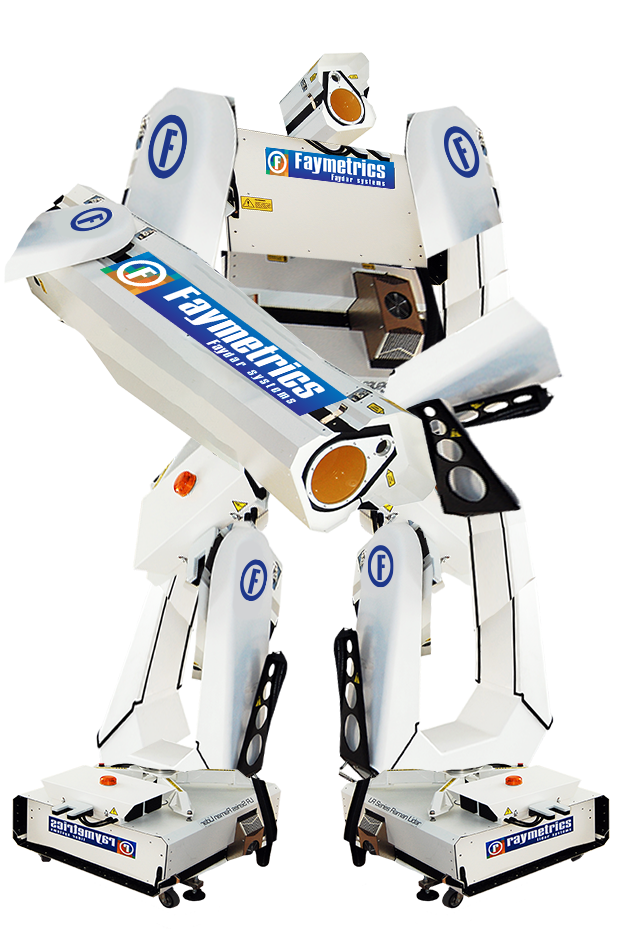
Fluorescence LIDAR System

A Faymetrics Fluorenscence LIDAR system LIDAR system

Product Code: #ADFC667

Product Category: Marine Applications

Cost: 12.500$

Fluorescence lidar is a non-invasive, remote sensing technique that makes it possible to extend the application of the laser-induced fluorescence technique to the outdoor environment. Various sea and land accidents, impact of climate change, or even an outbreak of a biological warfare can cause disastrous economically, environmentally, and socially consequences. Since very few other compounds show this tendency, fluorescence is a strong indication of the presence of oil or a bio-particle in the water or air respectively.
More details

LIDAR Technology

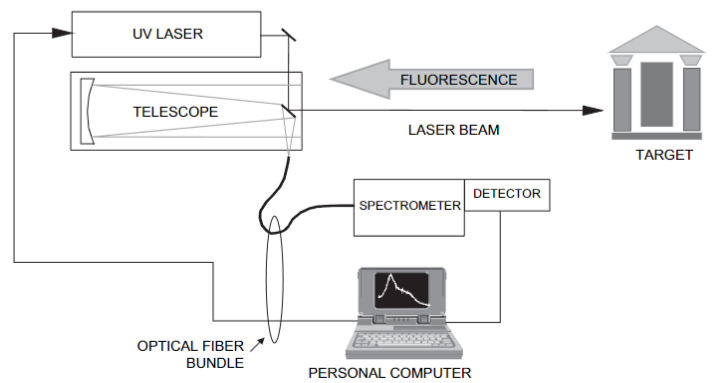
Lidar, acronym of LIght Detection And Ranging , is an active remote sensing instrument for the remote analysis of a target by means of a pulsed laser beam. The lidar can provide information on the spatial-eometrical features of the target or its physico- chemical characteristics. Thus, lidar can be regarded as the counterpart of radar. In other words, it makes it possible to extend the application of LIF spectroscopy to the outdoor environment, thus enabling an analysis of the target from great distances and operation in full sunlight.

lidar
                            explanation
Block diagram of a fluorescence lidar.

Uses

  • The system emits laser radiation, which causes fluorescence of the oil (e.g. oil spill) on the surface of the water
  • By using specialized algorithms, the system can detect a thin layer of oil or a Bio-particle in the air, much difficult to detect with the naked eye Even in the case that no oil is found, the system provides useful information on water quality (chlorophyll and soluble organic matter)
  • In a similar way in the air, it will detect Bioaerosols (fungi spores, bacteria, viruses, pollen grains, insects etc.)
lidar use
                            example
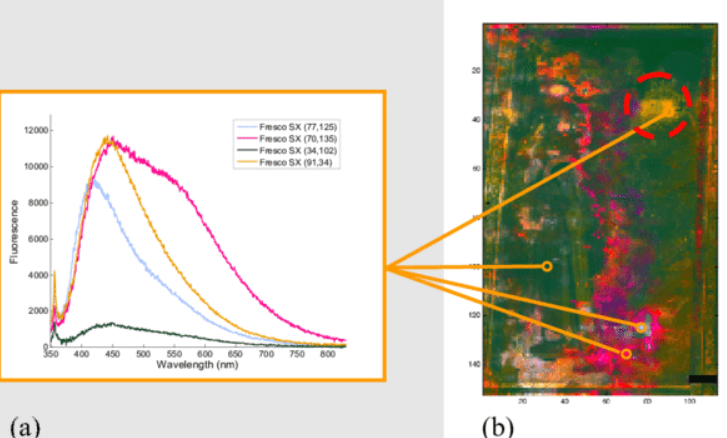
Example of lidar Technology used in an ocean spill off the Spanish coast.

Capabilities

  • It operates day and night as it is based on its own source of radiation
  • Provides results in real time, since no sampling and time-consuming chemical analyses are required
  • Detects oil layers thin up to 1 μm and Bio-particles in the air depending on local atmospheric conditions
  • It has the capability to differentiate key types of oils or Bio-Particles that are detected

Technical Specifications

Transmitter

LED Name/Brand Nichia
Wavelength 385 nm
Peak power 830 mW
Resolution 1.2 m
Bandwidth 10.92 ns
Repetition 500 kHz
Beam diameter 50 mmΦ
Beam divergence 5 mrad

Receiver

Telescope Schmidt-Cassegrain
Beam diameter 100 mmΦ
Beam divergence 3 mrad
Detection device Photomultiplier tube, Hamamatsu (R3650P)

Photon Counting Board

System lock 550 MHz
BIN Width 5 ns
Bin length 50
Acquisition count 167,777,214
Trigger Input/Threshold level 300 mV

Reviews:

profile icon

green_feret45

Did you know that this thing actually fries birds? No, really its rays decimate anything that enters its range. I really wish the company rep had warned us about this...

3.4 / 10
profile icon

Giorgos Liarakos

On tonight's video we ordered the Faymetrics Fluorenscence LIDAR System, and supposedly when you use the Faymetrics Fluorenscence LIDAR System at Metamorphosi Pierrias you turn into a very successful meteorologist.

6.7 / 10
profile icon

Batraxos Galinis

Accidentally burned my collegue's retinas during deployment, he's blind now. He deserved it. 10/10.

10 / 10