onetake icon

onetake

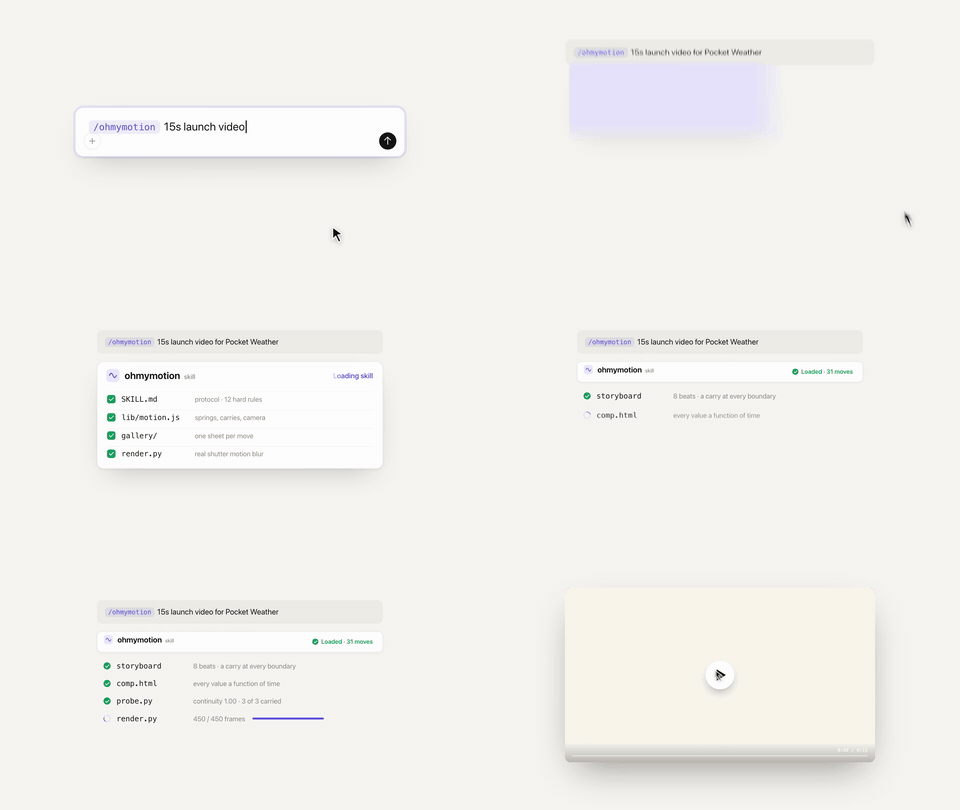
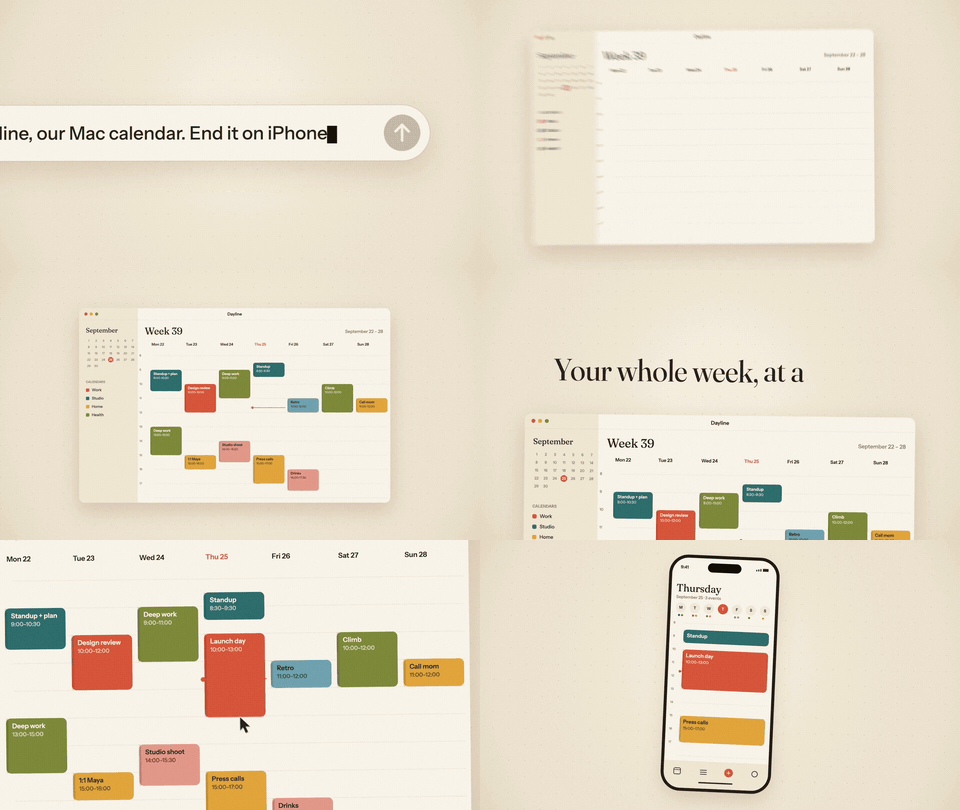
> **Motion films that never cut to the next slide.** A Claude Agent Skill that makes product launch films, teasers and feature demos where every beat grows out of the one before — one continuous take, not a stack of scenes. > **一镜到底的连贯动效。** 做产品发布片、预告片、功能演示:每一个画面都从上一个画面里长出来,是一整条连续的镜头,而不是一张张轮流出场的"PPT"。 [![License: PolyForm Noncommercial](https://img.shields.io/badge/License-PolyForm%20Noncommercial%201.0.0-lightgrey.svg)](LICENSE) [![Type](https://img.shields.io/badge/Type-Agent%20Skill-333.svg)](SKILL.md) [![Cases](https://img.shields.io/badge/Cases-10%20films-orange.svg)](cases/) [![Continuity](https://img.shields.io/badge/Continuity-measured%20per%20boundary-brightgreen.svg)](scripts/verify_promo.py) ![onetake launch](assets/hero.gif) From onetake's own launch film. A prompt bar opens into the ad it asked for; the next prompt collapses into a line that shoots across the desk and opens into a festival screen. No cut. [Full film with sound →](cases/onetake-launch-30s/onetake-launch.mp4) --- [English](#english) | [中文说明](#chinese) --- ## English ### The problem: motion that falls apart Most motion videos an AI makes today — and most template tools — come out **loose**. Title card, fade, UI shot, fade, feature card, fade, logo. Each shot can look fine and the whole still reads like a slideshow, because nothing connects one beat to the next: scenes *replace* each other. ### What onetake does differently: every beat is carried onetake treats the boundary between two beats as the thing to design. At every boundary, **something on screen survives and visibly becomes the next beat**: - the prompt bar **opens into** the app window; the window **reflows into** the phone; - a bar **collapses into a line**, the line **shoots across** the desk and **becomes the first grid line** of the next film; - a card **grows into** the page; a stage **opens from** the character; the camera **pushes through** a card until it *is* the next scene; - at the end, the cast **folds into** the lockup — in the launch film, the block cursor **writes the name** in one stroke. And **one camera holds it all together**. It never cuts: it follows the subject a beat ahead, whips to where the next thing will land, floats like a hand-held operator and shakes when something hits — then holds dead still, because rests are what make the moves land. ### Continuity is measured, not hoped for Every film is checked by an oracle before a human watches it. `probe.py` records what is on screen in every frame, finds each boundary, and asks what carried across it. A film whose beats replace each other fails. | film | verdict | continuity (carry score) | |---|---|---| | an earlier launch film, v1 — perfect rhythm, still a slideshow | rejected | **0.00** | | the same film, v2 | rejected | **0.40** | | the same film, v3 — every beat grows out of the last | accepted | **0.75** | | onetake launch film | accepted | **0.83** | The same oracle fails uniform cadence (shots all the same length), no stillness, clipped audio, fast moves without motion blur, and a subject that leaves the frame. ### What makes it look finished - **Real UI, rebuilt.** The product's interface is rebuilt in HTML from screenshots and sits on the camera's plane, so the camera can fly into it at any zoom. No screen recording. - **Measured moves.** ~38 moves (springs, entrances, carries, contact, sims, camera, fluid grounds), each a pure function of time with its speed curve measured — never a hand-rolled ease. - **Real motion blur.** Every moving frame is several captures across an open 180° shutter, averaged in linear light. Fast moves smear instead of strobing. - **Sound in one room.** Foley and synthesis placed from the film's own events, in one reverb, ducking the music under the hits. - **Deterministic.** Seek to any time, get the same frame. Drafts at 1080p30, finals at 4K60. ### 🌟 Films made with it Every case ships the finished film and a breakdown (concept, beat sheet, numbers, what was rejected and why). The films' source code is not included.
onetake launch

Three prompts, three films, one take — each prompt visibly becomes its film
▶ Film | 📖 Breakdown
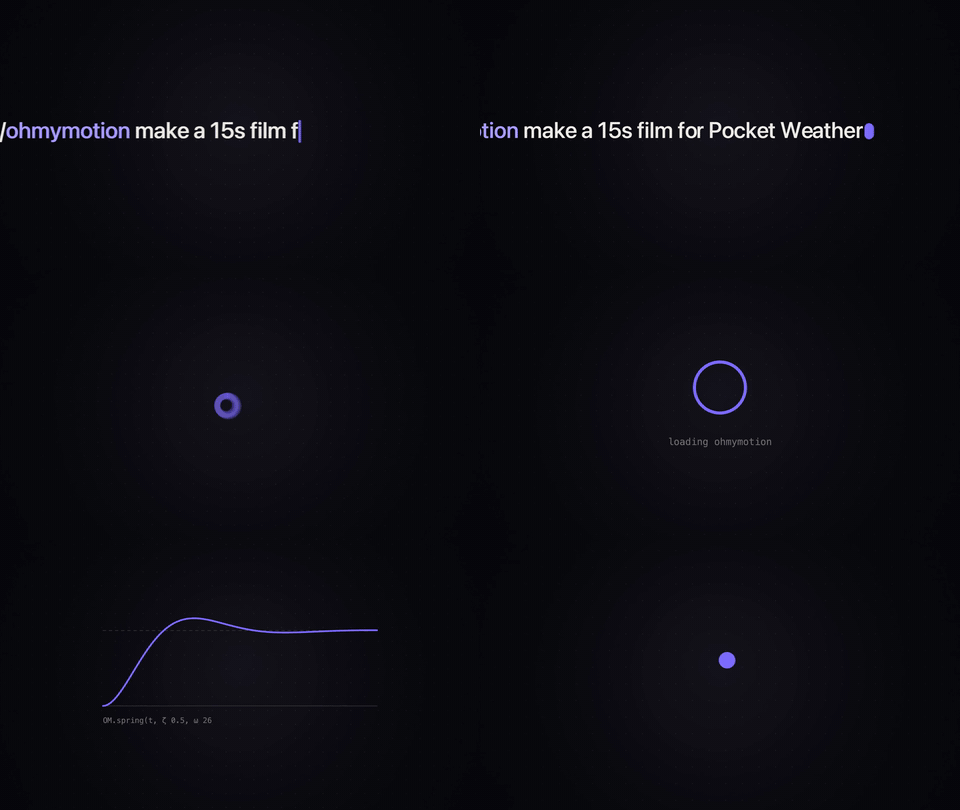
one-dot

One dot is the whole film: caret → menu → loading ring → spring curve → the dot on the i
▶ Film | 📖 Breakdown
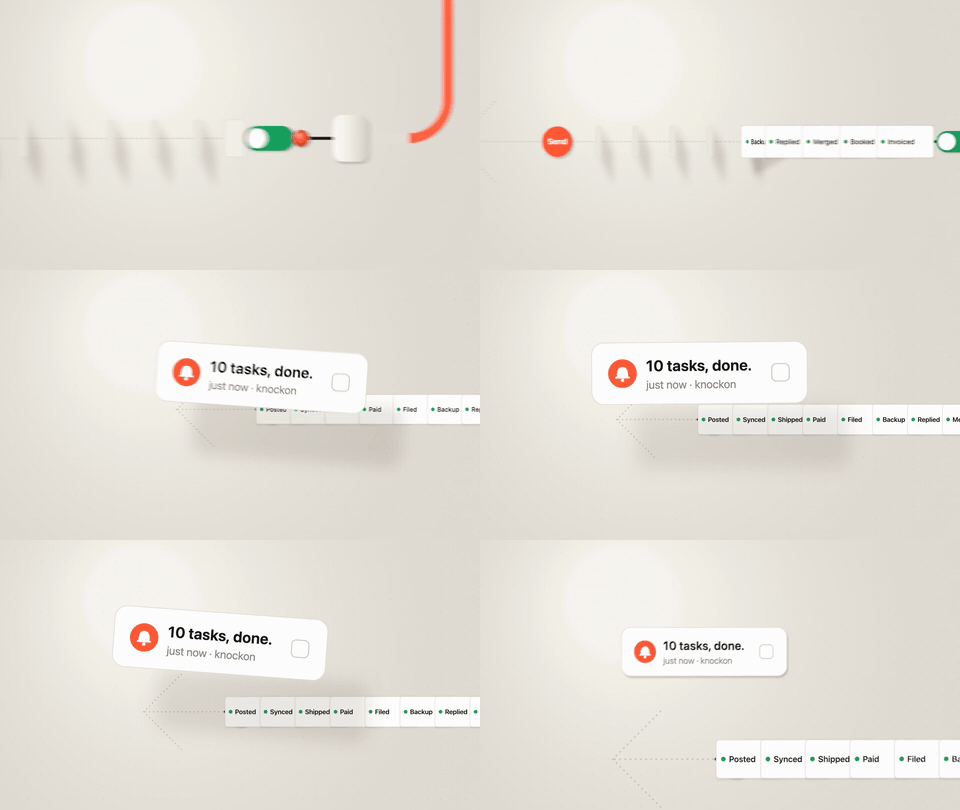
knockon

A chain reaction: every beat is the collision that starts the next
▶ Film | 📖 Breakdown
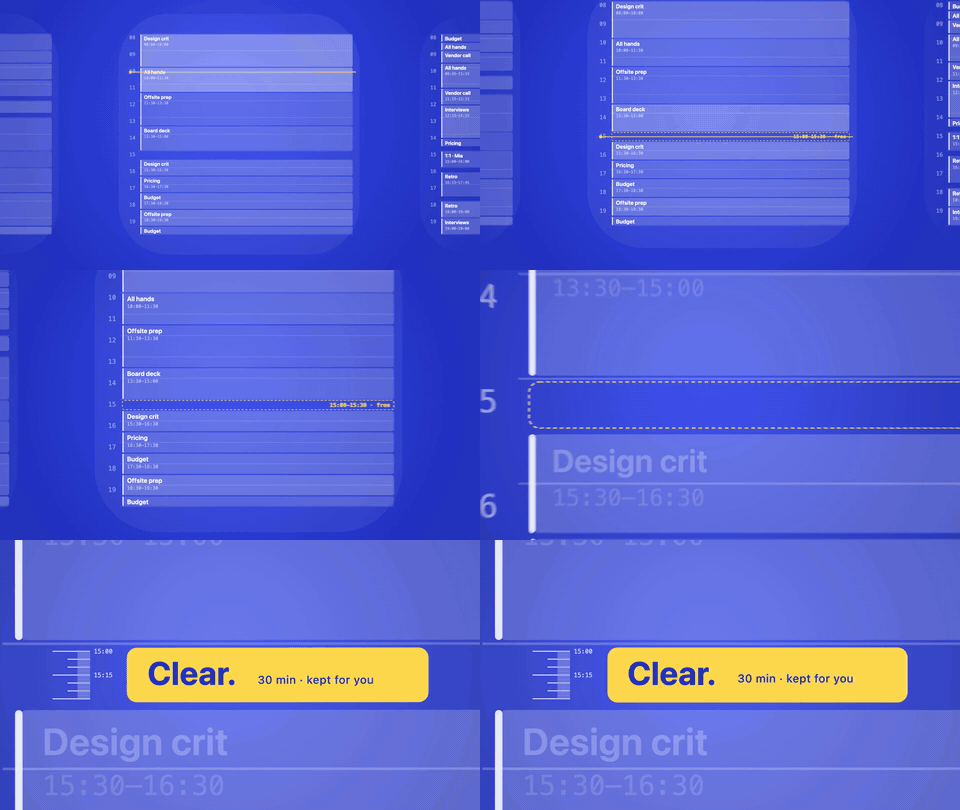
clearing

One zoom from a year to a free half hour — 1× to 300× and back, never a cut
▶ Film | 📖 Breakdown
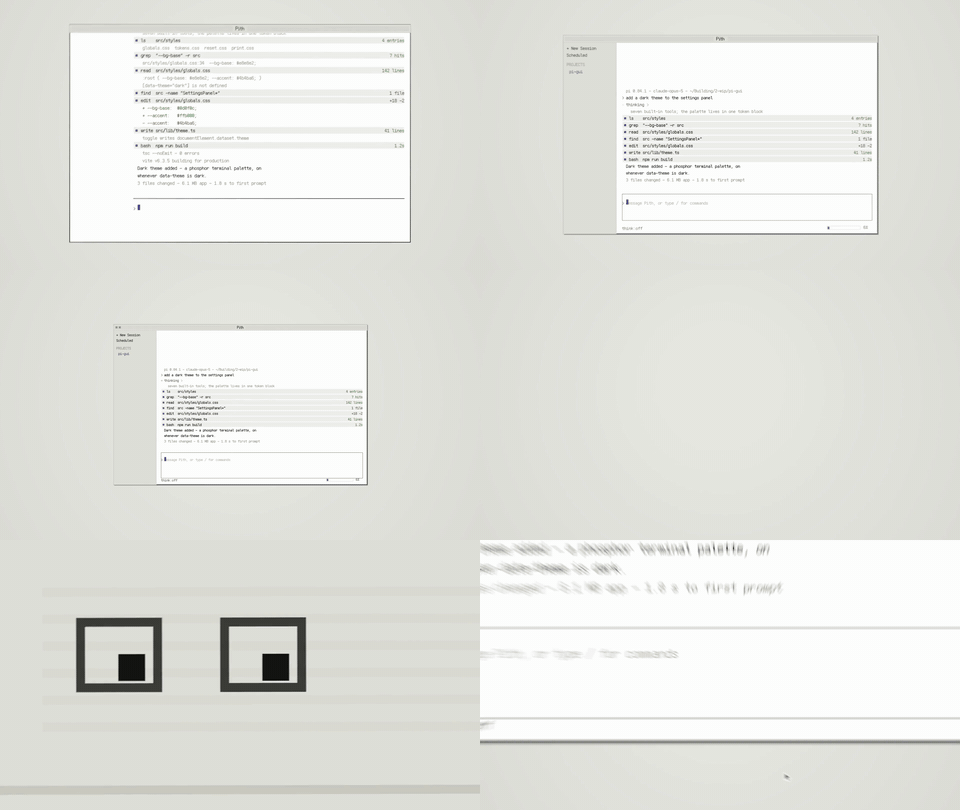
pith

The window grows out of one phosphor pixel: 440× → 0.52× in one move
▶ Film | 📖 Breakdown
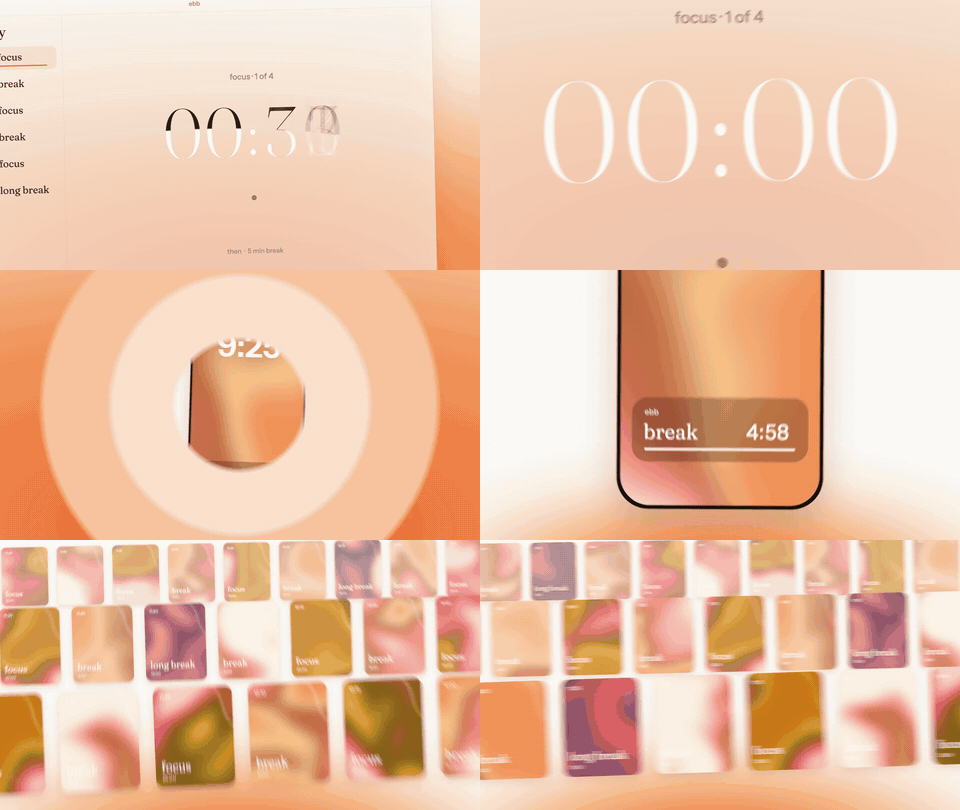
ebb

A field of light carries the take through five places; each flood drains onto the next
▶ Film | 📖 Breakdown
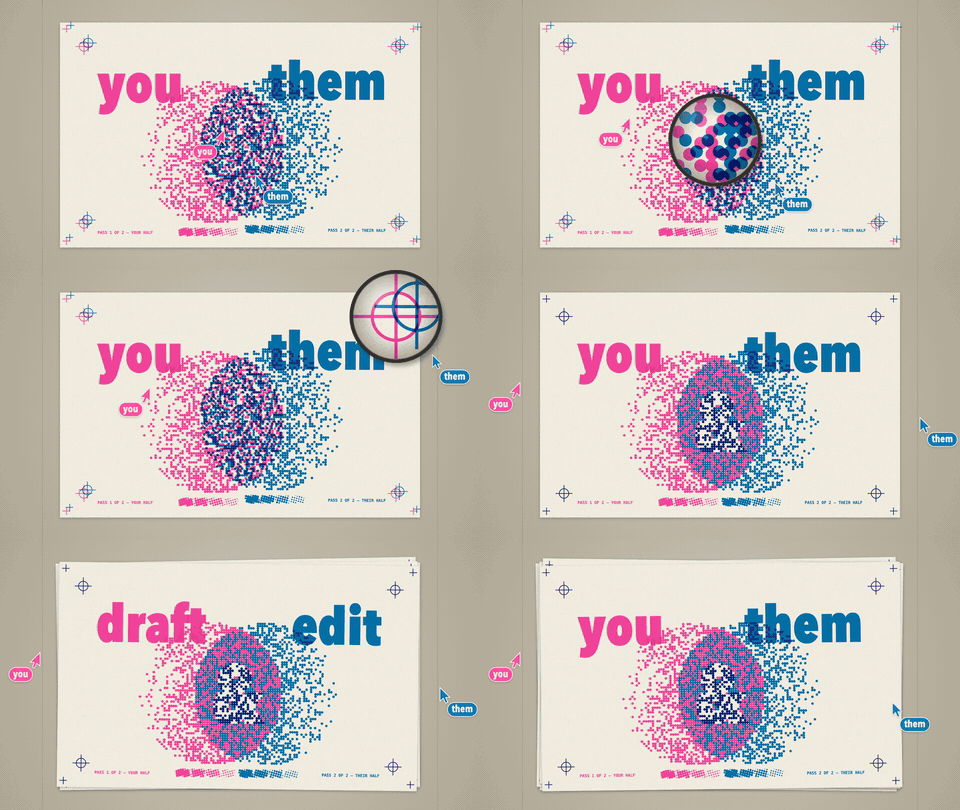
overlap

Two print passes slide into register — and an & appears that was hidden in both
▶ Film | 📖 Breakdown
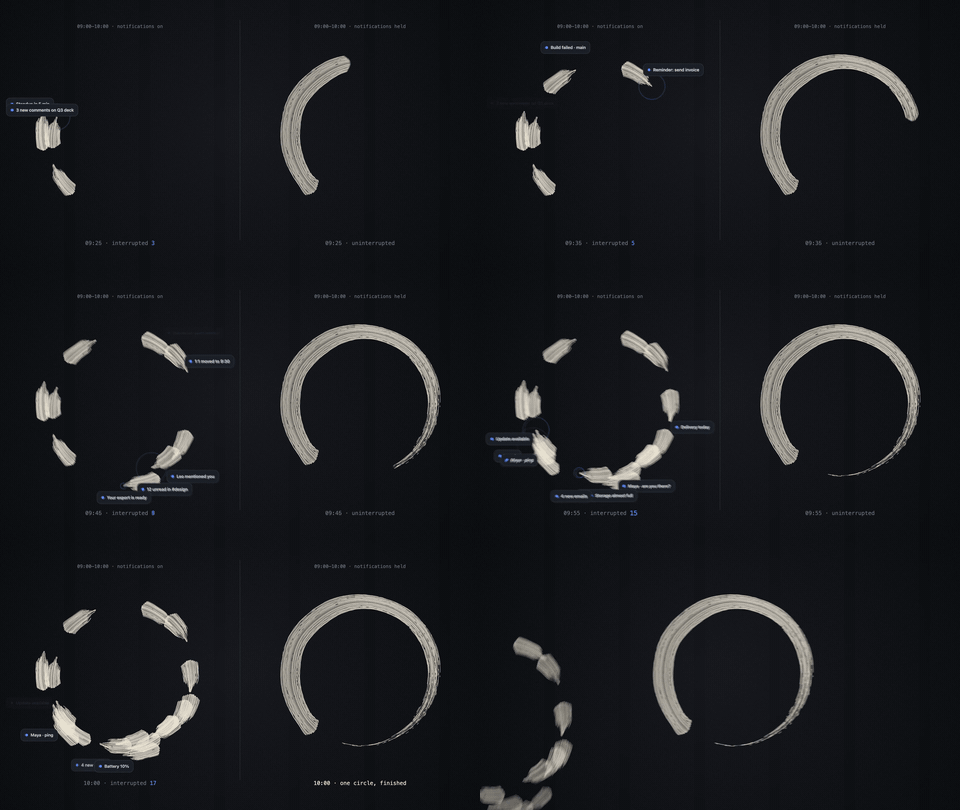
unbroken

One ink stroke that is never lifted: procedural brush, no textures
▶ Film | 📖 Breakdown
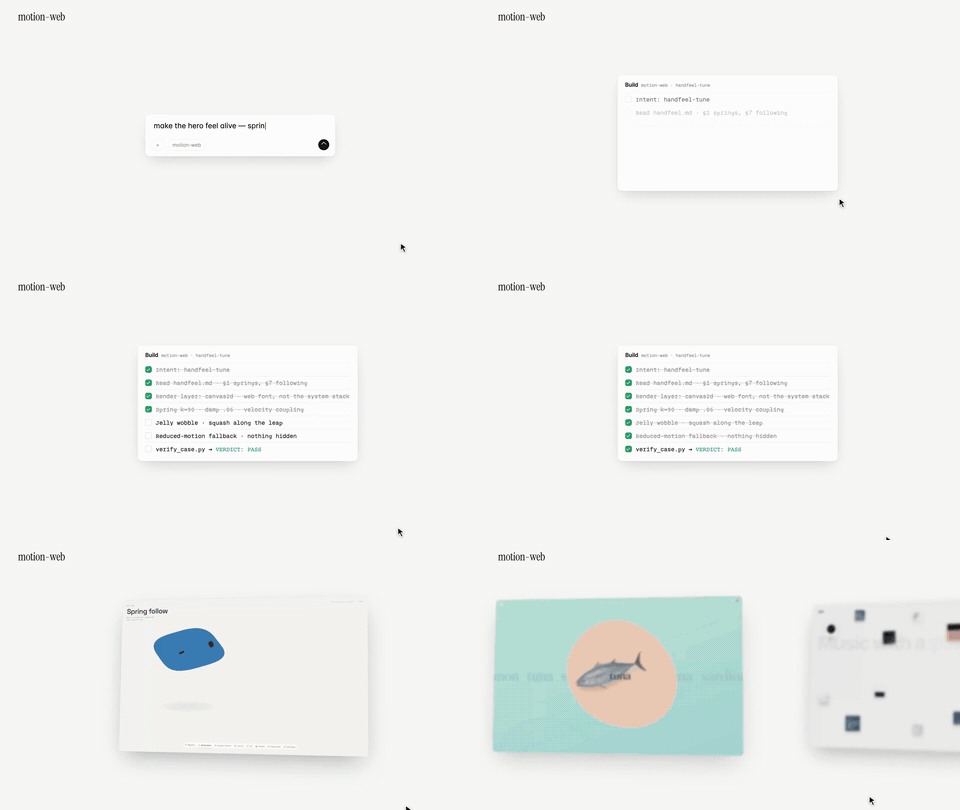
motion-web

Where the rhythm rules came from: small UI, big ground, rests, then a burst
▶ Film | 📖 Breakdown
skill-demo

An operation demo from nothing: the chosen menu row flies into the input as a chip, and on from there
▶ Film | 📖 Breakdown
> one-dot and skill-demo were made when the skill was still called *ohmymotion*; the films show that name. ### How a film is made 1. **Deconstruct the reference in numbers:** how much of it is still, where it cuts, how its moves ease. 2. **Three concepts, pick one.** Each is one sentence about the *picture* — "one dot becomes everything", "one zoom through scale" — not three stories told with the same cards. 3. **A beat sheet for rhythm *and* carry.** Shot lengths vary by ≥ 4×, and every boundary names what survives it. 4. **Compose** one HTML file on the move library. **Render** with motion blur. **Score** the sound from the film's events. 5. **Verify**, then show a human. ### 📦 Installation ```bash # Claude Code git clone https://github.com/feitangyuan/onetake.git ~/.claude/skills/onetake # Codex / other agents that read skills git clone https://github.com/feitangyuan/onetake.git ~/.agents/skills/onetake ``` Then ask: *"Make a 15 s launch video for my app"*, *"a feature demo rebuilt from these screenshots, no screen recording"*, *"my motion video feels like a slideshow — fix it"*. **Requires** python3 with `playwright` (chromium), `numpy`, `scipy`, `Pillow`, `matplotlib` (`opencv-python` for reference analysis), `ffmpeg`, `node`. Narration adds `faster-whisper` and Kokoro TTS. Music is royalty-free by default. | | | |---|---| | `SKILL.md` | the protocol and the hard rules each rejected cut taught | | `lib/motion.js` · `lib/ui_kit.js` | the move library; the UI-rebuild kit | | `scripts/` | render (motion blur, 4K60), verify (the oracle), probe, stills, reference analysis, footage, narration, sound | | `gallery/` | one live demo and one six-frame sheet per move | | `references/` | rhythm, carry, composition, camera, sound, product demos — the method with its numbers | ### License [PolyForm Noncommercial 1.0.0](LICENSE): free for personal, educational, research and other noncommercial use. **Commercial use is not permitted.** --- ## 中文说明 ### 问题:动效是散的 现在大多数 AI 做出来的动效视频,还有大多数模板工具做出来的,都是**散的**。 标题卡、淡出、界面镜头、淡出、功能卡片、淡出、Logo。每一镜单看也许都不错,合起来还是像在翻 PPT。 原因是画面和画面之间没有任何联系,后一个场景只是把前一个**替换**掉了。 ### onetake 不一样:每个画面都被"接住" onetake 把两个画面之间的交接处当成设计的重点。每一个交接处,**都有一个东西活下来,并且看得见地变成下一个画面**: - 输入框**展开成** App 窗口,窗口再**重排成**手机界面; - 输入框**压成一条线**,这条线**划过桌面**,**变成**下一条片子的第一根网格线; - 卡片**长成**整个页面;舞台从角色身上**打开**;镜头**穿过**一张卡片,穿过去就是下一个场景; - 结尾,所有元素**收拢成**标志。在 onetake 自己的发布片里,是光标一笔**写出**名字。 **把这一切串起来的是同一个镜头。** 它从不剪断:提前半拍跟着主体走,抢在下一个东西落地前甩过去,像手持一样轻微浮动,东西撞上来时跟着一震; 该停的时候又能完全静止,因为有停顿,动作才落得下来。 ### 连贯是量出来的,不是靠感觉 每条片子给人看之前,先过一遍自动验收。`probe.py` 记录每一帧画面上有什么,找出每一个交接处,再判断有没有东西从这边带到那边。 画面互相替换的片子,直接判不合格。 | 片子 | 结果 | 连贯度(carry score) | |---|---|---| | 更早的一条发布片 v1:节奏完美,仍然像 PPT | 被否 | **0.00** | | the same film, v2 | 被否 | **0.40** | | 同一条片子 v3:每个画面从上一个里长出来 | 通过 | **0.75** | | onetake 发布片 | 通过 | **0.83** | 同一套验收还会判掉这些问题:镜头长度全都一样、没有静止段落、音频爆音、快动作没有运动模糊、主体出画。 ### 为什么看起来像成品 - **复刻的真实界面**:按截图用 HTML 重建产品界面,放在镜头所在的平面上,推到多近都清楚,不需要录屏。 - **实测过的动作**:约 38 个动作(弹簧、入场、衔接、碰撞、物理模拟、镜头、流体光场),每个都是时间的纯函数,速度曲线都实测过,不用随手写的缓动。 - **真实运动模糊**:每个运动帧都是快门张开期间的多次采样,在线性光下平均。快动作会拖出残影,而不是一格一格地闪。 - **同一个空间里的声音**:音效按片子里的事件摆放,放在同一个混响里,打点的地方音乐自动让位。 - **结果确定**:跳到任意时间,得到的都是同一帧。草稿 1080p30,成片 4K60。 ### 案例 上面的表格里有 10 条用它做的片子,每条都附成片和拆解文档(概念、节拍表、数据、被否掉的版本和原因)。**不包含片子的源代码。** 其中 one-dot 和 skill-demo 做的时候 skill 还叫 *ohmymotion*,画面里是旧名字。 ### 一条片子怎么做出来 1. **先把参考片拆成数字**:静止占多少、在哪里剪、动作怎么缓动。 2. **出三个概念,选一个**:每个概念是一句关于画面的话,比如"一个点变成一切""一个镜头穿过所有尺度",而不是同一套卡片换三种讲法。 3. **写节拍表,节奏和衔接都要写**:镜头长短相差 4 倍以上,每个交接处都写明是什么东西活下来。 4. **合成、渲染、配音**:在动作库上写一个 HTML 文件,带运动模糊渲染,按片子里的事件配声音。 5. **过验收,再给人看。** ### 安装 ```bash # Claude Code git clone https://github.com/feitangyuan/onetake.git ~/.claude/skills/onetake # Codex 等读取 skills 的 Agent git clone https://github.com/feitangyuan/onetake.git ~/.agents/skills/onetake ``` 然后直接说:「给我的 App 做个 15 秒发布视频」「按这几张截图复刻界面做功能演示,不录屏」「我的动效视频像 PPT,帮我改」。 **依赖**:python3(`playwright` + chromium、`numpy`、`scipy`、`Pillow`、`matplotlib`,分析参考片需要 `opencv-python`)、`ffmpeg`、`node`。 配音需要 `faster-whisper` 和 Kokoro TTS。音乐默认用免版权曲库。 ### 许可证 [PolyForm Noncommercial 1.0.0](LICENSE):个人、学习、研究等**非商业用途免费使用,不允许商用**。