Final Project: Open Book/Libro Abierto

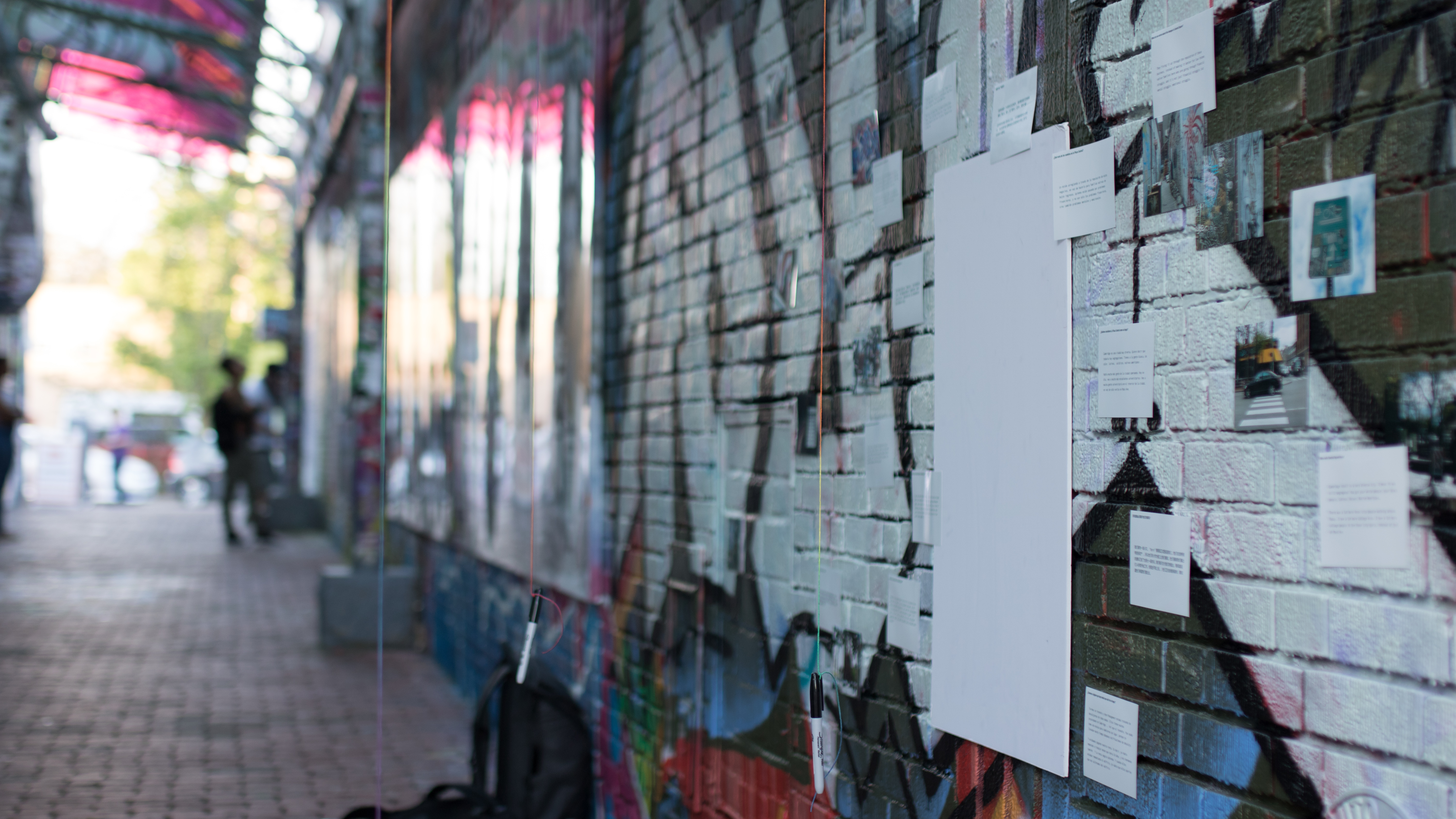
Open Book Screenshot

Calvin Z. + Kate W. + Daniel C.

Abstract:

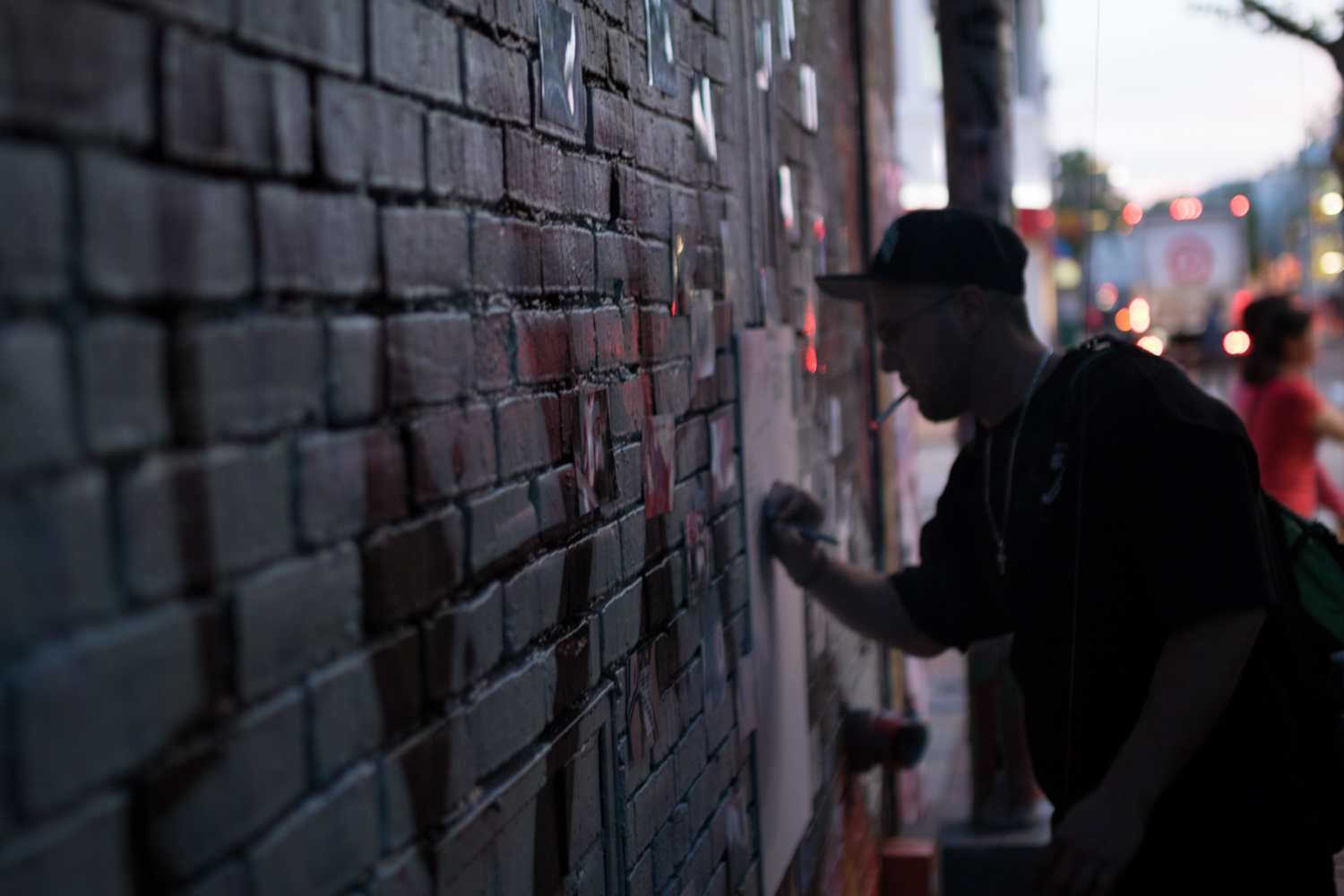
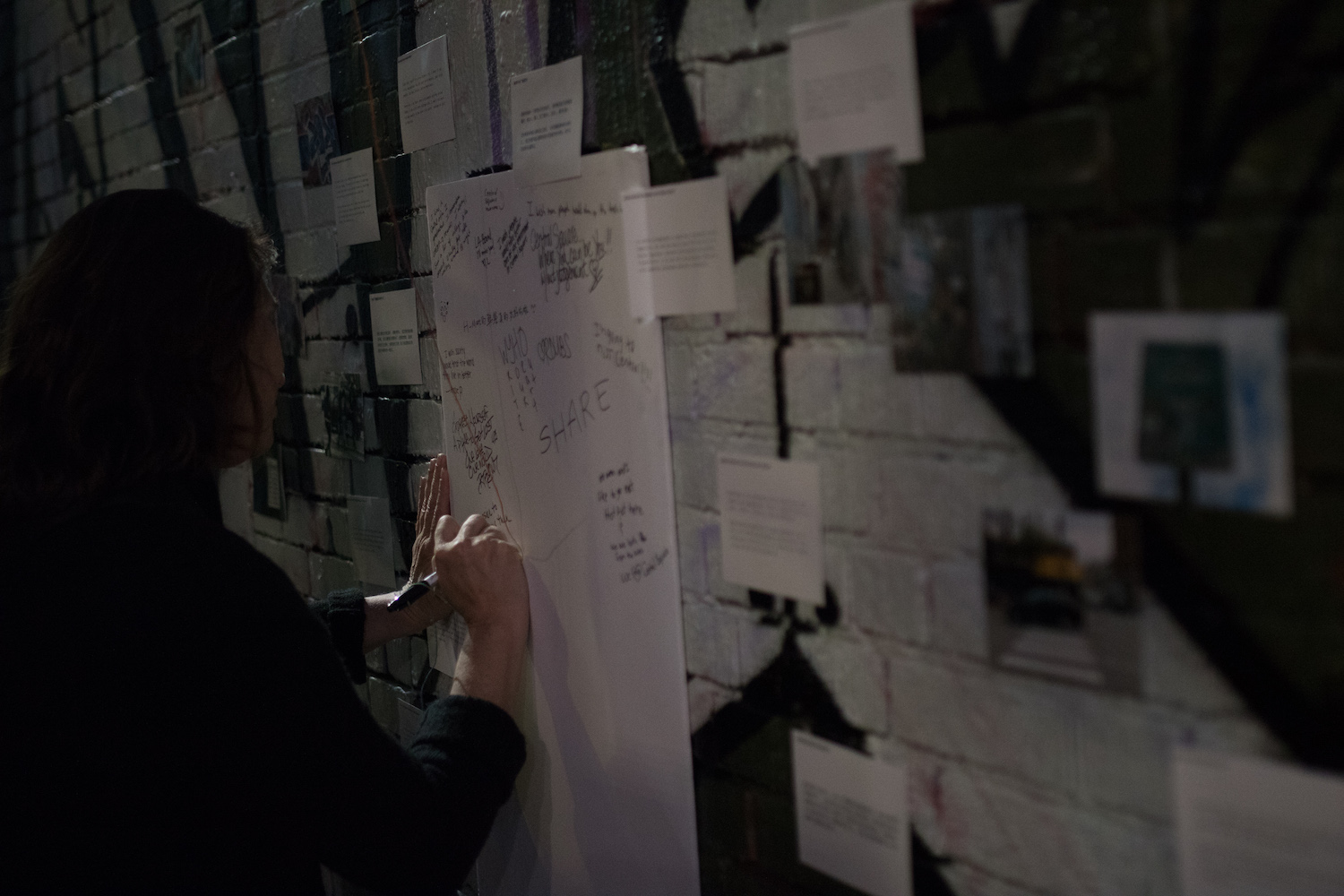
Open Book/Libro Abierto is designed to be a versatile platform for community members to share their stories. The print medium allows users to interact with the book in a tactile way, physically making their mark on the story of their community. The book presents handwritten and printed words along with photos of community members, and offers viewers access to audio interviews via QR links. Our goal is to create a hackable book that invites viewers to share their stories and start conversations, responding in whatever medium they choose. The book will be exhibited in Urbano’s Nomadic Sculpture, where visitors will be able to read the stories and respond by writing directly in the book. We hope to foster productive and honest conversations about what displacement and community mean to the people of Egleston Square, both physically written in the book as well as verbally during and after the exhibition.


Updated 05.21.17:

Link to project: http://ca.lvinzhong.com/OpenBook/

Link to presentation: http://ca.lvinzhong.com/OpenBook/Presentation.pdf

Link to case study: Case Study 

Final Project: Rainbow

Screen Shot 2017-05-16 at 10.29.48 PM


Abstract: Rainbow is a public installation that tells the stories of about Cambridge residents and their history with the area. The goal of the project to highlight important issues mainly gentrification in and around Central Square. Using audio recordings and photography, this installation will help the voices of people who live in the area to be heard and shed light on how universities and businesses are changing Central Square and making the low-income life increasingly difficult.

Link to Presentation: https://docs.google.com/presentation/d/1vonENRwyIaiYigMjKvgw5pNT5dyBD5ao4CKpK85ehqU/edit?usp=sharing

Link to Case Study:  https://docs.google.com/document/d/1fpR5GLREKT6m4jd4QQMMq-q2UdnuAIKzXIT68o29axU/edit?usp=sharing


Final Project Blog Post

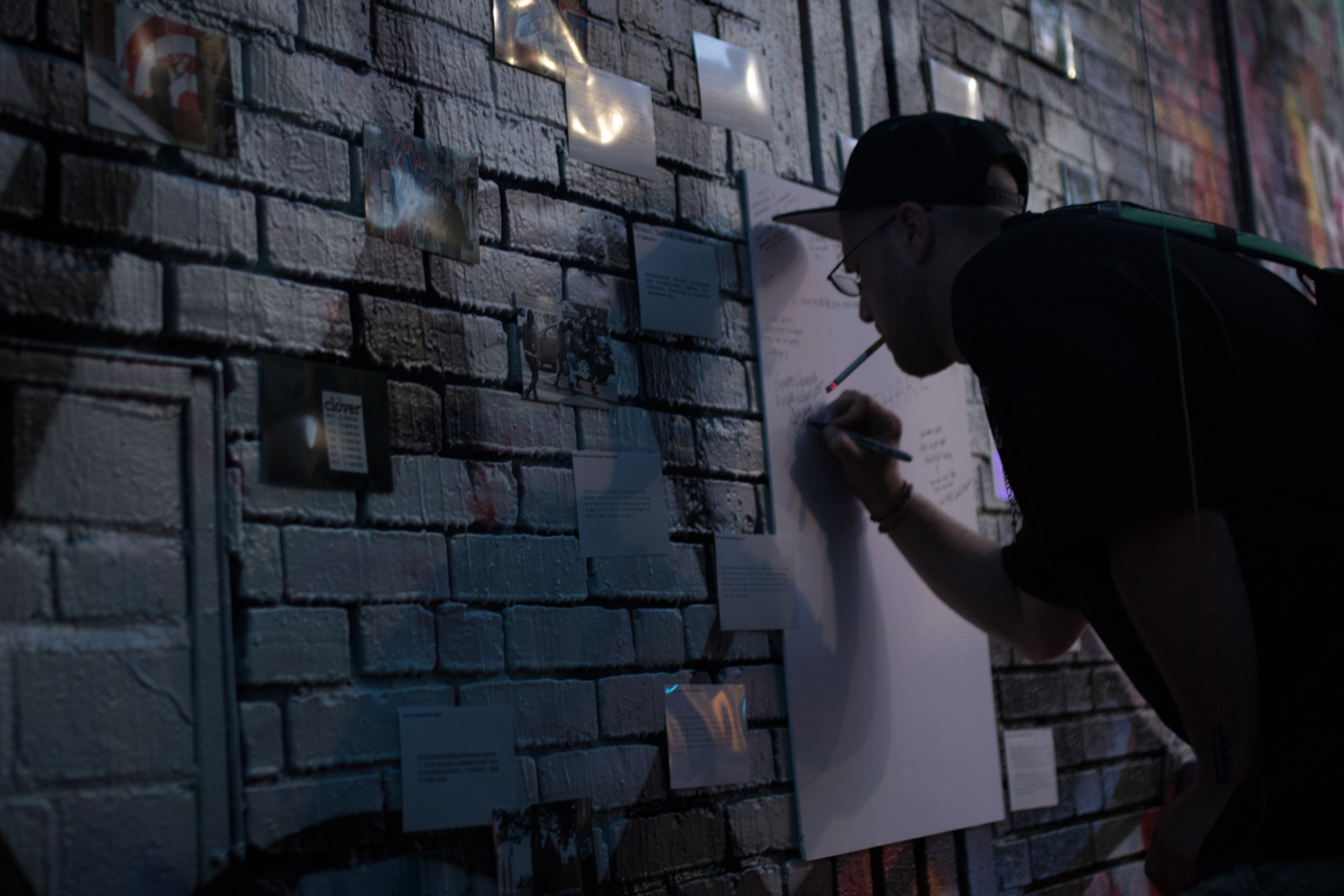
Kathy, Nina, Max and I finished and installed the project last night! I have lots of photos and video to share at class tonight. Within the night and morning, people walking past shared dozens of thoughts about Central and the photos we took. At some point today, someone stole the sharpies, which we expected to happen. I’m satisfied with the ephemeral nature of the project (and I’ve already noticed people bringing their own pens).

I’m currently working on getting the images and videos uploaded, but here are a few to start:

IMG_0747 IMG_0728 IMG_0748 IMG_0783 IMG_0740

Response to Hackathon Readings

I found the course readings on discotechs, design jams, and hackathons to be very interesting and relatable, despite not being a computer science/design person myself. Much of what I learned from the readings was new information to me although I did have some inkling as to the various perks and problems of hackathons thanks to hearing about many of my friends’ various experiences.

I agree with Charlie Detar that hackathons don’t, or can’t, solve big problems. It is unreasonable to believe that solutions to large scale issues can be created in the span of a couple days. However, because I have such limited knowledge of and experience with hackathons (and discotechs, and design jams) I was under the impression that most hackathons were meant to be a space where one can meet other people interested in tech and collaborate on fun projects. Perhaps this is because the only hackathon I have ever been to is WHACK, Wellesley’s hackathon, which I have heard offers a more inclusive and relaxed environment than other hackathons. WHACK is also great because it caters to women in tech, who are often marginalized, and offers them a safe space to hack. I believe that this specific hackathon serves a good purpose because it allows women to be comfortable doing design with others and invites people who may not have a tech background explore in a welcoming environment. I understand that this is not the norm, though, and that they can sometimes foster more toxic environments.

From the many friends I have in CS and tech I know that there is an unhealthy lifestyle associated with hacking that is almost glorified within these departments and at hackathons. People often stay up late and get very little, if any, hours of sleep and really on heavily caffeinated beverages to stay awake. While I knew there was pressure for participants to sleep as little as possible in order to “maximize” productivity at hackathons, I was shocked to learn that there were sometimes no sleeping areas available or that hackers were “restricted to sleeping on concrete slabs.” It’s upsetting that the people organizing the hackathons aren’t prioritizing participants’ health which can then lead to participants picking up habits they start at hacks and carrying them into their own life. Going without sleep or proper food and hygiene is not a sustainable way to live nor does it contribute to being productive when the point of these hackathons is to find solutions to problems, not create more.

From what I have seen personally, though that experience was limited, and what I learned through the readings I believe that hackathons are worthwhile and important so long as they are organized with reasonable goals in mind and with programming that helps to foster a more healthy hacking environment. Hackathons should help promote interest in tech and hacking instead of trying to tackle on impossible issues. This way we can grow a network of people who can later work on these issues with the amount of care and time they deserve and need.

Interview with Jorge and Felisa

Jorge Caraballo Cordovez

I interviewed Jorge Caraballo Cordovez and his partner, Felisa, as part of the East Boston group.

Jorge came to speak to our class about his work with East Boston, Nuestra Casa. He explained that when he first moved to Boston as an international student from Colombia studying journalism at Northeastern, he became especially interested in learning more about East Boston. He heard from many people that the area was populated by many Latinx people and would remind him of home, which it did. After doing journalism work in the community, he began to hear about issues of gentrification and displacement from the people who lived in the area. Many of the people affected, some of whom only spoke Spanish, were unaware of their rights as tenants. This led to the creation of his postcard project, which we in the Co-Design Studio were fortunate enough to hear about and see the postcards firsthand.

Since we had already heard about East Boston, Nuestra Casa I decided to focus on Jorge and Felisa’s personal experiences and observations regarding gentrification and displacement in East Boston. It was interesting for me to hear from them as they are both immigrants and students living in East Boston; the two are often shown at odds with each other when it comes to displacement. Perhaps the most important thing I heard from them was that while displacement and gentrification is a serious issue that disproportionately hurts Latinx people and immigrants, it is not the fault of the people who then move in and take their place as tenants. We all need a place to live and it is the responsibility of the government to ensure that there is enough affordable housing for all.

Listen to the full interview here.

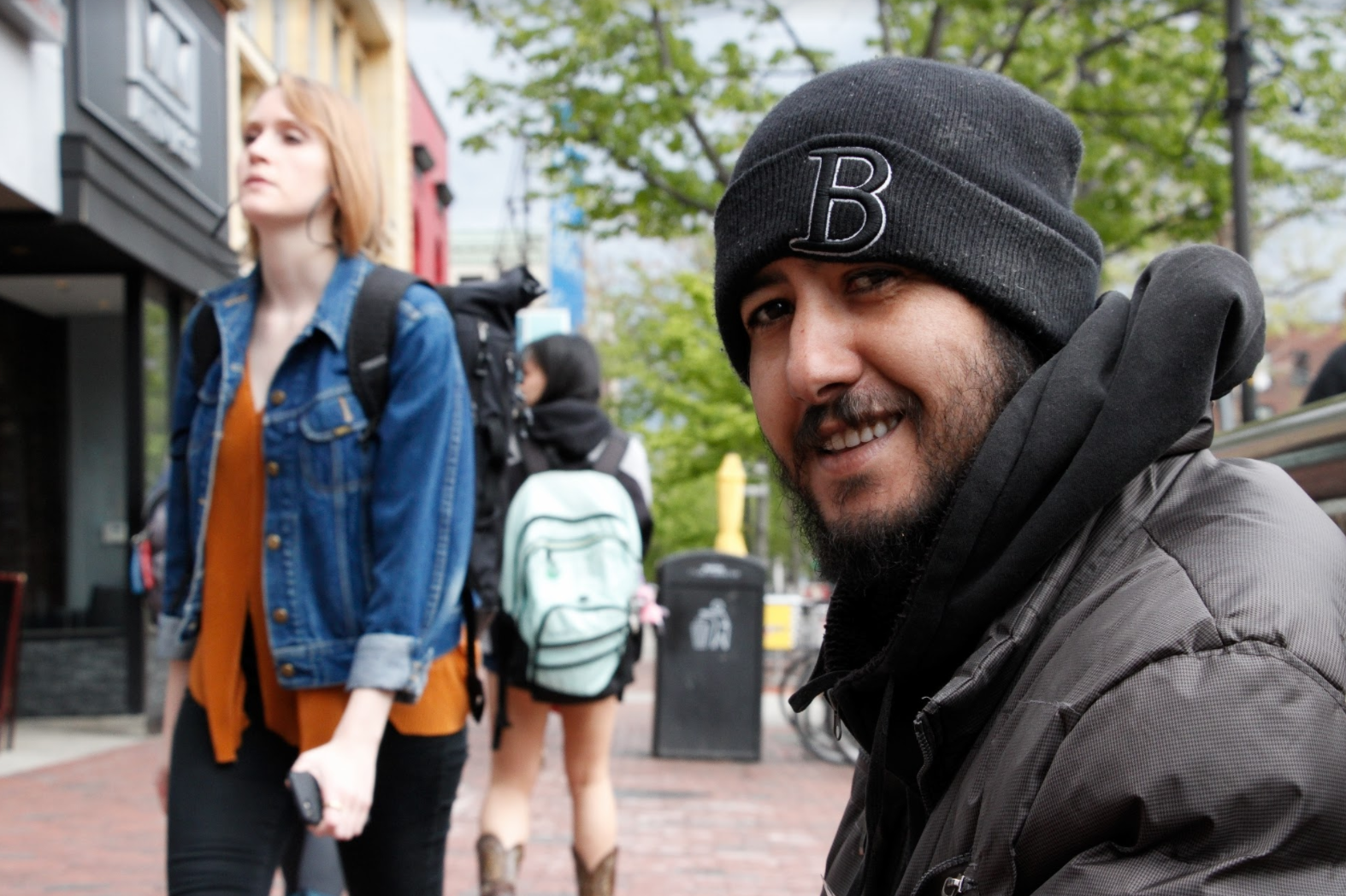
Photo by Adam Glanzman.

Interview with Chad Shabazz (Central Sq Resident)

https://soundcloud.com/user-852861513/interview-with-chad-shabazz

On Tuesday, I met with Chad Shabazz in the cafe of the HMart on Central Square. I know Chad through a friend, though this was our first time meeting.

He had just finished a training session at his job as a youth advisor at the YCMA. He was wearing a black motorcycle jacket completely covered in patches; “People look at me and they’re surprised that I work with children. And the parents are surprised. And I take pride in that,” he told me.

Chad’s 33 years old. He’s from the Cambridge Coast, and grew up in Cambridge around Central. He’s written a song about his experience growing up between MIT and Harvard.

His mom grew up in Boston, he tells me, around the Blue Hills area. Right now, he and his family live in in Cambridge Port. He spoke immediately and passionately about his experience, and struck me as someone with a sense of urgency—and at the same time, optimism.

He shared his observations, and also his experience being evicted by Wynn Management as a young adult. I’ve clipped and transcribed parts of our conversation that moved, frustrated, or interested me. (Read more…)

Continue reading

Interviews with Carlos

I’ve been very overloaded between work, NuVu, several migraines and two allergic reactions so I designated time today to get this post from last week done.

I interviewed Carlos Espinoza-Toro from the Jamaica Plain Neighborhood Development Corporation (JPNDC). This is a link to my interview.

Carlos and I talked about the JPNDC’s work with small business-owners and their families.The JPNDC does a lot of work with businesses facing eviction. Many businesses facing eviction/displacement don’t have the information they need to fight back against exploitative landlords. The JPNDC is able to support local families’ businesses, which protects them and their community against interests that are trying to extract value from their land by kicking them out.

The JPNDC often acts as a connector, linking lawyers and community advocates (especially from groups like Harvard Legal Aid Bureau and City Life / Vida Urbana) with tenants or small family business-owners. This can level balance of power between landlords and residents, since landlords often begin with a greater understanding of the law. Even knowing that they are allowed to fight a displacement can be a significant improvement for residents or business-owners.

Carlos and I discussed the difference between the words gentrification and displacement as they relate to the people he works with. When people talk about gentrification, he said that they often focus on the new residents entering an area. He believes that it is important to consider the people that are pressured to leave an area as a result of economic, cultural and other changes that occur in tandem with new residents moving in. This concept, displacement, more directly refers to the people who have to leave.

Carlos talked about specific cases like a group of tenants whose landowner sent them a notice that their building had changed ownership and they were not sure of the significance of the document they were being asked to sign. This uncertainty was aggravated by the fact that the residents “didn’t speak English very well…they were afraid to sign it.” When they reached out to the JPNDC, they partnered with several other local organizations (like Egleston Square Main Streets, and City Life / Vida Urbana). The tenants didn’t have enough money (>$5,000) so Carlos applied for a mini-grant from the Massachusetts Growth Capital Corporation so that the tenants would be able to pay for legal representation from Gabriel Mendoza. This let them negotiate with the new landlords for support towards their relocation. Carlos considered this a “great model for helping tenants going through the exact same situation.”

I interviewed Carlos a second time on video, at the JPNDC. This interview will be included in a film that I’m making, along with interviews with a number of other activists, professors and people fighting displacement.

Jason Korb: 100% Affordable Housing at Port Landing

Link

The walk from the heart of Central Square to 131 Harvard Street, the home of Port Landing is deceptively short. Although separated by a mere ten minutes the transition into The Port, or Area 4, is sharp. Niche brunch spots, graffiti murals, and glass encased gyms become average brick and mortar buildings. A shiny new playground passes by to my right. A Cambridge Residents Alliance van sits parked along the street. The grinning faces of people of color are displayed on large apartment flyers, encouraging applications.


The sharp demarcation is reflective of larger forces that have resulted in increased development and housing prices in Central Square/Kendall over the past decade or so. Included in these forces are rent deregulation of 1994, the increasing cost of land and an influx of tech companies and their employees. A review can be found in this BuQuad article from 2013.


Another way to describe what we see in Area 4 is gentrification, a term first coined by Sociologist Ruth Glass in 1964. She defines it as the “process of neighborhood change that results in the replacement of lower income residents with higher income ones.” Increasing the amount of affordable housing is one way to combat the displacement associated with gentrification.


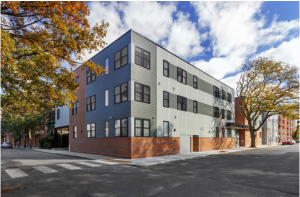
Enter: Port Landing. Port Landing is a 20 unit development with 100% affordable housing. While it is an attempt to create space in Cambridge for low and middle-income housing, Port Landing was made possible via a complex history directly intertwined with a Biotech development company.


In order to build an office building on Broadway St. the organization was contracted to donate a large sum of money to the community of The Port and a parcel of land at 131 Harvard St. was deed restricted for community use and returned to the community. Due to an unfortunate series of mismanagement, the land sat empty and unused for years. The land was eventually placed on the market, but the deed restriction meant the land could only be used as affordable housing, a community park, community garden etc. This drastically lowered the cost of the land and presented an opportunity for Jason Korb and his partners at CapStone Communities LLC to build Port Landing.
 

Port Landing (Before)


Even with the affordable price of land, making Port Landing financially feasible required a complex combination of low-income housing tax credits (LIHTC), investment tax credits, and soft debt. LIHTC specifically are a government incentive for private investment and financing of affordable housing. To some estimates LIHTC support 90% of all affordable housing in the US. Mr. Korb is concerned that these essential tax credits may be on the chopping block for HUDS and the current administration, as they are considered to be entitlements.


According to Mr. Korb rather than discouraging public-private partnerships and investment in affordable and mixed-income housing, we should be encouraging it. Policies like inclusionary zoning [linking the production of affordable housing to market price housing] and density bonuses [allow developers of market rate housing to increase the amount of housing built if affordable housing is included] are important ways to incentivize the creation of more affordable housing.

Korb and his partner at CapStone have invested the same amount of attention to the design of Port Landing as they have to its financing. The building is a beautiful blend of the brick and modern sleek steel. The interior is intentionally designed. A giant wallpaper map of Cambridge greets you as soon as you walk in and portraits of members of the community line every hallway. One community member put it this way:
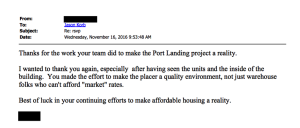
 

Testimonial


Korb says he is just happy to provide “homes worthy of the people who live in them.”

 

131-Harvard-Unit-101-0001 Screen Shot 2017-05-04 at 4.53.35 PM

PC: Patrick Rogers Photography

listen to our interview here:

Interview With Dom at ZUMIX

Two weeks ago, Tabia and I visited Zumix to meet up with Britany’s class to conduct our interviews. I was excited to see the space as I missed the whole class visit due to a concussion, so I was really excited to be able to get more of an understanding of what Zumix was about. When we walked in the door we were met by two people the sitting behind a desk collaborating on a what seems to be a song. The younger looking one holds a guitar and seems to be explaining a section of the song to the other person. The older one looks up long enough to tell us how to sign in and where to go, but both are clearly quite invested in their project. Tabia and I follow their instructions down the stairs and to a small classroom where students work fairly independently in front of computers, each headphone clad student cutting up sections of audio together various audio tracks.

We ended up interviewing a student named Dominic. Dominic is a sophomore in high school who has been taking classes at Zumix since last summer. Zumix is an organization that works with kids teaching them how to make and produce their own music; some of which they play on their Zumix Radio and stream online. Music is not their only focus, however, and Dom’s class is currently working on a project about a problem that greatly effects his community of East Boston: gentrification. In his interview Dom explains how his class conducts interviews with members of the community to learn their stories of how gentrification has effected them or people they know, and he hopes that by sharing these stories with a wider audience, the city might begin to address the legitimate concerns of the community.