Interview Part 2: CERO

Part of Insiyah’s goals for this week involved investigating what it might take for CERO to break into an anchor institution like MIT. To this end, she reached out to some colleagues at the Department of Urban Studies and Planning who did a research project on the procurement office at MIT last term. From their report, we were able to glean that MIT has a Supplier Diversity Program that CERO could benefit from. This program connects MIT buyers with suppliers of diverse background, including small business that are minority owned, women owned, owned by people with disabilities, and others. This program also supports local purchasing. Insiyah reached out to Rositha Durham, a Procurement Manager at MIT to learn more about this program; we are still waiting for a response on this. Insiyah also called and left messages for folks at Rita’s Catering (one of MIT’s largest suppliers), to try and learn more about their composting practices.

Ben’s goal for this week was to follow up with some of the restaurants, grocery stores, and (via restaurants) building managers we visited and interviewed last week in order to reach the decision makers.  We have also entered our leads into CERO’s lead, contact, and deal tracker, Base.  This, as has been CERO’s experience, has proven much more difficult than talking with front-line staff and even managers, who, as we learned last week, don’t know where the waste goes after they put it in bins.  Waiting on calls or e-mails back (or sufficient time to pass to follow up again) from Thomas at Morton’s The Steakhouse, the head of procurement at Legal Seafoods corporate (locations will not divulge any information), Miguel at Harvest Coop, and most interestingly, the real estate and building management services behemoth JLL, which we know to compost at some locations at least and to talk up a good environmental sustainability game, http://www.us.jll.com/united-states/en-us/services/corporates

Part of Jason’s goal for this week was to investigate deeper into the food festivals and see if there is a way for CERO to market more to these people. The questions asked were centered around how connected the local food community is and if they practiced composting. But this time around, it was to the people that was attending as attendees and not just vendors. He e-mailed about 10 buyers and food suppliers from around Boston that attended the festivals as attendees. Only about two of them responded and the foundings were extremely similar to the results from last week, which was that people attended a lot of these festivals as way of networking and a way to get the word out there about their business. This is indication that potentially CERO can maybe do the same thing. One of the respondents is actually a Chef of a restaurant in JP, and has done a lot of work in promoting local foods and such. We will be having a phone call with her on thursday.


Part of Husayn’s goals for this week was to reach out to WhatsGood, a vendor at the trade show at Northeastern he went to last week. He e-mailed them requesting a list of the restaurants that the chefs that partnered with local farmers worked at. He also asked for more information regarding what institutions most often used their service. This will help us figure out if trade shows and the local farmer scene is a good area for CERO to target. If the institutions/restaurants that use WhatsGood to partner with local farmers/food producers actually compost, maybe it’d be good for CERO to attend these trade shows and people who are in these circles. We haven’t heard back from WhatsGood yet.
Placetailor 3/9 Interviews

This past week, our team’s goal was to gather as much preliminary information as possible for our project through the method of interviews. First, we made a spreadsheet of potential interviewees, which included the names of the local co-ops/freelancers that we could connect with and their contact information. We found many co-ops available online but the ones with the most potential were organizations and people who we knew personally and could connect to more easily.

We also made a list of questions that we could ask them to serve as guidelines for the interview process. The questions mainly revolved around the co-ops/freelancers themselves in their occupations and the relationships between 1. them and other co-ops/freelancers and 2. them and their clients. We then proceeded to contact potential interviewees and schedule interviews throughout the following days.

Here is a list of interviewers we were able to conduct:

Co-ops:
Restoring Roots
A Yard and a Half
Broadway Bike School
Chamber of Cooperation

Freelancers:
Azure McBride
Monica Starr Feldman
Pavika Buddhari
Joseph Lee

From our interviews, some common themes were:

Primary source of networking/referrals is by word of mouth
Always looking for more networking/advertising opportunities and more stable workflow
Interest in local network, but nobody likes meetings/conferences
Fear in competition of other co-ops/freelancers
Social media (Yelp, Facebook, mailing lists) is important for outreach

We hope to learn and utilize this information while moving on with our project. Until next time!

CERO, Interviews with Restaurants + Local food producers

This past week, we split in two teams of two, in order to interview a variety of different stakeholders. Ben and Insiyah went to interview restaurants and grocery stores around central, seaport district, and South Boston. Jason and Husayn went to Northeastern to attend a local food festival, featuring vendors, farmers, local food producers around the Boston Area. The underlying hypothesis for this work is that CERO could benefit from fine tuning their marketing strategies to be specific to different customer segments.

These interview settings were selected based on our canvas from last class. While doing the interviews, we acted as independent students doing a class project on local food and waste management systems, and only mentioned CERO if the conversation around composting became more specific.

Food Festival Interviews:

People Interviewed: Crunch Cookies, Fox Pickling, Just Janes, Farmer’s Cow, What’s Good

Main Findings:

  • Many places wanted to further expand from local stores into like Whole Foods/Star Market. Some people only sold their products at local farmers markets.

  • No one we talked to produced that much waste → but the waste they did produce was either composted or given to pig farmers (for the most part).

  • Definitely a good place for CERO to be so they can connect with other people who are in the co-op/local farmers/etc. scene

  • One of the groups had a lot of good information about institutional/large-scale composting and how things were contracted. They also mentioned a company that sounded really similar to what Cero was doing. Also mentioned that Brandeis (I think — maybe some other northeast college) made their own composting system. Pretty interesting — was significantly cheaper than the system a company called O2 offered.

Restaurant/grocery store interviews:

Locations scouted: Harvest Coop, Thelonious Monkfish, Veggie Galaxy, Whole Foods, Legal Harborside, Mortons Steakhouse, Salvatore’s, Rosa Mexicano Ristorante, Sportello

Main findings:

  • Willingness of managers to talk to us varied to a large degree. Managers at Thelonious Monkfish and Legal Harborside refused to talk to us (Legal said that we would have to go through their corporate department to get any information at all). Some places in the Seaport District that we expected would not engage at all us actually did, including Morton’s Steakhouse, Salvatore’s and Rosa Mexicano Ristorante.

  • The big/fancy restaurants near the Seaport didn’t really think that green cred is a big deal for them, suspecting that their customers might not care if they composted. We did however find that many of them do compost as required by their rental contracts. We would have to contact building managers to get more information about who they use for composting, but it is possible that the newer buildings on this stretch are under stricter city control/watch.

  • Veggie Galaxy’s manager was really forthcoming; though they don’t compost, they produce a huge amount of waste and would potentially be a great lead for CERO.

  • Whole Foods’ manager was also super helpful. All Whole Foods in this region use Save that Stuff, a competitor of CERO. Whole Foods only has regional contracts and she suspects that when the decision to compost was made, Save that Stuff was the only company large enough to take the contract.

We are hoping to discuss the interviews in more detail as a group soon. This was a fascinating exercise, and we hope it can lead to some tangible results for CERO.

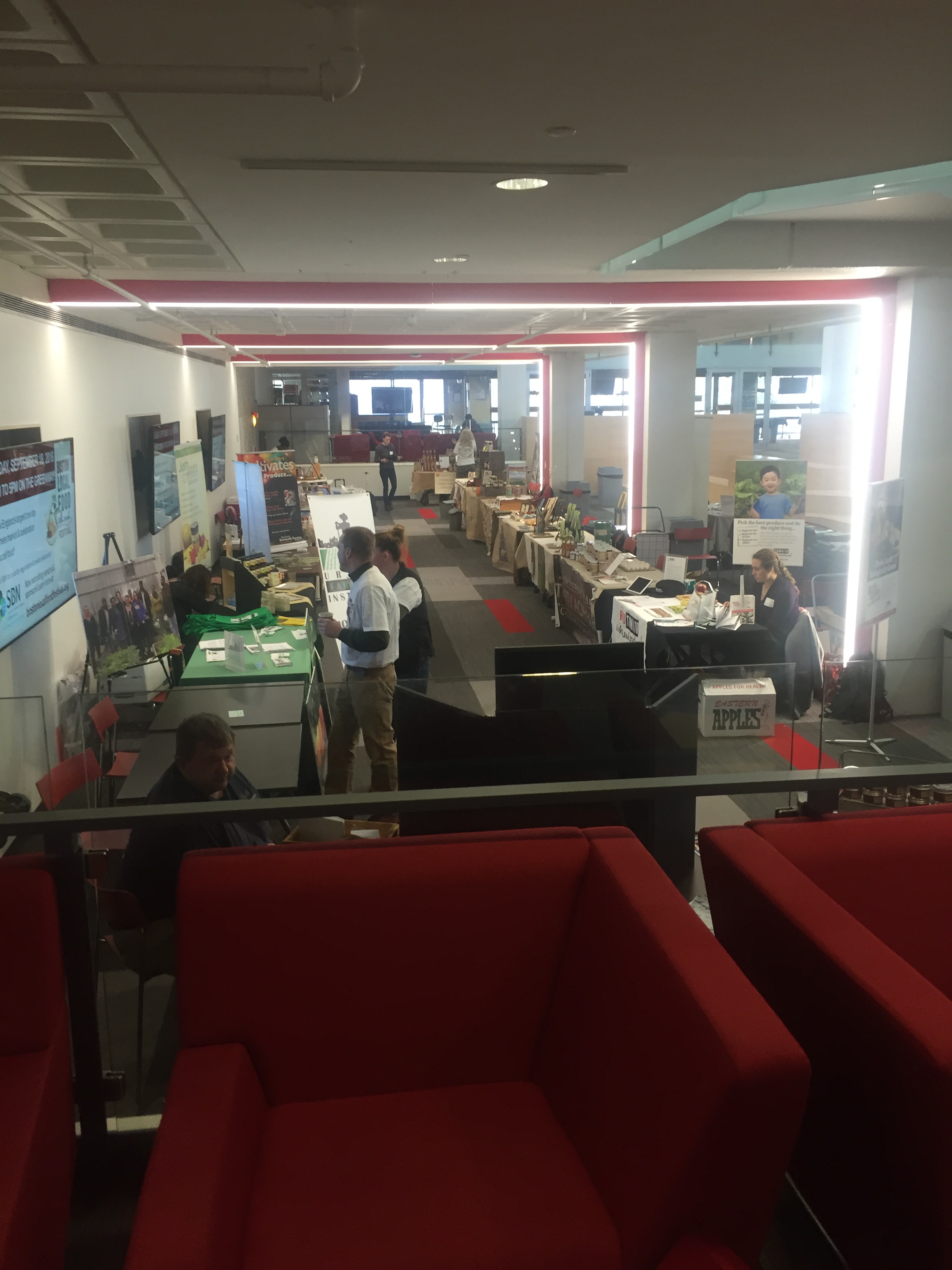
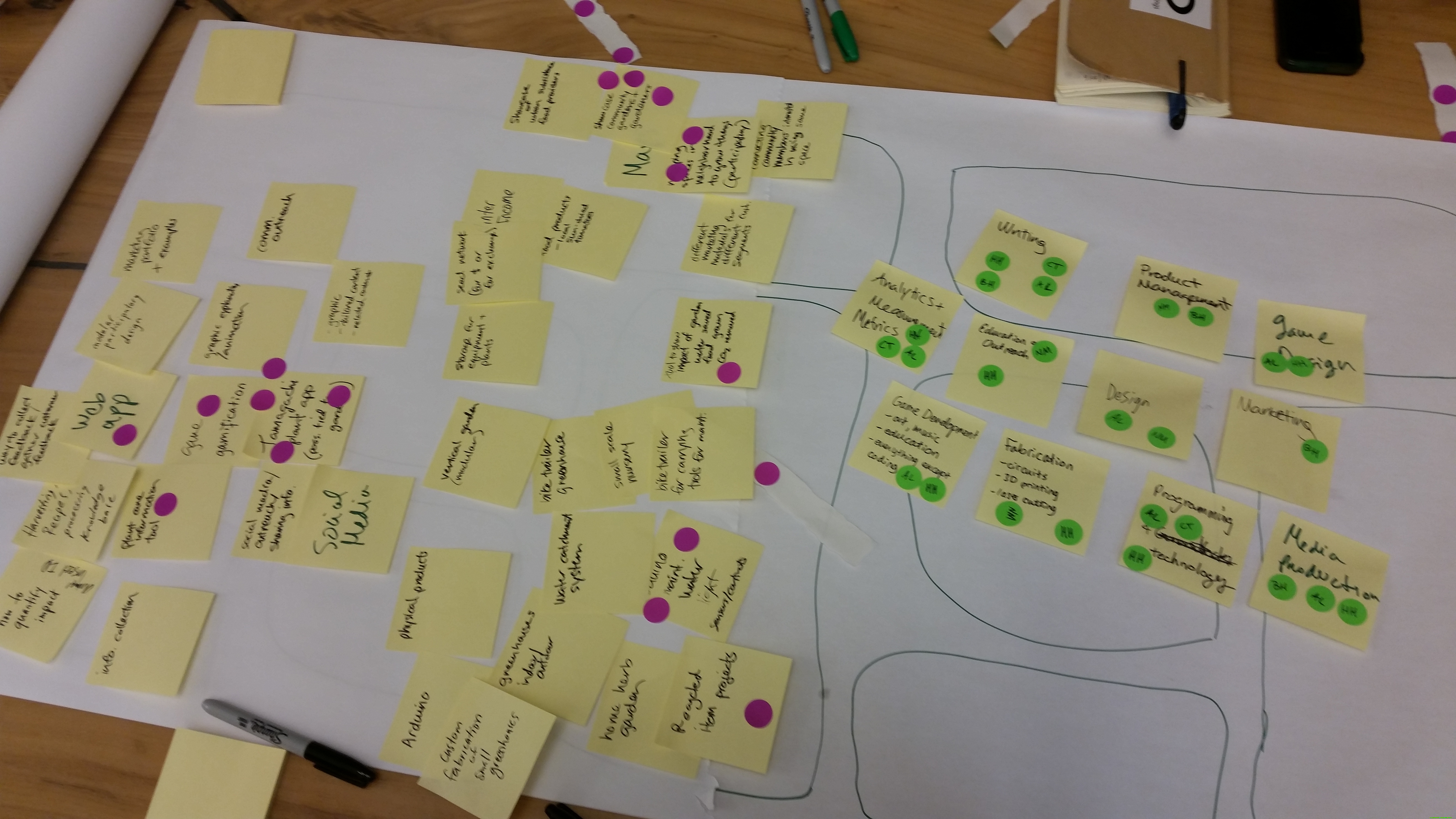
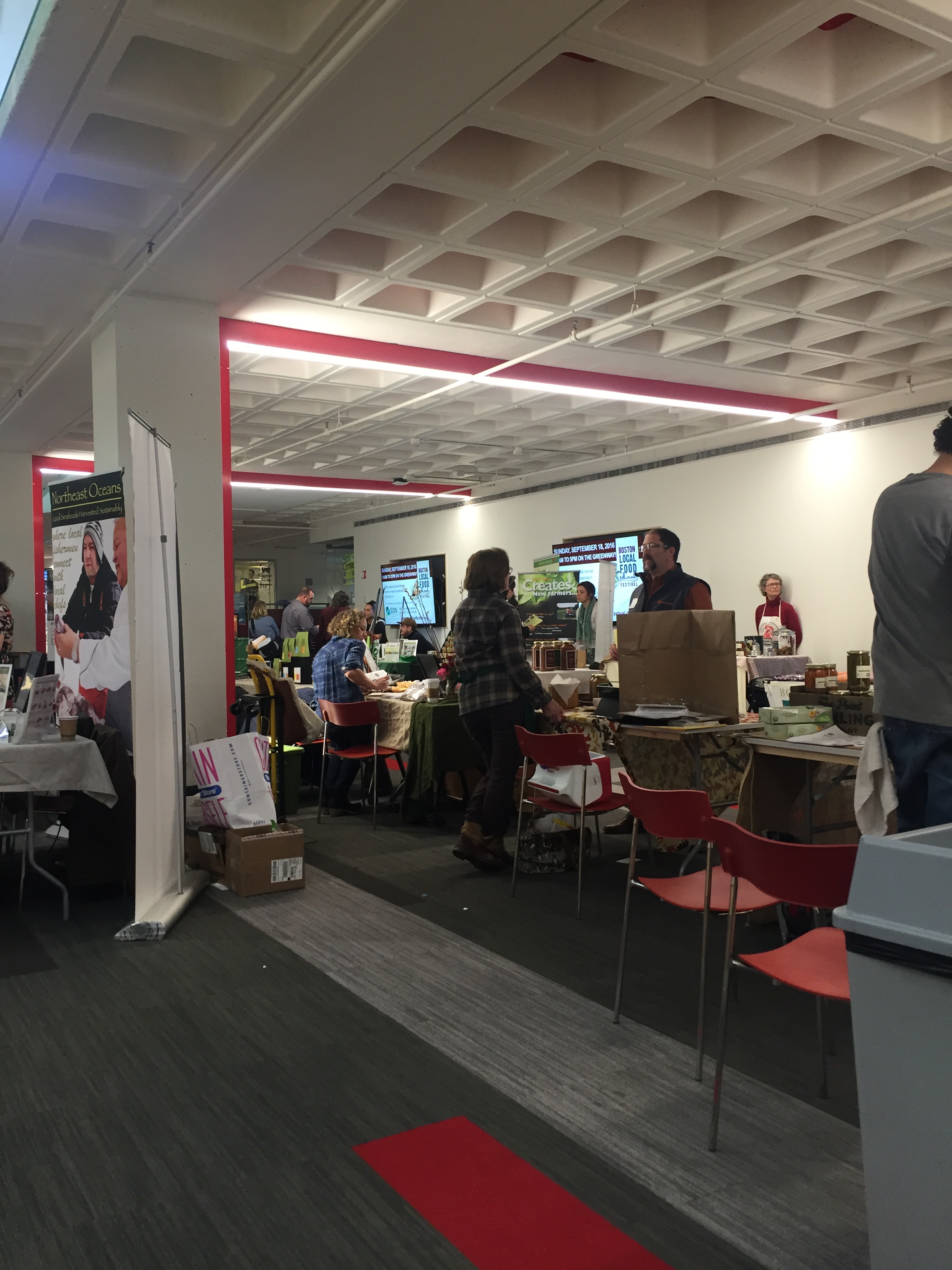
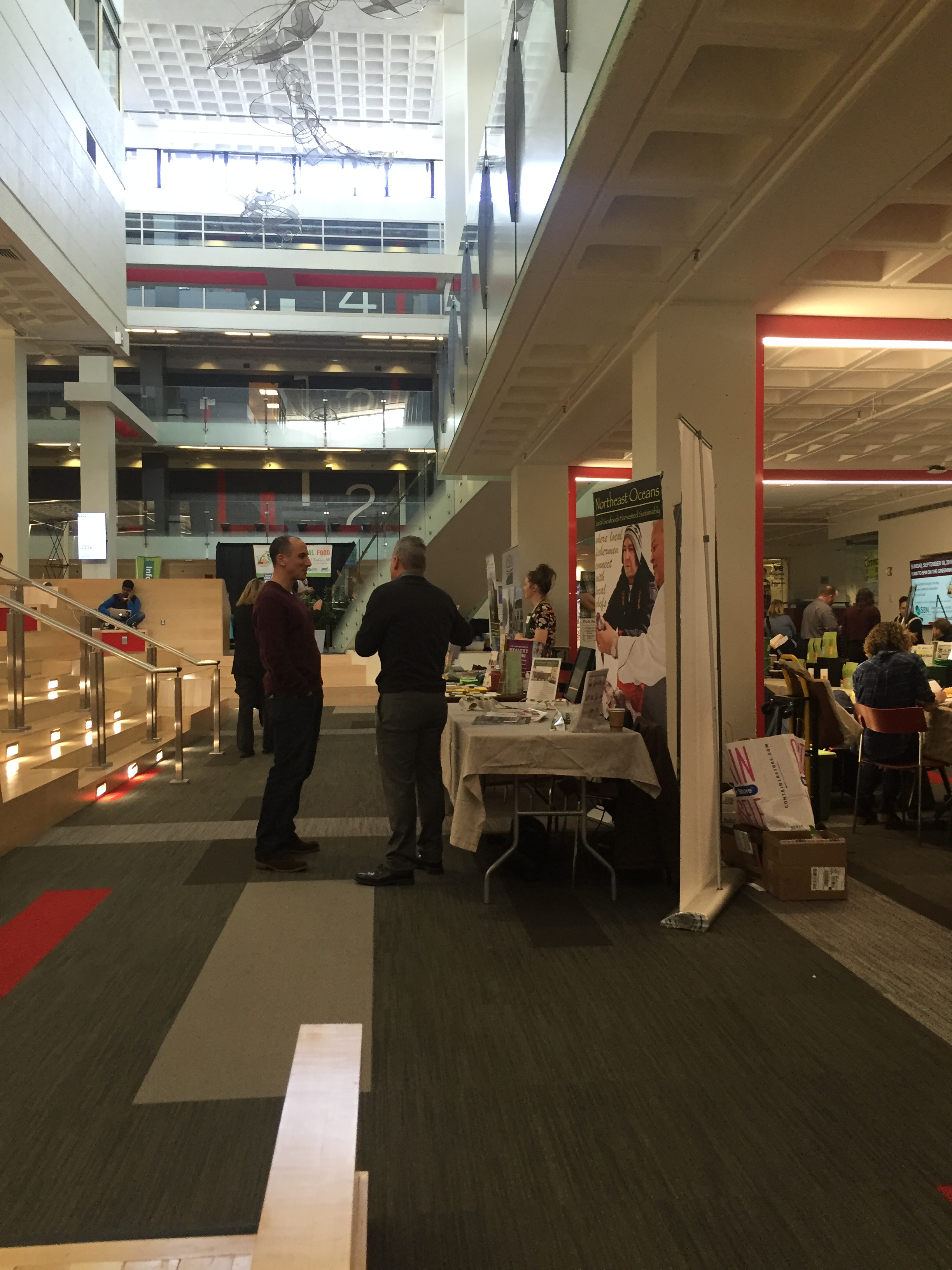
Pictures of the food festival below.


2016-03-08 10.06.36 2016-03-08 10.06.38 2016-03-08 09.10.41

Vida Verde: First Round of Interviews

This week, we conducted interviews with both current co-op members at Vida Verde and people who have employed house cleaning services of any company.

We conducted the Vida Verde interviews in two sessions. For the first session, Tais interviewed several cleaners. After these interviews, we refined some of our interview questions for the next round. For this round of  Vida Verde interviews, Emilie and Val interviewed two cleaners, as well as one co-op member who has been performing much of the coordinating and central communication duties of the co-op. Though we are still in the process of transcribing and processing the interviews, we are feeling more confident that the communications route is the right direction for our project, and that we are capable of designing and implementing tools that will help streamline and expedite the communications processes substantially.

Moving forward, Rachel wrote up some emails that we could potentially use to contact previous clients of Vida Verde. We are considering interviewing them to gain further insight into what areas of the co-op’s operations could be improved.

Additionally, Maya crafted a Facebook blast to start our search for potential interviewees who have employed house cleaning services. We have received several responses so far.

CERO: Meeting on 02/28

Maya Gaul, the sales team leader at CERO, joined Lor as a main contact, and we are all even more energized and excited! We met this week on Monday to brainstorm and develop our canvases.

We began with a discussion about the waste ban and whether it would be worth spending time and effort on advocacy and building connections with community groups (environmental and social groups) that could influence their members to recognize the value of what CERO offers. After some back and forth we concluded that the best use of our resources right now would be to focus on sales, since Lor is already actively making connections with environmental groups and sees this as a longer ongoing process. Additionally we felt that results from that approach would not be quick enough to help CERO, given that the company is under a time crunch to get customers.

We decided that it would be best to focus on boosting sales, which would be a more tangible project with direct implications for CERO. We developed three canvases around sales and marketing to restaurants, grocery stores and anchor institutions (like hospitals and universities). The central problem that we were trying to answer for each canvas was: How do we reach and connect new potential customers to CERO?

Some highlights from the three canvas:

Marketing to restaurants and food lovers:

  • Restaurants, Foodies, Food Critics, Festivals: Since there are dozens of food events that happen throughout Cambridge and Boston each year, we hypothesize that bringing CERO to these events will help with brand visibility and attract potential customers in the restaurant business. A lot of these festivals tend to be community oriented and might attract folks who would consider a company like CERO. We also discussed that connecting directly with chefs might be a more targeted approach (especially chefs who pride themselves on sustainability and local procurement).

Sales to grocery stores:

  • Grocery stores, especially chain stores, have huge sales potential for CERO. However, getting those contracts can be difficult, especially since large companies own these chains and/or have headquarters located elsewhere. Our work would involve better understanding the underlying factors that these chains consider when choosing a composter (if they work with one at all) and then convincing these stores to partner with CERO. One idea we had was to use our position as MIT students to conduct independent focus groups and interviews to uncover why grocery stores make the choices that they do.

Marketing for anchor institutions:

  • We realize that this might be the hardest group to consider from a sales and marketing perspective. Institutions like MIT, for instance, are extremely bureaucratic and have long standing contracts with suppliers and trash collectors. In order to tackle this issue, we might need to make connections with sustainability offices at these institutions (if they have them) or work with student groups that are passionate about sustainability and can apply pressure on their universities to change procurement patterns.

Check out our canvases here:

1. Restaurants:

https://canvanizer.com/canvas/m4mpGIMNyRI

2. Grocery Stores:

https://canvanizer.com/canvas/f8s6kXq8HAY

3. Anchor Institutions:

https://canvanizer.com/canvas/aHghdx6MUNc

Placetailor – Business Model Canvases

On Monday, February 29th, we met with Declan and Travis of Placetailor to discuss our three business model canvases as well as to complete and sign our working agreement. First, we determined which route we were most excited about and wanted to further explore from our original project ideas. We decided to incorporate quite a few of them into one bigger picture: a project we are calling Co-Everything.

Co-Everything is a single platform or reference list meant to help develop a network of cooperatives, local businesses, and future clientele in the Boston area. We aim to develop this platform to connect co-ops, local businesses, and freelancers with not only each other, but with a consumer base as well. With our new excitement for the project at hand, we began focusing on creating a functional business model canvas for it.

Co-ops need help connecting to other co-ops, connecting to clientele, advertising their services, and formalizing their transactions. And, on the flip side, consumers need help finding providers that match their values. By creating this platform, discussed as a possible website or mobile app (or both with a  responsive design), this will be targeted towards consumers who are looking for specific services and those who want to support co-ops, local businesses, or freelancers. Co-ops can also benefit by not only by growing their consumer base, but by networking with other co-ops, local businesses, freelancers, and service providers.

A way we thought of setting up the platform would be to have an entry, or subscription fee for co-ops, local businesses, and freelancers that want to join the company. This fee would then give them ownership of the company as well. Some ways that we would gain consumers and grow Co-Everything would be to design a platform that is most importantly intuitive and simplistic for both owners and consumers to interact hassle-free. Then, we can grow the ownership by leveraging our current networks in order to firstly get co-ops on board with joining Co-Everything, and then grow the network further by asking users to review and recommend this platform to others. We’d then incentivize co-ownership of the platform by providing special privileges for co-owners (such as discounts on co-op to co-op services, etc.). When the network gets larger, it will be incentive enough for other co-ops to hop on the bandwagon and join the network. Another idea is that the consumer could also buy in with a membership fee in return for privileges of their own.

We did a little research and found that the Greater Boston Chamber of Cooperatives, Coopify, and Loconomics have tried to do something similar to this, and we’re hoping that a product like this would help decrease the need for endless search efforts to find services that a consumer may need and that this intuitive platform would be a catalyst for seamless transactions.

Here is a link to our Business Model Canvas  for Co-Everything: https://www.launchpadcentral.com/team/spring-2016-placetailor/canvas?week=4

Vida Verde: Three Possible Business Canvases

When we met again with Vida Verde on Friday, 2/26 to discuss project ideas that would address co-op needs, we discovered that all of our ideas fell into three primary categories: Coordination, Product Sales, and Marketing.

Coordination includes all of the communications, organization, and management of the business. Currently, each step of client intake and cleaner scheduling and communication requires multiple steps of paperwork. After noting some of the primary concerns voiced in Yelp reviews, we found that language barriers and inconsistent communication were significant obstacles for clients who had hired or attempted to hire Vida Verde in the past. Can we automate this process? Can we make it easier for cleaners, coordinators, and clients to understand and respond to each other’s needs? Can Vida Verde function without hiring a new full-time coordinator? A project focused on coordination would bring together client/cleaner, client/coordinator, and coordinator/cleaner communication practices and reduce the burden on cleaners and coordinators to create and navigate forms and spreadsheets. Coordination on the VV end would also lead to a more convenient, seamless process for the client.

Our business canvas for a coordination-focused project: https://canvanizer.com/canvas/MY55Sea-epk

While a project focused on coordination would streamline VV’s current practices, a focus on natural cleaning product sales would take their business in a completely new direction. Currently, they believe one of their main value propositions is the all-natural, chemical-free products they use in their business. Is it possible that this value proposition is high enough that they could viably sell the products by themselves and host paid workshops on making the products at home? With this product idea, we would need to look into packaging, marketing for the product, distribution, and value propositions for the actual materials.

Our business canvas for a product sales-focused project: https://canvanizer.com/canvas/FGr9RxlEqoE

Marketing, if successful, would drive the expansion of the business and solve the most pressing issue facing Vida Verde. When VV first started, they had near-constant news coverage because of the social and environmental impulse behind creating the co-op. From this coverage, they got hundreds of clients and had a thriving cooperative of around 30 cleaners. After a devastating incident where several cleaners left the cooperative with their clients, VV has struggled to regain their former success. A focus on marketing would involve finding the best ways to get new clients, prototyping advertising strategies, doing outreach at events, testing different value propositions, and potentially expanding the referrals program.

Our business canvas for a marketing-focused project: https://canvanizer.com/canvas/EKywguzW28g


Vida Verde Site Visit

On Monday night, the MIT contingent of our team had a great meeting with five spectacular members of the Vida Verde cooperative, Silvia, Leidiane, Valeria, Lucimara, and our primary contact Tais. We spent approximately three hours together learning about the Vida Verde members’ backgrounds, the history of the co-op, strengths and weaknesses of current processes, etc. We discussed some of the pitfalls of the current model, and talked about ideas that the VV ladies have for potential projects.

Based on our conversation, we were able to come up with a few possible project ideas, as well as leads on a couple of other areas for exploration. Current proposals include: 1. an automated cleaning estimate widget for the VV website, 2. a web- or SMS-based shift scheduling system, 3. an app-based product to link clients, workers, and the co-op in order to ensure that all parties are productively involved and aligned on every transaction. We agreed to have weekly meetings with all team members on Fridays at 6pm for the duration of the project so that we can keep everyone in the loop. Additionally, we plan to communicate with each other outside of the meetings via email and WhatsApp. We’re excited to start the product development phase!

Restoring Roots: First Meeting

On Monday Bridget, Andres, Chris, and Hannah got together with Noah at Clover in Kendall Square (since Restoring Roots does not have a brick and mortar location) to brainstorm.

We began by learning more from Noah about the needs and goals of Restoring Roots. Next we identified our “hard skills,” such as media production, writing, or programming to start us off with a general idea of what skills the group has and would like to further develop. We used post-its to situate our ideas graphically between a number of umbrella projects, such as working on a web or mobile app, or creating a physical product prototype.

20160222_212930

We discussed how aspects of social media, community and client outreach and gamification may be applied to a digital project. We talked about developing a plant care and information tool that provides clients with tailored tips and instructions for their plants. A centralized, accessible information collection would be useful since Restoring Roots spends a lot of time educating clients individually. We also thought about a making an education game where users take care of plants, including digital versions of the real plants in their gardens. This app could suggest new plants based on the user’s preferences and be integrated with social media.

We considered the possibility of prototyping a physical product. Since Restoring Roots income is season-dependent, such a project could provide a source of income during the winter. We discussed developing a tool to measure the impact of the client’s garden, looking at how much water was saved, food was grown, or CO2 removed. Another idea proposed using Arduino and sensors to create a garden monitoring system.

Lastly, we discussed various community-focused projects. For example, we proposed putting on a showcase of urban sustenance food providers and community gardeners. Another proposal was to launch a participatory mapping project to identify unused or poorly used land that could be transformed for community gardening and food production.